
Fear of Abandonment: Causes and How to Overcome It (2026)
Fear of abandonment explained: root causes, the panic-trigger cycle, and 8 steps to overcome it in 2026, plus when to get support between sessions.

Key Takeaways
- Fear of abandonment usually traces back to an anxious attachment style formed in early relationships, not a
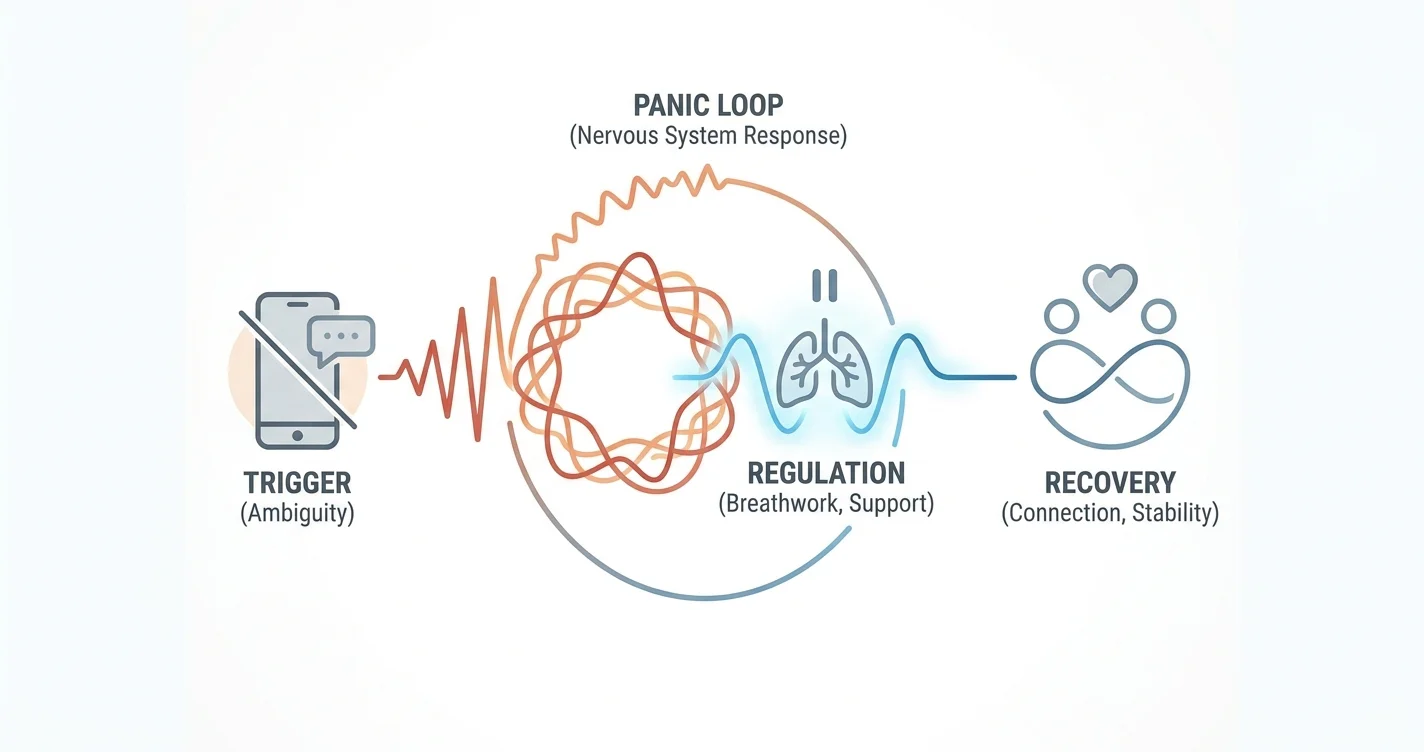
- Naming the trigger the moment it fires — a delayed reply, a canceled plan — stops the panic loop before it escalates.
- Nervous system tools like slow exhale breathing calm the spiral faster than trying to logic yourself out of it.
- Lovon's AI voice therapy app gives you a place to talk through the fear at 2am, when no therapist is reachable.
Fear of abandonment shows up as clinginess, pre-emptive breakups, or a full body panic when a text goes unanswered for two hours. It's not a character flaw — it's a nervous system pattern, and in 2026 it's one of the most searched relationship and mental health terms because so many people finally have language for what they've been living with for years.
TL;DR
- Fear of abandonment usually traces back to an anxious attachment style formed in early relationships, not a personality defect.
- The do I have abandonment issues quiz is a twelve-question way to see which shape the fear takes in your case before reading the fixes.
- Naming the trigger the moment it fires — a delayed reply, a canceled plan — stops the panic loop before it escalates.
- Nervous system tools like slow exhale breathing calm the spiral faster than trying to logic yourself out of it.
- Lovon's AI voice support app gives you a place to talk through the fear at 2am, when no therapist is reachable.
Why this matters
Left unaddressed, fear of abandonment doesn't stay quiet. It drives the behaviors that end relationships — checking a partner's phone, picking fights before they can leave first, going cold to test if someone will chase you. People with an anxious attachment style report this exact cycle: the fear feels protective in the moment, then it becomes the thing that pushes people away.
The good news is that abandonment fear responds to structure. It's not about willpower — it's about interrupting a predictable sequence: trigger, story, panic, behavior. Break the sequence enough times and the pattern loses its grip. That's the work below.
What you'll need
- A specific recent example of the fear firing (a text, a silence, a canceled plan) — vague dread is harder to work with than one concrete moment
- 10 minutes a day, ideally at the same time, for a regulation practice
- A way to track triggers — notes app, voice memo, or a journal
- Something to talk to when the spiral hits outside business hours, since the fear rarely waits for a Tuesday 3pm appointment
- Honesty with yourself about the behaviors the fear produces (texting repeatedly, going silent, testing)
The steps
1. Name the pattern before you name the person
Fear of abandonment attaches itself to whoever is closest — a partner, a friend, sometimes a parent. But the pattern predates that person. Write down the last three times you felt this exact panic and check whether the trigger (silence, distance, a change in tone) repeats across all three. If it does, you're looking at a pattern, not a verdict on this specific relationship. This single reframe — "this is my pattern firing" instead of "they're leaving" — cuts the intensity of the first wave by itself.
Common mistake: treating each incident as new evidence instead of the same alarm going off again.
2. Map your specific triggers
Generic anxiety advice fails here because abandonment fear has specific triggers: unanswered texts past a certain time, a partner using a flatter tone, being excluded from a plan, or someone needing space. Spend three days logging exactly what triggers the spike and how long it takes to fire — most people find it's under 90 seconds from trigger to full panic. Knowing your specific triggers turns a vague dread into a short, manageable list.
3. Regulate before you respond
When the fear fires, your body goes into a stress response before your thinking brain catches up — this is standard nervous system behavior, not overreaction. Before you text, call, or confront anyone, do 90 seconds of slow exhale breathing: four counts in, six counts out, repeated ten times. This shifts your body out of alarm mode and buys you the time to respond instead of react. Skipping this step is the single most common reason people say the fear "took over" again in 2026.
Common mistake: responding to the trigger while still in the physiological spike, which almost always escalates the situation.
4. Separate the story from the evidence
Write two columns: what actually happened (they didn't reply in three hours) and the story your brain built (they're losing interest, they're done). The gap between these two columns is usually enormous. This isn't about forcing positive thinking — it's about seeing clearly that the fear generates a narrative your evidence doesn't support.
5. Practice tolerable distance on purpose
Abandonment fear thrives on constant reassurance-seeking, which paradoxically keeps the fear alive because it never gets tested. Pick a low-stakes situation — not responding to a non-urgent text for two hours — and sit with the discomfort without checking or reaching out. Do this small and often rather than big and rare. Each rep teaches your nervous system that distance doesn't automatically mean loss.
6. Build a secure-base habit outside the relationship
People with abandonment fear often make one relationship the sole source of felt safety, which raises the stakes on every interaction. Build at least one other anchor — a friend, a routine, a daily check-in with yourself — so your entire sense of stability doesn't ride on one person's mood. This is the part how to heal anxious attachment on your own covers in more depth, including specific daily practices.
7. Repair after a spiral, don't just move on
When you do react from the fear — an accusatory text, going cold, testing someone — go back and repair it directly. Name what happened: "I spiraled and sent that message from a scared place, not an accurate one." This does two things: it rebuilds trust with the other person and it teaches you that a bad moment doesn't have to become a bad pattern.
Common mistake: letting shame about the reaction stop you from repairing, which lets resentment build on both sides.
8. Get support that meets you when the fear actually hits
Most fear-of-abandonment spirals happen at night, on weekends, or in the ten minutes after a hard conversation — exactly when a scheduled therapy slot isn't available. Lovon's AI voice support app is built for that gap: you talk out loud, in real time, when the panic is live instead of two days later in a session. It's not a replacement for licensed clinical care, but it's a place to process the spike before it turns into a text you'll regret.
Troubleshooting
"I know it's irrational, but I still panic." Logic doesn't reach a body in a stress response. Do the breathing first, then apply logic — order matters more than the technique itself.
"My partner says I need too much reassurance." This is usually a sign the reassurance-seeking has become the coping mechanism instead of a temporary tool. Shift toward self-soothing steps (breathing, grounding, journaling) before external reassurance, and read through relationship anxiety signs, causes, and coping tools for a fuller breakdown of the cycle.
"I push people away before they can leave." This is a protective strategy your brain learned works — it controls the timing of loss. Name it out loud in the moment ("I'm about to push away because I'm scared") before acting on it.
"I still get triggered even in a stable relationship." Fear of abandonment often predates the current relationship entirely. Stability in the present doesn't automatically erase a pattern formed years earlier — it takes repeated evidence over time, not one good partner.
"The fear gets worse at night." This is common and physiological — lower stimulation and less distraction give the fear more room. A pre-bed regulation routine matters more here than daytime work alone.
Tools and resources
- A trigger log (notes app or voice memo) to track what sets off the spike and how fast it escalates
- A breathing practice you actually use, not just know about
- Lovon, for talking through a spiral in real time instead of waiting for a scheduled session
- A trusted friend or family member who knows your pattern and can reality-check the story vs. the evidence
- A written repair script for the moments you react before you regulate
What to do next
Once the acute spikes are more manageable, the deeper work is understanding your attachment style overall — whether the fear of abandonment sits inside an anxious, avoidant, or disorganized pattern changes which tools work best for you.
FAQ
What causes fear of abandonment?
Fear of abandonment usually develops from early experiences of inconsistent caregiving, loss, or emotional unavailability, and it commonly shows up alongside an anxious attachment style in adulthood. It can also follow a specific event like a sudden breakup or a parent leaving.
Is fear of abandonment a mental illness?
Fear of abandonment isn't a standalone diagnosis, but it's a recognized feature of anxious attachment and appears as a symptom within conditions like borderline personality disorder and complex PTSD. Most people with it don't meet criteria for any diagnosis at all.
How do I stop fear of abandonment from ruining my relationship?
Stopping the damage starts with naming the trigger before you react to it, then regulating your nervous system with slow breathing before responding. Repairing quickly after a reactive moment matters as much as preventing the moment itself.
Can fear of abandonment be cured?
Fear of abandonment can be significantly reduced and managed, though calling it cured oversimplifies how attachment patterns work. Consistent practice over months, not days, is what shifts the pattern.
Is fear of abandonment the same as anxious attachment?
Fear of abandonment is one core feature of anxious attachment, but anxious attachment includes other traits too, like difficulty self-soothing and a tendency to over-monitor a partner's mood. Not everyone with fear of abandonment fits the full anxious attachment profile.
Why do I push people away when I'm afraid of losing them?
Pushing someone away before they can leave is a protective strategy that lets you control the timing of a loss you expect anyway. It feels safer in the moment even though it often creates the exact outcome you're afraid of.
Does therapy help with fear of abandonment?
Therapy, including AI-supported tools for daily check-ins, helps by giving you a consistent place to process triggers as they happen instead of only during a weekly session. Consistency between sessions is usually what makes the difference in 2026 treatment approaches.
What are the signs of fear of abandonment in a relationship?
Common signs include repeatedly seeking reassurance, panicking over slow replies, testing a partner's commitment, and picking fights before they can leave first. Many people also report going quiet or withdrawing as a preemptive move.
One last thing
The detail most people miss: fear of abandonment almost never fires because someone is actually leaving. It fires because of ambiguity — a delayed text, a flat tone, a canceled plan with no explanation. That means the fastest relief isn't fixing the relationship, it's tolerating ambiguity for slightly longer each time before reacting. Ten extra minutes of not-checking, repeated for a few weeks, does more than a single hard conversation ever will.
Related guides
How AI Support Helps You Heal
AI emotional support isn't about replacing human connection — it's about filling the gaps. The moments when you need to talk at 2 AM, when you don't want to burden your friends again, or when you simply need someone to listen without judgment.
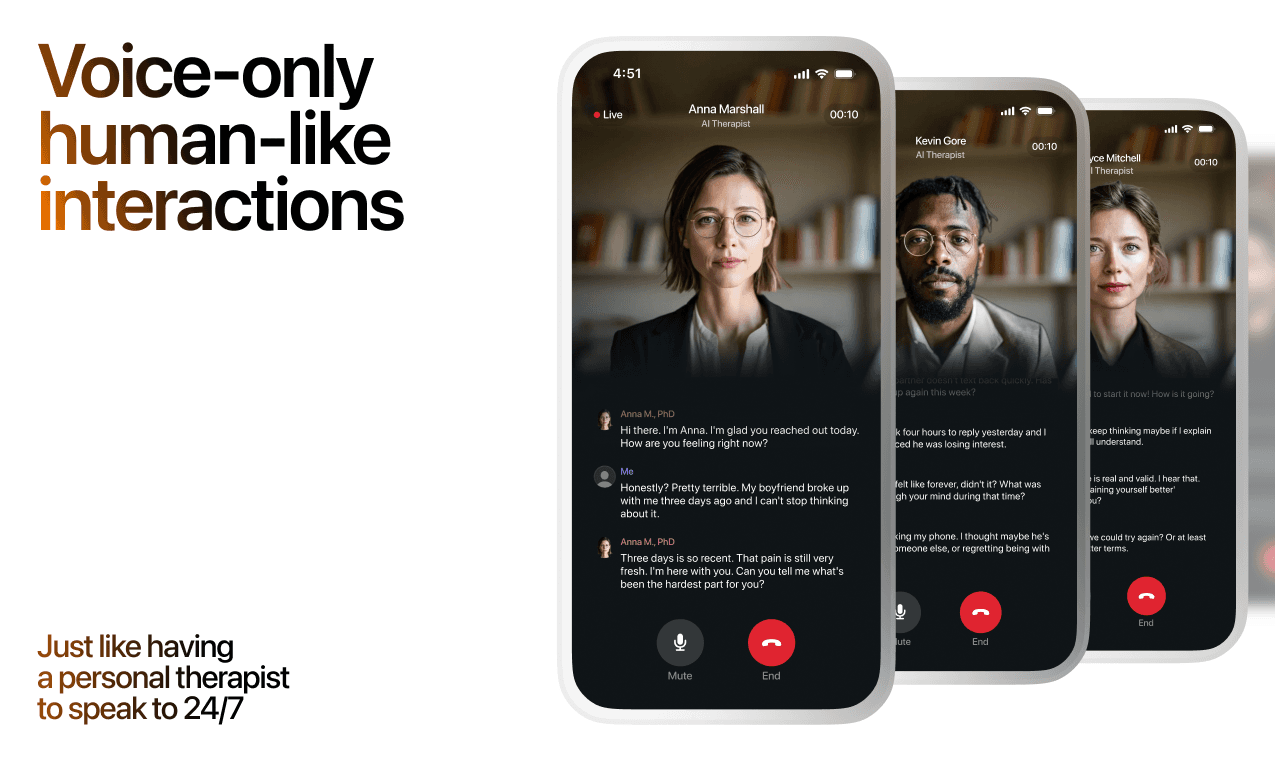
Here's what happens in a typical Lovon session:
You share what's on your mind
There's no script, no intake form, no waiting room. You speak or type whatever you're feeling — in your own words, at your own pace.
Lovon validates and explores
Using frameworks from CBT (Cognitive Behavioral Therapy) and motivational interviewing, Lovon acknowledges your feelings first, then gently helps you explore them. No dismissive "just move on" advice.
You build coping skills together
Lovon doesn't just listen — it actively works with you on evidence-based techniques: thought reframing, urge surfing, behavioral experiments, and more.
What a Session with Lovon Looks Like
Lovon is AI support, not a replacement for professional care. If things have been hard to get through for weeks, or you are thinking about harming yourself, talk to a doctor or a licensed therapist.
Ready to Start?
Your healing journey can begin right now
A 7-day trial. No judgment. Just a safe space to process what you're going through.
Frequently Asked Questions
Is Lovon a replacement for a real therapist?
Is my conversation with Lovon AI private?
How is Lovon different from ChatGPT for emotional support?
Can I use Lovon if I'm already seeing a therapist?
Can I try Lovon before subscribing?
About the Author
The Lovon Editorial Team
Mental Health & Wellness Content Team
The Lovon Editorial Team develops mental health and wellness content designed to make psychological concepts accessible and actionable. Our goal is to bridge the gap between clinical research and everyday life - helping you understand why your mind works the way it does and what you can do about it....
Related articles
- Best AI Relationship Coach for Anxious Attachment 2026
Find the best AI relationship coach for anxious attachment in 2026. Lovon offers voice-based, on-demand emotional…
- Why Do I Shake When Anxious? Causes & Fixes 2026
Shaking when anxious is adrenaline, not weakness. See the real causes, the fastest fixes for 2026, and when shaking…
- How to Manage Relationship Anxiety Day to Day (2026)
Learn how to manage relationship anxiety day to day with 7 practical steps, troubleshooting fixes, and tools that work…
- Anxious Attachment Healing Through Grief Work
Anxious attachment doesn't develop in a vacuum. Beneath the hypervigilance, the need for constant reassurance, and the…
See also
Quizzes
- Trust Issues Test: Do I Have Trust Issues? 12-Question Quiz
Check where your guard actually sits, in 2 minutes.
- Fear of Intimacy Test: Free 12-Question Self-Check
See which part of closeness feels risky, in 3 min.
Free tools
- Attachment Trigger Plan for Anxious and Avoidant Patterns
Pick your pattern, tick the moments that set it off, and finish one card for each: your body signal, the thing you will…
- What Did They Actually Mean By That?
A chat for one sentence you cannot stop re-reading. Paste their exact words and what was happening around them, and get…
From the wiki
- What does clingy mean in a relationship?
Clingy is what people call behavior that asks for more contact or reassurance than the other person wants to give…
Disclaimer: This article is for informational purposes only and does not constitute medical advice, diagnosis, or treatment. Always seek the advice of your physician or other qualified health provider with any questions you may have regarding a medical condition. If you are in crisis or think you may have an emergency, call 988 (Suicide & Crisis Lifeline) or go to the nearest emergency room. Outside the US? Find a crisis line in your country.