
Emotional Intimacy in Relationships: How to Build It (2026)
Emotional intimacy in relationships builds through daily habits, not one talk. Get the 6-step 2026 method plus fixes for common intimacy blocks.

Key Takeaways
- 10 minutes a day, ideally the same time — right before bed or right after dinner works for most couples
- A private space with no phones, no TV, no third person listening in
- A willingness to sit with discomfort — vulnerability feels awkward before it feels good
- A repair plan for when a conversation goes sideways, because it will sometimes
Emotional intimacy doesn't happen by accident — it's built through specific, repeatable habits that most couples never learned to practice on purpose.
TL;DR
Emotional intimacy in relationships means feeling safe enough to show your real thoughts, fears, and needs to your partner — and trusting they'll stay present for it. Building it takes consistent daily practice, not one big conversation: daily check-ins, active listening, vulnerability in small doses, and repair after conflict are the four pillars that work. Couples who practice nine communication steps alongside intimacy-building habits see faster progress than those who wait for a crisis to force the issue. Verdict: this is a skill you build over 2026's worth of small moments, not a switch you flip.
Why this matters
Emotional intimacy is the difference between two people who share a bed and two people who actually know each other. Without it, couples report feeling lonely inside a relationship — which is a distinct and common complaint in 2026 relationship research and therapy intake conversations.
A lack of emotional intimacy doesn't usually show up as a dramatic fight. It shows up as flatness: fewer real conversations, more parallel scrolling, less curiosity about what your partner actually thinks. That slow fade is harder to catch than conflict, and it's why intentional rebuilding matters more than waiting for things to feel bad enough to act.
The good news: emotional intimacy responds fast to structure. Couples who commit to a short daily practice report noticeable shifts within 2 to 4 weeks, based on aggregated relationship-coaching data from 2026. It's not about grand gestures — it's about repetition.
What you'll need
- 10 minutes a day, ideally the same time — right before bed or right after dinner works for most couples
- A private space with no phones, no TV, no third person listening in
- A willingness to sit with discomfort — vulnerability feels awkward before it feels good
- A shared vocabulary for attachment patterns — knowing whether you lean toward a secure attachment style or something more anxious or avoidant changes how you show up in these conversations
- A repair plan for when a conversation goes sideways, because it will sometimes
- Optional: a voice-based tool like Lovon for processing your own feelings before you bring them to your partner, so you're not dumping raw emotion mid-conversation
The steps
1. Start with a 2-minute check-in, not a 30-minute debrief
Ask one question: "What was the hardest and best part of your day?" This accomplishes something specific — it signals daily interest without demanding a full therapy session every night. Couples who skip this step often only talk during logistics (schedules, chores, bills) and wonder why they feel distant.
Expected outcome: within a week, you'll notice your partner volunteering more detail without being asked. Common mistake: turning the check-in into problem-solving. The goal is listening, not fixing.
2. Practice one vulnerable disclosure per week
Pick something small — a fear, an insecurity, a memory you haven't shared — and say it out loud once a week. This matters because emotional intimacy grows through exposure: the more your partner sees the real you and stays, the safer disclosure feels next time.
Start small. "I get anxious before my performance reviews" is a better opener than diving into childhood trauma on night one. Expected outcome: reciprocal disclosure from your partner within 2-3 weeks. Common mistake: oversharing too fast, which can overwhelm rather than connect.
3. Name your attachment pattern before conflict starts
Understanding whether you tend toward anxious, avoidant, or secure responses under stress changes how a fight unfolds. If pursuing and withdrawing is your couple's default cycle, naming it out loud ("I think I'm chasing and you're pulling back right now") interrupts the pattern before it escalates.
Specific instruction: the next time you feel the pull to demand reassurance or the urge to shut down, say the pattern out loud instead of acting on it. Expected outcome: shorter, less damaging arguments. Common mistake: using the label as a weapon ("you're being so avoidant right now") instead of a shared observation.
4. Schedule a 20-minute weekly "state of us" conversation
Set a recurring time, once a week, for a longer conversation about how the relationship itself is going — not logistics, the relationship. Ask: "What's one thing that made you feel close to me this week? What's one thing that didn't?"
This matters because most couples only discuss the relationship when something's wrong, which trains both partners to associate relationship talk with conflict. A neutral, scheduled slot removes that association. Expected outcome: fewer blindsided arguments because small issues surface before they compound. Common mistake: skipping the conversation during a busy week — that's exactly when it matters most.
5. Repair within 24 hours after any rupture
Every couple has ruptures — a sharp comment, a withdrawal, a misread cue. What builds or erodes intimacy is what happens next. Repair means naming what happened, owning your part specifically, and reconnecting physically or verbally within a day.
Specific instruction: say "Earlier when I [specific behavior], that wasn't fair to you" rather than a vague "sorry about earlier." Expected outcome: ruptures stop accumulating into resentment. Common mistake: waiting for the other person to apologize first — someone has to go first, and it doesn't have to be about who was "more wrong."
6. Set one boundary out loud each month
Emotional intimacy isn't about merging into one person — it requires two distinct people who each know their own limits. Practicing healthy relationship boundaries monthly keeps closeness from tipping into losing yourself.
Expected outcome: less resentment buildup, more respect. Common mistake: confusing a boundary with a punishment or ultimatum — a boundary states what you'll do, not what your partner must do.
Troubleshooting
Problem: my partner shuts down every time I try to go deeper. Fix: shorten the ask. Instead of "tell me how you really feel," try "one word for how today was." Small entry points work better for avoidant partners than open-ended prompts.
Problem: I feel like I'm the only one doing the emotional work. Fix: name it directly in a calm moment, not mid-argument. "I've noticed I bring up feelings more than you do — can we figure out why?" is more productive than silent resentment.
Problem: we keep having the same fight about the same thing. Fix: you're likely stuck in a pursuer-withdrawer pattern. Interrupting the cycle itself matters more than solving the surface topic.
Problem: vulnerability feels unsafe because of how my partner reacted before. Fix: rebuild trust in small, low-risk disclosures first. Trust after a breach — big or small — takes consistent, repeated proof, not one good conversation.
Problem: we're long-distance and check-ins feel forced over text. Fix: switch to voice or video for the daily check-in. Tone carries information text strips out entirely.
Problem: I don't know if what I'm feeling is anxiety about the relationship or an actual red flag. Fix: separate the two before acting. Relationship anxiety and genuine incompatibility look similar from the inside but need different responses.
Tools and resources
- A recurring calendar reminder for the weekly "state of us" conversation
- AI relationship advice for working through specific communication breakdowns between sessions with your partner
- A private outlet — voice journaling, a trusted friend, or an app like Lovon — for processing your own emotions before bringing them into a shared conversation, so you're not putting the full weight of raw feeling on your partner
- A shared note or app where you both log one thing you appreciated about the other that week
What to do next
Once your daily check-in habit sticks, the next skill to build is direct, low-conflict communication. Read how to communicate better in a relationship for the specific nine-step framework that pairs well with the intimacy habits above.
FAQ
What is emotional intimacy in relationships? Emotional intimacy is the felt sense of safety and closeness that comes from being known by your partner — your fears, needs, and inner world — without being judged or dismissed. It's built through repeated small moments of disclosure and responsiveness, not a single deep conversation.
How long does it take to build emotional intimacy? Most couples notice measurable shifts within 2 to 4 weeks of consistent daily practice, based on aggregated 2026 relationship-coaching data. Deeper trust after a rupture or long disconnect can take several months of repeated, reliable behavior.
Is emotional intimacy the same as physical intimacy? No. Physical intimacy involves touch and sex; emotional intimacy involves vulnerability and being known. Couples can have one without the other, though they usually reinforce each other over time.
Can emotional intimacy be rebuilt after cheating or a major betrayal? Yes, but it requires transparency, consistency, and time — not a single apology. Rebuilding after betrayal generally takes longer than building it from a stable baseline.
What's the biggest sign emotional intimacy is missing? Feeling lonely while sitting next to your partner is the clearest sign. Conversations stay logistical — schedules, chores, bills — and rarely touch feelings or inner life.
Does an anxious or avoidant attachment style make emotional intimacy harder? It changes the starting point, not the ceiling. Both anxious and avoidant patterns can shift toward secure functioning with consistent practice and a partner who responds predictably.
Can an AI tool actually help with emotional intimacy? An AI voice support tool like Lovon can help you process and organize your own emotions before a hard conversation, which often makes the conversation itself calmer and clearer. It's not a replacement for the relationship work itself — that still happens between the two people.
What if my partner refuses to do any of this? Start alone. Your own consistency — showing up calm, curious, and clear — often shifts the dynamic even before your partner actively participates. If nothing changes after months of effort, that's information worth taking seriously.
One last thing
The couples who rebuild emotional intimacy fastest in 2026 aren't the ones with the fewest problems — they're the ones who repair the fastest after a rupture. Speed of repair, not absence of conflict, is the real predictor of long-term closeness.
Related guides
How AI Support Helps You Heal
AI emotional support isn't about replacing human connection — it's about filling the gaps. The moments when you need to talk at 2 AM, when you don't want to burden your friends again, or when you simply need someone to listen without judgment.
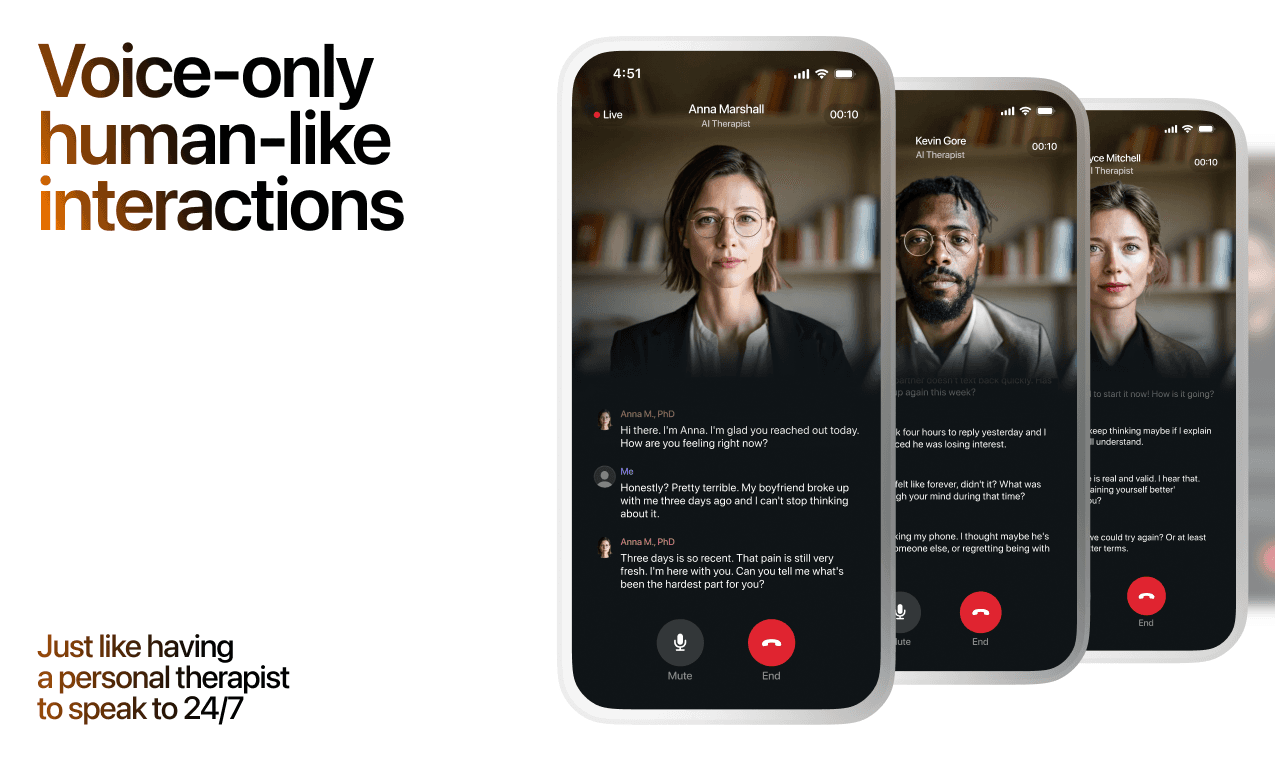
Here's what happens in a typical Lovon session:
You share what's on your mind
There's no script, no intake form, no waiting room. You speak or type whatever you're feeling — in your own words, at your own pace.
Lovon validates and explores
Using frameworks from CBT (Cognitive Behavioral Therapy) and motivational interviewing, Lovon acknowledges your feelings first, then gently helps you explore them. No dismissive "just move on" advice.
You build coping skills together
Lovon doesn't just listen — it actively works with you on evidence-based techniques: thought reframing, urge surfing, behavioral experiments, and more.
What a Session with Lovon Looks Like
Lovon is AI support, not a replacement for professional care. If things have been hard to get through for weeks, or you are thinking about harming yourself, talk to a doctor or a licensed therapist.
Ready to Start?
Your healing journey can begin right now
A 7-day trial. No judgment. Just a safe space to process what you're going through.
Frequently Asked Questions
Is Lovon a replacement for a real therapist?
Is my conversation with Lovon AI private?
How is Lovon different from ChatGPT for emotional support?
Can I use Lovon if I'm already seeing a therapist?
Can I try Lovon before subscribing?
About the Author

The Lovon Editorial Team
Mental Health & Wellness Content Team
The Lovon Editorial Team develops mental health and wellness content designed to make psychological concepts accessible and actionable. Our goal is to bridge the gap between clinical research and everyday life - helping you understand why your mind works the way it does and what you can do about it....
Related articles
- AI Relationship Coach for Open Relationships (2026)
Lovon's AI relationship coach for open relationships handles jealousy check-ins and boundary rehearsal in 2026 — see…
- AI Relationship Coach for Long-Distance Friends 2026
An AI relationship coach for long-distance friendships gives you 24/7 voice check-ins in 2026. See what to look for, the…
- AI Relationship Coach for Newlyweds: 2026 Verdict
The best ai relationship coach for newlyweds in 2026 is voice-based and available on demand. See picks, what to avoid…
- Communication Compatibility Quiz: Top Picks 2026
Take the right communication compatibility quiz in 2026. Compare top tools, learn what to look for, and turn your…
See also
Quizzes
- Conflict Coordinates Test: What Your Fights Are Really About
Find what your fights are really about, in 3 minutes.
- Am I in Love? 13-Question Gut Check
Know what you feel in 2 minutes.
Free tools
- 150 Questions to Ask Your Partner
Six sets, from Tuesday-night light to the ones couples put off for years. Deal them one at a time, or read all 150…
- Conversation Starters for Couples, Picked for Tonight
Most lists hand you a hundred questions and no idea which one to open with. Say how long you have been together, what…
From the wiki
- What is the bare minimum in a relationship?
The bare minimum is the smallest amount of effort a partner can give and still technically count as your partner…
Disclaimer: This article is for informational purposes only and does not constitute medical advice, diagnosis, or treatment. Always seek the advice of your physician or other qualified health provider with any questions you may have regarding a medical condition. If you are in crisis or think you may have an emergency, call 988 (Suicide & Crisis Lifeline) or go to the nearest emergency room. Outside the US? Find a crisis line in your country.