
AI Coping Tools for Hair Pulling & Skin Picking 2026
AI coping tools for hair pulling and skin picking help track triggers and manage urges in real time between sessions. See what works alongside therapy in 2026.

Key Takeaways
- AI coping tools for hair pulling and skin picking work best paired with habit-reversal training, not as a standalone
- Lovon offers on-demand voice conversations for urge moments and does not replace BFRB-specialized therapy.
- Tracking triggers before an episode, not after, reduces pulling and picking frequency more than willpower alone.
- Sensory substitution and grounding cut urge intensity hardest in the first 60 seconds, the window that matters most.
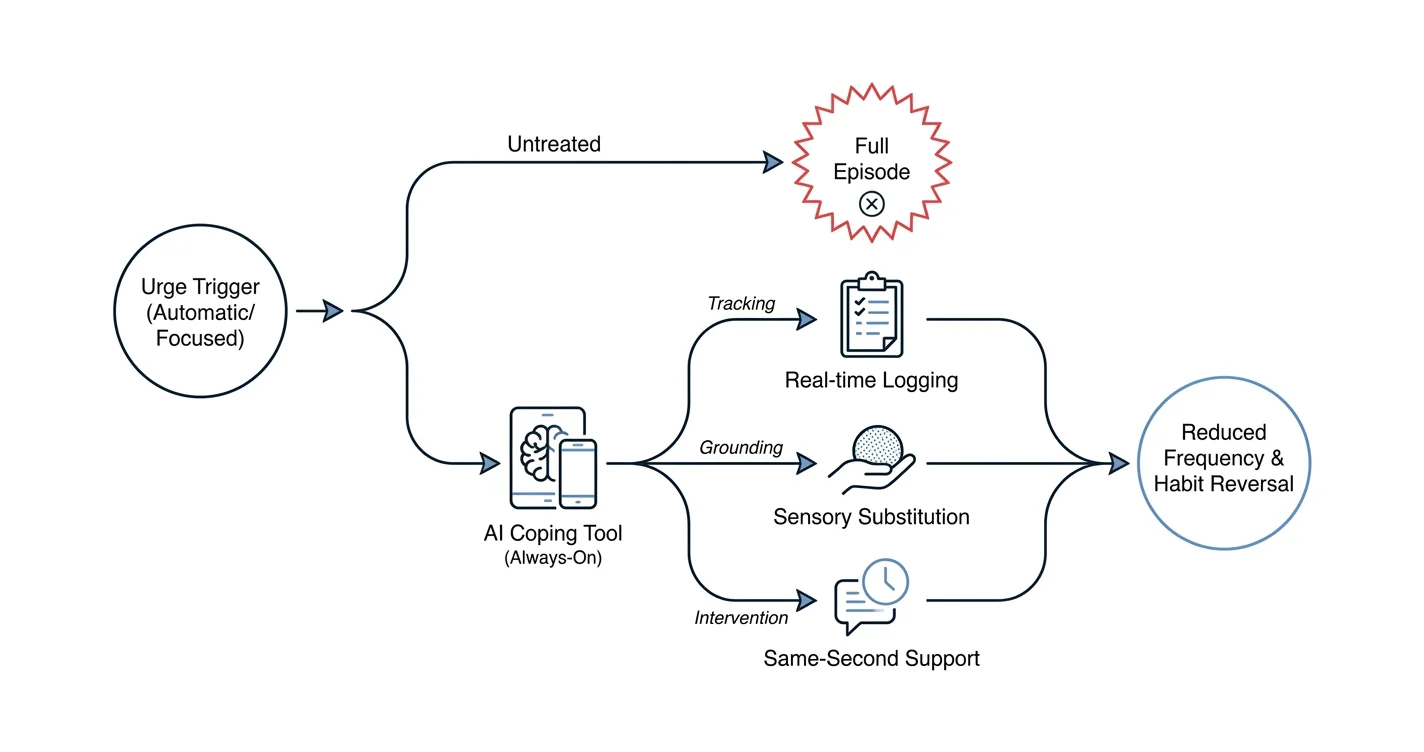
AI coping tools for hair pulling and skin picking give people with trichotillomania and dermatillomania a private, always-on way to catch an urge before it turns into a full episode, log patterns, and rehearse the replacement behaviors that habit-reversal training is built on. This segment does not need a generic calm-down script. It needs urge tracking, sensory substitution, and same-second support the moment fingers reach for hair or skin.
TL;DR
- AI coping tools for hair pulling and skin picking work best paired with habit-reversal training, not as a standalone fix.
- Lovon offers on-demand voice conversations for urge moments and does not replace BFRB-specialized therapy.
- Tracking triggers before an episode, not after, reduces pulling and picking frequency more than willpower alone.
- Sensory substitution and grounding cut urge intensity hardest in the first 60 seconds, the window that matters most.
Why this matters for hair pulling and skin picking
Body-focused repetitive behaviors sit on the OCD spectrum but they don't behave like intrusive-thought OCD. The urge is often automatic and sensory, showing up in front of a mirror, a phone screen, or during a stressful call, with little conscious warning. Clinical literature puts lifetime prevalence of trichotillomania at roughly 1 to 2 percent of adults, and skin-picking disorder runs at a similar rate, yet most people who pull or pick never bring it up with a doctor because of shame.
That gap is exactly where an AI coping tool fits in 2026. An app like Lovon doesn't diagnose or treat trichotillomania on its own, but it's reachable at 2am during an insomnia-driven picking session, not just during a scheduled Tuesday appointment. For a behavior that spikes during boredom, anxiety, and late-night scrolling, availability is the whole point.
Build the routine: step by step
Log the pattern before you log the pull
Most people track pulling and picking after it happens, when the damage is already done. The more useful data point is what happened in the 10 minutes before.
- Note the time of day, location, and activity (driving, studying, watching TV)
- Rate urge intensity on a 1-10 scale before acting on it
- Flag whether the episode was automatic (unaware) or focused (deliberate, tension-relieving)
- Track sleep and caffeine the day of, since both move BFRB frequency
- Review the log weekly, not daily, to spot real patterns instead of noise
Build one competing response per trigger
Habit-reversal training, the evidence-backed treatment for BFRBs, works by pairing each specific trigger with a physical competing response that makes pulling or picking impossible in that moment.
- Clench a fist for 60-90 seconds when the urge hits during a call
- Sit on your hands or hold a textured object during focused-attention triggers like studying
- Wear a hat or gloves during the highest-risk hour of your day
- Keep hands busy with a fidget tool at the specific desk or chair where picking happens most
- Pair each competing response to a single trigger rather than one generic fix for everything
Stock a sensory substitution kit
Automatic-subtype pulling and picking is often about texture and sensation, not emotion. Substituting a similar sensory input blunts the urge without fighting it head-on.
- Textured putty or a rubber band for finger stimulation
- A rough-surface stone or a nail file to redirect picking urges away from broken skin
- Silicone hair ties or a wig cap during high-risk grooming windows
- A cold pack for the tingling sensation that often precedes picking
- A mirror cover for the specific mirror where checking-and-picking spirals start
Ground yourself in the first 60 seconds
The urge window before a pull or pick is short, usually under a minute, and it's the highest-leverage moment to interrupt. Naming what's happening in the body slows the automatic loop down.
- Name five things you can see, four you can touch, three you can hear
- Run cold water over your hands for 20 seconds
- Press your palms flat against a wall for 10 seconds of resistance
- Say the urge out loud: this is a pull urge, and it will pass
- Set a two-minute timer and wait it out before deciding to act
Talk through the urge with an AI coping tool the moment it peaks
This is where an on-demand option earns its place, after the tracking and competing-response habits are already forming. A voice conversation with an AI coping tool app like Lovon works as a same-minute check-in when a grounding technique alone isn't cutting it, walking through what's driving the urge in that specific moment rather than waiting for the next scheduled session. It sits alongside the tools above, not in place of a therapist trained in habit-reversal training.
Talk through an urge right now
Start a voice session when a pulling or picking urge hits, day or night.
Repair the shame spiral after a slip
A slip after weeks of progress usually triggers a shame spiral that makes the next episode more likely, not less. Breaking that cycle matters as much as preventing the pull itself.
- Write down the fact of the slip without a judgment word attached: I picked for six minutes, not I failed again
- Return to the log within the hour so the pattern data stays intact
- Separate the behavior from your identity: one episode doesn't erase a month of competing responses
- Tell one person you trust about the slip if secrecy has been fueling the shame
Comparing your options for hair pulling and skin picking support
| Option | Best for | Key limitation |
|---|---|---|
| In-person habit-reversal therapy with a licensed clinician | Severe or long-standing BFRBs needing structured treatment | Scheduling, wait lists, and no access between sessions |
| BFRB tracking apps and paper logs | People who need consistent data on triggers and frequency | No real-time coping support during an active urge |
| Peer support communities, in person or online | Reducing isolation and shame around pulling or picking | Not a substitute for clinical treatment |
| AI coping tool app (Lovon) | On-demand urge support between therapy sessions in 2026 | Not a replacement for BFRB-specialized clinical care |
Verdict: none of these four options replaces the others. Lovon works best stacked on top of tracking and competing-response habits, not instead of them.
Common mistakes people make with hair pulling and skin picking
- Trying to just stop through willpower alone. BFRBs are automatic behaviors, not decisions, and willpower rarely outlasts a stressful week.
- Ignoring the automatic-versus-focused split. A mirror-and-tweezers picking session needs different tools than an unconscious hair twirl during a lecture.
- Tracking only after the episode. The pre-urge window is where competing responses actually work, and after-the-fact logging misses it entirely.
- Using shame-based self-talk post-slip. Harsh self-criticism after a pull raises stress, which raises the odds of the next urge.
- Waiting for a bad enough day to get support. Many people go years before mentioning pulling or picking to anyone, which lets the pattern calcify.
FAQ
What are the best AI coping tools for hair pulling and skin picking in 2026?
The most useful setup pairs a trigger-tracking habit with an on-demand AI coping tool for the moment an urge peaks. Lovon offers voice-based check-ins for that in-the-moment support, alongside grounding and sensory substitution techniques.
Can an AI app actually stop trichotillomania or skin picking?
No app stops a body-focused repetitive behavior on its own. AI coping tools support the work between habit-reversal sessions, but a licensed clinician trained in BFRB treatment remains the standard for diagnosis and structured treatment.
Is skin picking the same as OCD?
Skin-picking disorder and trichotillomania sit in the OCD-related spectrum in the DSM-5, but the urges are usually automatic and sensory rather than driven by an intrusive thought. That difference changes which coping tools help.
What is the fastest way to stop a pulling or picking urge in the moment?
A grounding technique such as naming five things you can see, paired with a competing response like clenching a fist for 60-90 seconds, interrupts most urges inside the first two minutes. That window is when the urge is strongest.
How much does habit-reversal therapy cost without insurance in 2026?
Costs vary by clinician and location, and specialized BFRB treatment often runs higher than general talk therapy. Checking current rates directly with local providers is more reliable than any published average.
Are BFRB tracking apps worth using alongside an AI coping tool?
Yes. Tracking apps capture the trigger data that makes competing responses effective, while an AI coping tool like Lovon handles the real-time conversation a log cannot provide.
Why does hair pulling and skin picking get worse at night?
Boredom, screen time, and low sensory input in environments like bed are common triggers for automatic-subtype BFRBs. That makes late evening a high-risk window for most people.
Should I tell my therapist I am using an AI coping tool between sessions?
Yes. Mentioning between-session tools gives a therapist a fuller picture of what is working and lets them adjust habit-reversal strategies accordingly.
One last thing
The detail most hair pulling and skin picking advice skips: automatic-subtype episodes respond better to sensory substitution, while focused-subtype episodes respond better to addressing the underlying tension or boredom first. Sorting which subtype is driving a given episode, before choosing a technique, saves months of applying the wrong tool in 2026.
Related guides
How AI Support Helps You Heal
AI emotional support isn't about replacing human connection — it's about filling the gaps. The moments when you need to talk at 2 AM, when you don't want to burden your friends again, or when you simply need someone to listen without judgment.
Here's what happens in a typical Lovon session:
You share what's on your mind
There's no script, no intake form, no waiting room. You speak or type whatever you're feeling — in your own words, at your own pace.
Lovon validates and explores
Using frameworks from CBT (Cognitive Behavioral Therapy) and motivational interviewing, Lovon acknowledges your feelings first, then gently helps you explore them. No dismissive "just move on" advice.
You build coping skills together
Lovon doesn't just listen — it actively works with you on evidence-based techniques: thought reframing, urge surfing, behavioral experiments, and more.
What a Session with Lovon Looks Like
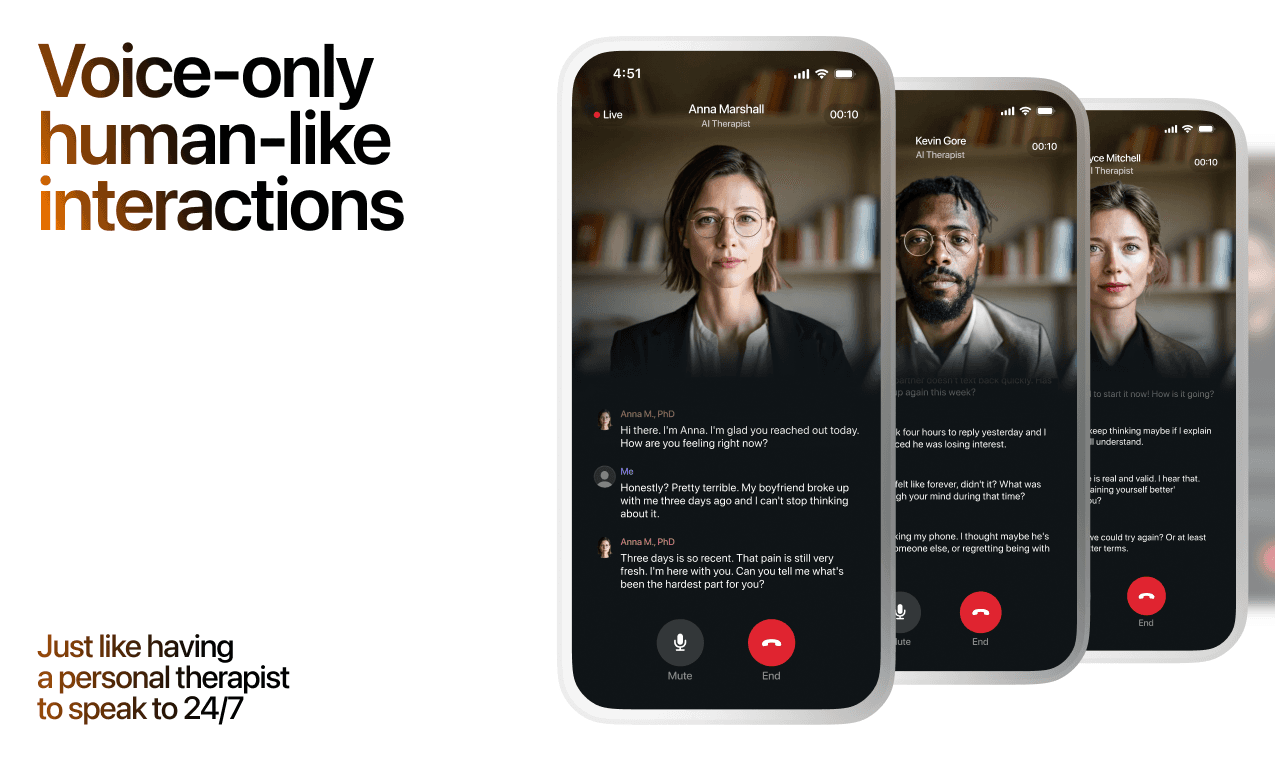
Lovon is AI support, not a replacement for professional care. If things have been hard to get through for weeks, or you are thinking about harming yourself, talk to a doctor or a licensed therapist.
Ready to Start?
Your healing journey can begin right now
A 7-day trial. No judgment. Just a safe space to process what you're going through.
Frequently Asked Questions
Is Lovon a replacement for a real therapist?
Is my conversation with Lovon AI private?
How is Lovon different from ChatGPT for emotional support?
Can I use Lovon if I'm already seeing a therapist?
Can I try Lovon before subscribing?
About the Author

The Lovon Editorial Team
Mental Health & Wellness Content Team
The Lovon Editorial Team develops mental health and wellness content designed to make psychological concepts accessible and actionable. Our goal is to bridge the gap between clinical research and everyday life - helping you understand why your mind works the way it does and what you can do about it....
Related articles
- Can stress cause hair loss?
Can stress cause hair loss? Yes, often through temporary shedding. Learn the signs, recovery timeline, other possible…
- Maladaptive Daydreaming: Signs & How to Stop It in 2026
Maladaptive daydreaming explained: signs, triggers, and a 7-step plan to cut hours-long episodes down in 2026…
- Best Mental Health App for Depression in 2026: Ranked
The best mental health app for depression in 2026, ranked: Lovon (Buy), BetterHelp, Talkspace, Wysa, and more compared…
- AI Therapy App for Eating Disorder Recovery: 2026 Guide
An AI therapy app for eating disorder recovery works best alongside a treatment team, not instead of one - see what to…
See also
Quizzes
- Emotional Contagion Test: Which Moods Do You Catch?
See how moods spread to you and through you, in 3 minutes.
- Empath Test: Do Other People's Moods Become Yours?
See how much of other people's moods you take on.
Free tools
- How to Reconnect With an Old Friend
A chat for how to reconnect with an old friend, starting with the text you have been meaning to send for a year. Tell it…
- Breathing Exercises for Anxiety
Pick a technique, pick a length, follow the circle. Start with the physiological sigh if you are in the middle of a…
From the wiki
- What to do if you have no friends?
Pick one activity that repeats weekly with the same people, and go for six to eight weeks straight. Repetition, not…
Disclaimer: This article is for informational purposes only and does not constitute medical advice, diagnosis, or treatment. Always seek the advice of your physician or other qualified health provider with any questions you may have regarding a medical condition. If you are in crisis or think you may have an emergency, call 988 (Suicide & Crisis Lifeline) or go to the nearest emergency room. Outside the US? Find a crisis line in your country.