
Can stress cause hair loss?
Can stress cause hair loss? Yes, often through temporary shedding. Learn the signs, recovery timeline, other possible causes, and when to see a doctor in 2026.

Key Takeaways
- Can stress cause hair loss? Yes: telogen effluvium causes delayed, often temporary hair shedding after significant
- Patchy hair loss, scalp inflammation, and gradual thinning need assessment rather than an assumption that stress
- Lovon offers emotional support for everyday stress, not a diagnosis or treatment for hair loss.
- Start with a medical assessment, gentle hair care, regular meals, and support for the stress you are carrying.
Yes, stress can cause hair loss, most often through temporary shedding called telogen effluvium after a significant emotional or physical stressor. Shedding usually appears months after the trigger, so your hair can start falling out even after life feels calmer. Many people recover, but stress is not the only cause of thinning; patches, scalp discomfort, or persistent loss need medical assessment.
TL;DR
- Can stress cause hair loss? Yes: telogen effluvium causes delayed, often temporary hair shedding after significant stress.
- Patchy hair loss, scalp inflammation, and gradual thinning need assessment rather than an assumption that stress caused them.
- Lovon offers emotional support for everyday stress, not a diagnosis or treatment for hair loss.
- Start with a medical assessment, gentle hair care, regular meals, and support for the stress you are carrying.
Can stress cause hair loss?
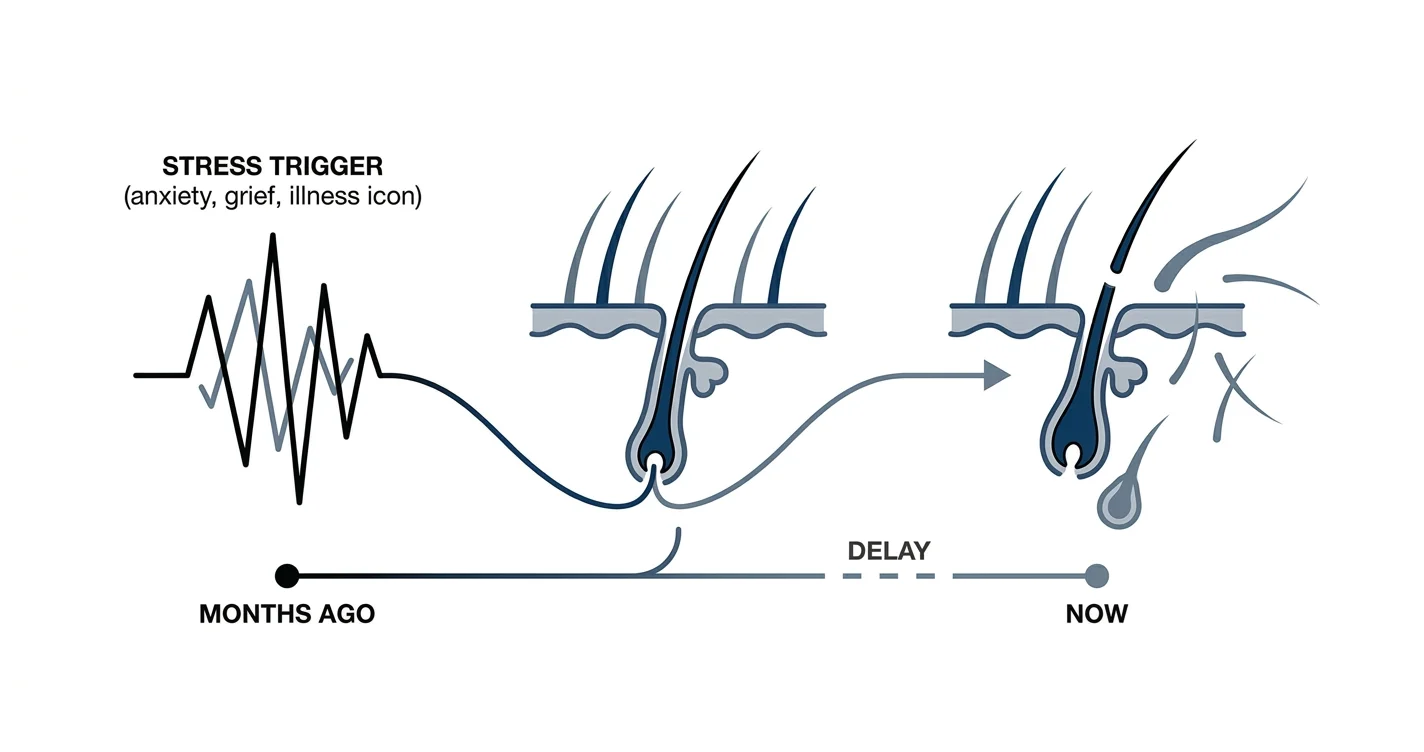
Stress can disrupt your hair's growth cycle and cause more hairs than usual to shed. In telogen effluvium, a larger share of growing hairs enters the resting phase. Those hairs fall out later, rather than immediately when the stressful event happens.
The American Academy of Dermatology's patient guidance, Do you have hair loss or hair shedding?, identifies major stressors, illness, surgery, and childbirth as common triggers for excessive shedding. Its guidance distinguishes temporary shedding from conditions that stop hair from growing. That distinction matters more than the size of a clump in your brush.
For this 2026 guide, the key comparison is between patterns—not between products promising thicker hair. You cannot confirm the cause from appearance alone, but the pattern helps you describe what is happening to a clinician.
| Pattern | What you might notice | Relationship to stress | Next step |
|---|---|---|---|
| Telogen effluvium | Increased shedding across the scalp | Significant emotional or physical stress can trigger it | Review the timeline and other possible triggers with a clinician |
| Alopecia areata | Distinct, often smooth bald patches | Stress can be associated, but this is an autoimmune condition | Arrange a medical assessment |
| Hair pulling | Broken hairs or uneven patches where you pull | Pulling can occur with tension or difficult emotions | Seek support for pulling urges and check scalp damage |
| Pattern hair loss | Gradual thinning at the part, crown, or hairline | Can coexist with stress-related shedding | Ask about diagnosis and condition-specific treatment |
Why this matters
Seeing more hair in the shower can be frightening. It can also create a loop: you notice shedding, worry about what it means, check again, and feel more distressed. Hair loss deserves attention without becoming proof that you have failed to manage stress.
Understanding whether chronic stress can cause physical illness helps put the broader concern in context. Still, a stressful month does not explain every physical symptom, and a hair-loss assessment should not stop at asking whether you feel anxious.
Your 2026 care plan can address both concerns at once: investigate the hair change and get support for the emotional strain. You do not have to choose between taking your symptoms seriously and calming your mind.
Telogen effluvium: shedding often starts after 2–3 months
Telogen effluvium commonly becomes noticeable about 2–3 months after a trigger, according to the British Association of Dermatologists' patient information on the condition. You might notice more hair during washing or brushing, or a general reduction in volume rather than a single bare patch.
Think back beyond this week. A major illness, surgery, difficult life event, substantial weight loss, or childbirth can precede the shedding. More than one trigger can happen together, which makes self-diagnosis unreliable.
Telogen effluvium is generally a nonscarring form of hair loss: it does not destroy the hair follicles. That is reassuring, but it is not a reason to dismiss ongoing symptoms. A clinician can check whether another condition is contributing.
Recovery: fullness often returns within 6–9 months
The American Academy of Dermatology states that hair tends to regain normal fullness within 6–9 months as the body readjusts after excessive shedding. This is a general recovery expectation, not a personal deadline or a promise that every cause of hair loss follows that schedule.
Shedding and visible fullness are different milestones. Your shedding can settle before your hair looks as thick as it did before, because new hair needs time to grow. Repeated triggers or another hair-loss condition can complicate the picture.
Use the 2026 calendar to record when changes started, not to set a deadline your body must meet. If thinning continues or the pattern changes, ask for reassessment rather than waiting indefinitely for stress reduction to fix it.
Alopecia areata: patches need a different assessment
Alopecia areata causes hair loss when the immune system attacks hair follicles. It often produces smooth, round patches, although its presentation varies. The American Academy of Dermatology describes it as an autoimmune disease, not simply the result of being stressed.
Do not assume a bald patch is ordinary stress shedding. Arrange an appointment, especially if you also lose eyebrow or eyelash hair. Treatments and expectations depend on the diagnosis, so advice for telogen effluvium is not interchangeable with advice for alopecia areata.
Hair pulling: support should address the urge, not blame
Hair pulling, also called trichotillomania, is different from hairs shedding on their own. You might pull during tension, boredom, concentration, or without fully noticing. Uneven patches and hairs of different lengths can be clues, but they do not establish the diagnosis.
A mental health professional can assess pulling patterns and discuss behavioral treatment, including habit reversal training. A clinician can also examine affected areas for injury. Telling yourself to stop being stressed is not an adequate treatment plan.
Why stress-related hair loss varies
The same stressful event does not produce the same hair changes in everyone. Several factors affect the pattern, timing, and recovery:
- The trigger: Emotional strain, illness, surgery, childbirth, and substantial weight loss are different events, even when each affects the hair cycle.
- Repeated triggers: Continued or repeated stressors can prolong shedding rather than create a single, clearly defined episode.
- Nutrition: Restrictive eating and nutritional deficiencies can contribute to hair loss independently of emotional stress.
- Other health conditions: Thyroid disease and other medical causes can resemble or accompany stress-related shedding.
- Medicines and hormonal changes: A medication change or hormonal shift can matter to the timeline and needs clinical review.
- Overlapping hair loss: Pattern hair loss can occur alongside telogen effluvium, changing what recovery looks like.
This is why a diagnosis based only on feeling stressed is incomplete. Bring your full history, including recent illness, food restriction, medicines, and changes in your scalp.
What should you do if your hair is shedding?
Start with assessment and basic care, not a pile of supplements. You can support yourself while a clinician investigates the cause; you do not need to prove that stress is responsible first.
1. Record changes
Write down when shedding began and whether it is diffuse or patchy. Note recent illness, major life changes, childbirth, medication changes, and changes in eating. Bring that timeline to your appointment rather than relying on memory when you feel worried.
2. Arrange assessment
A primary care clinician or dermatologist can review your history and examine your scalp. Blood tests are sometimes appropriate, depending on the findings—for example, when iron deficiency or thyroid disease is suspected. Testing should follow your clinical situation, not a universal online checklist.
3. Use gentle care
Avoid hairstyles that pull tightly and reduce harsh handling or repeated heat damage. These steps limit additional breakage and traction; they do not cure a medical cause of shedding. Washing your hair does not create telogen effluvium, although washing can make already-loosened hairs more noticeable.
4. Support recovery
Keep meals regular and discuss restrictive eating or suspected deficiencies with a clinician. Protect your sleep routine and seek help with stress that feels difficult to carry. These are supportive steps, not a guarantee of regrowth.
The sequence below summarizes the next move. It separates finding the cause from caring for yourself while you wait.
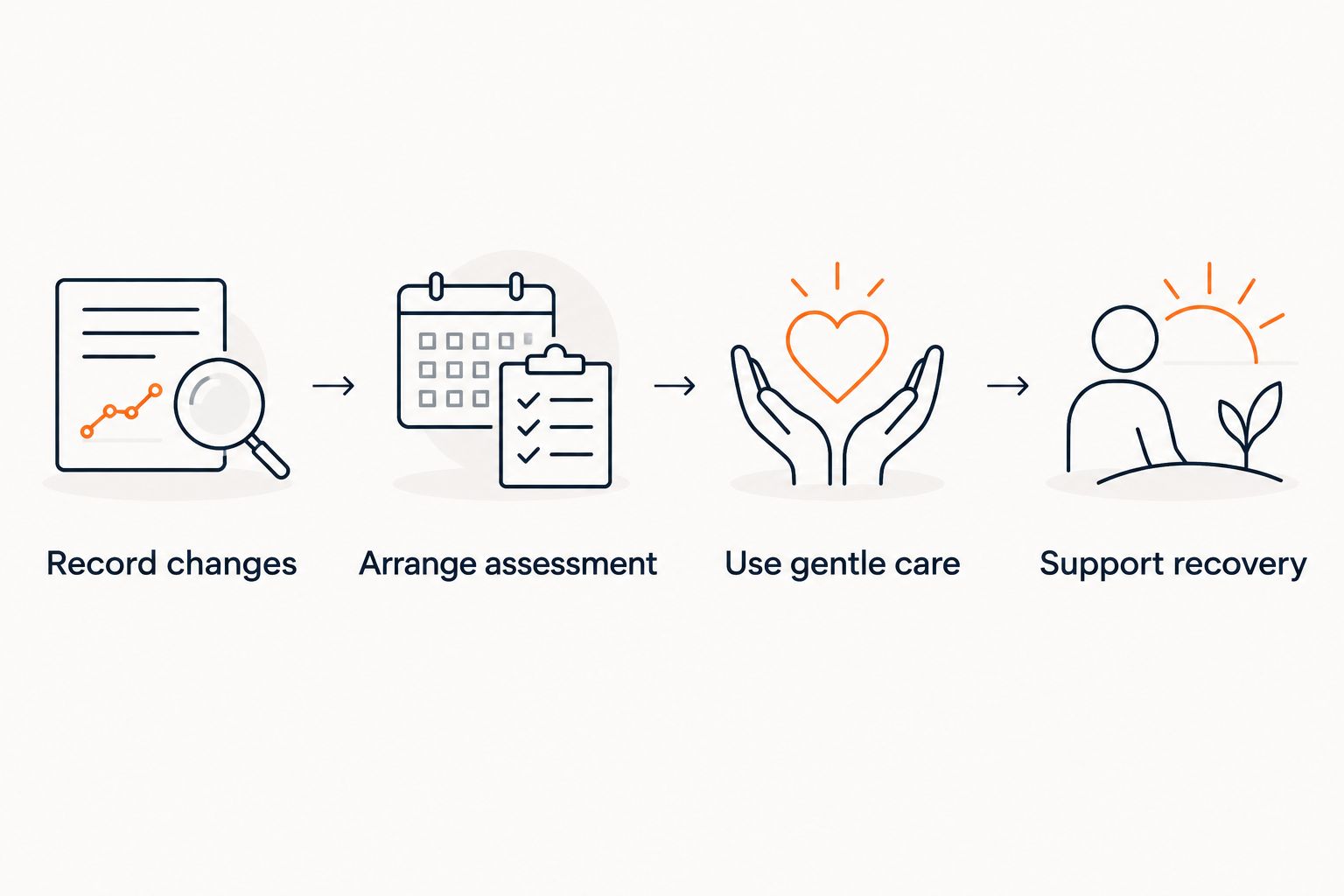 Four steps for responding to hair shedding, from recording changes to supporting recovery.
Investigate the cause while keeping hair care and daily routines gentle.
When should you see a doctor about hair loss?
Arrange an assessment if you have distinct bald patches, continuing thinning, eyebrow or eyelash loss, or scalp pain, redness, scaling, or sores. These signs do not identify a particular condition on their own. They do mean you should not settle for an explanation of stress without an examination.
Also mention fatigue, changes in weight, menstrual changes, or a restricted diet. A clinician needs the wider picture, not just the hair symptom. Seek prompt medical advice for a painful, inflamed scalp, especially if you also feel unwell.
For decisions in 2026, prioritize an examination over an online diagnosis. Photos and symptom descriptions can help explain your concern, but they cannot reliably distinguish every cause of hair loss.
Can reducing stress help your hair grow back?
Reducing stress can support recovery when stress contributed to telogen effluvium, but it does not reverse every type of hair loss. Your hair cycle also takes time to respond, so feeling calmer today does not mean shedding stops tomorrow.
Choose a manageable action: ask for practical help, step away from repeated symptom searches, or speak with a mental health professional. Keep the medical assessment alongside these steps. Stress support is useful even before you know whether stress caused the shedding.
How much hair shedding is normal?
Losing 50–100 hairs per day is normal, according to the American Academy of Dermatology. That range is background context, not a reliable home diagnostic test; washing frequency, hair length, and styling affect how much shed hair you notice at once.
You do not need to count every strand. Focus on a sustained change from your usual pattern, visible thinning, or scalp symptoms, and describe those changes at your appointment.
Will supplements stop stress-related hair loss?
Supplements do not reliably stop hair loss when you do not have a deficiency. The American Academy of Dermatology advises discussing supplements with a dermatologist; excess amounts of some nutrients can contribute to hair loss, and biotin can interfere with certain laboratory tests.
Tell your clinician about anything you take, including hair gummies or powders. Correcting a confirmed deficiency is different from taking a supplement because its label promises thicker hair.
Where emotional support fits
Hair changes can affect confidence and make an already difficult period feel heavier. Lovon offers voice conversations, coping tools, and self-reflection guidance for everyday emotional struggles. You can use that kind of support to talk through worry while keeping medical questions with a qualified clinician.
Lovon is best for everyday stress support, not hair-loss diagnosis or treatment. Its voice format gives you a way to express what you are feeling; its limitation is that it is not a licensed clinician and cannot examine your scalp, order tests, or determine the cause of shedding.
In 2026, keep the roles separate: Lovon provides emotional support, and your medical clinician assesses the hair loss. Neither calming down nor using an app is a requirement you must meet before you deserve care.
FAQ
Can stress cause hair loss even after I feel better?
Yes, stress-related shedding can become noticeable after the stressful period has passed. Telogen effluvium commonly appears about 2–3 months after a trigger because the hair cycle has a delayed response.
How long does stress-related hair loss take to recover?
Hair tends to regain normal fullness within 6–9 months after excessive shedding as the body readjusts, according to the American Academy of Dermatology. Persistent triggers or another hair-loss condition can change the recovery timeline.
Can anxiety make my hair fall out?
Significant emotional stress associated with anxiety can contribute to telogen effluvium, but anxiety alone does not establish the cause of hair loss. New or persistent thinning still needs medical assessment.
How can I tell whether my hair loss is from stress?
You cannot confirm stress-related hair loss at home. Diffuse shedding after a significant trigger is a clue, but a clinician needs to review the timeline, examine your scalp, and consider other causes.
Should I wash my hair less if it is shedding?
Washing less does not treat telogen effluvium. Washing makes already-loosened hairs visible; use gentle handling and a routine appropriate for your scalp.
Does stress cause permanent baldness?
Telogen effluvium is generally temporary and does not destroy hair follicles. Other conditions can cause lasting loss, so patches, progressive thinning, or scalp symptoms need assessment.
Should I take biotin for stress-related hair loss?
Do not start biotin as a default treatment for stress-related hair loss. Discuss supplements with your clinician because a deficiency needs assessment and biotin can interfere with certain laboratory tests.
One last thing
The timing can be misleading: shedding that starts during a calm week can reflect a trigger months earlier. Bring a timeline to your appointment rather than treating today's stress level as the answer.
You do not need to earn recovery by becoming perfectly calm. Take the hair change seriously, get the cause checked, and let stress support help you feel less alone while you do.
Related guides
How AI Support Helps You Heal
AI emotional support isn't about replacing human connection — it's about filling the gaps. The moments when you need to talk at 2 AM, when you don't want to burden your friends again, or when you simply need someone to listen without judgment.
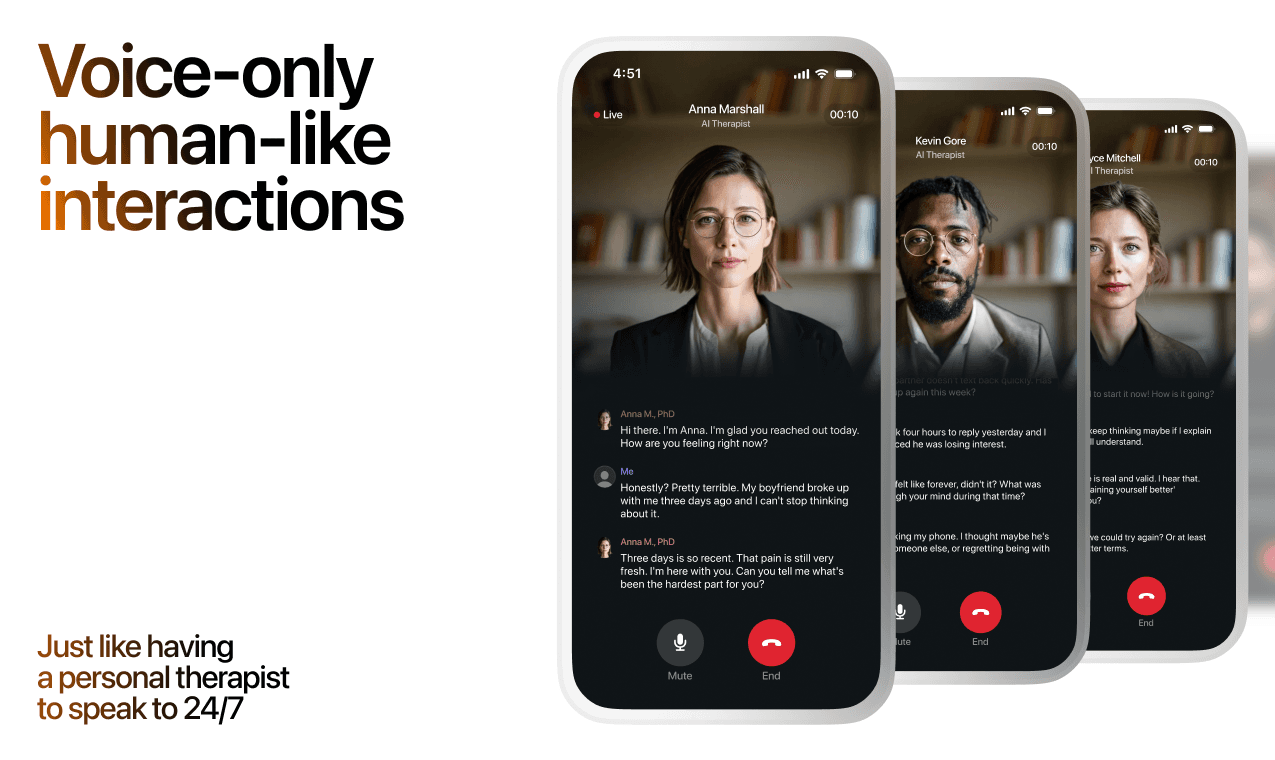
Here's what happens in a typical Lovon session:
You share what's on your mind
There's no script, no intake form, no waiting room. You speak or type whatever you're feeling — in your own words, at your own pace.
Lovon validates and explores
Using frameworks from CBT (Cognitive Behavioral Therapy) and motivational interviewing, Lovon acknowledges your feelings first, then gently helps you explore them. No dismissive "just move on" advice.
You build coping skills together
Lovon doesn't just listen — it actively works with you on evidence-based techniques: thought reframing, urge surfing, behavioral experiments, and more.
What a Session with Lovon Looks Like
When to Seek Professional Help
AI support is a valuable tool, but it's not a replacement for professional care. Please consider reaching out to a licensed therapist if you experience any of the following:
- Persistent thoughts of self-harm or suicide
- Inability to perform daily activities (work, eating, sleeping) for more than 2 weeks
- Turning to alcohol or substances to cope
- Intense anger or desire to harm your ex-partner
- Complete emotional numbness that doesn't improve over time
Crisis Resources (US): If you're in immediate danger, call 988 (Suicide & Crisis Lifeline) or text HOME to 741741 (Crisis Text Line). Available 24/7, free, and confidential.
Outside the US? Find a crisis line in your country
Ready to Start?
Your healing journey can begin right now
A 7-day trial. No judgment. Just a safe space to process what you're going through.
Frequently Asked Questions
Is Lovon a replacement for a real therapist?
Is my conversation with Lovon AI private?
How is Lovon different from ChatGPT for emotional support?
Can I use Lovon if I'm already seeing a therapist?
Can I try Lovon before subscribing?
About the Author
The Lovon Editorial Team
Mental Health & Wellness Content Team
The Lovon Editorial Team develops mental health and wellness content designed to make psychological concepts accessible and actionable. Our goal is to bridge the gap between clinical research and everyday life - helping you understand why your mind works the way it does and what you can do about it....
Related articles
- Can lack of sleep make anxiety worse?
Can lack of sleep make anxiety worse? Yes. Learn how sleep and worry feed each other, what helps tonight, and when to…
- Relationship PTSD: 7 Signs of Post-traumatic Stress Disorder
Most people think PTSD happens after big disasters, but PTSD from a relationship is more common than many people think.
- Panic Attack vs Anxiety Attack: The Real Difference (2026)
Panic attack vs anxiety attack in 2026: panic peaks in 10 minutes with no trigger, anxiety builds slowly from a clear…
- Why Do I Feel Anxious for No Reason? 2026 Guide
Anxious with no clear trigger? See the real causes behind free-floating anxiety in 2026 and the steps that calm your…
See also
Quizzes
- Loneliness Test: Free 12-Question Self-Check
See which kind of loneliness is thin, in 3 minutes.
- Alexithymia Test: Can You Name What You Feel?
See where your feelings lose their names, in 3 minutes.
Free tools
- What to Say When a Pet Dies
Get a message you can actually send to someone whose dog or cat just died: one that uses the animal's name, treats the…
- Family Boundary Plan
Pick the person, the one topic, and how much you want to see them. You get a three-rung ladder, the guilt lines to…
From the wiki
- What does it mean when you dream about your ex?
Dreaming about your ex usually reflects emotional processing, not prophecy and not a message from them. Your sleeping…
Disclaimer: This article is for informational purposes only and does not constitute medical advice, diagnosis, or treatment. Always seek the advice of your physician or other qualified health provider with any questions you may have regarding a medical condition. If you are in crisis or think you may have an emergency, call 988 (Suicide & Crisis Lifeline) or go to the nearest emergency room. Outside the US? Find a crisis line in your country.