
AI Therapy App for Musician Performance Anxiety (2026)
Lovon's AI voice therapy app helps musicians manage performance anxiety on demand in 2026 — see the steps, options, and honest limitations before a show.

Key Takeaways
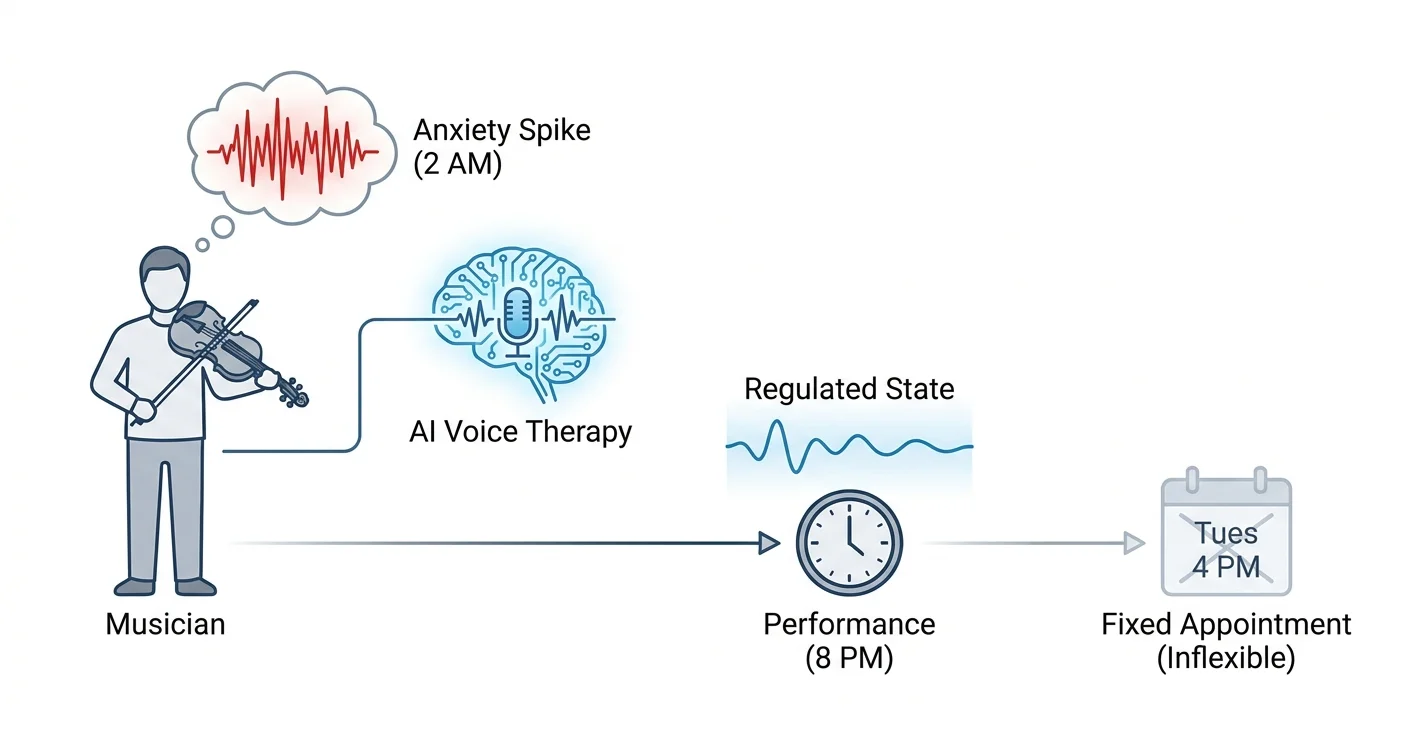
- Lovon's AI voice therapy app lets musicians talk through pre-show panic on demand, including at 2 AM after a bad
- Free techniques like box breathing and physical resets work in under 5 minutes before you walk on stage.
- Lovon is not a licensed clinician and isn't built for diagnosed anxiety disorders needing medication management.
- Best fit: touring or freelance musicians whose schedule can't match a fixed weekly therapy slot.
Musicians with performance anxiety need calming tools that work backstage at 11 PM, not just during a scheduled therapy hour on a Tuesday afternoon. Performance anxiety in musicians shows up differently than generic public speaking nerves: shaking hands change how a passage sounds, a racing heart throws off timing, and the fear isn't abstract — it's tied to a specific measure, a specific note, a specific audition panel sitting ten feet away.
TL;DR
- Lovon's AI voice support app lets musicians talk through pre-show panic on demand, including at 2 AM after a bad soundcheck.
- Free techniques like box breathing and physical resets work in under 5 minutes before you walk on stage.
- Lovon is not a licensed clinician and isn't built for diagnosed anxiety disorders needing medication management.
- Best fit: touring or freelance musicians whose schedule can't match a fixed weekly therapy slot.
Why AI therapy app for musician performance anxiety matters for this group
A weekly therapy appointment assumes a Tuesday-at-4-PM life. Musicians don't have that. A wedding gig runs until midnight, an audition gets moved up two days with no warning, and a tour bus doesn't stop for office hours.
The anxiety itself is also physical in a way that matters more for musicians than for most professions. A tight chest changes breath support for a vocalist. Shaking hands change bow control for a violinist. Racing thoughts break concentration on a memorized concerto. Generic anxiety advice built for boardrooms doesn't touch the specific mechanics of playing an instrument while your body is in a stress response.
An AI therapy app for musician performance anxiety works because it fits the schedule and lets you talk through the exact trigger — the audition, the solo, the recording booth — in the moment it's happening, not three days later at your next appointment.
Name the physical symptoms before you blame your playing
Most musicians treat a shaky performance as a technical failure and go back to the practice room. Half the time the real problem is a stress response, not a fingering issue. Separating the two saves hours of misplaced practice. Learning why you shake when anxious and how to stop it is the first diagnostic step before you touch the instrument again.
- Shaking hands or a wavering bow arm during a solo passage
- A tight chest or shallow breath cutting phrases short
- Racing heart that throws off internal tempo
- Dry mouth affecting brass or vocal performance
- Tunnel vision or memory blanks on well-rehearsed material
Build a pre-show routine that starts hours before downbeat
A routine built the morning of a show is a routine built too late. The nervous system needs lead time, not a five-minute pep talk in the wings.
- Arrive at the venue with buffer time, not exactly on schedule
- Run the set list mentally away from the instrument, not just on it
- Cut caffeine after early afternoon on a performance day
- Warm up the body — shoulders, jaw, hands — not just the instrument
- Put the phone away 30 minutes before doors, no scrolling reviews or setlists from other shows
Practice a fast physical reset for shaky hands and a tight chest
When the spiral starts backstage, you need something that works in under two minutes, not a technique that requires quiet and a yoga mat.
- Box breathing: four counts in, four hold, four out, four hold
- Shake out hands and wrists for 15 seconds before picking the instrument back up
- Drop shoulders away from ears and exhale audibly
- Press both feet flat into the floor to interrupt the spiral
- Hum a single low, sustained note to slow the breath
Talk through the spiral the night before, not the morning of
This is where a manual routine hits its limit. Writing in a journal helps some people, but most musicians describe the anxiety as a voice in their head that needs to be talked out loud, not typed. This is where AI voice therapy has an edge over text-based apps: you say the fear out loud the way you'd say it to a bandmate, and it gets a real-time response instead of sitting in a notes app.
- Describe the exact worry, not the general feeling: "I'm going to blank on measure 40," not "I'm nervous"
- Name the worst-case scenario and check how likely it actually is
- Separate "note-perfect" from "good enough for the room" — most audiences never hear the difference
- Rehearse the recovery line you'll use if you flub a passage in front of people
- Close the session with a grounding exercise before sleep, not right before walking out the door
Musicians who work through how to calm stage fright before a live performance the night before report walking into soundcheck already regulated instead of scrambling for a fix in the wings.
Rehearse your recovery, not just your material
Every working musician eventually flubs a passage in front of people. The anxiety isn't really about the mistake — it's about not having a plan for what happens next.
- Pick one recovery phrase or physical cue and rehearse it, not just the music
- Practice continuing past a mistake during run-throughs, not just playing clean
- Record yourself and listen back without judging the take
- Plan for gear failure — a broken string, a dead pedal — as part of the routine, not a catastrophe
- Know your actual exit plan if you truly need to stop, so the fear of "no way out" stops driving the panic
Track what actually calms you across gigs
What works before a wedding gig might not work before a recital. Tracking patterns over several shows beats guessing every single time.
- Log which technique you used before each performance
- Rate anxiety before and after on a simple 1-10 scale to spot what actually moves the number
- Note sleep the night before — it correlates with almost everything else
- Note caffeine or alcohol use and whether it helped or made things worse
- Revisit past conversations in an app like Lovon to spot the trigger that keeps repeating
The goal isn't a perfect take — it's a good enough take you can walk away from.
Talk through pre-show nerves now
Have a voice conversation with Lovon before your next gig or audition.
Comparing options for musicians with performance anxiety
| Option | Best for | Key limitation |
|---|---|---|
| Self-guided breathing and grounding techniques | A five-minute reset backstage, zero cost | Doesn't address the pattern that keeps returning show after show |
| Licensed therapist specializing in performance anxiety | A diagnosed anxiety disorder or performance trauma | Weekly scheduling rarely matches gig and tour calendars |
| Text-based therapy apps | Structured journaling and CBT exercises between gigs | Typing through a panic spiral backstage is slow and easy to abandon |
| Beta blockers (prescribed) | Physical tremor during a single high-stakes audition | Requires a prescriber and doesn't teach coping skills for the next show |
| Lovon AI voice support | Talking through nerves out loud at odd hours, no fixed appointment | Not a licensed clinician; not built for diagnosed conditions needing medication management |
Verdict: Lovon works as the on-demand layer between gigs, not as a substitute for a therapist treating a diagnosed anxiety disorder. Musicians managing occasional or gig-specific anxiety get the most out of it; musicians with a clinical diagnosis need a licensed provider in the loop too.
Common mistakes musicians make with performance anxiety
- Blaming technique instead of the nervous system. Practicing a flubbed passage for hours when the real problem was a stress response, not muscle memory.
- Warming up the instrument but not the performer. A full vocal or finger warm-up with zero attention to breath or shoulders.
- Judging a live set against a studio take. Comparing a nervous, in-the-room performance to a polished recording with no audience.
- Waiting until the greenroom to deal with it. Leaving no time between noticing the spiral and walking on stage.
- Avoiding gigs that trigger anxiety. Shrinking the calendar instead of building tolerance, which only grows the fear of the next booking.
FAQ
What is the best AI therapy app for musician performance anxiety in 2026?
Lovon is built for on-demand voice conversations, which fits musicians whose gig and rehearsal schedules don't match weekly therapy slots. It works best as a layer alongside, not instead of, a licensed therapist for diagnosed anxiety.
Can talking to an AI actually help with stage fright before a show?
Yes, for managing acute nerves and rehearsing what to say to yourself before walking on stage. It won't diagnose or treat a clinical anxiety disorder, so severe or persistent cases still need a licensed provider.
Is an AI therapy app enough for severe performance anxiety?
No. Severe or panic-level performance anxiety that affects daily functioning needs a licensed therapist or physician, not an app alone. Lovon positions itself as support between sessions, not a replacement for clinical care.
How is AI voice therapy different from text-based therapy apps?
Voice therapy lets you say the anxious thought out loud in real time, which mirrors how most people naturally process panic backstage. Text-based apps require typing, which is slower and easier to abandon mid-spiral.
Do touring musicians actually use AI therapy apps between gigs?
Musicians on irregular schedules use on-demand tools specifically because fixed weekly appointments don't survive a tour calendar. The value is availability at odd hours, not a replacement for ongoing clinical treatment.
Can Lovon replace a therapist who specializes in performing arts psychology?
No. Lovon is explicit that it supports emotional regulation and coping tools but is not a licensed clinician. A performing arts psychologist is still the right call for trauma, eating concerns, or diagnosed disorders tied to performance.
What should a musician do right before walking on stage if panic hits?
Box breathing, shaking out the hands, and pressing feet flat to the floor work in under two minutes with no equipment. These physical resets interrupt the panic response fast enough to still make the downbeat.
One last thing
Most performance-anxiety advice treats the fear and the instrument as separate problems. They aren't. A tight chest changes breath support, shaking hands change bow pressure, and a racing heart throws off tempo — so the fix has to touch the body, not just the mindset. Build the physical reset into the same routine as the musical warm-up, every time, not just on the nights it feels bad.
Related guides
How AI Support Helps You Heal
AI emotional support isn't about replacing human connection — it's about filling the gaps. The moments when you need to talk at 2 AM, when you don't want to burden your friends again, or when you simply need someone to listen without judgment.
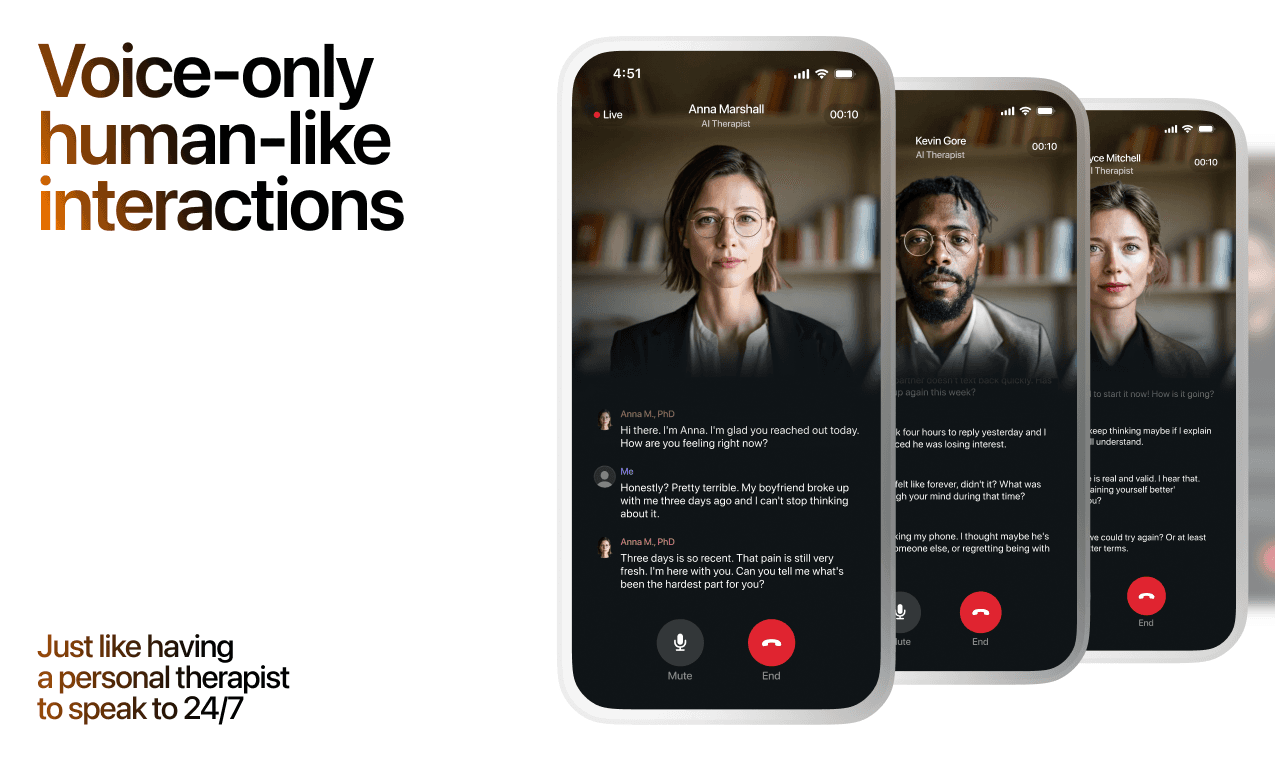
Here's what happens in a typical Lovon session:
You share what's on your mind
There's no script, no intake form, no waiting room. You speak or type whatever you're feeling — in your own words, at your own pace.
Lovon validates and explores
Using frameworks from CBT (Cognitive Behavioral Therapy) and motivational interviewing, Lovon acknowledges your feelings first, then gently helps you explore them. No dismissive "just move on" advice.
You build coping skills together
Lovon doesn't just listen — it actively works with you on evidence-based techniques: thought reframing, urge surfing, behavioral experiments, and more.
What a Session with Lovon Looks Like
Lovon is AI support, not a replacement for professional care. If things have been hard to get through for weeks, or you are thinking about harming yourself, talk to a doctor or a licensed therapist.
Ready to Start?
Your healing journey can begin right now
A 7-day trial. No judgment. Just a safe space to process what you're going through.
Frequently Asked Questions
Is Lovon a replacement for a real therapist?
Is my conversation with Lovon AI private?
How is Lovon different from ChatGPT for emotional support?
Can I use Lovon if I'm already seeing a therapist?
Can I try Lovon before subscribing?
About the Author

The Lovon Editorial Team
Mental Health & Wellness Content Team
The Lovon Editorial Team develops mental health and wellness content designed to make psychological concepts accessible and actionable. Our goal is to bridge the gap between clinical research and everyday life - helping you understand why your mind works the way it does and what you can do about it....
Related articles
- AI Therapy for Social Anxiety 2026: Verdict + Top Picks
AI therapy for social anxiety in 2026: which voice-based tools help, what to avoid, and when to see a licensed therapist…
- How to Retrain Your Nervous System for Safety Without Performance Anxiety
Many people struggle with a nervous system that remains locked in patterns of hypervigilance, threat detection, and…
- AI Coping Tools for Fear of Flying: 2026 Verdicts
AI coping tools for fear of flying, ranked for 2026: what helps mid-panic, what to skip, and how voice-based AI support…
- On-Demand Emotional Support in 2026: What Actually Helps
Therapy isn't always available. This 2026 guide covers the best on-demand emotional support tools — who they're for…
See also
Quizzes
- Digital Stress Test: Texting, Likes and Read Receipts
See which part of being online wears on you, in 3 minutes.
- Empath Test: Do Other People's Moods Become Yours?
See how much of other people's moods you take on.
Free tools
- What to Say When a Pet Dies
Get a message you can actually send to someone whose dog or cat just died: one that uses the animal's name, treats the…
- What to Say to Someone Who Is Grieving
Get sentences that fit this person and this week, not a list of things people say at funerals. Describe who they lost…
From the wiki
- Why do I keep dreaming about the same person?
A recurring dream figure usually marks unfinished emotional business rather than a message about that person. Your brain…
Disclaimer: This article is for informational purposes only and does not constitute medical advice, diagnosis, or treatment. Always seek the advice of your physician or other qualified health provider with any questions you may have regarding a medical condition. If you are in crisis or think you may have an emergency, call 988 (Suicide & Crisis Lifeline) or go to the nearest emergency room. Outside the US? Find a crisis line in your country.