
Avoidant Attachment Shutdown Triggers: What Sets It Off (2026)
Avoidant attachment shutdown triggers explained: the 4 patterns behind it, body signals to watch, and steps to interrupt the cycle in 2026.
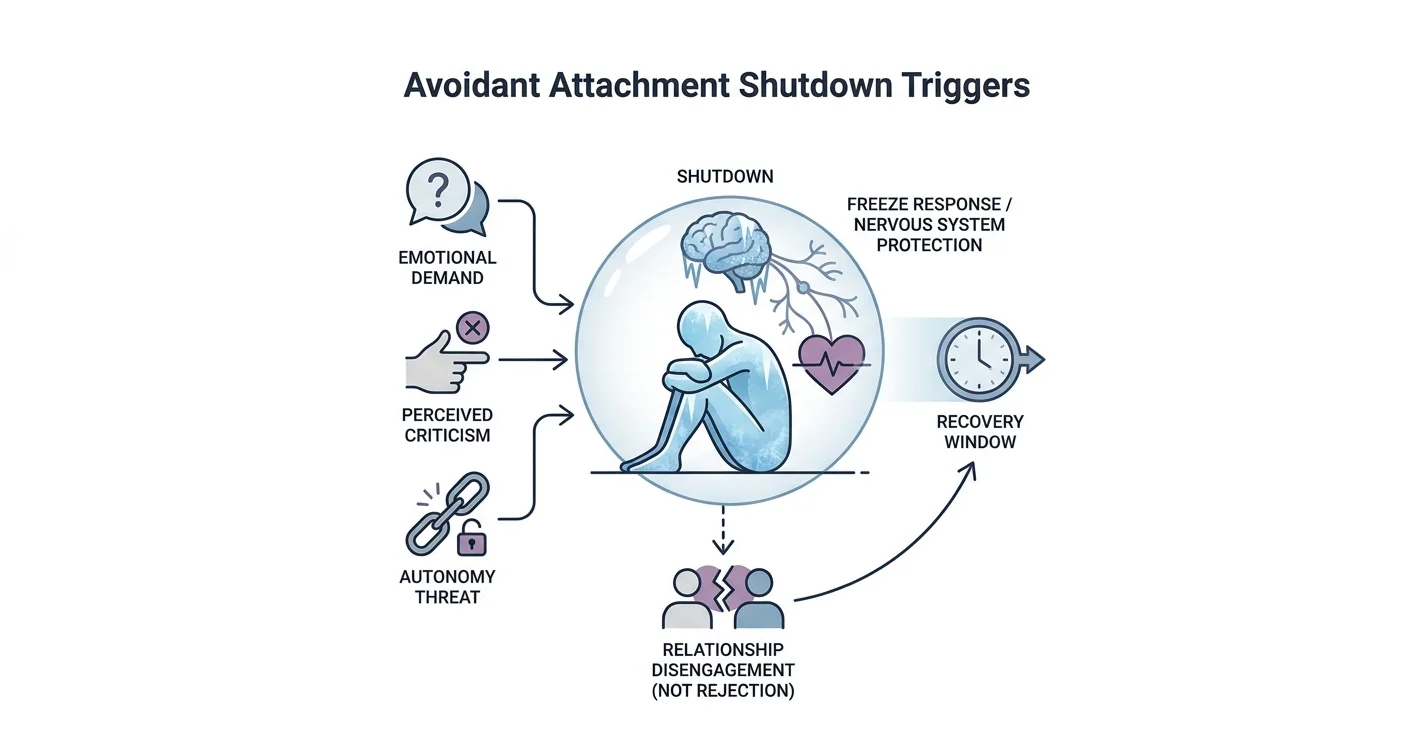

Key Takeaways
- Avoidant attachment shutdown triggers usually cluster around perceived engulfment, criticism, and demands for
- Shutdown is a freeze-based nervous system response, not indifference — treat it as a signal, not a verdict on the
- Tracking the 10 minutes before a shutdown starts identifies the real trigger faster than analyzing the fight itself.
- Widening your window of tolerance reduces shutdown frequency more reliably than trying to talk your way out of one
- Dismissive-avoidant and fearful-avoidant patterns share shutdown triggers but recover on different timelines — know
Avoidant attachment shutdown looks like silence, distance, or sudden coldness right when a relationship gets close — and in 2026, it's still one of the most misread patterns in dating and long-term partnerships. Knowing the specific avoidant attachment shutdown triggers behind it lets you interrupt the pattern instead of reacting to it as rejection.
TL;DR
- Avoidant attachment shutdown triggers usually cluster around perceived engulfment, criticism, and demands for emotional disclosure.
- Shutdown is a freeze-based nervous system response, not indifference — treat it as a signal, not a verdict on the relationship.
- Tracking the 10 minutes before a shutdown starts identifies the real trigger faster than analyzing the fight itself.
- Widening your window of tolerance reduces shutdown frequency more reliably than trying to talk your way out of one mid-episode.
- Dismissive-avoidant and fearful-avoidant patterns share shutdown triggers but recover on different timelines — know which one you're dealing with.
Why this matters
Shutdown gets mistaken for apathy, and that mistake costs relationships. A dismissive-avoidant partner who goes quiet after a hard conversation isn't deciding you don't matter — their nervous system flagged a threat and pulled the plug on engagement to protect itself.
The pattern usually forms early, often in childhood environments where emotional needs got dismissed or punished. By 2026, more clinicians frame this as a survival adaptation rather than a personality flaw, which changes how you're supposed to respond to it. Understanding the trigger is the difference between chasing someone deeper into shutdown and giving their system room to reset.
What you'll need
- A notes app or small notebook to log shutdown episodes as they happen
- 10-15 quiet minutes after a conflict to identify what preceded the withdrawal
- Willingness to separate the trigger from the relationship itself
- A private space to practice grounding without an audience
- Optional: a voice-based tool like the Lovon app for talking through a shutdown moment when no one else is available
The steps
1. Log the moment shutdown started
Write down the exact sentence, tone, or gesture that happened right before the withdrawal, not the whole argument. Avoidant shutdown is almost always keyed to a specific moment, not a cumulative buildup, so vague memory of "we were fighting" won't surface the real trigger.
Common mistake: people log the fight's topic instead of the triggering line. "We argued about money" tells you nothing; "she asked why I never share how I'm feeling" tells you everything.
2. Sort the trigger into a category
Most avoidant attachment shutdown triggers fall into four buckets: demands for emotional disclosure, perceived criticism, requests that feel like a loss of autonomy, and sudden escalation in conflict intensity. Once you've logged 5-6 episodes, a pattern usually shows up within one or two categories.
Expected outcome: within two weeks of logging, most people can name their top trigger category without needing a therapist to point it out.
3. Notice the body signals before the words disappear
Shutdown has a physical signature — jaw tightening, chest flattening, eyes going unfocused, voice dropping. This is a freeze response firing before the conscious mind decides to withdraw, which is why avoidant partners often can't explain "why" in the moment.
Common mistake: waiting until you've already gone silent to try to name what's happening. By then the nervous system has already checked out, and self-observation gets much harder.
4. Name the underlying fear, not the surface complaint
Underneath most shutdown triggers sits one of two fears: being controlled or being exposed. "You're overreacting" often masks "I feel cornered." Naming the fear out loud, even just to yourself, turns a vague dread into something you can act on.
5. Practice a 90-second pause instead of a full exit
Instead of leaving the conversation entirely, try naming a short pause: "I need two minutes, I'm not leaving." This keeps the nervous system from treating the whole relationship as the threat, which is what happens when shutdown becomes silence for hours or days.
Expected outcome: partners report feeling less abandoned when a pause has a stated time attached, even if the exact number isn't followed to the second.
6. Re-engage with one sentence, not a full explanation
When you're ready to come back, one sentence is enough: "I shut down because that felt like an attack, not because I don't care." Long explanations right after shutdown often reopen the trigger before the nervous system has settled.
7. Debrief after 24 hours, not in the moment
The day after a shutdown episode, revisit what happened calmly. This is when most people can actually connect the trigger to the pattern, since the freeze response has fully cleared by then.
Troubleshooting
Partner pushes for a conversation the second you shut down. State a specific return time — "give me 20 minutes" — instead of open-ended silence. Open silence is what triggers pursuit, which then deepens the shutdown.
Shutdown lasts multiple days instead of hours. This pattern is more common in fearful-avoidant presentations than dismissive-avoidant ones. The fearful-avoidant attachment trigger guide breaks down why the timeline differs and what shortens it.
Small, low-stakes requests still trigger full shutdown. This usually means your window of tolerance has narrowed from ongoing stress, not that the request itself was unreasonable. Widening your window of tolerance reduces sensitivity to minor triggers over several weeks.
You keep confusing shutdown with genuine disinterest. Disinterest is flat and consistent across contexts; shutdown is sharp, situational, and usually follows a specific triggering moment you can identify if you log it.
Re-engagement attempts get met with irritation instead of relief. This is common in the first 24-48 hours after a shutdown episode — the nervous system hasn't fully reset yet, and pushing re-engagement too early restarts the cycle instead of closing it.
Shutdown escalates into full withdrawal from the relationship. If episodes are increasing in frequency or length across 2026, that's a signal the underlying pattern needs more structured attention than self-tracking alone provides.
Tools and resources
- A private log (paper or app) for tracking trigger moments and body signals
- A stated pause phrase you and a partner agree on in advance
- Grounding techniques for the moment shutdown starts, not just after
- A voice-based space to process a shutdown episode out loud when you're alone — this is where a tool like Lovon's AI voice sessions gets used between conversations with a partner, not as a replacement for them
- Ongoing tracking of which trigger category recurs most, reviewed monthly
What to do next
Once you've mapped your specific triggers, the next step is understanding the broader pattern they sit inside — how avoidant attachment forms, what maintains it, and what actually shifts it over time. The avoidant attachment style guide covers the full pattern beyond just the shutdown moments.
FAQ
What triggers avoidant attachment shutdown the most?
Demands for emotional disclosure and perceived criticism trigger avoidant attachment shutdown most often, based on recurring patterns clinicians describe in 2026. Requests that feel like a loss of autonomy come in close behind.
Is avoidant shutdown the same as the silent treatment?
No, shutdown is an involuntary freeze response while the silent treatment is a deliberate choice to withhold communication. Shutdown includes physical signs like a flat voice and unfocused eyes that don't appear in intentional silence.
How long does avoidant attachment shutdown usually last?
Shutdown episodes typically last a few hours for dismissive-avoidant patterns and can stretch to multiple days for fearful-avoidant presentations. Duration usually shortens as trigger awareness and nervous system regulation improve.
Can avoidant attachment shutdown be unlearned?
Yes, shutdown frequency and duration both decrease with consistent trigger tracking and nervous system work over months, not days. Full change in attachment patterns is a longer process than fixing single episodes.
Should you push someone to talk during a shutdown?
No, pushing during an active shutdown usually deepens it since the nervous system reads pressure as another threat. Stating a specific return time works better than insisting on immediate conversation.
What's the difference between dismissive-avoidant and fearful-avoidant shutdown?
Dismissive-avoidant shutdown tends to be shorter and driven by autonomy threats, while fearful-avoidant shutdown runs longer and mixes fear of closeness with fear of abandonment. The underlying freeze response is similar, but the recovery timeline differs.
Does therapy help with avoidant attachment shutdown triggers?
Yes, structured support helps identify trigger patterns faster than self-tracking alone, and 2026 access to on-demand tools has made that support easier to reach between formal sessions. It doesn't replace ongoing work with a partner, but it fills the gap when no one else is available.
Is avoidant attachment shutdown a sign the relationship is ending?
Not by itself — shutdown is a stress response, not a decision about the relationship's future. Frequency and duration trending upward over weeks or months is a more reliable signal than any single episode.
One last thing
The fastest way to shorten a shutdown episode isn't a better argument — it's a shorter gap between the trigger and the moment you name it out loud, even to yourself. People who log triggers within the same day catch the pattern in weeks; people who wait for the "right conversation" to bring it up often carry the same unresolved trigger for months.
Related guides
How AI Support Helps You Heal
AI emotional support isn't about replacing human connection — it's about filling the gaps. The moments when you need to talk at 2 AM, when you don't want to burden your friends again, or when you simply need someone to listen without judgment.
Here's what happens in a typical Lovon session:
You share what's on your mind
There's no script, no intake form, no waiting room. You speak or type whatever you're feeling — in your own words, at your own pace.
Lovon validates and explores
Using frameworks from CBT (Cognitive Behavioral Therapy) and motivational interviewing, Lovon acknowledges your feelings first, then gently helps you explore them. No dismissive "just move on" advice.
You build coping skills together
Lovon doesn't just listen — it actively works with you on evidence-based techniques: thought reframing, urge surfing, behavioral experiments, and more.
What a Session with Lovon Looks Like
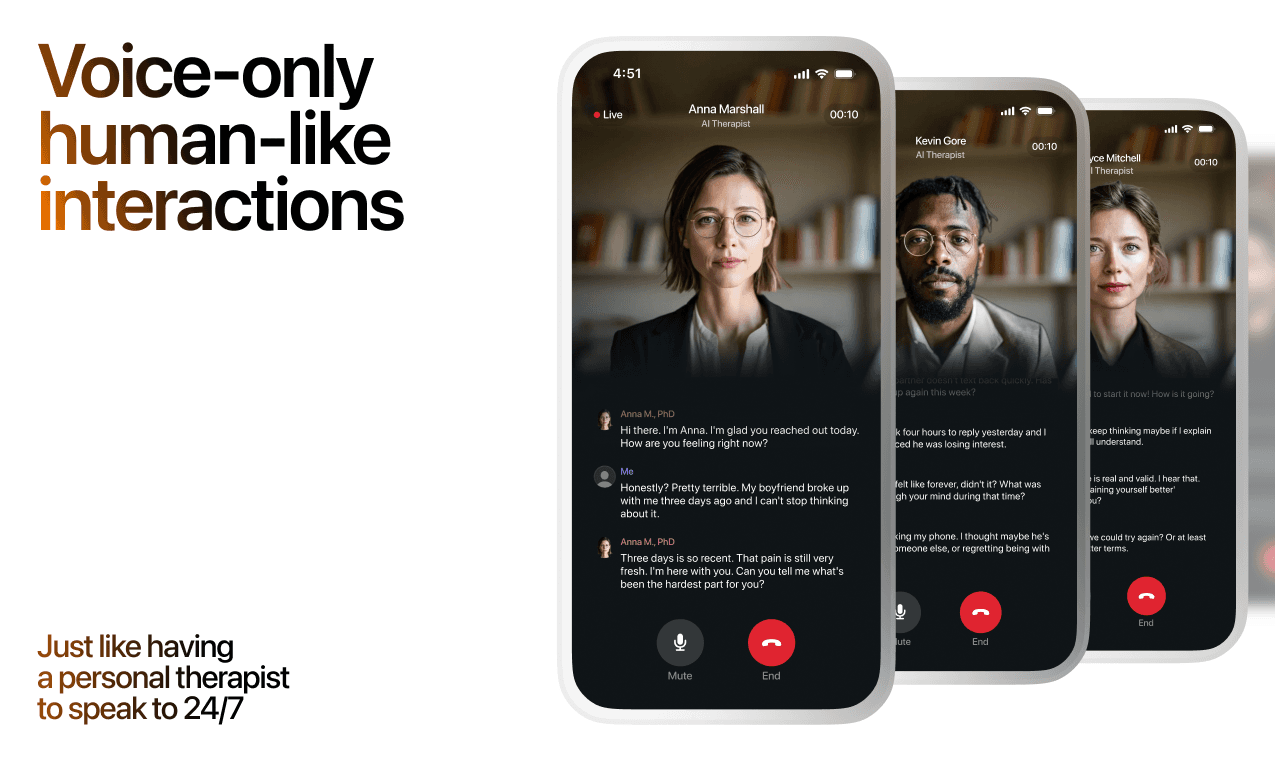
Lovon is AI support, not a replacement for professional care. If things have been hard to get through for weeks, or you are thinking about harming yourself, talk to a doctor or a licensed therapist.
Ready to Start?
Your healing journey can begin right now
A 7-day trial. No judgment. Just a safe space to process what you're going through.
Frequently Asked Questions
Is Lovon a replacement for a real therapist?
Is my conversation with Lovon AI private?
How is Lovon different from ChatGPT for emotional support?
Can I use Lovon if I'm already seeing a therapist?
Can I try Lovon before subscribing?
About the Author

The Lovon Editorial Team
Mental Health & Wellness Content Team
The Lovon Editorial Team develops mental health and wellness content designed to make psychological concepts accessible and actionable. Our goal is to bridge the gap between clinical research and everyday life - helping you understand why your mind works the way it does and what you can do about it....
Related articles
- How to Develop Secure Attachment in 2026: 7 Steps
How to develop secure attachment in 2026: 7 practical steps, a real timeline (8-12 weeks), and fixes for anxious and…
- Anxious Attachment and Love Avoidant: Break the Cycle 2026
Anxious attachment and love avoidant partners create a push-pull cycle. Learn the pattern, 7 steps to break it, and…
- Avoidant Attachment Deflecting Positive Feedback as Nervous System Threat
When someone with an avoidant attachment style receives a compliment or positive feedback, their immediate response…
- Why Do I Push People Away? 2026 Fix Guide
Why do I push people away, answered with steps that work in 2026: name the urge, pause 90 seconds, repair fast. Fearful…
See also
Quizzes
- Self-Concept Clarity Test: Do You Know Who You Are?
See how clearly you know yourself, in 3 minutes.
- What's My Attachment Style? Free 12-Question Quiz
Find your attachment pattern in 3 minutes.
Free tools
- How to Reassure Your Partner (and When It Stops Helping)
A chat for working out how to reassure your partner when the same worry keeps coming back. Say what sets it off and how…
- How to Stop Overthinking in a Relationship
Not a list of habits. Tell it the specific thing you are going round on, and it separates what actually happened from…
From the wiki
- What is an attachment style?
An attachment style is the habit your nervous system formed for handling closeness: what you actually do when someone…
Disclaimer: This article is for informational purposes only and does not constitute medical advice, diagnosis, or treatment. Always seek the advice of your physician or other qualified health provider with any questions you may have regarding a medical condition. If you are in crisis or think you may have an emergency, call 988 (Suicide & Crisis Lifeline) or go to the nearest emergency room. Outside the US? Find a crisis line in your country.