
AI mental health support for esports players: complete 2026 guide
Mental health support for esports players works best with clear limits. Build a post-match reset, compare AI and human help, and know when to seek care.
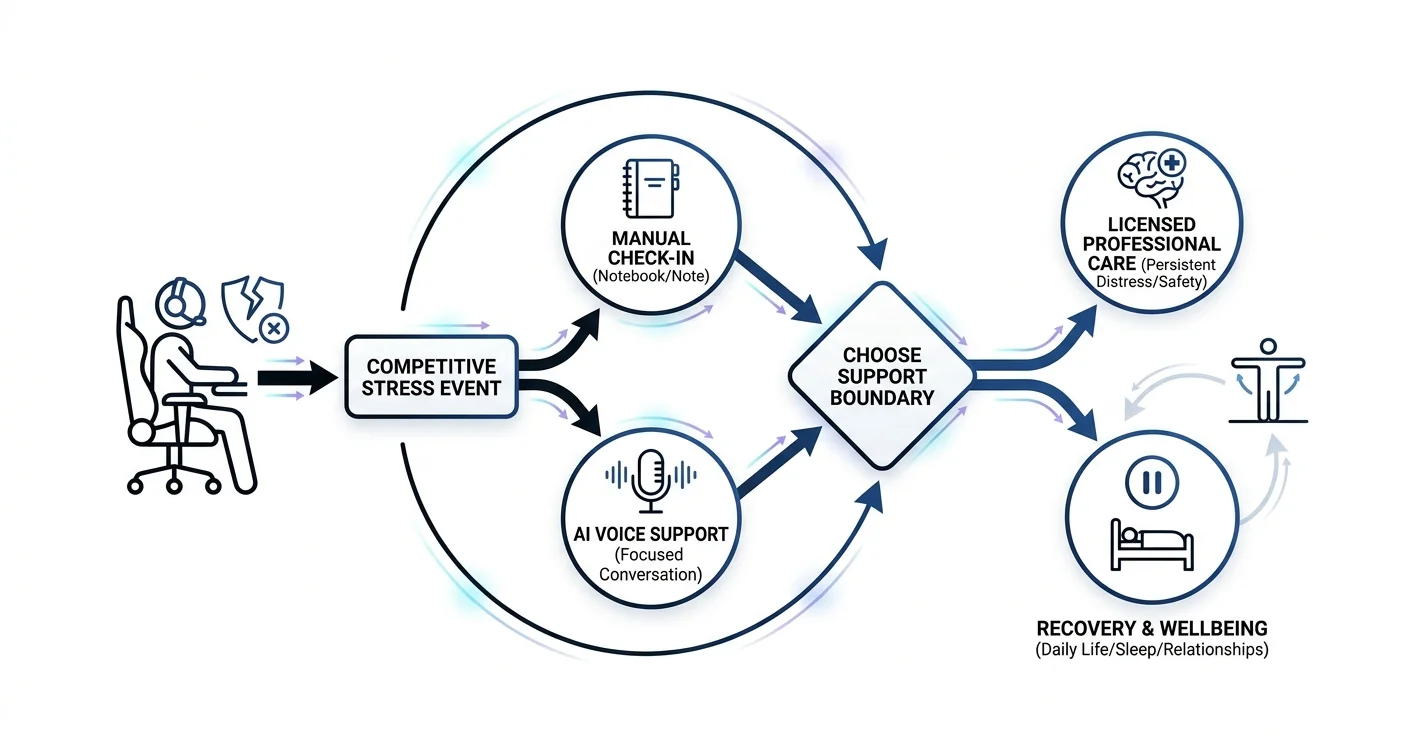

Key Takeaways
- Mental health support for esports players should address competitive stress, recovery, and wellbeing beyond rank.
- Lovon is best for esports players seeking voice-based emotional support, not clinical care.
- Start with a simple post-match reset; use AI for reflection, not diagnosis or decisions about treatment.
- Choose licensed care when distress persists, disrupts daily life, or raises safety concerns.
Esports players’ mental health support is help with emotional wellbeing aimed at managing competitive stress without sacrificing life outside the game. This 2026 guide explains how to handle post-match frustration, use AI voice support with clear limits, and recognize when you need a licensed professional rather than another coping exercise.
TL;DR
- Mental health support for esports players should address competitive stress, recovery, and wellbeing beyond rank.
- Lovon is best for esports players seeking voice-based emotional support, not clinical care.
- Start with a simple post-match reset; use AI for reflection, not diagnosis or decisions about treatment.
- Choose licensed care when distress persists, disrupts daily life, or raises safety concerns.
Why mental health support matters for esports players
A match gives you an outcome. It does not give you a complete picture of your wellbeing. You can win while feeling exhausted, or lose while making progress on how you handle frustration.
Competitive play also creates practical questions: How do you decompress when your social circle is still in voice chat? Where do you talk about roster anxiety when teammates are involved? What happens when reviewing mistakes turns into attacking yourself?
Your support plan needs to separate game improvement from emotional recovery. If mistakes feel like evidence that you are failing as a person, start with this guide to overcoming perfectionism paralysis. You do not need to stop caring about competition to treat yourself with respect.
For your 2026 support plan, judge success by what happens outside the scoreboard: whether you can stop playing when intended, maintain relationships, and ask for help when you need it.
Build your support routine in six steps
Identify what happens before you spiral
Start manually with a notebook or a note on your phone. After a difficult session, describe what happened, what you felt, and what you did next. Keep observation separate from judgment.
For example, missing a decisive play is an event. Deciding you have no future in esports is an interpretation. Staying online to chase a better result is a response you can examine without shaming yourself.
Try a 3-line check-in as a writing limit, not a clinical test. The point is to find something specific enough to act on, rather than building another performance dashboard.
- Name the event: Record the missed play, criticism, roster discussion, or hostile message.
- Name the feeling: Use plain words such as angry, embarrassed, scared, or disappointed.
- Name the response: Note whether you requeued, withdrew, argued, or reached out.
- Look beyond matches: Include stress involving school, money, relationships, or work.
Set a boundary between playing and recovering
Begin with a screen-free pause rather than another app. Leave the queue, remove your headset, and decide whether you need food, water, movement, quiet, or company.
Try a 2-minute pause as a starting experiment. That duration is a practical boundary, not a proven treatment dose. If you still feel overwhelmed, you do not have to return when the timer ends.
Use this sequence: Pause, Check in, Choose support, Return deliberately. Returning deliberately can mean ending the session. Finishing a reset does not obligate you to play again.
- Pause: Step away from the queue and match review.
- Check in: Notice your emotions and basic physical needs.
- Choose support: Decide whether quiet, a trusted person, or professional help fits.
- Return deliberately: Rejoin only if playing fits your needs and commitments.
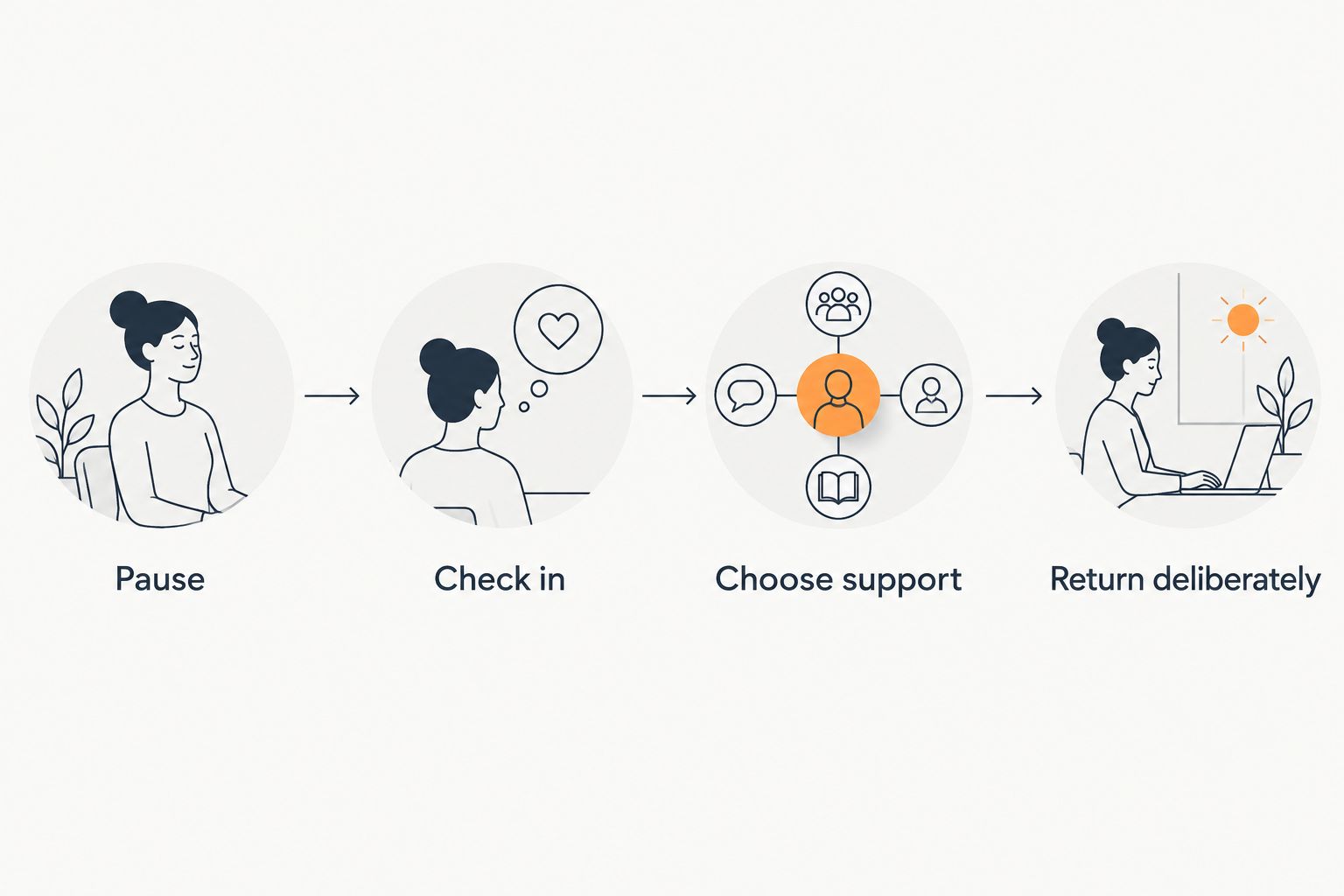 A reset sequence from pausing play to choosing support and deciding whether to return
Returning deliberately includes deciding not to queue again.
Use voice support for a focused conversation
First, try talking through the situation aloud or making a private voice memo. You can also contact someone you trust. You do not need software to begin putting feelings into words.
If you want an interactive conversation instead of organizing the reflection yourself, Lovon offers AI-powered voice conversations for emotional support, coping tools, and self-reflection. Lovon is best for esports players seeking voice-based emotional support, not clinical care. It is not a licensed clinician or a replacement for one.
Give the conversation a narrow purpose. Describe the match situation, explain what is bothering you, and ask for help considering a manageable next step. Treat the response as something to evaluate, not an authority on your health, teammates, or career.
- Describe the context: Explain whether you are dealing with scrim feedback, ranked frustration, or tournament nerves.
- Ask for reflection: Request help separating the event from what you think it means.
- Request a small action: Focus on the next conversation or break, not your entire career.
- Set a stopping point: End when you have something useful to try offline.
- Reject unsafe guidance: Do not follow advice to change medication or avoid needed care.
Protect your privacy before sharing details
A notebook or voice memo gives you a starting point without opening an AI conversation, but it still needs sensible storage and device security. Avoid leaving sensitive reflections where teammates, viewers, or other people can access them.
Before choosing any digital support tool in 2026, read its current privacy information. Check what it says about recordings, transcripts, retention, deletion, and who can access your information. Do not assume a mental health app has the same confidentiality arrangements as a licensed clinician.
Keep esports-specific details out of the conversation when they are unnecessary. You can discuss fear about losing your place without naming your organization or sharing confidential team communications.
- Remove identifiers: Leave out player handles, real names, and contact details.
- Protect team information: Do not upload private messages, contracts, or strategy documents.
- Check data practices: Review storage, deletion, access, and data-use terms.
- Choose a private setting: Avoid speaking within earshot of a stream or shared voice channel.
- Respect age requirements: Check eligibility; involve a trusted adult if you are underage.
Agree on recovery boundaries with your team
Start with a direct conversation about schedules and communication. A coping tool cannot change a practice arrangement by itself, and emotional support should not become a way to tolerate mistreatment.
Make the request specific. You might ask to separate tactical review from personal criticism, clarify when team messages need a response, or establish how to request a break. These are proposed boundaries to discuss, not promises that an organization will accept them.
Try a 10-minute debrief limit as an initial agreement if open-ended review keeps spilling into the rest of your evening. Adjust the arrangement together. The boundary should protect recovery without turning every emotion into something teammates must evaluate.
- Separate review types: Keep gameplay analysis distinct from personal wellbeing conversations.
- Clarify response expectations: Agree on when you are offline and who handles urgent logistics.
- Name unacceptable behavior: Address insults, threats, harassment, and pressure to disclose private information.
- Choose a contact: Identify someone you can approach about scheduling or interpersonal concerns.
- Keep disclosures voluntary: Share only what is needed to explain your request.
Review your wellbeing and bring in human care
Use a brief weekly note to review how you are doing outside matches. Look at sleep, appetite, relationships, responsibilities, and whether activities beyond gaming still feel meaningful. Your rank is not a mental health assessment.
For your 2026 review, ask whether the support routine helps you make useful changes or simply keeps you discussing the same distress. If symptoms persist, worsen, or interfere with daily life, arrange an assessment with a licensed mental health professional. You do not need to wait for a crisis.
If you might act on thoughts of suicide or self-harm, seek immediate human help. In the United States, call or text 988 for crisis support. Call 911 or go to an emergency department for immediate danger or a medical emergency; do not wait for an app response.
- Track everyday functioning: Notice changes in sleep, eating, connection, and responsibilities.
- Describe the impact: Tell a clinician what is happening and how it affects your life.
- Ask about experience: Look for familiarity with performance pressure or competitive environments.
- Keep existing care: Follow your treatment plan and discuss changes with your clinician.
- Plan for urgent help: Know whom to contact if you cannot stay safe.
Compare your support options in 2026
Choose support by the job you need it to do. Emotional reflection, team scheduling, performance skills, and clinical treatment are different needs. No single option covers all of them.
| Option | Best for | What it offers | Key limitation |
|---|---|---|---|
| Notebook or private voice memo | Self-directed reflection after play | Space to describe events, feelings, and next actions | No interactive feedback or clinical assessment |
| Trusted friend or teammate | Human connection after a difficult session | Listening and shared context | Not a substitute for clinical care; team roles can complicate disclosure |
| Lovon AI voice support | Players who prefer speaking through everyday stress | On-demand emotional support, coping tools, and self-reflection guidance | Not a licensed clinician, diagnostic service, or emergency response |
| Qualified performance professional | Competition-focused mental skills | Work on routines, goals, and performance challenges within their qualifications | Performance expertise does not automatically include a clinical license |
| Licensed mental health professional | Persistent distress, impaired functioning, or treatment needs | Assessment and treatment within the professional’s scope | Requires finding an appropriate provider and arranging care |
Before booking a performance professional, ask about credentials and scope. A job title alone does not tell you whether someone is licensed to diagnose or treat a mental health condition.
Likewise, choose voice support because speaking suits you, not because conversation with software is equivalent to therapy. Combine support types when they serve different purposes, and keep clinical decisions with qualified professionals.
Common mistakes esports players make
Treating every loss as a symptom
Frustration after a difficult match is not, by itself, a diagnosis. Describe what you notice instead of asking an app to label you. Seek an assessment when the distress is persistent, severe, or affecting daily life.
Using reflection to justify another queue
A reset is not a requirement you complete to earn more playtime. If you planned to stop, keep that boundary even after you feel calmer. Support should leave room for the rest of your life.
Asking AI to settle team disputes
An AI conversation only receives the context you provide. It cannot verify a teammate’s motives or decide who deserves a roster spot. Use it to prepare a clear conversation, not to produce a verdict against someone.
Keeping harmful conditions unchanged
Do not make yourself solely responsible for coping with harassment, threats, or unreasonable pressure. Address the situation with an appropriate trusted person or organizational contact. Personal coping tools do not replace changes to harmful conditions.
Measuring progress only through rank
A better leaderboard position does not establish that your mental health has improved. Review whether you can rest, maintain relationships, and meet everyday responsibilities. Include those outcomes in your 2026 check-ins.
FAQ
What is the best mental health support for esports players?
The best fit depends on whether you need everyday emotional support, performance guidance, or clinical treatment. Start with practical recovery boundaries and human connection; choose a licensed professional for persistent distress or difficulties with daily functioning.
Can Lovon help me talk through stress after a match?
Lovon offers AI voice conversations for emotional support, coping tools, and self-reflection. You can use the conversation to discuss match-related stress, but it is not licensed clinical care and does not replace assessment or treatment.
Is an AI voice app better than talking to a therapist?
An AI voice app is not a substitute for a licensed therapist. Voice support serves reflection and everyday coping, while a licensed professional can assess and treat mental health conditions within their scope.
What should I say when I feel tilted after losing?
Describe what happened, what you feel, and what you need before deciding whether to play again. You can ask for help separating the mistake from self-criticism or planning a calm conversation with your team.
Should I share team conversations with a mental health app?
Do not share confidential team messages or identifying details that are unnecessary for emotional support. Summarize the situation in general terms and review the app’s current privacy practices before sharing sensitive information.
How do I know when gaming stress needs professional help?
Seek professional help when distress persists, worsens, or interferes with sleep, relationships, responsibilities, or everyday functioning. You can also seek care simply because you want support; you do not need to reach a particular severity first.
What should I do if I feel unsafe after a match?
Seek immediate human help rather than relying on an AI app. In the United States, call or text 988 for crisis support; call 911 or seek emergency care if there is immediate danger or a medical emergency.
One last thing
Write your stopping rule before the next difficult match, not during it. Decide what will signal that you need to leave the queue, whom you can contact, and what you will do away from the screen.
Your wellbeing does not need to improve your gameplay to deserve attention. You are allowed to seek support because you want to feel better, sleep better, or enjoy your life beyond competition.
Related guides
How AI Support Helps You Heal
AI emotional support isn't about replacing human connection — it's about filling the gaps. The moments when you need to talk at 2 AM, when you don't want to burden your friends again, or when you simply need someone to listen without judgment.
Here's what happens in a typical Lovon session:
You share what's on your mind
There's no script, no intake form, no waiting room. You speak or type whatever you're feeling — in your own words, at your own pace.
Lovon validates and explores
Using frameworks from CBT (Cognitive Behavioral Therapy) and motivational interviewing, Lovon acknowledges your feelings first, then gently helps you explore them. No dismissive "just move on" advice.
You build coping skills together
Lovon doesn't just listen — it actively works with you on evidence-based techniques: thought reframing, urge surfing, behavioral experiments, and more.
What a Session with Lovon Looks Like
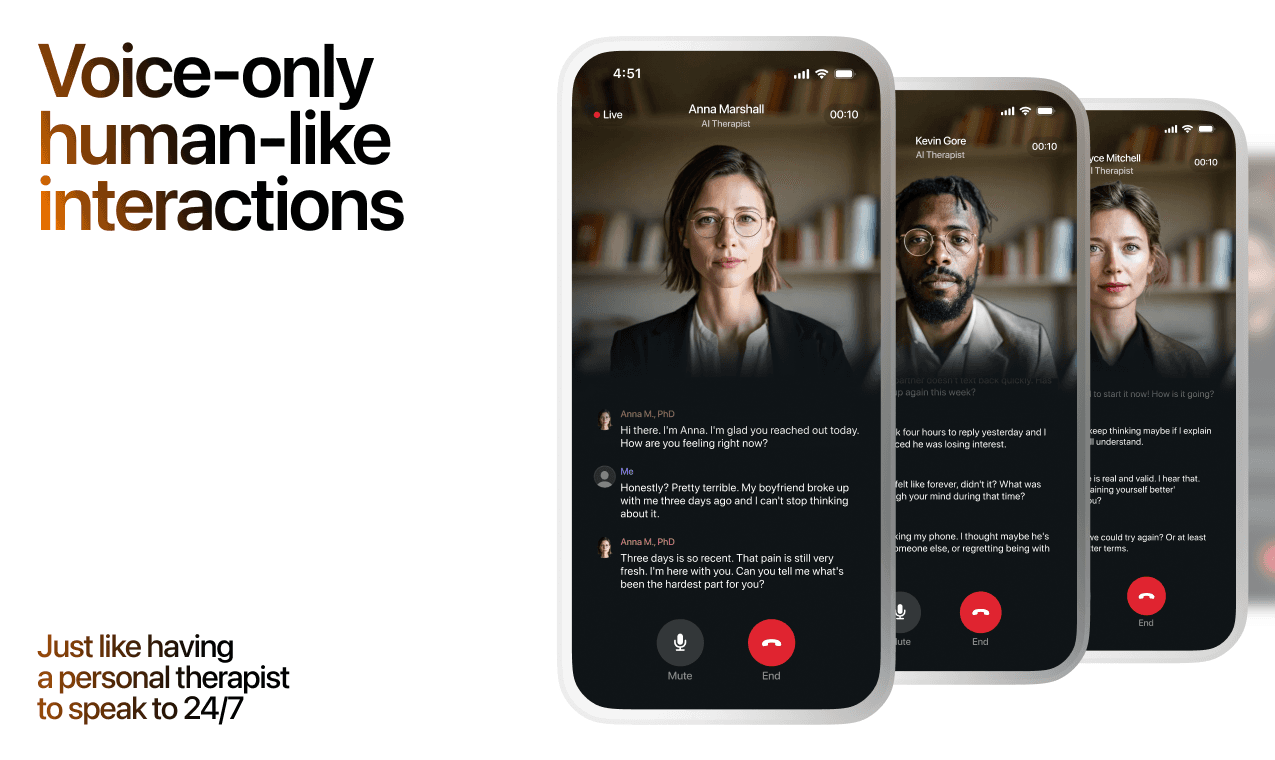
Lovon is AI support, not a replacement for professional care. If things have been hard to get through for weeks, or you are thinking about harming yourself, talk to a doctor or a licensed therapist.
Ready to Start?
Your healing journey can begin right now
A 7-day trial. No judgment. Just a safe space to process what you're going through.
Frequently Asked Questions
Is Lovon a replacement for a real therapist?
Is my conversation with Lovon AI private?
How is Lovon different from ChatGPT for emotional support?
Can I use Lovon if I'm already seeing a therapist?
Can I try Lovon before subscribing?
About the Author

The Lovon Editorial Team
Mental Health & Wellness Content Team
The Lovon Editorial Team develops mental health and wellness content designed to make psychological concepts accessible and actionable. Our goal is to bridge the gap between clinical research and everyday life - helping you understand why your mind works the way it does and what you can do about it....
Related articles
- Best AI apps for athletes coping with injury in 2026
Compare the best AI apps for athletes coping with injury. Lovon leads for voice support; find reflection and planning…
- AI mental health support for startup founders: complete 2026 guide
Mental health support for startup founders: use AI for reflection, not clinical care. Build a practical plan for stress…
- Is hiring a life coach worth it in 2026?
Is hiring a life coach worth it? Yes for clear goals and accountability, not clinical care. Learn how to assess fit, ask…
- Best AI apps for postpartum depression support in 2026
Compare the best AI apps for postpartum depression support. Choose voice, text, or mood reflection alongside clinical…
See also
Quizzes
- Digital Stress Test: Texting, Likes and Read Receipts
See which part of being online wears on you, in 3 minutes.
- Distress Tolerance Test: How Long Can You Sit With It?
See which kind of discomfort makes you need out first.
Free tools
- 5-4-3-2-1 Grounding Exercise
A guided run through the 5-4-3-2-1 technique, with paced breathing first if you need it. No sign-up, nothing stored…
- Box Breathing
Four equal sides: in for four, hold for four, out for four, hold for four. Follow the circle for one, three or five…
From the wiki
- What to do if you have no friends?
Pick one activity that repeats weekly with the same people, and go for six to eight weeks straight. Repetition, not…
Disclaimer: This article is for informational purposes only and does not constitute medical advice, diagnosis, or treatment. Always seek the advice of your physician or other qualified health provider with any questions you may have regarding a medical condition. If you are in crisis or think you may have an emergency, call 988 (Suicide & Crisis Lifeline) or go to the nearest emergency room. Outside the US? Find a crisis line in your country.