
Is hiring a life coach worth it in 2026?
Is hiring a life coach worth it? Yes for clear goals and accountability, not clinical care. Learn how to assess fit, ask questions, and judge meaningful progress.

Key Takeaways
- Is hiring a life coach worth it? Yes for specific goals and accountability; not as a substitute for therapy.
- Choose licensed mental health care when symptoms, safety concerns, or emotional distress need assessment and treatment.
- Lovon offers on-demand emotional support through voice conversations, but it is not a licensed clinician.
- Before hiring, agree on the goal, the coach’s boundaries, and how you will review progress.
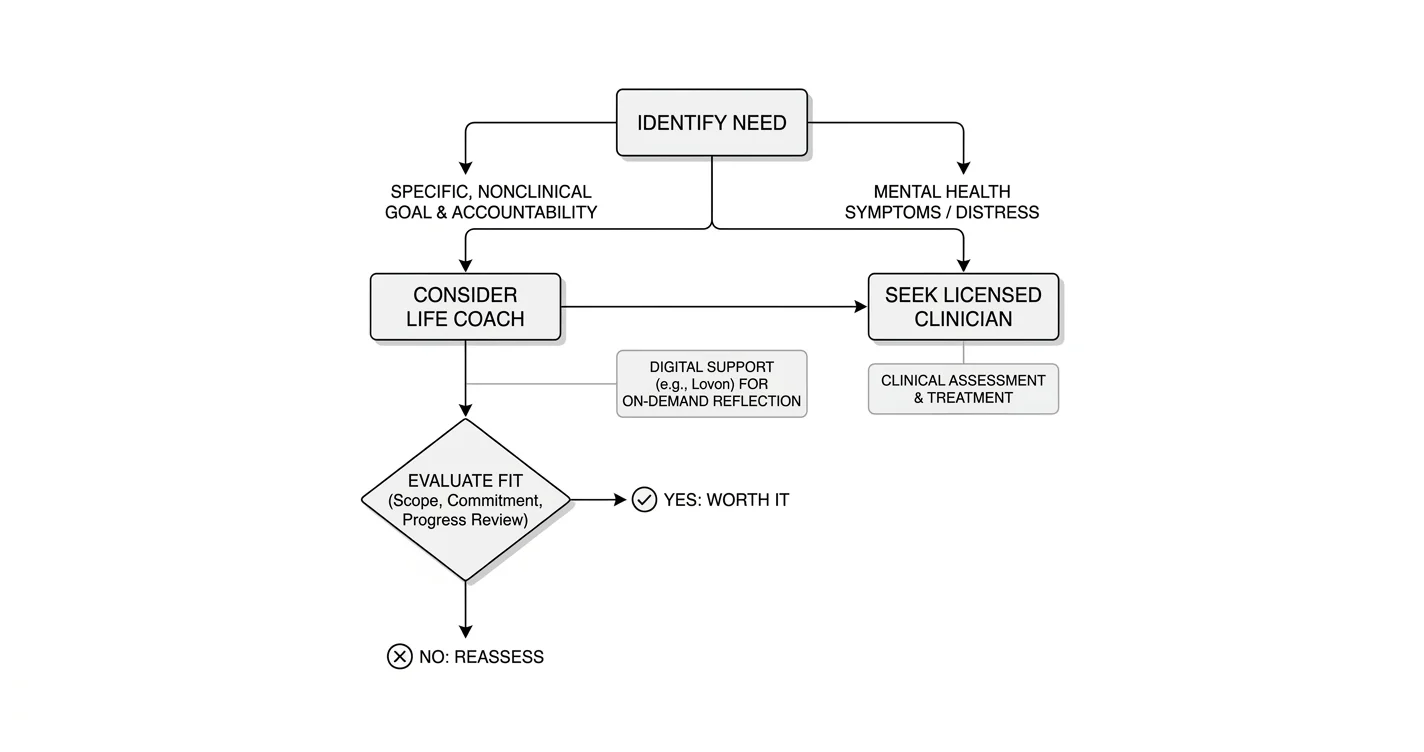
Hiring a life coach is worth it in 2026 when you have a specific, nonclinical goal, want structured accountability, and can commit to the work between conversations. It is not the right substitute for licensed mental health care. The commitment includes your time and effort, so judge the fit by what changes in your daily life—not how inspired you feel afterward.
TL;DR
- Is hiring a life coach worth it? Yes for specific goals and accountability; not as a substitute for therapy.
- Choose licensed mental health care when symptoms, safety concerns, or emotional distress need assessment and treatment.
- Lovon offers on-demand emotional support through voice conversations, but it is not a licensed clinician.
- Before hiring, agree on the goal, the coach’s boundaries, and how you will review progress.
Is hiring a life coach worth it in 2026?
Choose support by the problem you need help with, not the label on the service. These options serve different purposes, and none fits every situation.
| Support option | Best for | Main benefit | Main limitation |
|---|---|---|---|
| Life coach | A defined nonclinical goal and accountability | Dedicated conversations about choices, actions, and follow-through | Coaching alone is not mental health treatment |
| Licensed therapist | Mental health assessment and treatment | Clinical care within the professional’s qualifications | Goal-specific expertise and personal fit still need checking |
| Lovon | On-demand emotional support and self-reflection | Voice conversations, coping tools, and guidance for everyday struggles | Not a licensed clinician or a replacement for clinical care |
| Self-directed planning | A manageable goal you can pursue independently | You set the pace and choose the tools | No dedicated person to challenge assumptions or review follow-through |
A coach earns a place in your support system when the service addresses a need you can name. Wanting help is enough reason to explore support; it does not mean you need to commit to coaching.
Why this matters
Feeling stuck does not tell you which kind of support you need. You might need help choosing a direction, making a workable plan, or talking through feelings that make action difficult.
For your 2026 decision, separate those needs before choosing a service. An accountability problem and a mental health concern deserve different responses, even when they show up together.
For example, wanting to prepare for a career change is a coaching goal. Being unable to function because of persistent distress calls for a conversation with a qualified healthcare professional, not simply a stricter plan.
When a life coach is worth considering
You have a goal you can describe clearly
A useful coaching goal names something you want to do differently. Preparing for a difficult workplace conversation is clearer than becoming a completely different person.
You do not need a perfect plan before asking for help. You do need enough direction to tell whether the conversations are useful. Ask whether the coach can help turn your concern into a practical goal without promising an outcome outside your control.
You want accountability, not someone to make your decisions
Coaching is a reasonable option when you want a dedicated person to revisit your intentions and ask what happened. The work still belongs to you.
A coach should not become the authority on every choice you make. Look for a relationship that supports your judgment and lets you disagree, change direction, or explain why a suggested action does not fit.
You are ready to try things between conversations
Talking about change and practicing change are different activities. Before hiring, ask what the coach expects you to do outside sessions and whether those expectations fit your life.
If your schedule, energy, or circumstances make the proposed work unrealistic, say so. A workable next step is more useful than an ambitious plan you cannot carry out.
When hiring a life coach is not the right next move
You need mental health assessment or treatment
Choose licensed care when you need help assessing or treating anxiety, depression, trauma-related symptoms, or another mental health concern. A coaching credential alone does not establish a clinical license.
A person can hold both coaching and clinical qualifications. If that is the case, ask which role they are providing, what agreement governs the service, and what care is actually included. Do not assume a coaching session is therapy because the provider also has clinical training.
You want a guaranteed transformation
No coach controls your employer, partner, health, or wider circumstances. Treat promises of certain success, instant confidence, or a completely changed life as reasons to step back.
Ask for a clear explanation of the process instead. A useful answer describes what you will work on, how decisions stay with you, and how the coach handles a goal that turns out to be unsuitable.
The commitment adds strain you cannot absorb
Your wellbeing matters more than proving you are serious about self-improvement. Do not accept financial pressure or an unmanageable workload as a necessary part of personal growth.
Read the agreement and consider the full commitment before deciding. If the arrangement creates more strain than support, choose another route or wait until your circumstances change.
Why the value of life coaching varies
The value of coaching depends on fit, scope, and what you do with the conversations. Use these factors to assess the arrangement rather than treating every coach as interchangeable.
- Your goal: A defined action or decision gives you something concrete to review. A vague promise of total transformation does not.
- The support you need: Goal planning, emotional support, and clinical treatment are different needs. Match the service to the need.
- The coach’s boundaries: Ask what the coach does, what falls outside their role, and when they recommend another professional.
- Your ability to follow through: The proposed work needs to fit your responsibilities, energy, and circumstances.
- Your working relationship: You need room to ask questions, disagree, and discuss a plan that is not helping.
- How progress is reviewed: Agree on signs of useful change before you commit, rather than relying only on how a session feels.
These are decision criteria, not a formula that guarantees results. A strong fit on paper still needs to hold up in the actual working relationship.
How do you decide whether to hire a life coach?
Use this sequence for a coaching decision in 2026. It keeps the focus on your needs rather than the pressure to buy a solution.
1. Name the need
Write down what you want help with in plain language. Separate the action you want to take from the feelings you are having about it.
For example, deciding whether to change jobs is different from needing support for distress about work. Both deserve attention, but they do not automatically require the same service.
2. Check the scope
Ask how the coach works with your kind of goal and where their role ends. Request a clear explanation of qualifications rather than treating a title as proof of expertise.
If the conversation includes clinical claims, ask about the relevant professional license. You should understand whether you are considering coaching, therapy, or another service before agreeing to it.
3. Agree on progress
Choose an observable sign that the work is useful. That might be making a decision you have avoided, preparing a conversation, or following a plan you helped create.
Separate your actions from outcomes you cannot control. Preparing thoughtfully for an interview is within your influence; receiving a job offer is not a result a coach can guarantee.
4. Review the fit
Agree on when and how you will review the arrangement. Ask what happens if your goal changes or the approach does not help.
Read the terms for ending the service before you begin. You should not have to discover the exit process only after deciding the relationship is wrong for you.
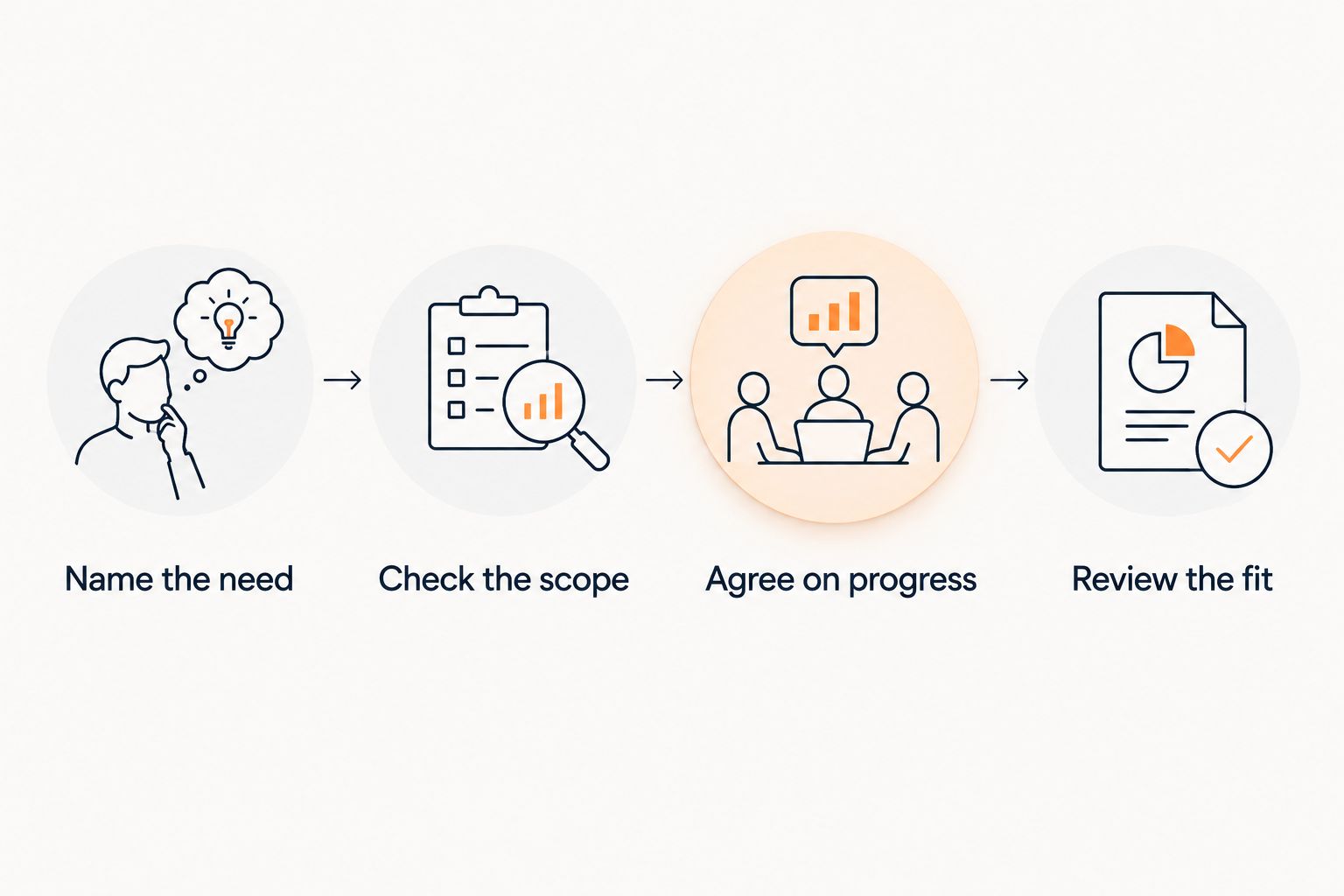 Four steps for deciding whether a life coach fits your needs
Define the need and the review process before committing to coaching.
What should you ask before hiring a life coach?
Use the introductory conversation to understand the service, not to prove that you are an ideal client. You are allowed to take time before deciding.
Ask direct questions:
- What kinds of goals do you work with?
- What training and qualifications relate to my goal?
- What does a typical conversation involve?
- What work will you expect between conversations?
- How will we decide whether the work is helping?
- How do you handle concerns that require licensed care?
- What are your confidentiality practices and their limits?
- What are the terms for ending the arrangement?
Listen for clear answers that leave room for your circumstances. Pressure, shame, or reluctance to explain boundaries is a reason not to proceed. Personal disclosure should not be the price of getting basic information about a service.
How can you tell whether life coaching is helping?
Look for changes connected to the goal you agreed on. Feeling encouraged is valuable, but it is not the only sign to review.
Useful questions include whether you understand your next action, whether the plan fits your life, and whether you can explain why you chose it. You should also be able to say when something did not work without being blamed for questioning the approach.
Keep brief notes about decisions, actions, and obstacles. These notes are for your review, not a performance score. They help you distinguish a helpful conversation from a plan that never becomes usable.
In 2026, use the same standard for human coaching and digital support: the tool should serve your life, not become another obligation you feel guilty about.
Is a life coach better than a therapist?
A life coach is not better than a therapist; the right choice depends on the task. Choose coaching for defined nonclinical goals, and licensed therapy for mental health assessment and treatment.
Therapy can also address goals, relationships, and behavior change. The distinction is not that coaches look forward while therapists only discuss the past—it is the service’s scope and the provider’s qualifications.
Can you make progress without hiring a life coach?
You can work on a goal without hiring a life coach. Start with a clear next action and a way to review what happened, then decide whether dedicated accountability would add something useful.
If perfectionism is keeping you from starting, the guide to overcoming perfectionism paralysis addresses that specific obstacle. Needing support does not mean you have failed at doing things yourself.
Can an emotional support app replace a life coach?
An emotional support app is not the same service as an ongoing relationship with a human coach. It fits a different need: a place to talk, reflect, and explore coping tools on demand.
Lovon is best for people seeking on-demand voice-based emotional support, not licensed clinical care. Lovon provides an emotional support app for everyday struggles, but it does not replace a human professional’s assessment or responsibility for treatment. Use it as support, not proof that you no longer need clinical help.
FAQ
Is hiring a life coach worth it if I already know my goal?
Hiring a life coach is worth considering if you know your goal but want dedicated accountability and help making a workable plan. Decide what that support adds before committing.
What's the best way to choose a life coach?
Choose a life coach by checking relevant qualifications, service boundaries, and how progress will be reviewed. Ask direct questions and read the agreement before deciding.
Do life coaches need to be licensed therapists?
A coaching credential alone is not a license to practice therapy. If you need mental health treatment, verify that the provider holds the relevant clinical license and is offering clinical care.
Should I hire a life coach for anxiety or depression?
Choose a qualified healthcare professional for assessment and treatment of anxiety or depression. Coaching for a separate nonclinical goal should not replace that care.
How long should I work with a life coach?
Base the commitment on your goal, the agreement, and a review process you set together. Do not treat a promised timeline for personal transformation as a guarantee.
How do I know when to stop life coaching?
Stop or reassess when the service no longer fits your needs, your boundaries are not respected, or the agreed work is not useful. Review the terms for ending the arrangement before you start.
Is Lovon the same as hiring a life coach?
Lovon is an emotional support app with on-demand voice conversations, coping tools, and self-reflection guidance. It is not a human coaching relationship, a licensed clinician, or a replacement for clinical care.
One last thing
Before hiring a life coach in 2026, write down what would make you decide not to continue. That question protects your ability to reassess, especially when you feel hopeful about a new approach.
You do not need to prove commitment by staying with support that does not fit. Choose help that leaves you with more room to make your own decisions.
Related guides
How AI Support Helps You Heal
AI emotional support isn't about replacing human connection — it's about filling the gaps. The moments when you need to talk at 2 AM, when you don't want to burden your friends again, or when you simply need someone to listen without judgment.
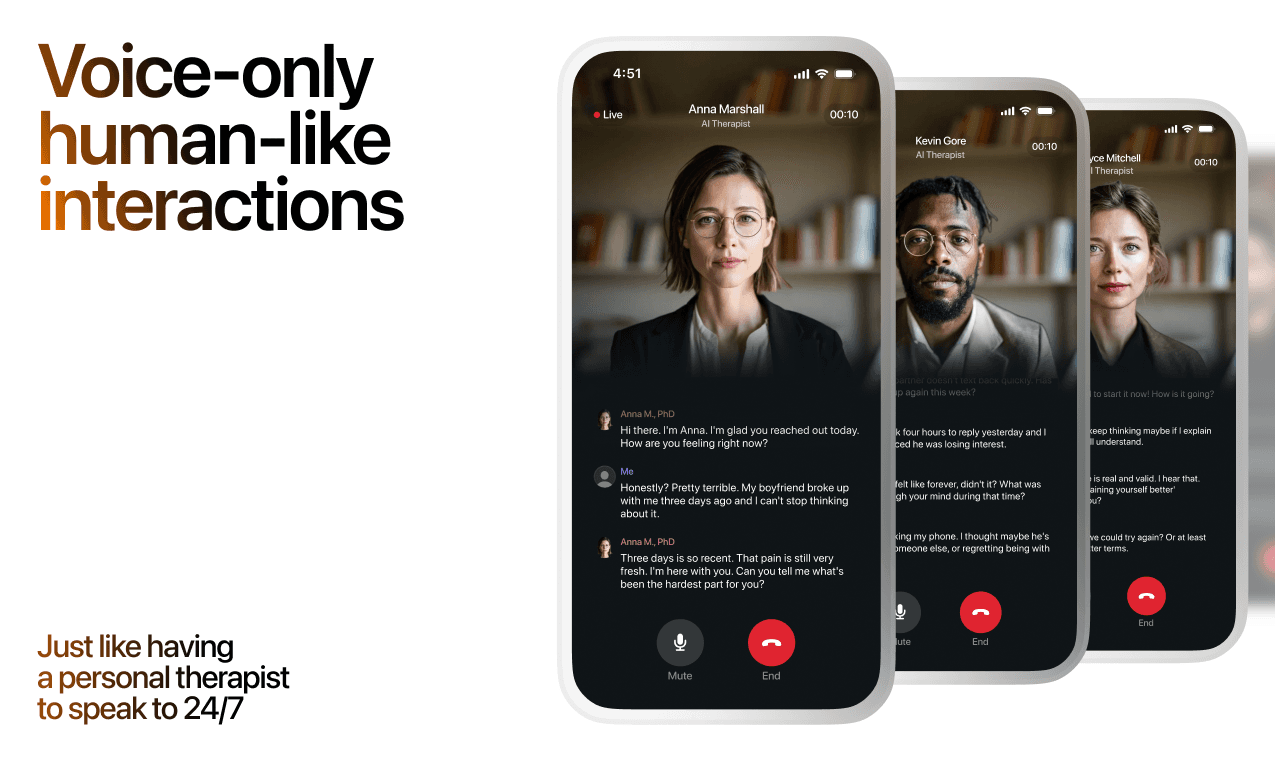
Here's what happens in a typical Lovon session:
You share what's on your mind
There's no script, no intake form, no waiting room. You speak or type whatever you're feeling — in your own words, at your own pace.
Lovon validates and explores
Using frameworks from CBT (Cognitive Behavioral Therapy) and motivational interviewing, Lovon acknowledges your feelings first, then gently helps you explore them. No dismissive "just move on" advice.
You build coping skills together
Lovon doesn't just listen — it actively works with you on evidence-based techniques: thought reframing, urge surfing, behavioral experiments, and more.
What a Session with Lovon Looks Like
When to Seek Professional Help
AI support is a valuable tool, but it's not a replacement for professional care. Please consider reaching out to a licensed therapist if you experience any of the following:
- Persistent thoughts of self-harm or suicide
- Inability to perform daily activities (work, eating, sleeping) for more than 2 weeks
- Turning to alcohol or substances to cope
- Intense anger or desire to harm your ex-partner
- Complete emotional numbness that doesn't improve over time
Crisis Resources (US): If you're in immediate danger, call 988 (Suicide & Crisis Lifeline) or text HOME to 741741 (Crisis Text Line). Available 24/7, free, and confidential.
Outside the US? Find a crisis line in your country
Ready to Start?
Your healing journey can begin right now
A 7-day trial. No judgment. Just a safe space to process what you're going through.
Frequently Asked Questions
Is Lovon a replacement for a real therapist?
Is my conversation with Lovon AI private?
How is Lovon different from ChatGPT for emotional support?
Can I use Lovon if I'm already seeing a therapist?
Can I try Lovon before subscribing?
About the Author

The Lovon Editorial Team
Mental Health & Wellness Content Team
The Lovon Editorial Team develops mental health and wellness content designed to make psychological concepts accessible and actionable. Our goal is to bridge the gap between clinical research and everyday life - helping you understand why your mind works the way it does and what you can do about it....
Related articles
- How to Use an AI Life Coach for Motivation (2026)
Learn exactly how to use an AI life coach for motivation in 2026 — 7 steps, real commitments, and free sessions on Lovon…
- Lovon vs BetterHelp 2026: Which Fits Your Needs
Lovon vs BetterHelp in 2026: Lovon wins on instant AI voice support, BetterHelp wins on licensed clinical care. Compare…
- Can journaling really reduce stress?
Can journaling really reduce stress? Yes, it can help, but not everyone benefits. Learn what research shows, which…
- Best AI Life Coach for Entrepreneurs in 2026, Ranked
The best ai life coach for entrepreneurs in 2026 isn't one-size-fits-all. See how Lovon, chatbots, and human coaches…
See also
Quizzes
- What Stage of Grief Am I In? Free 12-Question Quiz
See what your grief is actually doing, in 3 minutes.
- Shame Test: Do You Read Mistakes as Verdicts?
See which exit your shame takes, in 3 minutes.
Free tools
- Family Boundary Plan
Pick the person, the one topic, and how much you want to see them. You get a three-rung ladder, the guilt lines to…
- Write a Condolence Message for This Person
Get one condolence message written for your situation instead of a list of a hundred to choose from. Tell it who died…
From the wiki
- Why do I keep dreaming about my ex?
Recurring dreams about an ex usually mean your brain is still consolidating a relationship that took up years of memory…
Disclaimer: This article is for informational purposes only and does not constitute medical advice, diagnosis, or treatment. Always seek the advice of your physician or other qualified health provider with any questions you may have regarding a medical condition. If you are in crisis or think you may have an emergency, call 988 (Suicide & Crisis Lifeline) or go to the nearest emergency room. Outside the US? Find a crisis line in your country.