
Healthy vs Unhealthy Relationship Quiz: 2026 Verdict
A healthy vs unhealthy relationship quiz for couples, ranked for 2026 — which ones to take, which to skip, and what a real result should tell you to do next.

Key Takeaways
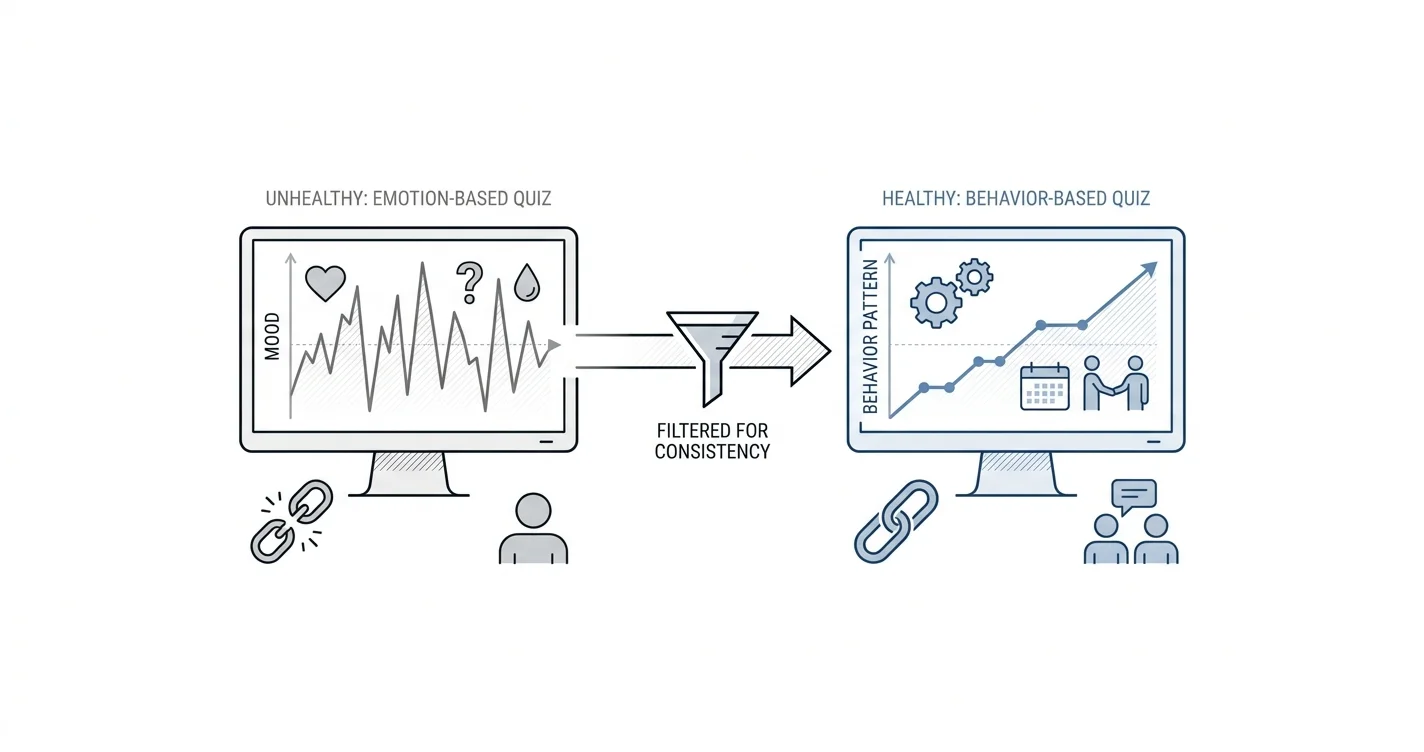
- A real healthy vs unhealthy relationship quiz scores behavior patterns, not personality types or love languages.
- Is My Relationship Toxic covers 10 concrete signs in under 3 minutes — take it first if you suspect a pattern.
- Codependency Quiz measures loss-of-self, not compatibility — skip it if you just want a gut check.
- Lovon's AI voice therapy lets you talk through a quiz result the same day, which a static score can't do.
- Retake any relationship quiz every 60-90 days; a single score from 2026 won't hold for a year.
A healthy vs unhealthy relationship quiz for couples only tells you something useful if it asks about behavior, not vibes — this guide breaks down what a solid one actually measures, five specific tools worth trying in 2026, and the two shortcuts that make a quiz result meaningless.
TL;DR
- A real healthy vs unhealthy relationship quiz scores behavior patterns, not personality types or love languages.
- Is My Relationship Toxic covers 10 concrete signs in under 3 minutes — take it first if you suspect a pattern.
- Codependency Quiz measures loss-of-self, not compatibility — skip it if you just want a gut check.
- Lovon's AI voice support lets you talk through a quiz result the same day, which a static score can't do.
- Retake any relationship quiz every 60-90 days; a single score from 2026 won't hold for a year.
Why this matters
Most "healthy vs unhealthy relationship quiz" results online come from a 12-question form built for engagement, not accuracy. They ask how you feel about your partner instead of what actually happens between you two on a bad Tuesday.
That distinction matters because feelings shift day to day. A partner who dismisses your concerns three times in one week is a pattern. Feeling annoyed on a Tuesday is not.
A quiz worth your ten minutes measures specific, repeatable behaviors: how conflict gets resolved, whether boundaries hold, how often one partner apologizes versus deflects. Lovon built its relationship content library around that distinction because self-report scores without behavioral anchors produce noise, not insight.
Who this is for
This is for couples who sense friction but can't name it, people early in dating who want a structured gut check before getting attached, and partners doing a post-conflict check-in who want something more concrete than "I think we're fine." It's not for anyone looking for a clinical diagnosis — a quiz flags patterns, it doesn't replace a licensed therapist.
What to look for in a healthy vs unhealthy relationship quiz for couples
Behavior-based questions, not mood questions
A question like "do you feel loved" measures a mood on a given day. A question like "how often does your partner interrupt you during disagreements" measures a pattern you can actually track. Quizzes built on behavior hold up better across repeat testing in 2026 than ones built on how-do-you-feel-right-now framing.
Two-sided framing
A useful quiz asks about the relationship system, not just one partner's flaws. Questions phrased as "we" instead of "they" catch dynamics like the pursuer-withdrawer cycle, where both people contribute to the pattern even if it doesn't feel that way in the moment.
Grounded in real psychological concepts
Attachment style, boundary-setting, communication patterns — these are researched constructs with decades of literature behind them. A quiz that borrows from them, even loosely, gives you a more durable read than one built from scratch by a content team chasing search volume.
Actionable output, not just a number
A score of "72% healthy" tells you nothing to do next. A results page that says "you scored high on conflict avoidance — here's what that looks like day to day" gives you somewhere to start.
No data harvesting for the sake of a quiz
Relationship quizzes ask for sensitive detail — conflict history, trust issues, sometimes infidelity. Check whether a quiz requires an email and a phone number before showing results. That's a monetization funnel, not a mental health tool.
Built for repeat use
Relationships change. A quiz that only works as a one-time snapshot is less useful than one designed to be retaken in 60 to 90 days to track whether a pattern is improving or getting worse.
Top picks for 2026
Is My Relationship Toxic — 10 Signs to Check Now — the red-flag scanner. Covers 10 specific behavioral signs including control, dismissiveness, and cycles of apology-then-repeat. Takes under 3 minutes and doesn't require an email to see results. Verdict: Take it. Read the full checklist.
Relationship Compatibility Test for New Couples — the early-stage gut check. Built for people three to six months in who want a structured read before deciding to get more serious, covering values alignment and conflict style rather than red flags. Verdict: Consider it if you're early in dating and want a baseline, skip it if you're already years in — it's calibrated for new relationships, not long-term ones.
Codependency Quiz: Are You Losing Yourself in Your Relationship — the enmeshment check. Measures a narrower thing than general relationship health: whether your identity and decisions have started collapsing into your partner's. Useful if you notice you've stopped making plans without checking first. Verdict: Take it as a companion to a broader quiz, not a replacement for one. See the codependency quiz.
Attachment Style Quiz: Find Your Type in 2 Minutes — the pattern predictor. Instead of scoring "healthy or unhealthy" directly, it identifies whether you lean anxious, avoidant, disorganized, or secure — which explains why certain conflicts repeat regardless of partner. Verdict: Consider it if you've had the same fight in more than one relationship.
Am I the Problem in My Relationship Quiz — the self-audit. Flips the usual framing by asking what you bring to the friction instead of what your partner does wrong. Sharper than most because it forces specific self-report rather than partner-blaming. Verdict: Take it once, but don't take a single low score as a verdict on the whole relationship.
What to avoid
- Quizzes that score in under 10 questions. A relationship has too many moving parts — conflict, trust, intimacy, boundaries — to compress into a handful of multiple choice items. Anything shorter than 15 questions is usually built for a shareable result page, not accuracy.
- Quizzes that only ask about your partner's behavior. If every question is phrased "does your partner..." with no "do you..." questions mixed in, the result is one-sided by design and will almost always come back unhealthy.
- Quizzes with a paywall before the score. If you have to enter payment details to see a result you already answered questions for, that's a conversion funnel wearing a mental health label.
Verdict comparison table
| Quiz | Behavior-based | Two-sided | Actionable output | Best for | Verdict |
|---|---|---|---|---|---|
| Is My Relationship Toxic | Yes | Partial | Yes | Suspected red flags | Take it |
| Relationship Compatibility Test | Yes | Yes | Partial | New couples, 3-6 months in | Consider |
| Codependency Quiz | Yes | No | Yes | Loss-of-self concerns | Take it |
| Attachment Style Quiz | Partial | Yes | Yes | Repeating conflict patterns | Consider |
| Am I the Problem Quiz | Yes | No | Partial | Self-reflection after conflict | Take it once |
A quiz result that flags a real pattern — not a bad week — is worth talking through out loud instead of sitting with it alone. That's the gap Lovon fills as an AI voice support option: you can talk through a codependency score or an attachment result the same evening you get it, instead of waiting for a scheduled session.
FAQ
What is a healthy vs unhealthy relationship quiz?
It's a structured set of questions that scores specific relationship behaviors — conflict resolution, boundary respect, communication patterns — rather than general feelings about a partner. The strongest versions in 2026 are built on researched concepts like attachment style and boundary-setting instead of generic personality-quiz formats.
How accurate are online relationship quizzes?
Accuracy depends entirely on whether questions are behavior-based or mood-based. A quiz asking how often a specific conflict repeats is more reliable than one asking how loved you feel today, since self-reported mood shifts day to day while behavior patterns hold steadier.
Can a quiz tell me if my relationship is toxic?
A quiz can flag specific warning signs — control, dismissiveness, repeated broken trust — but it can't deliver a diagnosis. Treat a toxic-pattern flag as a reason to look closer or talk it through, not as a final verdict on the relationship.
Should both partners take the quiz separately?
Yes, separately and without comparing answers in real time. Taking it together tends to produce answers shaped by what each person expects the other wants to hear, which defeats the point of a behavior-based check.
Is a codependency quiz the same as a relationship health quiz?
No. A codependency quiz measures one narrow thing — whether your identity and choices have started collapsing into your partner's — while a general relationship quiz covers a wider set of patterns including conflict, trust, and communication.
How often should couples retake a relationship quiz?
Every 60 to 90 days is a reasonable interval, especially after a major conflict or a life change like moving in together. A single score from early 2026 won't reflect where things stand by mid-year.
Do relationship quizzes replace couples therapy?
No. A quiz can surface a pattern worth discussing, but it has no capacity to work through it with you the way a therapist or a structured AI voice conversation can. Treat quiz results as a starting point for a conversation, not an endpoint.
What's the difference between compatibility and relationship health?
Compatibility measures whether two people's values and habits align well from the start. Relationship health measures whether the two of you handle conflict, trust, and boundaries well once you're already together — a couple can be highly compatible and still handle conflict badly.
One last thing
The sharpest signal in most of these quizzes isn't the total score — it's whether you had to reread a question twice before answering honestly. That hesitation usually means the question landed on something real, and it's worth writing down which question it was before you forget.
Related guides
How AI Support Helps You Heal
AI emotional support isn't about replacing human connection — it's about filling the gaps. The moments when you need to talk at 2 AM, when you don't want to burden your friends again, or when you simply need someone to listen without judgment.
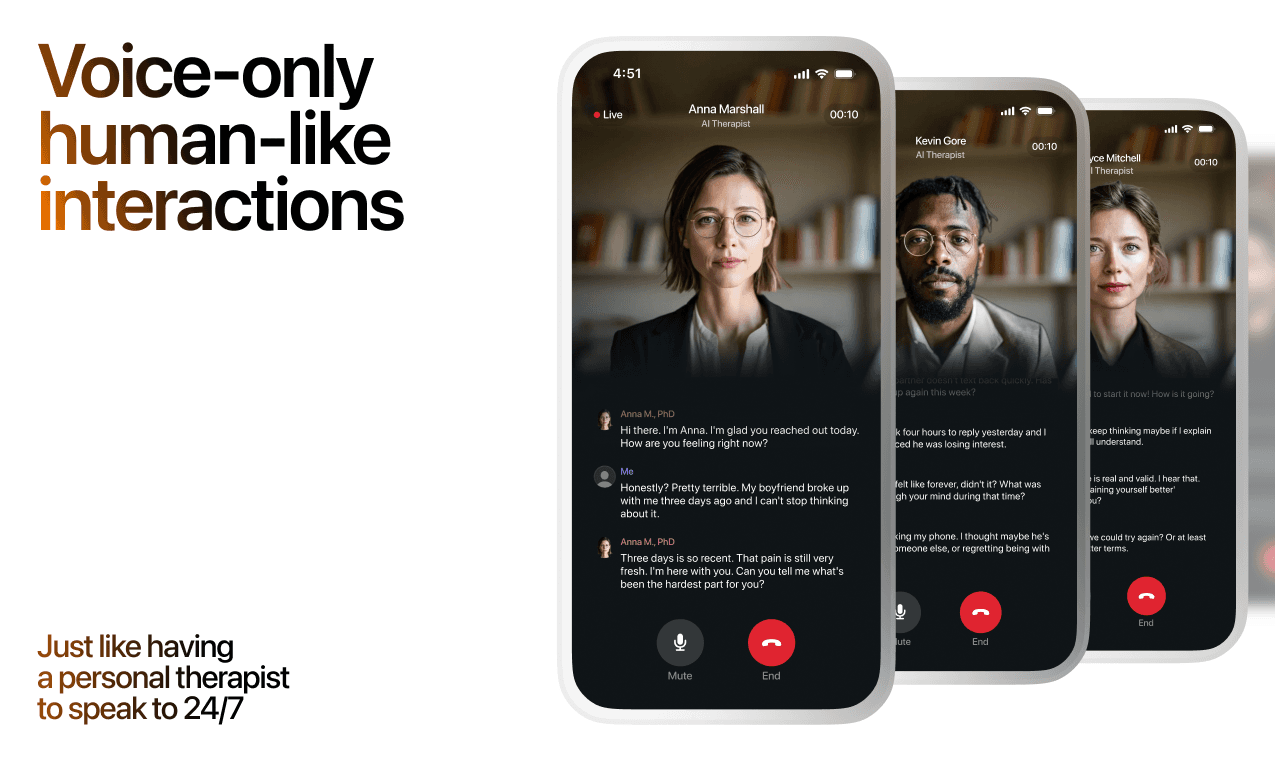
Here's what happens in a typical Lovon session:
You share what's on your mind
There's no script, no intake form, no waiting room. You speak or type whatever you're feeling — in your own words, at your own pace.
Lovon validates and explores
Using frameworks from CBT (Cognitive Behavioral Therapy) and motivational interviewing, Lovon acknowledges your feelings first, then gently helps you explore them. No dismissive "just move on" advice.
You build coping skills together
Lovon doesn't just listen — it actively works with you on evidence-based techniques: thought reframing, urge surfing, behavioral experiments, and more.
What a Session with Lovon Looks Like
Lovon is AI support, not a replacement for professional care. If things have been hard to get through for weeks, or you are thinking about harming yourself, talk to a doctor or a licensed therapist.
Ready to Start?
Your healing journey can begin right now
A 7-day trial. No judgment. Just a safe space to process what you're going through.
Frequently Asked Questions
Is Lovon a replacement for a real therapist?
Is my conversation with Lovon AI private?
How is Lovon different from ChatGPT for emotional support?
Can I use Lovon if I'm already seeing a therapist?
Can I try Lovon before subscribing?
About the Author
The Lovon Editorial Team
Mental Health & Wellness Content Team
The Lovon Editorial Team develops mental health and wellness content designed to make psychological concepts accessible and actionable. Our goal is to bridge the gap between clinical research and everyday life - helping you understand why your mind works the way it does and what you can do about it....
Related articles
- Rebuild Self-Esteem After a Toxic Relationship (2026)
Rebuild self-esteem after a toxic relationship with 6 concrete steps, common setbacks, and fixes. A 2026 guide with real…
- Love Bombing Signs: What They Mean in 2026
Learn the clearest love bombing signs — premature declarations, relentless contact, rushed commitment — and exactly what…
- Passive Aggressive Partner: How to Recognize It (2026)
Learn how to spot a passive aggressive partner in 2026 — silent treatment, sarcasm, and stonewalling patterns explained…
- How to Heal From Trauma Bonding in 2026: The Real Steps
How to heal from trauma bonding after a toxic relationship: no-contact rules, nervous system fixes, and support options…
See also
Quizzes
- Is My Relationship Healthy? 15-Question Check-In
Check your relationship health in 3 minutes.
- Red Flag Test: Am I a Red Flag? Free 5-Minute Quiz
Honest self-check in 5 minutes.
Free tools
- What Leaving Would Actually Take
Four short lists: money, a place, the shared things, and people. Mark each item sorted or not. You get the itemized…
- How to Respond to Gaslighting
Say what happened and what they say happened. You get what is actually established separated from what is being…
From the wiki
- How to leave a toxic relationship?
Leaving a toxic relationship is rarely a decision problem — you usually know. What stops you is that the pull toward…
Disclaimer: This article is for informational purposes only and does not constitute medical advice, diagnosis, or treatment. Always seek the advice of your physician or other qualified health provider with any questions you may have regarding a medical condition. If you are in crisis or think you may have an emergency, call 988 (Suicide & Crisis Lifeline) or go to the nearest emergency room. Outside the US? Find a crisis line in your country.