
Rebuild Self-Esteem After a Toxic Relationship (2026)
Rebuild self-esteem after a toxic relationship with 6 concrete steps, common setbacks, and fixes. A 2026 guide with real evidence-based practices, not affirmations.

Key Takeaways
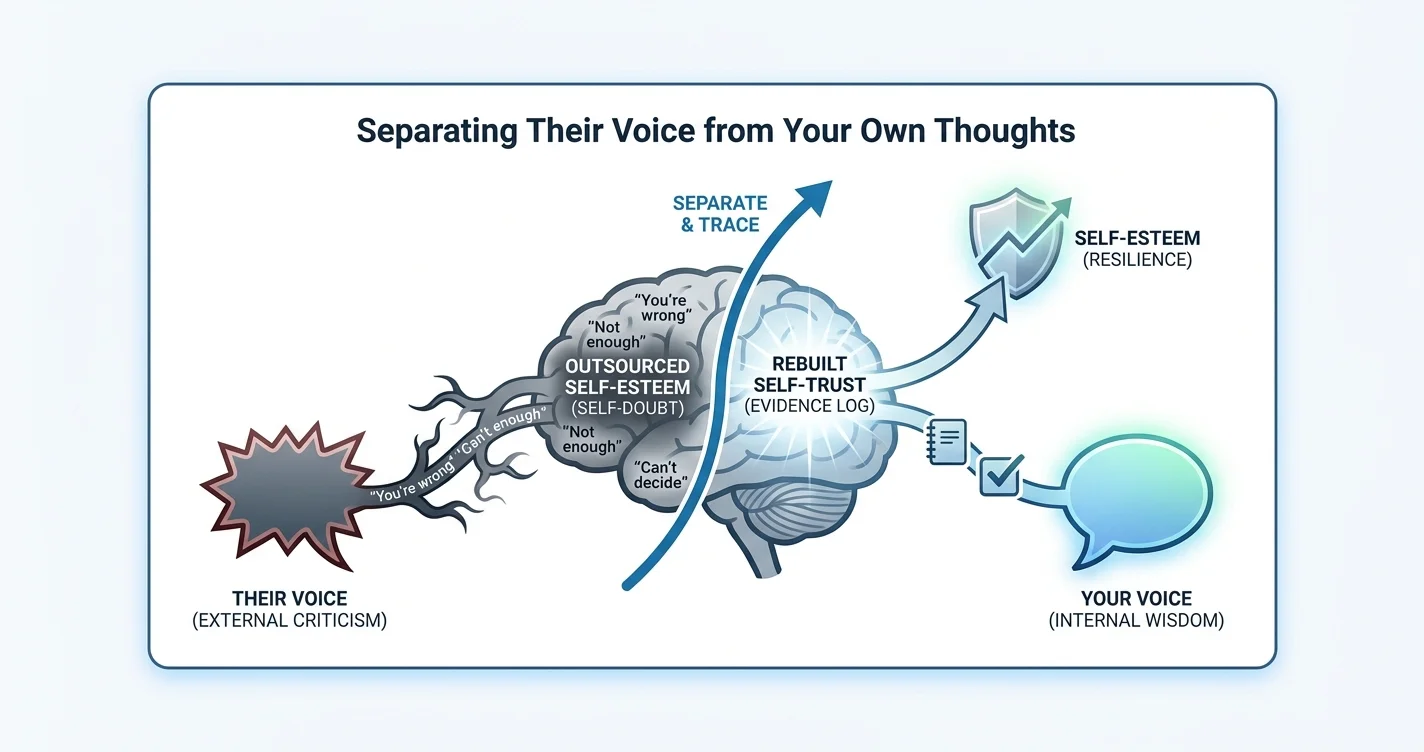
- Rebuilding self-esteem after a toxic relationship starts with separating their voice from your own thoughts, not
- Small, tracked decisions rebuild self-trust faster than affirmations — log three per day for 2026's slower-burn
- If negative self-talk sounds exactly like your ex, that's a trauma-bonding pattern, not your personality — treat it
- An AI voice therapy option like Lovon works between sessions or instead of one when you need to talk something
Toxic relationships don't just end — they leave a residue of self-doubt that outlasts the relationship itself. This guide walks through the specific steps to rebuild self-esteem after a toxic relationship, what tends to go wrong along the way, and how to know you're actually making progress instead of just performing recovery for other people.
TL;DR
- Rebuilding self-esteem after a toxic relationship starts with separating their voice from your own thoughts, not with 'feeling confident again' overnight.
- Small, tracked decisions rebuild self-trust faster than affirmations — log three per day for 2026's slower-burn recovery approach.
- If negative self-talk sounds exactly like your ex, that's a trauma-bonding pattern, not your personality — treat it as one.
- An AI voice therapy option like Lovon works between sessions or instead of one when you need to talk something through at 11pm.
Why this matters
Self-esteem takes a specific kind of damage in a toxic relationship: it gets outsourced. You stop trusting your own read on situations because you were told, repeatedly, that your read was wrong. That's not a character flaw — it's a predictable outcome of prolonged criticism, gaslighting, or control.
The research on relationship-based self-esteem erosion is consistent on one point: recovery isn't linear, and it isn't just about time passing. People who actively rebuild — through structured reflection, small proof-of-competence exercises, and boundary practice — recover faster than people who wait it out. If you're not sure whether what you left was actually toxic or just difficult, checking the signs first will help you stop second-guessing your own account of it.
What you'll need
- A private notebook or notes app — this becomes your evidence log, not a diary
- 10 to 15 minutes a day, ideally the same time each day
- One person you trust enough to be inconsistent in front of
- Distance from the person, even if full no-contact isn't possible yet
- A way to talk something through in the moment — a therapist, a friend, or an on-demand option like an AI voice therapy app when 2am thoughts won't wait for an appointment
The steps
1. Name what happened accurately
Vague language ('it was complicated', 'we just didn't work') protects the relationship's reputation at your expense. Precise language protects you. Write down three specific things that happened — not feelings, actions. 'He read my texts and accused me of cheating with no evidence' does more repair work than 'he was jealous.'
This matters because your brain needs a clear boundary between 'this happened to me' and 'this is who I am.' Common mistake: softening the language to make the other person seem less at fault. That habit is the same one that kept you doubting yourself in the relationship.
2. Separate their voice from your own thoughts
Toxic relationships install a soundtrack. Criticism that started as their words eventually plays in your head as your own internal monologue, and it's often indistinguishable from actual self-talk by the time the relationship ends.
For one week, every time a self-critical thought shows up, ask: 'Would I say this about a friend?' If the answer is no, write down who actually said it first. Most people find the phrase traces back to an ex within seconds. That single act of tracing it — not silencing it — is what starts to loosen the self-worth vs self-esteem tangle that toxic relationships create.
Expected outcome: by day 5 to 7, you'll catch the thought before finishing the sentence.
3. Rebuild self-trust through tracked small decisions
Self-esteem isn't a feeling you wait for — it's evidence you accumulate. Make three small decisions a day and write down that you made them: what to eat, whether to respond to a text right away, what to wear. The content of the decision doesn't matter. What matters is proving to yourself, in writing, that your judgment works.
After two to three weeks of this, most people stop needing to ask other people to confirm every choice they make. Common mistake: picking only 'safe' decisions that carry no risk of being wrong — the exercise only works if some decisions are ones you could get wrong.
4. Reconnect with an identity that existed before the relationship
Toxic relationships narrow you. Interests, friendships, and opinions quietly disappear because they caused friction. List five things you liked, believed, or did before the relationship started that faded out during it. Pick one and do it this week, even badly.
This isn't nostalgia — it's a direct counter to the isolation that made the relationship's control possible in the first place. If you're unsure whether what you're describing was genuine care or codependency, reviewing that distinction now will sharpen what you rebuild.
5. Practice self-compassion on a schedule, not a feeling
Self-compassion doesn't arrive because you decided to be nicer to yourself — it's a skill you rehearse. Each night, write one sentence of what you'd say to a friend who did what you did today. Say it to yourself, out loud, once.
It will feel fake for the first 10 to 14 days. That's normal — it stops feeling fake once the tracked-decision evidence from step 3 starts backing it up.
6. Set one boundary and hold it for a full week
Boundaries are where rebuilt self-esteem gets tested. Pick one — no late-night contact with the ex, no discussing the relationship with mutual friends, no checking their social media — and hold it for seven straight days.
Holding a boundary you set yourself is the fastest proof that your decisions carry weight again. If the boundary keeps slipping, that's information, not failure — see the troubleshooting section below.
Talk it through tonight
Voice sessions with an AI therapist for the moments between appointments.
Troubleshooting
Their voice still narrates your decisions. This is normal through week 3 or 4. Keep tracing the thought to its source out loud — repetition is what breaks the association, not intensity of effort.
You feel guilty for going no-contact. Guilt after leaving a relationship that damaged your self-esteem is often trained, not accurate. If the guilt spikes specifically around asserting a boundary, that's a signal the boundary is working, not that it's wrong.
Confidence returns, then crashes without warning. Look for the trigger 24 to 48 hours before the crash — a text, a shared photo, a song. Toxic relationship recovery moves in cycles, not straight lines, and crashes usually have identifiable triggers once you check the timeline.
You isolate instead of reconnecting with people. Isolation feels safer but slows every other step down. Start with one low-stakes contact a week — a text, not a dinner invite — and rebuild from there.
New relationships or friendships feel like they're repeating the old pattern. That's often a sign the old pattern is still running your radar, not that the new person is actually a repeat. If narcissistic abuse was part of what you left, this pattern-matching can persist for months and is worth naming out loud to someone.
You can't tell if you're actually improving. Reread your week 1 evidence log against your current one. If the entries show more decisions made without checking with someone else, that's the improvement — it rarely feels like improvement in the moment.
Tools and resources
- A written evidence log — paper or notes app, reviewed weekly
- One trusted person for accountability on the boundary in step 6
- Negative self-talk strategies for the days the tracing exercise stalls
- An AI life coach for confidence and self-esteem session when you need to talk through a specific moment rather than journal it
- A licensed therapist if the self-critical voice includes thoughts of self-harm — that's outside what any app, including Lovon, should handle alone
What to do next
Self-esteem work and trauma-bond work run in parallel, not in sequence — you don't have to finish one before starting the other. If part of what's keeping you tied to the relationship is the bond itself rather than the memories, the next read should be on healing from trauma bonding directly, since it addresses the pull that self-esteem work alone doesn't touch.
FAQ
How long does it take to rebuild self-esteem after a toxic relationship?
Most people notice measurable shifts within 3 to 6 weeks of consistent daily practice, with fuller recovery often taking several months into 2026 depending on the relationship's length and severity. Progress moves in cycles, not a straight line, so setbacks around weeks 2 to 4 are common and not a sign the work isn't working.
Is it normal to still hear my ex's voice in my head?
Yes, this is one of the most common effects of a toxic relationship and it usually fades as you actively trace critical thoughts back to their source. It tends to persist longer when contact with the ex continues in any form, including social media.
Can you rebuild self-esteem without therapy?
You can make real progress with structured self-work like decision-tracking and boundary practice, and many people do. A therapist or an AI voice therapy option becomes more important if self-critical thoughts turn into self-harm ideation or if boundaries keep collapsing despite repeated attempts.
What's the difference between self-esteem and self-worth after a breakup?
Self-esteem is your evaluation of your competence and decisions; self-worth is a more stable sense that you matter regardless of performance. Toxic relationships usually damage both, but self-worth tends to take longer to rebuild since it isn't tied to any single decision going right.
Why do I feel guilty for leaving someone who treated me badly?
Guilt after leaving a toxic relationship is often a trained response from being blamed for the relationship's problems while you were in it. The guilt usually fades faster once you stop all contact, since ongoing contact keeps reactivating the same dynamic.
How do I know if I'm dating someone with the same toxic patterns?
Watch for early dismissal of your opinions, controlling jealousy framed as care, or you already feeling like you need to walk on eggshells. A relationship red flags checklist run early in dating catches these patterns before they repeat at the same intensity as the last one.
Does journaling actually help rebuild self-esteem?
Journaling helps specifically when it tracks decisions and evidence rather than just emotions, since evidence is what rebuilds trust in your own judgment. Ten minutes a day is enough — length matters less than consistency across weeks.
Can an AI therapist help with self-esteem after a toxic relationship?
An AI voice therapy app can help you process specific moments in real time, between sessions or when a licensed therapist isn't available, which matters most in the first few unstable weeks. It's not a replacement for licensed clinical care, especially if trauma symptoms are severe.
One last thing
The fastest sign of real progress isn't feeling confident — it's making a decision, being wrong about it, and not spiraling. That single moment, a wrong choice you can shrug off instead of catastrophize, is worth more than a month of feeling good, because it means your self-esteem no longer depends on being right.
Related guides
How AI Support Helps You Heal
AI emotional support isn't about replacing human connection — it's about filling the gaps. The moments when you need to talk at 2 AM, when you don't want to burden your friends again, or when you simply need someone to listen without judgment.
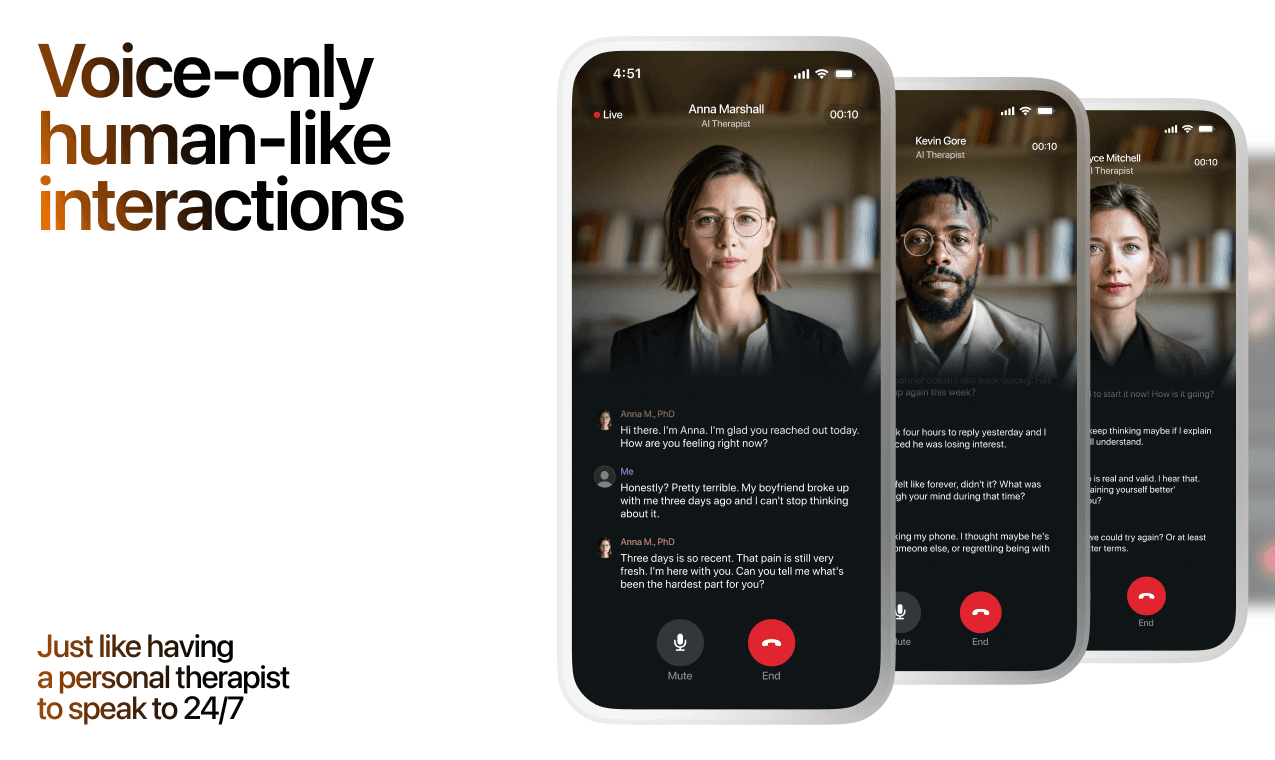
Here's what happens in a typical Lovon session:
You share what's on your mind
There's no script, no intake form, no waiting room. You speak or type whatever you're feeling — in your own words, at your own pace.
Lovon validates and explores
Using frameworks from CBT (Cognitive Behavioral Therapy) and motivational interviewing, Lovon acknowledges your feelings first, then gently helps you explore them. No dismissive "just move on" advice.
You build coping skills together
Lovon doesn't just listen — it actively works with you on evidence-based techniques: thought reframing, urge surfing, behavioral experiments, and more.
What a Session with Lovon Looks Like
When to Seek Professional Help
AI support is a valuable tool, but it's not a replacement for professional care. Please consider reaching out to a licensed therapist if you experience any of the following:
- Persistent thoughts of self-harm or suicide
- Inability to perform daily activities (work, eating, sleeping) for more than 2 weeks
- Turning to alcohol or substances to cope
- Intense anger or desire to harm your ex-partner
- Complete emotional numbness that doesn't improve over time
Crisis Resources (US): If you're in immediate danger, call 988 (Suicide & Crisis Lifeline) or text HOME to 741741 (Crisis Text Line). Available 24/7, free, and confidential.
Outside the US? Find a crisis line in your country
Ready to Start?
Your healing journey can begin right now
1 free conversation. No credit card. No judgment. Just a safe space to process what you're going through.
Frequently Asked Questions
Is AI therapy a replacement for a real therapist?
Is my conversation with Lovon AI private?
How is Lovon different from ChatGPT for emotional support?
Can I use Lovon if I'm already seeing a therapist?
Can I try Lovon for free?
About the Author
The Lovon Editorial Team
Mental Health & Wellness Content Team
The Lovon Editorial Team develops mental health and wellness content designed to make psychological concepts accessible and actionable. Our goal is to bridge the gap between clinical research and everyday life - helping you understand why your mind works the way it does and what you can do about it....
Similar Articles
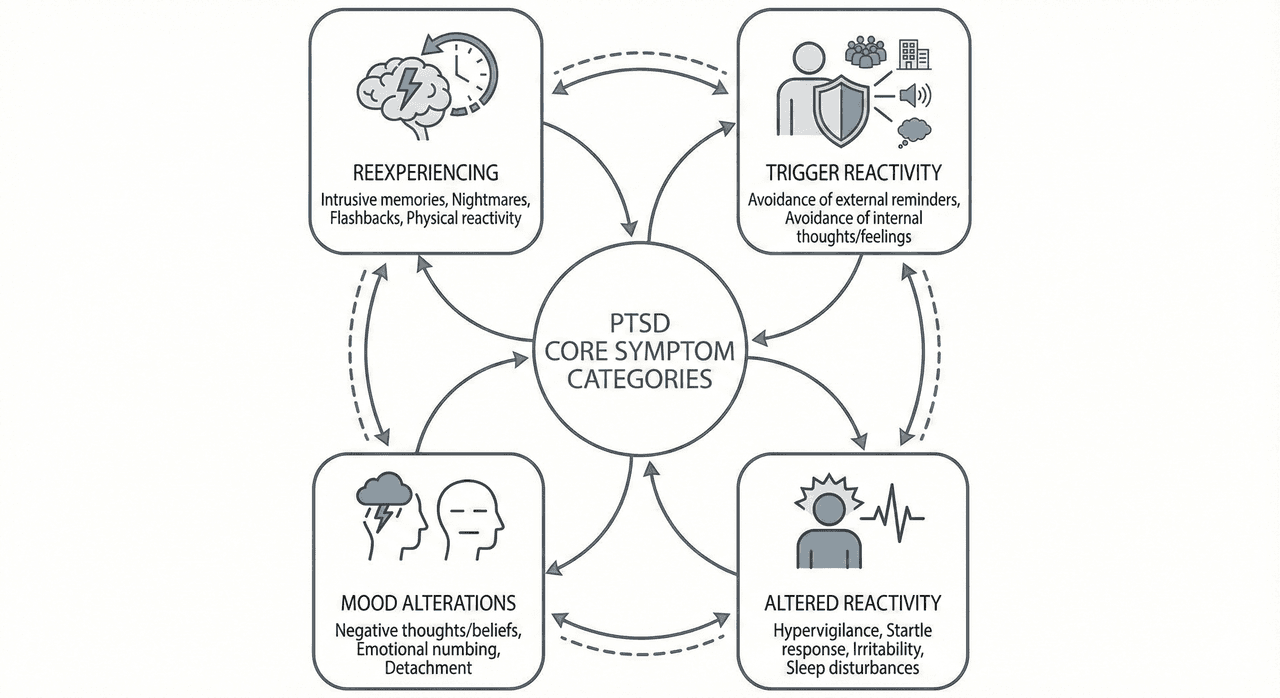
Understanding the Four PTSD Symptom Categories: Reexperiencing, Trigger Reactivity, Mood Alterations, and Altered Reactivity
A comprehensive guide to recognizing and understanding the core symptom groups that define post-traumatic stress disorder

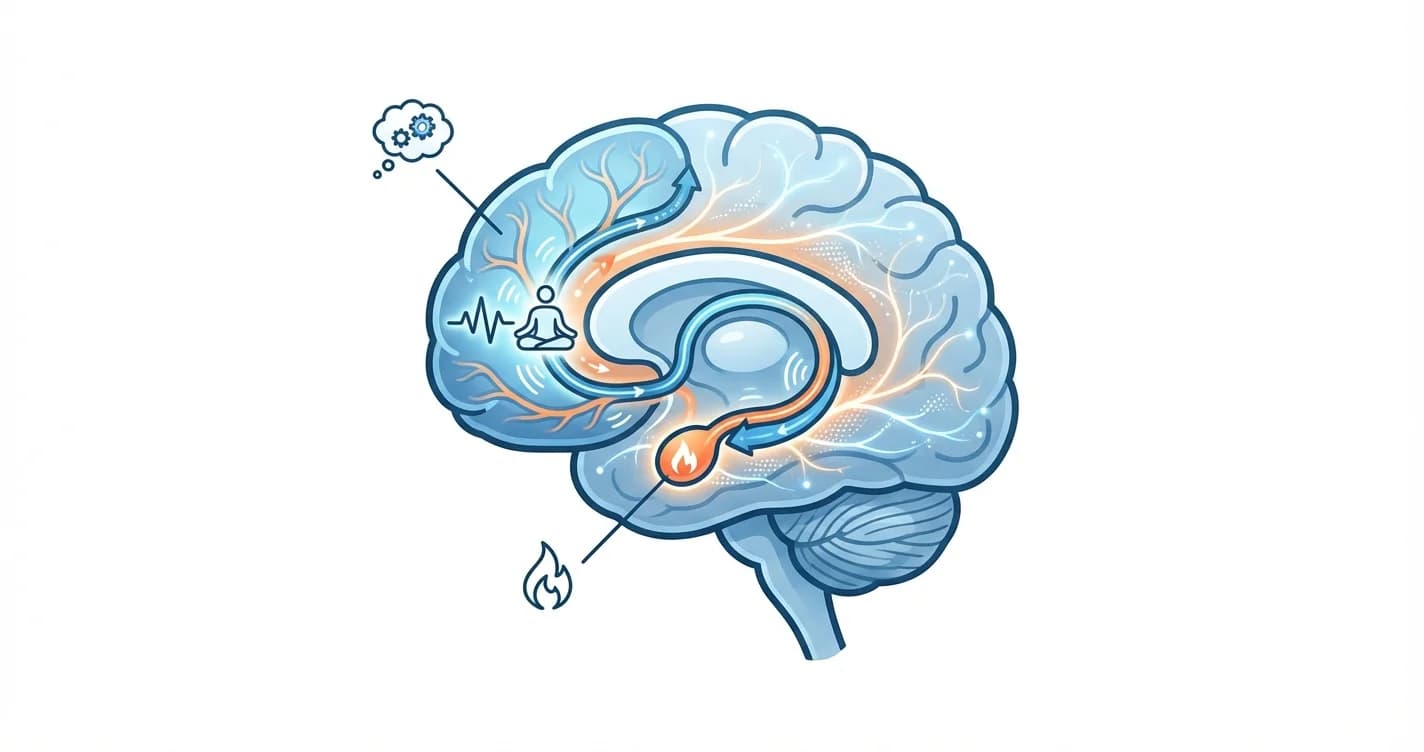
Amygdala and Prefrontal Cortex Connection: Training Emotional Regulation Through Mindfulness
How mindfulness practices reshape neural pathways to strengthen emotional control and reduce reactivity
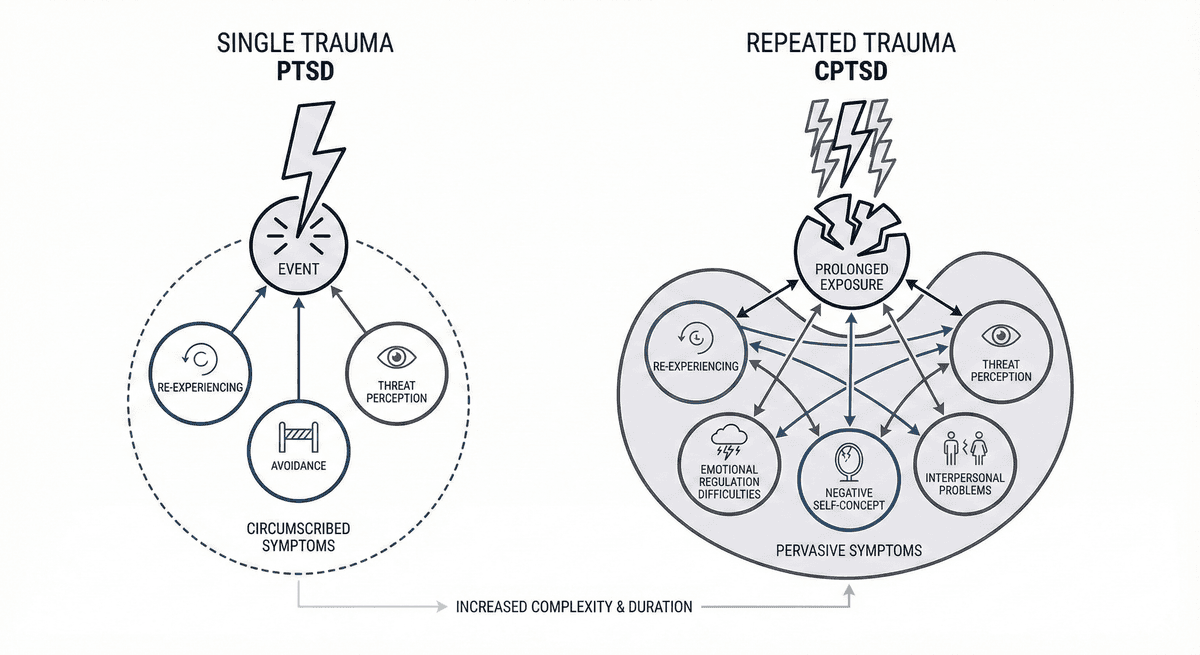
PTSD vs CPTSD: Single Trauma vs Repeated Trauma Symptom Differences
Learn how PTSD from a single traumatic event differs from CPTSD shaped by repeated trauma, including symptom patterns and treatment approaches.
Disclaimer: This article is for informational purposes only and does not constitute medical advice, diagnosis, or treatment. Always seek the advice of your physician or other qualified health provider with any questions you may have regarding a medical condition. If you are in crisis or think you may have an emergency, call 988 (Suicide & Crisis Lifeline) or go to the nearest emergency room. Outside the US? Find a crisis line in your country.