
Passive Aggressive Partner: How to Recognize It (2026)
Learn how to spot a passive aggressive partner in 2026 — silent treatment, sarcasm, and stonewalling patterns explained, with steps to name and address it.

Key Takeaways
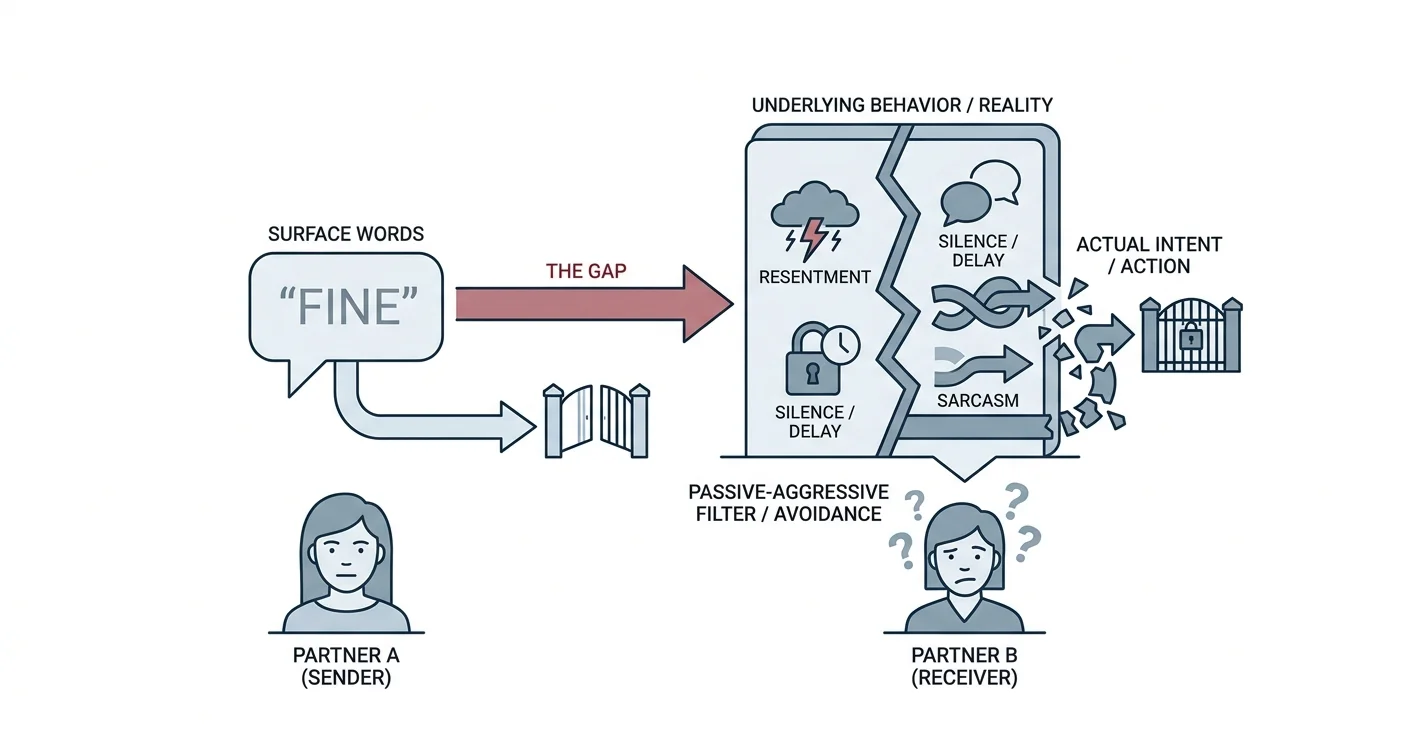
- A passive aggressive partner shows contempt through silence, sarcasm, or delay — not through direct words.
- Stonewalling, backhanded compliments, and chronic lateness are the three most common tells in 2026 relationship
- Naming the pattern out loud, calmly, is the single highest-leverage first move — confrontation without proof backfires.
- If the behavior escalates to control or fear, this guide is not enough — get outside support.
You can't fix a fight you can't name, and passive-aggressive behavior is built to dodge naming. It hides in sighs, silences, and "fine" said through a locked jaw — and by the time you notice the pattern, you've usually been living inside it for months.
TL;DR
- A passive aggressive partner shows contempt through silence, sarcasm, or delay — not through direct words.
- Stonewalling, backhanded compliments, and chronic lateness are the three most common tells in 2026 relationship research.
- Naming the pattern out loud, calmly, is the single highest-leverage first move — confrontation without proof backfires.
- If the behavior escalates to control or fear, this guide is not enough — get outside support.
Why this matters
Passive aggression isn't a personality quirk you can shrug off — it's a communication style that erodes trust one unspoken resentment at a time. Partners who use it often don't see it as hostile; they see it as "keeping the peace," which is exactly what makes it so hard to call out without sounding paranoid.
Left unaddressed, this pattern tends to calcify. What starts as an eye-roll during an argument becomes six months of silent treatment after minor disagreements. If your relationship already feels like is my relationship toxic territory, passive aggression is frequently the mechanism underneath the label.
What you'll need
- A notebook or notes app — you're tracking patterns, not memories, and memory alone will gaslight you
- Two to three weeks of observation before you draw conclusions
- A private, low-stakes moment to test a direct conversation (not mid-argument)
- Willingness to sit with an uncomfortable answer if the pattern confirms itself
The steps
1. Track the gap between words and actions
Write down every time your partner says "it's fine" or "no big deal" and then does something that contradicts it — slamming a cabinet, going quiet for the rest of the evening, or bringing it up sarcastically three days later. One instance is a bad day. Four instances in two weeks is a pattern.
Common mistake: treating each incident as isolated instead of logging them together, which is exactly how the behavior stays invisible.
2. Watch for the compliment with a blade in it
"Wow, you actually remembered" or "must be nice to only think about yourself" — these land as praise on the surface and criticism underneath. That's the backhanded compliment, and it's one of the most reliable markers of passive aggression because it lets the speaker deny hostile intent while landing the hit anyway.
3. Name the stonewalling when it happens
If your partner goes silent mid-conflict — not for a cooling-off period they've named, but indefinitely, with no timeline — that's stonewalling, and it's a documented conflict-avoidance tactic, not a personality trait. Read what is stonewalling to understand the difference between a healthy pause and a punishment.
Expected outcome: once you can label it in the moment ("this feels like you're shutting down rather than pausing"), the behavior often intensifies briefly before it shifts — that's a sign it was working as intended before you noticed.
4. Log the "forgetting" pattern
Chronic lateness, missed plans, and conveniently forgotten promises that only happen around topics your partner resents are rarely accidental. Ask yourself: does the forgetting cluster around specific requests (your birthday plans, a chore you asked for twice, a conversation they didn't want to have)? Selective forgetting is passive aggression wearing a memory problem as a disguise.
5. Test with a direct, low-heat question
Pick a calm moment — not during or right after a conflict — and ask plainly: "When you go quiet after we disagree, what's happening for you?" A partner without passive-aggressive patterns will usually answer directly, even if the answer is "I need space." A partner deep in the pattern will often deflect, minimize, or turn the question back on you ("why are you making this a thing?").
Common mistake: asking this question as an accusation ("you're being so passive aggressive right now") instead of a genuine question — it guarantees a defensive answer instead of an honest one.
6. Check whether sarcasm has become the primary language
Some sarcasm is just humor. Sarcasm that only appears when your partner is upset, and that always carries a jab underneath the joke, is a substitute for saying "I'm angry" out loud. If every disagreement gets processed through jokes at your expense, that's avoidance dressed up as wit.
7. Bring the pattern, not a single incident, to the conversation
Once you have two to three weeks of tracked examples, bring the pattern — dates, specific quotes, specific behaviors — rather than relitigating one fight. "Three times this month you've said you're fine and then not spoken to me for the rest of the night" is much harder to deflect than "you're always passive aggressive."
Expected outcome: a partner capable of change will often go quiet, then defensive, then — over days, not minutes — start acknowledging specific instances. A partner unwilling to change will attack the messenger or the method instead of the content.
Troubleshooting
Problem: they deny it entirely, even with examples in front of them. Don't argue the label — argue the behavior. Drop the phrase "passive aggressive" and describe the action instead: "when you went quiet for two days after I brought up the trip." Labels invite defensiveness; specific behavior descriptions are harder to deny.
Problem: you start second-guessing whether you're the problem. This is common and it's exactly what an unaddressed pattern does over time — it makes the person naming the issue feel unstable for naming it. A codependency vs love framework can help you separate your reasonable observations from anxiety-driven overreading.
Problem: the conversation always ends in them shutting down completely. If your partner shuts down every time conflict surfaces, the pattern itself needs direct attention before the underlying issue does. Handling a partner who shuts down during conflict is its own skill, separate from resolving whatever you were originally disagreeing about.
Problem: you can't tell if it's passive aggression or just a bad week. One bad week isn't a pattern. Passive aggression shows up repeatedly, across different topics, with the same shape each time — silence, sarcasm, or delay standing in for a direct "I'm upset." If it only happened once around a stressful event in 2026, give it room before you diagnose it.
Problem: naming it made things worse, not better. Sometimes it does, short-term — a pattern that's been working for years doesn't dissolve after one conversation. If things escalate to contempt, control, or fear rather than settling after a few honest talks, that's a signal to bring in outside support rather than keep pushing alone.
Tools and resources
- A shared, calm-context conversation — not text messages sent mid-argument
- Written tracking of dates and specific quotes, kept private and factual
- How to communicate better in a relationship for structuring the actual conversation once you've confirmed the pattern
- On-demand talk support when you need to process a hard interaction the same night it happens, rather than waiting for your next scheduled therapy session
Talk through it tonight, not next week
Lovon gives you a voice conversation whenever the pattern flares up, day or night.
What to do next
Once you've confirmed the pattern and had at least one direct conversation about it, the next question is whether the relationship's overall health is at stake or just this one behavior. If gaslighting, minimizing, or denial keeps showing up alongside the silence and sarcasm, read gaslighting in relationships next — the two patterns often travel together, and telling them apart changes what you do about each one.
FAQ
What are the clearest signs of a passive aggressive partner?
The clearest signs are saying "I'm fine" while acting upset, giving backhanded compliments, going silent instead of addressing conflict, and chronic "forgetting" tied to specific resentments. One instance is a mood; a repeated cluster across weeks is the pattern.
Is passive aggressive behavior a form of emotional abuse?
Occasional passive aggression is a poor communication habit, not abuse. It crosses into emotional abuse when it's paired with control, punishment through withdrawal, or fear on your side about bringing up normal disagreements.
How do I confront a passive aggressive partner without starting a fight?
Bring specific, dated examples during a calm moment rather than mid-conflict, and describe the behavior instead of the label — "you went quiet for two days" lands better than "you're passive aggressive." Ask an open question about what's happening for them rather than making an accusation.
Can passive aggressive behavior change?
Yes, when the person recognizes the pattern and wants to communicate directly instead of avoiding conflict. Change shows up gradually over weeks as fewer silent-treatment episodes and more direct statements of frustration, not overnight.
Is silent treatment the same as passive aggression?
Silent treatment is one of the most common forms passive aggression takes, but not all silence is passive aggressive — a clearly communicated cooling-off period with a timeline is healthy conflict management, while indefinite unexplained silence used as punishment is not.
How is passive aggression different from stonewalling?
Stonewalling is one specific tactic within passive aggression, defined by shutting down and refusing to engage during conflict. Passive aggression is the broader style, which also includes sarcasm, backhanded compliments, and chronic lateness.
Should I leave a relationship over passive aggressive behavior?
Not automatically — many partners can learn direct communication once the pattern is named clearly and consistently. Consider leaving if the behavior is paired with denial, escalating contempt, or refusal to acknowledge specific documented examples over months.
One last thing
The partner using passive aggression is often just as conflict-avoidant as you are conflict-anxious — the sarcasm and silence aren't proof they don't care, they're proof they never learned a direct way to say they're upset. That doesn't excuse the pattern, but it does change your opening line from "why do you do this" to "what would it take for you to just tell me directly," and in 2026 relationship counseling, that reframe is often the difference between a conversation that goes somewhere and one that just repeats the fight.
Related guides
How AI Support Helps You Heal
AI emotional support isn't about replacing human connection — it's about filling the gaps. The moments when you need to talk at 2 AM, when you don't want to burden your friends again, or when you simply need someone to listen without judgment.
Here's what happens in a typical Lovon session:
You share what's on your mind
There's no script, no intake form, no waiting room. You speak or type whatever you're feeling — in your own words, at your own pace.
Lovon validates and explores
Using frameworks from CBT (Cognitive Behavioral Therapy) and motivational interviewing, Lovon acknowledges your feelings first, then gently helps you explore them. No dismissive "just move on" advice.
You build coping skills together
Lovon doesn't just listen — it actively works with you on evidence-based techniques: thought reframing, urge surfing, behavioral experiments, and more.
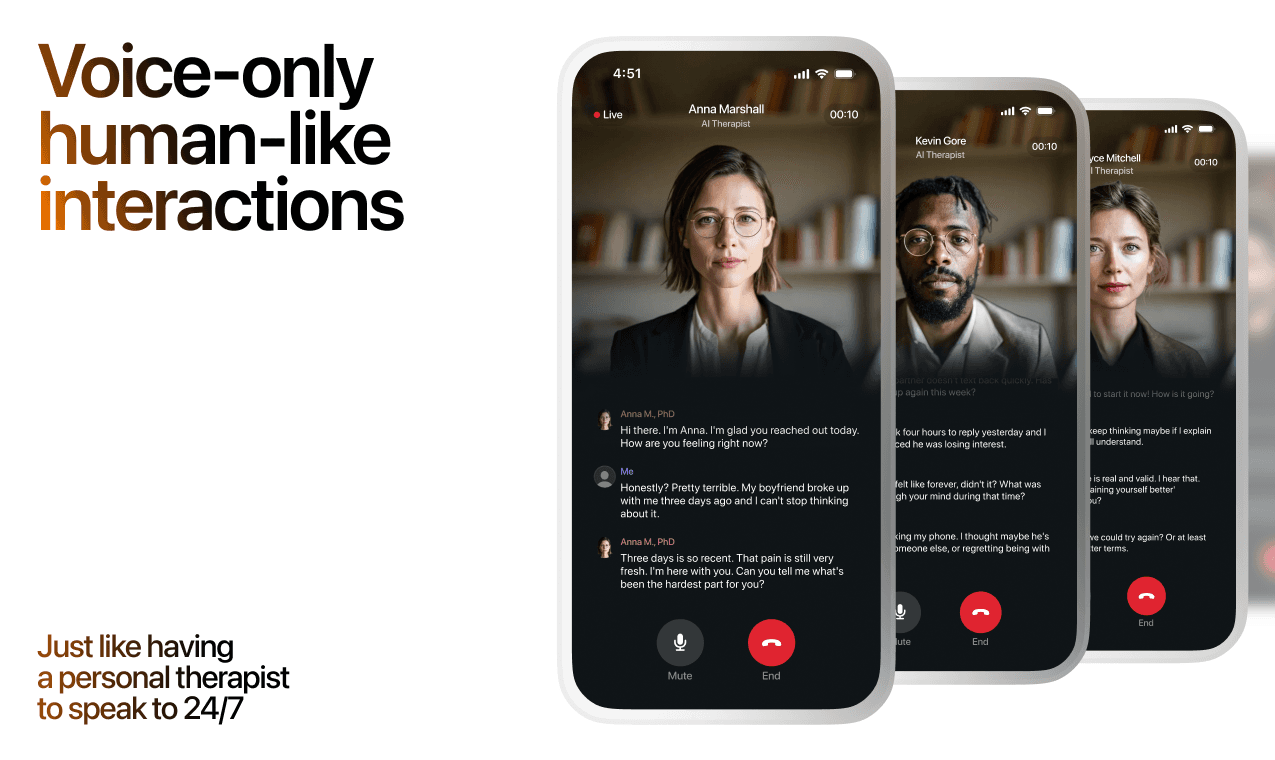
What a Session with Lovon Looks Like
When to Seek Professional Help
AI support is a valuable tool, but it's not a replacement for professional care. Please consider reaching out to a licensed therapist if you experience any of the following:
- Persistent thoughts of self-harm or suicide
- Inability to perform daily activities (work, eating, sleeping) for more than 2 weeks
- Turning to alcohol or substances to cope
- Intense anger or desire to harm your ex-partner
- Complete emotional numbness that doesn't improve over time
Crisis Resources (US): If you're in immediate danger, call 988 (Suicide & Crisis Lifeline) or text HOME to 741741 (Crisis Text Line). Available 24/7, free, and confidential.
Outside the US? Find a crisis line in your country
Ready to Start?
Your healing journey can begin right now
1 free conversation. No credit card. No judgment. Just a safe space to process what you're going through.
Frequently Asked Questions
Is AI therapy a replacement for a real therapist?
Is my conversation with Lovon AI private?
How is Lovon different from ChatGPT for emotional support?
Can I use Lovon if I'm already seeing a therapist?
Can I try Lovon for free?
About the Author

The Lovon Editorial Team
Mental Health & Wellness Content Team
The Lovon Editorial Team develops mental health and wellness content designed to make psychological concepts accessible and actionable. Our goal is to bridge the gap between clinical research and everyday life - helping you understand why your mind works the way it does and what you can do about it....
Similar Articles
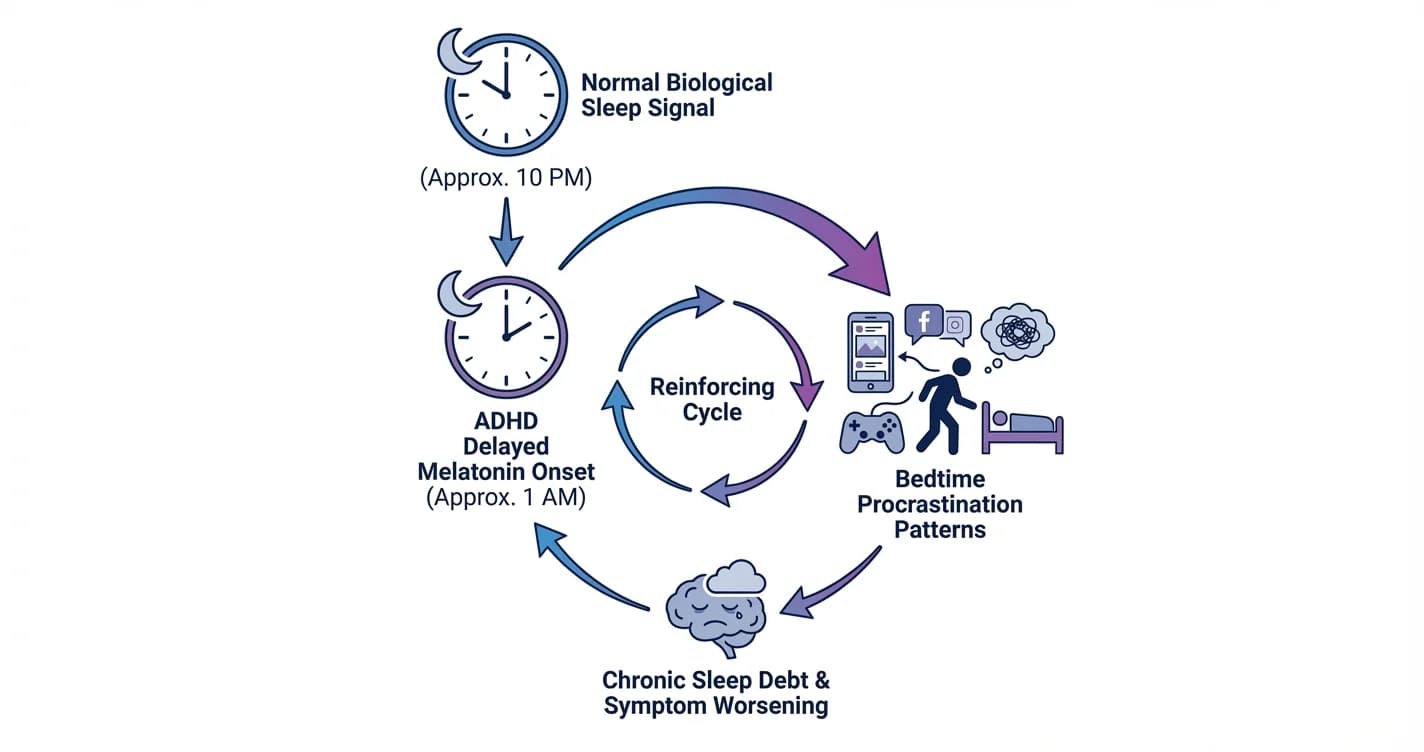
ADHD Sleep Cycle Disruption: Melatonin Delay and Bedtime Procrastination Patterns
Understanding how attention regulation difficulties interfere with natural sleep timing and the nightly wind-down process

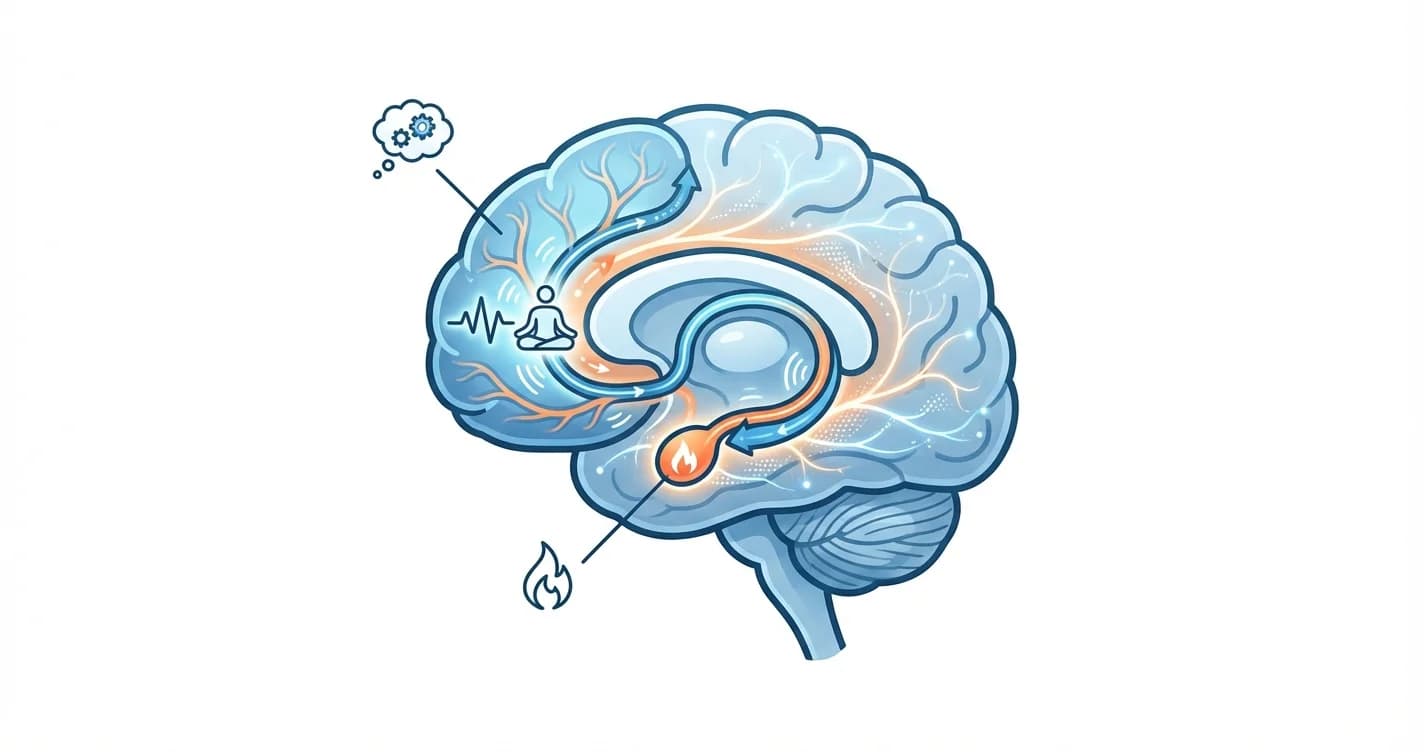
Amygdala and Prefrontal Cortex Connection: Training Emotional Regulation Through Mindfulness
How mindfulness practices reshape neural pathways to strengthen emotional control and reduce reactivity
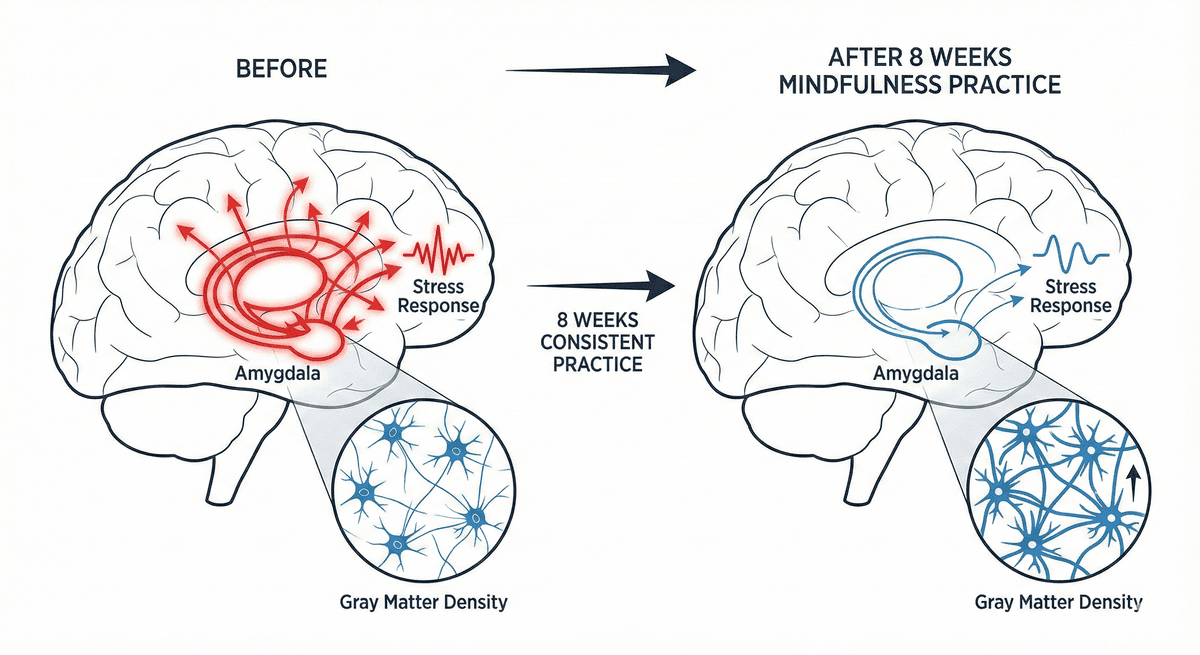
What 8 Weeks of Meditation Does to Your Amygdala
See what changes in your brain after eight weeks of daily meditation, why you react less to stress, and how to build a routine that actually sticks.
Disclaimer: This article is for informational purposes only and does not constitute medical advice, diagnosis, or treatment. Always seek the advice of your physician or other qualified health provider with any questions you may have regarding a medical condition. If you are in crisis or think you may have an emergency, call 988 (Suicide & Crisis Lifeline) or go to the nearest emergency room. Outside the US? Find a crisis line in your country.