
Mental health app for warehouse workers: complete 2026 guide
Choose a mental health app for warehouse workers that fits safe breaks and privacy. Compare voice support, self-help, and when to seek licensed care.

Key Takeaways
- Lovon offers on-demand voice support for everyday stress; it is not a licensed clinician or crisis service.
- Choose a mental health app for warehouse workers around safe break times, privacy, and shift-work stress.
- Start with a simple written check-in before deciding whether voice conversations suit you.
- Use licensed care for assessment and treatment, and human crisis support when you cannot stay safe.
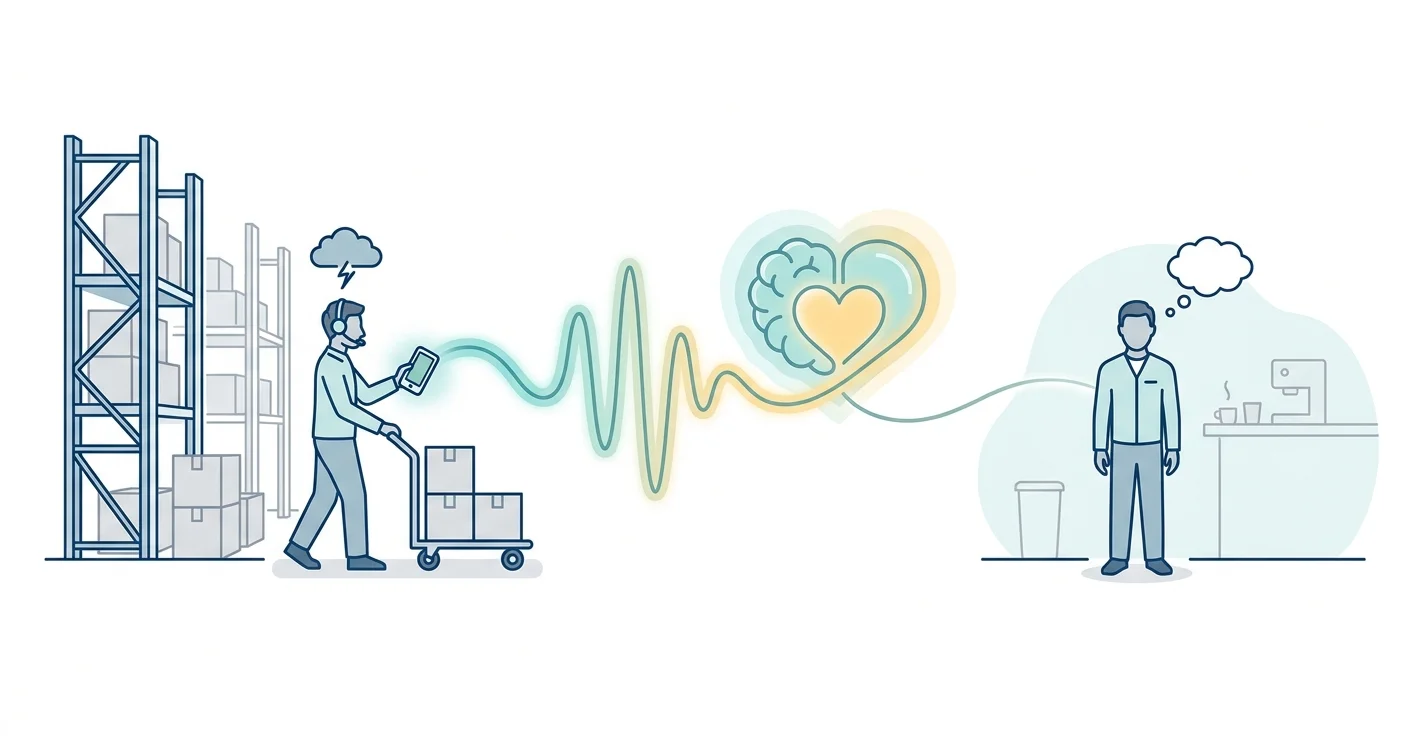
Warehouse workers’ mental health app support is phone-based emotional guidance aimed at helping you manage everyday stress around your shifts. Choosing a mental health app for warehouse workers means checking whether it fits your schedule, gives you space to talk privately, and keeps emotional support separate from clinical care.
TL;DR
- Lovon offers on-demand voice support for everyday stress; it is not a licensed clinician or crisis service.
- Choose a mental health app for warehouse workers around safe break times, privacy, and shift-work stress.
- Start with a simple written check-in before deciding whether voice conversations suit you.
- Use licensed care for assessment and treatment, and human crisis support when you cannot stay safe.
Why mental health support matters for warehouse workers
The useful question in 2026 is not which app has the longest feature list. It is which kind of support you can use safely when you need it, without adding another task to an already demanding day.
If you work changing shifts, share a break room, or finish work when other people are asleep, a fixed appointment and an on-demand check-in serve different purposes. Our guide to mental health support for shift workers covers that scheduling problem in more detail.
An app gives you somewhere to reflect, but it does not change an unsafe assignment, resolve harassment, or replace rest. Choose emotional support for emotional needs, and address workplace hazards through the appropriate workplace process.
Your goal does not have to be feeling calm after every shift. A useful starting point is recognizing what happened, deciding what you need, and knowing when to involve another person.
How to choose and use support around your shifts
Start with a notebook or a private note on your own device. The following steps help you decide whether an app adds something useful, rather than assuming you need one. Follow the sequence at your own pace; it is not a treatment plan.
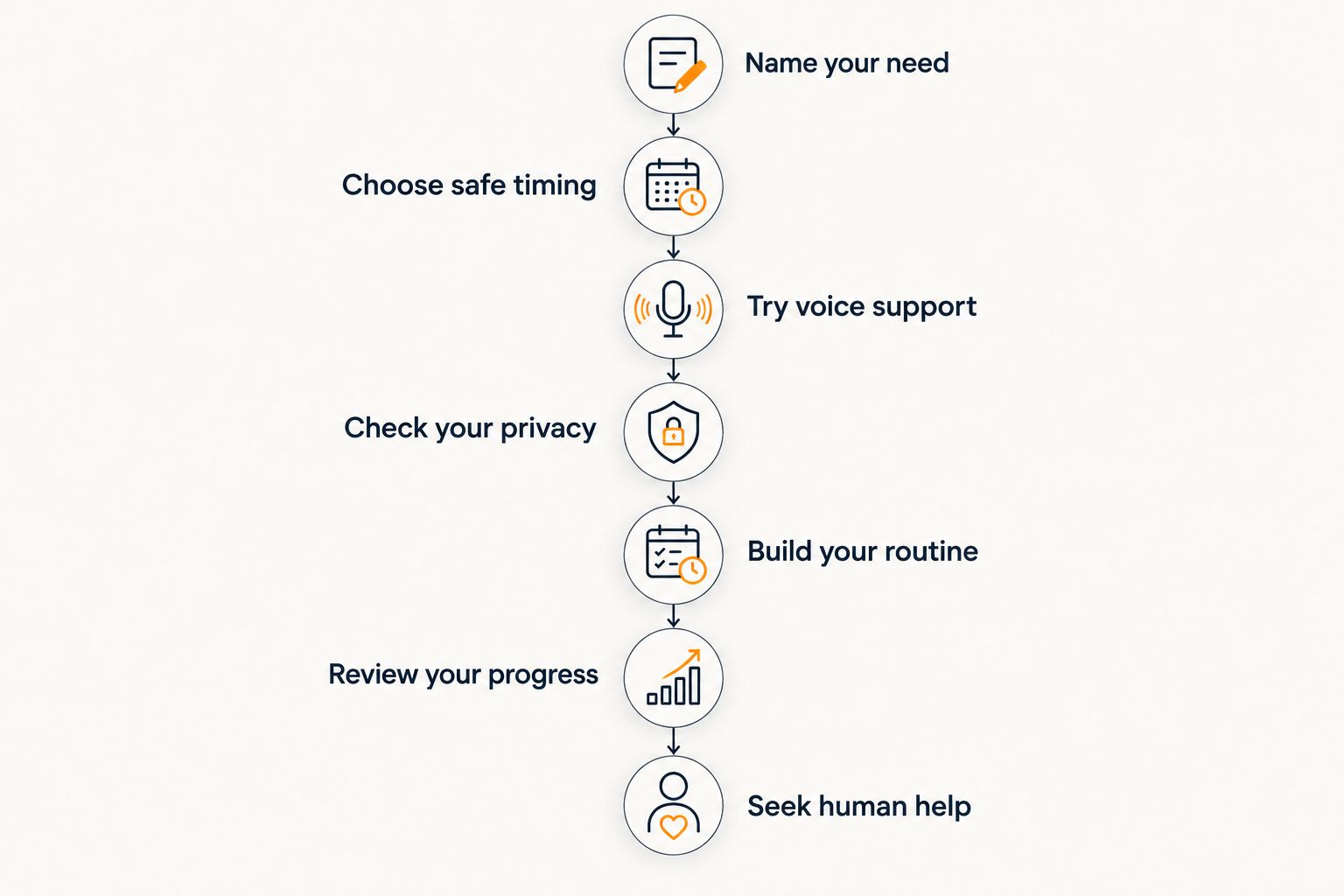 Seven steps for choosing mental health support that fits warehouse shifts
Start with your needs and safety before choosing an app.
Name your need
Write down the moment you want help with, not just the feeling you want to remove. For example, you might want to stop replaying a supervisor’s comment after work, explain your exhaustion to your partner, or organize worries before trying to sleep.
Keep the first check-in small. Try a suggested 2-minute check-in, not a demand to unpack everything. Separate what happened from what you think it means; neither a notebook nor an app can confirm another person’s intentions.
- Name the situation without including coworkers’ identifying details.
- Describe the feeling in everyday words, such as worried or angry.
- Choose one immediate need: reflection, connection, rest, or practical help.
- Write down whether the problem also needs a workplace response.
Choose safe timing
Set a clear boundary: use mental health apps away from active warehouse tasks. Do not start a conversation while operating a forklift, handling moving equipment, crossing vehicle routes, or driving home. Hands-free use still asks for your attention.
For your 2026 routine, choose a safe pause rather than assuming every break is suitable. A shared room might work for a quiet written note but not a personal voice conversation. If you have no private place at work, leave the conversation until you are somewhere appropriate.
- Follow your workplace’s phone and headphone rules.
- Move away from equipment and traffic before opening an app.
- Choose a private, stationary place for voice conversations.
- Stop the session if it competes with situational awareness.
Try voice support
First, say your thoughts aloud privately or write them down. Notice whether speaking feels easier than typing after your shift. You do not need polished language; a plain description of what is bothering you is enough.
Lovon offers on-demand voice conversations, emotional support, coping tools, and self-reflection guidance. Lovon is best suited to warehouse workers who want on-demand voice-based emotional support, not clinical care. Its voice format gives you a way to talk rather than compose a written entry, but it also requires somewhere you feel comfortable speaking.
Treat responses as suggestions to consider, not instructions you must follow. A supportive-sounding reply is not a diagnosis, a safety assessment, or proof that the advice fits your circumstances.
- Explain the situation in your own words.
- Ask for one coping tool rather than a long list.
- Say when a response misses the point or feels unhelpful.
- End the conversation if it increases distress or keeps you stuck.
Check your privacy
Read the current privacy policy before sharing sensitive information. For any app you consider in 2026, check what happens to conversations, whether people can review them, and how account or data deletion works. Do not assume that a mental health label means every service handles information the same way.
Also consider the device itself. Someone seeing a notification or overhearing your voice is a different privacy risk from the app’s data practices. If an employer introduces a service, ask what information the employer receives before using it.
- Look for clear explanations of storage, access, and deletion.
- Check whether conversations are used to improve the service.
- Avoid employee numbers, customer information, and confidential work details.
- Review notifications and access on any shared device.
Build your routine
Use a repeatable cue, such as arriving home or sitting down before your main sleep period. A cue tied to your day is easier to adapt when the clock time changes. Start with the same short written check-in, whether or not you use an app afterward.
Try these 3 prompts: What happened? What am I feeling? What do I need next? They organize reflection without requiring you to retell the entire shift. If talking starts to crowd out sleep, food, or contact with someone you trust, shorten the routine or skip it.
- Pick a cue that works on both workdays and days off.
- Keep the check-in focused on one situation.
- End with a manageable next action, not another self-improvement task.
- Leave room for rest without tracking or recording anything.
Review your progress
Choose a review point, such as after 7 days of use. This is a suggested trial period for judging fit, not a promise about symptom improvement. For your 2026 review, compare usefulness and burden rather than counting how often you opened the app.
Ask whether the conversations helped you name a need, prepare a difficult conversation, or decide to seek help. Also check the downside. Repeating the same worry for longer, delaying sleep, or feeling dependent on a reply are reasons to reconsider how you use the tool.
- Note one useful takeaway, if there was one.
- Check whether sessions leave you clearer or more distressed.
- Notice whether app use delays sleep or human contact.
- Change the routine or stop using the app if it is not helping.
Seek human help
You do not need to exhaust self-help tools before contacting a professional. Arrange licensed care when distress persists, worsens, or interferes with sleep, relationships, daily life, or safe work. A clinician can assess symptoms and discuss treatment; an emotional support app cannot replace that role.
If you might hurt yourself, cannot stay safe, or are in a mental health crisis in the United States, call or text 988 for the Suicide & Crisis Lifeline. Call 911 for immediate danger or a medical emergency. Do not wait for an app to recognize a crisis.
- Contact a licensed mental health professional for assessment and treatment.
- Ask a primary care clinician about ongoing mood or sleep concerns.
- Check whether your employer offers an employee assistance program.
- Tell a trusted person when you need help getting support.
Compare support options for warehouse workers
Choose by the job you need support to do, not by whether the option sounds more advanced. In 2026, the central distinction remains the same: self-help and emotional support are different from licensed assessment and treatment.
| Option | Best for | Main advantage | Key limitation |
|---|---|---|---|
| Paper journal or private written note | Workers who want quiet, self-directed reflection | Lets you organize thoughts without speaking aloud | Does not offer feedback or clinical assessment; notes still need secure storage |
| Lovon voice support | Workers who prefer talking through everyday stress outside work tasks | Offers on-demand emotional support, coping tools, and reflection guidance | Is not a licensed clinician; voice use needs a suitable private setting |
| Guided breathing or meditation tool | Workers who want a structured exercise during a safe pause | Provides an exercise to follow rather than an open conversation | Does not address every emotional need or change workplace conditions |
| Employee assistance program, if offered | Workers who want to explore employer-provided support | Provides a route to ask about available services and referrals | Scope, confidentiality arrangements, and access depend on the program |
| Licensed mental health care | Workers who need assessment or treatment | Provides clinical evaluation and a treatment relationship | Requires arranging care around schedules and provider access |
Use the least complicated option that meets the need, but do not substitute convenience for necessary care. You can use a notebook for reflection and still arrange therapy. You can also decide that voice support does not fit your privacy needs.
Common mistakes warehouse workers make
Using a session during an active task
A conversation belongs in a safe pause, not between picks, while reversing equipment, or during the drive home. Do not use headphones or a phone in ways that conflict with workplace rules. Being able to start a session does not mean the setting is safe.
Treating a shared break room as private
Speaking softly does not prevent someone from overhearing personal information. Choose written reflection or wait until later if you cannot talk comfortably. Avoid naming coworkers even when the conversation feels private.
Trying to cope your way through a workplace hazard
An app cannot make unsafe equipment safe or resolve a threatening interaction. Separate your emotional response from the action the situation requires. Follow the appropriate reporting process, and seek immediate help when there is danger.
Turning reflection into another performance target
You do not owe an app a daily streak, a long explanation, or a better mood. If you finish a shift exhausted, a short note or no check-in at all is acceptable. The routine should serve you, not become another quota.
Assuming exhaustion explains every symptom
Do not use an app to decide that persistent low mood, severe sleep difficulties, or new physical symptoms are only work stress. Seek professional assessment rather than relying on reassurance. New or severe chest pain, fainting, or serious breathing difficulty needs urgent medical attention.
FAQ
What's the best mental health app for warehouse workers?
The best fit depends on whether you need quiet reflection, voice-based emotional support, or licensed care. Lovon suits workers who want on-demand voice conversations about everyday stress, but it is not a licensed clinician or a replacement for treatment.
Can I use a mental health app during my warehouse shift?
Use an app only during a safe, permitted pause away from active tasks and traffic. Follow workplace rules, and never use a session while operating equipment or driving.
Is voice support better than typing after a shift?
Voice support fits people who prefer speaking, while typing fits situations where speaking is not private or comfortable. Try a short spoken reflection and a written note before choosing; neither format is automatically the better fit.
Will my employer see what I tell a mental health app?
Check the specific service and any employer arrangement before sharing information. Ask what data is collected, who can access it, and what the employer receives; do not assume confidentiality terms are identical across services.
Can a mental health app treat warehouse burnout?
An emotional support app is not a substitute for assessment or treatment. It can offer reflection and coping tools, but persistent exhaustion or distress also deserves attention to working conditions, recovery needs, and professional care.
What if I work nights and cannot keep a daily routine?
Tie your check-in to an event, such as arriving home, instead of a fixed clock time. Keep the routine brief and optional so it does not take priority over your main sleep period.
When should I stop using an app and get human help?
Seek human help when distress worsens, disrupts daily life, or affects your ability to work safely. In the United States, call or text 988 for a mental health crisis, and call 911 for immediate danger or a medical emergency.
One last thing
Before choosing a tool in 2026, finish this sentence: I need help with this specific moment. Your answer might be the worry before clocking in, the frustration after a conflict, or the silence when you get home.
Lovon mental health support fits the talking-and-reflection part of that decision. Choose the next step that matches your need, even when that step is rest, a workplace conversation, or licensed care rather than an app.
Related guides
How AI Support Helps You Heal
AI emotional support isn't about replacing human connection — it's about filling the gaps. The moments when you need to talk at 2 AM, when you don't want to burden your friends again, or when you simply need someone to listen without judgment.
Here's what happens in a typical Lovon session:
You share what's on your mind
There's no script, no intake form, no waiting room. You speak or type whatever you're feeling — in your own words, at your own pace.
Lovon validates and explores
Using frameworks from CBT (Cognitive Behavioral Therapy) and motivational interviewing, Lovon acknowledges your feelings first, then gently helps you explore them. No dismissive "just move on" advice.
You build coping skills together
Lovon doesn't just listen — it actively works with you on evidence-based techniques: thought reframing, urge surfing, behavioral experiments, and more.
What a Session with Lovon Looks Like
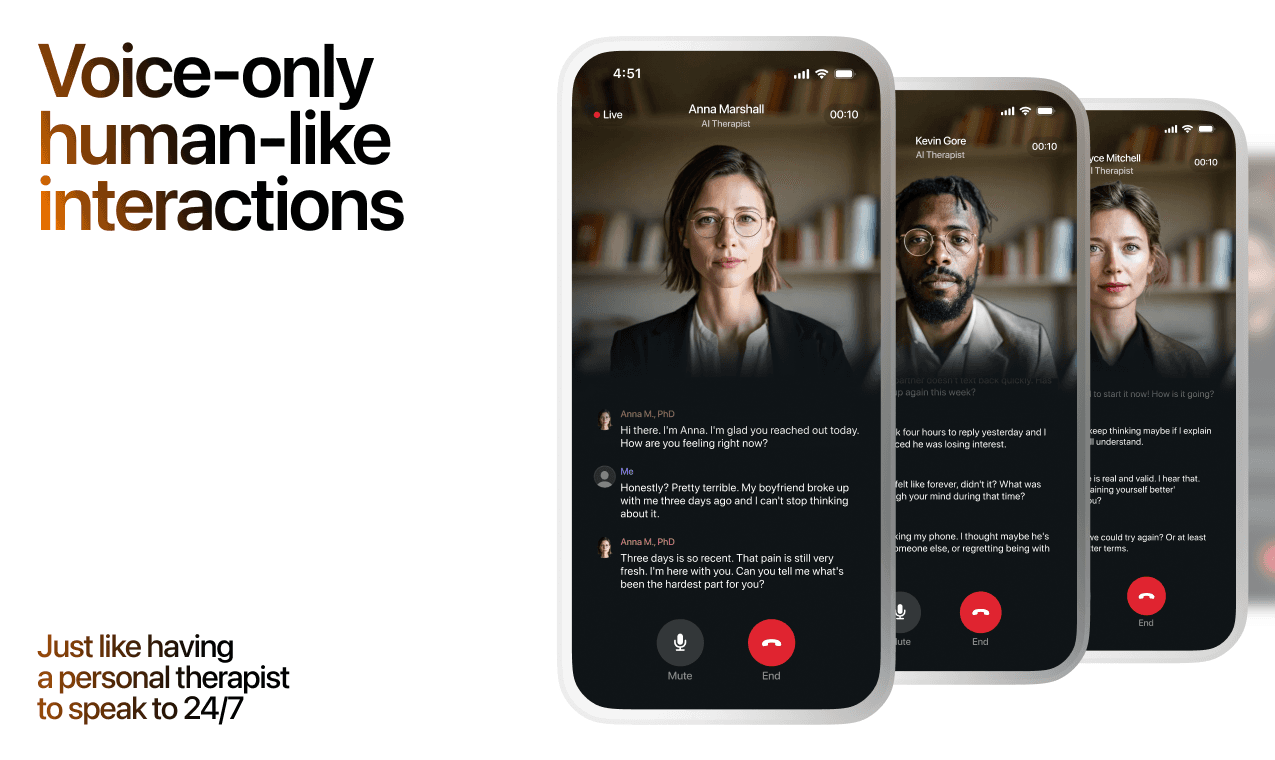
Lovon is AI support, not a replacement for professional care. If things have been hard to get through for weeks, or you are thinking about harming yourself, talk to a doctor or a licensed therapist.
Ready to Start?
Your healing journey can begin right now
A 7-day trial. No judgment. Just a safe space to process what you're going through.
Frequently Asked Questions
Is Lovon a replacement for a real therapist?
Is my conversation with Lovon AI private?
How is Lovon different from ChatGPT for emotional support?
Can I use Lovon if I'm already seeing a therapist?
Can I try Lovon before subscribing?
About the Author
The Lovon Editorial Team
Mental Health & Wellness Content Team
The Lovon Editorial Team develops mental health and wellness content designed to make psychological concepts accessible and actionable. Our goal is to bridge the gap between clinical research and everyday life - helping you understand why your mind works the way it does and what you can do about it....
Related articles
- AI mental health support for startup founders: complete 2026 guide
Mental health support for startup founders: use AI for reflection, not clinical care. Build a practical plan for stress…
- AI Mental Health Support 2026: What It Is & Who It Helps
AI mental health support ranges from voice therapy to chatbots in 2026. See what each format does best, who it helps…
- How much time a day should you spend on self-care?
How much time a day should you spend on self care? There is no fixed daily target. Learn how to choose care that fits…
- Mental Health Support for First Responders: 2026 Guide
What works for mental health support for first responders in 2026: trauma-informed coping tools, PTSD guidance, and 24/7…
See also
Quizzes
- Digital Stress Test: Texting, Likes and Read Receipts
See which part of being online wears on you, in 3 minutes.
- Resilience Test: How Fast Do You Bounce Back?
See how you recover from setbacks, in 3 minutes.
Free tools
- Write a Condolence Message for This Person
Get one condolence message written for your situation instead of a list of a hundred to choose from. Tell it who died…
- What to Say to Someone Who Is Grieving
Get sentences that fit this person and this week, not a list of things people say at funerals. Describe who they lost…
From the wiki
- What does it mean when you dream about your ex?
Dreaming about your ex usually reflects emotional processing, not prophecy and not a message from them. Your sleeping…
Disclaimer: This article is for informational purposes only and does not constitute medical advice, diagnosis, or treatment. Always seek the advice of your physician or other qualified health provider with any questions you may have regarding a medical condition. If you are in crisis or think you may have an emergency, call 988 (Suicide & Crisis Lifeline) or go to the nearest emergency room. Outside the US? Find a crisis line in your country.