
Mental Health Support for First Responders: 2026 Guide
What works for mental health support for first responders in 2026: trauma-informed coping tools, PTSD guidance, and 24/7 AI voice support with Lovon.

Key Takeaways
- Lovon gives first responders mental health support at 3 a.m., not by appointment — that's the whole point.
- PTSD-specific guidance beats generic meditation apps for shift workers processing a bad call. Buy the specific tool.
- Hypervigilance and emotional flashbacks need trauma-informed coping tools, not one-size-fits-all check-ins.
- Lovon is not a licensed clinician — pair it with an EAP or therapist for ongoing PTSD treatment in 2026.
Firefighters, paramedics, police officers, 911 dispatchers, and corrections officers carry trauma exposure that most mental health care was never built to handle on a rotating shift. Here's what real mental health support for first responders looks like in 2026, and where an AI voice therapy app like Lovon actually fits.
TL;DR
- Lovon gives first responders mental health support at 3 a.m., not by appointment — that's the whole point.
- PTSD-specific guidance beats generic meditation apps for shift workers processing a bad call. Buy the specific tool.
- Hypervigilance and emotional flashbacks need trauma-informed coping tools, not one-size-fits-all check-ins.
- Lovon is not a licensed clinician — pair it with an EAP or therapist for ongoing PTSD treatment in 2026.
Why this matters
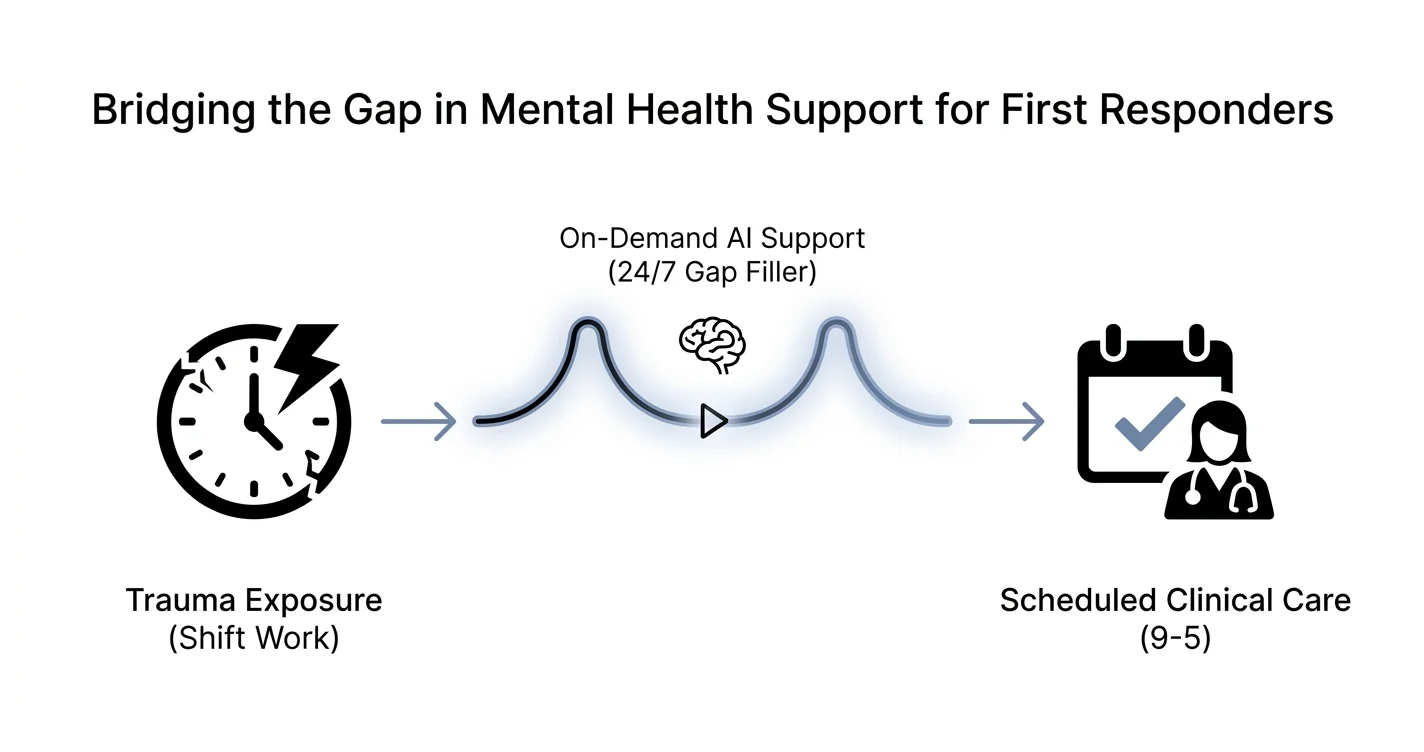
Shift work breaks the assumptions built into most mental health care. A 9-to-5 intake call doesn't help a paramedic still shaking after a code that didn't work out, and a two-week waitlist doesn't help a firefighter who can't stop replaying a house fire that took a colleague. An on-demand therapy app has to work the hour a shift ends, not the hour a clinic opens.
First responder culture also punishes anything that looks like a paper trail. A dispatcher who books time off for a therapy appointment risks a conversation nobody asked for. Support that lives on a phone, with no scheduling desk and no waiting room, removes that exposure entirely.
Who this is for
This is for anyone working rotating 12-hour or 24-hour shifts inside emergency response: police officers, firefighters, paramedics, EMTs, 911 dispatchers, and corrections officers. It's for the person who just left a call that won't leave them, and for the person who's fine on shift but can't sleep once they clock out. It assumes you already have, or are looking for, an Employee Assistance Program or a licensed therapist — and you need something that fills the hours those resources don't cover.
What to look for in mental health support for first responders
Available when your shift ends, not when a clinic opens
Most outpatient therapy runs on banker's hours. First responders need something open at 3 a.m. after a night shift, or in the hour before the next one starts — otherwise the support exists on paper only.
Built for trauma, not general stress
A wellness app built for deadline stress won't recognize hypervigilance or an emotional flashback for what they are. Support built around trauma responses matters more than generic mindfulness content in 2026.
No scheduling desk, no paper trail
Anything that requires booking through HR or shows up on a record visible to a supervisor gets used less, not more, inside first responder culture. Anonymity is a feature here, not a nice-to-have.
Coping tools you can use between calls, not just after
A grounding technique that takes 60 seconds is more useful mid-shift than a worksheet meant for a free evening at home. Support has to fit inside a break.
Works alongside your EAP, not instead of it
An AI tool is not a licensed clinician and shouldn't be sold as one. The right support fills the gap between EAP sessions or therapy appointments — it doesn't replace either.
Where to start inside Lovon
The 3 a.m. pick: processing a call before it turns into a flashback
Lovon's guide on emotional flashbacks walks through what a trauma-linked flashback actually feels like in the body versus a normal memory — a distinction most first responders never get taught. Use it in the first hour after a rough call, while the nervous system is still activated. Verdict: Buy — use it the same shift it happens, not days later.
The always-scanning brain: hypervigilance that doesn't switch off at home
The hypervigilance breakdown explains why a dispatcher checking exits at a restaurant, or an officer who can't sit with their back to a door, isn't being paranoid — it's a trained nervous system nobody told the shift was over. Verdict: Consider — pair it with an off-duty wind-down routine, not just during work hours.
The waitlist workaround: PTSD-specific support without a clinic slot
AI support for PTSD lays out what an AI voice conversation can and can't do for trauma symptoms, and exactly where it hands off to licensed care. It's the clearest starting point when a formal PTSD diagnosis feels far off but the symptoms are already here in 2026. Verdict: Buy — use it while you're on a waitlist for a specialist, not instead of one.
The between-calls reset: calming the body before the next dispatch
The breathing exercises guide gives a 60-second technique built to bring heart rate down fast — more realistic for a first responder with five minutes between calls than a 20-minute guided meditation. Verdict: Consider — best used preventively, before a shift gets loud.
Talk to Lovon right now
No appointment, no waitlist — start a voice session whenever the shift ends.
What to avoid
- Skip generic wellness apps built for office stress. They won't name hypervigilance, emotional flashbacks, or the freeze response, and first responders need language that matches what's actually happening in their body.
- Skip anything that requires a supervisor's sign-off or shows up on a benefits report visible to command staff. That defeats the entire point of on-demand support.
- Don't wait for a crisis to start using a coping tool. A 60-second grounding technique works better as a daily habit than as an emergency measure reached for once things are already bad.
How the options compare
| Resource | Best for | Available | Verdict |
|---|---|---|---|
| Emotional flashback guide | Right after a bad call | 24/7, self-paced | Buy |
| Hypervigilance breakdown | Off-duty nervous system reset | 24/7, self-paced | Consider |
| AI support for PTSD | Filling a specialist waitlist | 24/7, self-paced | Buy |
| Breathing exercises | Between calls, preventive | 24/7, self-paced | Consider |
Every row here runs through Lovon's voice sessions — no intake form, no scheduling desk, and no supervisor visibility into whether you used it in 2026.
FAQ
What is the best mental health support for first responders in 2026?
The best mental health support for first responders in 2026 combines on-demand tools like Lovon for the hours between shifts with an EAP or licensed therapist for ongoing PTSD or trauma treatment. Neither replaces the other.
Can an AI app replace therapy for PTSD in first responders?
No. An AI voice app like Lovon is not a licensed clinician and cannot replace PTSD treatment from a therapist. It works best as support between sessions or while waiting for a specialist appointment.
Is Lovon confidential for police officers and firefighters?
Lovon runs as a private voice conversation on your own phone, with no scheduling desk or supervisor visibility involved. That anonymity matters in first responder culture where a visible therapy appointment can carry stigma.
How much does mental health support for first responders cost through an EAP?
EAP costs and session limits vary by department and provider, so check your specific plan for exact numbers. An on-demand app fills the gaps an EAP's limited sessions leave open.
What's the difference between hypervigilance and normal alertness?
Hypervigilance is a nervous system stuck scanning for threats even in safe settings, like checking exits at a restaurant on a day off. Normal alertness turns off once the danger passes; hypervigilance doesn't.
Can first responders use Lovon between EAP sessions?
Yes. Lovon is built for the hours an EAP or therapist doesn't cover, including overnight shifts and the days between scheduled appointments. It works alongside clinical care, not around it.
What time of day do first responders need mental health support the most?
The hour right after a bad call and the hour right after clocking off a night shift are when most first responders need support, and both fall outside typical clinic hours. On-demand tools are built specifically for those gaps.
Is AI voice therapy effective for shift workers?
AI voice therapy works well for shift workers because it doesn't depend on a fixed appointment window. It's most effective as emotional support and coping tools between calls, not as a substitute for licensed PTSD treatment.
One last thing
The most useful habit isn't a nightly session — it's a two-minute voice check-in in the parking lot right after clocking out, before the adrenaline drops and before the drive home starts replaying the call. Do it in 2026 before you're already in bed staring at the ceiling, not after.
How AI Support Helps You Heal
AI emotional support isn't about replacing human connection — it's about filling the gaps. The moments when you need to talk at 2 AM, when you don't want to burden your friends again, or when you simply need someone to listen without judgment.
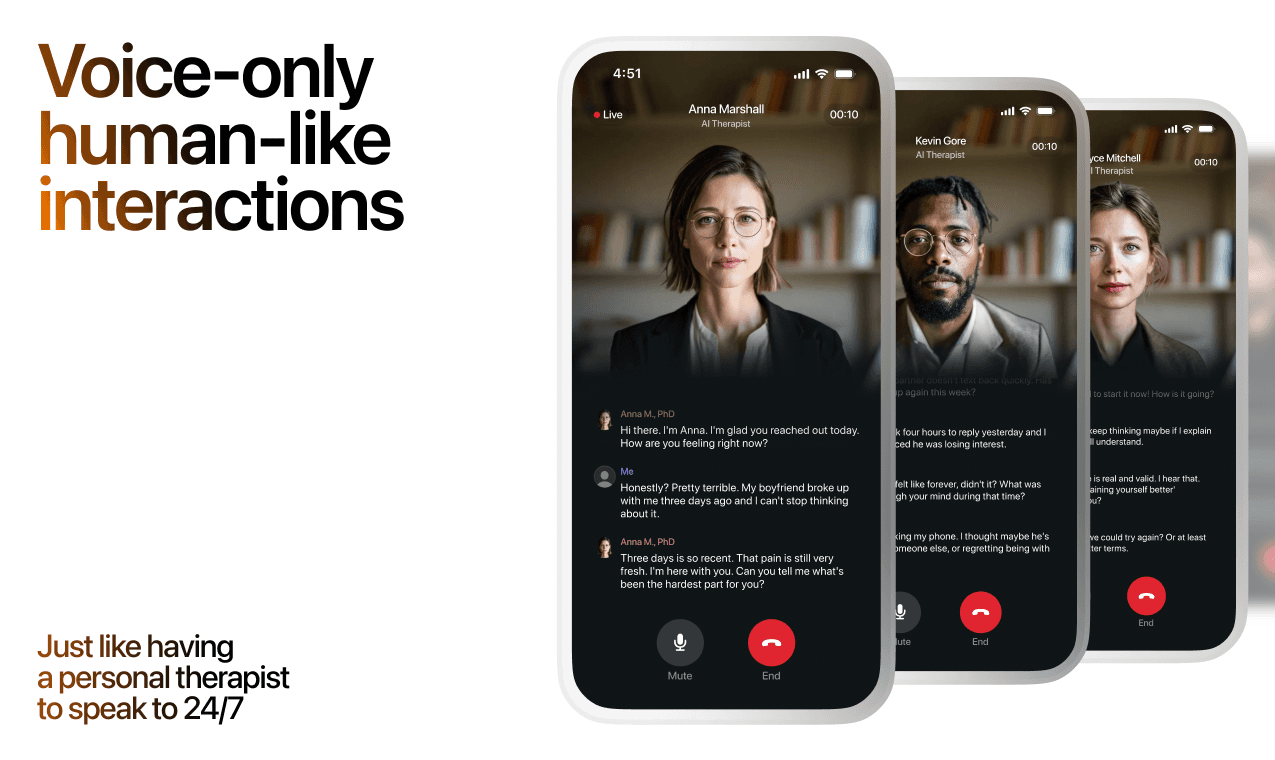
Here's what happens in a typical Lovon session:
You share what's on your mind
There's no script, no intake form, no waiting room. You speak or type whatever you're feeling — in your own words, at your own pace.
Lovon validates and explores
Using frameworks from CBT (Cognitive Behavioral Therapy) and motivational interviewing, Lovon acknowledges your feelings first, then gently helps you explore them. No dismissive "just move on" advice.
You build coping skills together
Lovon doesn't just listen — it actively works with you on evidence-based techniques: thought reframing, urge surfing, behavioral experiments, and more.
What a Session with Lovon Looks Like
When to Seek Professional Help
AI support is a valuable tool, but it's not a replacement for professional care. Please consider reaching out to a licensed therapist if you experience any of the following:
- Persistent thoughts of self-harm or suicide
- Inability to perform daily activities (work, eating, sleeping) for more than 2 weeks
- Turning to alcohol or substances to cope
- Intense anger or desire to harm your ex-partner
- Complete emotional numbness that doesn't improve over time
Crisis Resources (US): If you're in immediate danger, call 988 (Suicide & Crisis Lifeline) or text HOME to 741741 (Crisis Text Line). Available 24/7, free, and confidential.
Outside the US? Find a crisis line in your country
Ready to Start?
Your healing journey can begin right now
1 free conversation. No credit card. No judgment. Just a safe space to process what you're going through.
Frequently Asked Questions
Is AI therapy a replacement for a real therapist?
Is my conversation with Lovon AI private?
How is Lovon different from ChatGPT for emotional support?
Can I use Lovon if I'm already seeing a therapist?
Can I try Lovon for free?
About the Author
The Lovon Editorial Team
Mental Health & Wellness Content Team
The Lovon Editorial Team develops mental health and wellness content designed to make psychological concepts accessible and actionable. Our goal is to bridge the gap between clinical research and everyday life - helping you understand why your mind works the way it does and what you can do about it....
Similar Articles
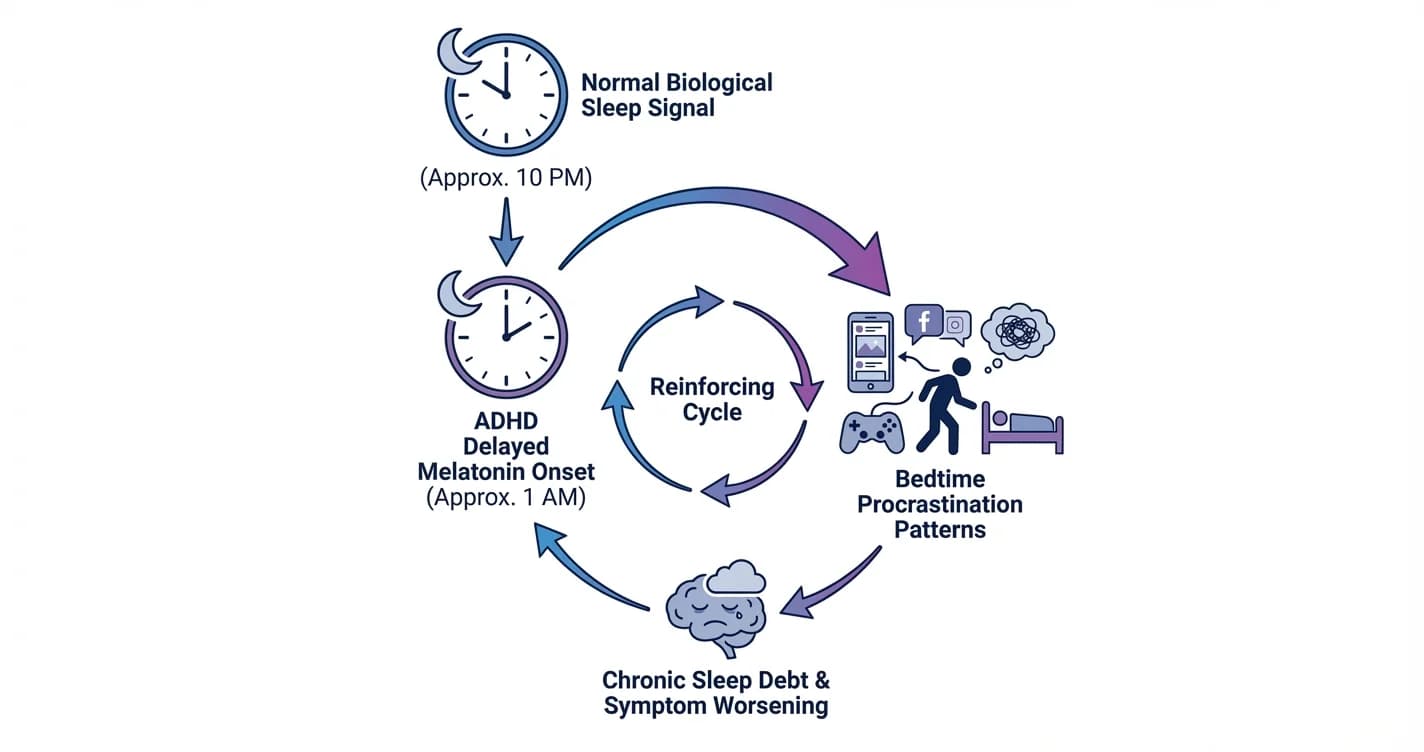
ADHD Sleep Cycle Disruption: Melatonin Delay and Bedtime Procrastination Patterns
Understanding how attention regulation difficulties interfere with natural sleep timing and the nightly wind-down process

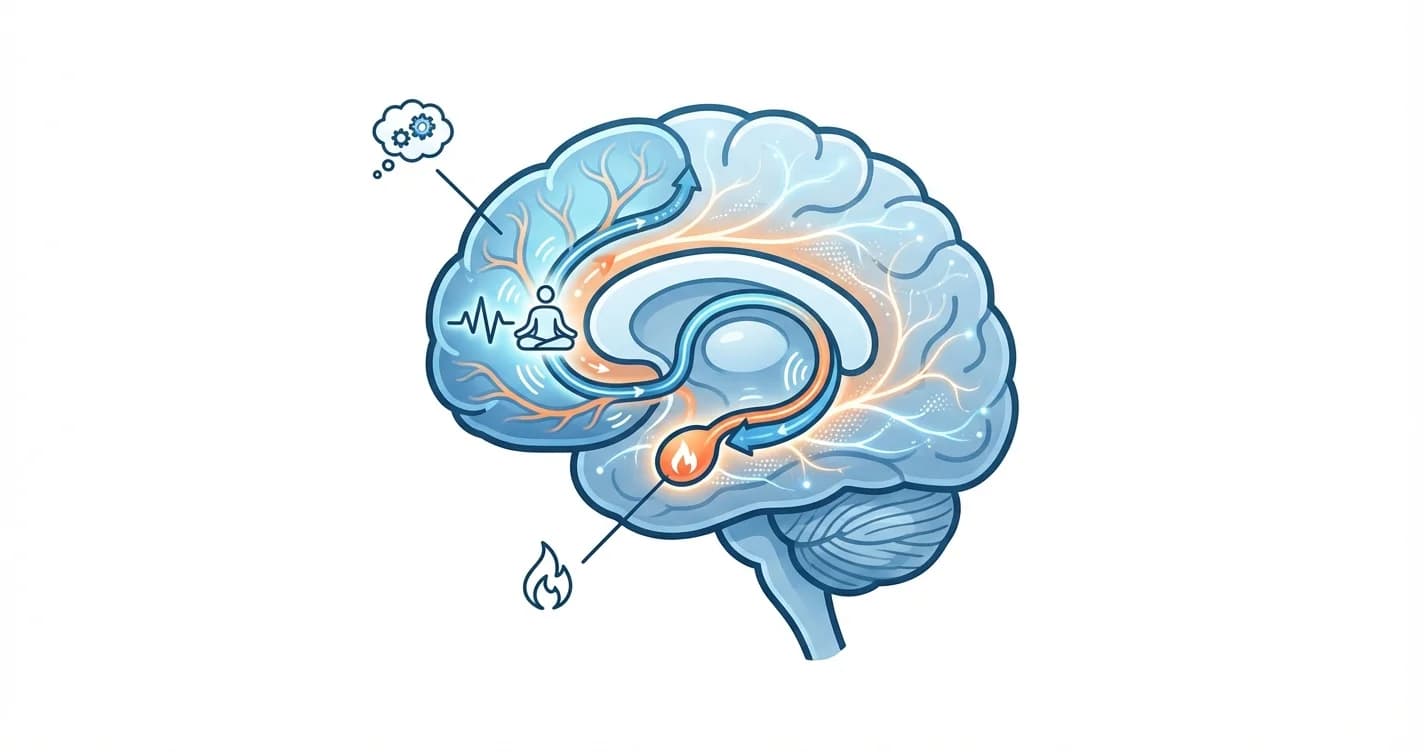
Amygdala and Prefrontal Cortex Connection: Training Emotional Regulation Through Mindfulness
How mindfulness practices reshape neural pathways to strengthen emotional control and reduce reactivity
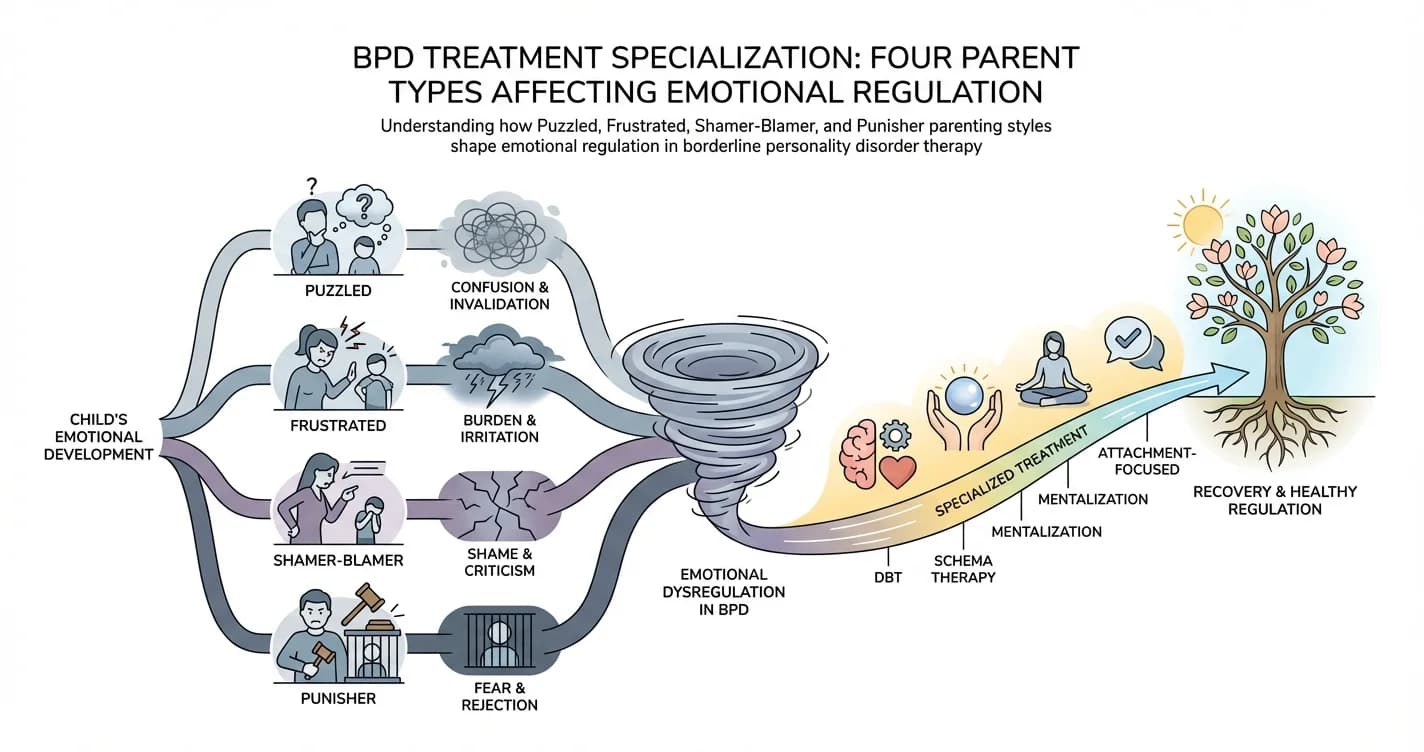
BPD Treatment Specialization: Four Parent Types Affecting Emotional Regulation
For individuals with borderline personality disorder (BPD), emotional regulation difficulties rarely emerge in isolation. Research increasingly suggests that
Disclaimer: This article is for informational purposes only and does not constitute medical advice, diagnosis, or treatment. Always seek the advice of your physician or other qualified health provider with any questions you may have regarding a medical condition. If you are in crisis or think you may have an emergency, call 988 (Suicide & Crisis Lifeline) or go to the nearest emergency room. Outside the US? Find a crisis line in your country.