
How to Manage Stress as a Shift Worker (2026 Guide)
Learn how to manage stress as a shift worker in 2026 with sleep timing, light exposure, and coping tools plus 24/7 AI voice therapy support from Lovon.

Key Takeaways
- Managing stress as a shift worker starts with anchoring sleep and light exposure, not willpower.
- A 10-minute wind-down routine before bed cuts the physical stress response faster than scrolling does.
- Lovon's AI voice therapy is available at 3 a.m. when no other support is open.
- Progressive muscle relaxation and box breathing work in as little as 5 minutes between shifts.
- Chronic shift-work stress that includes panic symptoms or persistent low mood needs a licensed clinician, not just
Rotating shifts scramble your sleep, your appetite, and your nervous system all at once, and generic stress advice built for a 9-to-5 body clock rarely holds up against a 2 a.m. clock-out. This guide walks through what actually works when your schedule fights your biology.
TL;DR
- Managing stress as a shift worker starts with anchoring sleep and light exposure, not willpower.
- A 10-minute wind-down routine before bed cuts the physical stress response faster than scrolling does.
- Lovon's AI voice support is available at 3 a.m. when no other support is open.
- Progressive muscle relaxation and box breathing work in as little as 5 minutes between shifts.
- Chronic shift-work stress that includes panic symptoms or persistent low mood needs a licensed clinician, not just self-help.
Why this matters
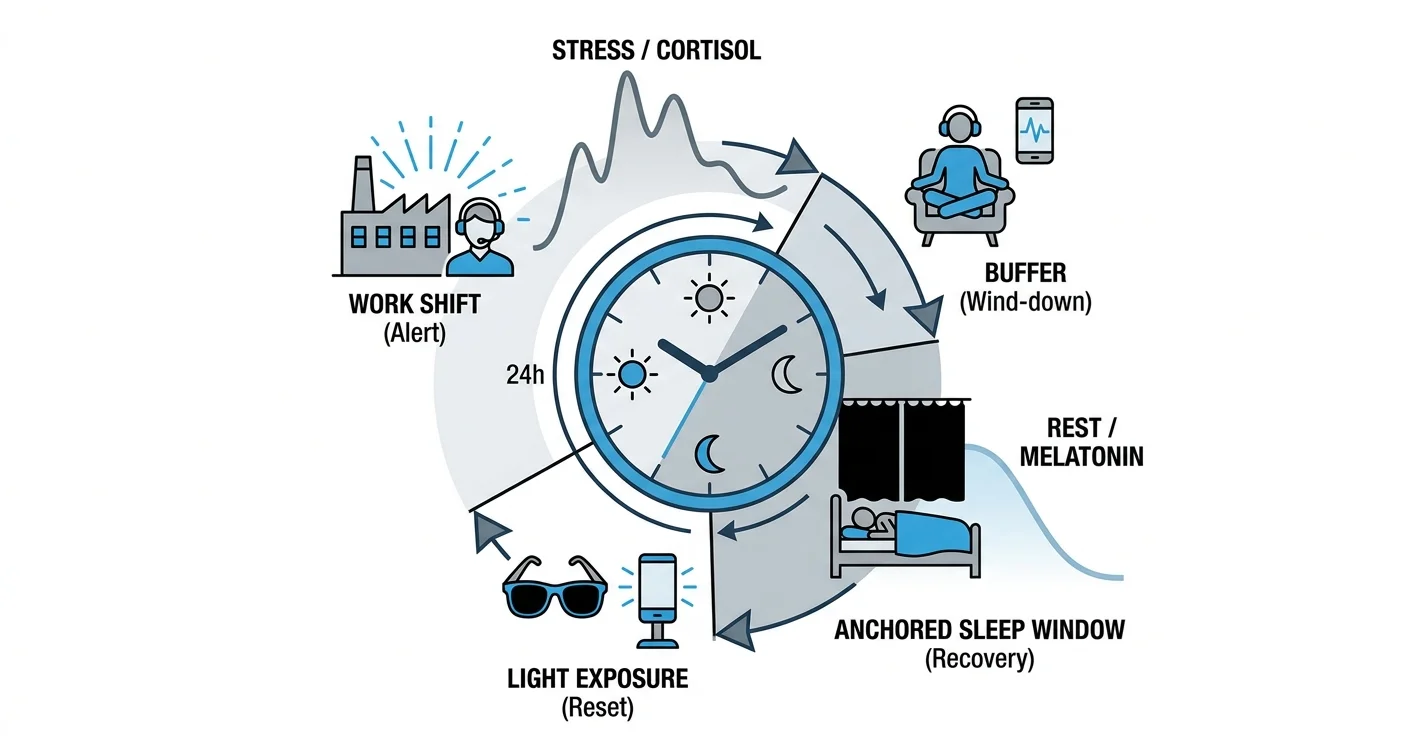
Your body runs on a roughly 24-hour internal clock, and night, swing, and rotating shifts push against it every single week. That mismatch doesn't just cost you sleep — it keeps your nervous system stuck in a low-grade alert state, which is a big part of why nervous system dysregulation shows up so often in shift workers: racing thoughts at bedtime, irritability by hour six, a stomach that never quite settles.
This isn't a motivation problem. It's a biological one, and it responds to specific, repeatable habits more than to general "just relax" advice. The steps below are built around what actually changes for someone whose Tuesday looks nothing like their Wednesday.
What you'll need
- A consistent wind-down routine, even if your "evening" starts at 7 a.m.
- Blackout curtains or a sleep mask, plus a white noise source
- A 10-15 minute buffer between clocking out and trying to sleep
- A way to talk through stress in the moment — journaling, a trusted person, or an AI voice support app like Lovon for the hours nobody else is awake
- Blue-light glasses or dimmed screens for the last hour of your shift if you're heading to daytime sleep
- A caffeine cutoff time, worked backward from when you actually need to fall asleep
The steps
1. Anchor your sleep window, even across rotating shifts
Pick a sleep window and protect it the way you'd protect a meeting with your boss. If you work nights, that might mean sleeping 9 a.m. to 4 p.m. every single workday, weekends included when possible. Shifting your sleep time by more than two hours between workdays and days off is what triggers the worst stress symptoms — the shift-work equivalent of jet lag every week. Common mistake: sleeping in three extra hours on your day off, which resets your clock and makes the next night shift brutal.
2. Build a 10-minute wind-down that has nothing to do with your phone
Your brain needs a signal that it's time to power down, and scrolling does the opposite — blue light and stress-inducing content both delay melatonin release. Try progressive muscle relaxation for 8-10 minutes before you try to sleep, tensing and releasing each muscle group from your feet up. Common mistake: treating this as optional on "good" nights — consistency is what makes it work, not doing it perfectly once.
3. Control light exposure like it's a tool, not an afterthought
Light is the single strongest signal your body uses to decide when to be alert and when to wind down. If you're heading home after a night shift, wear sunglasses on the drive to blunt the morning light hitting your eyes. If you're heading into a night shift, get bright light exposure — even a 15-minute walk — an hour or two before clock-in to help your body treat it as "daytime." Common mistake: skipping blackout curtains and wondering why 6 hours of daytime sleep feels like 3.
4. Lower cortisol before it compounds across the week
Chronic shift-work stress keeps cortisol elevated at times it should be dropping, and that compounds night after night. Simple, repeatable habits — a short walk, cold water on your face, reducing cortisol naturally through timed meals and consistent caffeine cutoffs — matter more here than any single big intervention. Common mistake: relying on caffeine to push through fatigue, which spikes cortisol right when your body needs it to fall.
5. Use a 5-minute reset between the end of your shift and the drive home
Don't go straight from a high-alert work environment into a car or bed. Sit for five minutes, do a box-breathing round (4 counts in, 4 hold, 4 out, 4 hold, repeated 4-6 times), and let your heart rate come down before you transition. Expected outcome: a calmer drive home and a faster path to actual sleep once you're in bed. Common mistake: skipping this because you're "too tired," which is exactly when your nervous system needs the buffer most.
6. Talk through the stress in real time, not just after it piles up
Most shift workers don't have a therapist available at 4 a.m., which is often exactly when the stress hits hardest — right after a hard shift, alone, with nobody else awake. Lovon gives you a voice conversation with an AI voice companion whenever that moment shows up, built with input from PhD psychologists, so you're not just sitting with it until your schedule lines up with office hours. Expected outcome: you process the stress before it snowballs into the next shift. Common mistake: bottling it up until a day off, when it's harder to untangle what's actually bothering you.
Talk it through before your next shift
Lovon is available for a voice session any hour your schedule allows.
Troubleshooting
- You can't fall asleep even with a consistent window. Your bedroom is probably still too bright or too loud — audit blackout coverage and add white noise before adding anything else.
- You're wired after night shifts but exhausted by evening. This is a light-exposure mismatch, not a willpower problem. Recheck your morning sunglasses habit and pre-shift light exposure.
- Sleep isn't fixing your exhaustion. For some shift workers, the fatigue has more to do with stress load than hours slept — why sleep doesn't fix your exhaustion breaks down the mental health side of that gap.
- You feel irritable with coworkers or family within an hour of waking. That's a nervous system still in alert mode from the shift before — a 5-minute reset before you engage with people helps more than it sounds like it would.
- The stress feels like more than tiredness — racing heart, dread, or persistent low mood. These symptoms cross from shift-work fatigue into something that deserves a closer look, and Lovon is explicit that it supports emotional processing but isn't a replacement for licensed clinical care when symptoms are severe or persistent.
Tools and resources
- Blackout curtains and a white noise machine or app
- A caffeine cutoff calculator (work backward from your sleep window)
- Lovon's AI voice support for real-time processing between shifts
- A wind-down checklist you actually follow, not one you keep meaning to start
- A written sleep schedule posted somewhere your household can see it
What to do next
Once your sleep and light routine is stable, the next lever is your nervous system's baseline — how quickly it calms down after a stressful shift versus how long it stays activated. That's worth understanding in more depth: polyvagal theory explains why some people bounce back from a hard shift in 20 minutes and others carry it for days.
FAQ
How do shift workers manage stress differently than day workers?
Shift workers manage stress by anchoring sleep timing and light exposure first, since a misaligned body clock amplifies every other stressor in 2026 the same way it did a decade ago. Day-worker stress advice often assumes a stable schedule, which doesn't apply here.
What's the best way to wind down after a night shift?
A 10-minute routine of progressive muscle relaxation combined with blackout curtains and sunglasses on the drive home works best for most night-shift workers. Skipping the light-blocking step is the most common reason this fails.
Can rotating shifts cause anxiety or depression?
Rotating shifts are linked to higher rates of stress, anxiety, and low mood because of chronic sleep disruption and cortisol dysregulation. If symptoms persist beyond a few weeks of adjusting your routine, that's a signal to talk to a licensed clinician.
Is caffeine bad for shift workers managing stress?
Caffeine isn't bad, but timing matters more than quantity — a cutoff 6-8 hours before your sleep window prevents it from spiking cortisol right when you need to wind down. Most shift workers underestimate how late an afternoon coffee actually sits in the system.
How much sleep do shift workers actually need?
Shift workers need the same 7-9 hours as anyone else, but consistency in timing matters as much as total hours. A stable 9 a.m. to 4 p.m. sleep window beats a variable 6-10 hour range even if the average is similar.
Can an AI therapist help with shift-work stress at odd hours?
Yes — Lovon offers voice conversations with an AI voice companion any time of day or night, which fills the gap when stress peaks outside normal clinic hours. It's built for support and coping tools, not diagnosis or emergency care.
What's the fastest way to calm down after a stressful shift?
Box breathing for 2-3 minutes, done before you leave the building or get in the car, lowers physical stress markers faster than trying to power through the drive home. Pair it with a 5-minute pause before switching into home or family mode.
Does exercise help with shift-work stress?
A 15-20 minute walk timed to your light-exposure goals (before a night shift, or right after waking) helps regulate both your body clock and stress levels. Heavy exercise right before your sleep window can backfire by delaying sleep onset.
One last thing
The habit that moves the needle fastest for most shift workers isn't sleep hygiene — it's the 5-minute buffer between clocking out and whatever comes next. Skipping straight from a high-alert shift into a car, a bed, or a conversation with family is what keeps stress compounding night after night in 2026 the same way it did before. Build the pause in first; everything else gets easier once that's in place.
Related guides
How AI Support Helps You Heal
AI emotional support isn't about replacing human connection — it's about filling the gaps. The moments when you need to talk at 2 AM, when you don't want to burden your friends again, or when you simply need someone to listen without judgment.
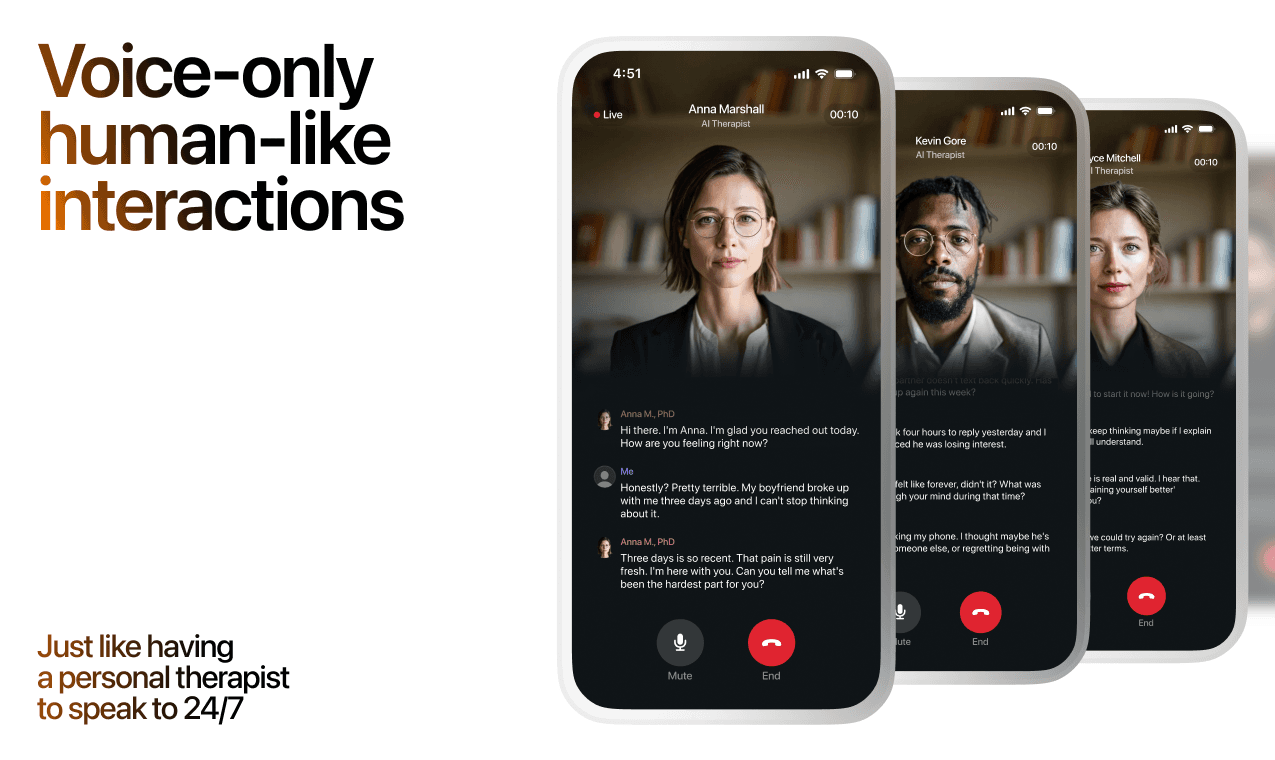
Here's what happens in a typical Lovon session:
You share what's on your mind
There's no script, no intake form, no waiting room. You speak or type whatever you're feeling — in your own words, at your own pace.
Lovon validates and explores
Using frameworks from CBT (Cognitive Behavioral Therapy) and motivational interviewing, Lovon acknowledges your feelings first, then gently helps you explore them. No dismissive "just move on" advice.
You build coping skills together
Lovon doesn't just listen — it actively works with you on evidence-based techniques: thought reframing, urge surfing, behavioral experiments, and more.
What a Session with Lovon Looks Like
When to Seek Professional Help
AI support is a valuable tool, but it's not a replacement for professional care. Please consider reaching out to a licensed therapist if you experience any of the following:
- Persistent thoughts of self-harm or suicide
- Inability to perform daily activities (work, eating, sleeping) for more than 2 weeks
- Turning to alcohol or substances to cope
- Intense anger or desire to harm your ex-partner
- Complete emotional numbness that doesn't improve over time
Crisis Resources (US): If you're in immediate danger, call 988 (Suicide & Crisis Lifeline) or text HOME to 741741 (Crisis Text Line). Available 24/7, free, and confidential.
Outside the US? Find a crisis line in your country
Ready to Start?
Your healing journey can begin right now
A 7-day trial. No judgment. Just a safe space to process what you're going through.
Frequently Asked Questions
Is Lovon a replacement for a real therapist?
Is my conversation with Lovon AI private?
How is Lovon different from ChatGPT for emotional support?
Can I use Lovon if I'm already seeing a therapist?
Can I try Lovon before subscribing?
About the Author
The Lovon Editorial Team
Mental Health & Wellness Content Team
The Lovon Editorial Team develops mental health and wellness content designed to make psychological concepts accessible and actionable. Our goal is to bridge the gap between clinical research and everyday life - helping you understand why your mind works the way it does and what you can do about it....
Related articles
- Emotional Regulation Skills for Adults That Work in 2026
Learn which emotional regulation skills for adults actually work in 2026 — step-by-step techniques, common mistakes…
- Seasonal Affective Disorder: Signs & Coping Tools 2026
Spot seasonal affective disorder signs early and use coping tools proven to work in 2026 — light therapy, movement, and…
- AI Coping Tools for Anxiety 2026: What Actually Works
AI coping tools for anxiety compared for 2026: box breathing, grounding, and PMR ranked with clear verdicts on what to…
- AI Mental Health App for Shift Workers (2026 Guide)
The best AI mental health app for shift workers in 2026 needs 24/7 voice access, not banker's hours. See what to look…
See also
Quizzes
- Light Triad Test: Are People Ends or Means?
See how you treat people when there is nothing to gain.
- Am I Codependent? 12-Question Self-Check
See how much of you is left over, in 2 minutes.
Free tools
- How to End a Friendship Without a Scene
A chat for working out how to end a friendship clearly, without a grievance list or a slow ghost. Tell it how long you…
- How to Come Out to Your Parents
A chat about how to come out to your parents that starts with whether now is safe, not with the speech. Tell it your…
From the wiki
- Why do I feel lonely all of a sudden?
Sudden loneliness usually traces back to something that quietly ended in the last few months: a routine, a shared class…
Disclaimer: This article is for informational purposes only and does not constitute medical advice, diagnosis, or treatment. Always seek the advice of your physician or other qualified health provider with any questions you may have regarding a medical condition. If you are in crisis or think you may have an emergency, call 988 (Suicide & Crisis Lifeline) or go to the nearest emergency room. Outside the US? Find a crisis line in your country.