
Relationship Red Flags Checklist 2026: Spot Them Early
This relationship red flags checklist for early dating in 2026 flags love bombing, gaslighting, and future faking before month six, not six months later.

Key Takeaways
- A relationship red flags checklist for early dating should flag pace, consistency, and conflict response first.
- Love bombing before week three is a red flag, not romance — verdict: slow down or walk.
- Gaslighting under disagreement is a dealbreaker red flag with no exceptions in 2026 dating.
- Jealousy read as passion is the most common false green flag people miss early on.
- One overlapping red flag rarely ends things; three showing up before week eight usually does.
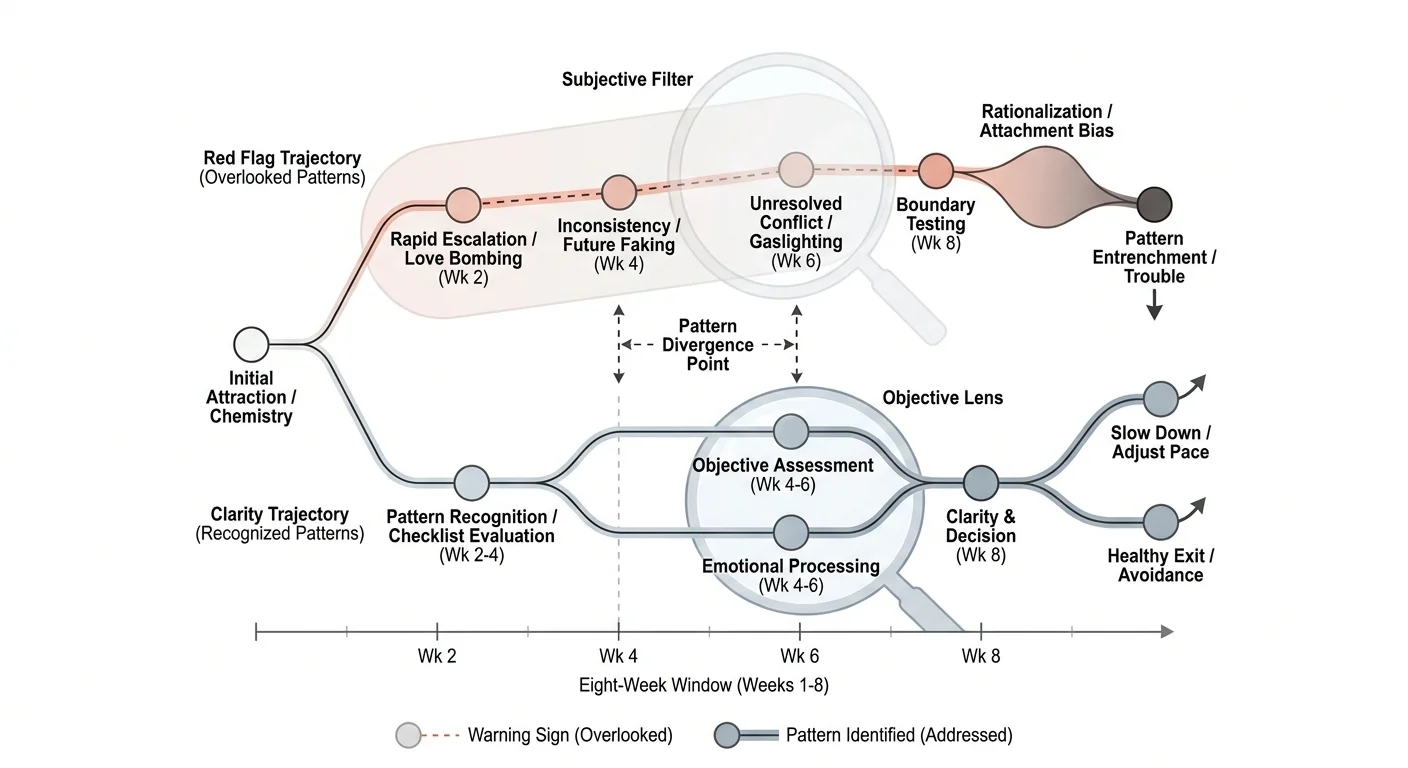
A relationship red flags checklist for early dating works only if it separates the patterns that predict real trouble from the quirks that just feel unfamiliar. This one does that, using the eight-week window when most warning signs actually surface.
TL;DR
- A relationship red flags checklist for early dating should flag pace, consistency, and conflict response first.
- Love bombing before week three is a red flag, not romance — verdict: slow down or walk.
- Gaslighting under disagreement is a dealbreaker red flag with no exceptions in 2026 dating.
- Jealousy read as passion is the most common false green flag people miss early on.
- One overlapping red flag rarely ends things; three showing up before week eight usually does.
Why This Matters
Early dating red flags are easy to name in hindsight and easy to miss while you're inside the relationship. The first eight weeks are when patterns show up clearest, before comfort and attachment start softening your judgment. Love bombing especially gets missed here — it feels like being chosen, not like a warning sign.
A red flag you can explain away in week two becomes the fight you're having in month six. That's the pattern behind most breakup post-mortems: the sign was there early, just relabeled as intensity, passion, or "he's just really into me." Running a relationship red flags checklist for early dating in 2026 isn't about treating every date like a suspect — it's about noticing the pattern before you're six months deep and emotionally invested in explaining it away.
Who This Checklist Is For
This is built for anyone in the first two to three months of dating someone new, especially people with a history of anxious attachment, a past relationship with a narcissistic or avoidant partner, or a habit of rationalizing something that bothered them before they've even processed why. If you've caught yourself defending someone's behavior to a friend faster than you've sat with your own reaction to it, this list is for you. An AI voice support app like Lovon can't tell you whether your date is a red flag — that's not a diagnosis it's built to make — but it can help you talk through the reaction itself before you decide what it means.
What to Look For in a Relationship Red Flags Checklist
1. How Fast Things Escalate
Speed is the single biggest tell in early dating in 2026. A relationship that goes from first date to "I've never felt this way before" inside two weeks isn't moving fast because it's rare — it's moving fast because urgency creates a bond before trust has actually been earned.
2. Whether Words Match Actions
Someone who talks about a future — moving in, meeting family, exclusivity — before you've had a real disagreement is selling a vision, not describing a plan. Watch what they do the next time you're inconvenient, not what they say when you're not.
3. How They Handle Disagreement
This is the fastest way to see someone's real operating system. Do they get curious about your side, or do they rewrite what happened five minutes ago? Defensiveness under mild pushback in week three is a preview of every future conflict, not an isolated bad moment.
4. Whether They Respect a Stated Boundary
A boundary tested once and respected is normal. A boundary tested, crossed, and tested again after you've said something is a pattern, not a misunderstanding. Pay attention to whether your "no" needs to be repeated with more force each time.
5. How They Talk About the Past
How someone describes an ex tells you how they'll describe you in six months. Constant blame with zero accountability, or a story where they're always the victim, usually means the same story is being written about you already — you just haven't heard it yet.
The 5 Red Flags That Predict Trouble Later
1. Love bombing — the fast mover. Constant contact, grand declarations, and "I love you" inside the first two weeks is the clearest early marker in any relationship red flags checklist. It escalates faster than trust can actually be built. Verdict: red flag — slow the pace down deliberately.
2. Future faking — the promise maker. Talking about marriage, moving in together, or a shared future before you've survived one real disagreement is a script, not a plan. It feels flattering in week three and hollow by week ten if nothing concrete follows. Verdict: yellow flag — watch whether promises turn into scheduled plans.
3. Emotional unavailability — the vanishing act. Someone who's intense on a good night and distant for days after, who avoids naming what you are, is giving you access without commitment. This is worth checking against a structured emotionally unavailable partner quiz rather than your own hope that it'll change. Verdict: red flag if the pull-back repeats past week six.
4. Gaslighting under disagreement — the blame shifter. Denying something you have a text of, or reframing your reaction as the actual problem, is documented in detail in this breakdown of gaslighting in relationships. It's the one pattern on this list with no gray area. Verdict: dealbreaker — red flag, no exceptions.
5. Boundary testing — the tester. Pushing past a stated limit once, watching for your reaction, then testing again if you don't hold the line firmly is a low-grade version of the same control pattern that shows up in more serious cases. Verdict: red flag if it happens a second time.
Talking through any of these five out loud — with a friend, a therapist, or an AI voice companion on Lovon — usually clarifies faster than replaying the conversation in your head for the fourth time.
What Looks Like a Red Flag But Usually Isn't
- Nervousness on early dates. Fidgeting, over-talking, or going quiet reads as avoidance but is often just nerves. Give it two or three dates before you decide it means something.
- Wanting space after an intense weekend. Needing 24 hours to recharge after back-to-back dates isn't pulling away — it's normal recovery, especially for anyone who's naturally more introverted.
- Bluntness mistaken for coldness. Someone who says "I'm not looking for anything serious right now" directly is giving you more information than someone who's vague and lets you assume. Directness is a green flag wearing a red flag's clothes.
Red Flag Verdict Table
| Pattern | Looks Like | Red Flag Version | Verdict |
|---|---|---|---|
| Attention | Constant texting, fast affection | "I love you" by week two, no space to breathe | Red flag |
| Future talk | Excitement about what's ahead | Marriage/moving-in talk before one disagreement | Yellow flag |
| Conflict | Mild disagreement, normal friction | Denial of facts, blame shifted to you | Dealbreaker |
| Boundaries | One respectful "no" accepted | Boundary tested twice after being stated | Red flag |
| Space | Needing a day to recharge | Days of silence with no explanation, repeated | Yellow flag |
FAQ
What is the most reliable relationship red flags checklist for early dating?
The most reliable checklist tracks pace, consistency between words and actions, and how someone handles disagreement in the first eight weeks. These three predict more future conflict than any single comment or gift ever does.
How many red flags is too many in early dating?
One isolated red flag rarely ends a relationship, but two or more overlapping patterns before week eight usually do. Love bombing plus gaslighting together is a stronger signal than either alone.
Is love bombing always a red flag?
Yes, when it happens inside the first two to three weeks and escalates faster than trust has been earned. It's the single most-cited early dating red flag in 2026 relationship advice for a reason.
What's the difference between a red flag and a dealbreaker?
A red flag is a pattern worth watching closely; a dealbreaker is a pattern with no acceptable version, like gaslighting under disagreement. Red flags can sometimes resolve with direct conversation — dealbreakers rarely do.
Can red flags be worked through?
Some can, especially inconsistency or slow-building future talk, if the person responds to direct feedback with changed behavior, not just an apology. Patterns tied to control or denial of facts rarely improve without outside intervention.
How soon do red flags usually show up in dating?
Most show up within the first six to eight weeks, which is why an early dating red flags checklist matters more than a six-month retrospective. Pace and conflict response are visible almost immediately.
Is jealousy a red flag or a green flag?
Jealousy is a red flag when it shows up as monitoring, accusations, or controlling your time; it's not a sign of passion. Mild, brief jealousy that's acknowledged and dropped is a different, far less concerning thing.
Can an app tell me if my date is a red flag?
No app diagnoses another person, and an AI voice support app like Lovon is upfront about that limitation. What it can do is help you process your own reaction to a pattern so you're deciding from clarity, not anxiety.
One Last Thing
People with an anxious attachment style catch fewer red flags in the first month, not more, because urgency reads as chemistry instead of as a warning. That's worth sitting with before you dismiss your own hesitation as overthinking — the discomfort might be the accurate read, and the excitement might be the noise. Talking it through out loud, including with an AI voice companion on Lovon between dates, tends to surface which one you're actually feeling faster than journaling about it alone.
Related Guides
How AI Support Helps You Heal
AI emotional support isn't about replacing human connection — it's about filling the gaps. The moments when you need to talk at 2 AM, when you don't want to burden your friends again, or when you simply need someone to listen without judgment.
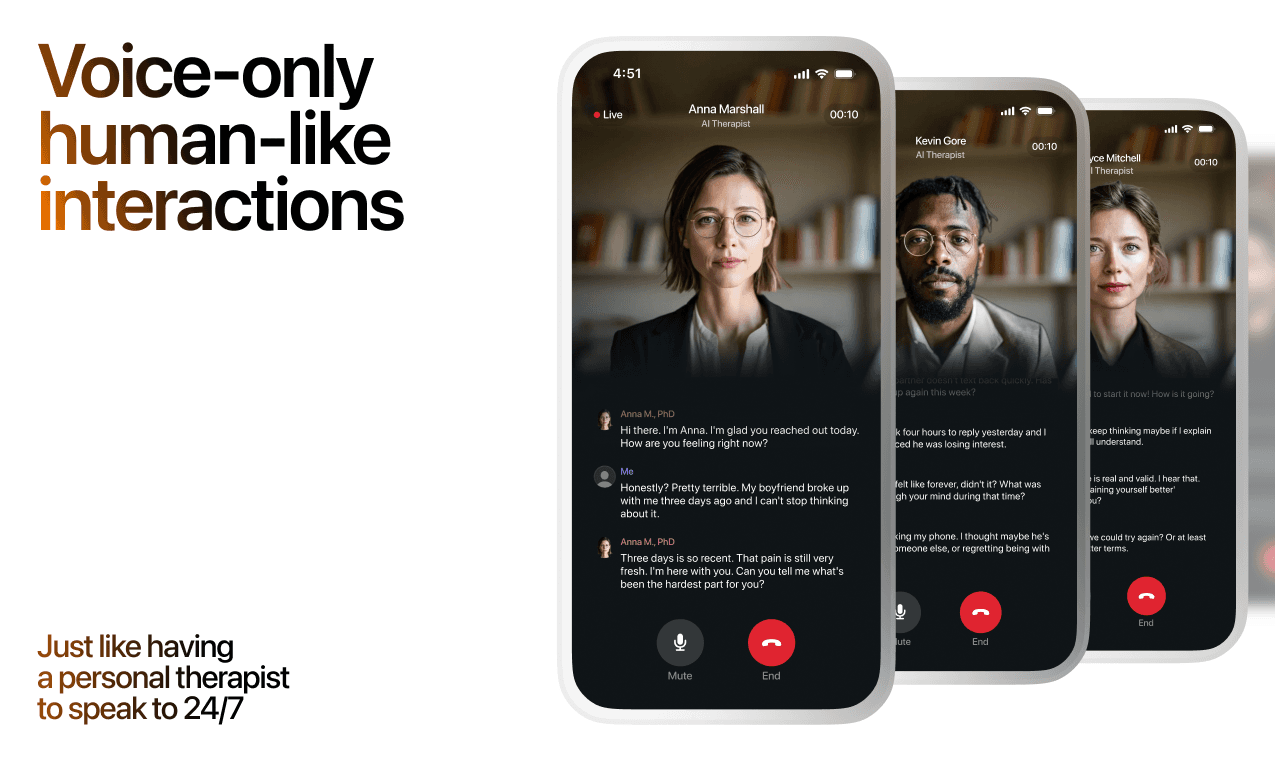
Here's what happens in a typical Lovon session:
You share what's on your mind
There's no script, no intake form, no waiting room. You speak or type whatever you're feeling — in your own words, at your own pace.
Lovon validates and explores
Using frameworks from CBT (Cognitive Behavioral Therapy) and motivational interviewing, Lovon acknowledges your feelings first, then gently helps you explore them. No dismissive "just move on" advice.
You build coping skills together
Lovon doesn't just listen — it actively works with you on evidence-based techniques: thought reframing, urge surfing, behavioral experiments, and more.
What a Session with Lovon Looks Like
Lovon is AI support, not a replacement for professional care. If things have been hard to get through for weeks, or you are thinking about harming yourself, talk to a doctor or a licensed therapist.
Ready to Start?
Your healing journey can begin right now
A 7-day trial. No judgment. Just a safe space to process what you're going through.
Frequently Asked Questions
Is Lovon a replacement for a real therapist?
Is my conversation with Lovon AI private?
How is Lovon different from ChatGPT for emotional support?
Can I use Lovon if I'm already seeing a therapist?
Can I try Lovon before subscribing?
About the Author
The Lovon Editorial Team
Mental Health & Wellness Content Team
The Lovon Editorial Team develops mental health and wellness content designed to make psychological concepts accessible and actionable. Our goal is to bridge the gap between clinical research and everyday life - helping you understand why your mind works the way it does and what you can do about it....
Related articles
- Narcissistic Relationships — Deflection and Reality Reframing Tactics
Narcissistic relationships often begin subtly, without the obvious red flags many expect to see. What starts as…
- Am I Dating a Narcissist Quiz (2026): 12-Point Test
Take the 12-question am I dating a narcissist quiz. Score your relationship against 6 core NPD patterns and get clear…
- Narcissistic Abuse: Examples, Signs, and What a Narcissist Does
Relationships with a narcissist can start in a positive way because at first you may ignore some warning signs.
- Toxic Parent Patterns: Signs & How to Set Limits (2026)
Recognize toxic parent patterns — manipulation, enmeshment, conditional love — and follow 7 concrete steps to set limits…
See also
Quizzes
- Is My Relationship Healthy? 15-Question Check-In
Check your relationship health in 3 minutes.
- Are They a Red Flag? 10 Questions to Check Your Partner
Check your partner in 3 minutes.
Free tools
- What to Say Back to a Hostile Co-Parent
A chat, not a form. Paste the message your ex sent about the kids, say what actually has to be decided, and you get a…
- How to Respond to a Narcissist
Paste what they said. You get the part that actually needs answering separated from the part designed to pull you in, a…
From the wiki
- How to leave a toxic relationship?
Leaving a toxic relationship is rarely a decision problem — you usually know. What stops you is that the pull toward…
Disclaimer: This article is for informational purposes only and does not constitute medical advice, diagnosis, or treatment. Always seek the advice of your physician or other qualified health provider with any questions you may have regarding a medical condition. If you are in crisis or think you may have an emergency, call 988 (Suicide & Crisis Lifeline) or go to the nearest emergency room. Outside the US? Find a crisis line in your country.