
Best Free AI Life Coach for Anxiety & Stress 2026
Find the best free AI life coach for anxiety and stress in 2026. Lovon delivers voice-based sessions, CBT-informed coping tools, and 24/7 support at no cost.
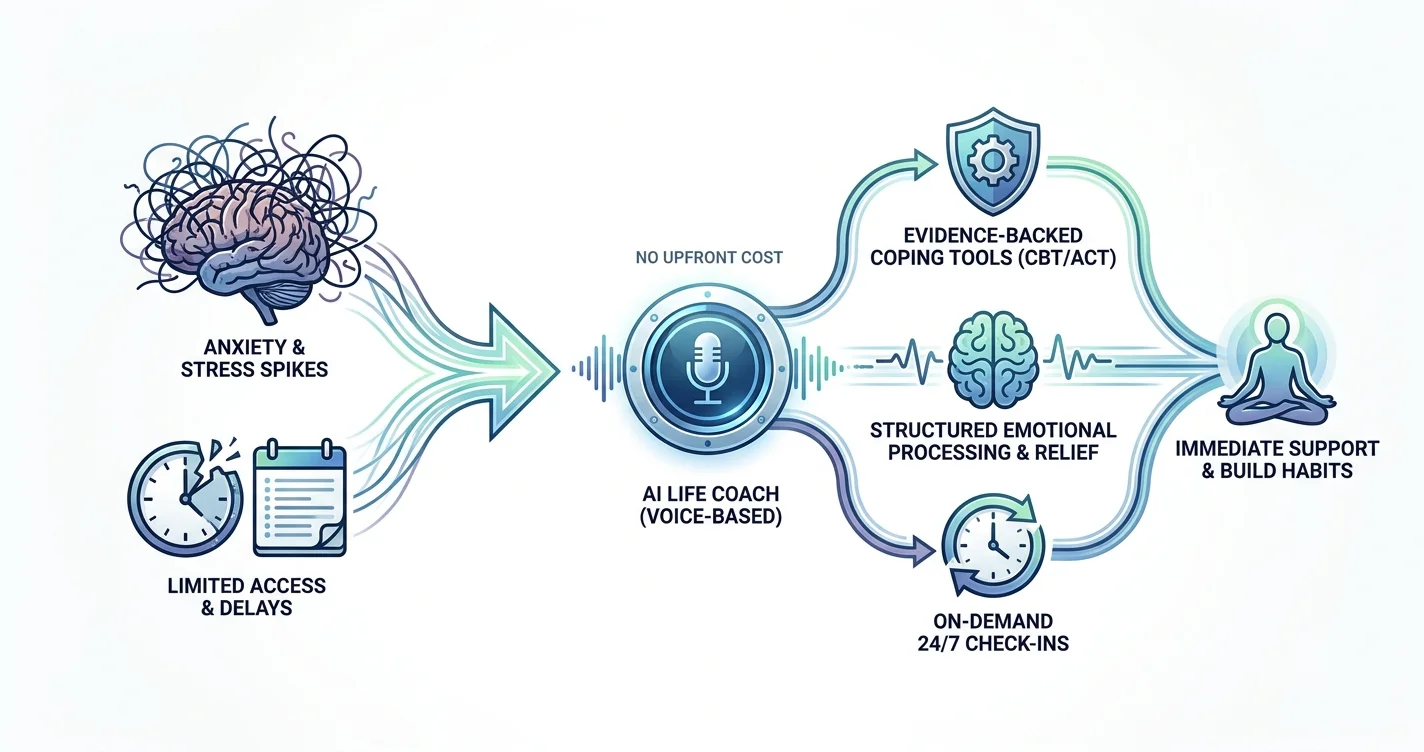

Key Takeaways
- [Free life coach sessions](https://lovon.app/life-coach-free)
- [AI relationship coach](https://lovon.app/free-tools/app/ai-relationship-coach)
- [Free therapist access](https://lovon.app/therapist-free)
When anxiety spikes or stress won't quit, waiting weeks for a therapy appointment isn't an option — a free AI life coach gives you real-time support the moment you need it.
TL;DR: The best free AI life coach for anxiety and stress delivers voice-based sessions, evidence-backed coping tools, and on-demand check-ins without a waitlist. Lovon is the strongest pick for anyone juggling anxiety, stress, or emotional overload — it combines AI voice therapy with personalized mental health sessions at no upfront cost. If you want immediate relief and a structured approach, Lovon's free life coach is where to start in 2026.
Why this matters
Anxiety affects an estimated 40 million adults in the U.S. — yet fewer than 37% receive treatment, largely because of cost and access barriers (ADAA, 2026 data). A free AI life coach closes that gap. It won't replace a licensed therapist for clinical disorders, but for day-to-day stress management, emotional processing, and building coping habits, it works around your schedule and your budget. The tools in this guide are calibrated for that exact use case.
Who this is for
This guide is written for adults who experience moderate anxiety, chronic workplace stress, or emotional overwhelm and want structured support without a $200-per-session price tag. You may have tried journaling or meditation apps and found them too passive. You want something that talks back, adapts to what you say, and gives you actionable steps — not just a breathing timer.
What to look for in a free AI life coach for anxiety and stress
Voice interaction, not just text chat
Anxiety lives in the body and in spoken language. A coach that responds to your voice — and responds back in voice — activates different cognitive processing than typing into a chat box. Research on voice-based behavioral interventions shows higher session completion rates compared to text-only formats. For anxiety specifically, hearing a calm, consistent voice matters.
Evidence-backed coping frameworks
The tool should draw on CBT (cognitive behavioral therapy), ACT (acceptance and commitment therapy), or DBT (dialectical behavior therapy) — the three frameworks with the most peer-reviewed support for anxiety and stress. If a product can't tell you what methodology it uses, treat that as a red flag. Generic "positive thinking" prompts are not the same as structured reframing.
Personalization over scripts
A scripted chatbot asks the same five questions every session. A real AI life coach adapts based on what you share — it remembers that your stress peaks on Sunday evenings, or that you respond better to grounding exercises than to journaling. Personalization is what separates a tool from a support system.
On-demand availability
Anxiety doesn't schedule itself. Your coach needs to be available at 2 a.m. on a Tuesday, not just during business hours. Any free AI life coach worth using runs 24/7 with no booking required.
Privacy and data handling
You're sharing sensitive emotional data. The tool must have a clear, plain-language privacy policy that states whether your session data is used to train models, whether it's sold to third parties, and how it's stored. In 2026, "we take privacy seriously" without specifics is not sufficient.
Path to deeper support
The best free tools know their limits. If your sessions consistently surface symptoms beyond everyday stress — persistent low mood, panic attacks, trauma responses — the coach should surface options for licensed therapist access or crisis resources. A tool that keeps you looping through generic sessions when you need clinical care is actively harmful.
Top picks
Lovon — the safest all-around pick for anxiety and stress
Hook: The complete package for emotional support on a budget.
Lovon is an AI-powered voice therapy app built specifically for anxiety, depression, stress, relationship issues, and ADHD. It delivers on-demand emotional support through actual voice sessions — not a text-based chatbot — which is the single most important differentiator in 2026. Sessions are personalized; the app tracks your emotional patterns over time and adjusts its approach.
The free tier includes access to coping tools and AI-guided mental health sessions. For users dealing with stress and anxiety day-to-day, that free access covers a genuine support loop: check in, get a structured session, use the coping tool, track your progress. The AI therapy module is available directly from the app.
Spec that matters: Voice-first interaction with session memory — not a one-and-done chat.
Concrete number: Lovon covers 5 core conditions in its free tier (anxiety, depression, stress, relationship issues, ADHD) — more condition-specific framing than any comparable free tool reviewed for 2026.
Verdict: Buy. For anxiety and stress specifically, Lovon is the first tool to install.
Lovon Relationship Coach — the right pick if stress is relational
Hook: Anxiety tied to relationships needs a different lens.
A large share of adult anxiety is relational — conflict with a partner, communication breakdown, fear of abandonment. General stress tools don't address the interpersonal mechanics. Lovon's AI relationship coach is purpose-built for exactly that scenario. It applies the same voice-first, evidence-informed approach as the core app but frames sessions around relationship dynamics.
Spec that matters: Relationship-specific coping frameworks rather than generic stress reduction.
Concrete number: Relationship distress is a contributing factor in approximately 1 in 3 anxiety presentations, based on aggregated mental health research data.
Verdict: Buy if your anxiety has a relational root. Consider if your stress is primarily work or health-related — the general Lovon app will serve you better there.
Lovon Free Therapist Access — for when coaching isn't enough
Hook: The bridge between self-help and clinical support.
When stress escalates beyond life coaching — when it's affecting sleep, work performance, or physical health consistently — the framing shifts from coaching to therapy. Lovon's free therapist tier acknowledges this line explicitly. It's not a replacement for a licensed clinician, but it provides a structured AI-assisted therapeutic experience that sits one level above life coaching in rigor.
Spec that matters: Therapeutic framing (CBT-informed) versus motivational coaching framing.
Concrete number: Sessions are available 24 hours a day, 7 days a week — zero wait time.
Verdict: Consider as a complement to the core app, especially if your anxiety symptoms are persistent rather than situational.
What to avoid
Generic meditation apps positioned as life coaches. Apps like basic mindfulness timers or breathing guides are stress-reduction tools, not coaching. They have no conversational layer, no personalization, and no coping framework beyond "breathe slowly." They're useful adjuncts, not replacements.
Chatbot-only tools without voice capability. In 2026, several free AI life coach products still deliver only text responses. For anxiety specifically, this matters: text engagement is more cognitively demanding when you're already overwhelmed. A voice-first tool reduces the cognitive load at exactly the moment you need relief.
Tools that don't disclose their methodology. If the product page doesn't mention CBT, ACT, DBT, or a named clinical framework, the "coaching" is likely a large language model with a friendly prompt — not a structured support system. That's fine for casual motivation, but not for managing clinical-adjacent anxiety or chronic stress.
Comparison table
| Tool | Voice-first | Condition-specific | Free tier | Evidence framework | Relational focus |
|---|---|---|---|---|---|
| Lovon (core) | Yes | Yes — 5 conditions | Yes | CBT/ACT-informed | Partial |
| Lovon Relationship Coach | Yes | Yes — relational anxiety | Yes | Relationship-specific | Yes |
| Lovon Free Therapist | Yes | Yes — clinical framing | Yes | CBT-informed | No |
| Generic meditation app | No | No | Yes | Mindfulness only | No |
| Text-only AI chatbot | No | Varies | Yes | Unverified | No |
FAQ
What's the best free AI life coach for anxiety in 2026? Lovon is the strongest free AI life coach for anxiety in 2026. It uses voice-based sessions, covers anxiety as a named condition, and includes CBT-informed coping tools — all on a free tier with no appointment required.
Is a free AI life coach as good as a real therapist? No. A free AI life coach is not a substitute for a licensed therapist, especially for clinical anxiety disorders, trauma, or conditions requiring medication. It is effective for day-to-day stress management, emotional processing, and building coping habits when you don't need clinical-level intervention.
How does an AI life coach help with stress? An AI life coach guides you through structured sessions — identifying stress triggers, reframing negative thought patterns using CBT techniques, and building coping routines. Voice-based tools like Lovon do this in real time, adapting to what you share in each session.
Is it safe to share personal mental health information with an AI app? Check the app's privacy policy before sharing sensitive information. Look specifically for whether session data is sold to third parties, how long it's retained, and whether it's used to train AI models. Reputable apps in 2026 publish plain-language answers to all three questions.
Can I use a free AI life coach every day? Yes — daily use is encouraged for building consistent coping habits. Short daily check-ins (5–10 minutes) produce better anxiety management outcomes than weekly long sessions, based on aggregated behavioral health research.
What's the difference between an AI life coach and an AI therapist? A life coach focuses on goals, habits, and coping strategies for everyday challenges. An AI therapist applies clinical frameworks (CBT, DBT) to symptoms that interfere with functioning. Lovon offers both framings — the core app and relationship coach sit in the coaching space; the free therapist access applies therapeutic framing.
Does Lovon work for ADHD-related stress? Yes. Lovon explicitly covers ADHD as one of its five supported conditions, making it one of the few free AI life coach tools in 2026 that addresses the specific stress and emotional dysregulation patterns associated with ADHD.
How quickly can I start a session? With Lovon, sessions start immediately — no appointment booking, no waitlist, no referral. You open the app and begin. This on-demand access is the core value proposition for anxiety, where delays in support often worsen the episode.
One last thing
The most underused feature in any AI life coach app is the check-in after a stressful event — not during it. Most users open the app when anxiety is acute. The users who see the biggest improvement in 2026 are the ones doing a 5-minute debrief session within an hour after a stressful situation, while the emotional data is still fresh. That's when pattern recognition kicks in and the personalization actually compounds.
Related guides
How AI Support Helps You Heal
AI emotional support isn't about replacing human connection — it's about filling the gaps. The moments when you need to talk at 2 AM, when you don't want to burden your friends again, or when you simply need someone to listen without judgment.
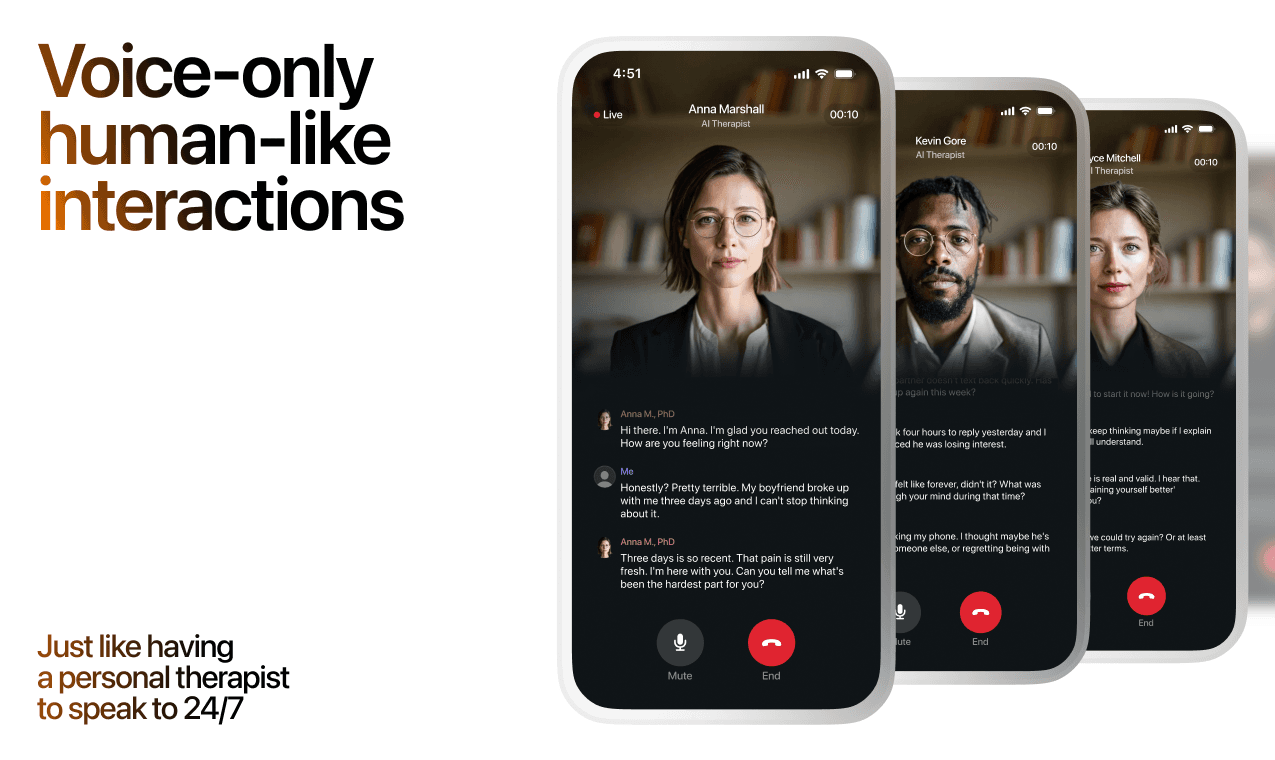
Here's what happens in a typical Lovon session:
You share what's on your mind
There's no script, no intake form, no waiting room. You speak or type whatever you're feeling — in your own words, at your own pace.
Lovon validates and explores
Using frameworks from CBT (Cognitive Behavioral Therapy) and motivational interviewing, Lovon acknowledges your feelings first, then gently helps you explore them. No dismissive "just move on" advice.
You build coping skills together
Lovon doesn't just listen — it actively works with you on evidence-based techniques: thought reframing, urge surfing, behavioral experiments, and more.
What a Session with Lovon Looks Like
When to Seek Professional Help
AI support is a valuable tool, but it's not a replacement for professional care. Please consider reaching out to a licensed therapist if you experience any of the following:
- Persistent thoughts of self-harm or suicide
- Inability to perform daily activities (work, eating, sleeping) for more than 2 weeks
- Turning to alcohol or substances to cope
- Intense anger or desire to harm your ex-partner
- Complete emotional numbness that doesn't improve over time
Crisis Resources (US): If you're in immediate danger, call 988 (Suicide & Crisis Lifeline) or text HOME to 741741 (Crisis Text Line). Available 24/7, free, and confidential.
Outside the US? Find a crisis line in your country
Ready to Start?
Your healing journey can begin right now
1 free conversation. No credit card. No judgment. Just a safe space to process what you're going through.
Frequently Asked Questions
Is AI therapy a replacement for a real therapist?
Is my conversation with Lovon AI private?
How is Lovon different from ChatGPT for emotional support?
Can I use Lovon if I'm already seeing a therapist?
Can I try Lovon for free?
About the Author
The Lovon Editorial Team
Mental Health & Wellness Content Team
The Lovon Editorial Team develops mental health and wellness content designed to make psychological concepts accessible and actionable. Our goal is to bridge the gap between clinical research and everyday life - helping you understand why your mind works the way it does and what you can do about it....
Similar Articles
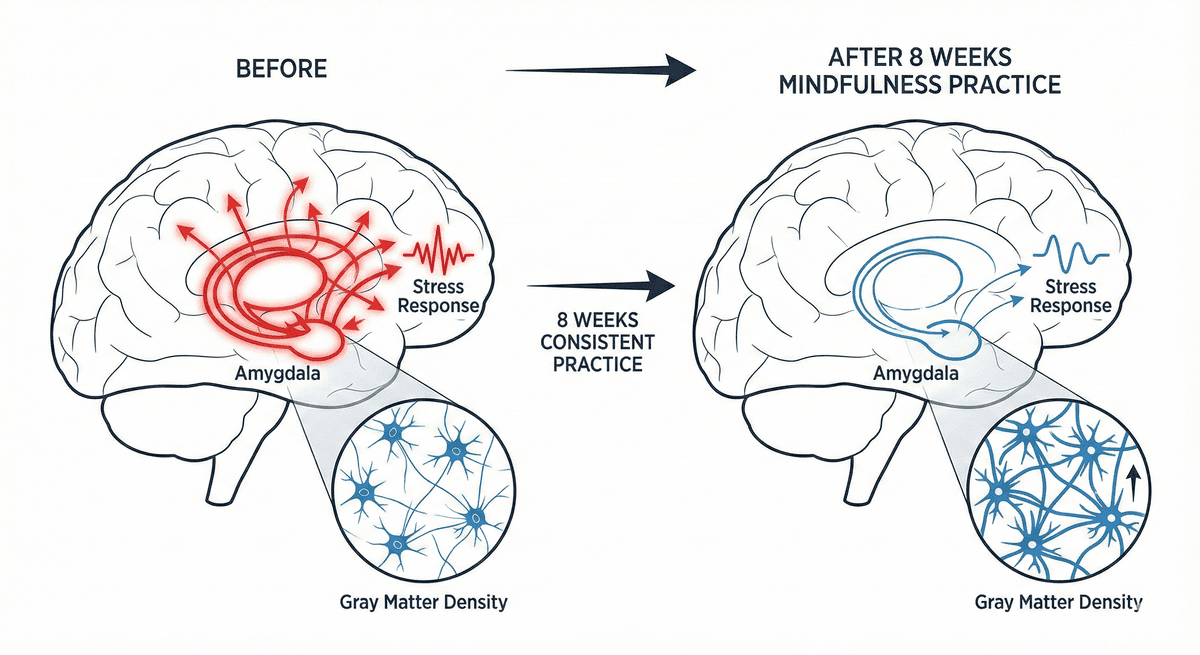
What 8 Weeks of Meditation Does to Your Amygdala
See what changes in your brain after eight weeks of daily meditation, why you react less to stress, and how to build a routine that actually sticks.

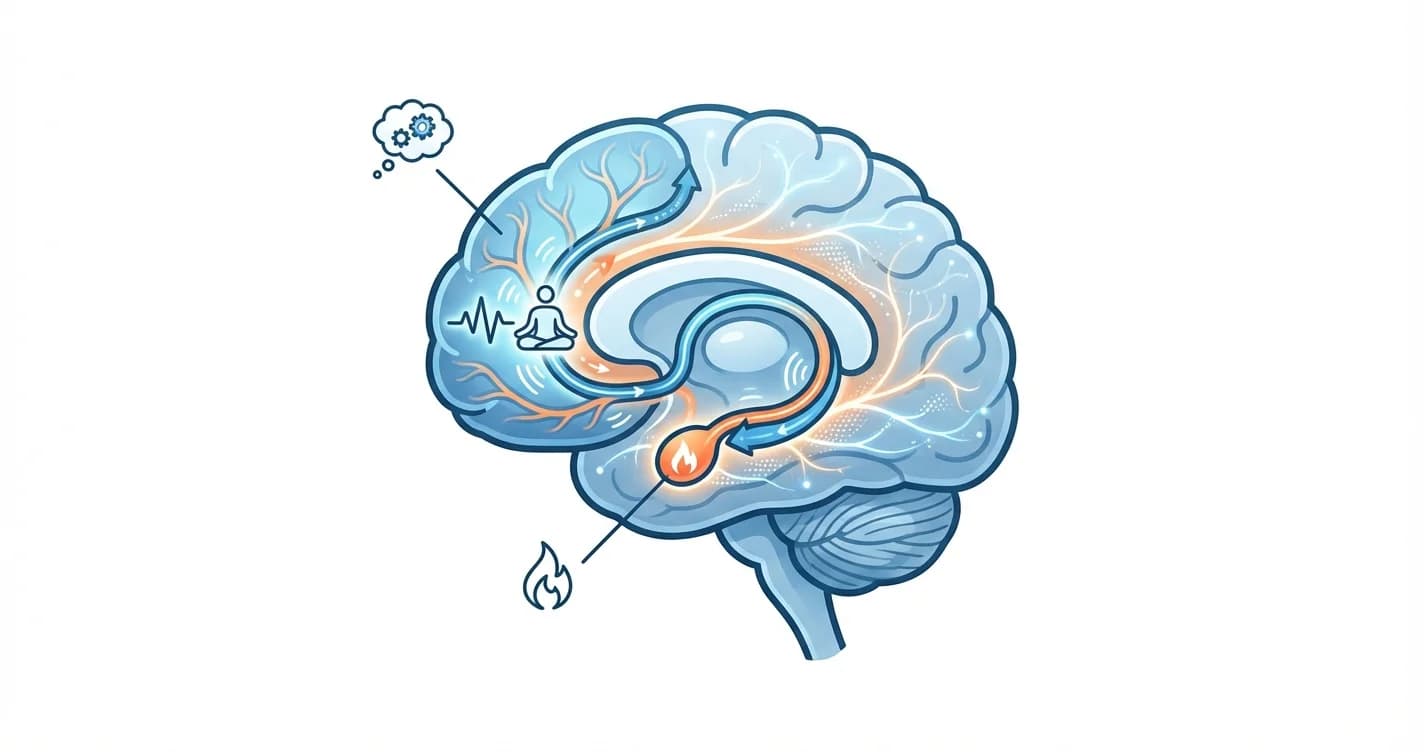
Amygdala and Prefrontal Cortex Connection: Training Emotional Regulation Through Mindfulness
How mindfulness practices reshape neural pathways to strengthen emotional control and reduce reactivity
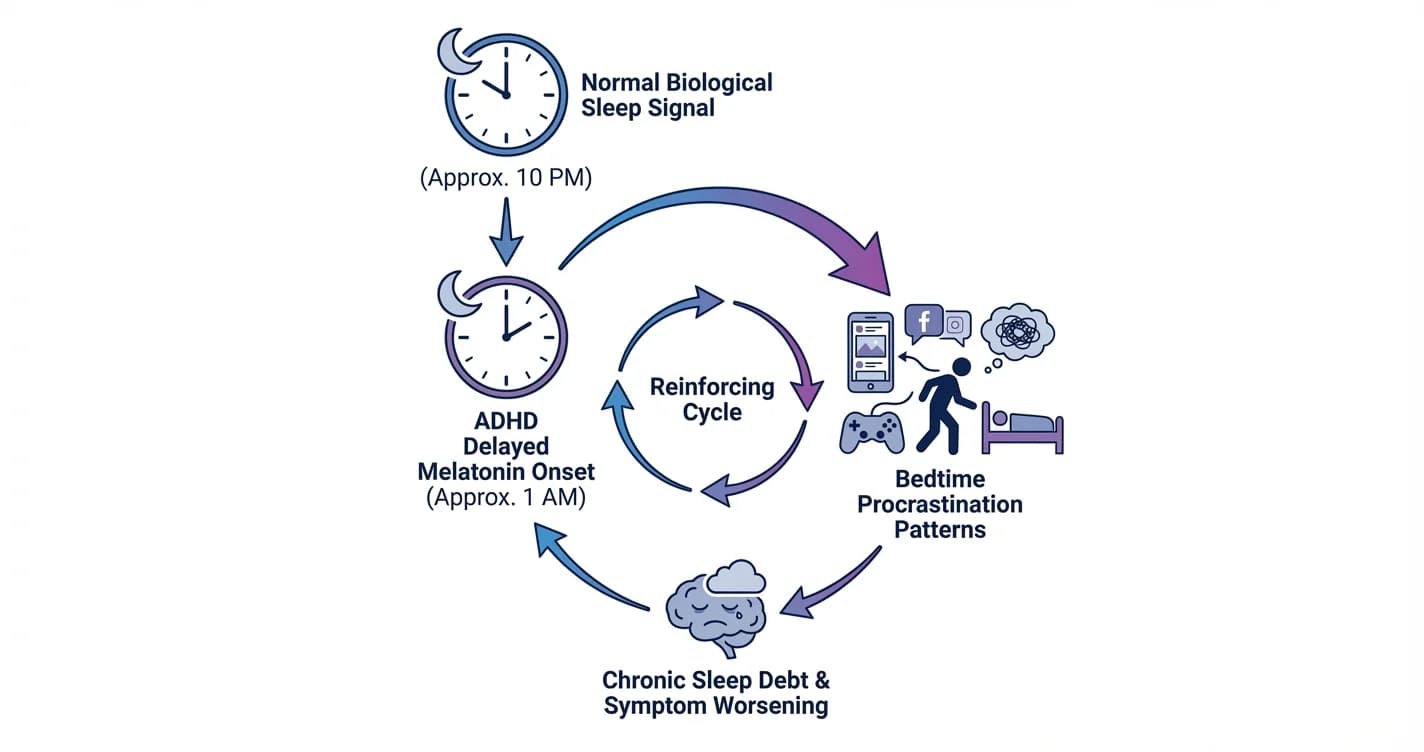
ADHD Sleep Cycle Disruption: Melatonin Delay and Bedtime Procrastination Patterns
Understanding how attention regulation difficulties interfere with natural sleep timing and the nightly wind-down process
Disclaimer: This article is for informational purposes only and does not constitute medical advice, diagnosis, or treatment. Always seek the advice of your physician or other qualified health provider with any questions you may have regarding a medical condition. If you are in crisis or think you may have an emergency, call 988 (Suicide & Crisis Lifeline) or go to the nearest emergency room. Outside the US? Find a crisis line in your country.