
Why Do I Push People Away? 2026 Fix Guide
Why do I push people away, answered with steps that work in 2026: name the urge, pause 90 seconds, repair fast. Fearful avoidant attachment explained.

Key Takeaways
- Why do I push people away usually traces to fear of engulfment or abandonment, not lack of caring.
- Fearful avoidant attachment is the most common driver of the push-pull pattern in adults.
- The urge to withdraw peaks in the first 48 hours after a moment of real closeness.
- Naming the urge out loud, before acting on it, breaks the cycle faster than avoiding the relationship entirely.
- An AI voice therapy app like Lovon gives you a place to talk through the withdrawal urge the moment it hits, at 2am
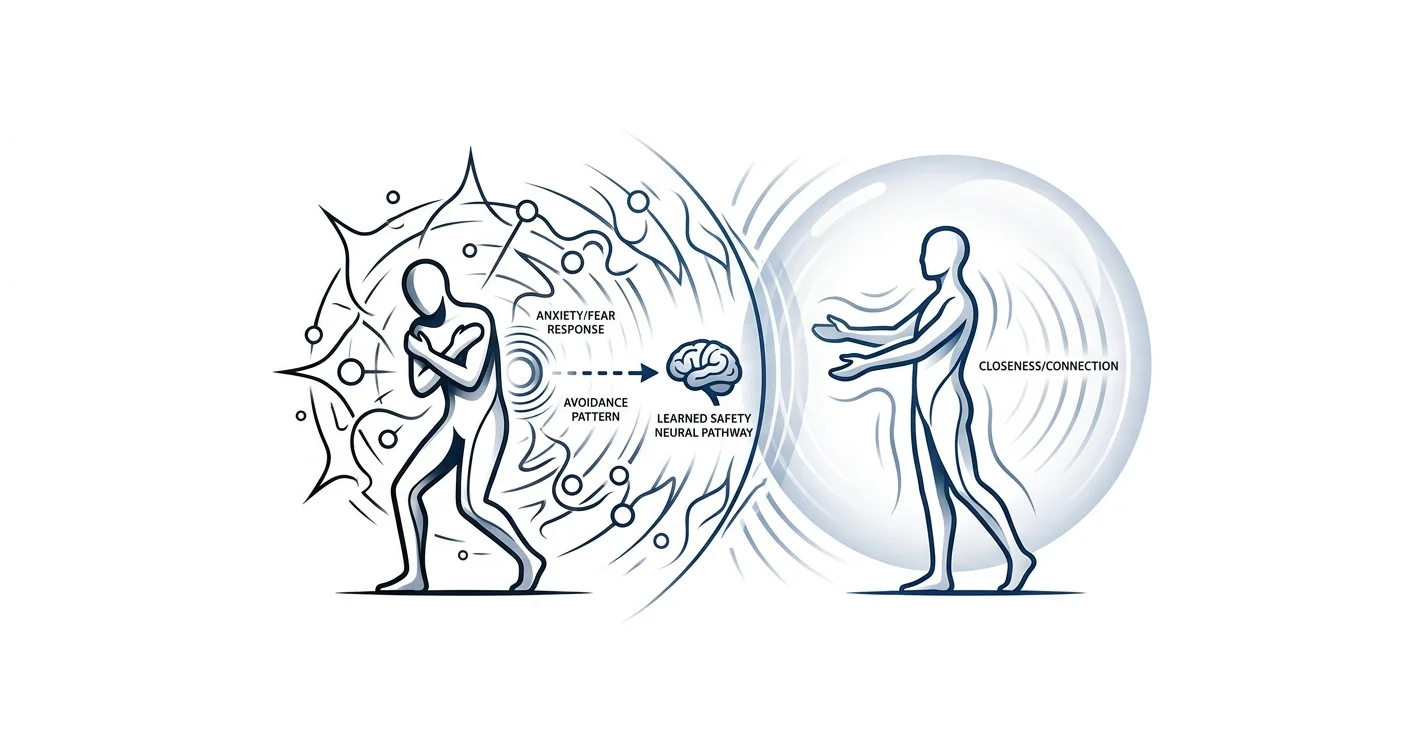
Pushing people away right when things get good isn't random and it isn't a character flaw. It's usually a learned safety response that fires the moment closeness starts to feel like risk.
TL;DR
- Why do I push people away usually traces to fear of engulfment or abandonment, not lack of caring.
- Fearful avoidant attachment is the most common driver of the push-pull pattern in adults.
- The urge to withdraw peaks in the first 48 hours after a moment of real closeness.
- Naming the urge out loud, before acting on it, breaks the cycle faster than avoiding the relationship entirely.
- An AI voice support app like Lovon gives you a place to talk through the withdrawal urge the moment it hits, at 2am or on a lunch break.
Why this matters
The pattern shows up the same way for almost everyone who searches this: things start going well, someone gets emotionally close, and your body reacts like it's under threat. You pick a fight over nothing, go quiet for three days, or find a sudden reason the relationship isn't right. That's not you being difficult. It's a nervous system pattern often rooted in fearful avoidant attachment, where closeness and threat get wired together early in life.
The cost of not naming it is real. Relationships end at the exact point they were about to deepen, and the person doing the pushing usually feels the loss hardest, months later, once the adrenaline of distance wears off. In 2026, more people are catching this pattern by name before it costs them a relationship, which is the whole point of this guide.
“If closeness makes you want to run, that's not a character flaw. That's a nervous system doing what it learned to do.”
What you'll need
- A specific recent example of pushing someone away, with a date and what happened right before it
- 10 minutes a day for two weeks to track triggers (a notes app works, a voice memo works better)
- One person you trust enough to name the pattern to, even imperfectly
- Willingness to sit in discomfort for 90 seconds without acting on it
- Optional: a place to talk it through out loud when it's happening in real time. Lovon is built for exactly that moment, when the urge to withdraw is live and you need to think out loud before you act on it
You don't need a diagnosis to start. You need one clear example and the willingness to slow down the next time it happens.
The steps
1. Name the urge the second it starts
The push-away impulse almost always has a physical tell before it becomes an action: tight chest, urge to check your phone, sudden irritation at something small. Catching it here, before the fight or the silence, is the highest-leverage moment in the whole cycle. Say it internally: I'm about to create distance. That single sentence interrupts the automatic sequence. Common mistake: waiting until after you've already gone cold to analyze what happened, which is too late to redirect anything.
2. Track your triggers for two weeks
Write down the date, what happened right before the urge hit, and what you did. Patterns emerge fast; most people find their pushing-away moments cluster around specific triggers, like a partner saying I love you first, being asked about the future, or getting complimented on something vulnerable. Two weeks of data beats a lifetime of vague guessing. Common mistake: only tracking the dramatic pushes and skipping the small ones, like canceling plans for no real reason.
3. Build a 90-second pause
When the urge hits, set a timer for 90 seconds before you send the text, start the fight, or leave the room. Ninety seconds is roughly how long it takes the adrenaline spike behind the urge to crest and start dropping. Breathe out longer than you breathe in during that window; four counts in, six counts out, five rounds. Expected outcome: the urge doesn't disappear, but its intensity drops enough that you can choose a different action. Common mistake: using the pause to build a better case for why you should still leave.
4. Say what's happening, out loud, to the other person
This is the step people skip because it feels exposing, and it's the one that actually changes the relationship. A simple script works: I notice I want to pull away right now, and I don't think it's about you. You don't need to explain the whole history in one sentence. Taking an attachment style quiz beforehand can help you find language that fits your specific pattern instead of generic relationship advice. Common mistake: only saying this after the damage is done, as an apology instead of a real-time flag.
5. Repair within 24 hours, not days
If you do withdraw, silence, coldness, a canceled plan, the repair window matters more than the withdrawal itself. Reaching back out within a day tells the other person the distance was a reaction, not a decision. Waiting a week to cool off reads as rejection and often triggers their own protective response. Expected outcome: shorter, less damaging ruptures over time as both people learn the pattern resolves quickly. Common mistake: waiting for the other person to reach out first, which can turn one withdrawal into a standoff.
6. Build one small vulnerability rep a week
Pick one low-stakes moment a week to share something slightly more honest than you normally would: a fear, a preference, a need. Small reps build tolerance for closeness the same way small weights build strength; jumping straight to full vulnerability usually backfires and confirms the fear that closeness is dangerous. Common mistake: treating vulnerability as all-or-nothing, either total openness or total shutdown.
7. Get a second source of support outside the relationship
Working on this pattern inside the same relationship that triggers it is hard; you're processing the wound and managing the person you're wounding at the same time. A separate outlet, a friend, a therapist, or an AI voice therapy session, gives you room to think without managing someone else's reaction in real time. This is where a lot of people use Lovon between sessions with a licensed therapist or as a starting point if therapy isn't accessible yet.
Troubleshooting
You catch the urge but still act on it anyway. Naming it is step one, not the whole fix; expect several months of catching-and-still-doing-it before the gap closes. Keep tracking anyway, the awareness compounds even when the behavior lags behind.
The other person doesn't believe you when you explain the pattern. That's often because past explanations weren't followed by different behavior. Trust rebuilds through repeated small repairs, not through a better explanation.
You push people away even when you consciously want closeness. This split, wanting connection and fearing it at the same time, is the core signature of avoidant attachment patterns. It's not contradictory; it's two systems running at once, and naming that out loud to a partner usually lands better than either version alone.
You only push away people who are genuinely good to you. This is common and confusing. Kindness and consistency can feel more threatening than chaos if your early relationships taught you that closeness eventually gets withdrawn. It's a pattern to work on, not a sign you don't want the good thing.
Tracking feels like it's making things worse. If two weeks of noticing your triggers spikes anxiety instead of clarity, slow down to once a day instead of in-the-moment logging, and consider bringing a therapist into the process rather than working through it solo.
Tools and resources
- A daily tracking method: notes app, voice memo, or a simple notebook
- A trusted person to name the pattern to
- Lovon, for talking through the withdrawal urge the moment it hits, especially outside therapy hours
- A licensed therapist, if the pattern connects to earlier relationship or family history
- The 90-second pause technique, practiced daily even when there's no trigger, so it's automatic when one appears
What to do next
Once you can name the pattern and catch it in the moment, the next piece is understanding what secure connection actually feels like, since most people who push others away have never had a steady model for it. The guide on how to become more securely attached in relationships walks through what that shift looks like day to day, not just in theory.
FAQ
Why do I push people away when I get close to them?
You push people away when closeness triggers an old fear response, usually tied to fearful avoidant attachment, where intimacy and threat became linked early on. The fix is catching the urge before you act on it and naming it out loud instead of acting it out.
Is pushing people away a sign of an attachment disorder?
It's more often a sign of an insecure attachment style, avoidant or fearful avoidant, rather than a clinical disorder. Attachment styles are patterns learned in early relationships, and they can shift with consistent practice and, in many cases, therapy.
Why do I self-sabotage relationships that are going well?
Self-sabotage in good relationships often happens because sustained closeness feels unfamiliar or unsafe, so your system creates a reason to exit before it can be hurt. Tracking the specific moment the sabotage starts is the fastest way to catch it early.
Can you fix a fear of intimacy on your own?
You can make real progress alone with consistent tracking, the 90-second pause technique, and small weekly vulnerability practice, but deep-rooted patterns tied to childhood usually move faster with outside support. A therapist or an AI voice support tool like Lovon can help you practice the harder conversations before you have them for real.
How long does it take to stop pushing people away?
Most people notice the gap between catching the urge and controlling it starting to close within a few months of consistent tracking and practice. Full change in attachment patterns typically takes longer, often six months to a couple of years of active work.
Is it normal to push away people who treat you well?
Yes, and it's one of the more confusing versions of this pattern. If early relationships taught you that consistency doesn't last, calm and steady treatment can feel less trustworthy than chaos, even though it's objectively safer.
What's the difference between needing space and pushing someone away?
Needing space is a stated, temporary boundary communicated to the other person. Pushing someone away is an unstated withdrawal, often through coldness or conflict, that leaves the other person guessing what happened.
Does an AI therapist help with attachment issues?
An AI voice therapy app can help you practice naming the pattern and rehearse difficult conversations in the moment the urge to withdraw hits, which is often when you need support most and a licensed therapist isn't available. It works best alongside, not instead of, professional care for deeper attachment work.
One last thing
The detail most people miss: the urge to push someone away usually peaks within 48 hours of a genuinely good moment, not a bad one. If you notice distance creeping in right after something went well, that's not a coincidence, that's the pattern doing exactly what it learned to do, and catching it there is the whole game.
Related guides
How AI Support Helps You Heal
AI emotional support isn't about replacing human connection — it's about filling the gaps. The moments when you need to talk at 2 AM, when you don't want to burden your friends again, or when you simply need someone to listen without judgment.
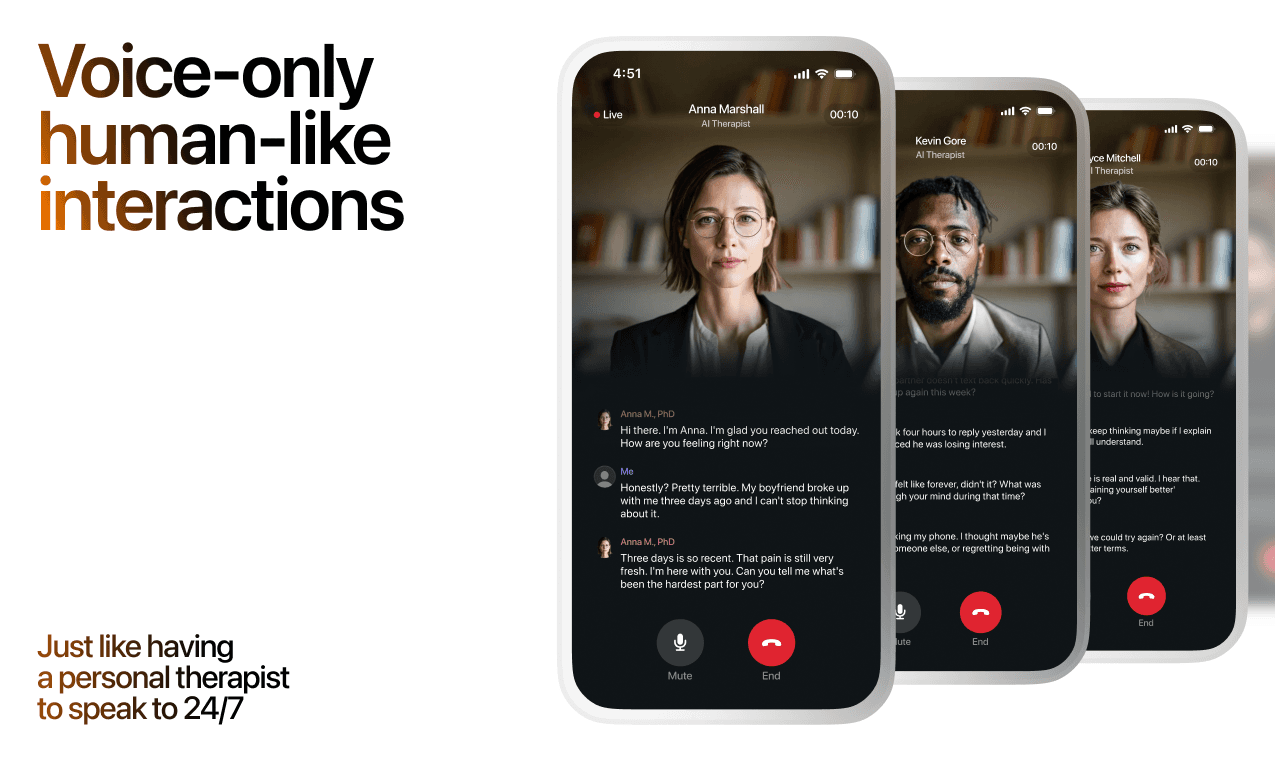
Here's what happens in a typical Lovon session:
You share what's on your mind
There's no script, no intake form, no waiting room. You speak or type whatever you're feeling — in your own words, at your own pace.
Lovon validates and explores
Using frameworks from CBT (Cognitive Behavioral Therapy) and motivational interviewing, Lovon acknowledges your feelings first, then gently helps you explore them. No dismissive "just move on" advice.
You build coping skills together
Lovon doesn't just listen — it actively works with you on evidence-based techniques: thought reframing, urge surfing, behavioral experiments, and more.
What a Session with Lovon Looks Like
Lovon is AI support, not a replacement for professional care. If things have been hard to get through for weeks, or you are thinking about harming yourself, talk to a doctor or a licensed therapist.
Ready to Start?
Your healing journey can begin right now
A 7-day trial. No judgment. Just a safe space to process what you're going through.
Frequently Asked Questions
Is Lovon a replacement for a real therapist?
Is my conversation with Lovon AI private?
How is Lovon different from ChatGPT for emotional support?
Can I use Lovon if I'm already seeing a therapist?
Can I try Lovon before subscribing?
About the Author
The Lovon Editorial Team
Mental Health & Wellness Content Team
The Lovon Editorial Team develops mental health and wellness content designed to make psychological concepts accessible and actionable. Our goal is to bridge the gap between clinical research and everyday life - helping you understand why your mind works the way it does and what you can do about it....
Related articles
- Why Do I Attract Emotionally Unavailable People (2026)
Why do you attract emotionally unavailable people? The pattern traces to attachment style, not bad luck. Get the 2026…
- Disorganized Attachment Style: Causes & Recovery 2026
Disorganized attachment style causes constant push-pull in relationships. Learn what drives it, 6 evidence-based…
- Dismissive Avoidant Attachment: Signs & Fixes (2026)
Dismissive avoidant attachment explained: what drives the withdrawal, how to respond, and when it actually shifts…
- Abandonment Issues in Relationships: How to Overcome Them 2026
Overcome abandonment issues in relationships with 6 practical steps for 2026 — grounding routines, trigger logs, and…
See also
Quizzes
- Fear of Intimacy Test: Free 12-Question Self-Check
See which part of closeness feels risky, in 3 min.
- Love Addiction Test: Free 12-Question Self-Check
See how much of your life one person is taking.
Free tools
- Attachment Trigger Plan for Anxious and Avoidant Patterns
Pick your pattern, tick the moments that set it off, and finish one card for each: your body signal, the thing you will…
- What Did They Actually Mean By That?
A chat for one sentence you cannot stop re-reading. Paste their exact words and what was happening around them, and get…
From the wiki
- What is an attachment style?
An attachment style is the habit your nervous system formed for handling closeness: what you actually do when someone…
Disclaimer: This article is for informational purposes only and does not constitute medical advice, diagnosis, or treatment. Always seek the advice of your physician or other qualified health provider with any questions you may have regarding a medical condition. If you are in crisis or think you may have an emergency, call 988 (Suicide & Crisis Lifeline) or go to the nearest emergency room. Outside the US? Find a crisis line in your country.