
Anxious Attachment Triggers: How to Defuse Them (2026)
Anxious attachment triggers explained: a 6-step sequence to name, regulate, and defuse them in 2026, plus troubleshooting for the moments it feels impossible.

Key Takeaways
- A specific recent trigger to work with (not a vague "I get anxious sometimes")
- A quiet 10 minutes, phone away from notifications
- A notes app or journal for a 7-day trigger log
- A grounding technique you can do anywhere: box breathing, a cold-water splash, or a 20-minute walk
- Optional: a voice-based space to talk it through out loud — Lovon's AI voice therapy sessions work well here because
An anxious attachment trigger is any moment — a delayed text, a shift in tone, a canceled plan — that flips your nervous system into fear of abandonment, even when nothing is actually wrong. This guide breaks down where anxious attachment triggers come from and gives you a step-by-step way to defuse them before they wreck your day.
TL;DR
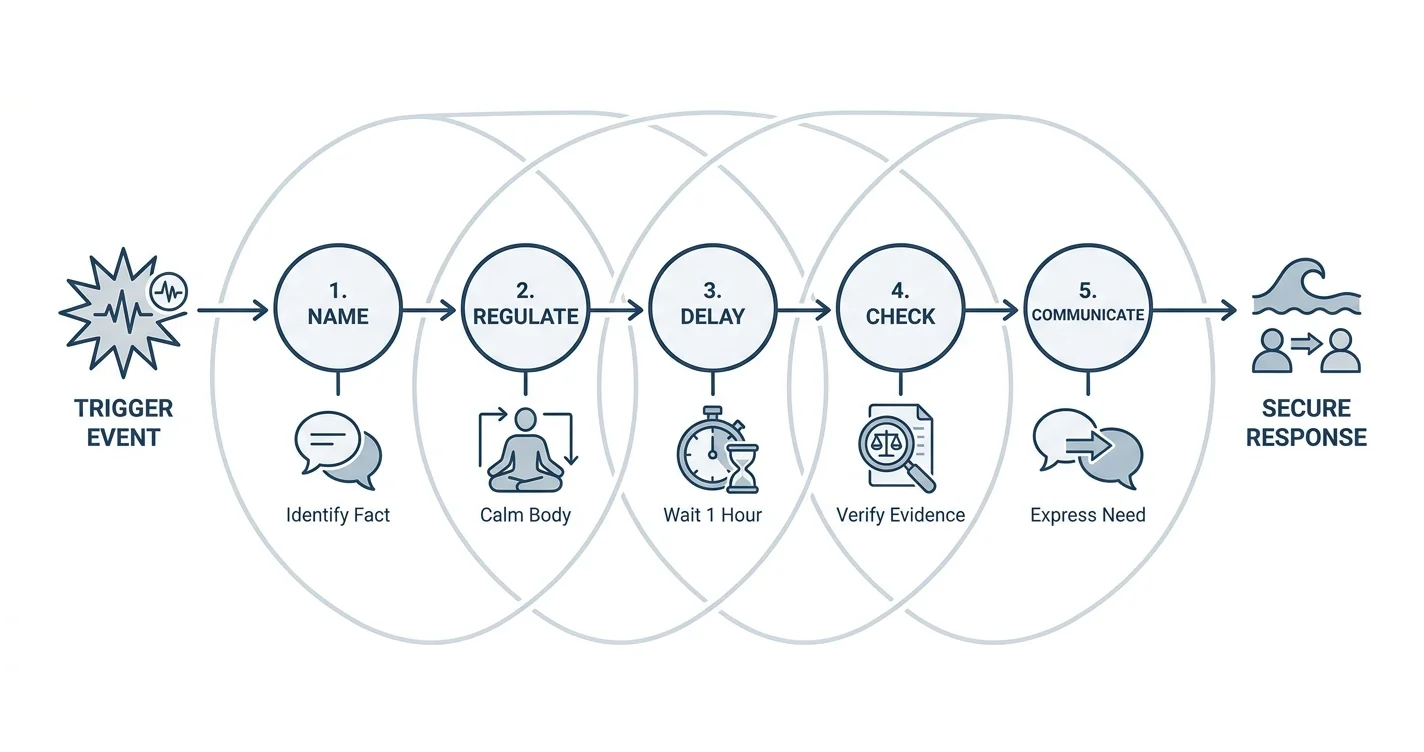
Anxious attachment triggers are small relational cues — silence, distance, ambiguity — that your body reads as threat because of an attachment pattern formed early in life, not because of what's actually happening in 2026. The fix is a five-step defusing sequence: name the trigger, regulate the body first, delay the reaction, check the story against the facts, then communicate the need directly. Verdict: this is learnable in weeks, not years, if you practice the sequence consistently. For structured daily practice, anxious attachment style signs and coping strategies is the place to start; Lovon's AI voice sessions give you somewhere to run the sequence out loud when it's 11 p.m. and nobody else is awake.
Why this matters
Anxious attachment isn't a character flaw. It's a nervous system that learned, at some point, that connection was unreliable — so it stays on alert for signs of loss. The problem in 2026 is that modern communication (read receipts, typing bubbles, delayed replies) hands that nervous system an endless supply of ambiguous data to misread.
Left unaddressed, anxious attachment triggers don't just cause a bad afternoon. They drive the checking-your-phone-every-four-minutes loop, the over-apologizing, the picking fights to get reassurance — patterns covered in anxious attachment patterns in dating. Defusing the trigger in the moment is the skill that stops the spiral before it becomes the relationship's whole personality.
What you'll need
- A specific recent trigger to work with (not a vague "I get anxious sometimes")
- A quiet 10 minutes, phone away from notifications
- A notes app or journal for a 7-day trigger log
- A grounding technique you can do anywhere: box breathing, a cold-water splash, or a 20-minute walk
- Optional: a voice-based space to talk it through out loud — Lovon's AI voice sessions work well here because saying the fear out loud, not just typing it, engages a different part of processing than silent scrolling does
The steps
1. Name the trigger the moment it lands
The instant your chest tightens or your stomach drops, say — out loud or in your head — exactly what just happened: "He hasn't texted back in three hours." Naming it does two things: it slows the amygdala's hijack and it separates the event from the story you're about to build on top of it.
Common mistake: skipping straight to the interpretation ("he's losing interest") instead of the fact ("three hours, no reply"). The fact is neutral. The interpretation is where the panic lives.
2. Regulate the body before you touch your phone
A trigger reaction is physiological first, emotional second. Box breathing — four seconds in, hold four, out four, hold four, repeated for two minutes — brings your heart rate down enough that the next four steps actually work. This is the same regulation logic behind nervous system dysregulation signs and how to reset.
Expected outcome: within 90 seconds, the urge to text "are you mad at me?" five times drops noticeably. That 90-second window matters — it's roughly how long an emotional surge takes to crest and start receding on its own if you don't feed it.
3. Delay the reaction by one full hour
Do not respond, confront, or seek reassurance for 60 minutes after a trigger fires. Set a timer if you have to. This single rule breaks more anxious-attachment cycles in 2026 than any reframe or affirmation, because it stops you from acting on a nervous system reading, not a fact.
Common mistake: using the hour to rehearse the confrontation instead of actually distracting yourself. Go do something with your hands — dishes, a walk, a workout — not more thinking about the trigger.
4. Check the story against the evidence
Write down the trigger, the story your brain told ($he's pulling away$), and the actual evidence for and against it. Most of the time the evidence column stays nearly empty because the story was built on silence, not information. This is the same distortion-checking logic used in catastrophizing: how to stop worst-case thinking — anxious attachment triggers and catastrophizing feed each other constantly.
Expected outcome: roughly nine times out of ten, the evidence doesn't support the panic-level story. That gap is the whole point of the exercise.
5. Communicate the actual need, not the accusation
Once you're regulated and the story's been checked, say what you need directly: "I noticed I got anxious when I didn't hear back — can we agree on rough reply times when one of us is busy?" That's a request. "Why didn't you text me back?" is an accusation dressed as a question, and it triggers defensiveness instead of closeness.
Common mistake: waiting until you're already flooded to have this conversation. Have it when you're calm, as a standing agreement, not mid-trigger.
6. Log the pattern for 7 days
Write down every trigger, the time, what preceded it, and how long the reaction lasted. After a week you'll usually see two or three repeat triggers — same time of day, same type of ambiguity — doing 80% of the damage. That's your actual target for practice, not every possible trigger.
Troubleshooting
The trigger fires even when I know the fear is irrational. Knowing and feeling are different systems. Regulate the body (step 2) before you argue with the thought — logic doesn't land while your nervous system thinks you're under threat.
My partner gets frustrated when I ask for reassurance again. Ask for reassurance less often but more specifically — a standing agreement (step 5) beats repeated in-the-moment asks. How to communicate better in a relationship covers how to frame the request so it lands.
I spiral at night more than during the day. Nighttime triggers hit harder because there's less distraction and more rumination room. A 10-minute wind-down routine before bed — no phone, box breathing, journaling — cuts this significantly.
The one-hour delay feels impossible. Start with 15 minutes and build up. The goal isn't perfection in week one; it's proving to your nervous system that waiting doesn't end the relationship.
I'm triggered by my partner's attachment style, not just my own anxiety. Anxious and avoidant pairings amplify each other's triggers — see anxious attachment and love avoidant: the push-pull cycle for how that dynamic specifically works and what breaks it.
I don't know if this is anxiety or something bigger. If triggers are happening daily, disrupting sleep, or driving compulsive checking behavior, that's worth more support than a self-guided sequence — a therapist or a same-day AI voice therapy session can help you sort out what's attachment-driven versus something else.
Tools and resources
- A trigger log (notes app, notebook, whatever you'll actually use daily)
- Box breathing or the 5-4-3-2-1 grounding method for the regulation step
- AI relationship coach for anxious attachment for talking through specific scenarios in real time, including the exact wording for step 5
- A standing weekly check-in with your partner to review patterns instead of relitigating every trigger individually
- Lovon's voice-based sessions, useful specifically because talking a trigger through out loud forces you to slow down in a way texting a friend doesn't
What to do next
Once the five-step sequence feels automatic for one or two repeat triggers, the next layer is understanding the attachment pattern underneath them — where it came from and what it takes to shift toward security. Anxious attachment style: signs and coping strategies is the deeper resource for that work, and it's the natural next stop after you've got the in-the-moment defusing sequence down.
FAQ
What is an anxious attachment trigger? It's a relational cue — delayed replies, a change in tone, distance after conflict — that activates fear of abandonment even when the actual situation is neutral or unclear. The trigger is physiological before it's emotional, which is why body-first regulation works better than arguing with the thought.
How long does it take to stop reacting to anxious attachment triggers? Most people notice a measurable drop in reaction intensity within 2-3 weeks of consistent practice using a naming-and-delay sequence, though full pattern change toward security is typically a longer, ongoing process through 2026 and beyond.
Is anxious attachment the same as being needy? No. Anxious attachment is a nervous system pattern formed from inconsistent early caregiving or relational experiences; neediness is a behavior, and it's often the visible symptom, not the cause. Treating the underlying pattern reduces the behavior naturally.
Can anxious attachment triggers happen with friends, not just romantic partners? Yes, though they show up most intensely in romantic relationships because of the higher stakes. Friendship-based triggers usually center on feeling excluded or replaced rather than abandonment specifically.
What's the fastest way to calm down mid-trigger? Box breathing for two minutes (four seconds in, hold four, out four, hold four) is the fastest reliable method, because it directly lowers heart rate and interrupts the panic response before you act on it.
Does an anxious attachment trigger mean the relationship is bad? Not necessarily — the trigger reflects your nervous system's history, not necessarily the health of the current relationship. Checking evidence against the story (step 4) is how you tell the difference between an old wound and an actual red flag.
Is anxious attachment linked to relationship anxiety generally? They overlap heavily. Relationship anxiety: signs, causes, and coping tools covers the broader pattern if triggers are only part of what you're dealing with.
Can therapy or AI voice therapy help with anxious attachment triggers specifically? Yes — talking through a trigger out loud, in real time, helps you catch the story-versus-fact gap faster than journaling alone, and an AI voice therapy session is available at 2 a.m. when the trigger actually fires, not just during business hours.
One last thing
The trigger itself almost never predicts what actually happens next. Track your log for a full 7 days and you'll usually find that the outcome you feared — being left, being unimportant — didn't happen in a single instance, even though the fear felt identical every time. That gap between the prediction and the outcome is the actual proof your nervous system needs, and no amount of reassurance from someone else replaces seeing it in your own data.
Related guides
How AI Support Helps You Heal
AI emotional support isn't about replacing human connection — it's about filling the gaps. The moments when you need to talk at 2 AM, when you don't want to burden your friends again, or when you simply need someone to listen without judgment.
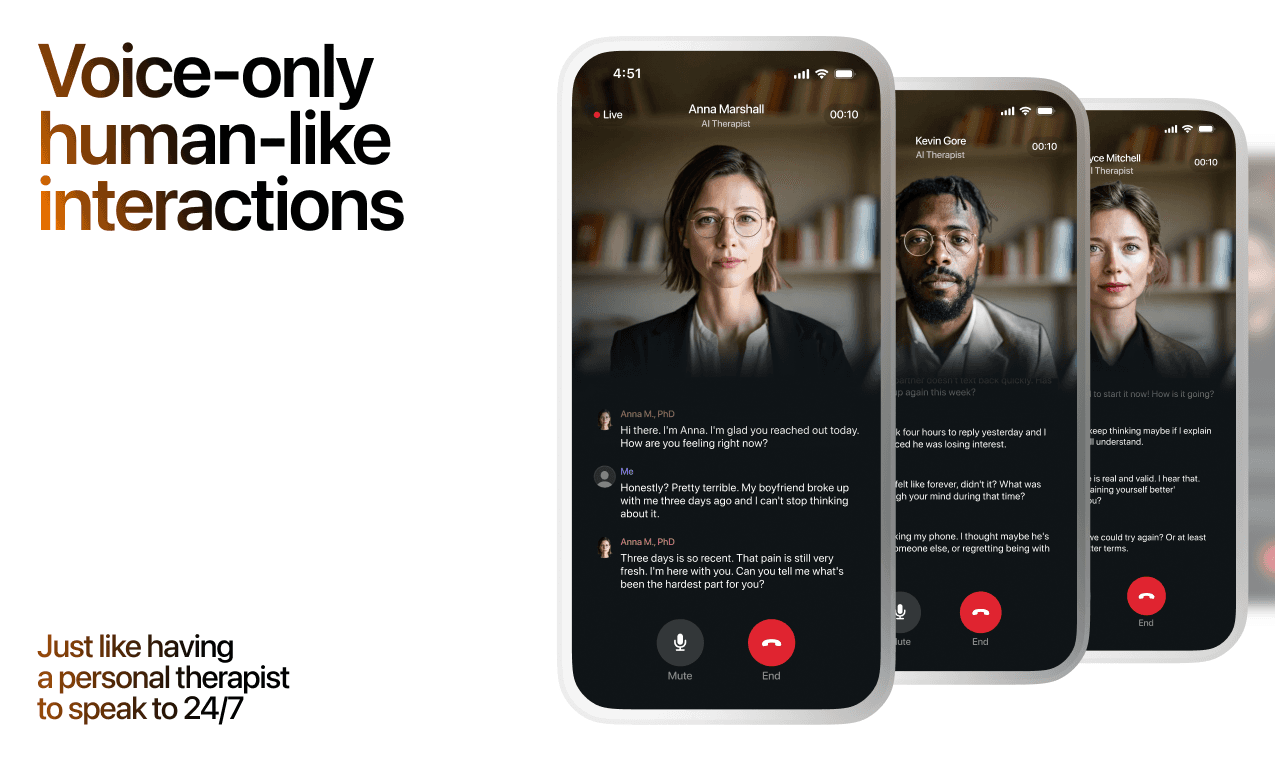
Here's what happens in a typical Lovon session:
You share what's on your mind
There's no script, no intake form, no waiting room. You speak or type whatever you're feeling — in your own words, at your own pace.
Lovon validates and explores
Using frameworks from CBT (Cognitive Behavioral Therapy) and motivational interviewing, Lovon acknowledges your feelings first, then gently helps you explore them. No dismissive "just move on" advice.
You build coping skills together
Lovon doesn't just listen — it actively works with you on evidence-based techniques: thought reframing, urge surfing, behavioral experiments, and more.
What a Session with Lovon Looks Like
Lovon is AI support, not a replacement for professional care. If things have been hard to get through for weeks, or you are thinking about harming yourself, talk to a doctor or a licensed therapist.
Ready to Start?
Your healing journey can begin right now
A 7-day trial. No judgment. Just a safe space to process what you're going through.
Frequently Asked Questions
Is Lovon a replacement for a real therapist?
Is my conversation with Lovon AI private?
How is Lovon different from ChatGPT for emotional support?
Can I use Lovon if I'm already seeing a therapist?
Can I try Lovon before subscribing?
About the Author
The Lovon Editorial Team
Mental Health & Wellness Content Team
The Lovon Editorial Team develops mental health and wellness content designed to make psychological concepts accessible and actionable. Our goal is to bridge the gap between clinical research and everyday life - helping you understand why your mind works the way it does and what you can do about it....
Related articles
- Secure Attachment Style: How to Build It in 2026
Learn the traits of a secure attachment style and the exact steps to build one in 2026 — regulation, repair, and direct…
- Why Do I Attract Emotionally Unavailable People (2026)
Why do you attract emotionally unavailable people? The pattern traces to attachment style, not bad luck. Get the 2026…
- Understanding Anxious Attachment Patterns in Relationships
If you find yourself constantly checking your phone for messages, worrying whether your partner still cares, or feeling…
- Abandonment Issues in Relationships: How to Overcome Them 2026
Overcome abandonment issues in relationships with 6 practical steps for 2026 — grounding routines, trigger logs, and…
See also
Quizzes
- Rejection Sensitivity Test: Free 12-Question Check
See how strongly you expect and read rejection.
- Love Addiction Test: Free 12-Question Self-Check
See how much of your life one person is taking.
Free tools
- Attachment Trigger Plan for Anxious and Avoidant Patterns
Pick your pattern, tick the moments that set it off, and finish one card for each: your body signal, the thing you will…
- How to Reassure Your Partner (and When It Stops Helping)
A chat for working out how to reassure your partner when the same worry keeps coming back. Say what sets it off and how…
From the wiki
- What does clingy mean in a relationship?
Clingy is what people call behavior that asks for more contact or reassurance than the other person wants to give…
Disclaimer: This article is for informational purposes only and does not constitute medical advice, diagnosis, or treatment. Always seek the advice of your physician or other qualified health provider with any questions you may have regarding a medical condition. If you are in crisis or think you may have an emergency, call 988 (Suicide & Crisis Lifeline) or go to the nearest emergency room. Outside the US? Find a crisis line in your country.