
One Sided Relationship Signs: 8 to Check in 2026
Confirm one sided relationship signs with an 8-point checklist covering effort, planning, and apologies — plus what to do next in 2026.

Key Takeaways
- Fifteen quiet minutes — no phone, no partner in the room, just you and your honest memory
- A notes app or journal — you're about to make a list, and it needs to exist outside your head
- The last 30 days of your relationship in mental replay — texts, plans, apologies, who did what
- Willingness to be uncomfortable — this exercise only works if you don't soften the answers
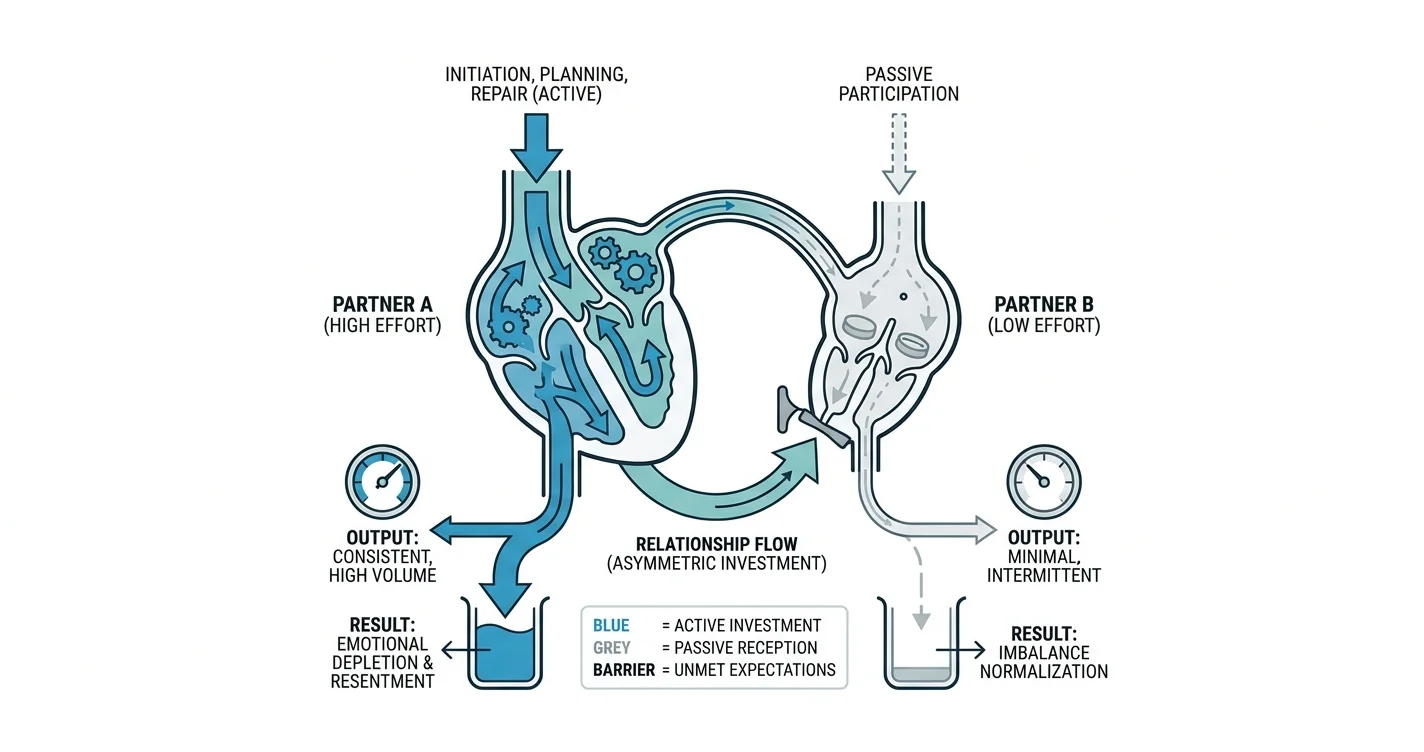
A one-sided relationship shows up in small math errors long before anyone says the words out loud: you're the one texting first, planning first, apologizing first, every single time. This guide walks through the specific signs, the mental checklist to run when you're not sure, and what to do once the pattern is confirmed.
TL;DR
One sided relationship signs cluster around effort, not feelings — you initiate contact, plan the dates, remember the details, and absorb the compromises while your partner shows up when it's convenient. If you're tallying more than three of the eight signs below, the pattern is real, not in your head. Verdict: address it directly within the next two weeks, or expect the imbalance to calcify by 2026's end. Talking it through with a licensed therapist or an AI voice companion like Lovon between sessions can help you rehearse the conversation before you have it for real.
Why this matters
Most people don't wake up one day fully aware they're in a lopsided relationship. It erodes gradually — one skipped birthday, one unreturned favor, one "I forgot" at a time — until the imbalance feels normal. By the time someone searches "one sided relationship signs" in 2026, they've usually already sensed something is wrong; they just need the checklist to confirm it.
The cost of ignoring this pattern isn't abstract. Chronic one-sided effort correlates with resentment, lower self-esteem, and the kind of anxious attachment behavior that spills into future relationships. Naming the signs early is the fastest way to either fix the relationship or exit it with your sense of self intact.
What you'll need
- Fifteen quiet minutes — no phone, no partner in the room, just you and your honest memory
- A notes app or journal — you're about to make a list, and it needs to exist outside your head
- The last 30 days of your relationship in mental replay — texts, plans, apologies, who did what
- Willingness to be uncomfortable — this exercise only works if you don't soften the answers
- Optional: a codependency vs love breakdown open in another tab, since the two patterns often overlap
The signs, step by step
1. Count who initiates contact
Open your last 20 text exchanges and tally who sent the first message each time. If you initiated 15 or more of those 20, that's not a coincidence — that's a pattern. Common mistake: telling yourself "they're just busy" without checking whether busy has lasted for months.
2. Track who plans the dates
Think back on your last five hangouts. Who picked the restaurant, the time, the activity? A relationship where one person is the default event planner every single time isn't collaborative — it's outsourced. If your partner has never once said "let's do X on Saturday" without you prompting it, write that down.
3. Notice who remembers the details
Do you know their coworker's name, their coffee order, the date of their job interview? Do they know yours? Mismatched detail-tracking is a quiet but reliable marker of asymmetric investment — one person is paying attention because they care, the other isn't because they don't have to.
4. Check who apologizes first after conflict
After an argument, who reaches out to smooth things over? If it's always you — even when you weren't the one who escalated — you've taken on the emotional-repair job solo. This is one of the clearest one sided relationship signs because it shows who's actually invested in keeping the relationship intact.
5. Watch what happens when you need support
Think of the last three times you were stressed, sick, or upset. Did your partner show up, or did you end up managing it alone and comforting them about how hard it was to watch you struggle? If emotional unavailability is a pattern rather than a one-off bad week, it's a sign worth naming out loud.
6. Measure how often your plans get canceled versus theirs
If your plans get bumped for their convenience but theirs never move for yours, you're the flexible variable in this equation and they're the fixed one. Common mistake: accepting "something came up" as an explanation every time without asking why it never comes up on their end.
7. Ask whether your interests show up in the relationship at all
Do you know their hobbies, their favorite shows, their opinions on things that matter to them? Do they know yours — or have you stopped mentioning them because nobody asked? A relationship that only has room for one person's world is running on one person's fuel.
8. Notice whether you're grateful for basic effort
If a text back within a few hours feels like a win, or a single thoughtful gesture makes you feel "seen" for the first time in weeks, your baseline has dropped to match minimal effort. That gratitude for scraps is itself one of the more painful one sided relationship signs — it means you've adjusted your expectations downward without noticing.
Scoring: three or more confirmed signs means the imbalance is structural, not situational. Verdict: name it to your partner this week — waiting past 2026's midpoint tends to make the pattern harder to unwind.
Troubleshooting
"I only see one or two signs — is it still one-sided?" Probably not chronically, but check timing. One or two signs during a genuinely busy month (new job, family crisis) isn't the same as one or two signs as a permanent baseline.
"They say they love me, but the effort doesn't match." Words and effort are different data points, and effort is the harder one to fake consistently. Compare what they say against the conditional love vs unconditional love framework if the mismatch feels confusing.
"I've brought it up before and nothing changed." A single conversation rarely fixes months of established patterns. Look at whether effort improved for a week and then reverted — that dip-and-return cycle is common and worth naming as its own pattern, separate from the original imbalance.
"I'm scared I'm overreacting or being needy." Wanting reciprocity isn't neediness — it's the baseline requirement of a partnership. If you keep talking yourself out of your own observations, that self-doubt is worth examining on its own.
"What if I'm the one causing this?" Fair question, and worth checking honestly rather than assuming. Run the same eight signs against your own behavior before concluding you're only on the receiving end.
Tools and resources
- Is my relationship toxic — 10 signs to check now — a broader diagnostic if imbalance is one of several red flags you're seeing
- Signs your partner is losing interest in you — for when the one-sidedness feels like a recent shift rather than a long pattern
- Healthy relationship boundaries — how to set them clearly — the practical follow-up once you've confirmed the imbalance
- Lovon — an AI voice support app you can talk to at 2 a.m. when the doubt spikes and your partner isn't the person you can process it with right now
What to do next
Once you've confirmed the pattern, the next move is the conversation itself, not another round of quiet observation. A structured communication approach makes that conversation land as a request for change rather than an accusation, which is the difference between a partner who adjusts and one who gets defensive and shuts down.
FAQ
What are the clearest one sided relationship signs? Who initiates contact, who plans the dates, and who apologizes first after conflict are the three most reliable indicators. If one person carries all three consistently across 2026, the relationship is running on unequal investment.
Is a one-sided relationship the same as codependency? No — codependency involves both partners over-relying on each other in unhealthy ways, while a one-sided relationship has one partner under-investing. They can overlap, but they're different mechanisms with different fixes.
Can a one-sided relationship become balanced again? Yes, but only if the underperforming partner recognizes the pattern and changes behavior consistently over weeks, not just after one conversation. A single good gesture after being confronted isn't evidence of a fix.
How long should I wait before addressing it? If you've confirmed three or more signs over a month or longer, address it within two weeks rather than waiting for it to resolve on its own — it rarely does without a direct conversation.
Does emotional unavailability cause one-sided relationships? Often, yes. A partner who struggles to engage emotionally will naturally contribute less to planning, remembering, and repairing, which produces the exact imbalance described above.
Is it normal for effort to fluctuate month to month? Some fluctuation is normal during stressful periods. The concern is a consistent baseline, not a temporary dip during a hard month at work or a family emergency.
Should I talk to a therapist about this before confronting my partner? Processing your own doubts and rehearsing the conversation with a therapist, or an AI voice companion like Lovon in between sessions, can make the actual conversation calmer and more specific instead of emotional and vague.
What if my partner denies the imbalance exists? Bring the specific tally — who initiated the last 20 texts, who planned the last five hangouts — rather than a general feeling. Concrete numbers are harder to argue against than "you never try."
One last thing
The single most reliable sign isn't any one behavior — it's your own gratitude threshold. When a basic text back feels like a relief instead of a given, your baseline has already adjusted to the imbalance, and that's usually the moment worth acting on, not the moment worth waiting past.
Related guides
How AI Support Helps You Heal
AI emotional support isn't about replacing human connection — it's about filling the gaps. The moments when you need to talk at 2 AM, when you don't want to burden your friends again, or when you simply need someone to listen without judgment.
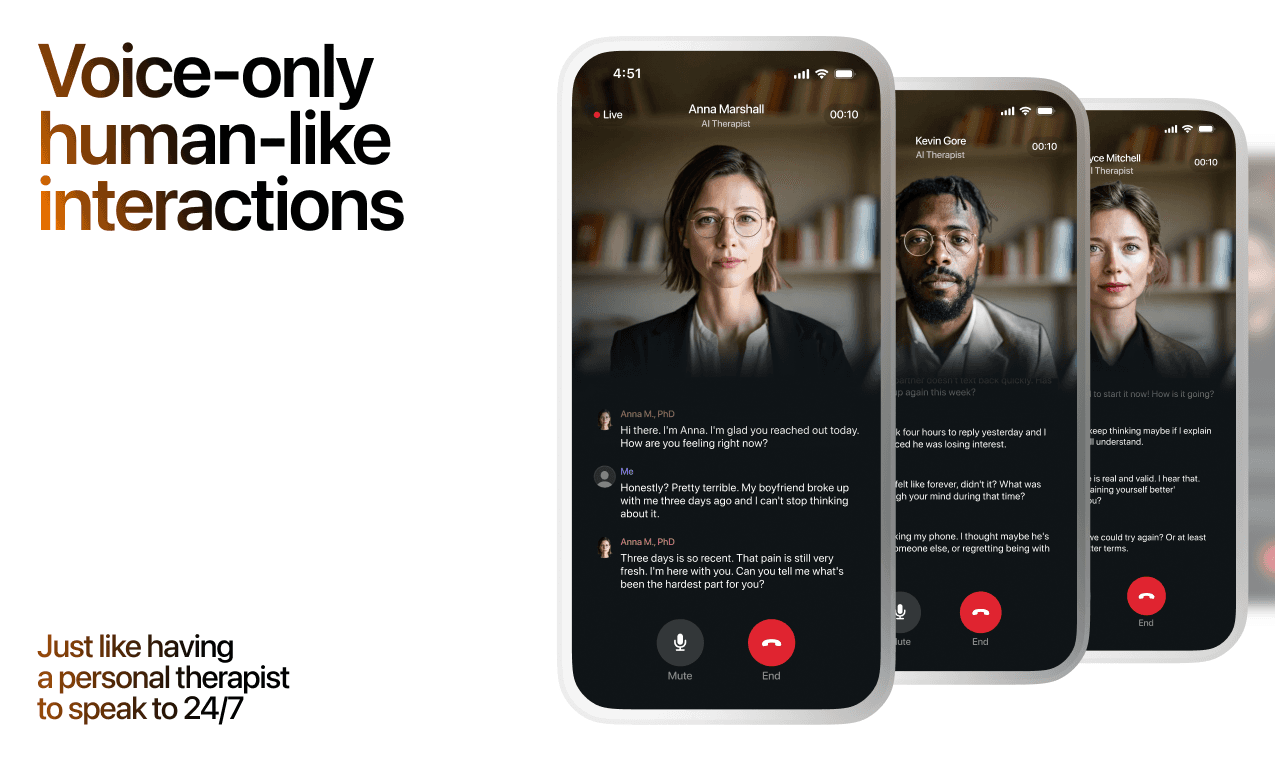
Here's what happens in a typical Lovon session:
You share what's on your mind
There's no script, no intake form, no waiting room. You speak or type whatever you're feeling — in your own words, at your own pace.
Lovon validates and explores
Using frameworks from CBT (Cognitive Behavioral Therapy) and motivational interviewing, Lovon acknowledges your feelings first, then gently helps you explore them. No dismissive "just move on" advice.
You build coping skills together
Lovon doesn't just listen — it actively works with you on evidence-based techniques: thought reframing, urge surfing, behavioral experiments, and more.
What a Session with Lovon Looks Like
Lovon is AI support, not a replacement for professional care. If things have been hard to get through for weeks, or you are thinking about harming yourself, talk to a doctor or a licensed therapist.
Ready to Start?
Your healing journey can begin right now
A 7-day trial. No judgment. Just a safe space to process what you're going through.
Frequently Asked Questions
Is Lovon a replacement for a real therapist?
Is my conversation with Lovon AI private?
How is Lovon different from ChatGPT for emotional support?
Can I use Lovon if I'm already seeing a therapist?
Can I try Lovon before subscribing?
About the Author
The Lovon Editorial Team
Mental Health & Wellness Content Team
The Lovon Editorial Team develops mental health and wellness content designed to make psychological concepts accessible and actionable. Our goal is to bridge the gap between clinical research and everyday life - helping you understand why your mind works the way it does and what you can do about it....
Related articles
- What Is Casual Dating? How It Differs from a Relationship (2026)
Casual dating means connection without commitment — but the emotional stakes are real. Learn exactly how it differs from…
- Relationship Anxiety: Signs, Causes, Fixes (2026)
Relationship anxiety explained: signs, causes like anxious attachment, and coping tools that work in 2026. Practical…
- How to Manage Relationship Anxiety Day to Day (2026)
Learn how to manage relationship anxiety day to day with 7 practical steps, troubleshooting fixes, and tools that work…
- Is My Partner Emotionally Unavailable Quiz: 2026 Verdict
Take the 12-question is my partner emotionally unavailable quiz, score your pattern, and get a 2026 verdict on whether…
See also
Quizzes
- Does She Like Me? 10-Sign Quiz
Does she like you back? Ten signs of interest, read honestly.
- Relationship Appetite Test: What Do You Want From Love?
See what you really go after in love, in 3 minutes.
Free tools
- First Date Questions Worth Asking
A chat for the hour before a first date. Say how you met, what you already know about them, and what you are worried…
- What Did They Actually Mean By That?
A chat for one sentence you cannot stop re-reading. Paste their exact words and what was happening around them, and get…
From the wiki
- What is a rebound relationship?
A rebound is a relationship that starts while someone is still attached to the last one, and is doing a job the old…
Disclaimer: This article is for informational purposes only and does not constitute medical advice, diagnosis, or treatment. Always seek the advice of your physician or other qualified health provider with any questions you may have regarding a medical condition. If you are in crisis or think you may have an emergency, call 988 (Suicide & Crisis Lifeline) or go to the nearest emergency room. Outside the US? Find a crisis line in your country.