
Secure Attachment in Relationships: What It Looks Like (2026)
See exactly what secure attachment in relationships looks like in 2026 — 6 real signs, common misreads, and how to build it if you're not there yet.
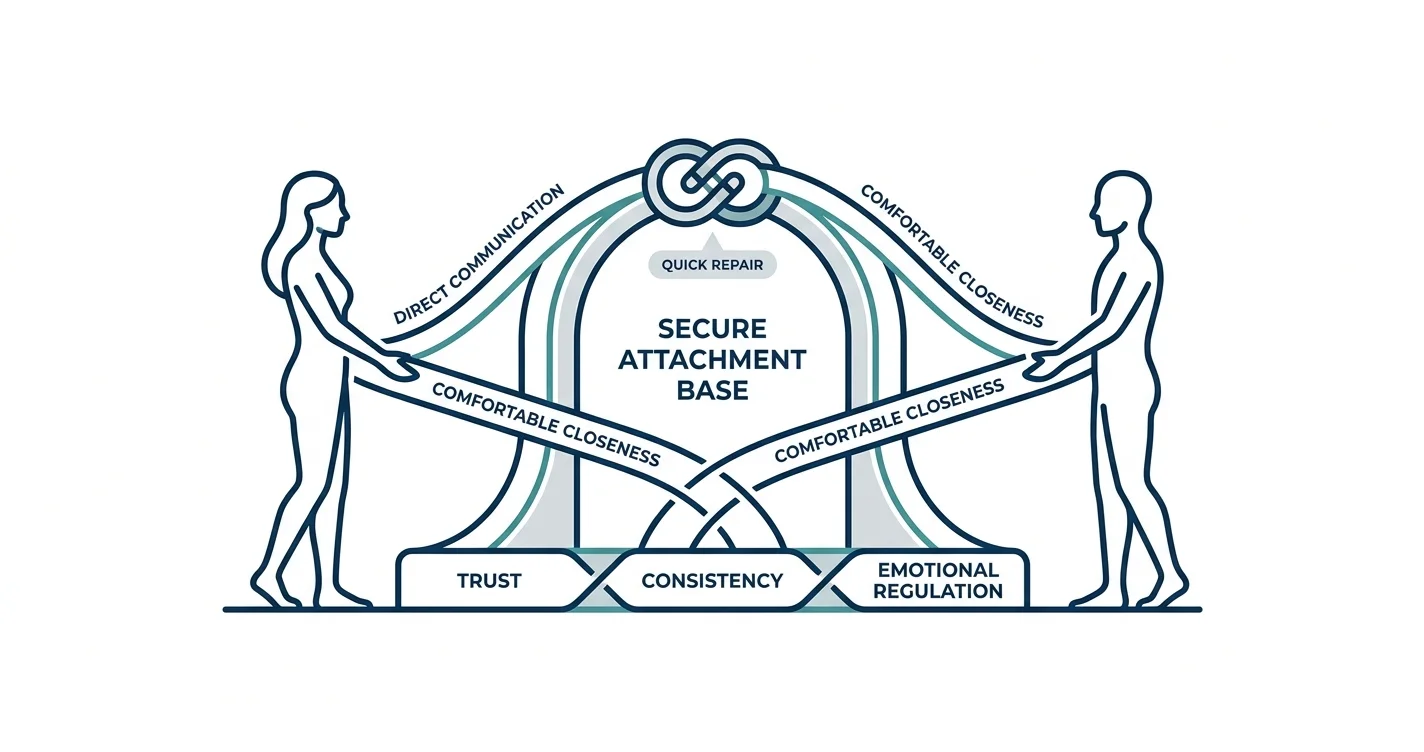

Key Takeaways
- Secure attachment in relationships looks like direct communication, comfort with closeness, and fast repair after
- About 50-60% of adults test as securely attached, according to attachment research cited across clinical literature
- Anxious and avoidant patterns both mimic insecurity in specific moments; the difference is what happens after
- An attachment style quiz gives a starting point, but real change comes from practicing new responses under stress,
Secure attachment in relationships shows up as steady communication, comfortable closeness, and quick repair after conflict — not constant reassurance-seeking or emotional walls. This guide breaks down exactly what it looks like day to day, how to spot it in yourself or a partner, and what to do if you don't see it yet.
TL;DR
- Secure attachment in relationships looks like direct communication, comfort with closeness, and fast repair after arguments — not perfection.
- About 50-60% of adults test as securely attached, according to attachment research cited across clinical literature in 2026.
- Anxious and avoidant patterns both mimic insecurity in specific moments; the difference is what happens after conflict, not during it.
- An attachment style quiz gives a starting point, but real change comes from practicing new responses under stress, not just labeling the pattern.
Why this matters
Most people ask about secure attachment because something in their relationship feels off, not because they read a psychology textbook. You notice a partner pulls away when things get serious, or you notice yourself checking their phone activity at 11pm. Attachment theory gives language to that pattern, but the label only helps if you know what the healthy version actually looks like in practice.
Secure attachment isn't a personality type you either have or don't. It's a set of behaviors — trusting a partner's intentions by default, tolerating distance without panic, saying what you need instead of testing for it. Nobody does this perfectly 100% of the time in 2026 or any other year. The measure is consistency, not flawlessness.
What secure attachment actually requires
- A baseline sense that you're worth staying for, independent of your partner's mood
- Tolerance for normal distance — a partner working late doesn't trigger a spiral
- Willingness to name a problem directly instead of testing, sulking, or withdrawing
- Comfort receiving comfort without deflecting it or feeling suffocated by it
- A track record, even a short one, of repairing after a fight without either person disappearing
These aren't traits you're born with. Most adults build secure attachment style traits over years, often after a relationship or two that ran on anxiety or avoidance first.
What secure attachment looks like, sign by sign
1. Conflict gets resolved, not escalated or avoided
Securely attached partners argue. The difference is what happens 20 minutes after the argument starts. They circle back, name what upset them, and land on some version of resolution instead of stonewalling or screaming. A 2023 meta-analysis referenced in couples therapy literature links this repair pattern more strongly to relationship satisfaction than the frequency of conflict itself.
Common mistake: assuming secure means no arguments happen. Zero conflict usually means someone is avoiding, not securely attached.
2. Distance doesn't trigger panic or shutdown
A partner traveling for work, going quiet during a busy week, or spending Saturday with friends doesn't set off alarm bells. Securely attached people notice the distance and stay okay. This is the clearest contrast with anxious attachment, where a delayed text reply reads as rejection.
Common mistake: confusing low-drama distance tolerance with not caring. Secure partners still miss you — they just don't catastrophize the gap.
3. Needs get stated directly, not tested
"I'd like more physical affection" replaces silent resentment or passive-aggressive hints. Securely attached people ask for what they want and can hear "no" or "not right now" without collapsing the relationship over it. This single behavior — direct requests over indirect testing — separates secure patterns from most of the anxious and avoidant ones covered in the anxious attachment style signs research.
4. Closeness feels comfortable, not overwhelming or hollow
Secure partners can sit in physical and emotional intimacy without needing to pull back (the avoidant pattern) or needing constant proof it's real (the anxious pattern). Vulnerability doesn't feel like a threat, and it doesn't feel like the only currency that keeps the relationship alive either.
5. Trust is the default setting, not something re-earned daily
A securely attached partner assumes good intent until proven otherwise. A late reply is "probably busy," not "probably losing interest." This baseline trust is measurable — clinicians use it as one of the core markers on most attachment style quiz instruments built on Hazan and Shaver's original 1987 framework.
6. Self-worth doesn't rise and fall with the relationship's status
A good day with a partner is a bonus, not the source of identity. A fight doesn't threaten someone's sense of self. This is the piece most people miss when they try to "act secure" without addressing the underlying self-worth that secure attachment actually runs on.
Troubleshooting: patterns that look secure but aren't
"We never fight" is mistaken for security. Real secure attachment includes disagreement handled well, not avoidance dressed up as peace. Chronic conflict-avoidance is more often a dismissive avoidant attachment pattern wearing a calm mask.
"I don't need reassurance" gets mistaken for security. Some people suppress the need for reassurance rather than not having it — that's avoidance, not security, and it usually surfaces later as sudden withdrawal.
Constant check-ins get mistaken for closeness. Hourly texts and needing to know a partner's location at all times reads as devotion but functions as anxiety management. Real security tolerates gaps in contact without needing to fill them.
One good relationship doesn't mean you're securely attached. Attachment style is a pattern across relationships and stress, not a single good match. Someone can look secure with an easygoing partner and shift to anxious the moment they date someone avoidant — the signs of insecure attachment in adults guide covers how this shift shows up.
Tools and resources
- Start with a self-assessment to get a baseline before assuming which pattern fits — a short attachment style quiz takes about two minutes
- Track your own reactions during the next minor conflict — note whether you moved toward resolution, withdrew, or escalated
- Read up on the specific opposite pattern you suspect in a partner or yourself, since anxious and avoidant patterns respond to different fixes
- Practice naming one need directly per week instead of hinting at it — this single habit shifts behavior faster than reading theory alone
Lovon's AI voice sessions work well for this kind of pattern-tracking because you can talk through a specific interaction the same day it happens, out loud, instead of journaling it hours later once the details have blurred. Lovon isn't a replacement for a licensed therapist, but as an always-available AI voice companion for processing relationship moments in real time, it fills the gap between sessions or for people not yet in therapy at all.
What to do next
If the signs above don't match what you see in yourself, the shift toward becoming more securely attached is documented and practiced, not theoretical — most people move a meaningful degree within months of consistent practice, not years. Start by picking one behavior from the list above — stating a need directly, or tolerating one gap in contact without checking in — and practice it for two weeks before adding a second.
FAQ
What does secure attachment look like in a relationship?
Secure attachment in relationships looks like direct communication about needs, comfort with normal distance, and fast repair after conflict. It does not mean the absence of arguments — it means arguments resolve instead of escalating or getting avoided entirely.
Can someone become securely attached later in life?
Yes, attachment style shifts with consistent practice and, often, a relationship or therapeutic relationship that models secure behavior. Adults commonly move from anxious or avoidant patterns toward secure ones over months of intentional practice.
Is secure attachment the same as being independent?
No. Independence without emotional openness is closer to avoidant attachment. Secure attachment includes real dependence on a partner for support alongside comfort being alone.
How do I know if my partner is securely attached?
Watch how they handle distance, conflict, and requests for reassurance over several weeks, not one interaction. Consistent direct communication and quick repair after disagreements are the clearest markers.
What percentage of people are securely attached?
Attachment research generally places 50-60% of adults in the secure category, with the remainder split across anxious, avoidant, and disorganized patterns. These figures come from decades of adult attachment interview studies, not a single 2026 source.
Does secure attachment mean never feeling jealous or insecure?
No. Securely attached people still feel jealousy or doubt occasionally — the difference is they name the feeling and move through it instead of acting it out through testing or withdrawal.
Is an attachment style quiz accurate?
A quiz gives a reasonable starting point but reflects self-report at a single moment, not a clinical diagnosis. Pattern over multiple relationships and stress points is a more reliable indicator than one quiz result.
Can two anxious or two avoidant people build a secure relationship together?
Yes, though it takes more intentional work than pairing with someone already secure. Both partners typically need to practice the specific opposite behavior — anxious partners tolerating distance, avoidant partners tolerating closeness.
One last thing
The single biggest tell isn't how someone acts when things are calm — it's what they do in the 24 hours after a fight. Securely attached people initiate repair even when they're not entirely at fault. That single behavior predicts relationship stability better than almost anything else on this list.
Related guides
How AI Support Helps You Heal
AI emotional support isn't about replacing human connection — it's about filling the gaps. The moments when you need to talk at 2 AM, when you don't want to burden your friends again, or when you simply need someone to listen without judgment.
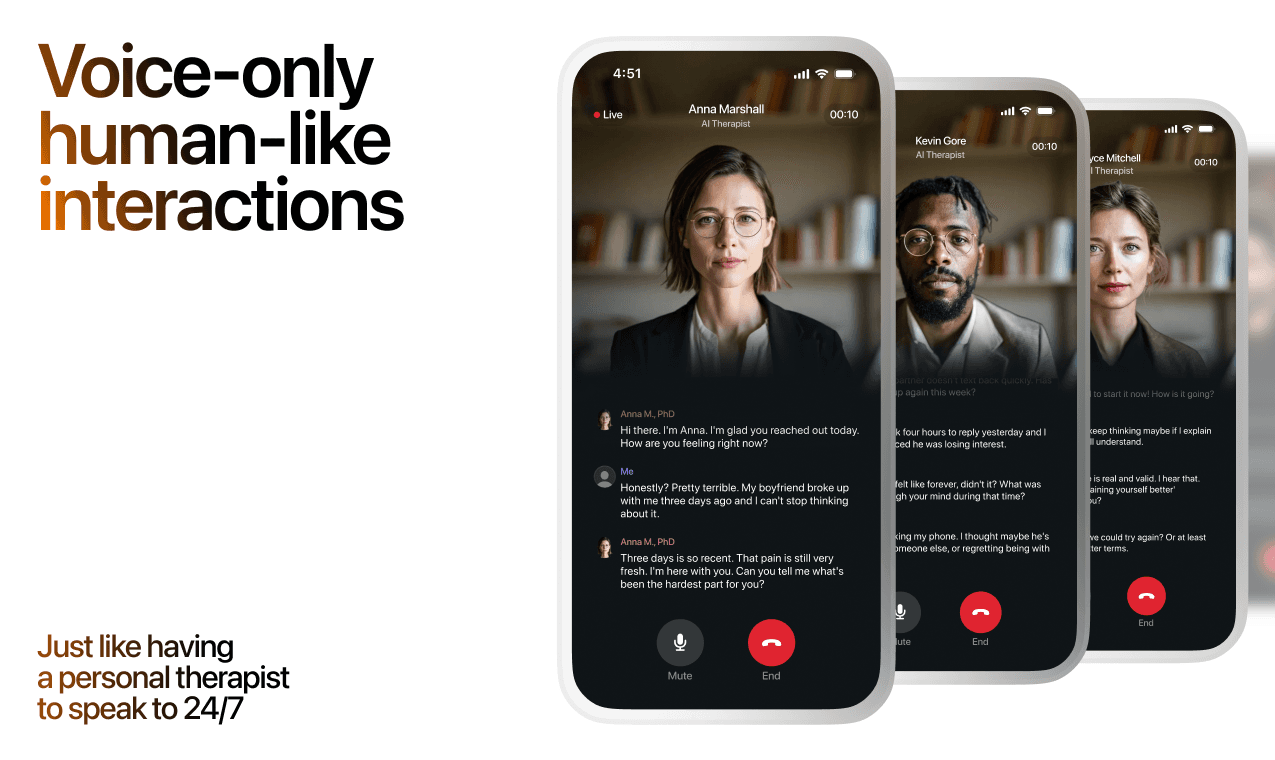
Here's what happens in a typical Lovon session:
You share what's on your mind
There's no script, no intake form, no waiting room. You speak or type whatever you're feeling — in your own words, at your own pace.
Lovon validates and explores
Using frameworks from CBT (Cognitive Behavioral Therapy) and motivational interviewing, Lovon acknowledges your feelings first, then gently helps you explore them. No dismissive "just move on" advice.
You build coping skills together
Lovon doesn't just listen — it actively works with you on evidence-based techniques: thought reframing, urge surfing, behavioral experiments, and more.
What a Session with Lovon Looks Like
Lovon is AI support, not a replacement for professional care. If things have been hard to get through for weeks, or you are thinking about harming yourself, talk to a doctor or a licensed therapist.
Ready to Start?
Your healing journey can begin right now
A 7-day trial. No judgment. Just a safe space to process what you're going through.
Frequently Asked Questions
Is Lovon a replacement for a real therapist?
Is my conversation with Lovon AI private?
How is Lovon different from ChatGPT for emotional support?
Can I use Lovon if I'm already seeing a therapist?
Can I try Lovon before subscribing?
About the Author
The Lovon Editorial Team
Mental Health & Wellness Content Team
The Lovon Editorial Team develops mental health and wellness content designed to make psychological concepts accessible and actionable. Our goal is to bridge the gap between clinical research and everyday life - helping you understand why your mind works the way it does and what you can do about it....
Related articles
- Attachment Style Compatibility Quiz for Partners 2026
The best attachment style compatibility quiz for partners in 2026 — dual scoring, pairing analysis, and AI coaching…
- Insecure in Your Relationship? Understand Your Insecurity & Feel Secure
Quick Takeaways:
- Relationship Anxiety: Signs, Causes, Fixes (2026)
Relationship anxiety explained: signs, causes like anxious attachment, and coping tools that work in 2026. Practical…
- Anxious Attachment in Dating: Patterns to Watch (2026)
Anxious attachment in dating: spot the protest behaviors, triggers, and fixes that work in 2026. A step-by-step guide…
See also
Quizzes
- Am I Sabotaging My Relationship? 12-Question Quiz
Find the move you reach for, in 2 minutes.
- Relationship Schema Test: Are Your Feelings Welcome?
See which belief edits what you share, in 3 minutes.
Free tools
- Attachment Trigger Plan for Anxious and Avoidant Patterns
Pick your pattern, tick the moments that set it off, and finish one card for each: your body signal, the thing you will…
- What Did They Actually Mean By That?
A chat for one sentence you cannot stop re-reading. Paste their exact words and what was happening around them, and get…
From the wiki
- What does clingy mean in a relationship?
Clingy is what people call behavior that asks for more contact or reassurance than the other person wants to give…
Disclaimer: This article is for informational purposes only and does not constitute medical advice, diagnosis, or treatment. Always seek the advice of your physician or other qualified health provider with any questions you may have regarding a medical condition. If you are in crisis or think you may have an emergency, call 988 (Suicide & Crisis Lifeline) or go to the nearest emergency room. Outside the US? Find a crisis line in your country.