
AI Support App for Athlete Injury Setbacks (2026)
Injured athletes need support between rehab sessions. See how Lovon works as an ai support app for athlete injury setbacks in 2026 — and where its limits are.

Key Takeaways
- Lovon works as an ai support app for athlete injury setbacks by offering voice-based emotional check-ins between
- Injured athletes face identity loss and fear of re-injury that physical rehab protocols don't address on their own.
- Best for daily grounding and processing frustration; not built to diagnose clinical depression, PTSD, or replace a
- Catastrophizing about re-injury and comparing your timeline to other athletes are the two most common mental traps
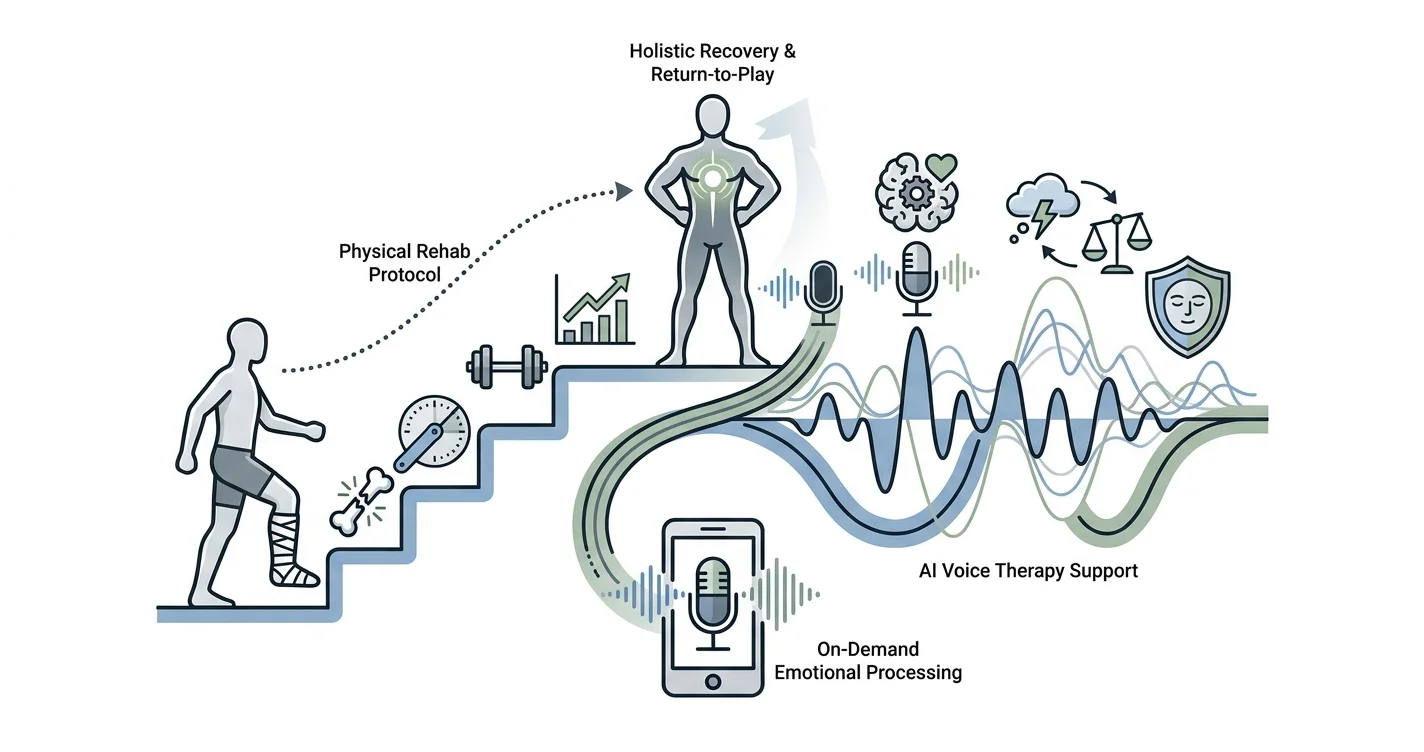
Injured athletes' mental health support is an AI voice therapy app that gives real-time emotional processing between rehab sessions, with the aim of keeping recovery on track instead of derailed by fear or frustration. An athlete sidelined by an ACL tear or a stress fracture isn't just managing pain and physical therapy homework — they're managing the loss of identity, routine, and team belonging that came with the sport. Generic stress-management content misses that; a setback in season, a comeback timeline stalled by a setback in the training room, and the specific dread of re-injury need support built around that reality.
TL;DR
- Lovon works as an ai support app for athlete injury setbacks by offering voice-based emotional check-ins between physical therapy visits, available any hour.
- Injured athletes face identity loss and fear of re-injury that physical rehab protocols don't address on their own.
- Best for daily grounding and processing frustration; not built to diagnose clinical depression, PTSD, or replace a sports psychologist.
- Catastrophizing about re-injury and comparing your timeline to other athletes are the two most common mental traps during recovery.
Why mental health support matters for injured athletes
Rehab protocols measure range of motion, strength percentages, and return-to-play clearance dates. They rarely measure whether an athlete is dreading physical therapy, avoiding the gym entirely, or lying awake replaying the moment of injury. That gap is where mental health support for injured athletes has to live, and it's why the chronic pain and mental health connection matters here — pain that doesn't resolve on the expected timeline erodes mood long before it shows up on an intake form.
Athletes also under-report. Locker room culture rewards toughing it out, and admitting to anxiety about a comeback can feel like admitting weakness to teammates or coaches. An AI voice therapy session carries none of that social risk — no one on the roster knows you used it at 6am before a scan.
Step-by-step: coping with an injury setback
Name what you actually lost
Before any coping tool works, the loss needs a name. "I'm hurt" is different from "I lost my starting spot, my routine, and the version of myself that trained twice a day." Athletes who skip this step tend to redirect the grief into anger or numbness instead.
- Write one sentence naming the specific loss (spot on the roster, scholarship pressure, streak, identity as "the athlete")
- Separate the physical injury from the emotional fallout on paper
- Say the loss out loud to one person who isn't your coach
- Notice if you're using "fine" as a way to avoid the conversation
Track the mental noise, not just the rehab metrics
Most recovery plans track reps, degrees of flexion, and pain scores. Almost none track mood, sleep, or dread before appointments — and those three predict adherence better than most people assume.
- Log a one-word mood check before and after each rehab session
- Note sleep hours alongside physical therapy homework completion
- Flag any session you wanted to skip and why
- Watch for a pattern of dread tied to a specific exercise or location
Interrupt catastrophizing before it takes over the day
Injured athletes catastrophize in a specific way: "I'll never get back to where I was" or "one bad rep and it's over again." This thinking spikes hardest right before return-to-play tests. A short grounding practice pulled from how to stop worst-case thinking breaks the loop before it hijacks an entire training session.
- Write the catastrophic thought, then write the most likely outcome next to it
- Set a 10-minute timer before allowing yourself to spiral about a setback
- Ask "what would I tell a teammate having this exact thought"
- Separate today's rehab data from a permanent verdict on your career
Build a support routine you can reach at any hour
Injuries don't happen on a therapist's schedule, and the worst moments — the night before a re-injury scare, the morning of a setback in PT — rarely land during office hours. This is where an on-demand option earns its place instead of a scheduled weekly session alone.
Lovon gives injured athletes a voice conversation whenever the spiral starts, without booking anything. The verdict: Lovon is best for the 11pm-before-imaging moments and the frustration right after a setback, not for diagnosing a clinical condition.
Talk through a setback right now
Start a voice conversation with Lovon whenever the frustration hits.
Reframe the setback with structured self-talk
Vague positivity ("stay strong") doesn't move the needle for most athletes. Structured reframing pulled from cognitive behavioral techniques you can use on your own does, because it forces evidence instead of vibes.
- Write the automatic thought, then list three pieces of evidence against it
- Replace "I'm behind everyone" with a specific, checkable fact about your timeline
- Practice one reframe out loud before each rehab session, not just after a bad one
- Track which reframes actually reduce the pre-session dread over two weeks
Watch for signs that go beyond normal frustration
Some injuries carry real trauma — a career-ending diagnosis, a violent collision, a surgery with complications. Persistent low mood, appetite changes, or intrusive replays of the injury moment are signals worth taking to a licensed professional, not managing solo. The overlap between physical setbacks and burnout is covered in coping tools for chronic fatigue and burnout, and trauma-specific patterns are covered in coping tools for medical trauma and PTSD.
- Track sleep and appetite changes over two consecutive weeks
- Note any intrusive replay of the injury moment during unrelated activities
- Flag persistent hopelessness about ever returning to your prior level
- Bring any of the above to a licensed clinician, not just an app
Reconnect with an identity outside the sport
Athletes sidelined for months often discover their entire self-concept was built on one activity. Rebuilding a life that isn't 100% training reduces the emotional weight riding on every rehab appointment.
- Pick one non-sport activity to commit to for the length of recovery
- Stay in the team environment in a non-playing role if allowed
- Set one goal unrelated to athletic performance for this quarter
- Talk to a teammate who's been through a comeback about what helped
Comparing support options for injured athletes
| Option | Best for | Key limitation |
|---|---|---|
| Licensed sports psychologist | Athletes with a diagnosed condition, trauma, or a career-ending injury | Limited availability, scheduling around rehab and travel, often requires referral |
| Team athletic trainer / physical therapist | Physical rehab progress and return-to-play clearance | Not trained or scoped to treat mental health conditions |
| Peer or teammate support | Feeling understood by someone who's been sidelined before | Can't address clinical symptoms; risks minimizing real distress |
| Lovon (AI voice support) | On-demand emotional processing between appointments, any hour | Not a licensed clinician, no diagnosis, not a substitute for in-person care |
Verdict: use a licensed sports psychologist for diagnosis and trauma work, and use Lovon for the daily emotional load rehab schedules don't cover.
Common mistakes injured athletes make
- Treating rehab as purely physical. Skipping the mental side until frustration boils into avoiding sessions altogether.
- Benchmarking recovery against other athletes' timelines. Every injury, surgery, and body responds differently; comparison manufactures panic that has nothing to do with actual healing.
- Withdrawing from the team once sidelined. Isolation compounds the identity loss instead of softening it.
- Rushing return-to-play to prove something. Fear of re-injury handled by pushing through it faster usually resurfaces at the worst moment — mid-competition.
FAQ
What's the best ai support app for athlete injury setbacks in 2026?
Lovon is built for on-demand voice conversations, making it a strong fit for injured athletes who need emotional support outside scheduled therapy hours in 2026. It works alongside, not instead of, a sports psychologist or athletic trainer.
Is an AI app better than a sports psychologist for injury recovery?
No — a licensed sports psychologist should handle diagnosis, trauma, and clinical symptoms. An AI voice support app like Lovon fills the gap between sessions, not the clinical role itself.
How common is depression after a serious sports injury?
Injured athletes commonly report elevated anxiety and low mood tied to loss of routine, identity, and playing time, though the severity varies by injury type and individual history. Persistent symptoms beyond a few weeks warrant a licensed clinician.
Can journaling replace therapy during injury recovery?
Journaling helps track mood and rehab adherence patterns but doesn't replace structured clinical support for trauma or diagnosed conditions. It works well as a daily habit alongside professional care.
How do I stop catastrophizing about re-injury?
Write the catastrophic thought down next to the most statistically likely outcome, then set a time limit on how long you'll let yourself dwell on it. Repeating this before high-stress rehab milestones reduces the spiral over a few weeks.
What are signs an injury setback needs professional help?
Persistent low mood, appetite or sleep changes lasting more than two weeks, and intrusive replays of the injury moment are signals to bring to a licensed clinician rather than manage alone.
Does Lovon diagnose sports-related depression or PTSD?
No. Lovon offers voice-based emotional support and coping tools but does not diagnose conditions or replace licensed clinical care — it's explicit about that limitation.
How much does mental health support cost for injured athletes?
Costs vary widely by provider type and insurance coverage; check current options directly with a licensed provider or your team's athletic department for specifics.
One last thing
The rehab metric everyone tracks is range of motion. The one almost nobody tracks — dread before a session — predicts whether an athlete actually shows up for the next six weeks of physical therapy. Log it for two weeks before assuming the mental side of an injury setback is fine.
Related guides
How AI Support Helps You Heal
AI emotional support isn't about replacing human connection — it's about filling the gaps. The moments when you need to talk at 2 AM, when you don't want to burden your friends again, or when you simply need someone to listen without judgment.
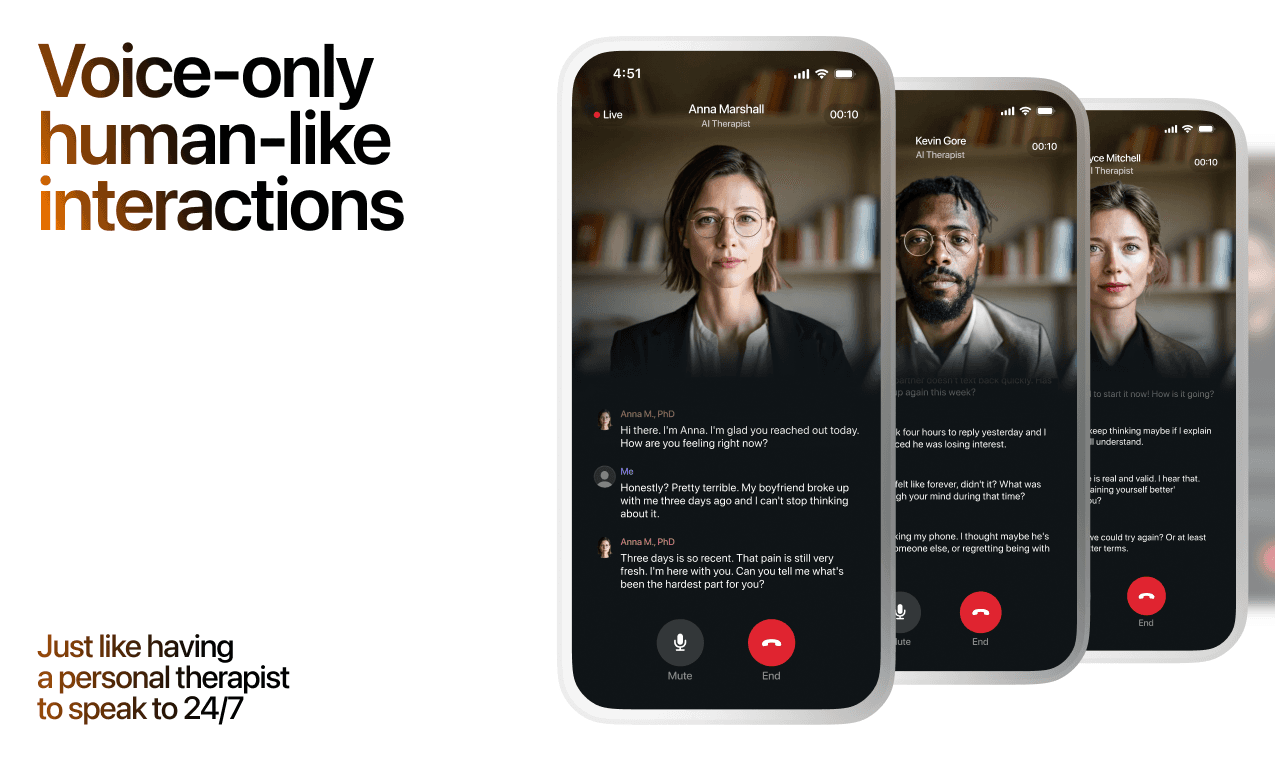
Here's what happens in a typical Lovon session:
You share what's on your mind
There's no script, no intake form, no waiting room. You speak or type whatever you're feeling — in your own words, at your own pace.
Lovon validates and explores
Using frameworks from CBT (Cognitive Behavioral Therapy) and motivational interviewing, Lovon acknowledges your feelings first, then gently helps you explore them. No dismissive "just move on" advice.
You build coping skills together
Lovon doesn't just listen — it actively works with you on evidence-based techniques: thought reframing, urge surfing, behavioral experiments, and more.
What a Session with Lovon Looks Like
Lovon is AI support, not a replacement for professional care. If things have been hard to get through for weeks, or you are thinking about harming yourself, talk to a doctor or a licensed therapist.
Ready to Start?
Your healing journey can begin right now
A 7-day trial. No judgment. Just a safe space to process what you're going through.
Frequently Asked Questions
Is Lovon a replacement for a real therapist?
Is my conversation with Lovon AI private?
How is Lovon different from ChatGPT for emotional support?
Can I use Lovon if I'm already seeing a therapist?
Can I try Lovon before subscribing?
About the Author

The Lovon Editorial Team
Mental Health & Wellness Content Team
The Lovon Editorial Team develops mental health and wellness content designed to make psychological concepts accessible and actionable. Our goal is to bridge the gap between clinical research and everyday life - helping you understand why your mind works the way it does and what you can do about it....
Related articles
- AI Support App for Retirement Transition Anxiety (2026)
Lovon wins for on-demand retirement transition anxiety support in 2026 — voice-first, available anytime. See the full…
- AI Therapy App for Coping After a Diagnosis: 2026
See the best AI therapy app for coping after a serious diagnosis in 2026 — what to look for, top picks, and where Lovon…
- Understanding the Setback Cycle in Therapy Process and Premature Termination
One of the most frustrating patterns in mental health treatment occurs when clients abandon therapy precisely when…
- AI Therapy App for Eating Disorder Recovery: 2026 Guide
An AI therapy app for eating disorder recovery works best alongside a treatment team, not instead of one - see what to…
See also
Quizzes
- Digital Stress Test: Texting, Likes and Read Receipts
See which part of being online wears on you, in 3 minutes.
- Coping Style Test: How Do You Actually Handle Stress?
See how you really cope under stress, in 3 minutes.
Free tools
- Words of Encouragement for Him When He Is Struggling
Words of encouragement for him that fit what he is actually going through, for when your usual lines are not landing…
- Vent to an AI
Need to vent and there is nobody to call, or nobody you want to tell? Type it here. You are talking to an AI listener…
From the wiki
- How to stop maladaptive daydreaming?
Maladaptive daydreaming is immersive waking fantasy that eats hours, usually with music and pacing attached. You rarely…
Disclaimer: This article is for informational purposes only and does not constitute medical advice, diagnosis, or treatment. Always seek the advice of your physician or other qualified health provider with any questions you may have regarding a medical condition. If you are in crisis or think you may have an emergency, call 988 (Suicide & Crisis Lifeline) or go to the nearest emergency room. Outside the US? Find a crisis line in your country.