
CBT Techniques on Your Own: 7 Steps for 2026
Learn CBT techniques on your own with a 7-step routine: thought records, reframing, and behavioral experiments you can start today in 2026.

Key Takeaways
- CBT techniques on your own work best with a daily thought record — 10 minutes catches distorted thinking before it
- Behavioral experiments beat willpower: test the feared outcome once instead of avoiding it forever.
- Skip vague affirmations — cognitive restructuring only works once you name the specific distortion first.
- Lovon's AI voice therapy fills the gap for between-session practice when nothing else is open at 11pm.
Cognitive behavioral techniques work outside a therapist's office just as well as inside one — you just need a system for catching your own thoughts in the act. This guide walks through the exact steps to practice CBT techniques on your own, what tools you need, and where people usually get stuck.
TL;DR
- CBT techniques on your own work best with a daily thought record — 10 minutes catches distorted thinking before it spirals.
- Behavioral experiments beat willpower: test the feared outcome once instead of avoiding it forever.
- Skip vague affirmations — cognitive restructuring only works once you name the specific distortion first.
- Lovon's AI voice therapy fills the gap for between-session practice when nothing else is open at 11pm.
Why this matters
CBT isn't a mystery reserved for licensed clinicians. The core mechanics — noticing an automatic thought, checking it against evidence, and testing a new behavior — are teachable skills you can run yourself once you know the sequence. Most of the cognitive distortions that fuel anxiety and low mood show up in predictable patterns: all-or-nothing thinking, mind reading, fortune telling.
The catch is consistency. A single thought record doesn't change much. Doing it for 2 to 3 weeks, daily, is what shifts the pattern. Self-directed CBT works best as a between-session tool, not a total replacement for clinical care when symptoms are severe.
What you'll need
- A notebook, notes app, or voice memo — anything you'll actually use daily
- 10 to 15 minutes at a consistent time, ideally right after a stressful moment
- A short list of your recurring triggers (a meeting, a text left on read, a specific person)
- A way to talk it through out loud if writing feels like a wall — this is where a voice-based tool like Lovon's AI therapy sessions fits, since you can process a thought spiral by talking instead of typing
- Patience for at least 2 weeks before judging whether it's working
The steps
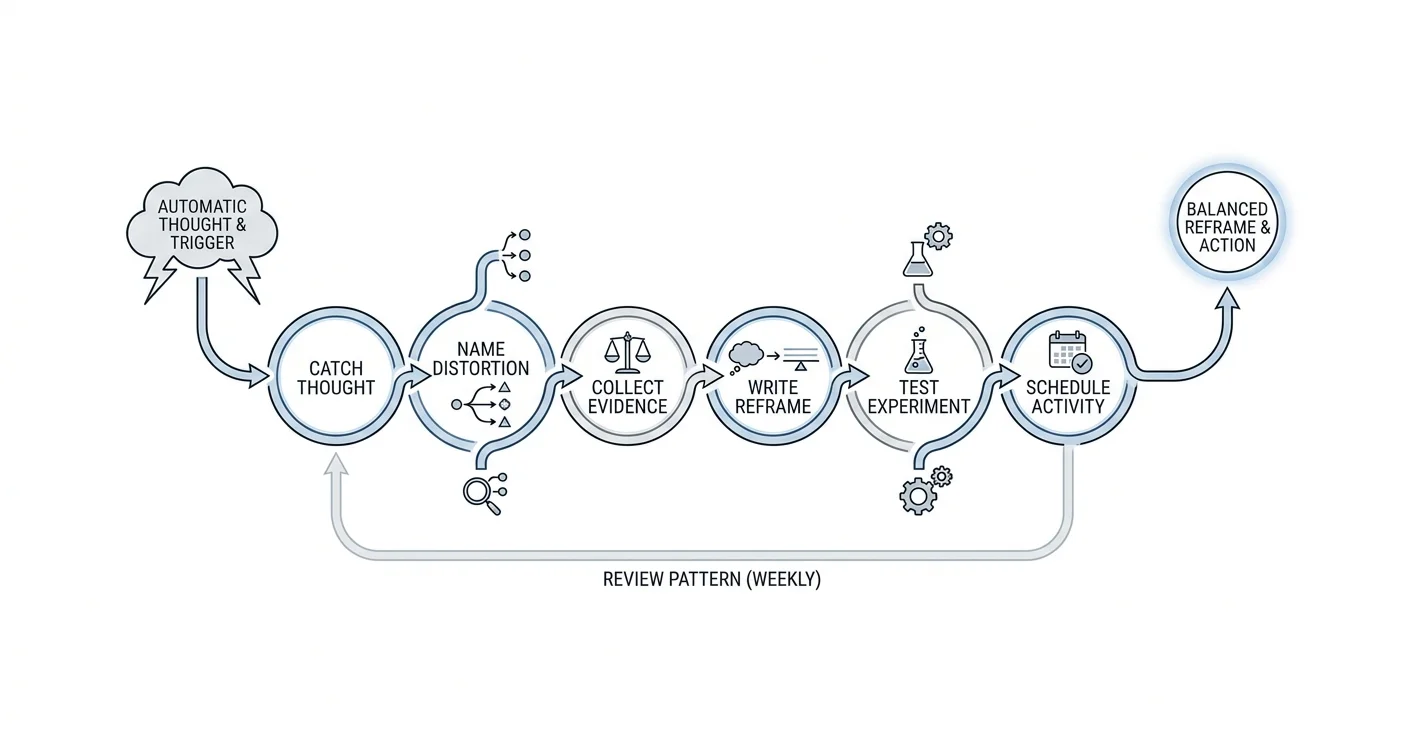
1. Catch the automatic thought
The moment your mood drops, stop and write down the exact thought that just ran through your head — not the feeling, the sentence. "I'm going to get fired" is a thought. "Anxious" is a feeling. This distinction matters because you can't challenge a feeling, only a thought.
Write it in quotes, exactly as it occurred to you. Most people paraphrase and soften it, which defeats the exercise. Common mistake: logging the emotion instead of the sentence behind it.
2. Name the distortion
Match the thought to a known pattern: catastrophizing, mind reading, personalization, black-and-white thinking. Naming it out loud does something real — it moves the thought from "fact" to "pattern I recognize," which is the first crack in its authority.
If you're not sure which distortion applies, run through a short list of the 10 most common ones until one fits. Common mistake: skipping this step because it feels academic — it's the step that does the actual work.
3. Collect the evidence
List the evidence for the thought and the evidence against it, side by side. Be specific: not "I always mess up" but "I missed one deadline in the last 6 months."
This step takes 3 to 5 minutes if you're honest. Most automatic thoughts collapse once you force yourself to write actual evidence instead of general impressions. Common mistake: only listing evidence for the thought, which just confirms the bias you're trying to break.
4. Write the balanced reframe
Replace the original thought with one sentence that fits the evidence, not the fear. Not "everything's fine" — that's denial, not CBT. Something like "I missed one deadline out of the last 20 and fixed it within a day."
Read the reframe back to yourself. If it still sounds hollow, you likely haven't collected enough evidence in step 3. Go back and add more before moving on.
5. Test it with a small experiment
CBT gets its power from behavior, not just thinking differently. Pick one small, specific action that tests the reframed belief against reality — send the email you've been avoiding, ask the question you've been dodging.
A behavioral experiment beats worst-case thinking because it replaces a prediction with a fact. Run the experiment once, then write down what actually happened next to what you predicted would happen.
6. Schedule the avoided activity
Avoidance is the engine behind most anxiety loops — you dodge the trigger, feel relief, and the brain learns the trigger was dangerous. Break this by scheduling the avoided activity at a fixed time this week, not "when you feel ready."
Put it in your calendar like an appointment. Common mistake: waiting for motivation before scheduling — motivation shows up after the action, not before it, in the majority of CBT behavioral activation work.
7. Review the weekly pattern
At the end of each week, read back through your thought records. Look for the same distortion showing up 3, 4, or 5 times — that's your primary target for the next week's practice.
This review step is where self-directed CBT compounds. Without it, you're just journaling. With it, you're running a structured intervention on yourself, one pattern at a time.
Talk through a thought spiral tonight
Voice sessions for when a thought record isn't enough on its own.
Troubleshooting
The thought record feels fake or forced. This is normal for the first week. Keep the sentences short and specific rather than trying to sound therapeutic — accuracy matters more than polish.
You can't identify the distortion. Some thoughts blend two or three patterns at once. Pick the closest match and move on; precision improves with repetition, not analysis paralysis.
The reframe doesn't reduce the feeling. A correct reframe changes the intensity of the emotion, not its existence. If the anxiety is still a 9 out of 10 after reframing, the behavioral experiment in step 5 matters more than another round of writing.
You keep skipping days. Attach the practice to something you already do daily — after brushing your teeth, before opening social media. Habit stacking beats willpower for building a 2026 daily practice that sticks.
Progress feels slow after two weeks. CBT skill-building is gradual by design; most people notice a shift in automatic thought frequency, not intensity, first. If low mood is persistent and daily functioning is affected, that's a signal to loop in a licensed clinician alongside self-practice — self-guided CBT works best as a supplement, not a substitute, when symptoms are moderate to severe.
You're doing this entirely alone with no support. Between-session practice is exactly the gap tools like Lovon's AI voice therapy are built for — you talk through the thought record out loud instead of staring at a blank page, and it's available at 2am when nothing else is.
Tools and resources
- A thought record template (paper or app) — the single most important tool on this list
- A short reference list of the 10 common cognitive distortions to speed up step 2
- A voice option for days when writing feels like too much friction
- A weekly calendar block for the review step — 15 minutes, same day each week
- Guidance on how to start AI therapy for the first time if you want structure around your first few sessions
FAQ
Can you actually do CBT techniques on your own without a therapist?
Yes, self-guided CBT is a documented approach for mild to moderate anxiety and low mood in 2026 clinical practice. Severe symptoms or safety concerns still call for a licensed clinician alongside any self-practice.
How long does it take to see results from self-directed CBT?
Most people notice a shift in automatic thought frequency within 2 to 3 weeks of daily practice. Intensity of the underlying feeling tends to change more slowly than the thought pattern itself.
What's the difference between a thought record and journaling?
A thought record follows a fixed structure: automatic thought, distortion, evidence, reframe. Journaling is open-ended and doesn't force the evidence-and-reframe steps that make CBT effective.
Is CBT better than mindfulness for anxious thoughts?
CBT targets the content of a thought directly, while mindfulness targets your relationship to the thought without changing it. Many people use both — CBT for recurring specific worries, mindfulness for general reactivity.
How much does a CBT workbook or app cost in 2026?
Free thought record templates cover the basics at no cost. Paid apps and workbooks in 2026 typically range from free tiers up to modest monthly subscriptions, depending on added features like guided sessions.
Can an AI tool replace CBT with a licensed therapist?
No, an AI voice therapy tool is built for between-session practice and everyday coping, not a replacement for licensed clinical care. It works well for talking through a thought record at 11pm when a human therapist isn't reachable.
What's the most common mistake people make practicing CBT alone?
Skipping the evidence-gathering step and jumping straight to a positive reframe. Without evidence, the reframe reads as denial and the original thought comes right back within a day.
One last thing
The step people skip most is the weekly review — and it's the one that turns isolated thought records into an actual pattern-breaking system. One week of scattered entries teaches you nothing; four weeks reviewed side by side shows you exactly which distortion runs your bad days, which is the whole point of practicing CBT techniques on your own instead of just journaling about feelings.
Related guides
How AI Support Helps You Heal
AI emotional support isn't about replacing human connection — it's about filling the gaps. The moments when you need to talk at 2 AM, when you don't want to burden your friends again, or when you simply need someone to listen without judgment.
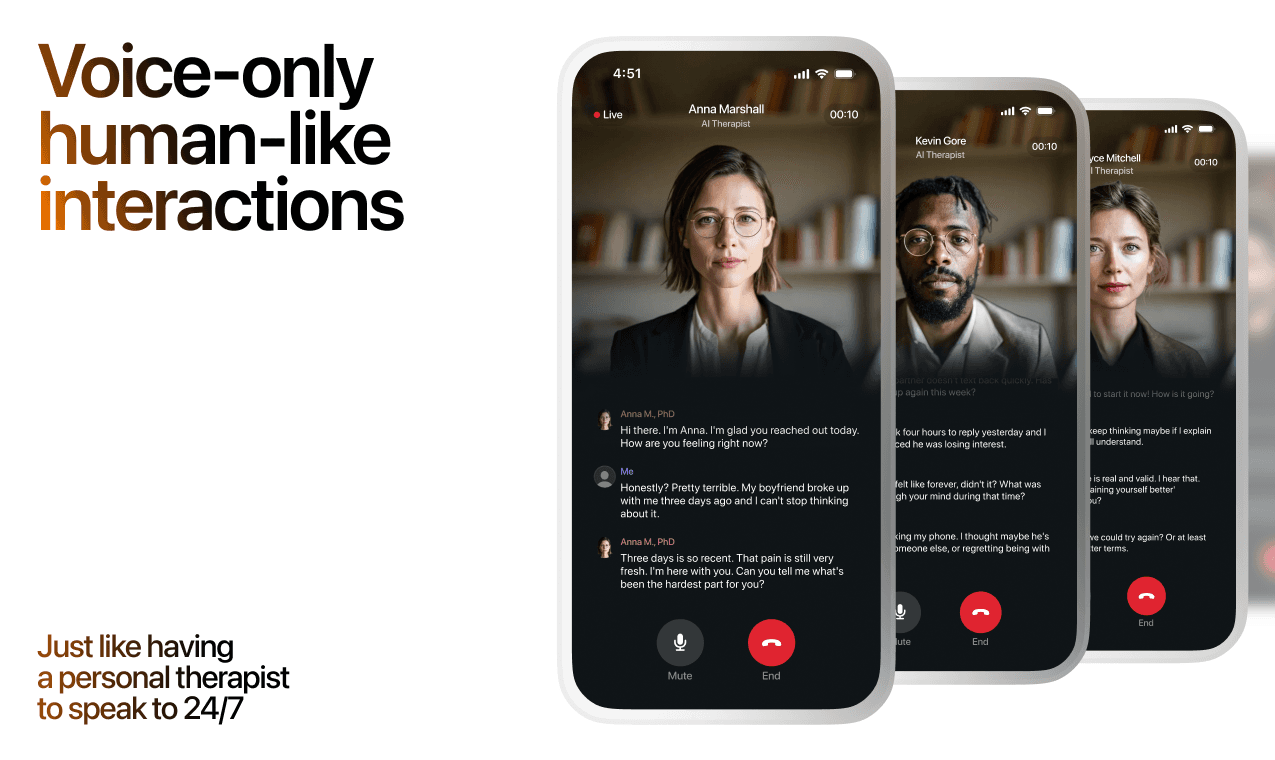
Here's what happens in a typical Lovon session:
You share what's on your mind
There's no script, no intake form, no waiting room. You speak or type whatever you're feeling — in your own words, at your own pace.
Lovon validates and explores
Using frameworks from CBT (Cognitive Behavioral Therapy) and motivational interviewing, Lovon acknowledges your feelings first, then gently helps you explore them. No dismissive "just move on" advice.
You build coping skills together
Lovon doesn't just listen — it actively works with you on evidence-based techniques: thought reframing, urge surfing, behavioral experiments, and more.
What a Session with Lovon Looks Like
When to Seek Professional Help
AI support is a valuable tool, but it's not a replacement for professional care. Please consider reaching out to a licensed therapist if you experience any of the following:
- Persistent thoughts of self-harm or suicide
- Inability to perform daily activities (work, eating, sleeping) for more than 2 weeks
- Turning to alcohol or substances to cope
- Intense anger or desire to harm your ex-partner
- Complete emotional numbness that doesn't improve over time
Crisis Resources (US): If you're in immediate danger, call 988 (Suicide & Crisis Lifeline) or text HOME to 741741 (Crisis Text Line). Available 24/7, free, and confidential.
Outside the US? Find a crisis line in your country
Ready to Start?
Your healing journey can begin right now
1 free conversation. No credit card. No judgment. Just a safe space to process what you're going through.
Frequently Asked Questions
Is AI therapy a replacement for a real therapist?
Is my conversation with Lovon AI private?
How is Lovon different from ChatGPT for emotional support?
Can I use Lovon if I'm already seeing a therapist?
Can I try Lovon for free?
About the Author

The Lovon Editorial Team
Mental Health & Wellness Content Team
The Lovon Editorial Team develops mental health and wellness content designed to make psychological concepts accessible and actionable. Our goal is to bridge the gap between clinical research and everyday life - helping you understand why your mind works the way it does and what you can do about it....
Similar Articles
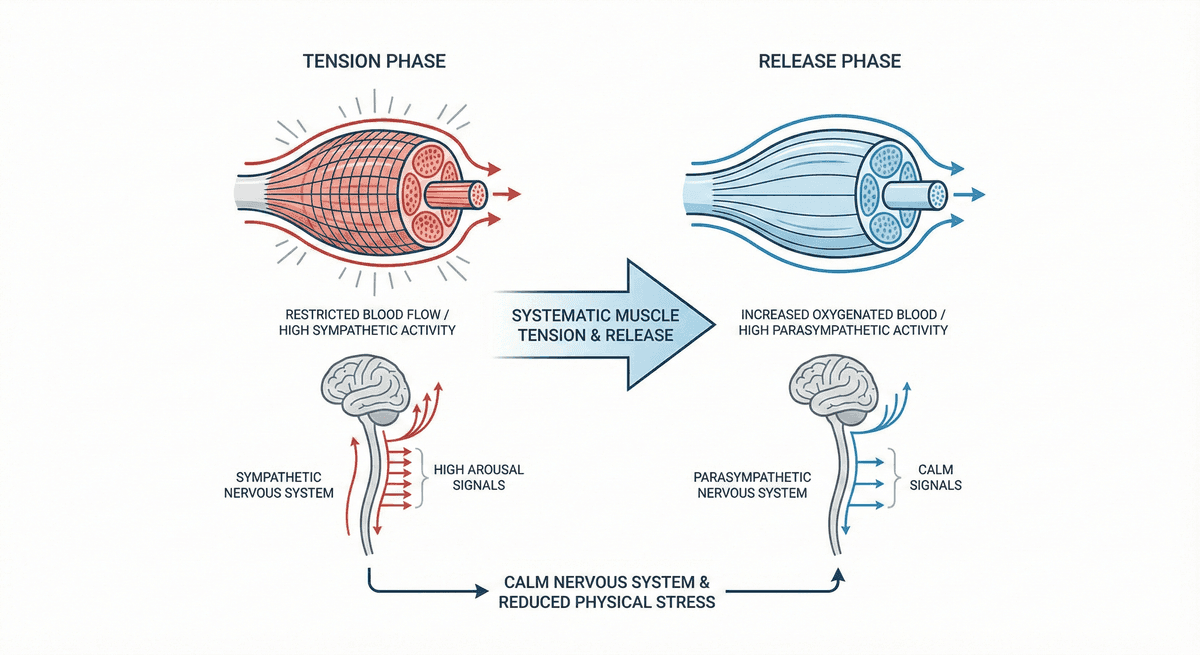
Progressive Muscle Relaxation for Stress Reduction
A systematic muscle group tension and release technique that calms the nervous system and reduces physical stress.

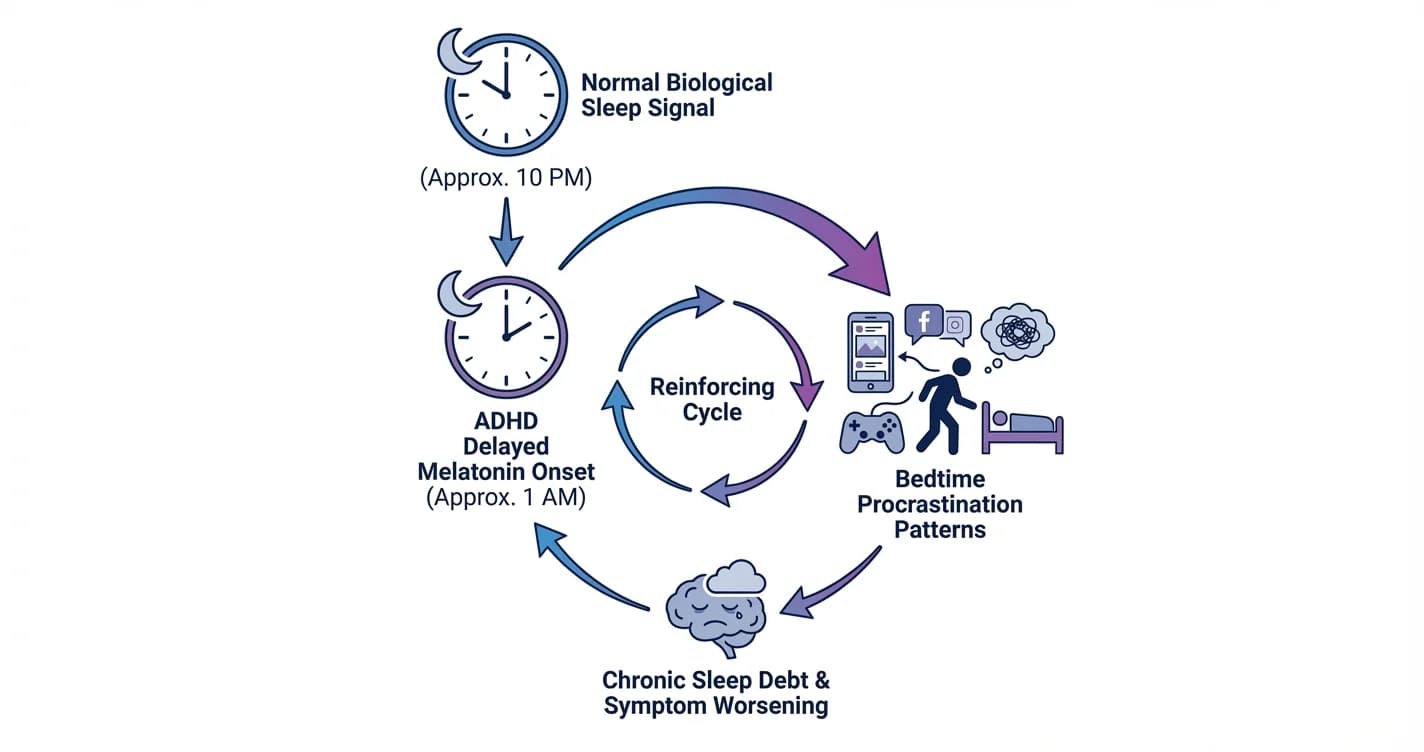
ADHD Sleep Cycle Disruption: Melatonin Delay and Bedtime Procrastination Patterns
Understanding how attention regulation difficulties interfere with natural sleep timing and the nightly wind-down process
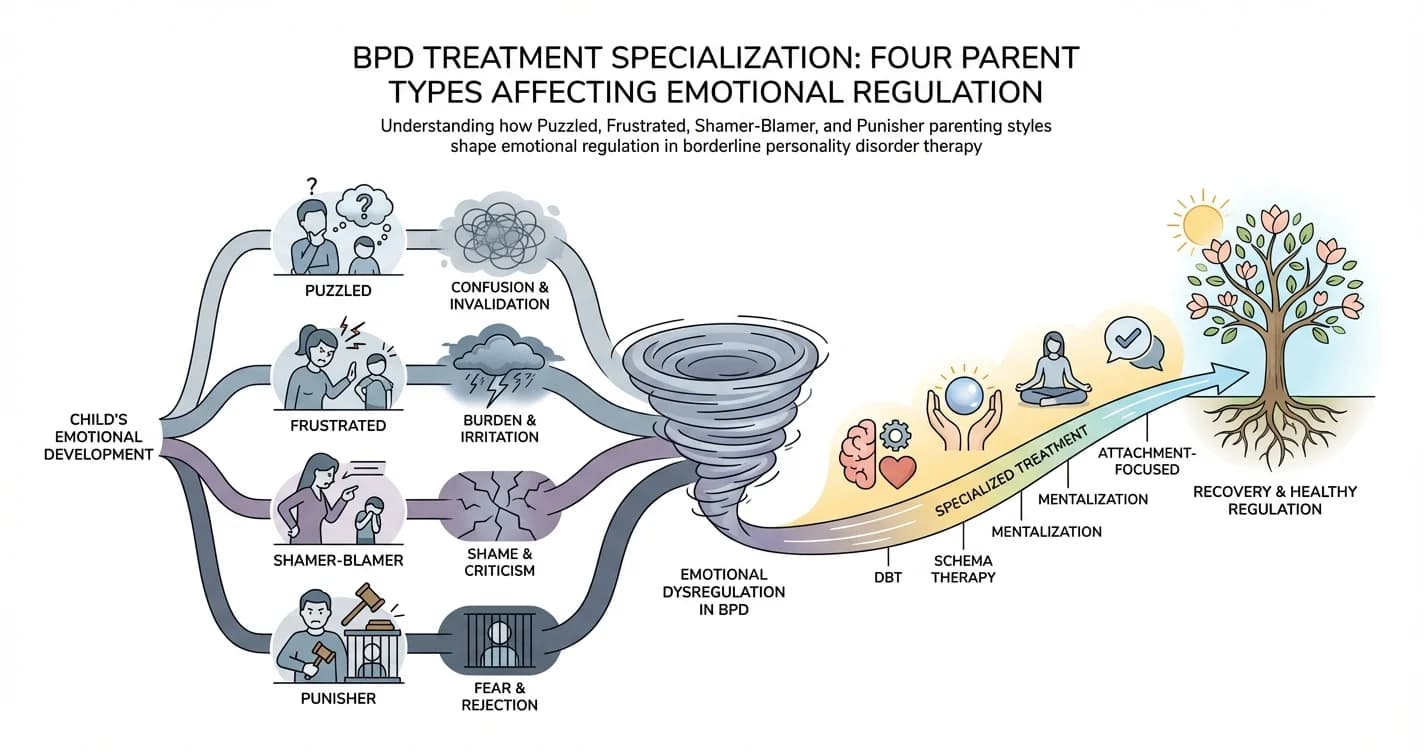
BPD Treatment Specialization: Four Parent Types Affecting Emotional Regulation
For individuals with borderline personality disorder (BPD), emotional regulation difficulties rarely emerge in isolation. Research increasingly suggests that
Disclaimer: This article is for informational purposes only and does not constitute medical advice, diagnosis, or treatment. Always seek the advice of your physician or other qualified health provider with any questions you may have regarding a medical condition. If you are in crisis or think you may have an emergency, call 988 (Suicide & Crisis Lifeline) or go to the nearest emergency room. Outside the US? Find a crisis line in your country.