
Is ADHD coaching covered by insurance in 2026?
Is ADHD coaching covered by insurance? Usually not. Learn what separates coaching from covered care and what to ask your insurer before booking a session.

Key Takeaways
- Is ADHD coaching covered by insurance? Generally not as standalone coaching; verify your specific plan before booking.
- Covered ADHD treatment and executive function coaching are different services, even when their goals overlap.
- A diagnosis, referral, or superbill does not guarantee reimbursement for ADHD coaching.
- Lovon provides voice-based emotional support, not licensed ADHD treatment or insurance coverage advice.
ADHD coaching is generally not covered by standard U.S. health insurance in 2026 when it is a standalone, nonclinical service. Insurance can cover eligible ADHD evaluation, psychotherapy, and medication management, but those benefits do not automatically extend to coaching. Even covered clinical care can leave you responsible for deductibles, copayments, or coinsurance, so confirm the exact service and provider before booking.
TL;DR
- Is ADHD coaching covered by insurance? Generally not as standalone coaching; verify your specific plan before booking.
- Covered ADHD treatment and executive function coaching are different services, even when their goals overlap.
- A diagnosis, referral, or superbill does not guarantee reimbursement for ADHD coaching.
- Lovon provides voice-based emotional support, not licensed ADHD treatment or insurance coverage advice.
Is ADHD coaching covered by insurance in 2026?
Usually not when you are buying coaching rather than a covered healthcare service. The important distinction is what the provider actually delivers and bills—not whether the appointment helps you manage ADHD.
A coach might help you organize tasks, build routines, or follow through on plans. A licensed therapist might address some of those same difficulties within psychotherapy. Similar goals do not make the services interchangeable for insurance purposes.
Before comparing packages, separate the coverage question from the payment question. The guide to how much ADHD coaching costs addresses the latter; your insurer must answer the former for your specific plan.
| Support option | Best for | Insurance distinction | Main limitation |
|---|---|---|---|
| Standalone ADHD coaching | Practical planning and accountability | Generally outside standard medical benefits unless a specific benefit applies | Coaching credentials alone do not establish eligibility for insurance billing |
| Psychotherapy with a licensed clinician | Clinical treatment and coping skills | Coverage depends on your benefits, provider eligibility, and the service delivered | A covered therapy visit is not an interchangeable coaching session |
| Medication management | Assessment and monitoring of medication treatment | Medical visits and prescriptions have their own benefit rules | Medication management does not replace practical daily support |
| Employer-sponsored coaching | Support included in a workplace program | Access depends on the employer program rather than ordinary medical coverage | Eligibility and scope depend on that program |
| Emotional support apps | Self-reflection and coping support between appointments | Do not assume an app subscription qualifies as covered treatment | Apps do not replace assessment or licensed clinical care |
Why this matters
Getting help should not require you to become an insurance expert. Still, the words covered, accepted, and reimbursable describe different things, and mixing them up can leave you with an unexpected bill.
For your 2026 benefits, check the exact appointment, not just whether the provider takes insurance. A provider can participate in a network while offering additional services that your plan excludes.
You also do not need to choose between useful support and clinical care as though they serve the same purpose. Start with the problem you need help with, then establish which benefit—if any—applies.
Standalone ADHD coaching: confirm an explicit benefit
Standalone coaching generally focuses on putting plans into practice. You might work on starting tasks, managing a calendar, or creating a routine you can actually follow.
That practical focus can be useful. It does not, by itself, make coaching a covered medical service, even when ADHD is the reason you seek help.
Best for: People seeking practical accountability and help carrying out everyday plans. The limitation is that coaching alone is not a substitute for clinical assessment or treatment.
Ask the coach whether the service is coaching, psychotherapy, or another clearly defined service. If the answer shifts depending on whether you want reimbursement, pause and ask for a written explanation.
A coaching certification and a healthcare license are different credentials. Neither a professional-looking invoice nor a recommendation from your doctor proves that your insurer covers the appointment.
Psychotherapy for ADHD: verify the clinical service
Psychotherapy can include practical strategies alongside work on distress, behavior patterns, or other mental health concerns. That overlap explains why therapy and coaching sometimes sound similar in a provider's description.
The insurance question remains specific: Is this an eligible clinical service, delivered by an eligible provider, under your plan's rules? A therapist's license alone does not answer every part of that question.
Best for: People who need clinical treatment, including help with mental health difficulties affecting daily life. The limitation is that therapy does not necessarily provide the same format or accountability arrangement as standalone coaching.
Ask the clinician what the appointment includes and how it will be billed. Do not ask a provider to relabel coaching as psychotherapy solely to obtain reimbursement. Claims need to accurately describe the care delivered.
If you want both therapy and coaching from the same professional, clarify which appointments belong to which service before you start.
Employer coaching: check outside your medical plan
Your workplace benefits are a separate place to ask about support. An employee assistance program, workplace coaching benefit, or accommodation process has different eligibility rules from your health insurance policy.
Do not assume your employer offers ADHD coaching. Ask the benefits team what support exists, who qualifies, and whether outside providers are included.
Best for: Employees whose workplace program explicitly includes the support they need. The limitation is that a workplace benefit is not proof of ongoing medical coverage.
For 2026, confirm the current program terms rather than relying on a colleague's experience. Ask what information the program requires and how that information is handled before sharing personal health details.
Why ADHD coaching coverage varies
The same provider description can lead to different answers under different benefit arrangements. These are the details to verify:
- Service definition: Coaching, psychotherapy, assessment, and medication management are not the same billing category.
- Provider eligibility: Check the provider's license, credentials, and eligibility to bill your specific plan.
- Network status: In-network and out-of-network benefits have different rules; some plans exclude out-of-network care.
- Benefit exclusions: A mental health benefit does not automatically include every service related to mental health.
- Approval requirements: Ask whether a referral, prior authorization, or supporting documentation is required.
- Separate programs: Employer benefits and health spending accounts follow rules distinct from medical insurance reimbursement.
A diagnosis establishes a clinical issue; it does not establish coverage for every service addressing that issue. Use it as relevant documentation, not as a promise that a coaching claim will be paid.
How do I check coverage before booking ADHD coaching?
Use the provider's actual service details when contacting your insurer. A general question about ADHD benefits is too broad to establish whether a particular appointment qualifies.
1. Get service details
Ask the provider for the service name, credentials, network status, and any billing information they intend to use. If they provide only coaching and do not submit medical claims, establish that clearly before discussing reimbursement.
You do not need to select billing codes yourself. The provider should accurately describe the proposed service.
2. Ask your insurer
Contact the member services number on your insurance card. Explain that you are asking about standalone ADHD coaching, unless the provider has identified a different clinical service.
Ask whether your plan covers that service with that provider. If the representative answers only that mental health treatment is covered, bring the question back to the specific appointment.
3. Confirm your responsibility
Ask about deductible requirements, copayments, coinsurance, authorization, and claim submission. Also ask what happens if the service is excluded rather than merely out of network.
Out-of-network coverage does not turn an excluded service into a covered one. That distinction matters before you agree to pay and seek reimbursement later.
4. Save the answer
Request written benefit information or a reference number for the conversation. Keep the provider's description and your insurer's response together.
A benefit check is not an unconditional payment guarantee. It gives you a clearer basis for deciding whether to book and what financial responsibility to expect.
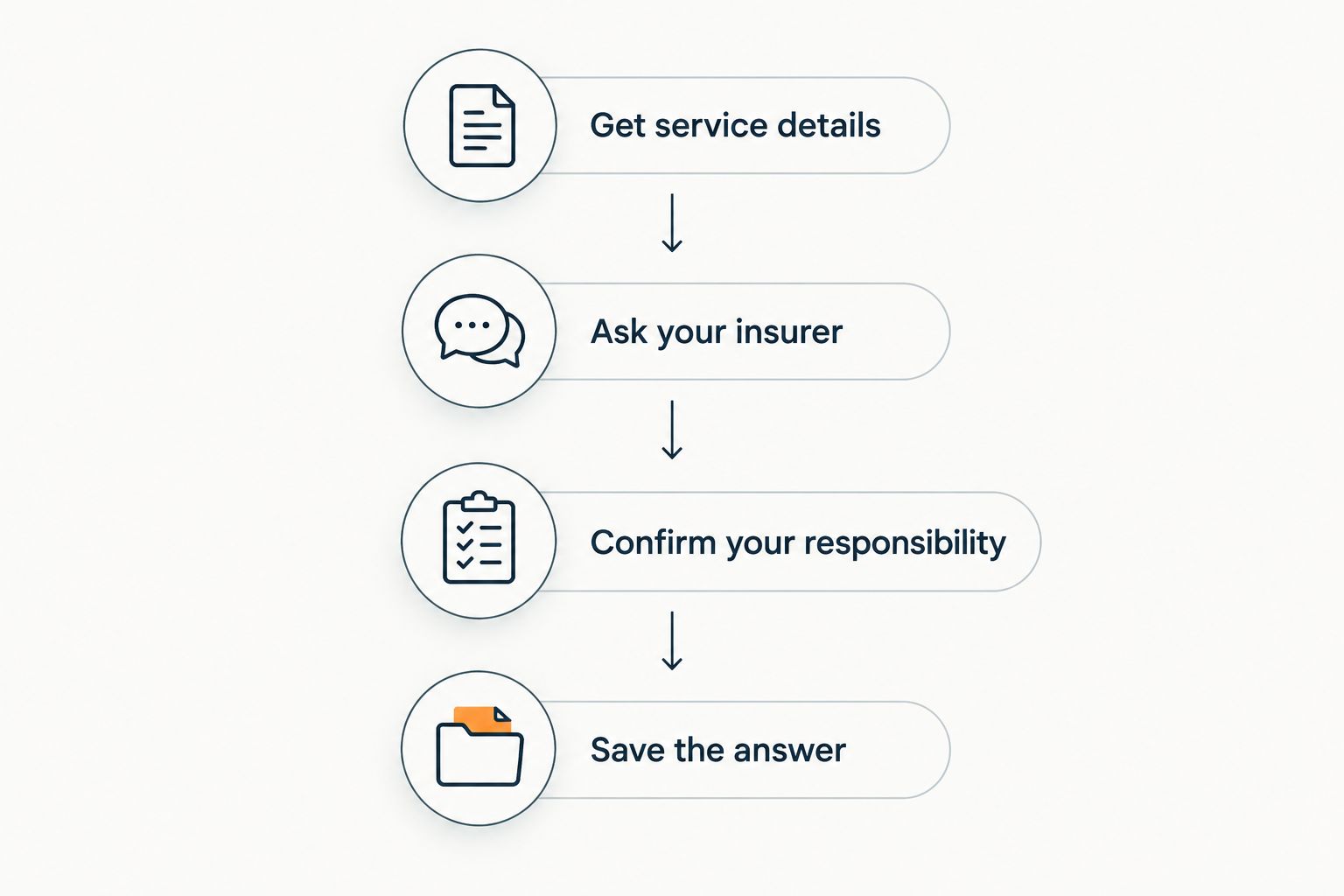 Four steps for checking ADHD coaching coverage before booking
Verify the exact service and provider before relying on reimbursement.
Does an ADHD diagnosis make coaching covered?
An ADHD diagnosis does not automatically make standalone coaching a covered benefit. Your plan still applies its rules about eligible services, providers, and documentation.
If you have not been evaluated and want diagnostic clarification, seek a qualified clinician rather than expecting a coach to establish a diagnosis. Coaching and clinical evaluation serve different purposes.
Can I use an HSA or FSA for ADHD coaching?
HSA and FSA eligibility is separate from health insurance coverage. A service being helpful for ADHD does not, on its own, establish that it is a qualified medical expense.
Ask your account administrator about the exact service and required documentation before using account funds. IRS Publication 502 explains the distinction between medical expenses and general wellness expenses; a medical necessity letter is not a universal exception for otherwise ineligible spending.
Will a superbill get ADHD coaching reimbursed?
A superbill does not guarantee reimbursement for ADHD coaching. It is documentation, not an insurer's approval of the service.
Before relying on one, ask your insurer whether the underlying service and provider qualify under your out-of-network benefits. An excluded service remains excluded even when the paperwork is complete.
What should I do if coaching is not covered?
First, identify what you need rather than searching only for a reimbursable label. Help with a clinical concern, practical accountability, and emotional support are different needs that sometimes overlap.
If you need assessment or treatment, ask your insurer for eligible clinicians with ADHD experience. If you mainly need help carrying out plans, ask prospective coaches how their approach works and what commitments the arrangement requires.
For an existing claim denial in 2026, read the explanation carefully. A documentation problem, a network issue, and an excluded benefit require different responses; ask your plan about the applicable review or appeal process.
Do not change the description of a service to make it fit a benefit. Instead, ask whether the claim accurately reflects what happened and whether any required information is missing.
Where voice-based emotional support fits
Lovon is best for people who want voice-based emotional support, not clinical ADHD care. The app offers conversations, coping tools, and self-reflection guidance for everyday mental health struggles.
Lovon is an emotional support app, not a licensed clinician, an ADHD diagnostic service, or a replacement for clinical treatment. Its practical advantage is on-demand conversation; its limitation is that conversation does not establish a diagnosis, provide medication management, or determine insurance eligibility.
If that type of support matches your needs, you can explore Lovon. Treat the choice separately from whether your plan covers coaching, and do not assume insurance reimbursement for an app subscription.
FAQ
Is ADHD coaching covered by insurance in 2026?
Standalone ADHD coaching is generally not covered by standard U.S. health insurance in 2026. Check your specific plan because a separate coaching benefit or employer program has its own terms.
Is ADHD coaching covered if my doctor recommends it?
A doctor's recommendation does not automatically make ADHD coaching covered. Your plan still determines whether the service and provider qualify for benefits.
Can a licensed therapist bill ADHD coaching as therapy?
A licensed therapist must bill for the service actually delivered. Clinical psychotherapy that includes practical ADHD strategies is different from relabeling standalone coaching to obtain reimbursement.
Does out-of-network insurance pay for ADHD coaching?
Out-of-network benefits do not automatically cover ADHD coaching. Both the service and the provider must meet your plan's eligibility requirements, and an excluded service remains excluded.
Can I appeal an insurance denial for ADHD coaching?
Ask your insurer about the review or appeal process listed in your denial notice. The appropriate response depends on whether the issue involves documentation, provider eligibility, or an excluded benefit.
Can Medicare or Medicaid cover my ADHD coach?
Do not assume Medicare or Medicaid covers a standalone ADHD coach. Ask the relevant program or managed care plan about the exact service, provider eligibility, and any separate support benefits.
Can Lovon replace an ADHD therapist or coach?
Lovon provides voice-based emotional support and self-reflection guidance, not licensed ADHD treatment. It does not replace a clinician, and its app-based support is different from a human coaching relationship.
One last thing
Whether a provider accepts insurance and whether your appointment is covered are different questions. Keep asking until you have an answer about the exact service you intend to book.
For a 2026 coverage check, put the provider's service description beside your plan's response. If they describe different things, resolve that mismatch before starting—not after a claim arrives.
Related guides
How AI Support Helps You Heal
AI emotional support isn't about replacing human connection — it's about filling the gaps. The moments when you need to talk at 2 AM, when you don't want to burden your friends again, or when you simply need someone to listen without judgment.
Here's what happens in a typical Lovon session:
You share what's on your mind
There's no script, no intake form, no waiting room. You speak or type whatever you're feeling — in your own words, at your own pace.
Lovon validates and explores
Using frameworks from CBT (Cognitive Behavioral Therapy) and motivational interviewing, Lovon acknowledges your feelings first, then gently helps you explore them. No dismissive "just move on" advice.
You build coping skills together
Lovon doesn't just listen — it actively works with you on evidence-based techniques: thought reframing, urge surfing, behavioral experiments, and more.
What a Session with Lovon Looks Like
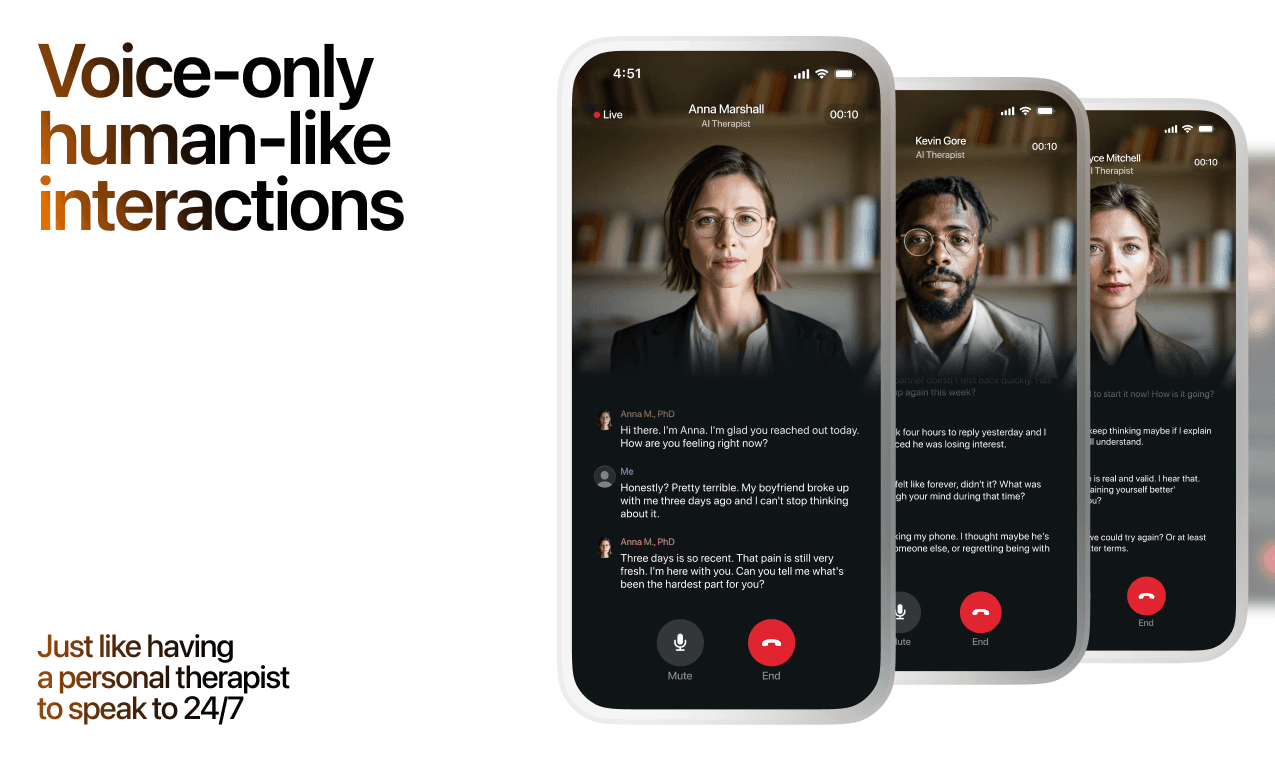
Lovon is AI support, not a replacement for professional care. If things have been hard to get through for weeks, or you are thinking about harming yourself, talk to a doctor or a licensed therapist.
Ready to Start?
Your healing journey can begin right now
A 3-day trial. No judgment. Just a safe space to process what you're going through.
Frequently Asked Questions
Is Lovon a replacement for a real therapist?
Is my conversation with Lovon AI private?
How is Lovon different from ChatGPT for emotional support?
Can I use Lovon if I'm already seeing a therapist?
Can I try Lovon before subscribing?
About the Author

The Lovon Editorial Team
Mental Health & Wellness Content Team
The Lovon Editorial Team develops mental health and wellness content designed to make psychological concepts accessible and actionable. Our goal is to bridge the gap between clinical research and everyday life - helping you understand why your mind works the way it does and what you can do about it....
Related articles
- Does ADHD medication help with emotional regulation?
ADHD medication emotional regulation benefits vary. Learn what improvement looks like, which mood changes need review…
- Can adults develop ADHD later in life?
Can adults develop ADHD later in life? A first diagnosis can come in adulthood, but symptoms begin earlier. Learn what…
- ADHD and Procrastination: Why It Happens (2026 Guide)
ADHD and procrastination linked to dopamine and task-initiation gaps, not laziness. Get the 2026 step-by-step fix: body…
- AI Therapy App for Job Loss Anxiety: 2026 Verdict
AI mental health support for job loss anxiety in 2026: Lovon, low-cost counseling without insurance, and EAPs compared…
See also
Quizzes
- Self-Concept Clarity Test: Do You Know Who You Are?
See how clearly you know yourself, in 3 minutes.
- Confidence Test: How Confident Am I? Self-Confidence Quiz
See which part of your confidence is thin.
Free tools
- Vent to an AI
Need to vent and there is nobody to call, or nobody you want to tell? Type it here. You are talking to an AI listener…
- Words of Encouragement for Him When He Is Struggling
Words of encouragement for him that fit what he is actually going through, for when your usual lines are not landing…
From the wiki
- Why do I keep dreaming about the same person?
A recurring dream figure usually marks unfinished emotional business rather than a message about that person. Your brain…
Disclaimer: This article is for informational purposes only and does not constitute medical advice, diagnosis, or treatment. Always seek the advice of your physician or other qualified health provider with any questions you may have regarding a medical condition. If you are in crisis or think you may have an emergency, call 988 (Suicide & Crisis Lifeline) or go to the nearest emergency room. Outside the US? Find a crisis line in your country.