
Can adults develop ADHD later in life?
Can adults develop ADHD later in life? A first diagnosis can come in adulthood, but symptoms begin earlier. Learn what to track and when to seek an evaluation.
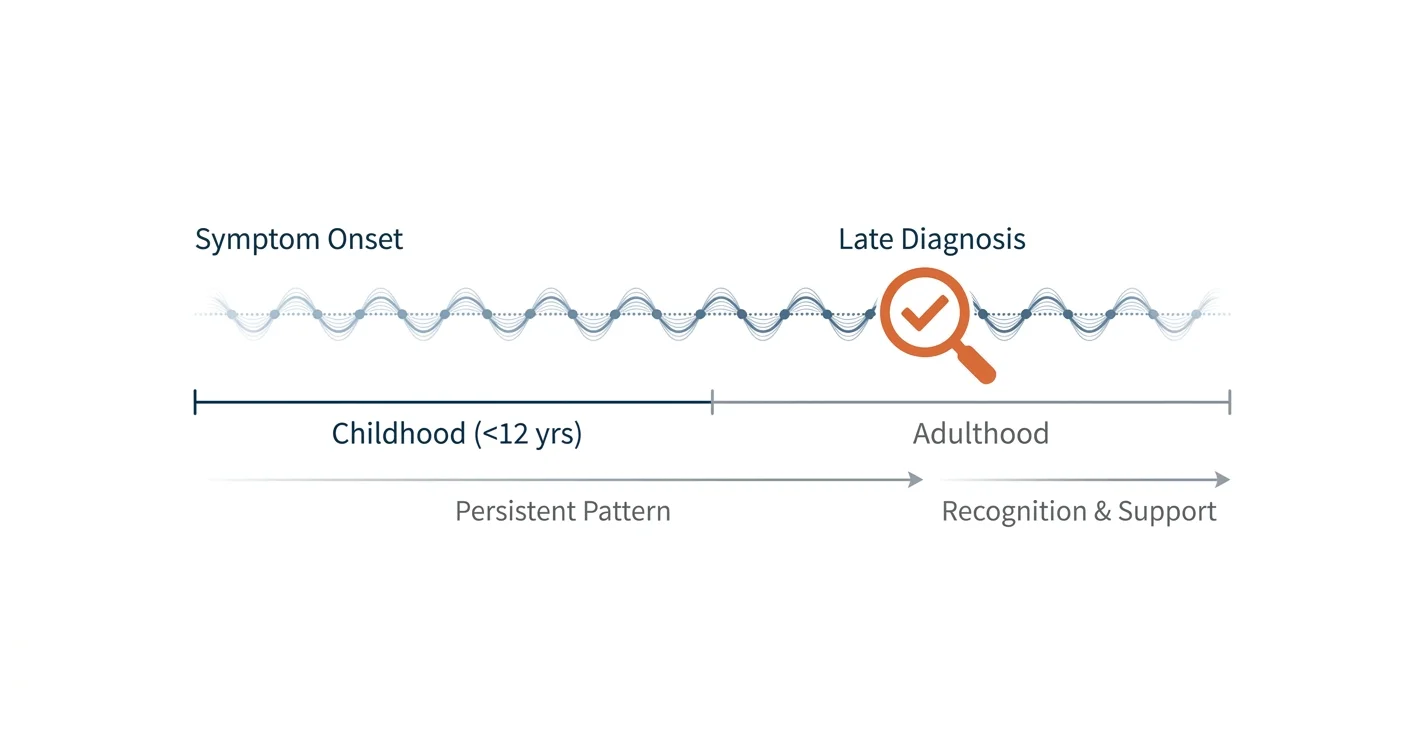

Key Takeaways
- Can adults develop ADHD later in life? Adults can receive a first diagnosis later in life, but symptoms generally
- Stress, poor sleep and anxiety can resemble ADHD; a clinician checks when symptoms began and where they occur.
- Lovon is best for talking through ADHD-related stress, not for diagnosing ADHD.
Adults can be diagnosed with ADHD for the first time later in life, but ADHD symptoms generally begin in childhood. If difficulty focusing or staying organized seems entirely new, a clinician should check for other causes as well as ADHD. A late diagnosis is not the same thing as a condition that first developed in adulthood.
TL;DR
- Can adults develop ADHD later in life? Adults can receive a first diagnosis later in life, but symptoms generally begin in childhood.
- Stress, poor sleep and anxiety can resemble ADHD; a clinician checks when symptoms began and where they occur.
- Lovon is best for talking through ADHD-related stress, not for diagnosing ADHD.
If you have spent years calling yourself forgetful or disorganized, this distinction matters. An evaluation can help you understand a long-standing pattern without assuming every recent struggle is ADHD. ADHD and anxiety can also overlap, so it helps to describe what you experience rather than trying to settle on a label before your appointment.
Can adults develop ADHD later in life?
You can discover ADHD later in life; that does not mean it started then. Some adults recognize symptoms only when work, caregiving or independent living puts more demands on their attention and planning. Others look back and realize that earlier difficulties were present but went unrecognized.
A clinician does not need you to have received a childhood diagnosis. They do need to investigate whether several symptoms were present before age 12, whether the pattern persists, and whether it affects more than one part of your life. They also check whether another condition better explains what is happening now.
Here is a useful way to prepare for that conversation:
- Describe what is difficult now. Give examples, such as losing track of tasks, missing details or struggling to finish what you start.
- Look back without forcing a story. Think about school, home and friendships. Ask a person who knew you then for their recollection if that feels possible.
- Note when things changed. Record whether the difficulty was always there, became more disruptive after a life change, or began suddenly.
- Bring the wider picture. Tell the clinician about sleep, stress, mood, anxiety, medications and other health changes.
- Ask what happens next. An assessment should explain both the evidence for ADHD and the reasons to consider other causes.
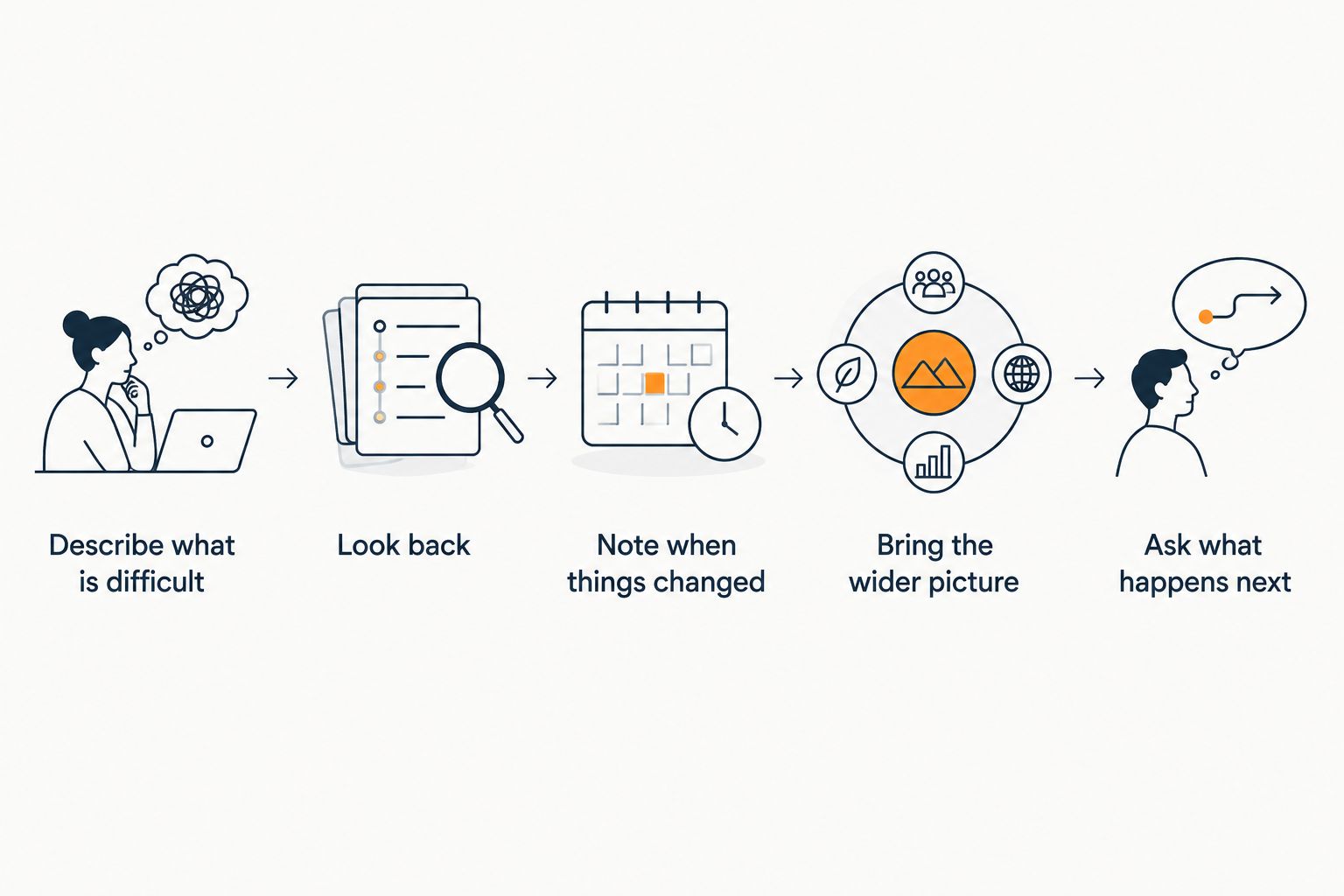 Steps for preparing to discuss possible adult ADHD symptoms with a clinician
A clear timeline helps separate a long-standing pattern from a recent change.
You do not have to make your childhood memories fit a checklist. Saying that you are unsure is more useful than guessing. A clinician can work with what you remember and explain what other information would help.
Why a late ADHD diagnosis feels like a new problem
Adult responsibilities can expose difficulties that were easier to work around earlier. You might have relied on reminders from family, the structure of school, or extra effort that nobody else saw. When that support changes, the same pattern can become harder to manage.
The question is not whether you looked visibly distracted as a child. A clinician looks for evidence of a persistent pattern, including difficulties that other people might have overlooked. Recalling both what you struggled with and what helped you cope gives a fuller account than either one alone.
Consider a person who now misses work deadlines but remembers regularly losing assignments at school. That history points toward a pattern worth assessing. A person whose concentration changed abruptly after weeks of poor sleep needs an assessment too, but the first question may be what disrupted their sleep. Neither example is a diagnosis.
In 2026, the practical next move is the same: bring a timeline of symptoms to a qualified clinician instead of relying on the age when you first noticed them. The timing, setting and impact matter more than the date you began asking about ADHD.
What counts in an adult ADHD assessment?
Clinicians assess symptoms of inattention and hyperactivity or impulsivity, along with how those symptoms affect daily functioning. For adults, diagnostic criteria call for at least 5 symptoms in a relevant symptom group, lasting at least 6 months. Several symptoms must have been present before age 12, with symptoms occurring in 2 or more settings and evidence that they interfere with functioning.
Those numbers are criteria for a professional evaluation, not a self-test. You cannot confirm ADHD by counting traits that sound familiar. The clinician also considers your history and whether another explanation fits better.
Bring examples from different settings rather than a general statement that you cannot focus. At work, perhaps you repeatedly lose the thread of a task. At home, perhaps you leave routine chores unfinished despite intending to do them. Explain the effect on your day, not just the behavior itself.
If childhood records are unavailable, say so. An assessment can draw on your recollections and other available history; it should not depend on you producing a perfect account of school. If someone who knew you as a child can offer observations, ask them to describe what they remember in their own words.
A 2026 ADHD assessment should examine the history behind your symptoms, not just how distracted you feel today. That protects you from overlooking a treatable cause of a recent change. It also leaves room to recognize difficulties you have managed quietly for years.
Why ADHD-like symptoms vary
Several factors can change how often you notice a difficulty or how much it affects you. Bring these up during an assessment rather than trying to sort them out alone:
- Sleep: Poor sleep can make attention, memory and patience feel less reliable.
- Stress: A demanding period can make planning and follow-through harder, whether or not you have ADHD.
- Anxiety: Worry can pull your attention away from the task in front of you.
- Low mood: Loss of energy or interest can make it difficult to start or finish tasks.
- Changing demands: Work, study or caregiving can make a long-standing pattern more noticeable.
- Health changes and medications: Tell your clinician what has changed so they can assess whether it contributes to your symptoms.
These factors can overlap. Having anxiety does not rule out ADHD, and having ADHD does not mean every difficulty with focus comes from ADHD. A useful assessment makes room for both possibilities.
How can you tell ADHD from a recent concentration problem?
Start with the timeline, then look at the pattern. ADHD is considered when symptoms trace back to childhood and cause difficulty across settings. When a concentration problem is new, its timing can point toward sleep disruption, stress, mood symptoms or a health change that also needs attention.
| Question to bring to an evaluation | Long-standing ADHD pattern | Recent concentration change |
|---|---|---|
| When did you first notice clues? | Childhood examples may become clearer in hindsight. | You can identify a more recent shift. |
| Where do difficulties show up? | Symptoms affect more than one setting. | Difficulties may track a particular change or period. |
| What else needs checking? | Other conditions can coexist with ADHD. | Sleep, stress, mood, health changes and medications need review. |
| What is the next step? | Ask for an ADHD evaluation. | Ask for an evaluation of the new symptoms. |
The table is a conversation aid, not a way to diagnose yourself. A recent increase in difficulty does not erase childhood ADHD symptoms. Likewise, finding one childhood example does not prove that ADHD explains a sudden change in 2026.
If your concentration changed sharply or is disrupting your daily life, tell a healthcare professional when it began and what changed around that time. You deserve help with the problem you have now, even if ADHD is not the answer.
Can stress reveal ADHD that was missed in childhood?
Yes, stress can make an existing difficulty more visible, but stress does not establish an ADHD diagnosis. When you have less room to recover from missed tasks or forgotten plans, a familiar pattern can feel newly unmanageable. A clinician checks whether the underlying symptoms were present before the stressful period.
It helps to separate 2 questions: What was difficult before the stress increased? What became difficult afterward? Write down concrete examples for both. If you have always lost track of multi-step tasks but recently started struggling to sleep, both details belong in the conversation.
You do not need to prove that you were struggling enough as a child. The purpose of looking back is to understand whether there was a pattern, not to judge how well you handled it. Be honest about the supports that made life easier, too.
What if you cannot remember childhood symptoms?
Tell the clinician what you do and do not remember. Childhood memories are incomplete for many adults. You can look for old records or ask someone who knew you then, but do not fill gaps with guesses.
Think about repeated experiences rather than isolated mistakes. Were there routines you needed help to maintain? Did teachers or family members comment on unfinished work, restlessness or losing things? An answer of no or I am not sure is useful information.
A clinician can explain how limited childhood information affects their assessment. If ADHD cannot be established, that does not mean your current difficulty is unimportant. The next step is to keep investigating what is making daily life harder.
What can you do while you wait for an evaluation?
Choose supports that address the difficulties you can already name. You do not need a confirmed diagnosis to put an appointment in a calendar, break a task into smaller parts, or tell someone that your attention has been hard to manage. Keep a simple note of what helps and what does not.
For 2026, focus on observations you can share with a clinician:
- Note the task you meant to do and what interrupted it.
- Record where the difficulty occurred, such as at home or at work.
- Write down sleep, stress or mood changes that happened around the same time.
- Keep examples of unfinished tasks and any strategies that helped you complete them.
Lovon is best for adults who want voice-based emotional support while sorting through ADHD-related stress. You can use the Lovon voice support app to talk through what feels difficult and reflect on coping tools. Its limit is clear: Lovon is not a licensed clinician and cannot diagnose ADHD or replace an evaluation.
Talk through what feels difficult
Use voice conversation for emotional support while you prepare for an evaluation.
If you are waiting for an appointment, keep your notes brief enough that you will actually use them. A few specific examples will give a clinician more to work with than a long list of traits copied from an online checklist.
FAQ
Can adults develop ADHD later in life?
Adults can receive a first ADHD diagnosis later in life, but diagnostic criteria look for several symptoms before age 12. A clinician should also assess other causes when symptoms seem entirely new.
Can ADHD appear suddenly in your 30s or 40s?
ADHD can become more noticeable in your 30s or 40s, but a sudden onset of attention problems calls for a broader evaluation. Tell a clinician when the change began and what else changed.
Can you have ADHD if nobody noticed it when you were a child?
Yes, ADHD can go unrecognized in childhood. A clinician looks for earlier symptoms and their effect on your life, even if you never received a childhood diagnosis.
What if I cannot remember having ADHD symptoms as a child?
Tell the clinician that you cannot remember clearly rather than guessing. Available records or recollections from someone who knew you may help, and the clinician can explain what remains uncertain.
Can anxiety look like ADHD in adults?
Yes, anxiety can make concentration and follow-through difficult, and it can also occur alongside ADHD. An assessment considers your symptom history and both possibilities.
Does stress cause ADHD in adults?
Stress does not by itself establish an ADHD diagnosis. It can make existing difficulties more noticeable and can cause attention problems that need their own assessment.
Can Lovon diagnose adult ADHD?
No, Lovon cannot diagnose adult ADHD and is not a licensed clinician. Lovon offers voice-based emotional support while you seek an evaluation from a qualified professional.
One last thing
The most useful question is not whether you have become someone with ADHD. It is what has been difficult over time, what changed recently, and what else might explain it. In 2026, bring those 3 parts of your story to an evaluation. You can seek support for the stress now without deciding on a diagnosis first.
Related guides
How AI Support Helps You Heal
AI emotional support isn't about replacing human connection — it's about filling the gaps. The moments when you need to talk at 2 AM, when you don't want to burden your friends again, or when you simply need someone to listen without judgment.
Here's what happens in a typical Lovon session:
You share what's on your mind
There's no script, no intake form, no waiting room. You speak or type whatever you're feeling — in your own words, at your own pace.
Lovon validates and explores
Using frameworks from CBT (Cognitive Behavioral Therapy) and motivational interviewing, Lovon acknowledges your feelings first, then gently helps you explore them. No dismissive "just move on" advice.
You build coping skills together
Lovon doesn't just listen — it actively works with you on evidence-based techniques: thought reframing, urge surfing, behavioral experiments, and more.
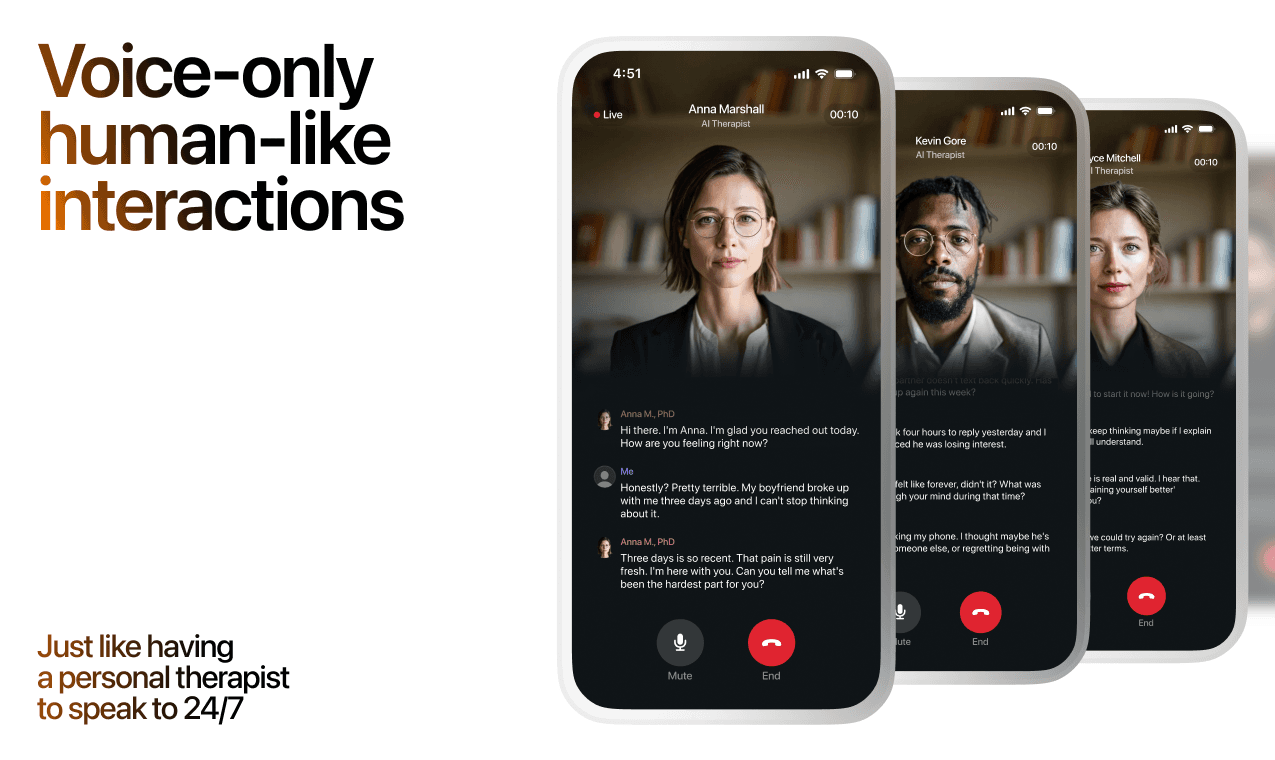
What a Session with Lovon Looks Like
When to Seek Professional Help
AI support is a valuable tool, but it's not a replacement for professional care. Please consider reaching out to a licensed therapist if you experience any of the following:
- Persistent thoughts of self-harm or suicide
- Inability to perform daily activities (work, eating, sleeping) for more than 2 weeks
- Turning to alcohol or substances to cope
- Intense anger or desire to harm your ex-partner
- Complete emotional numbness that doesn't improve over time
Crisis Resources (US): If you're in immediate danger, call 988 (Suicide & Crisis Lifeline) or text HOME to 741741 (Crisis Text Line). Available 24/7, free, and confidential.
Outside the US? Find a crisis line in your country
Ready to Start?
Your healing journey can begin right now
A 7-day trial. No judgment. Just a safe space to process what you're going through.
Frequently Asked Questions
Is Lovon a replacement for a real therapist?
Is my conversation with Lovon AI private?
How is Lovon different from ChatGPT for emotional support?
Can I use Lovon if I'm already seeing a therapist?
Can I try Lovon before subscribing?
About the Author

The Lovon Editorial Team
Mental Health & Wellness Content Team
The Lovon Editorial Team develops mental health and wellness content designed to make psychological concepts accessible and actionable. Our goal is to bridge the gap between clinical research and everyday life - helping you understand why your mind works the way it does and what you can do about it....
Related articles
- AI Life Coach for ADHD Goal Setting 2026
The best AI life coach for ADHD in 2026 breaks goals into micro-steps, removes scheduling pressure, and adds emotional…
- How long does it take to get an adult ADHD diagnosis?
How long does an adult ADHD diagnosis take? There is no fixed timeline in 2026. Learn what affects the wait, what an…
- Can ADHD be managed without medication?
Can ADHD be managed without medication? Yes, for some adults. Learn which therapy, routines, and supports help, where…
- AI Therapy for ADHD Emotional Regulation 2026
AI therapy for ADHD gives you on-demand voice support for emotional dysregulation, RSD, and mood swings. See which tools…
See also
Quizzes
- Loneliness Test: Free 12-Question Self-Check
See which kind of loneliness is thin, in 3 minutes.
- What Stage of Grief Am I In? Free 12-Question Quiz
See what your grief is actually doing, in 3 minutes.
Free tools
- Write a Letter to Someone You Lost
Tell it who they were to you and what you never got to say, and it writes the letter back in your words. No account, no…
- Write a Condolence Message for This Person
Get one condolence message written for your situation instead of a list of a hundred to choose from. Tell it who died…
From the wiki
- What to do if you have no friends?
Pick one activity that repeats weekly with the same people, and go for six to eight weeks straight. Repetition, not…
Disclaimer: This article is for informational purposes only and does not constitute medical advice, diagnosis, or treatment. Always seek the advice of your physician or other qualified health provider with any questions you may have regarding a medical condition. If you are in crisis or think you may have an emergency, call 988 (Suicide & Crisis Lifeline) or go to the nearest emergency room. Outside the US? Find a crisis line in your country.