
Can adult ADHD be misdiagnosed as anxiety?
Adult ADHD misdiagnosed as anxiety is possible. Learn which symptoms overlap, what an assessment checks, and how to ask for a clearer clinical review.

Key Takeaways
- Adult ADHD misdiagnosed as anxiety requires a fuller assessment, not an automatic switch in diagnosis.
- ADHD and anxiety can coexist; trouble focusing alone does not distinguish them.
- CDC diagnostic guidance includes childhood onset, persistent symptoms, and difficulties across settings.
- Bring examples of attention problems, worry, sleep, and daily impact to a qualified clinician.
Yes, adult ADHD can be misdiagnosed as anxiety because both can involve restlessness, difficulty concentrating, irritability, and sleep problems. Anxiety can also exist alongside ADHD, so an anxiety diagnosis is not automatically wrong. If you're seeking answers in 2026, the next step is a clinical assessment that considers childhood symptoms, current difficulties, and other possible causes—not a decision based on a symptom checklist alone.
TL;DR
- Adult ADHD misdiagnosed as anxiety requires a fuller assessment, not an automatic switch in diagnosis.
- ADHD and anxiety can coexist; trouble focusing alone does not distinguish them.
- CDC diagnostic guidance includes childhood onset, persistent symptoms, and difficulties across settings.
- Bring examples of attention problems, worry, sleep, and daily impact to a qualified clinician.
Can adult ADHD be misdiagnosed as anxiety?
Yes. The overlap is real, but the pattern behind the symptoms matters more than any single symptom. ADHD can make it difficult to organize tasks, manage attention, and control impulses. Anxiety can interfere with attention when worry or a sense of threat takes over.
Someone with ADHD might feel anxious after repeatedly missing deadlines or forgetting responsibilities. Someone with anxiety might miss a deadline because they spend the afternoon worrying about making a mistake. The missed deadline looks similar; the history and surrounding experiences help a clinician understand it.
The guide to ADHD and anxiety overlap explains why these experiences do not always fit neatly into separate boxes.
| Experience | Pattern relevant to ADHD assessment | Pattern relevant to anxiety assessment |
|---|---|---|
| Trouble concentrating | Attention difficulties across tasks and situations, including when worry is low | Attention repeatedly pulled toward worries or perceived threats |
| Restlessness | A longstanding need to move or difficulty staying still | Feeling keyed up or tense around worry or fear |
| Avoiding tasks | Difficulty organizing, starting, or sustaining effort | Avoidance connected to feared mistakes, judgment, or outcomes |
| Forgetfulness | A recurring pattern involving responsibilities and everyday activities | Details missed while attention is occupied by worry |
| Sleep difficulties | Trouble settling or maintaining a consistent sleep routine | Trouble settling because of worry or physical tension |
This table describes patterns to discuss, not rules for diagnosing yourself. Both conditions vary, and sleep loss, depression, trauma-related symptoms, medical conditions, and substance effects can also affect concentration.
What diagnostic evidence matters?
The CDC's ADHD diagnostic guidance and the American Psychiatric Association's DSM-5-TR describe ADHD as a developmental condition. An adult assessment looks for several symptoms present before age 12 years, symptoms lasting at least 6 months, and symptoms present in at least 2 settings, such as home and work.
Those details matter more than whether a social media description feels familiar. A clinician also evaluates whether symptoms interfere with functioning and whether another condition better explains them. Meeting a duration threshold alone does not establish ADHD.
These diagnostic references apply to ADHD assessment, not to estimating how often anxiety diagnoses are mistaken. They do not turn this article or an online screener into a diagnostic test.
Why this matters
If anxiety treatment helps your worry but leaves longstanding organization and attention difficulties unresolved, that deserves a conversation. It does not prove ADHD. It means the remaining difficulties need their own explanation.
For someone requesting reassessment in 2026, the useful question is not simply whether the original diagnosis was wrong. Ask whether the current explanation accounts for your full history, including what happens when you feel relatively calm.
You do not need to disprove anxiety to ask about ADHD. A careful assessment can identify ADHD, anxiety, both, or another explanation. The aim is appropriate care, not winning an argument about a label.
Why ADHD and anxiety can look alike
Several features make the distinction harder to see in a brief conversation:
- Shared symptoms: Restlessness, concentration problems, and sleep difficulties appear in both conditions.
- Anxiety about daily difficulties: Repeatedly losing things or falling behind can become a source of genuine worry.
- Attention captured by worry: Anxiety can make it difficult to follow conversations, remember details, or finish tasks.
- Longstanding workarounds: Reminders, rigid routines, and help from others can make difficulties less visible.
- Both conditions together: Identifying anxiety does not rule out ADHD, and identifying ADHD does not rule out anxiety.
A short appointment focused on your most distressing symptom might not reveal the whole pattern. Tell the clinician about difficulties that feel ordinary to you because you have lived with them for so long.
For example, mention whether you rely on someone else to keep track of appointments or spend substantial effort checking your work. Explain what those habits prevent and what happens without them. The effort behind a successful outcome is part of your experience.
What should I bring to an ADHD assessment in 2026?
Bring concrete examples rather than trying to sound like a diagnostic checklist. You are helping the clinician understand your daily life, not preparing a case you must prove.
1. Childhood history
Write down what you remember about schoolwork, forgotten belongings, unfinished chores, interruptions, or difficulty sitting still. Include examples that do not fit ADHD as well as those that do.
School reports or a trusted person's memories can add useful context if available. Missing records are a reason to discuss how to assess your history, not a reason to invent certainty about childhood symptoms.
2. Current patterns
Describe where difficulties happen: work, home, education, relationships, or managing appointments. Explain whether attention problems also occur when you feel safe and relatively unworried.
Be specific about the task and its impact. Repeatedly forgetting a bill despite intending to pay it tells a clinician more than describing yourself as bad at adult life. Avoid turning an isolated mistake into a lifelong pattern.
3. Anxiety timeline
Note when worry became a problem and what it focuses on. Describe whether anxiety tends to come before a task, follows a mistake, or remains present even when practical demands are manageable.
The order of events is useful information, not a diagnostic shortcut. ADHD and anxiety can influence each other, and your timeline might not have a clear dividing line.
4. Sleep and health
Bring a list of medications, supplements, caffeine use, and other substances, along with relevant sleep and health concerns. A clinician needs this context because several factors can change attention, energy, and restlessness.
Mention sudden changes clearly. New concentration problems should not automatically be attributed to previously unrecognized ADHD, especially when they begin alongside illness, major sleep disruption, or a medication change.
5. Treatment history
Describe what previous treatment helped, what stayed difficult, and any unwanted effects. Include practical changes such as improved sleep or reduced workload, not just medication or therapy.
Do not stop, start, or adjust medication to test which diagnosis fits. Ask the prescribing clinician to review your symptoms and treatment response. Feeling better or worse after a particular treatment does not, by itself, confirm a diagnosis.
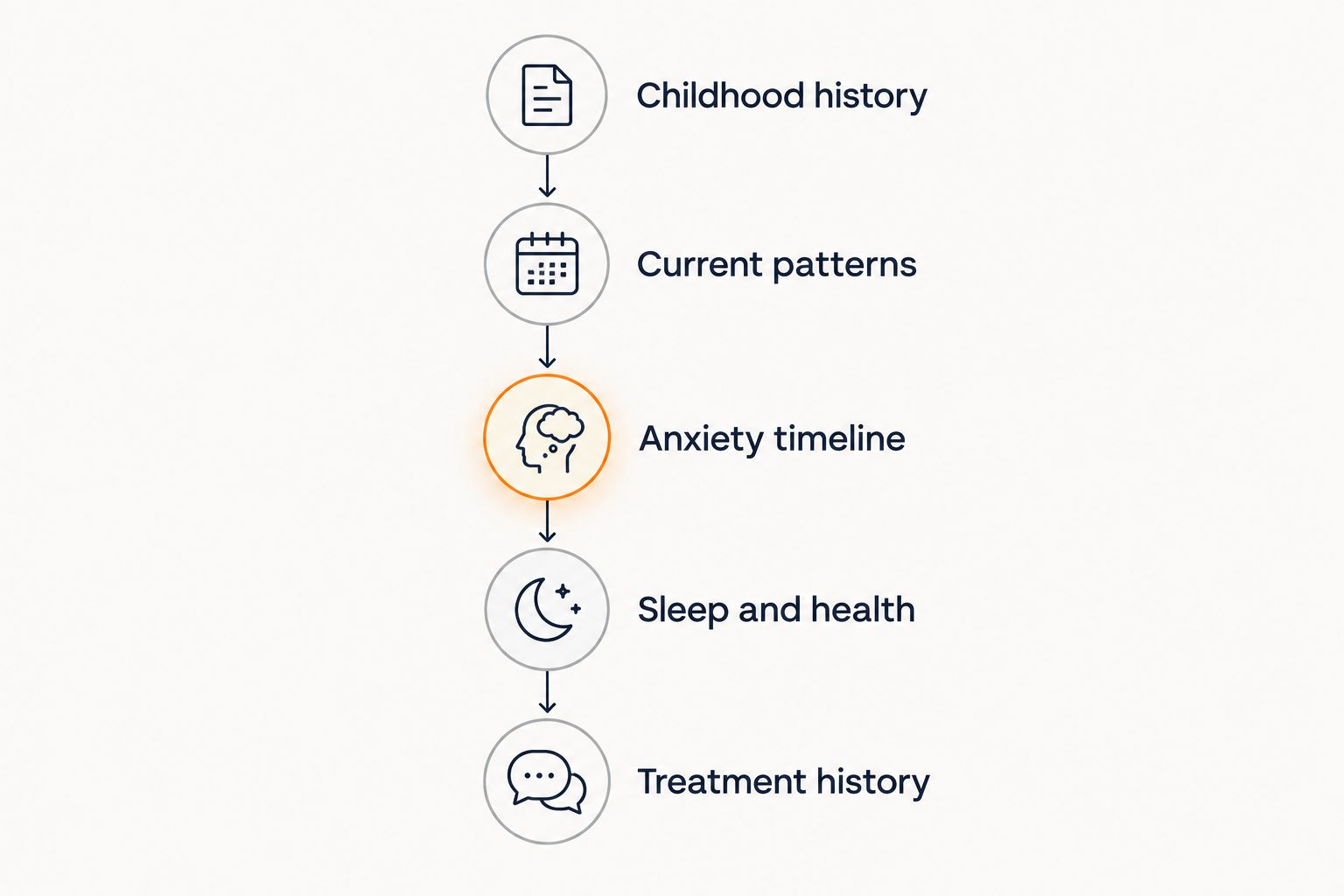 Five areas to prepare before discussing possible ADHD and anxiety with a clinician.
Bring a history of your difficulties, not just a list of symptoms.
How do I ask for a second opinion?
Start with the gap between your current care and your ongoing difficulties. Explain that you want an assessment of attention and organization problems alongside your anxiety, rather than asking someone to confirm a diagnosis you have already chosen.
Ask whether the clinician evaluates adult ADHD or can refer you to someone who does. Depending on professional qualifications and local rules, assessment can involve a psychiatrist, psychologist, or another appropriately trained healthcare professional.
Useful questions include:
- What evidence supports anxiety as the explanation for my attention difficulties?
- What childhood information would help assess possible ADHD?
- Could both conditions be contributing?
- What other causes should be considered?
- What is the plan if treatment improves worry but not daily functioning?
For a second opinion in 2026, bring previous assessment summaries and medication information if you have them. This helps the next clinician understand earlier decisions without requiring you to recall every detail during the appointment.
A second opinion is a request for clarification. It does not require rejecting the help you have already received or assuming that every earlier clinician missed something.
Can I have ADHD and anxiety at the same time?
Yes, ADHD and anxiety can occur together. A clinician should assess how each affects your life rather than assuming one diagnosis explains every difficulty. Care can address both, with priorities based on your symptoms, functioning, and safety.
Does anxiety medication not working mean I have ADHD?
No, an unhelpful response to anxiety medication does not establish ADHD. Treatment response depends on several factors, including the treatment itself and other health concerns. Review ongoing symptoms with the prescriber instead of changing medication yourself.
Can an online ADHD test tell me whether I was misdiagnosed?
No, an online ADHD screener cannot determine whether an anxiety diagnosis was mistaken. A screener can highlight experiences worth discussing, but it cannot replace developmental history, assessment of daily impact, and consideration of other causes. In 2026, the same boundary applies to chatbot answers and symptom-matching tools.
What can I do while waiting for an assessment?
You can make daily life easier without deciding which diagnosis explains everything. Choose supports that respond to a specific difficulty, then notice whether they help. These steps support functioning; they do not diagnose or treat every underlying cause.
- For forgotten tasks: Keep commitments in a single place and make reminders specific about the action needed.
- For difficulty starting: Write the smallest visible next action, such as opening the document rather than finishing the project.
- For worry before tasks: Note the feared outcome separately from the practical task so you can discuss both.
- For appointments: Bring written questions and ask for the agreed next steps in writing.
Keep notes brief enough that you can maintain them without creating another demanding project. Record what happened, what you were feeling, and the practical consequence. Avoid repeatedly checking symptoms for reassurance if that checking is increasing your distress.
Where voice support fits
Lovon offers voice conversations for emotional support, coping tools, and self-reflection. Lovon mental health support is best for adults who want to talk through everyday distress, not obtain a diagnosis.
The benefit is a place to express what feels difficult and reflect on your experience. The limitation is essential: Lovon is not a licensed clinician and cannot determine whether you have ADHD, anxiety, or both. Lovon mental health support does not replace assessment, prescribed treatment, or emergency care.
If you feel unable to stay safe or are thinking about suicide, seek immediate human help. In the United States, call or text 988 for the Suicide & Crisis Lifeline; call 911 for an immediate life-threatening emergency.
FAQ
Can adult ADHD be mistaken for generalized anxiety disorder?
Yes, adult ADHD can be mistaken for generalized anxiety disorder because concentration problems, restlessness, and sleep difficulties overlap. A clinician distinguishes them through developmental history, the pattern of worry, daily impact, and assessment for both conditions.
How do I know whether my trouble focusing is ADHD or anxiety?
You cannot reliably distinguish ADHD from anxiety through trouble focusing alone. Describe when concentration problems occur, whether they were present in childhood, and what happens when worry is low.
Can I have ADHD if I did well in school?
Yes, doing well in school does not rule out ADHD. An assessment considers symptoms and impairment, including the support and effort behind your results, rather than grades alone.
Does ADHD have to start before adulthood?
ADHD diagnostic criteria require several symptoms to have been present before age 12 years. Recognition can happen in adulthood, but a clinician should investigate newly appearing attention problems rather than automatically labeling them ADHD.
Can untreated ADHD make me feel anxious?
Difficulties associated with ADHD can become a source of anxiety, such as worry about forgotten responsibilities or missed deadlines. That does not establish whether you also have an anxiety disorder; both deserve assessment.
Should I stop anxiety treatment if I think I have ADHD?
Do not stop or change prescribed treatment on your own. Tell your clinician which symptoms remain and request a review that considers ADHD, anxiety, and other explanations.
What if I cannot remember my childhood symptoms?
Tell the assessor that your childhood memories are limited. Available school records and information from someone who knew you then can add context, and the clinician can explain how uncertainty affects the assessment.
One last thing
Bring examples of days that went well, not only days that fell apart. Explain what made the difference: fewer demands, clearer instructions, reminders, someone working alongside you, or less worry.
A successful day does not erase a difficulty. It can show the conditions that help you function—and give your clinician a clearer picture than a symptom list alone.
Related guides
How AI Support Helps You Heal
AI emotional support isn't about replacing human connection — it's about filling the gaps. The moments when you need to talk at 2 AM, when you don't want to burden your friends again, or when you simply need someone to listen without judgment.
Here's what happens in a typical Lovon session:
You share what's on your mind
There's no script, no intake form, no waiting room. You speak or type whatever you're feeling — in your own words, at your own pace.
Lovon validates and explores
Using frameworks from CBT (Cognitive Behavioral Therapy) and motivational interviewing, Lovon acknowledges your feelings first, then gently helps you explore them. No dismissive "just move on" advice.
You build coping skills together
Lovon doesn't just listen — it actively works with you on evidence-based techniques: thought reframing, urge surfing, behavioral experiments, and more.
What a Session with Lovon Looks Like
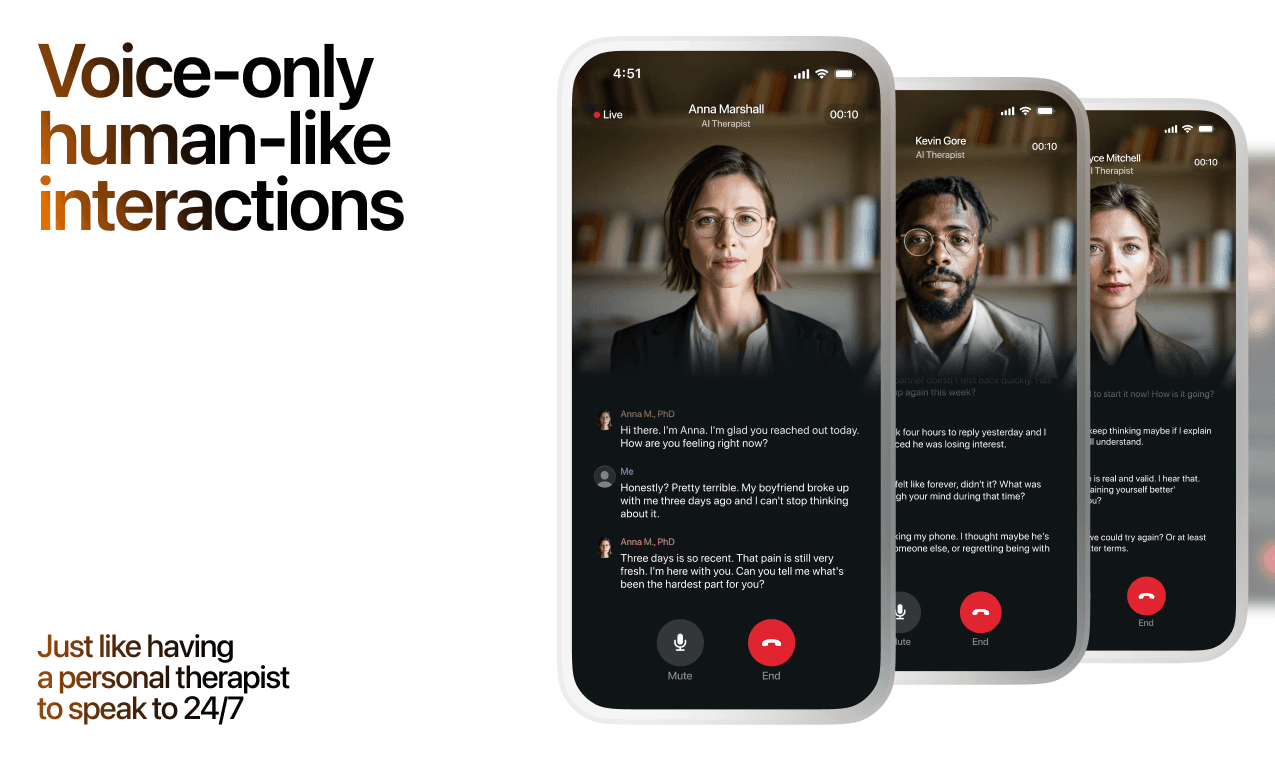
Lovon is AI support, not a replacement for professional care. If things have been hard to get through for weeks, or you are thinking about harming yourself, talk to a doctor or a licensed therapist.
Ready to Start?
Your healing journey can begin right now
A 3-day trial. No judgment. Just a safe space to process what you're going through.
Frequently Asked Questions
Is Lovon a replacement for a real therapist?
Is my conversation with Lovon AI private?
How is Lovon different from ChatGPT for emotional support?
Can I use Lovon if I'm already seeing a therapist?
Can I try Lovon before subscribing?
About the Author

The Lovon Editorial Team
Mental Health & Wellness Content Team
The Lovon Editorial Team develops mental health and wellness content designed to make psychological concepts accessible and actionable. Our goal is to bridge the gap between clinical research and everyday life - helping you understand why your mind works the way it does and what you can do about it....
Related articles
- Can ADHD be managed without medication?
Can ADHD be managed without medication? Yes, for some adults. Learn which therapy, routines, and supports help, where…
- Complex PTSD vs PTSD: What Sets Them Apart (2026)
Complex ptsd vs ptsd explained: trauma origin, symptom clusters, and self-assessment steps. See the 2026 diagnostic…
- ADHD Sleep Problems: Why Your Brain Fights Bedtime 2026
ADHD sleep problems affect 75% of adults with ADHD. Learn why your brain resists sleep and get a 7-step wind-down system…
- Can anxiety cause chest pain like a heart attack?
Can anxiety cause chest pain like a heart attack? Yes. Learn why symptoms overlap, when to call 911, and why medical…
See also
Quizzes
- Resilience Test: How Fast Do You Bounce Back?
See how you recover from setbacks, in 3 minutes.
- Alexithymia Test (Free): Do I Have Alexithymia?
See where your feelings lose their names, in 3 minutes.
Free tools
- Body Scan Meditation
Ten minutes, from your toes to the top of your head, noticing what is there without trying to fix it. Follow the voice…
- Sleep Meditation for Anxiety
For lying in bed with a mind that will not stop. About twelve minutes of slower breathing, a place to put the worries…
From the wiki
- Why do I keep dreaming about my ex?
Recurring dreams about an ex usually mean your brain is still consolidating a relationship that took up years of memory…
Disclaimer: This article is for informational purposes only and does not constitute medical advice, diagnosis, or treatment. Always seek the advice of your physician or other qualified health provider with any questions you may have regarding a medical condition. If you are in crisis or think you may have an emergency, call 988 (Suicide & Crisis Lifeline) or go to the nearest emergency room. Outside the US? Find a crisis line in your country.