
ADHD in Women Symptoms: Overlooked Signs (2026)
ADHD in women often looks like anxiety, not hyperactivity. See the overlooked symptoms, screening criteria, and support options that actually help in 2026.

Key Takeaways
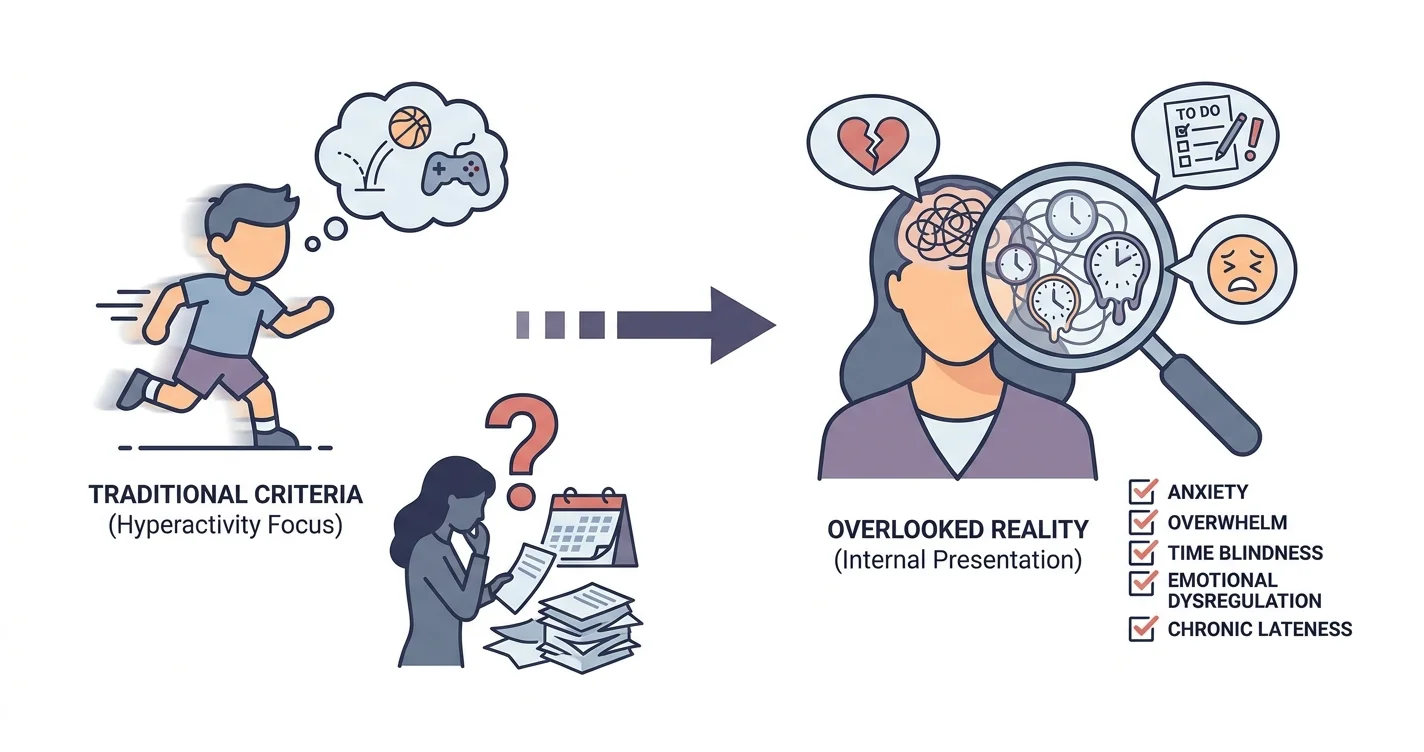
- ADHD in women symptoms often show up as anxiety, overwhelm, and chronic lateness, not hyperactivity.
- Rejection sensitive dysphoria and time blindness are two of the most overlooked ADHD in women symptoms clinicians miss.
- AI voice therapy from Lovon supports daily emotional regulation between appointments — a reasonable Consider.
- A formal psychiatric evaluation is still the only path to diagnosis and medication access — Buy the appointment, not
- Skip generic productivity apps that ignore emotional dysregulation; they solve the wrong problem for most women.
Most ADHD screening tools were built around how hyperactive boys present in a classroom, which is why so many women don't get identified until their late 20s or 30s — usually after years of being told they're just anxious, disorganized, or "a lot."
TL;DR
- ADHD in women symptoms often show up as anxiety, overwhelm, and chronic lateness, not hyperactivity.
- Rejection sensitive dysphoria and time blindness are two of the most overlooked ADHD in women symptoms clinicians miss.
- AI voice support from Lovon supports daily emotional regulation between appointments — a reasonable Consider.
- A formal psychiatric evaluation is still the only path to diagnosis and medication access — Buy the appointment, not the quiz.
- Skip generic productivity apps that ignore emotional dysregulation; they solve the wrong problem for most women.
Why this matters
ADHD in women gets missed because the diagnostic criteria were written around hyperactive boys, not inattentive girls. Girls who show up as internally restless, anxious, or over-apologetic get a different label — usually anxiety or "a sensitive personality," not a neurodevelopmental condition. That mislabeling follows women straight into adulthood.
By the time many women get evaluated, they've spent a decade managing symptoms with willpower, sticky notes, and self-blame. The overlap between the two conditions is real and well documented, and it's worth understanding before you assume one diagnosis rules out the other — see how ADHD and anxiety overlap in practice.
In 2026, more clinicians actively screen for inattentive-type ADHD in adult women, but the average gap between first suspecting something's off and getting a name for it is still measured in years, not weeks. In practice, ADHD in women often looks like anxiety, not hyperactivity.
Who this is for
This guide is for women who've spent years wondering why ordinary tasks feel disproportionately hard — the ones called "smart but scattered" on report cards who now run adult life on caffeine and last-minute panic. It's for women already diagnosed with anxiety or depression whose treatment never fully resolved the underlying restlessness, forgetfulness, or emotional flooding.
It's also for women recently diagnosed who are trying to figure out what support looks like day to day, not just once a month in a psychiatrist's office. If any of that sounds familiar, the rest of this guide is built for you.
What to look for in ADHD support for women
Screening built for the inattentive presentation
Most standard checklists ask about fidgeting and interrupting, symptoms far more common in boys. Screening that also asks about internal restlessness, chronic overwhelm, and "why can't I just start this" catches presentations that get missed for decades.
Support for rejection sensitive dysphoria
Many women with ADHD experience emotional pain from perceived criticism that feels disproportionate to the moment — often mistaken for anxiety or low self-esteem. Understanding rejection sensitive dysphoria reframes years of "why do I take everything so personally" into something workable.
Tools for time blindness and executive function
ADHD affects the brain's sense of time passing, not just attention span. If you're constantly shocked that it's 4pm, or you plan 20 minutes for something that takes two hours, time blindness is worth reading up on before you blame it on laziness.
Awareness of hormonal cycle effects
Estrogen influences dopamine regulation, and dopamine is the neurotransmitter ADHD medication and coping strategies both target. Symptoms frequently intensify in the week before a period and during perimenopause — support that ignores this is working with half the picture.
Emotional regulation, not just productivity hacks
A color-coded planner does nothing for the shame spiral after a missed deadline. Support that addresses the emotional side of ADHD, not just the organizational side, holds up better over months, not just the first motivated week.
Talk through ADHD overwhelm today
Get voice-based emotional support between appointments, anytime.
Top picks for support
The daily companion — AI voice therapy. You can talk through a spiral in five minutes instead of waiting three weeks for your next appointment slot. Lovon's AI voice therapy for ADHD emotional regulation is built for the moments between sessions, not as a replacement for a clinician. It's not a diagnostic tool and won't prescribe medication. Consider it as a daily add-on, not your only support.
The gold standard — a formal ADHD evaluation. A full evaluation typically includes rating scales completed by you and someone who knew you as a kid, plus a clinical interview, and usually runs 60 to 90 minutes across one or two sessions. This is still the only route to an official diagnosis and medication access in 2026. Buy the appointment; it's the one step nothing else substitutes for.
The support network — ADHD coaching or peer groups. Look for a coach who specializes in executive function for women specifically, not generic life coaching repackaged with an ADHD label. Peer groups add something coaching can't: other women who've lived the exact "why is this so hard for me" loop. Consider it if you're newly diagnosed and want community, not just strategies.
The wildcard — body-based regulation tools. ADHD brains run hot on stress hormones, and breathing or grounding techniques that calm the nervous system directly often outperform another to-do list app. This won't fix executive dysfunction on its own, but it lowers the baseline noise enough to make other tools usable. Consider it as a companion practice, not a standalone fix.
What to avoid
- Assuming you don't have ADHD because you were never hyperactive. Masking and internalized symptoms are the norm for women, not the exception, and they're a leading reason diagnosis gets delayed into the 30s or 40s.
- Productivity apps that ignore emotional regulation. A task list doesn't help when the barrier is shame or overwhelm, not forgetting the task existed.
- Treating self-diagnosis as a substitute for evaluation. Self-recognition is a valid and often accurate starting point in 2026, but medication access and formal accommodations still require a licensed clinician's assessment.
Verdict comparison
| Support option | Best for | Time to results | Verdict |
|---|---|---|---|
| AI voice support (Lovon) | Daily emotional spirals | Minutes | Consider |
| Formal psychiatric evaluation | Diagnosis and medication | 4-8 weeks | Buy |
| ADHD coaching or peer groups | Accountability and community | Weeks to months | Consider |
| Generic productivity app alone | Task lists only | N/A | Skip |
FAQ
What are the most overlooked ADHD symptoms in women?
Internal restlessness, chronic lateness, emotional flooding, and rejection sensitive dysphoria are among the most overlooked ADHD in women symptoms because they don't match the hyperactive stereotype most screening tools were built around. These show up as anxiety or personality traits far more often than they get flagged as ADHD.
Is ADHD in women different from ADHD in men?
The underlying condition is the same, but presentation differs — women more often show inattentive-type symptoms like internal restlessness and disorganization rather than visible hyperactivity. This difference is a major reason diagnosis in women lags behind men by years in most clinical settings.
Can you have ADHD if you were not hyperactive as a child?
Yes, inattentive-type ADHD rarely involves visible hyperactivity and is more common in girls than the hyperactive-impulsive type. Many women only recognize the pattern in adulthood once workload and responsibilities outpace their coping strategies.
Does ADHD get worse during your period or menopause?
Symptoms commonly intensify in the days before a period and during perimenopause because dropping estrogen affects dopamine regulation. Tracking symptom severity alongside your cycle for a month gives a clinician useful data for adjusting treatment.
Is rejection sensitive dysphoria a real ADHD symptom?
Rejection sensitive dysphoria is a recognized pattern in ADHD where perceived criticism triggers intense emotional pain, though it isn't a formal diagnostic criterion on its own. It's frequently mistaken for anxiety or low self-esteem until someone connects it back to ADHD.
How much does an ADHD evaluation cost in 2026?
Cost varies widely by provider, location, and whether insurance covers a portion of the assessment. Community mental health centers and university clinics typically run lower than private neuropsychological testing practices.
Can an AI therapist help with ADHD emotional regulation?
An AI voice companion like Lovon can support daily emotional regulation between appointments by talking through overwhelm or shame spirals in real time. It does not diagnose ADHD or prescribe medication, and it works best alongside, not instead of, a licensed clinician.
What age are women usually diagnosed with ADHD?
Many women are diagnosed in their late 20s through 40s, often after a life transition like a new job, a pregnancy, or a child's own ADHD diagnosis prompts them to look closer at their own patterns. Diagnosis this late is common, not a sign anything was done wrong earlier.
One last thing
Track your symptoms against your menstrual cycle for one full month before your evaluation appointment. Clinicians work with what you bring them, and "I have a rough week sometimes" is far less useful than "days 21 through 28, my focus and mood both drop noticeably" — that kind of detail changes how a diagnosis and treatment plan get built.
Related guides
How AI Support Helps You Heal
AI emotional support isn't about replacing human connection — it's about filling the gaps. The moments when you need to talk at 2 AM, when you don't want to burden your friends again, or when you simply need someone to listen without judgment.
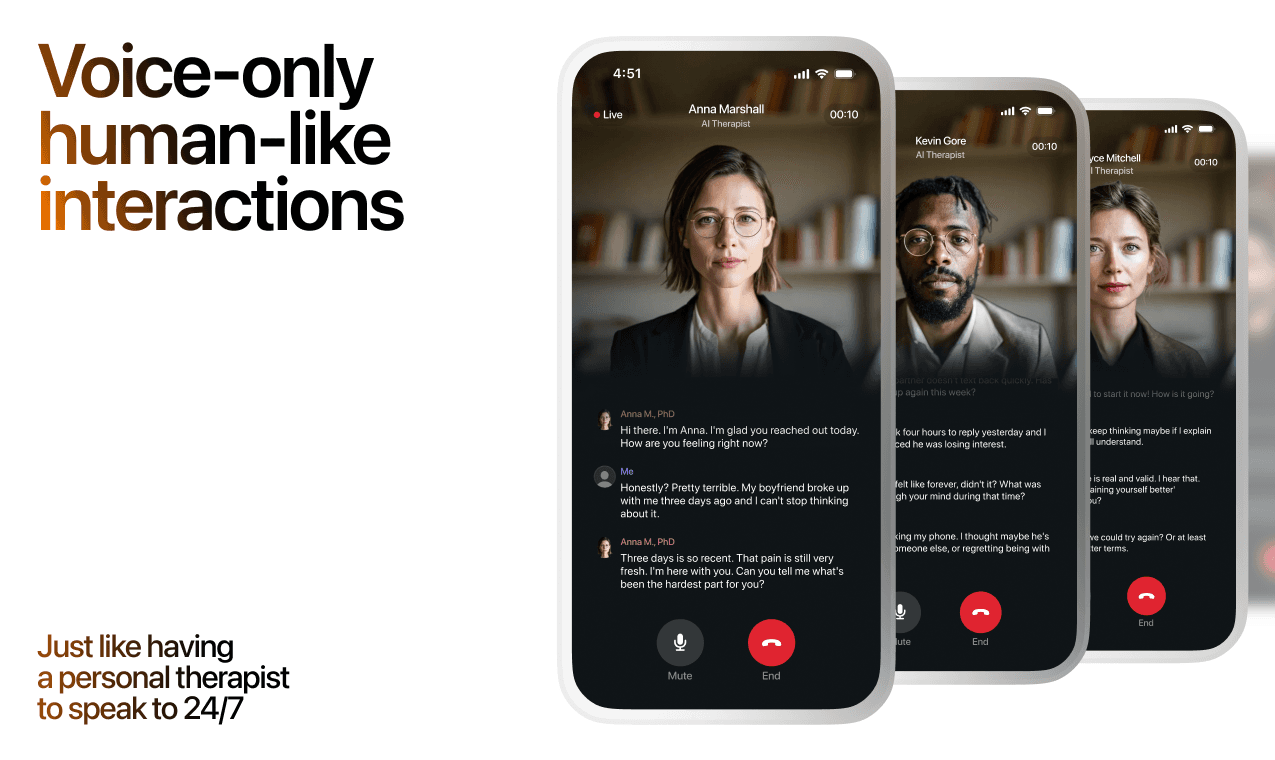
Here's what happens in a typical Lovon session:
You share what's on your mind
There's no script, no intake form, no waiting room. You speak or type whatever you're feeling — in your own words, at your own pace.
Lovon validates and explores
Using frameworks from CBT (Cognitive Behavioral Therapy) and motivational interviewing, Lovon acknowledges your feelings first, then gently helps you explore them. No dismissive "just move on" advice.
You build coping skills together
Lovon doesn't just listen — it actively works with you on evidence-based techniques: thought reframing, urge surfing, behavioral experiments, and more.
What a Session with Lovon Looks Like
When to Seek Professional Help
AI support is a valuable tool, but it's not a replacement for professional care. Please consider reaching out to a licensed therapist if you experience any of the following:
- Persistent thoughts of self-harm or suicide
- Inability to perform daily activities (work, eating, sleeping) for more than 2 weeks
- Turning to alcohol or substances to cope
- Intense anger or desire to harm your ex-partner
- Complete emotional numbness that doesn't improve over time
Crisis Resources (US): If you're in immediate danger, call 988 (Suicide & Crisis Lifeline) or text HOME to 741741 (Crisis Text Line). Available 24/7, free, and confidential.
Outside the US? Find a crisis line in your country
Ready to Start?
Your healing journey can begin right now
A 7-day trial. No judgment. Just a safe space to process what you're going through.
Frequently Asked Questions
Is Lovon a replacement for a real therapist?
Is my conversation with Lovon AI private?
How is Lovon different from ChatGPT for emotional support?
Can I use Lovon if I'm already seeing a therapist?
Can I try Lovon before subscribing?
About the Author
The Lovon Editorial Team
Mental Health & Wellness Content Team
The Lovon Editorial Team develops mental health and wellness content designed to make psychological concepts accessible and actionable. Our goal is to bridge the gap between clinical research and everyday life - helping you understand why your mind works the way it does and what you can do about it....
Related articles
- ADHD in College Students: Deadlines and Focus in 2026
ADHD in college students means missed deadlines and scattered focus — see what actually works in 2026, from…
- AI App for Postpartum Anxiety: 2026 Buying Guide
Looking for an ai app for postpartum anxiety in 2026? See what to look for, top picks with verdicts, and what to avoid…
- Cyclothymic Disorder as an Overlooked Mood Condition
When most people think of mood disorders, two conditions typically come to mind: major depression and bipolar disorder.
- Best App for Anxiety and Depression in 2026: Ranked
Ranked list of the best app for anxiety and depression in 2026 — AI voice therapy, chatbots, CBT apps, and teletherapy…
See also
Quizzes
- Alexithymia Test: Can You Name What You Feel?
See where your feelings lose their names, in 3 minutes.
- Empath Test: Do Other People's Moods Become Yours?
See how much of other people's moods you take on.
Free tools
- 5-4-3-2-1 Grounding Exercise
A guided run through the 5-4-3-2-1 technique, with paced breathing first if you need it. No sign-up, nothing stored…
- Attachment Trigger Plan for Anxious and Avoidant Patterns
Pick your pattern, tick the moments that set it off, and finish one card for each: your body signal, the thing you will…
From the wiki
- Why do I have no friends?
Usually nothing is wrong with you. Adult friendship runs on proximity and repetition, and most people lose both at once…
Disclaimer: This article is for informational purposes only and does not constitute medical advice, diagnosis, or treatment. Always seek the advice of your physician or other qualified health provider with any questions you may have regarding a medical condition. If you are in crisis or think you may have an emergency, call 988 (Suicide & Crisis Lifeline) or go to the nearest emergency room. Outside the US? Find a crisis line in your country.