
Can anxiety cause chest pain like a heart attack?
Can anxiety cause chest pain like a heart attack? Yes. Learn why symptoms overlap, when to call 911, and why medical assessment comes before anxiety coping tools.

Key Takeaways
- Yes, anxiety can cause chest pain like a heart attack, but the symptoms alone cannot tell you which it is.
- Call 911 for new, severe, or persistent chest pain, especially with breathing trouble or fainting.
- Lovon is best for talking through anxiety after urgent medical causes have been addressed, not for assessing chest pain.
Yes, anxiety can cause chest pain that feels like a heart attack. The symptoms can overlap, and you cannot safely tell the cause from how the pain feels alone. If chest pain is new, severe, persistent, or comes with shortness of breath, fainting, sweating, or pain spreading to your arm, back, neck, or jaw, call 911.
TL;DR
- Yes, anxiety can cause chest pain like a heart attack, but the symptoms alone cannot tell you which it is.
- Call 911 for new, severe, or persistent chest pain, especially with breathing trouble or fainting.
- Lovon is best for talking through anxiety after urgent medical causes have been addressed, not for assessing chest pain.
Why this matters
Chest pain can make you frightened, and fear can make the sensation harder to sort out. That does not mean the pain is harmless. In 2026, the safest next move is still the same: get urgent medical help for concerning chest pain before treating it as anxiety.
If panic is part of what you are experiencing, this guide to panic attacks versus anxiety attacks explains the terms. It cannot tell you what is causing chest pain right now.
Can anxiety cause chest pain like a heart attack?
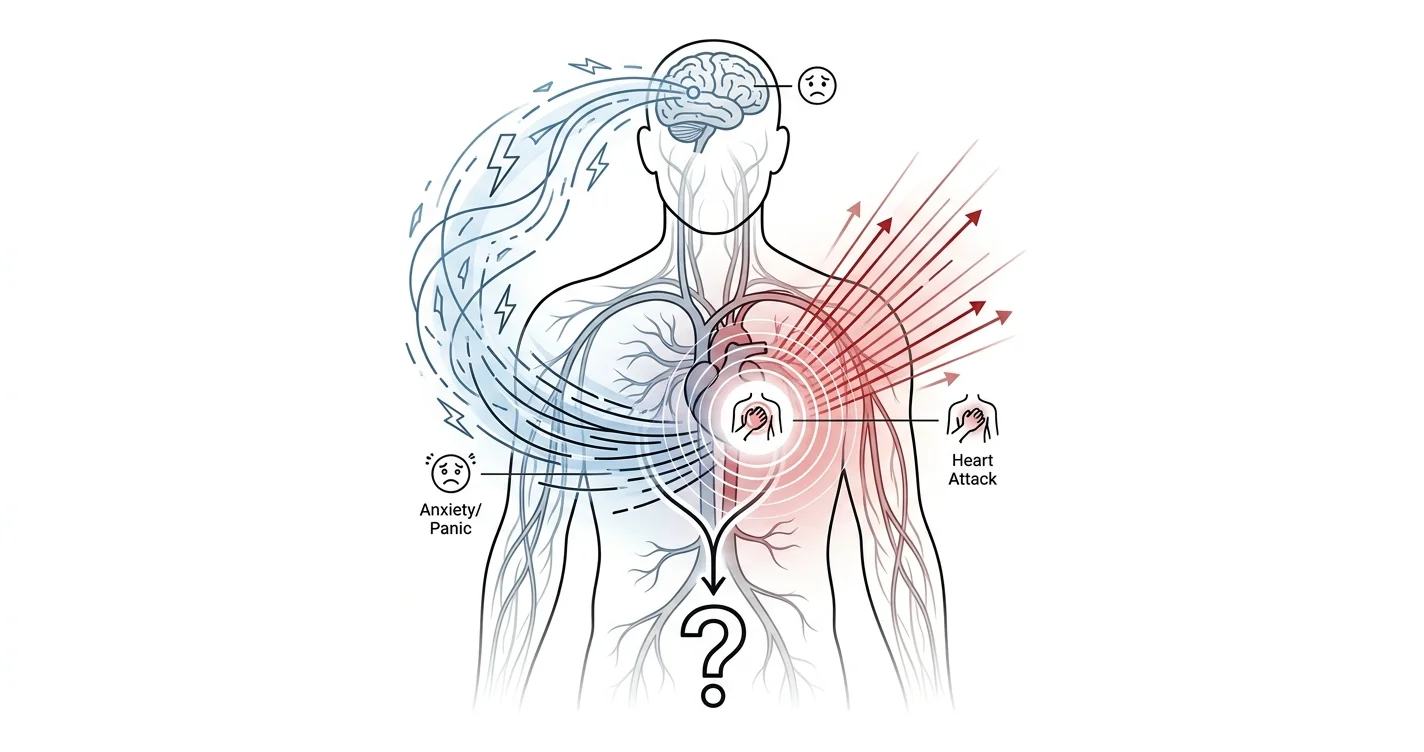
Yes. Anxiety and panic can bring on chest tightness or pain, a racing heart, sweating, dizziness, and shortness of breath. A heart attack can also involve chest discomfort and some of those same symptoms. Overlap is the reason to seek assessment, not a reason to assume you know the cause.
| What you notice | During anxiety or panic | During a heart attack |
|---|---|---|
| Chest discomfort | Can feel tight, painful, or difficult to describe | Can feel like pressure, squeezing, fullness, or pain |
| Breathing changes | Can include a feeling of breathlessness | Can include shortness of breath |
| Sweating or dizziness | Can occur | Can occur |
| Fear | Can be intense | Can occur, including alongside physical symptoms |
This table shows overlap, not a way to diagnose yourself. A symptom that appears in one column can appear with other conditions too. If you are unsure whether the pain is an emergency, call 911 rather than trying to decide from a checklist.
What should you do if chest pain might be a heart attack?
- Call 911 if the pain is new, severe, persistent, or accompanied by symptoms such as shortness of breath, fainting, sweating, or pain spreading to your arm, back, neck, or jaw.
- Follow the dispatcher’s instructions. Tell them what you feel and when it started. Do not delay the call to try a breathing exercise or an app.
- Get assessed by a medical professional. Even if the discomfort eases, explain what happened and follow the advice you receive.
The order matters: emergency help first, coping tools later. A panic attack and a medical emergency can feel similar, so feeling anxious does not settle the question.
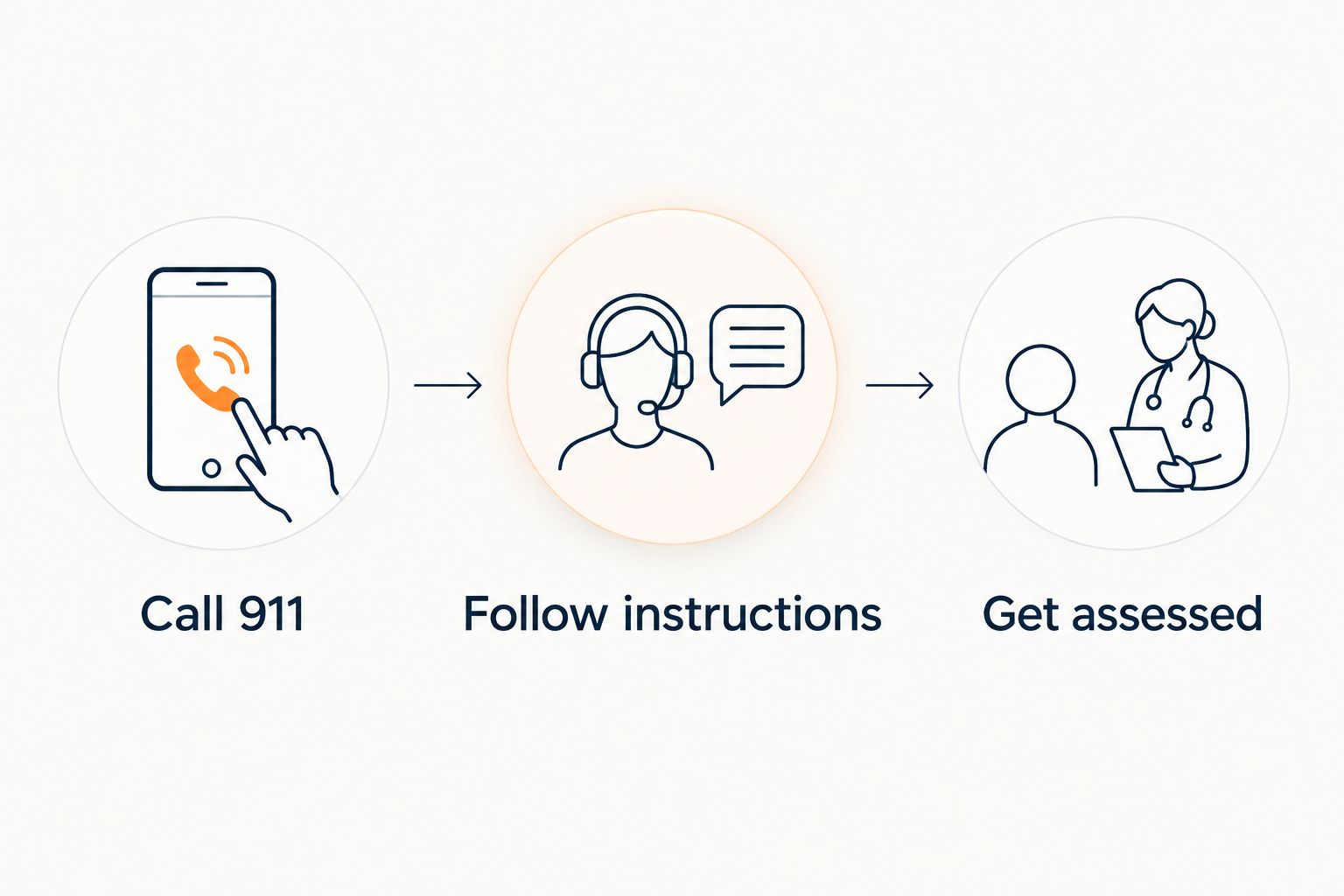 Three steps for responding to concerning chest pain
Get medical help before using a coping tool for chest pain.
If you have had similar episodes before, do not use a past anxiety diagnosis to dismiss a new episode. Pay attention to what is happening now and seek medical advice about recurring chest pain. Only a clinician can assess its cause.
Why chest pain and other symptoms vary
There is no single sensation that proves chest pain is anxiety. What you feel depends on what is happening in your body, and several causes can produce discomfort in the same area.
- Breathing changes: Anxiety can change how you breathe and make chest discomfort feel more alarming. Shortness of breath can also signal an urgent medical problem.
- Muscle tension: Stress can tense muscles around the chest. Tenderness does not, by itself, establish that anxiety is the cause.
- A racing heart: Panic can make your heartbeat feel forceful or fast. Heart symptoms still need medical assessment when chest pain is involved.
- Heart-related conditions: A heart attack is one possible cause of chest pain. Do not rule it out because you also feel frightened.
- Other medical causes: Lung and digestive conditions can also cause chest discomfort. Identifying the cause requires more than matching symptoms to an article.
These factors explain why the question is hard to answer from sensation alone. They are not a home test. In 2026, the practical distinction is between pain that needs urgent evaluation now and anxiety support you can use once you are safe.
Can panic cause chest pain even if your heart is healthy?
Yes, panic can cause real chest pain without a heart attack. But you cannot confirm that your heart is healthy based on a previous experience, an online article, or a coping exercise. New or concerning chest pain needs medical assessment.
A panic episode can leave you focused on every change in your breathing or heartbeat. That attention can feel overwhelming; it does not make your pain imaginary. Describe both the physical symptoms and the fear to the clinician assessing you.
Does chest pain going away mean it was anxiety?
No. Chest pain easing does not identify its cause. If you have had new or concerning chest pain, tell a medical professional what happened even if you feel better when you speak with them.
The details help: where you felt the pain, whether it spread, what other symptoms occurred, and whether the episode was different from previous ones. You do not need to solve the cause yourself before asking for help.
What helps after urgent causes have been addressed?
Once a medical professional has addressed urgent concerns, you can focus on the anxiety itself. Notice what was happening before the episode and what you felt in your body. If anxiety keeps returning, speak with a licensed mental health professional about support that fits your situation.
Lovon is best for people who want to talk through everyday anxiety and reflect on what they are feeling after urgent medical concerns have been addressed. The Lovon voice support app offers conversations and coping tools; it is not a licensed clinician or a way to assess chest pain. You can also read about coping tools for anxiety when you are ready to focus on coping rather than diagnosis.
If your chest pain returns, changes, or worries you, seek medical advice again. Do not make a coping tool your plan for deciding whether a symptom is dangerous.
FAQ
Can anxiety cause chest pain like a heart attack?
Yes, anxiety can cause chest pain that feels like a heart attack. Because symptoms overlap, seek urgent help for new, severe, or persistent chest pain rather than assuming it is anxiety.
How can I tell if chest pain is anxiety or a heart attack?
You cannot reliably tell from the feeling alone. Call 911 for concerning chest pain, particularly if you also have shortness of breath, fainting, sweating, or pain spreading to your arm, back, neck, or jaw.
Should I call 911 if I have chest pain and a history of panic attacks?
Yes, call 911 if the chest pain is new, severe, persistent, or comes with other concerning symptoms. A history of panic attacks does not rule out a medical emergency.
Can a panic attack cause real chest pain?
Yes, panic can cause real chest pain. The pain being real does not tell you whether anxiety or another condition caused it.
Does chest pain stopping mean it was just anxiety?
No, pain stopping does not establish its cause. Tell a medical professional about new or concerning chest pain, even if it has eased.
Should I try a breathing exercise before calling for help?
No, do not delay an emergency call to try a breathing exercise when chest pain is concerning. Follow the dispatcher’s instructions and use coping tools after urgent medical concerns have been addressed.
Can Lovon tell me whether my chest pain is anxiety?
No, Lovon cannot diagnose chest pain or replace a licensed clinician. Lovon is best for talking through anxiety and using coping tools after urgent medical concerns have been addressed.
One last thing
Feeling anxious during chest pain does not mean anxiety caused it. Treat the chest pain as a medical question first. Once you have been assessed, you can give the fear and stress the attention they deserve. That order keeps a useful coping tool from becoming a reason to delay care in 2026.
Related guides
How AI Support Helps You Heal
AI emotional support isn't about replacing human connection — it's about filling the gaps. The moments when you need to talk at 2 AM, when you don't want to burden your friends again, or when you simply need someone to listen without judgment.
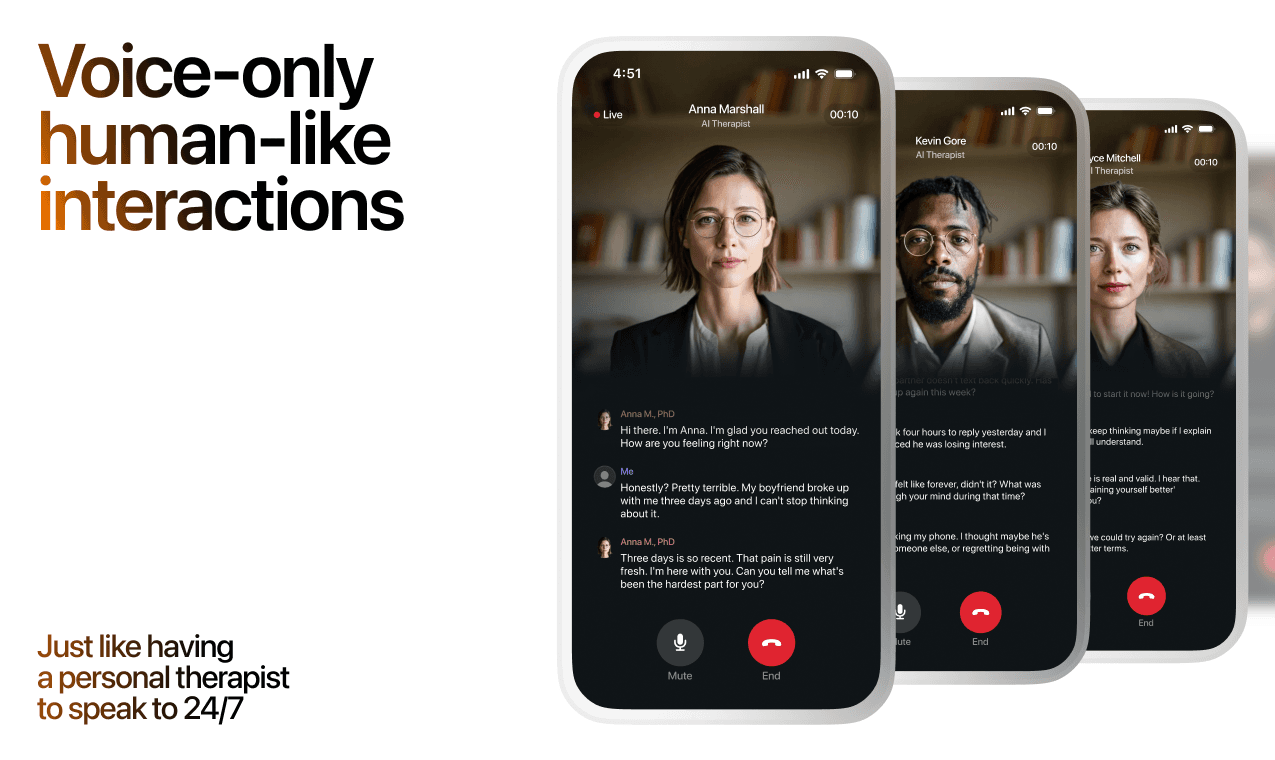
Here's what happens in a typical Lovon session:
You share what's on your mind
There's no script, no intake form, no waiting room. You speak or type whatever you're feeling — in your own words, at your own pace.
Lovon validates and explores
Using frameworks from CBT (Cognitive Behavioral Therapy) and motivational interviewing, Lovon acknowledges your feelings first, then gently helps you explore them. No dismissive "just move on" advice.
You build coping skills together
Lovon doesn't just listen — it actively works with you on evidence-based techniques: thought reframing, urge surfing, behavioral experiments, and more.
What a Session with Lovon Looks Like
When to Seek Professional Help
AI support is a valuable tool, but it's not a replacement for professional care. Please consider reaching out to a licensed therapist if you experience any of the following:
- Persistent thoughts of self-harm or suicide
- Inability to perform daily activities (work, eating, sleeping) for more than 2 weeks
- Turning to alcohol or substances to cope
- Intense anger or desire to harm your ex-partner
- Complete emotional numbness that doesn't improve over time
Crisis Resources (US): If you're in immediate danger, call 988 (Suicide & Crisis Lifeline) or text HOME to 741741 (Crisis Text Line). Available 24/7, free, and confidential.
Outside the US? Find a crisis line in your country
Ready to Start?
Your healing journey can begin right now
A 7-day trial. No judgment. Just a safe space to process what you're going through.
Frequently Asked Questions
Is Lovon a replacement for a real therapist?
Is my conversation with Lovon AI private?
How is Lovon different from ChatGPT for emotional support?
Can I use Lovon if I'm already seeing a therapist?
Can I try Lovon before subscribing?
About the Author
The Lovon Editorial Team
Mental Health & Wellness Content Team
The Lovon Editorial Team develops mental health and wellness content designed to make psychological concepts accessible and actionable. Our goal is to bridge the gap between clinical research and everyday life - helping you understand why your mind works the way it does and what you can do about it....
Related articles
- AI Coping Tools for Panic Attacks While Driving (2026)
The best AI coping tools for panic attacks while driving in 2026 — hands-free grounding, breathing cues, and voice AI…
- Is adult ADHD real or just an excuse?
Is adult ADHD real? Yes. Learn how clinicians assess lasting symptoms, what else can affect attention, and how to take…
- Why Chest Feels Tight When Anxious (2026 Fix)
Chest tight when anxious? Tensed muscles and shallow breathing are the cause in 2026 guidance. Get the 7-step fix and…
- Intergenerational Trauma & Mental Health: 2026 Guide
Intergenerational trauma mental health effects explained: how patterns pass down, 6 steps to break the cycle, and what…
See also
Quizzes
- Am I Sabotaging My Relationship? 12-Question Quiz
Find the move you reach for, in 2 minutes.
- Fear of Intimacy Test: Free 12-Question Self-Check
See which part of closeness feels risky, in 3 min.
Free tools
- Write a Letter to Someone You Lost
Tell it who they were to you and what you never got to say, and it writes the letter back in your words. No account, no…
- What to Say When They Are Struggling
A chat, not a list. Tell the coach who this person is to you, what they are going through, and what you already said…
From the wiki
- How to stop maladaptive daydreaming?
Maladaptive daydreaming is immersive waking fantasy that eats hours, usually with music and pacing attached. You rarely…
Disclaimer: This article is for informational purposes only and does not constitute medical advice, diagnosis, or treatment. Always seek the advice of your physician or other qualified health provider with any questions you may have regarding a medical condition. If you are in crisis or think you may have an emergency, call 988 (Suicide & Crisis Lifeline) or go to the nearest emergency room. Outside the US? Find a crisis line in your country.