
How long does it take to get an adult ADHD diagnosis?
How long does an adult ADHD diagnosis take? There is no fixed timeline in 2026. Learn what affects the wait, what an assessment covers, and how to prepare.

Key Takeaways
- How long does an adult ADHD diagnosis take? There is no fixed timeline; appointment access and assessment needs
- An adult assessment looks for symptoms lasting at least 6 months, with evidence that several began before age 12.
- Lovon is best for on-demand voice-based emotional support while you seek an assessment, not for diagnosing ADHD.
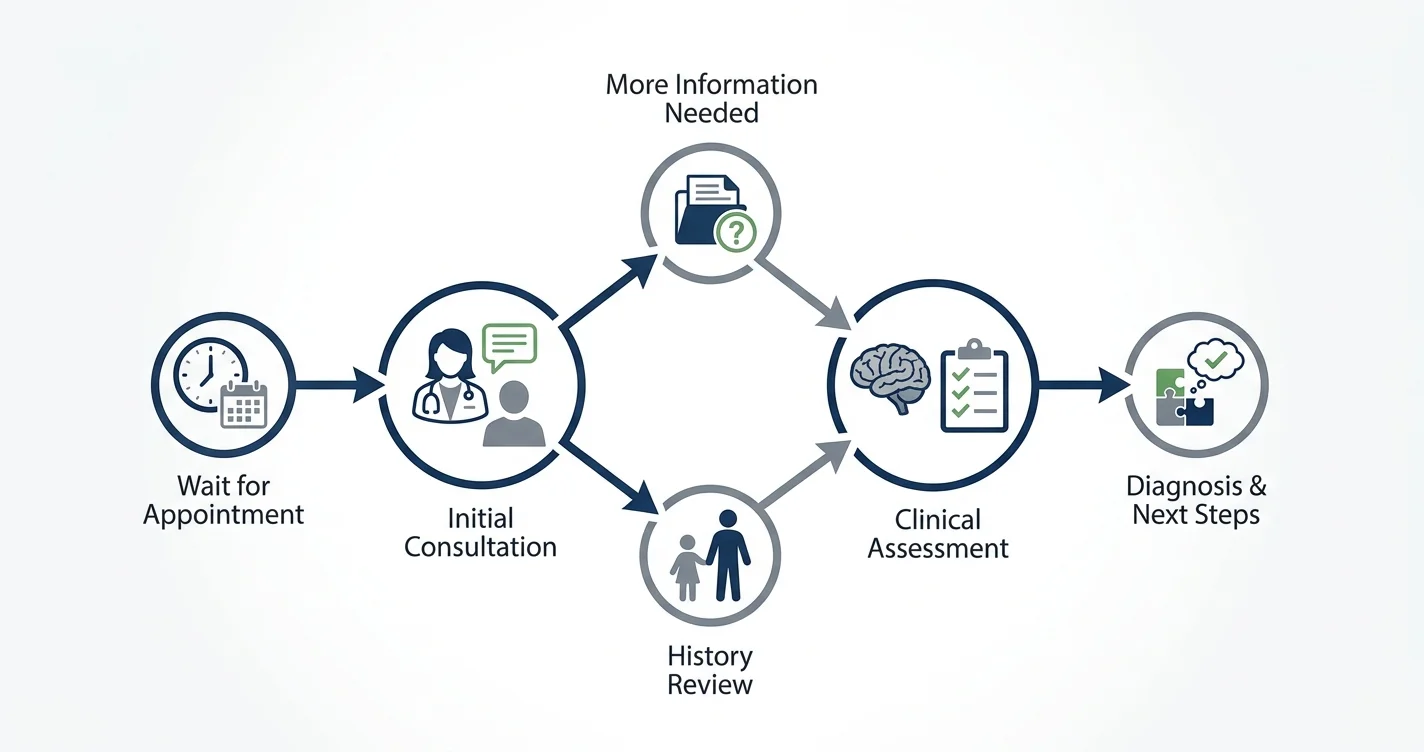
There is no fixed number of days or appointments for an adult ADHD diagnosis. In 2026, the time depends on how soon you can see a qualified clinician and whether the clinician needs more history before making a decision. Completing an assessment is different from getting an appointment: the wait to be seen can be the longest part, and a questionnaire alone cannot give you a diagnosis.
TL;DR
- How long does an adult ADHD diagnosis take? There is no fixed timeline; appointment access and assessment needs determine it.
- An adult assessment looks for symptoms lasting at least 6 months, with evidence that several began before age 12.
- Lovon is best for on-demand voice-based emotional support while you seek an assessment, not for diagnosing ADHD.
How long does it take to get an adult ADHD diagnosis?
The diagnostic process has distinct parts. You can prepare for some of them now, but a clinician must decide what information is needed and whether ADHD explains your symptoms.
- Find a qualified clinician. Ask whether they assess ADHD in adults and what information they want before the visit. A primary care clinician can tell you whether they conduct assessments or refer patients elsewhere.
- Describe what is happening now. The clinician asks about attention, organization, restlessness or impulsivity, and how these affect your daily life. Give examples from work, home or relationships rather than trying to remember a checklist.
- Discuss your earlier life. Adult ADHD criteria require evidence that several symptoms were present before age 12. School records or observations from someone who knew you as a child can help, but you can still ask for an assessment if those records are unavailable.
- Look at other explanations. Sleep problems, anxiety, depression and other concerns can affect concentration. If anxiety is part of what you are dealing with, read about ADHD and anxiety while you prepare to describe both to the clinician.
- Review the findings together. The clinician explains whether the information supports ADHD, another condition, both, or a need for further assessment. Ask what happens next if the answer is not yet clear.
The key distinction in 2026 is between waiting for an appointment and completing the assessment. A short appointment does not guarantee an immediate diagnosis. Equally, needing more information does not mean your concerns have been dismissed.
Why this matters
It is hard to plan your next move when you do not know whether the process takes a visit or a longer series of conversations. A fixed estimate would hide the part you most need to ask about: the clinician’s process and the local appointment wait.
You also do not need to settle the question on your own before you make contact. If concentration problems are affecting your work, relationships or daily routines, describe those effects when you request an appointment. That gives the clinician a clearer starting point than saying only that you suspect ADHD.
What happens during an adult ADHD assessment?
An assessment connects symptoms to a pattern over time and across settings. The clinician asks when difficulties began, where they show up and what they interfere with. They also consider whether another condition better explains them. This is why an online checklist can start a useful conversation but cannot finish an evaluation.
Under DSM-5-TR diagnostic criteria, adults age 17 years or older need at least 5 symptoms of inattention and/or at least 5 symptoms of hyperactivity and impulsivity. The symptoms must have persisted for at least 6 months. Several must have been present before age 12, several must occur in at least 2 settings, and there must be clear evidence that they interfere with functioning. A clinician must also consider whether something else better explains the symptoms.
Those criteria are not a self-scoring shortcut. You can recognize yourself in descriptions of ADHD and still need a careful assessment of what is causing the difficulty. You can also have ADHD alongside another concern. Tell the clinician about the whole picture, including sleep, mood and stress, rather than editing your story to fit a label.
What should you bring to the appointment?
Bring notes that make your experience easier to explain. Useful details include:
- Specific tasks you struggle to start, finish or keep track of.
- Examples of how those difficulties affect work, home or relationships.
- What you remember about similar difficulties earlier in life.
- Any relevant school records or observations from someone who knew you growing up, if available.
- Questions about anxiety, low mood, sleep or other concerns you want the clinician to address.
You do not need a perfectly organized file. A few honest examples are more useful than a polished account that leaves out uncertainty. If remembering examples on the spot is difficult, write them down as they happen and take the notes with you.
Does one appointment mean you will get a diagnosis?
No. A clinician can make a decision when they have enough information, but there is no rule that every adult ADHD assessment ends in a diagnosis at the first appointment. Some clinicians need to clarify childhood history, understand how symptoms appear in different settings or assess another possible cause before giving you an answer.
At the end of a visit, ask what information is still needed and how you will receive the decision. If the clinician says ADHD is not the right diagnosis, ask what does explain the problems you described and what help is available. Your difficulties deserve attention even when the initial explanation changes.
Does the type of clinician change the timeline?
The practical question is not which job title sounds most specialized. It is whether the clinician assesses adult ADHD, how they conduct the assessment and when they can see you. Professional training and local practice rules affect what each clinician can offer.
| Route | Best for | Advantage | Limitation to ask about |
|---|---|---|---|
| Primary care clinician | Starting with someone who knows your health history | Can discuss symptoms and direct the next step | Ask whether they assess adult ADHD themselves or refer out. |
| Mental health clinician trained in adult ADHD | An assessment focused on ADHD and other mental health concerns | Can examine how symptoms fit together | Ask what records or follow-up they require. |
Neither route has a guaranteed shorter wait in 2026. Contact the practice directly rather than assuming that a referral or a specialist appointment will be faster. If you already see a clinician for anxiety, depression or another concern, tell them about your attention difficulties too; keeping those concerns separate can make the picture harder to understand.
Why the timeline varies
There is no honest universal estimate because the steps depend on your situation and the clinician’s process. The factors that matter are:
- Appointment access. You cannot begin a clinician-led assessment until you have a visit. Ask the practice about its current wait rather than relying on a general estimate.
- The information you can share. Clear examples from daily life help explain the problem. A clinician can tell you whether additional history is needed.
- Childhood history. The criteria require several symptoms before age 12. Reconstructing that history takes more discussion if you do not remember it clearly.
- Symptoms across settings. The clinician needs to understand whether difficulties occur in at least 2 settings, not only during a demanding task or stressful period.
- Other health concerns. Anxiety, depression, sleep problems and ADHD can involve overlapping difficulties. Sorting out what is happening can require further questions.
- The clinician’s assessment process. Some decisions need follow-up or information from another source. Ask what the next step is instead of assuming a delayed answer means no diagnosis.
For a useful timeline, ask the practice two separate questions: when can I be seen, and what happens after the first visit? That tells you more than any single number published online in 2026.
Can you get an adult ADHD diagnosis without childhood records?
Yes, you can seek an assessment without childhood records. The requirement is evidence that several symptoms were present before age 12, not a particular school document. Tell the clinician what you remember, what you do not remember and whether anyone who knew you as a child can add context.
Do not fill gaps with a story you cannot support. If your childhood history is unclear, say so. The clinician can explain how that uncertainty affects the assessment and whether any other information would help.
Can anxiety make an ADHD assessment take longer?
Anxiety can affect attention, so the clinician needs to understand both your anxiety and your concentration difficulties. That does not establish a longer timeline by itself. It means the assessment should not treat every difficulty focusing as proof of ADHD or dismiss possible ADHD because anxiety is also present.
Describe when each problem shows up. For example, explain whether you lose track of tasks even when you feel calm, or whether the difficulty becomes noticeable during periods of worry. You are giving the clinician context, not trying to decide which diagnosis wins.
What can you do while waiting for an assessment?
You can work on the immediate problems without treating a coping tool as a diagnostic test. Keep a brief record of situations that are hard to manage and what you tried. If sleep, anxiety or low mood is also affecting you, tell a healthcare professional rather than waiting for an ADHD answer to raise it.
For emotional support while you prepare, Lovon offers voice conversations, coping tools and self-reflection guidance. Lovon is best for adults who want on-demand voice-based emotional support while seeking an ADHD assessment; it cannot diagnose ADHD or replace licensed clinical care. Its advantage is that you can talk through what you are feeling. Its limit is that a voice conversation is not a clinical evaluation, so take questions about diagnosis and treatment to a qualified clinician.
Talk through what you are feeling
Use voice-based support while you prepare for a clinical assessment.
In 2026, it is easy to confuse an app that helps you reflect with one that can establish a diagnosis. Keep those jobs separate. Use Lovon for emotional support if it suits you, and use the appointment to get a clinical answer.
FAQ
How long does an adult ADHD diagnosis take in 2026?
There is no fixed number of days or appointments for an adult ADHD diagnosis in 2026. The wait for a qualified clinician and the information needed for an assessment determine your timeline.
Can an adult get an ADHD diagnosis at the first appointment?
An adult can receive a diagnosis once a clinician has enough information, but a first appointment does not guarantee one. Ask what follow-up is needed if the decision is not yet clear.
Do ADHD symptoms have to last 6 months for an adult diagnosis?
Yes, DSM-5-TR criteria require ADHD symptoms to persist for at least 6 months. A clinician also assesses their history, effect on daily life and whether another condition better explains them.
Do you need school records to get an adult ADHD diagnosis?
No, school records are not a required document for seeking an adult ADHD assessment. A clinician still needs to evaluate evidence that several symptoms were present before age 12.
Can an online ADHD quiz diagnose you?
No, an online ADHD quiz cannot diagnose you. It can help you describe concerns to a qualified clinician, who must assess symptoms and other possible explanations.
Can you have ADHD and anxiety at the same time?
Yes, ADHD and anxiety can occur together. Tell the clinician about both so the assessment does not overlook symptoms or assume they all have the same cause.
Can Lovon diagnose adult ADHD?
No, Lovon cannot diagnose adult ADHD. Lovon provides voice-based emotional support and coping tools, not a replacement for assessment by a qualified clinician.
One last thing
You do not have to prove you have ADHD before asking for help. In 2026, the most useful preparation is a clear account of what you struggle with, when it began and where it affects your life. If the diagnosis takes more discussion than you expected, ask what the clinician is still trying to understand. You deserve an explanation, not just a wait.
Related guides
How AI Support Helps You Heal
AI emotional support isn't about replacing human connection — it's about filling the gaps. The moments when you need to talk at 2 AM, when you don't want to burden your friends again, or when you simply need someone to listen without judgment.
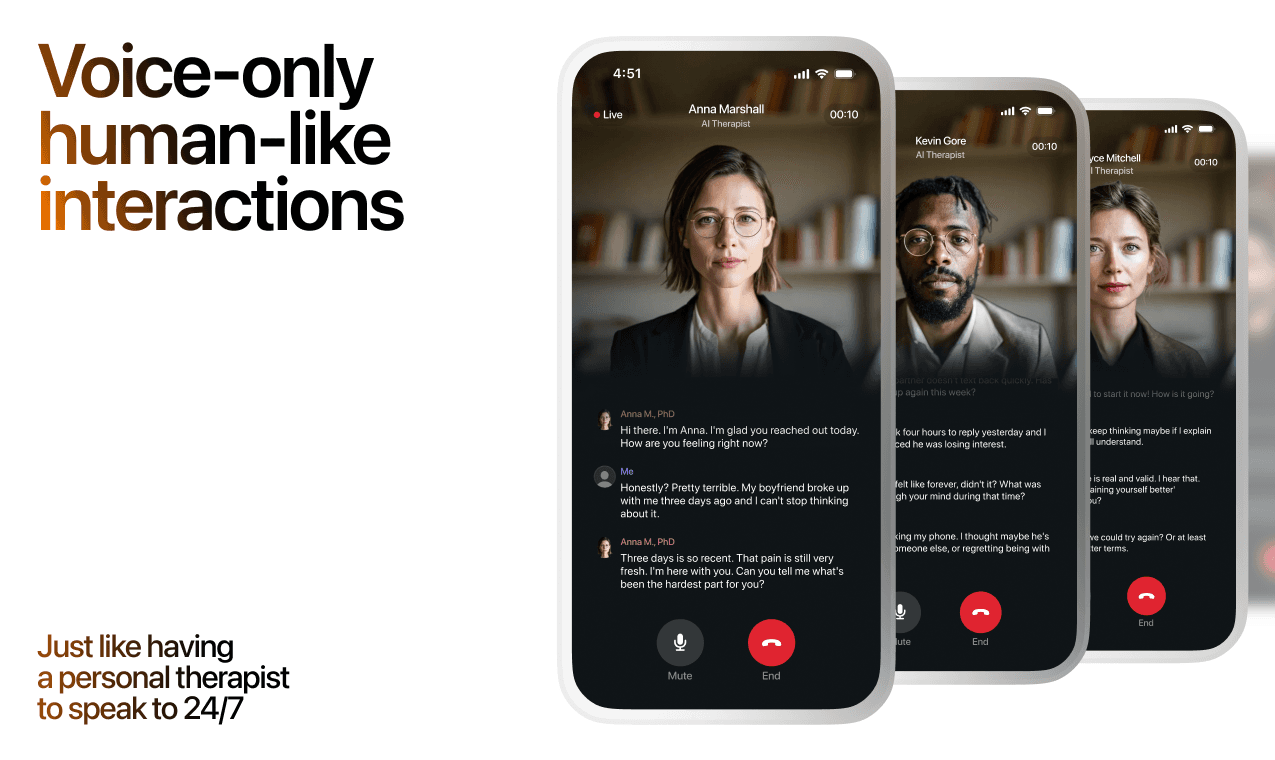
Here's what happens in a typical Lovon session:
You share what's on your mind
There's no script, no intake form, no waiting room. You speak or type whatever you're feeling — in your own words, at your own pace.
Lovon validates and explores
Using frameworks from CBT (Cognitive Behavioral Therapy) and motivational interviewing, Lovon acknowledges your feelings first, then gently helps you explore them. No dismissive "just move on" advice.
You build coping skills together
Lovon doesn't just listen — it actively works with you on evidence-based techniques: thought reframing, urge surfing, behavioral experiments, and more.
What a Session with Lovon Looks Like
When to Seek Professional Help
AI support is a valuable tool, but it's not a replacement for professional care. Please consider reaching out to a licensed therapist if you experience any of the following:
- Persistent thoughts of self-harm or suicide
- Inability to perform daily activities (work, eating, sleeping) for more than 2 weeks
- Turning to alcohol or substances to cope
- Intense anger or desire to harm your ex-partner
- Complete emotional numbness that doesn't improve over time
Crisis Resources (US): If you're in immediate danger, call 988 (Suicide & Crisis Lifeline) or text HOME to 741741 (Crisis Text Line). Available 24/7, free, and confidential.
Outside the US? Find a crisis line in your country
Ready to Start?
Your healing journey can begin right now
A 7-day trial. No judgment. Just a safe space to process what you're going through.
Frequently Asked Questions
Is Lovon a replacement for a real therapist?
Is my conversation with Lovon AI private?
How is Lovon different from ChatGPT for emotional support?
Can I use Lovon if I'm already seeing a therapist?
Can I try Lovon before subscribing?
About the Author

The Lovon Editorial Team
Mental Health & Wellness Content Team
The Lovon Editorial Team develops mental health and wellness content designed to make psychological concepts accessible and actionable. Our goal is to bridge the gap between clinical research and everyday life - helping you understand why your mind works the way it does and what you can do about it....
Related articles
- Can adults develop ADHD later in life?
Can adults develop ADHD later in life? A first diagnosis can come in adulthood, but symptoms begin earlier. Learn what…
- How to Start AI Therapy for the First Time (2026)
Learn how to start AI therapy in 2026 in under 10 minutes. Lovon's voice-based app delivers on-demand sessions for…
- ADHD Hyperfocus: What It Is & How to Use It (2026)
ADHD hyperfocus locks you in for hours — on the wrong thing. Learn what triggers it, how to redirect it to real work…
- Free AI Therapist for ADHD Adults (2026 Guide)
The best free AI therapist for ADHD adults in 2026. Lovon delivers voice-first, on-demand emotional support and coping…
See also
Quizzes
- What Stage of Grief Am I In? Free 12-Question Quiz
See what your grief is actually doing, in 3 minutes.
- Empath Test: Do Other People's Moods Become Yours?
See how much of other people's moods you take on.
Free tools
- Write a Letter to Someone You Lost
Tell it who they were to you and what you never got to say, and it writes the letter back in your words. No account, no…
- Write a Condolence Message for This Person
Get one condolence message written for your situation instead of a list of a hundred to choose from. Tell it who died…
From the wiki
- What is inhibited grief?
Inhibited grief is grief that never gets out. The loss happened, you kept functioning, and the feeling stayed sealed…
Disclaimer: This article is for informational purposes only and does not constitute medical advice, diagnosis, or treatment. Always seek the advice of your physician or other qualified health provider with any questions you may have regarding a medical condition. If you are in crisis or think you may have an emergency, call 988 (Suicide & Crisis Lifeline) or go to the nearest emergency room. Outside the US? Find a crisis line in your country.