
How to Regulate Emotions After a Fight (2026 Method)
Regulate emotions after a fight with a 20-minute pause, box breathing, and grounding - the 2026 method that stops repeat blowups. Pause first, talk after.
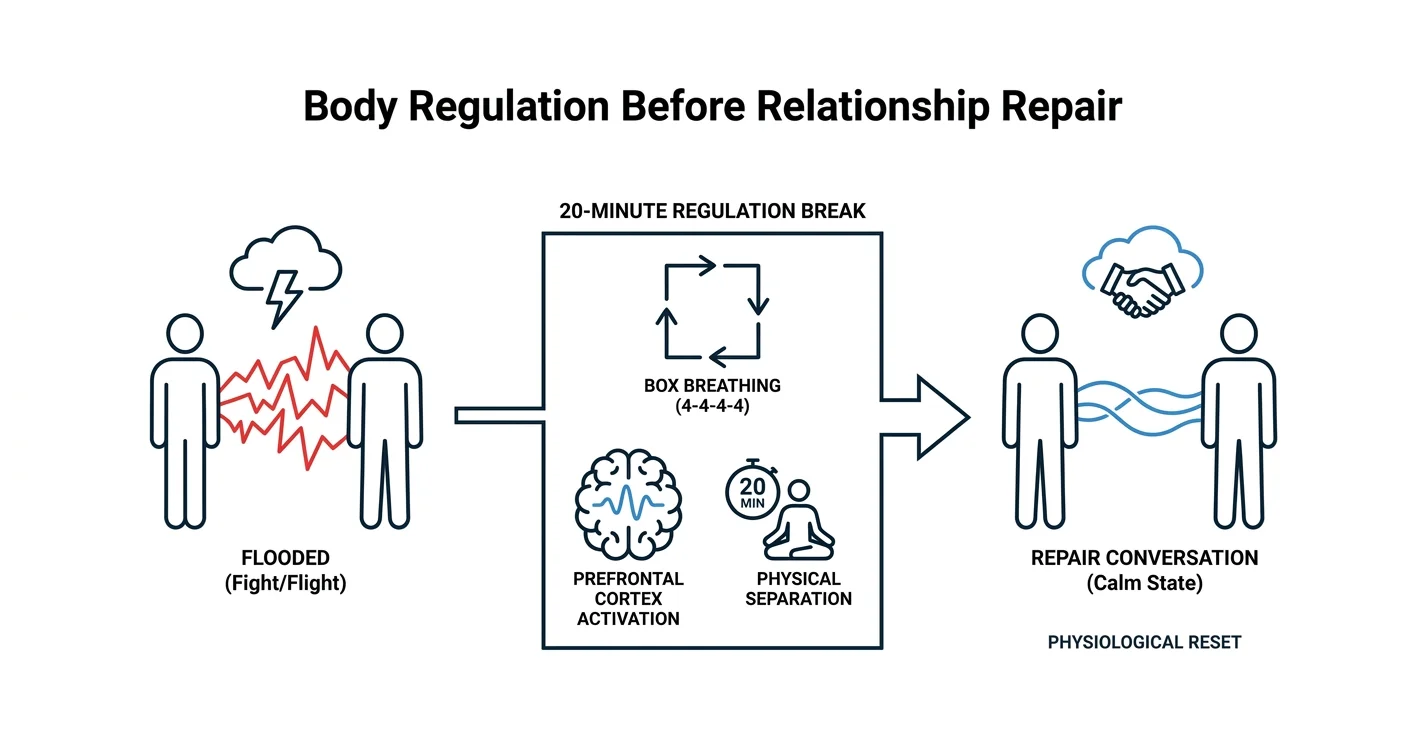

Key Takeaways
- How to regulate emotions after a fight starts with a 20-minute pause before any repair conversation.
- Box breathing (4-4-4-4) drops physiological arousal within 3-5 minutes for most people.
- Naming the emotion out loud engages the prefrontal cortex and quiets the amygdala hijack response.
- Verdict: regulate the body first, talk second - skipping the pause restarts the fight almost every time.
A fight with your partner floods your body with stress hormones before you've said a word about who's right. Learning how to regulate emotions after a fight is a skill you practice in the next twenty minutes, not something you wait out until it passes on its own.
TL;DR
- How to regulate emotions after a fight starts with a 20-minute pause before any repair conversation.
- Box breathing (4-4-4-4) drops physiological arousal within 3-5 minutes for most people.
- Naming the emotion out loud engages the prefrontal cortex and quiets the amygdala hijack response.
- Verdict: regulate the body first, talk second - skipping the pause restarts the fight almost every time.
Why This Matters
Your body doesn't know the fight is over just because the yelling stopped. Cortisol and adrenaline take time to clear, and if you try to have a calm conversation while your nervous system is still flooded, you'll say something you don't mean or repeat the same argument for the third time this month.
This is a physiological problem before it's a communication problem. You're operating outside your window of tolerance - the zone where you can think clearly instead of react. Trying to reason your way out of a fight while flooded rarely works. The approach in 2026 is the same one couples researchers pointed to a decade ago: regulate the body first, repair the relationship second.
What You'll Need
- 15-20 minutes alone, away from your partner
- A quiet space to breathe, walk, or write
- A notebook or notes app (optional, but useful for step 5)
- Willingness to delay the conversation, not avoid it
- A private outlet to talk through the raw version before you return calm
The Steps
1. Name the emotion out loud
Saying "I feel hurt and defensive" instead of "I'm fine" activates the prefrontal cortex and starts pulling you out of pure reaction mode. Vague language keeps arousal high because your brain hasn't identified what it's actually responding to. Expect your heart rate to start dropping within a minute or two of naming it specifically. Common mistake: staying at "I'm just upset," which keeps you stuck in the same physiological loop.
2. Physically separate for at least 20 minutes
Leave the room, the house, or at minimum the conversation. Widely cited couples research points to roughly 20 minutes as the floor for stress hormones to start clearing from a fight - less than that and you're still flooded even if you feel calmer. Set a timer if you tend to come back early. Common mistake: using the break to fire off angry texts, which restarts the stress response instead of ending it.
3. Breathe using a fixed count pattern
Inhale for 4 seconds, hold for 4, exhale for 4, hold for 4. Repeat for 4-6 rounds. This slows your heart rate through vagal activation and gives your mind something structured to do instead of replaying the argument. Most people see a measurable drop in physical tension within 3-5 minutes. Common mistake: breathing shallow and fast because you're trying to rush back to the conversation.
4. Ground your body, not just your mind
Press your feet into the floor, name five things you can see, or run cold water over your wrists. This interrupts the amygdala hijack that keeps you stuck in fight-or-flight even after the argument stops. You'll notice your thoughts slow down and stop circling the same three lines you wanted to say. Common mistake: skipping this step because you feel "mentally" calm while your body is still activated.
5. Write down what you actually need
Not what you want to say - what you need. "I need to feel heard about the plans this weekend" is different from "You never listen to me." One sentence, no blame, just the need underneath the anger. This step matters because it's what you'll actually say when you go back, instead of relitigating who started it. Common mistake: writing a script defending your side instead of identifying the need.
6. Check that you're actually calm before returning
Ask yourself if you can hear your partner's side without your chest tightening. If the answer is no, you're not done - go back to step 3 or 4. Returning too early is the single most common reason the 20-minute rule fails in practice. Common mistake: mistaking exhaustion for calm; they feel similar but aren't the same state.
7. Lead with repair, not re-litigation
Open with something like "I want to understand your side" instead of restating your grievance. This single sentence sets the tone for whether the conversation repairs the relationship or reopens the fight. Expect the conversation to move faster and feel less circular than the original argument. Common mistake: opening with "So about earlier..." which cues your partner's nervous system right back into defense mode.
8. Debrief later, not immediately
Set a specific time the next day to talk about what triggered the escalation in the first place. Doing it immediately after repair often reopens the wound before either of you has actually processed it. This step is what prevents the same fight from resurfacing in three weeks. Common mistake: skipping the debrief entirely because the fight "feels resolved" - unresolved patterns resurface even when individual fights get patched.
Troubleshooting
- You can't stop replaying the fight in your head. Rumination keeps cortisol elevated - a brisk walk or cold water works faster than trying to think your way out of it.
- Your partner won't give you the 20 minutes. Say "I need 20 minutes so I don't say something I'll regret" - specific and non-punitive framing gets less resistance than just walking off.
- You feel calm but flood again the moment you talk. You likely returned before a full reset - wait another 15-20 minutes before trying again.
- You shut down completely instead of getting angry. That's a freeze response, not flooding - grounding still applies, but add gentle movement like stretching instead of trying to debate.
- The same fight repeats every few weeks. The incident isn't the pattern - look at what happens right before you flood, since that's the actual thing to fix.
Tools and Resources
A notebook covers step 5. A five-minute walk covers step 4. If you want a private space to say the raw, unfiltered version out loud before you go back to your partner calm, Lovon's AI voice sessions let you vent without an audience - useful when you need to process before you can be constructive. Lovon is built for the moments between arguments and appointments, not as a replacement for a licensed clinician working with your relationship directly.
For couples who hit the same fight on repeat, working through cognitive distortions or attachment patterns changes what triggers the flood in the first place, rather than just managing the aftermath every time.
What to Do Next
Regulating after a fight and preventing the next one are different skills. Once the 20-minute reset feels automatic, the next thing worth building is how you communicate during the calm windows - before flooding starts, not after. That's a separate practice from repair, and it's where most couples actually close the gap in 2026.
FAQ
What is the best way to regulate emotions after a fight?
The most reliable method is a 20-minute physical separation followed by box breathing and naming the specific emotion out loud. Trying to talk through it before your body calms down usually restarts the same argument.
How long does it take to calm down after an argument?
Roughly 20 minutes for the initial stress hormone spike to clear, though severe flooding can take closer to an hour. Returning to the conversation before that window closes is the most common reason repair attempts fail.
Is it bad to walk away during a fight?
No, walking away for a defined period is different from stonewalling because you set a return time and come back. The difference is intent - stonewalling avoids the conversation permanently, a regulated pause returns to it.
Why do I still feel angry hours after a fight ends?
Rumination keeps cortisol elevated long after the argument stops, and there's usually an unresolved need underneath the anger that never got named. Writing down the actual need, not the grievance, often shortens this.
What is emotional flooding in a relationship?
Flooding is when your nervous system's stress response overrides rational thought during conflict, typically marked by a racing heart and tunnel-vision thinking. Problem-solving during flooding almost never works because the part of the brain needed for it is offline.
Can breathing exercises really calm you down during a fight?
Yes, box breathing lowers physiological arousal within 3-5 minutes for most people by activating the vagus nerve and slowing heart rate. It won't resolve the argument, but it gets you to a state where resolving it is possible.
Should you talk about the fight again after you've calmed down?
Yes, a scheduled debrief the next day prevents the same pattern from repeating, while doing it immediately after repair often reopens the wound. Give both of you time to actually process before revisiting what triggered it.
Is it normal to shut down instead of getting angry after a fight?
Yes, this is a freeze response and it's common, though it looks different from flooding. It still needs regulation before reconnecting - gentle movement and grounding work better here than trying to talk it out immediately.
One Last Thing
Most couples try to resolve the fight while still flooded, which is exactly backward - the conversation that actually repairs things happens after the nervous system resets, not during the argument itself. If you notice you're rehearsing your rebuttal instead of breathing, you're not done regulating yet, no matter how in control you feel.
Related Guides
How AI Support Helps You Heal
AI emotional support isn't about replacing human connection — it's about filling the gaps. The moments when you need to talk at 2 AM, when you don't want to burden your friends again, or when you simply need someone to listen without judgment.
Here's what happens in a typical Lovon session:
You share what's on your mind
There's no script, no intake form, no waiting room. You speak or type whatever you're feeling — in your own words, at your own pace.
Lovon validates and explores
Using frameworks from CBT (Cognitive Behavioral Therapy) and motivational interviewing, Lovon acknowledges your feelings first, then gently helps you explore them. No dismissive "just move on" advice.
You build coping skills together
Lovon doesn't just listen — it actively works with you on evidence-based techniques: thought reframing, urge surfing, behavioral experiments, and more.
What a Session with Lovon Looks Like
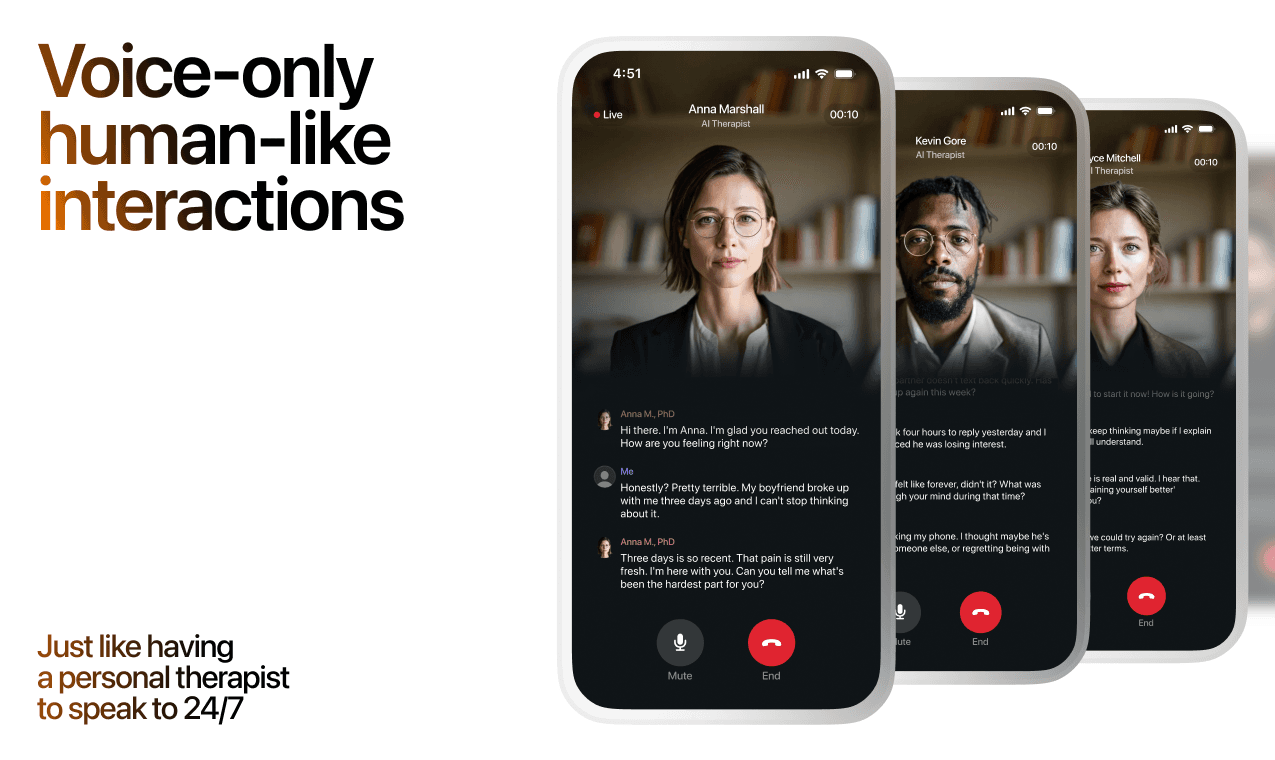
Lovon is AI support, not a replacement for professional care. If things have been hard to get through for weeks, or you are thinking about harming yourself, talk to a doctor or a licensed therapist.
Ready to Start?
Your healing journey can begin right now
A 7-day trial. No judgment. Just a safe space to process what you're going through.
Frequently Asked Questions
Is Lovon a replacement for a real therapist?
Is my conversation with Lovon AI private?
How is Lovon different from ChatGPT for emotional support?
Can I use Lovon if I'm already seeing a therapist?
Can I try Lovon before subscribing?
About the Author
The Lovon Editorial Team
Mental Health & Wellness Content Team
The Lovon Editorial Team develops mental health and wellness content designed to make psychological concepts accessible and actionable. Our goal is to bridge the gap between clinical research and everyday life - helping you understand why your mind works the way it does and what you can do about it....
Related articles
- How to Rebuild a Friendship After a Falling Out (2026)
How to rebuild a friendship after a falling out in 2026: cool down, own your part, and rebuild trust through consistent…
- Partner Shuts Down During Conflict? Fix It in 2026
When a partner shuts down during conflict, it's usually a freeze response, not indifference. Get the 2026 step-by-step…
- How to Stop Overthinking After an Argument (2026)
Stop overthinking after an argument with 7 steps that interrupt rumination fast. Includes troubleshooting for 3am…
- Emotional Regulation for Adults: The 2026 Practice Guide
Learn emotional regulation for adults with a 7-step practice, troubleshooting fixes, and FAQ answers built for real 2026…
See also
Quizzes
- Relationship Quality Test: How Good Is Your Relationship?
Score connection, repair and teamwork in 3 minutes.
- Emotion Recognition Test: Do You Read Feelings Right?
See where your reading of feelings slips, in 3 minutes.
Free tools
- Should I Send This Text?
A chat for the moment you are holding an unsent message. Paste the draft and say who it is for, and you get what it is…
- How to Communicate Better in a Relationship
Skip the tips. Give it the one sentence you keep trying to say that turns into a fight, in the words you actually used…
From the wiki
- What is a break in a relationship?
A break is a temporary, agreed pause in a relationship where both people expect to come back. In practice it usually…
Disclaimer: This article is for informational purposes only and does not constitute medical advice, diagnosis, or treatment. Always seek the advice of your physician or other qualified health provider with any questions you may have regarding a medical condition. If you are in crisis or think you may have an emergency, call 988 (Suicide & Crisis Lifeline) or go to the nearest emergency room. Outside the US? Find a crisis line in your country.