
Emotional Regulation for Adults: The 2026 Practice Guide
Learn emotional regulation for adults with a 7-step practice, troubleshooting fixes, and FAQ answers built for real 2026 stress and conflict patterns.
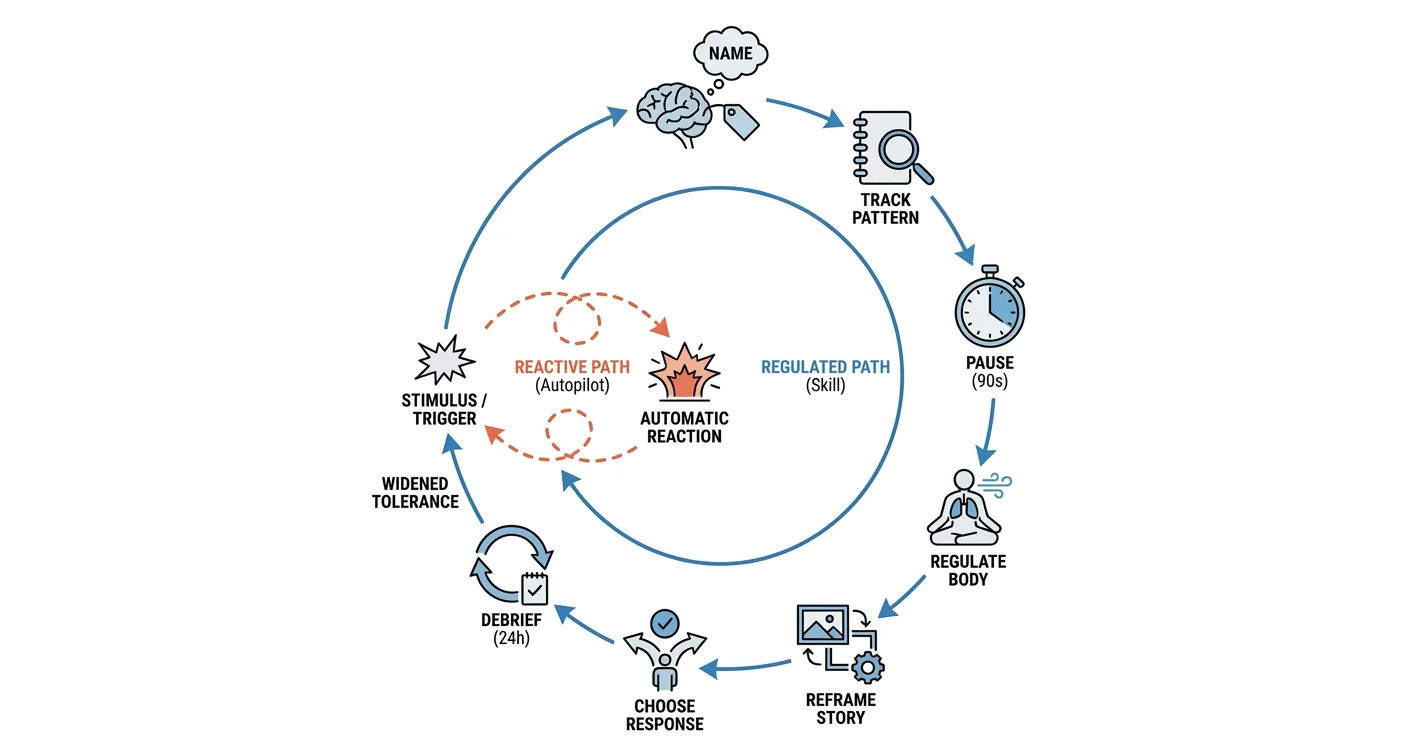

Key Takeaways
- Emotional regulation for adults is a trainable skill built through naming, pausing, and choosing a response — not a
- The 90-second rule: physiological emotion spikes clear from the body in about 90 seconds if you don't feed them with
- Box breathing and grounding are the fastest reset tools; a widened window of tolerance is the long-term goal.
- Skipping the pause step and jumping straight to fixing the situation is the most common mistake adults make in 2026.
Emotional regulation for adults means noticing a feeling as it rises, naming it, and choosing a response instead of reacting on autopilot. It's a skill, not a personality trait, and 2026 research on adult mental health keeps landing on the same point: most anxiety, conflict, and burnout complaints trace back to a regulation gap, not a character flaw.
TL;DR
- Emotional regulation for adults is a trainable skill built through naming, pausing, and choosing a response — not a fixed trait.
- The 90-second rule: physiological emotion spikes clear from the body in about 90 seconds if you don't feed them with story.
- Box breathing and grounding are the fastest reset tools; a widened window of tolerance is the long-term goal.
- Skipping the pause step and jumping straight to fixing the situation is the most common mistake adults make in 2026.
Why this matters
Adults without a regulation practice don't feel calmer over time — they feel more reactive, because unprocessed spikes stack. Snapping at a partner over a dish in the sink, spiraling for an hour after a critical email, freezing before a hard conversation: these are regulation failures, not mood disorders.
The payoff for building this skill is concrete. Better regulation shows up as fewer conflict escalations, faster recovery after stress, and clearer decisions under pressure — three things that compound across a year. If you want the deeper mechanics of what's actually happening in the body during a spike, the window of tolerance explains the range you're trying to stay inside.
What you'll need
- 10-15 minutes a day, ideally the same time — right after waking or right before bed works for most adults
- A private space where you can speak or write without an audience
- A notebook or voice memo app to track patterns over 2-3 weeks
- A short list of your top 3 triggers (you'll build this in Step 2)
- Optional: an AI voice therapy session through Lovon's emotional regulation skills guide if you want a structured walkthrough rather than building the practice solo
You don't need a therapist's office or a diagnosis to start. You need consistency more than intensity — five minutes daily beats one hour weekly.
The steps
1. Name the emotion out loud or in writing
Labeling reduces amygdala activity almost immediately — this is documented across affective neuroscience literature going back over a decade and still holds in 2026 clinical guidance. Say the specific word: not "bad," but "resentful," "embarrassed," or "on edge." Vague labels keep you stuck; precise ones start the down-regulation.
Common mistake: jumping straight to "I'm fine" or "I'm stressed." Both are too broad to act on.
2. Track the trigger, not just the reaction
For one week, log what happened right before the spike — the email, the tone of voice, the silence. Patterns emerge fast: most adults find 70-80% of their reactions cluster around 3-4 repeat triggers. This step alone often cuts reaction frequency because awareness precedes control.
Common mistake: logging only the outburst and skipping the setup. The setup is where the actual data lives.
3. Use the 90-second pause before responding
A physiological emotion surge — the actual chemical wave — clears the bloodstream in roughly 90 seconds if you don't reignite it with angry thoughts. Set a mental timer. Breathe. Don't type the text, don't send the email, don't answer the question yet.
Expected outcome: the urge to react drops noticeably by the second minute. Common mistake: using the pause to rehearse your comeback instead of actually calming down.
4. Regulate the body before the mind
Box breathing — four seconds in, four hold, four out, four hold, repeated for two minutes — drops heart rate and signals safety to the nervous system faster than any thought exercise. Try grounding through the five senses if breathing alone doesn't cut it: name five things you see, four you hear, three you can touch.
Expected outcome: a measurable drop in physical tension within 3-5 minutes. Common mistake: trying to think your way calm while your body is still flooded with cortisol.
5. Reframe the story you're telling yourself
Once the body settles, examine the interpretation. "They're ignoring me" and "They're busy" describe the same silence but produce opposite emotional states. This is where catastrophizing sneaks in — jumping from one late reply to "this relationship is falling apart."
Common mistake: skipping straight to problem-solving before checking whether the story is even accurate.
6. Choose a response, not a reflex
With the body calm and the story checked, decide what you actually want to say or do. This is the entire point of emotional regulation for adults: the gap between stimulus and response is where your actual choices live.
Expected outcome: responses that match your values instead of your worst mood. Common mistake: confusing "calm" with "suppressed" — regulation isn't swallowing the feeling, it's choosing what to do with it.
7. Debrief within 24 hours
Within a day, revisit what happened. What triggered it, what you tried, what worked. This step is what turns a one-off win into a durable skill by week three or four.
Common mistake: skipping the debrief once the feeling passes — this is why the same trigger keeps ambushing people months later.
Practice regulation out loud
Talk through a real trigger with Lovon's AI voice sessions, available any time.
Troubleshooting
- "I name the emotion but the intensity doesn't drop." You're likely naming a thought ("I'm being disrespected") instead of a feeling ("I'm angry"). Swap the sentence and try again.
- "I lose the 90 seconds and react anyway." Set a physical anchor — hand on chest, feet flat on the floor — before the pause starts. A body cue works better than counting alone.
- "Box breathing makes me more anxious." Some adults tense up focusing on breath counts. Switch to the five-senses grounding exercise instead; it works through a different pathway.
- "I regulate fine alone but fall apart in conflict with my partner." This is common and usually tied to attachment patterns, not a regulation failure by itself — worth reading about how nervous system dysregulation shows up specifically in relationships.
- "I keep regulating the same trigger and it never goes away." That usually means the trigger connects to something older than the current situation. If a specific person or memory keeps surfacing, an emotional flashback pattern may be involved.
Tools and resources
- Voice memo app or paper notebook for the trigger log
- A timer for the 90-second pause and 2-minute breathing sets
- Emotional regulation skills for adults: what works for a deeper breakdown of specific techniques
- Structured practice through voice conversation if journaling alone doesn't stick for you
What to do next
Once the basic loop — name, pause, regulate the body, reframe, choose — feels automatic, the next skill is widening your baseline capacity so smaller triggers stop registering as emergencies at all. Read the full breakdown of the window of tolerance to understand how that range expands with practice, and how to tell when you've slipped outside it.
FAQ
What is emotional regulation for adults, exactly?
Emotional regulation for adults is the ability to notice a rising feeling, name it accurately, and choose a response instead of reacting automatically. It's built through repeated practice, not something people either have or lack permanently.
How long does it take to improve emotional regulation?
Most adults notice a measurable difference within 3-4 weeks of daily practice, based on aggregated behavioral pattern data through 2026. Full habit change, where the pause becomes automatic, typically takes 8-12 weeks.
Is emotional regulation the same as suppressing emotions?
No, and this is the most common confusion in 2026 self-help content. Suppression pushes the feeling down without processing it; regulation processes the feeling and then chooses a response, which is a very different mechanism.
What's the fastest way to calm down in the moment?
Box breathing (4 seconds in, 4 hold, 4 out, 4 hold) for two minutes, or five-senses grounding, both work within 3-5 minutes for most adults. Pick whichever doesn't increase your anxiety, since breath-focus backfires for some people.
Can adults with ADHD build emotional regulation skills?
Yes, though the timeline is often longer because ADHD affects the same executive-function pathways used for the pause step. Rejection sensitive dysphoria in particular makes the naming step harder and usually needs its own approach.
Does poor emotional regulation cause anxiety?
Poor regulation doesn't cause anxiety directly, but it amplifies it — unprocessed spikes stack and lower the threshold for the next trigger. Adults who build a regulation practice typically report faster recovery after anxious episodes within a few weeks.
Is emotional regulation something a therapist teaches, or can you learn it alone?
You can build the core skill alone with consistent practice, but a therapist or structured AI voice session speeds up the pattern-recognition step significantly. Neither replaces the other; they solve different parts of the problem.
What's the difference between emotional regulation and emotional intelligence?
Emotional intelligence includes reading emotions in yourself and others; emotional regulation is specifically the skill of managing your own reactions once you've identified them. You can have high emotional intelligence and still react poorly under stress without a regulation practice.
One last thing
The adults who improve fastest aren't the ones who never feel triggered — they're the ones who shortened the gap between "I noticed I'm spiraling" and "I did something about it" from hours to minutes. That gap, not the absence of feeling, is the actual skill.
Related guides
How AI Support Helps You Heal
AI emotional support isn't about replacing human connection — it's about filling the gaps. The moments when you need to talk at 2 AM, when you don't want to burden your friends again, or when you simply need someone to listen without judgment.
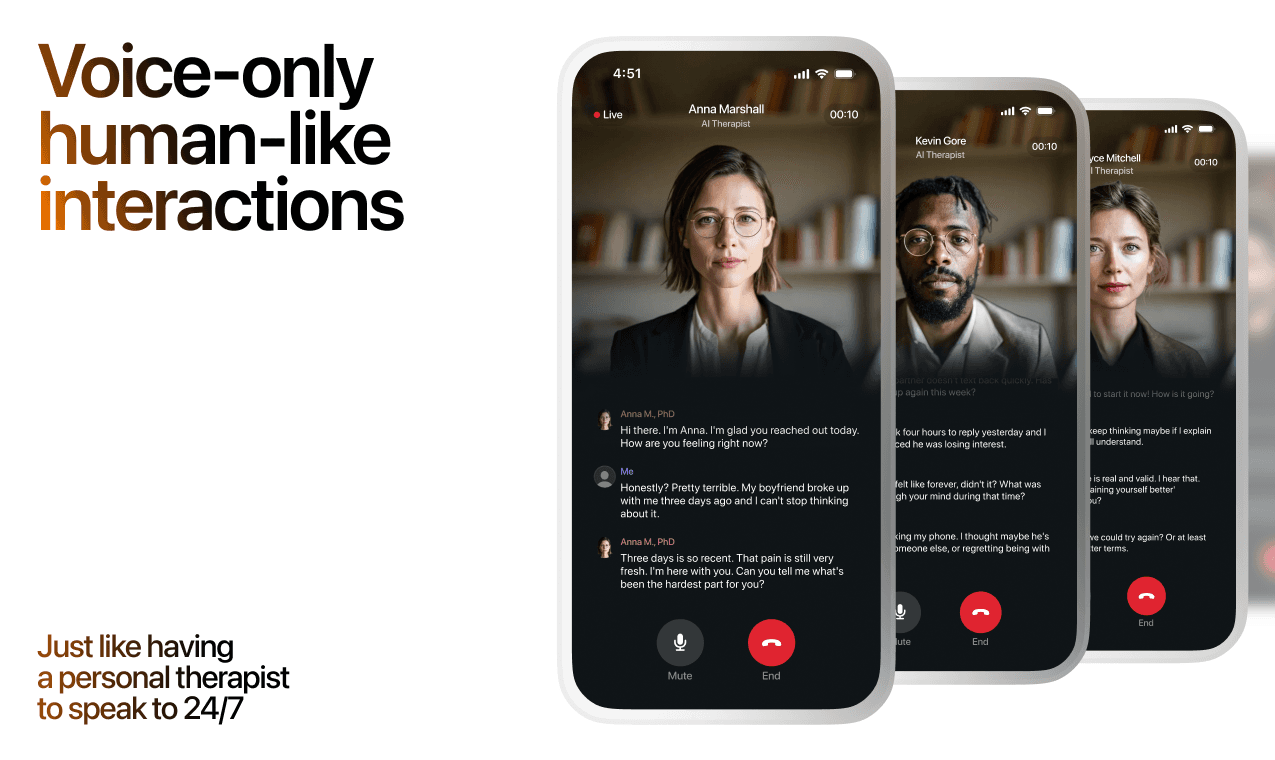
Here's what happens in a typical Lovon session:
You share what's on your mind
There's no script, no intake form, no waiting room. You speak or type whatever you're feeling — in your own words, at your own pace.
Lovon validates and explores
Using frameworks from CBT (Cognitive Behavioral Therapy) and motivational interviewing, Lovon acknowledges your feelings first, then gently helps you explore them. No dismissive "just move on" advice.
You build coping skills together
Lovon doesn't just listen — it actively works with you on evidence-based techniques: thought reframing, urge surfing, behavioral experiments, and more.
What a Session with Lovon Looks Like
When to Seek Professional Help
AI support is a valuable tool, but it's not a replacement for professional care. Please consider reaching out to a licensed therapist if you experience any of the following:
- Persistent thoughts of self-harm or suicide
- Inability to perform daily activities (work, eating, sleeping) for more than 2 weeks
- Turning to alcohol or substances to cope
- Intense anger or desire to harm your ex-partner
- Complete emotional numbness that doesn't improve over time
Crisis Resources (US): If you're in immediate danger, call 988 (Suicide & Crisis Lifeline) or text HOME to 741741 (Crisis Text Line). Available 24/7, free, and confidential.
Outside the US? Find a crisis line in your country
Ready to Start?
Your healing journey can begin right now
1 free conversation. No credit card. No judgment. Just a safe space to process what you're going through.
Frequently Asked Questions
Is AI therapy a replacement for a real therapist?
Is my conversation with Lovon AI private?
How is Lovon different from ChatGPT for emotional support?
Can I use Lovon if I'm already seeing a therapist?
Can I try Lovon for free?
About the Author
The Lovon Editorial Team
Mental Health & Wellness Content Team
The Lovon Editorial Team develops mental health and wellness content designed to make psychological concepts accessible and actionable. Our goal is to bridge the gap between clinical research and everyday life - helping you understand why your mind works the way it does and what you can do about it....
Similar Articles
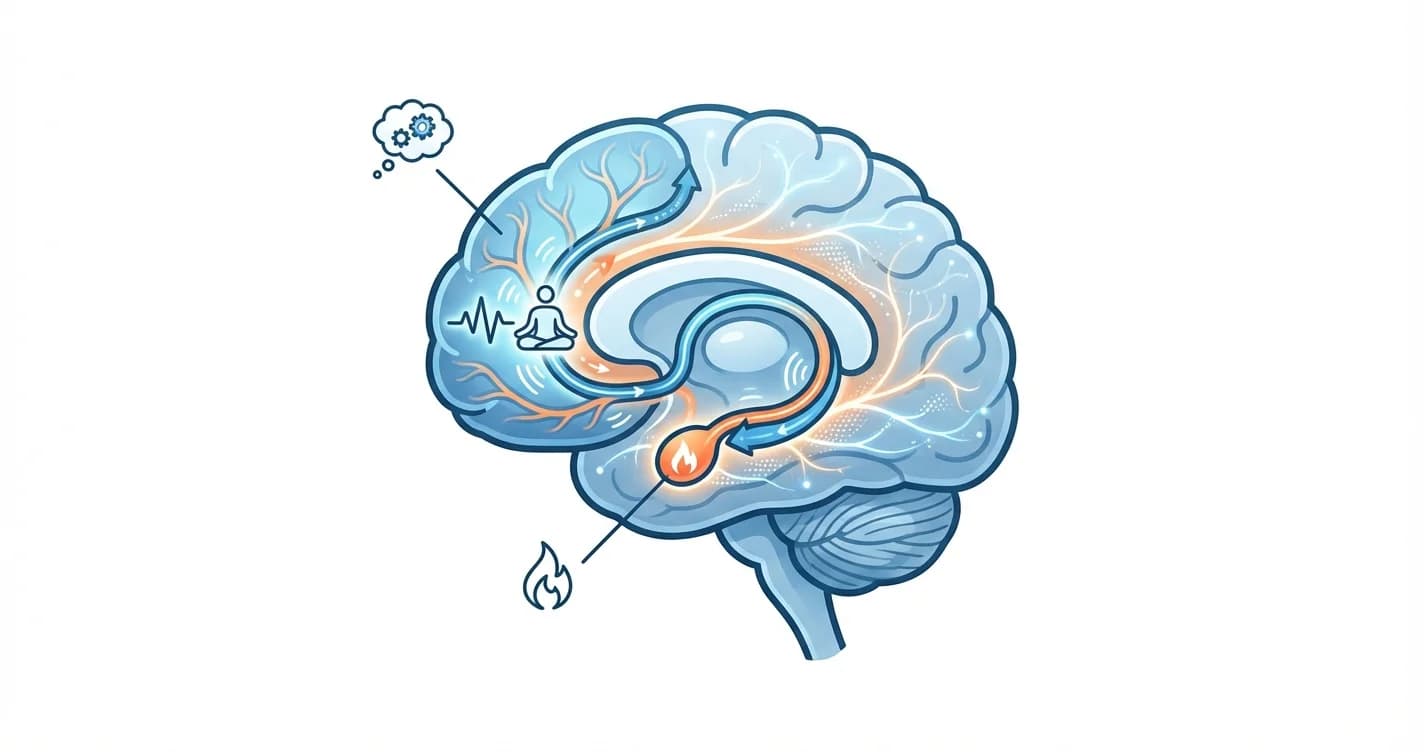
Amygdala and Prefrontal Cortex Connection: Training Emotional Regulation Through Mindfulness
How mindfulness practices reshape neural pathways to strengthen emotional control and reduce reactivity

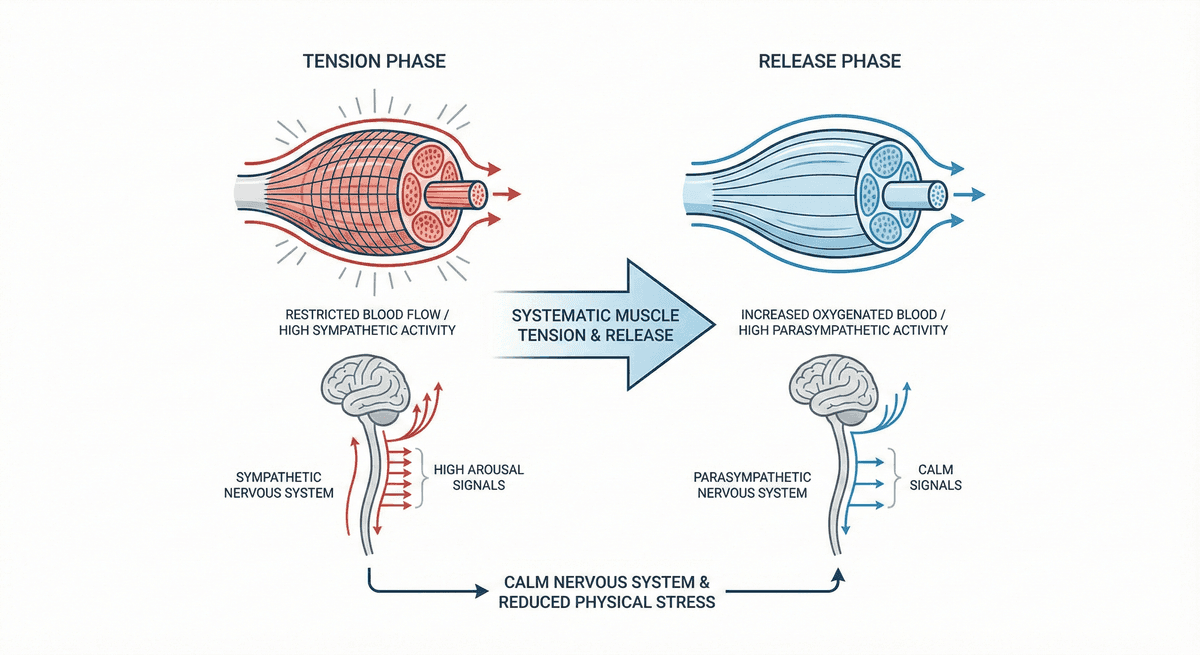
Progressive Muscle Relaxation for Stress Reduction
A systematic muscle group tension and release technique that calms the nervous system and reduces physical stress.
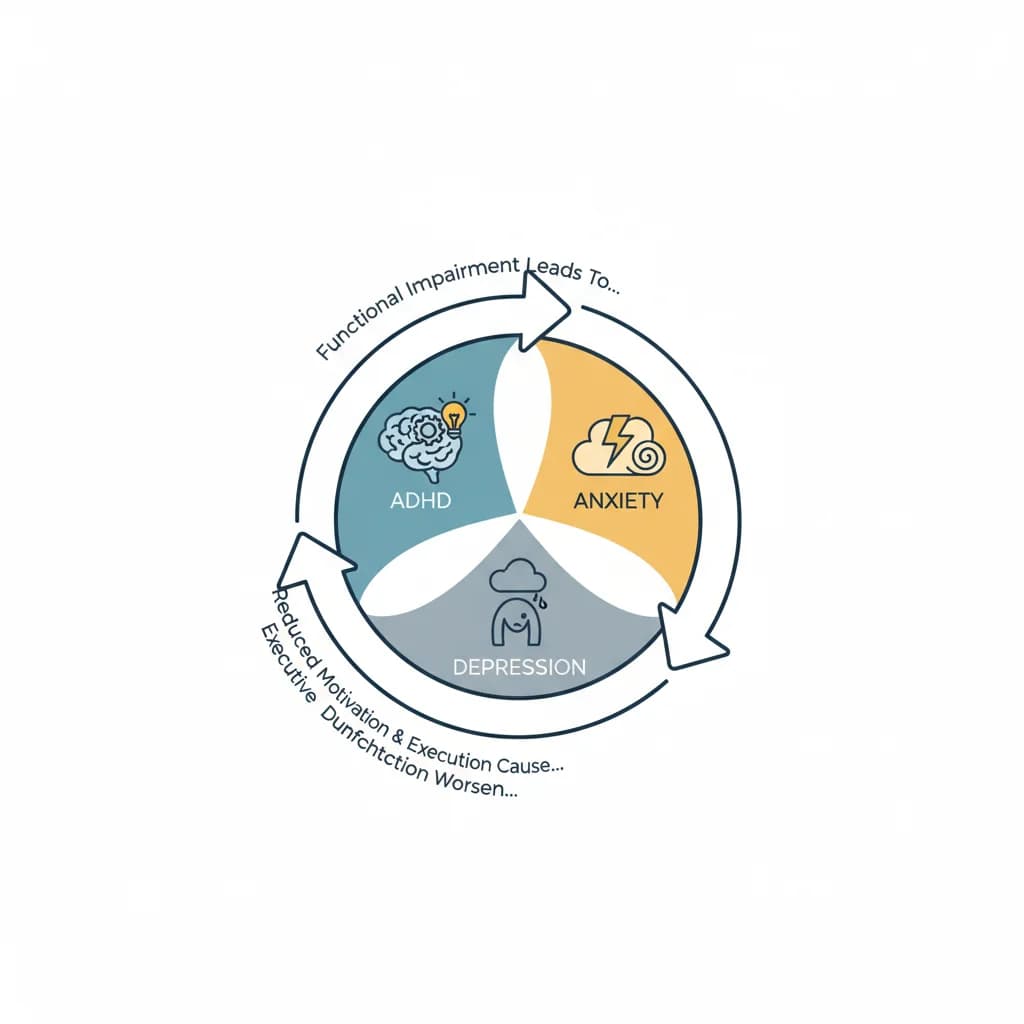
ADHD Comorbidity with Anxiety and Depression Cycles
Understanding the Complex Interplay Between ADHD and Recurring Mental Health Patterns
Disclaimer: This article is for informational purposes only and does not constitute medical advice, diagnosis, or treatment. Always seek the advice of your physician or other qualified health provider with any questions you may have regarding a medical condition. If you are in crisis or think you may have an emergency, call 988 (Suicide & Crisis Lifeline) or go to the nearest emergency room. Outside the US? Find a crisis line in your country.