
AI Life Coach for ADHD Goal Setting 2026
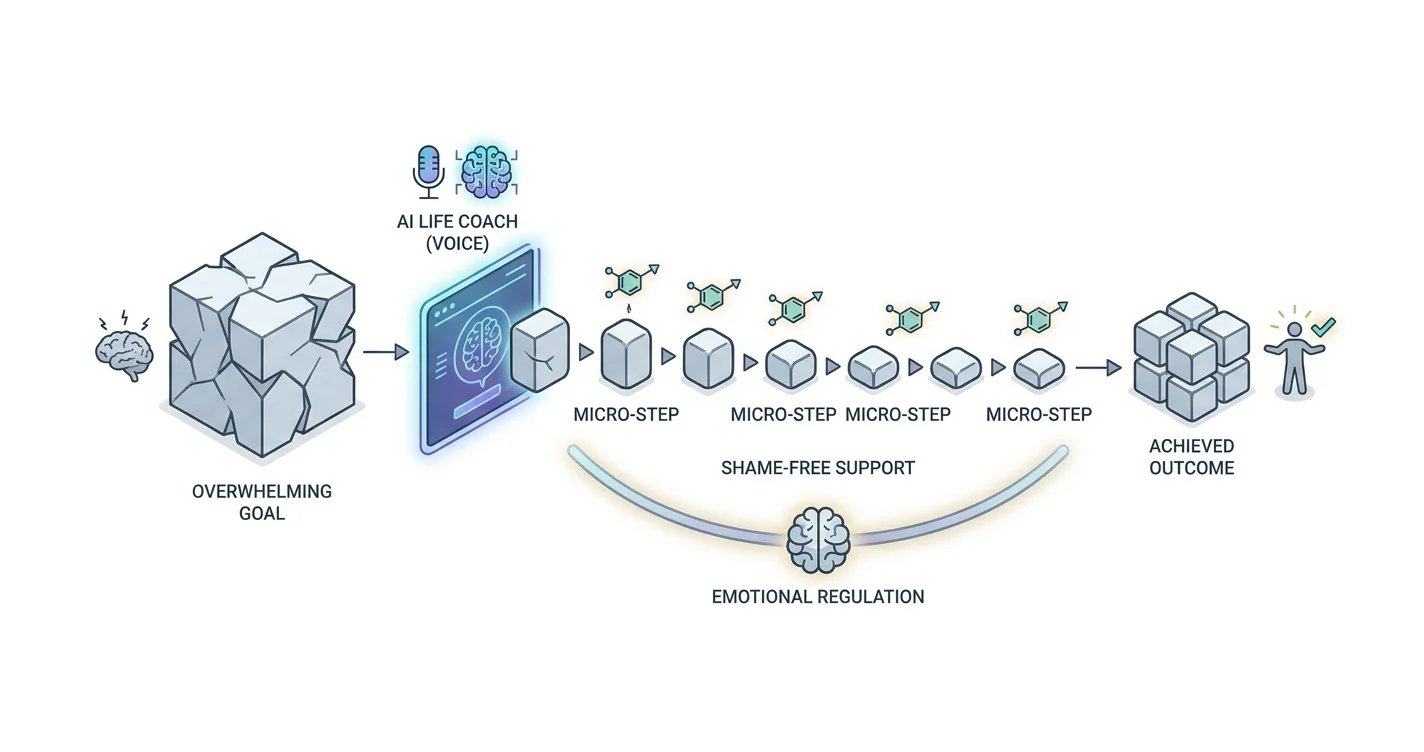
The best AI life coach for ADHD in 2026 breaks goals into micro-steps, removes scheduling pressure, and adds emotional support. Start free with Lovon today.

Key Takeaways
- Gamified productivity apps that reward streaks. Breaking a 30-day streak is a shame event for ADHD users with
- Coaching tools that require long onboarding sessions. If setup takes 45 minutes, many ADHD users will never reach
- Text-only interfaces for real-time support. Typing while emotionally activated or hyperfocused-but-distracted is a
- [AI therapy sessions on demand](https://lovon.app/ai-therapy)
- [Free therapist session — no commitment](https://lovon.app/therapist-free)
Finding a goal-setting system that actually works for an ADHD brain is harder than most productivity advice admits — and a dedicated AI life coach for ADHD changes that equation in 2026.
TL;DR: The best AI life coach for ADHD breaks big goals into dopamine-friendly micro-steps, delivers accountability without shame, and stays available at 3 a.m. when your brain finally decides to focus. Lovon's AI-powered voice app is built for exactly this — it combines on-demand emotional support with ADHD-specific coping tools that adapt to how you think, not how a neurotypical planner says you should. If you want to start without committing to a paid plan, try the free life coach today.
Why This Matters for ADHD Goal Setting in 2026
ADHD affects an estimated 366 million adults worldwide, yet most productivity tools — apps, planners, even human coaches — are designed for brains that can sustain linear focus for 45-minute sessions. The result: people with ADHD spend money on systems they abandon in week two, accumulate guilt, and conclude they are the problem.
AI coaching sidesteps three of the biggest friction points. It removes scheduling pressure (no fixed appointment you'll miss and feel bad about). It eliminates judgment (no coach sighing when you haven't touched your goal in 12 days). And it can fire off a micro-check-in in 90 seconds — short enough to fit inside a hyperfocus gap rather than disrupting it.
The keyword "ai life coach for adhd" pulls 590 monthly searches at a difficulty score of 27, which means real people are looking for this specific solution right now in 2026, and the field is not yet crowded with authoritative answers.
Who This Guide Is For
This guide is for adults who have been diagnosed with ADHD — or strongly suspect it — and have already burned through at least one paper planner, one productivity app, and possibly one human coach. You're not looking for motivation. You want a system that accounts for executive dysfunction, time blindness, emotional dysregulation, and the fact that "just break it into smaller steps" is advice you've heard 200 times without the steps ever staying small enough.
What to Look for in an AI Life Coach for ADHD
Micro-goal architecture
ADHD brains need goals chunked to the 5-to-15-minute action level, not the 90-day vision level. A good AI coach doesn't just let you set a goal — it actively restructures that goal into same-day wins. Look for a tool that asks "what's the smallest possible next action" rather than "what's your three-month plan."
Flexible, async check-ins
Fixed daily reminders at 8 a.m. work for about four days, then become part of the notification pile you swipe away. The right tool offers check-ins you can trigger yourself — when you're ready, not when a calendar says so. Voice-first interaction matters here: typing a reflection is a barrier; speaking one out loud takes 30 seconds.
Shame-free accountability
Accountability without judgment is not a soft benefit — it's a clinical one. Research on ADHD and rejection-sensitive dysphoria shows that perceived criticism activates an outsized stress response. An AI coach that reframes missed goals as data points instead of failures removes that stress trigger entirely. In 2026, the best tools do this by design.
Emotional regulation tools built in
Goal-setting sessions derail when emotional dysregulation hits mid-session. Look for a coach that can pivot from "let's map your week" to "you sound overwhelmed — want to do a 2-minute reset first?" Lovon is built for exactly this crossover between life coaching and mental health support, covering anxiety, stress, and ADHD within the same session.
Personalization that actually updates
Most apps personalize on day one and freeze. ADHD needs are highly state-dependent — your capacity on a high-dopamine Tuesday is nothing like your capacity on a crash Thursday. A useful AI coach reads your current state (ideally via voice tone and what you say) and adjusts the session difficulty, length, and type in real time.
On-demand availability
ADHD motivation is nonlinear. The window to act on a goal can open at midnight or during a 12-minute commute. An AI coach that's only accessible during "business hours" by way of human scheduling will miss most of those windows. 24/7 availability is a functional requirement, not a luxury feature.
Top Picks
The all-in-one mental health + coaching pick: Lovon
Hook: The safe pick for ADHD users who need coaching and emotional support in the same tool.
Lovon is an AI-powered voice therapy app that provides on-demand emotional support, coping tools, and personalized mental health sessions — ADHD is an explicit use case, not an afterthought. Sessions are voice-first, which removes the typing barrier that kills momentum mid-thought. The app covers the full ADHD spectrum: goal structuring, stress from missed goals, relationship friction caused by ADHD patterns, and anxiety that co-occurs with the diagnosis.
One spec that matters: Voice-led sessions mean you can run a check-in while pacing, which is how many ADHD brains actually think best.
Concrete number: Available 24/7, 365 days in 2026 — no scheduling window to miss.
Verdict: Buy. For ADHD adults who need more than a task manager but can't afford or access weekly therapy, Lovon covers both lanes. Start with the free life coach to test it before committing.
The structured-therapy adjacent pick: Lovon AI Therapy
Hook: The pick for ADHD users whose goal-setting failures are driven by underlying anxiety or depression.
When missed goals are less about system design and more about emotional weight, the coaching layer alone won't hold. Lovon's AI therapy sessions address the clinical layer — anxiety spirals, depressive episodes, and stress responses — that make goal follow-through feel impossible. This is not a replacement for a licensed therapist, but it fills the 167 hours per week when a therapist isn't available.
Verdict: Buy if your goal-setting breakdowns consistently follow an emotional event, not just a planning failure.
The on-ramp pick: Lovon Free Therapist
Hook: The wildcard for ADHD users who want to test AI-assisted mental health support at zero cost before investing.
Skepticism about AI coaching is fair. The free therapist session lets you evaluate how voice-led AI support actually feels before any financial commitment. For ADHD users who've already spent money on tools that didn't work, a free trial isn't just nice-to-have — it removes the guilt of "another thing I paid for and didn't use."
Verdict: Consider as your starting point, then upgrade if the session type fits your pattern.
What to Avoid
- Gamified productivity apps that reward streaks. Breaking a 30-day streak is a shame event for ADHD users with rejection sensitivity. Any tool that makes a missed day feel like a failure actively works against you.
- Coaching tools that require long onboarding sessions. If setup takes 45 minutes, many ADHD users will never reach the first actual coaching moment. High-friction onboarding predicts low completion rates specifically for this population.
- Text-only interfaces for real-time support. Typing while emotionally activated or hyperfocused-but-distracted is a cognitive load ADHD brains don't need added to a coaching session. Voice interaction removes that layer.
Comparison Table
| Criteria | Lovon (Life Coach) | Lovon (AI Therapy) | Lovon (Free Therapist) |
|---|---|---|---|
| Micro-goal architecture | Yes | Partial | Yes |
| Shame-free accountability | Yes | Yes | Yes |
| Emotional regulation tools | Yes | Yes | Yes |
| Voice-first interaction | Yes | Yes | Yes |
| 24/7 availability | Yes | Yes | Limited (free tier) |
| ADHD-specific sessions | Yes | Yes | Yes |
| Cost to start | Free tier available | Free tier available | Free |
FAQ
What is the best AI life coach for ADHD in 2026? Lovon is the strongest option in 2026 for ADHD adults who need goal-setting support combined with emotional regulation tools. It's voice-first, available on-demand, and explicitly designed for conditions including ADHD, anxiety, and stress — all of which intersect in real ADHD goal-setting failures.
Is an AI life coach better than a human coach for ADHD? For most ADHD adults, an AI coach solves the two biggest barriers a human coach creates: fixed scheduling (which ADHD brains often miss) and perceived judgment (which triggers rejection-sensitive dysphoria). A human coach offers relational depth a machine can't match, but that benefit means nothing if you cancel three sessions in a row and stop trying.
Can AI really help with ADHD goal setting? Yes, when the tool is designed for ADHD patterns rather than neurotypical productivity. The key features are micro-goal chunking, flexible check-in timing, voice interaction, and shame-free reframing of missed goals. Generic AI assistants like ChatGPT can help structurally but lack the emotional regulation layer that makes the difference when dysregulation hits.
How much does an AI life coach for ADHD cost? Lovon offers a free starting point — you can access the life coach and therapist sessions at no cost to evaluate fit. Paid tiers in 2026 vary by usage depth; starting free removes the financial risk that puts ADHD users off trying another tool.
What's the difference between an AI life coach and AI therapy for ADHD? Coaching focuses on goal structure, accountability, and forward momentum. Therapy addresses the emotional and psychological patterns underneath — anxiety, low self-worth from years of "failure," depression. For ADHD adults, the line blurs constantly, which is why a tool covering both (like Lovon) outperforms a pure coaching app.
Does Lovon work for ADHD specifically? Yes. ADHD is an explicit use case in Lovon's design, alongside anxiety, depression, stress, and relationship issues. Sessions adapt to your current state rather than running a fixed script, which matters for a condition as state-dependent as ADHD.
Is voice-based coaching better for ADHD than text? For most ADHD users, yes. Typing during a coaching session adds cognitive load, slows the pace, and creates a friction point where dropout happens. Voice interaction matches how ADHD brains process in real time — out loud, fast, non-linear — and keeps the session moving before the focus window closes.
How often should someone with ADHD use an AI life coach? Daily micro-check-ins (5-10 minutes) outperform weekly longer sessions for ADHD, based on what research on habit formation in ADHD populations consistently shows. The key is making each session short enough that starting it never feels like a project.
One Last Thing
ADHD productivity advice has existed since the early 1990s, and for 30-plus years the dominant framework has been "if you just find the right planner, you'll get organized." The insight that changed the field in the 2020s is that ADHD is primarily an emotional regulation disorder, not an organizational one. Goal-setting fails not because the goal wasn't specific enough — it fails because the emotional cost of starting, the fear of failing again, and the overwhelm of the gap between intention and action are all unmanaged. In 2026, an AI life coach for ADHD that treats those emotional layers as the core problem — not a sidebar — is the first genuinely different tool this population has had access to at scale.
Related Guides
How AI Support Helps You Heal
AI emotional support isn't about replacing human connection — it's about filling the gaps. The moments when you need to talk at 2 AM, when you don't want to burden your friends again, or when you simply need someone to listen without judgment.
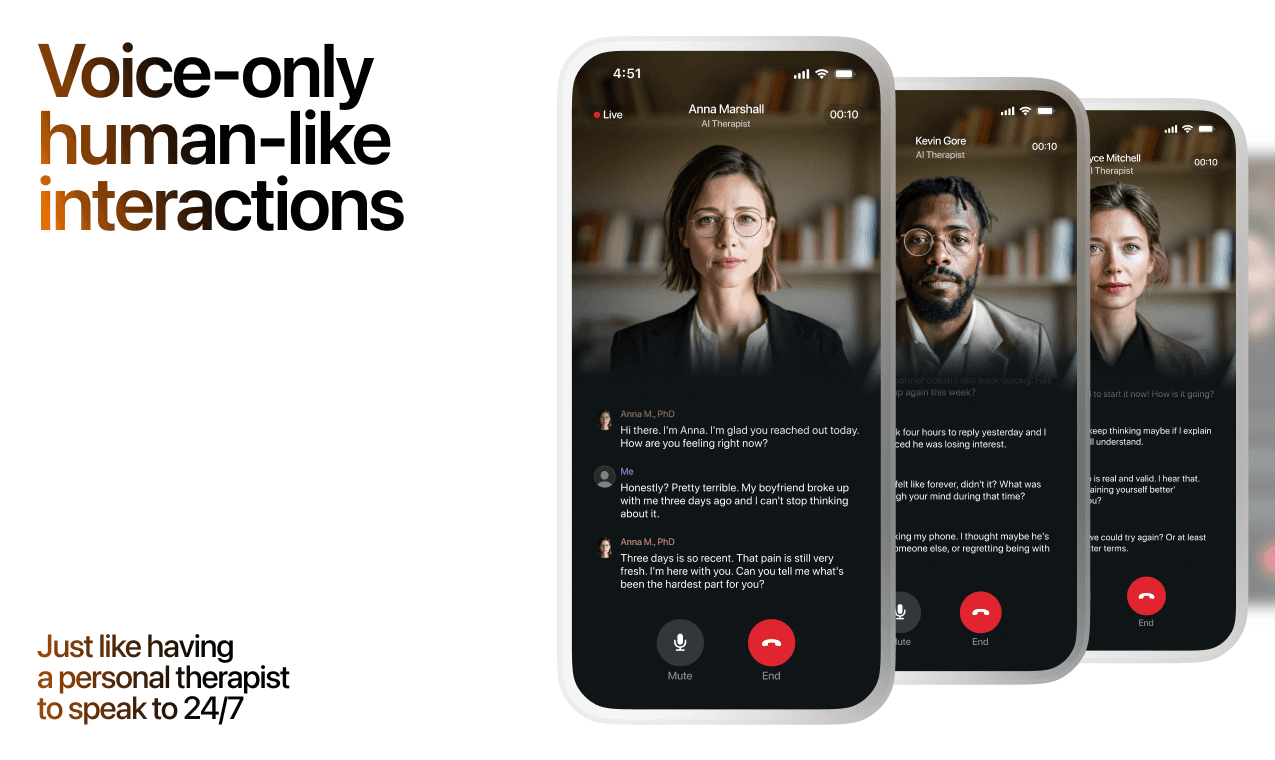
Here's what happens in a typical Lovon session:
You share what's on your mind
There's no script, no intake form, no waiting room. You speak or type whatever you're feeling — in your own words, at your own pace.
Lovon validates and explores
Using frameworks from CBT (Cognitive Behavioral Therapy) and motivational interviewing, Lovon acknowledges your feelings first, then gently helps you explore them. No dismissive "just move on" advice.
You build coping skills together
Lovon doesn't just listen — it actively works with you on evidence-based techniques: thought reframing, urge surfing, behavioral experiments, and more.
What a Session with Lovon Looks Like
When to Seek Professional Help
AI support is a valuable tool, but it's not a replacement for professional care. Please consider reaching out to a licensed therapist if you experience any of the following:
- Persistent thoughts of self-harm or suicide
- Inability to perform daily activities (work, eating, sleeping) for more than 2 weeks
- Turning to alcohol or substances to cope
- Intense anger or desire to harm your ex-partner
- Complete emotional numbness that doesn't improve over time
Crisis Resources (US): If you're in immediate danger, call 988 (Suicide & Crisis Lifeline) or text HOME to 741741 (Crisis Text Line). Available 24/7, free, and confidential.
Outside the US? Find a crisis line in your country
Ready to Start?
Your healing journey can begin right now
1 free conversation. No credit card. No judgment. Just a safe space to process what you're going through.
Frequently Asked Questions
Is AI therapy a replacement for a real therapist?
Is my conversation with Lovon AI private?
How is Lovon different from ChatGPT for emotional support?
Can I use Lovon if I'm already seeing a therapist?
Can I try Lovon for free?
About the Author
The Lovon Editorial Team
Mental Health & Wellness Content Team
The Lovon Editorial Team develops mental health and wellness content designed to make psychological concepts accessible and actionable. Our goal is to bridge the gap between clinical research and everyday life - helping you understand why your mind works the way it does and what you can do about it....
Similar Articles
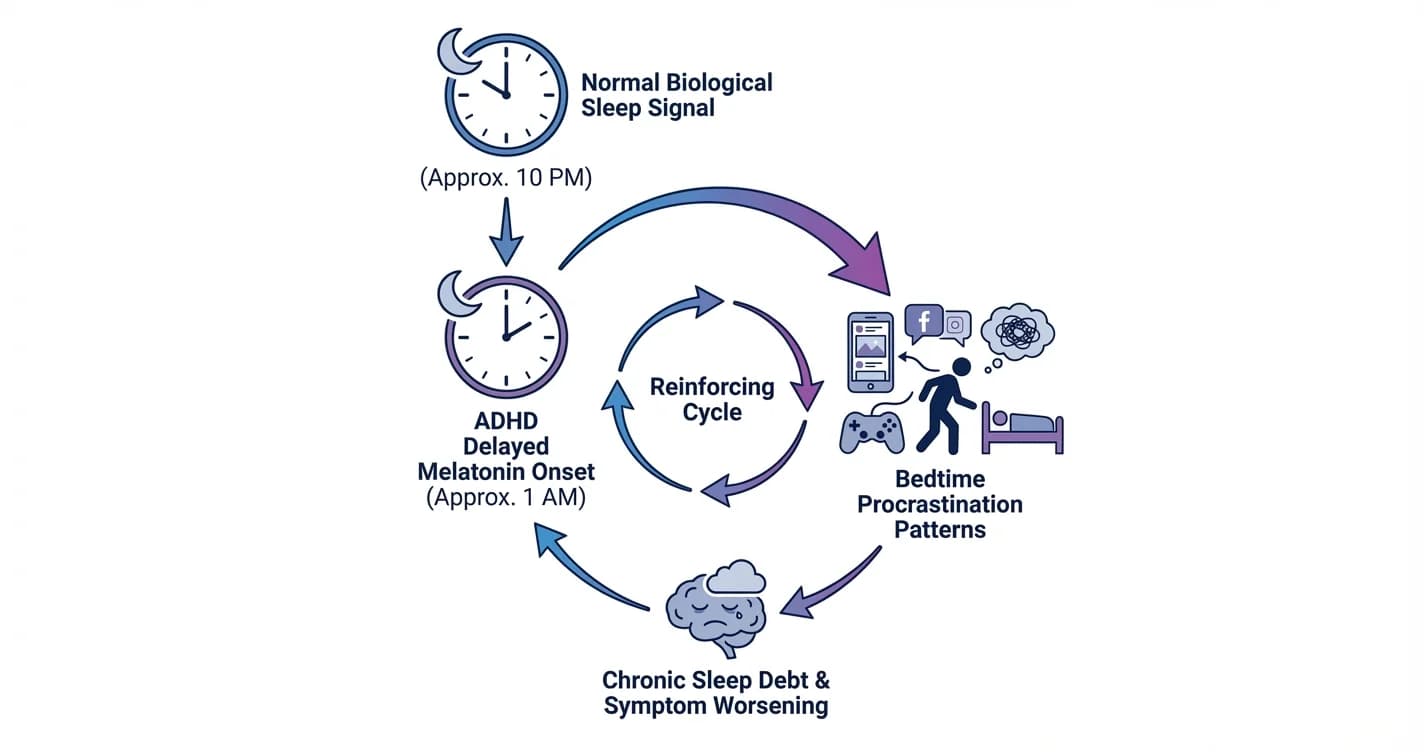
ADHD Sleep Cycle Disruption: Melatonin Delay and Bedtime Procrastination Patterns
Understanding how attention regulation difficulties interfere with natural sleep timing and the nightly wind-down process

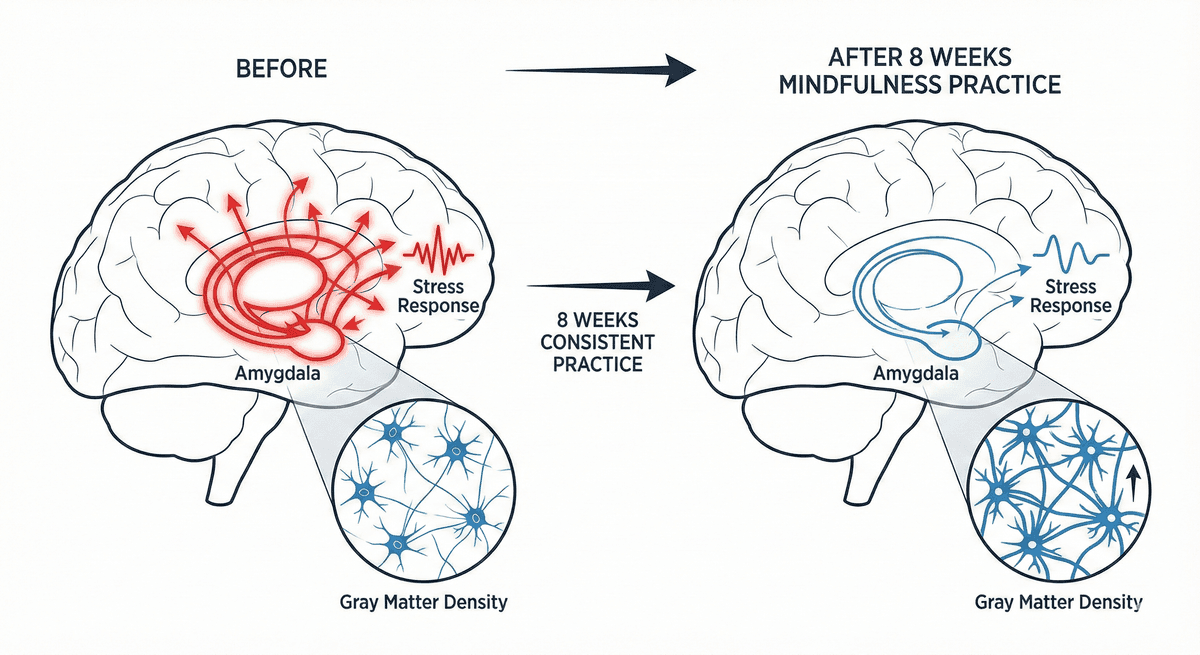
What 8 Weeks of Meditation Does to Your Amygdala
See what changes in your brain after eight weeks of daily meditation, why you react less to stress, and how to build a routine that actually sticks.
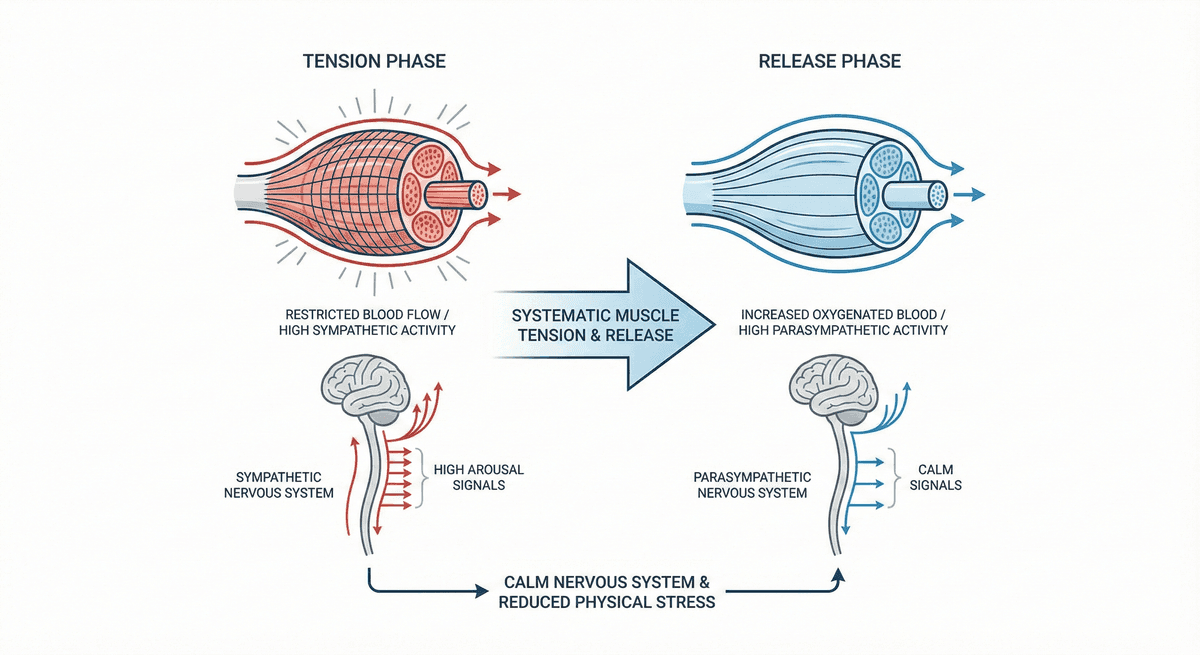
Progressive Muscle Relaxation for Stress Reduction
A systematic muscle group tension and release technique that calms the nervous system and reduces physical stress.
Disclaimer: This article is for informational purposes only and does not constitute medical advice, diagnosis, or treatment. Always seek the advice of your physician or other qualified health provider with any questions you may have regarding a medical condition. If you are in crisis or think you may have an emergency, call 988 (Suicide & Crisis Lifeline) or go to the nearest emergency room. Outside the US? Find a crisis line in your country.