
Best AI for ADHD: Tools That Help You Focus (2026)
The best AI for ADHD in 2026 — from task-breakdown tools to emotional support apps. Find out which tools match how an ADHD brain actually works.
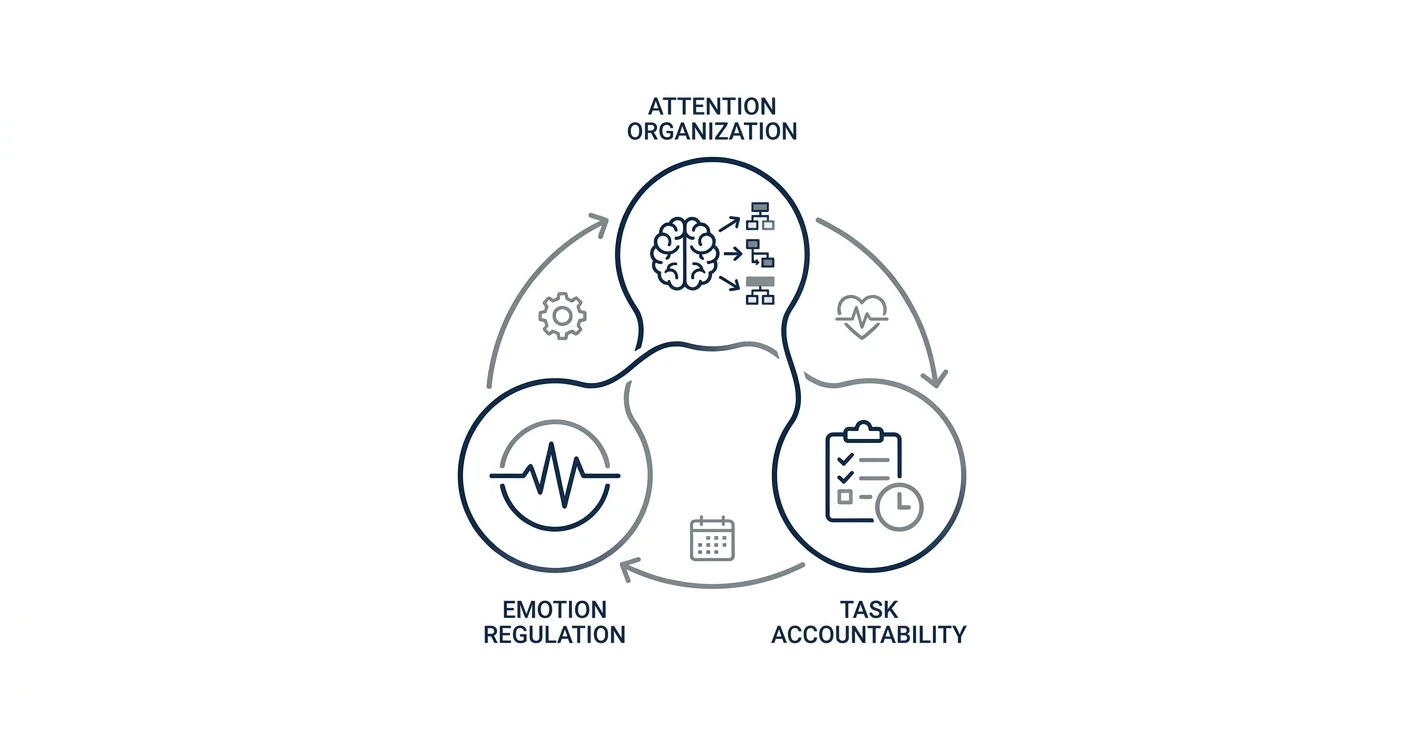

ADHD makes focus feel like a moving target — and follow-through can feel almost impossible. This guide covers the best AI tools for ADHD in 2026, what to look for before you download anything, and which tools actually match how an ADHD brain works.
TL;DR: The best AI for ADHD in 2026 covers three jobs: organizing your attention, regulating your emotions, and keeping you accountable between tasks. Tools like Goblin.tools and Notion AI handle the task-breakdown side. For the emotional weight that comes with ADHD — the shame spirals, the rejection sensitivity, the burnout — an AI voice companion like Lovon is built specifically for that gap. No single tool does everything, but the right combination changes daily life in real, measurable ways.
Why this matters in 2026
ADHD affects roughly 6 million adults in the United States, and fewer than half receive consistent treatment. The access problem is real: a psychiatry appointment can take 6–10 weeks to schedule, and therapy without insurance costs between $100 and $300 per session in 2026. AI tools do not replace licensed care, but they fill the hours between appointments — which is when most ADHD struggles actually happen.
Who this guide is for
You have ADHD, suspect you do, or you're supporting someone who does. You are not looking for a clinical treatment plan — you want tools that work on a Tuesday afternoon when your brain refuses to start a task. You have tried to-do apps before and abandoned them within a week. You know the problem is not motivation; it is initiation, attention regulation, and the emotional fallout when things go sideways.
What to look for in AI for ADHD
Low friction to start
If a tool requires setup time, an ADHD brain will never get past the setup. The best AI tools for ADHD in 2026 open to a single input — one text box, one voice prompt, one button. Every additional step is a drop-off point. Tools that ask you to configure dashboards, assign tags, or build templates before you can use them are tools you will not use.
Task breakdown, not task listing
A standard to-do app shows you what to do. That is not the bottleneck for ADHD. The bottleneck is knowing where to start on a task that feels too large or too vague. AI tools that automatically chunk a project into 3–5 micro-steps solve the actual problem. Goblin.tools does this with a single text input in under 10 seconds. That matters.
Emotional regulation support
ADHD and emotional dysregulation are inseparable. Rejection sensitive dysphoria, frustration spikes, shame after a missed deadline — these are not side effects of ADHD, they are core features of it. A tool that only manages tasks misses half the picture. AI companions that respond to how you are feeling — not just what you need to do — address the part of ADHD that productivity apps have always ignored. If you want to go deeper on this, ADHD emotional dysregulation tools that actually help is worth reading alongside this guide.
No judgment, available at 11 pm
ADHD does not keep business hours. Hyperfocus often hits late at night; the crash and shame spiral follows. The best AI for ADHD in 2026 is available the moment you need it, not the next time your therapist has a slot open. This is the single clearest advantage AI has over traditional support.
Works with voice, not just text
Typing requires executive function. When your brain is already fried, typing a long journal entry or detailed task list is a non-starter. Voice input removes that barrier. Tools with strong voice functionality — whether for dictating tasks or actually talking through what you are feeling — are disproportionately useful for ADHD brains.
Personalized over time
A tool that learns your patterns — when you go off-track, what triggers your avoidance, which types of tasks drain you fastest — becomes more useful over weeks, not less. One-size-fits-all prompts wear thin. AI that adjusts its approach based on your history keeps you engaged past the first week.
Top picks for 2026
Goblin.tools — the task-starter
The safe pick. Goblin.tools is a free web app built specifically for ADHD and autism. Its core feature, the Magic ToDo, takes any task you describe and breaks it into small, ordered steps automatically. Type "write the report" and it returns 6 steps with estimated effort ratings. The effort rating alone — a small pepper icon from 1 to 5 — changes how you approach your day. It costs nothing, requires no account to start, and works in under 30 seconds. There is no voice input, which is a real limitation, but for pure task initiation it is the most ADHD-aligned free tool available in 2026. Buy (free tier covers everything most users need).
Notion AI — the context keeper
The wildcard. Notion AI earns its place here not for ADHD-specific features but for one specific use case: brain dumping. ADHD brains generate fragmented ideas constantly. Notion AI lets you dump everything — random thoughts, half-formed plans, disconnected notes — and then summarize, sort, and connect those fragments on command. The $10/month AI add-on is reasonable. The learning curve is real, and the setup friction is high enough that it suits people who already use Notion rather than newcomers. If you start from zero, give yourself 2 hours of setup time. Consider (if you are already in the Notion ecosystem).
Reclaim.ai — the calendar that protects your focus time
The productivity layer. Reclaim.ai connects to Google Calendar and automatically schedules focus blocks, habits, and task time around your existing meetings. For ADHD adults who lose entire mornings to calendar fragmentation, this is genuinely useful. It costs $8/month on the Starter plan. It does not do emotional support, it does not talk to you, and it will not help when you are sitting in shame at 10 pm. But as a structural tool that reduces daily decision fatigue around scheduling, it does something no other tool here does. Buy (if calendar chaos is your primary ADHD friction point).
Lovon — the emotional support layer
The gap-filler. Lovon is an AI voice companion built for mental health support, including ADHD. The voice interface matters here — you just talk. No typing required when your executive function is depleted. Lovon draws on coping tools developed with PhD psychologists to help you process the emotional fallout of ADHD: the freeze after a missed deadline, the spiral after a rejection, the burnout that accumulates after years of masking. It is not a task manager and it does not organize your calendar. What it does is provide the kind of grounded, non-judgmental conversation that helps you regulate enough to get back on track. Available any time of day or night, no appointment needed. Lovon is explicit that it is not a licensed clinician — it is a support tool that works best alongside professional care, not instead of it. The free AI therapist for ADHD adults guide explains the scope clearly. Buy (especially if rejection sensitivity or emotional dysregulation is your hardest ADHD symptom).
ChatGPT (with a custom prompt) — the flexible assistant
The DIY option. ChatGPT is not ADHD-specific, but with the right prompt it becomes a surprisingly effective accountability partner. Tell it your task, ask it to break the work into 5-minute chunks, and have it check in with you after each one. This approach works well for people who find structured apps too rigid. The GPT-4o tier at $20/month gives you voice mode, which reduces the typing barrier. The downside is that it requires you to set up the system yourself — no ADHD-specific defaults, no emotional support architecture, no memory of your patterns unless you build that. Consider (if you want maximum flexibility and do not mind building your own workflow).
Comparison table
| Tool | Task breakdown | Voice input | Emotional support | Cost in 2026 | Verdict |
|---|---|---|---|---|---|
| Goblin.tools | Excellent | No | None | Free | Buy |
| Notion AI | Good (manual) | No | None | $10/mo add-on | Consider |
| Reclaim.ai | Calendar-focused | No | None | $8/mo | Buy |
| Lovon | No | Yes | Core feature | Free to start | Buy |
| ChatGPT | Good (prompt needed) | Yes (GPT-4o) | Minimal | $20/mo | Consider |
What to avoid
Apps with heavy onboarding. Any tool that starts with a 12-step tutorial, a questionnaire, or a feature tour before you can do anything useful will be abandoned. The setup cost is too high for an ADHD brain in 2026.
Gamified productivity apps with streaks. Streak-based systems feel motivating for about 4 days. When you break the streak — and you will, because ADHD — the guilt hits harder than the lost productivity. Apps that punish inconsistency by design are actively harmful for ADHD users.
Tools that confuse support with therapy. Some AI chat apps imply they can replace clinical ADHD treatment. They cannot. ADHD often involves co-occurring anxiety, and the overlap between the two conditions is significant — ADHD and anxiety: how the two conditions overlap covers this in detail. Use AI tools for support and skill-building; keep professional evaluation and medication management with a licensed clinician.
FAQ
What is the best AI tool for ADHD in 2026? There is no single best tool — the right stack depends on your biggest friction point. For task initiation, Goblin.tools is the fastest no-cost option. For emotional regulation and support between therapy sessions, Lovon is built specifically for that gap.
Can AI actually help with ADHD? AI can reduce specific friction points: breaking down tasks, scheduling focus time, and providing on-demand emotional support. It does not treat ADHD in a clinical sense — it does not replace medication evaluation or therapy. Think of it as daily scaffolding, not a cure.
Is there a free AI tool for ADHD? Yes. Goblin.tools is fully free. Lovon offers a free tier. ChatGPT has a free version, though the free model does not include voice mode.
How is AI for ADHD different from a regular productivity app? A regular productivity app lists tasks. AI for ADHD breaks tasks into steps, adjusts to your context, and — in the case of tools like Lovon — responds to how you are feeling, not just what you need to do. The difference is whether the tool adapts to you or expects you to adapt to it.
Is it safe to talk to an AI about ADHD struggles? For everyday support, coping strategies, and self-reflection, yes. Reputable tools like Lovon are built with clinical input and are clear about what they are and are not. For symptoms that may indicate a crisis or require diagnosis, contact a licensed professional.
Does AI help with ADHD paralysis specifically? Task paralysis is one of the clearest use cases for AI. Goblin.tools addresses it through automatic task breakdown. A voice companion like Lovon addresses the emotional component of paralysis — the freeze, the shame, the avoidance — which is often what makes task paralysis persist.
Can AI replace an ADHD coach? No. An ADHD coach builds a relationship over months, tracks your patterns, and holds you accountable in ways an AI cannot replicate fully. AI tools are most useful as between-session support — cheaper, always available, and zero wait time.
What about ADHD and sleep — do AI tools help there? AI companions that help you wind down, process the day, or reduce anxiety before bed can indirectly support ADHD sleep problems. The underlying reasons your ADHD brain fights bedtime are covered in detail in the ADHD sleep problems guide.
One last thing
ADHD tax is real — the time, money, and energy lost to disorganization, missed deadlines, and emotional dysregulation adds up to thousands of dollars and hundreds of hours per year for most adults with ADHD. The best AI tools for ADHD in 2026 do not eliminate ADHD tax entirely, but they cut it. Start with one tool that targets your single biggest friction point. Add a second only after the first becomes a habit. Trying to overhaul everything at once is the most ADHD way to change nothing.
Related guides
How AI Support Helps You Heal
AI emotional support isn't about replacing human connection — it's about filling the gaps. The moments when you need to talk at 2 AM, when you don't want to burden your friends again, or when you simply need someone to listen without judgment.
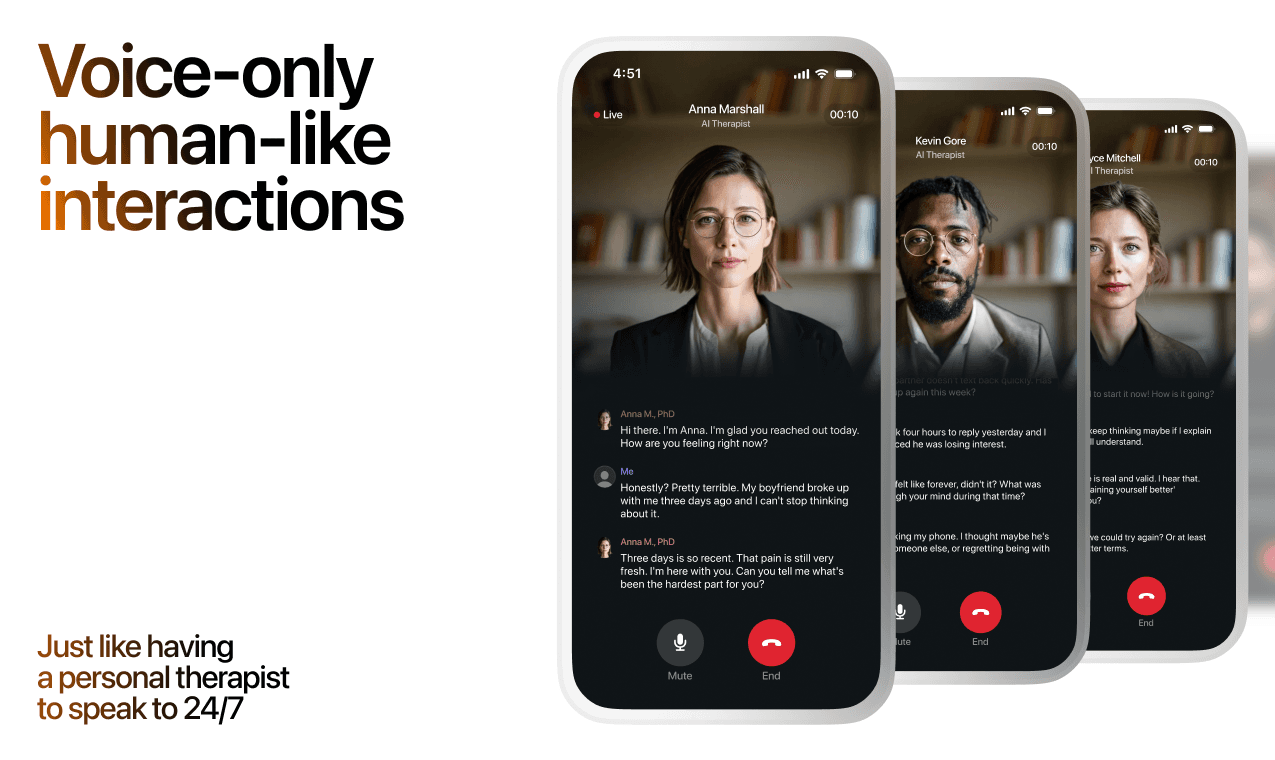
Here's what happens in a typical Lovon session:
You share what's on your mind
There's no script, no intake form, no waiting room. You speak or type whatever you're feeling — in your own words, at your own pace.
Lovon validates and explores
Using frameworks from CBT (Cognitive Behavioral Therapy) and motivational interviewing, Lovon acknowledges your feelings first, then gently helps you explore them. No dismissive "just move on" advice.
You build coping skills together
Lovon doesn't just listen — it actively works with you on evidence-based techniques: thought reframing, urge surfing, behavioral experiments, and more.
What a Session with Lovon Looks Like
When to Seek Professional Help
AI support is a valuable tool, but it's not a replacement for professional care. Please consider reaching out to a licensed therapist if you experience any of the following:
- Persistent thoughts of self-harm or suicide
- Inability to perform daily activities (work, eating, sleeping) for more than 2 weeks
- Turning to alcohol or substances to cope
- Intense anger or desire to harm your ex-partner
- Complete emotional numbness that doesn't improve over time
Crisis Resources (US): If you're in immediate danger, call 988 (Suicide & Crisis Lifeline) or text HOME to 741741 (Crisis Text Line). Available 24/7, free, and confidential.
Outside the US? Find a crisis line in your country
Ready to Start?
Your healing journey can begin right now
A 7-day trial. No judgment. Just a safe space to process what you're going through.
Frequently Asked Questions
Is Lovon a replacement for a real therapist?
Is my conversation with Lovon AI private?
How is Lovon different from ChatGPT for emotional support?
Can I use Lovon if I'm already seeing a therapist?
Can I try Lovon before subscribing?
About the Author
The Lovon Editorial Team
Mental Health & Wellness Content Team
The Lovon Editorial Team develops mental health and wellness content designed to make psychological concepts accessible and actionable. Our goal is to bridge the gap between clinical research and everyday life - helping you understand why your mind works the way it does and what you can do about it....
Related articles
- ADHD and Relationships: Common Challenges & Fixes 2026
ADHD and relationships clash over time blindness, RSD, and emotional dysregulation. Get step-by-step fixes that actually…
- ADHD in College Students: Deadlines and Focus in 2026
ADHD in college students means missed deadlines and scattered focus — see what actually works in 2026, from…
- How to Build a Routine With ADHD (2026 Guide)
Learn how to build a routine with ADHD using anchor habits, external cues, and a built-in reset rule. Step-by-step guide…
- Is ADHD considered a disability?
Is ADHD considered a disability? Yes, when its effects meet the rules. Learn how workplace, school and Social Security…
See also
Quizzes
- Guilt Test: Is Your Guilt Doing Its Job?
See whether your guilt repairs or just hurts.
- Alexithymia Test: Can You Name What You Feel?
See where your feelings lose their names, in 3 minutes.
Free tools
- What to Say to Someone Who Is Grieving
Get sentences that fit this person and this week, not a list of things people say at funerals. Describe who they lost…
- What to Say When a Pet Dies
Get a message you can actually send to someone whose dog or cat just died: one that uses the animal's name, treats the…
From the wiki
- What to do if you have no friends?
Pick one activity that repeats weekly with the same people, and go for six to eight weeks straight. Repetition, not…
Disclaimer: This article is for informational purposes only and does not constitute medical advice, diagnosis, or treatment. Always seek the advice of your physician or other qualified health provider with any questions you may have regarding a medical condition. If you are in crisis or think you may have an emergency, call 988 (Suicide & Crisis Lifeline) or go to the nearest emergency room. Outside the US? Find a crisis line in your country.