
Best AI Life Coach for Confidence in 2026
Looking for an AI life coach for confidence? Lovon's voice-based sessions beat text apps for real self-esteem work. Free to start. Updated 2026.

Key Takeaways
- [Free AI relationship coach](https://lovon.app/free-tools/app/ai-relationship-coach)
- [Free therapist session](https://lovon.app/therapist-free)
- [Compatibility quiz](https://lovon.app/quiz/are-we-compatible)
Confidence doesn't come from reading about it — it comes from doing the work, repeatedly, with something that pushes back. This page covers who benefits most from an AI life coach for confidence, what to look for before committing, and how Lovon stacks up for real self-esteem work in 2026.
TL;DR: An AI life coach for confidence gives you on-demand, judgment-free sessions that traditional therapy schedules can't match. Lovon's voice-based sessions combine emotional support, coping tools, and personalized check-ins — making it one of the strongest self-directed options for confidence and self-esteem work in 2026. If you want structured, daily practice without a waitlist, this approach wins.
Why This Matters in 2026
Self-esteem issues sit at the root of anxiety, relationship conflict, and stalled careers — yet most people never get structured help because access is slow, expensive, or stigmatized. Traditional coaching can run $150–$300 per session. AI-powered alternatives have closed the quality gap fast. The demand signal is real: "AI life coach for confidence" searches have grown alongside the broader mental health app category, which crossed $6 billion globally in 2024 and is accelerating. The tools available in 2026 are substantively better than anything from two years ago.
Who This Is For
This guide is for adults who know confidence is a skill gap, not a personality flaw — and who want daily, structured practice rather than occasional pep talks. That includes people in high-pressure careers who freeze under scrutiny, individuals coming out of toxic relationships where their self-worth was eroded, people managing ADHD or anxiety whose inner critic runs loud, and anyone who's tried journaling or self-help books and stalled out without accountability. If you want a human therapist, this isn't a substitute — it's a tool that works between sessions or instead of a waitlist.
What to Look for in an AI Life Coach for Confidence
Voice Interaction, Not Just Text
Confidence is built through doing — saying hard things out loud, practicing assertive framing, hearing your own voice without flinching. Apps that only accept text input skip this entirely. Voice-based sessions train the actual behavior, not just the concept. Lovon's core format is voice, which is the right default for this use case.
Personalized Session Structure
Generic affirmations don't move the needle. The session structure needs to adapt to what's actually blocking you — social anxiety, imposter syndrome, body image, fear of confrontation. Look for tools that ask intake questions and adjust their approach, not ones that run the same five-minute loop regardless of context.
Coping Tools That Travel With You
Confidence work isn't only done in scheduled sessions. You need grounding techniques, reframing prompts, and quick interventions available in real time — before a presentation, during a conflict, after a rejection. The tool should function as an on-demand resource, not a calendar appointment.
Consistency and Accountability Mechanisms
One session changes nothing. Thirty sessions build a habit. The best AI coaches surface check-ins, track patterns, and remind you to return. Without this, even well-intentioned users drift. Look for streak tracking, mood logging, or proactive follow-up built into the product.
Emotional Safety and Non-Judgment
People with low self-esteem often self-censor with human coaches — they perform confidence rather than excavate the absence of it. AI removes the social stakes. Sessions need to feel genuinely safe to be honest in, which means the AI must handle vulnerable disclosures without pivoting to dismissive reassurance.
Scope Transparency
An AI life coach for confidence should be explicit about what it is and isn't. It is a structured support tool. It is not crisis intervention, diagnosis, or a replacement for clinical care. Products that blur this line are a liability. Products that are clear about it earn trust.
Top Picks
Lovon — The Daily Practice Pick
Hook: Best for people who need structured, voice-led sessions they can run every single day.
Lovon offers an AI-powered voice therapy app built around on-demand emotional support and personalized mental health sessions. For confidence and self-esteem work specifically, the voice format is the differentiator — you practice saying things, not just thinking them. Sessions address anxiety, depression, stress, and relationship issues, all of which feed directly into self-esteem deficits. The app is designed for individuals who want real sessions on their schedule, with coping tools available between them.
The life coach free entry point means you can test the actual session quality before committing — no credit card required to find out if the format fits how you think and communicate.
One spec that matters: Voice-based interaction, not text-only — critical for confidence-building practice.
Verdict: Buy. Lovon is the strongest self-directed option in 2026 for anyone whose confidence work intersects with anxiety, stress, or relationship patterns. The voice format and on-demand availability solve the two biggest failure modes: scheduling friction and text-based practice that never transfers to real conversations.
BetterUp (AI-Assisted Coaching)
Hook: The enterprise pick, not the personal one.
BetterUp combines human coaches with AI-assisted goal tracking. For confidence work, the human element is a genuine plus — but the price point ($300+ per month for individual access) and the enterprise-first model make it a poor fit for most people reading this. Session frequency depends on your plan, which usually means 2–4 sessions per month.
Verdict: Consider — only if your employer subsidizes it and you want human accountability on top of AI tools.
Replika
Hook: The companionship app that gets misidentified as a coaching app.
Replika is built for social connection simulation, not structured self-esteem work. It has no session structure, no coping tool library, and no accountability layer. Users report feeling heard, which has value, but there's no mechanism for growth. It won't build confidence; it will validate the status quo.
Verdict: Skip for confidence work. Use it for loneliness, not self-esteem development.
Woebot
Hook: The CBT-lite option with text-only delivery.
Woebot uses cognitive behavioral therapy (CBT) techniques delivered through text chat. The research backing is real — it was developed at Stanford and has peer-reviewed studies supporting its mood outcomes. For confidence work, the limitation is format: text-based interaction means you practice thinking differently, not speaking differently. That's a ceiling for people whose confidence gap shows up in conversations, presentations, or confrontations.
Verdict: Consider as a complement if you're already doing voice-based work elsewhere. Standalone, it leaves the behavioral gap open.
Comparison Table
| Tool | Voice sessions | On-demand access | Confidence-specific tools | Price to start | Verdict |
|---|---|---|---|---|---|
| Lovon | Yes | Yes | Yes (anxiety, stress, relationships) | Free tier available | Buy |
| BetterUp | No (human coach) | No (scheduled) | Partial | $300+/mo | Consider |
| Replika | No | Yes | No | Free / $8/mo Pro | Skip |
| Woebot | No | Yes | Partial (CBT) | Free | Consider |
What to Avoid
Affirmation-only apps. Daily affirmation apps feel productive and do almost nothing. Repeating "I am confident" without behavioral practice is the audio equivalent of reading a workout book. If the app's core mechanic is push-notification affirmations, it is not a coaching tool.
Apps with no intake or personalization. A generic five-minute meditation won't address imposter syndrome in your specific job context or confidence erosion from a specific relationship. Personalization is the variable that separates tools that produce change from tools that produce engagement metrics.
Tools that obscure their AI nature. In 2026, any app that implies you're talking to a human therapist or human coach without making the AI nature explicit is a red flag — ethically and practically. You need to know what you're working with to calibrate your expectations correctly.
FAQ
What's the best AI life coach for confidence in 2026? Lovon is the strongest option for most people because it combines voice-based sessions, on-demand access, and tools that address the anxiety and stress patterns underlying most confidence deficits. It's free to start.
Is an AI life coach as effective as a human coach for building confidence? For daily practice and accessibility, AI coaches outperform human coaches on frequency and cost. Human coaches add nuance, challenge, and relationship — which matters for deeper work. The most effective approach in 2026 uses AI for daily practice and human coaching or therapy for periodic depth sessions.
How much does an AI life coach for confidence cost? Range runs from free (Lovon's free tier, Woebot) to $300+ per month (BetterUp enterprise). Most standalone AI apps fall in the $10–$30/month range for premium access.
Can an AI life coach help with social anxiety specifically? Yes — apps like Lovon that address anxiety directly have the strongest overlap with social confidence work. Social anxiety and low confidence share the same cognitive distortion patterns (catastrophizing, mind-reading, avoidance), and CBT-adjacent tools target both.
How long before I see results from AI confidence coaching? Most users report noticeable shifts in self-talk patterns within 3–4 weeks of daily use. Behavioral confidence — performing differently in high-stakes situations — typically requires 6–12 weeks of consistent practice.
What's the difference between an AI life coach and AI therapy? AI life coaching targets goal-setting, habit formation, and skill-building. AI therapy tools like Lovon's AI therapy go deeper into emotional processing, coping mechanisms, and mental health symptom management. Confidence work often benefits from both — the coaching layer for daily practice, the therapy layer when underlying anxiety or trauma is driving the deficit.
Is Lovon safe to use for mental health support? Lovon is designed for emotional support and coping tools — not crisis intervention or clinical diagnosis. It is transparent about its scope. For acute mental health crises, contact a licensed provider or crisis line.
Does AI confidence coaching work for ADHD? ADHD often amplifies the inner critic because rejection sensitivity and executive function challenges create a high volume of perceived failures. Lovon explicitly addresses ADHD as part of its use case, making it one of the few voice tools that accounts for this pattern.
One Last Thing
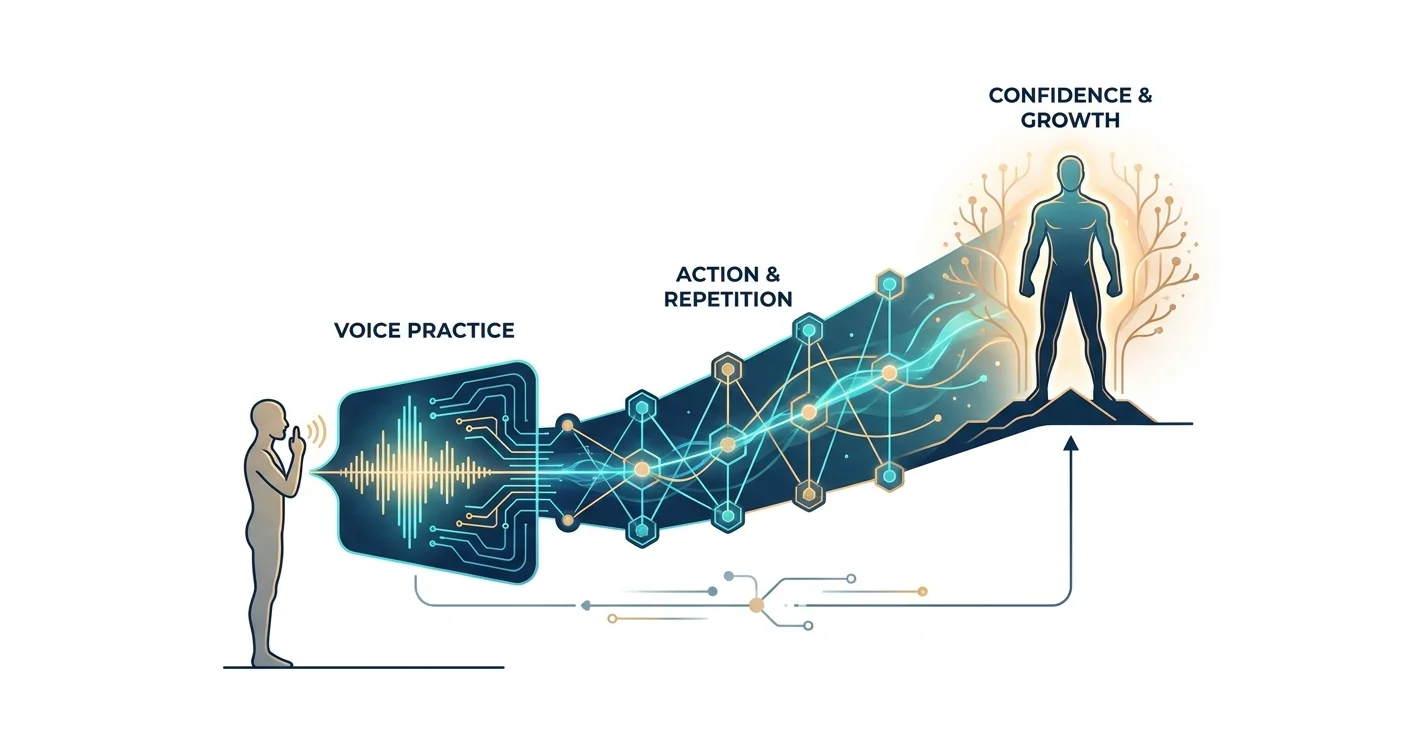
The research on confidence is counterintuitive: it follows action, it doesn't precede it. Waiting to feel confident before practicing is the exact mechanism that keeps confidence low. The apps that work in 2026 are the ones that force behavioral repetition — voice sessions, structured exercises, daily check-ins — not the ones that optimize for feeling good in the moment. Lovon's voice-first design is built on this principle. That's not marketing; it's the correct order of operations for self-esteem development.
Related Guides
How AI Support Helps You Heal
AI emotional support isn't about replacing human connection — it's about filling the gaps. The moments when you need to talk at 2 AM, when you don't want to burden your friends again, or when you simply need someone to listen without judgment.
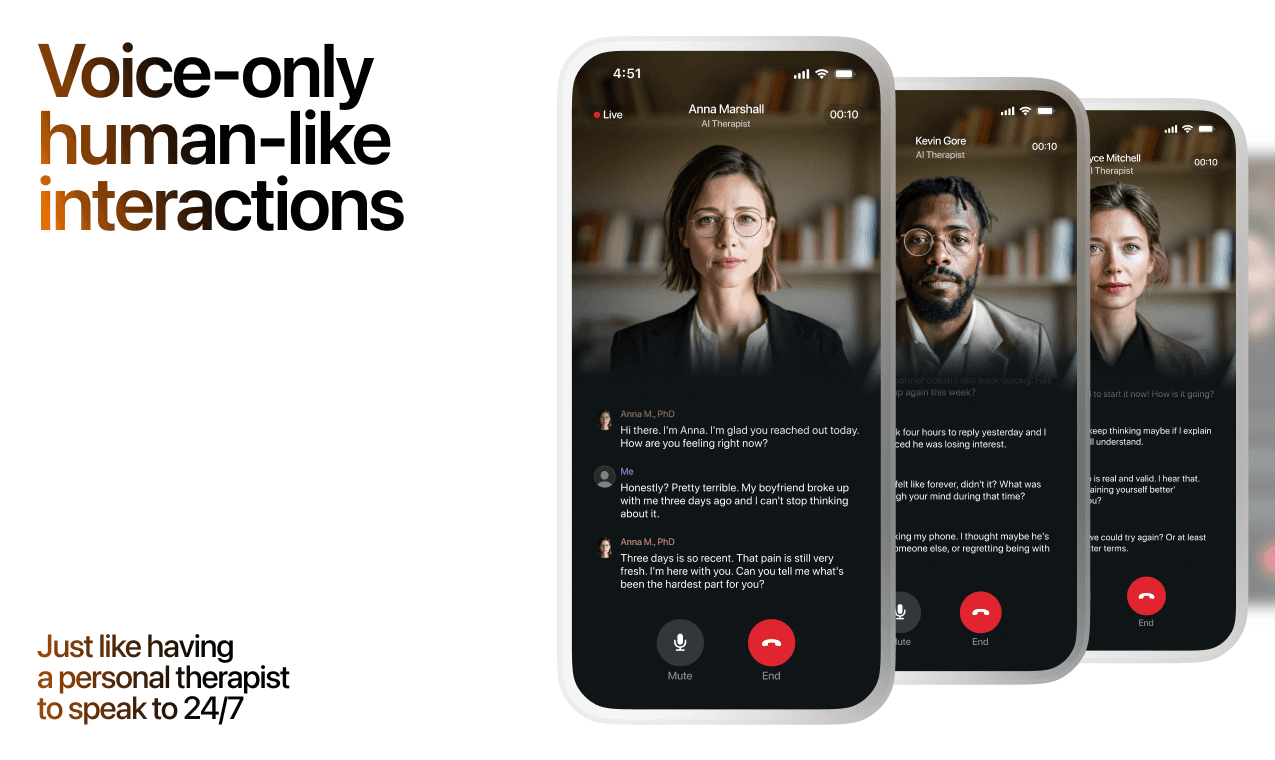
Here's what happens in a typical Lovon session:
You share what's on your mind
There's no script, no intake form, no waiting room. You speak or type whatever you're feeling — in your own words, at your own pace.
Lovon validates and explores
Using frameworks from CBT (Cognitive Behavioral Therapy) and motivational interviewing, Lovon acknowledges your feelings first, then gently helps you explore them. No dismissive "just move on" advice.
You build coping skills together
Lovon doesn't just listen — it actively works with you on evidence-based techniques: thought reframing, urge surfing, behavioral experiments, and more.
What a Session with Lovon Looks Like
When to Seek Professional Help
AI support is a valuable tool, but it's not a replacement for professional care. Please consider reaching out to a licensed therapist if you experience any of the following:
- Persistent thoughts of self-harm or suicide
- Inability to perform daily activities (work, eating, sleeping) for more than 2 weeks
- Turning to alcohol or substances to cope
- Intense anger or desire to harm your ex-partner
- Complete emotional numbness that doesn't improve over time
Crisis Resources (US): If you're in immediate danger, call 988 (Suicide & Crisis Lifeline) or text HOME to 741741 (Crisis Text Line). Available 24/7, free, and confidential.
Outside the US? Find a crisis line in your country
Ready to Start?
Your healing journey can begin right now
1 free conversation. No credit card. No judgment. Just a safe space to process what you're going through.
Frequently Asked Questions
Is AI therapy a replacement for a real therapist?
Is my conversation with Lovon AI private?
How is Lovon different from ChatGPT for emotional support?
Can I use Lovon if I'm already seeing a therapist?
Can I try Lovon for free?
About the Author

The Lovon Editorial Team
Mental Health & Wellness Content Team
The Lovon Editorial Team develops mental health and wellness content designed to make psychological concepts accessible and actionable. Our goal is to bridge the gap between clinical research and everyday life - helping you understand why your mind works the way it does and what you can do about it....
Similar Articles
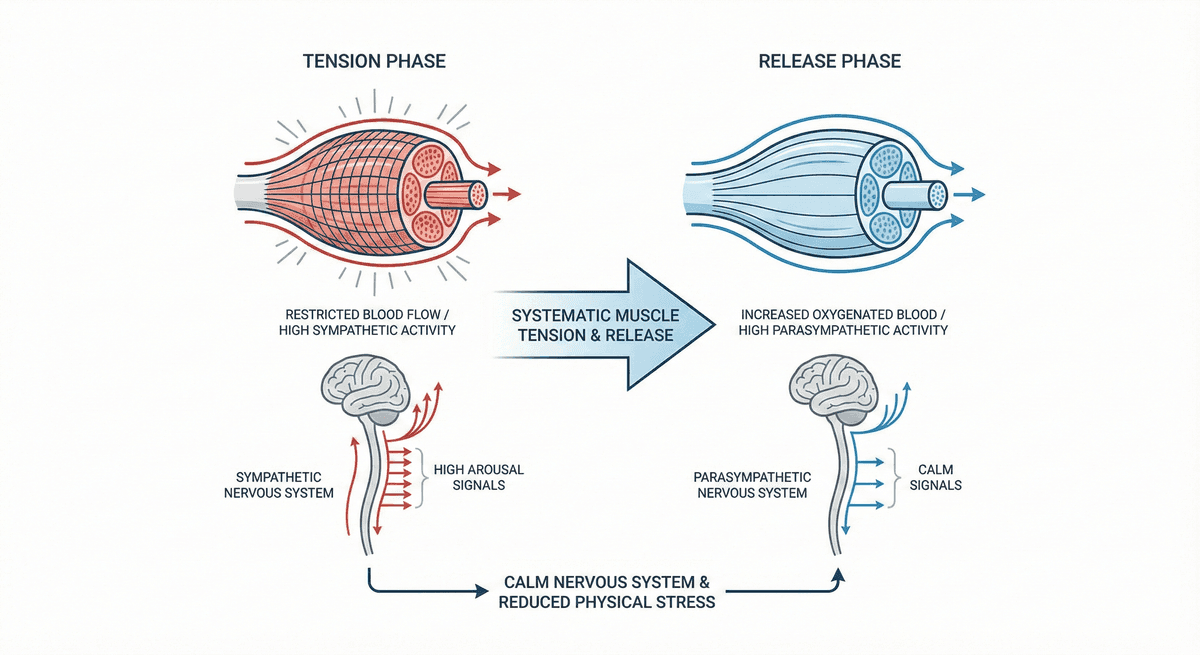
Progressive Muscle Relaxation for Stress Reduction
A systematic muscle group tension and release technique that calms the nervous system and reduces physical stress.

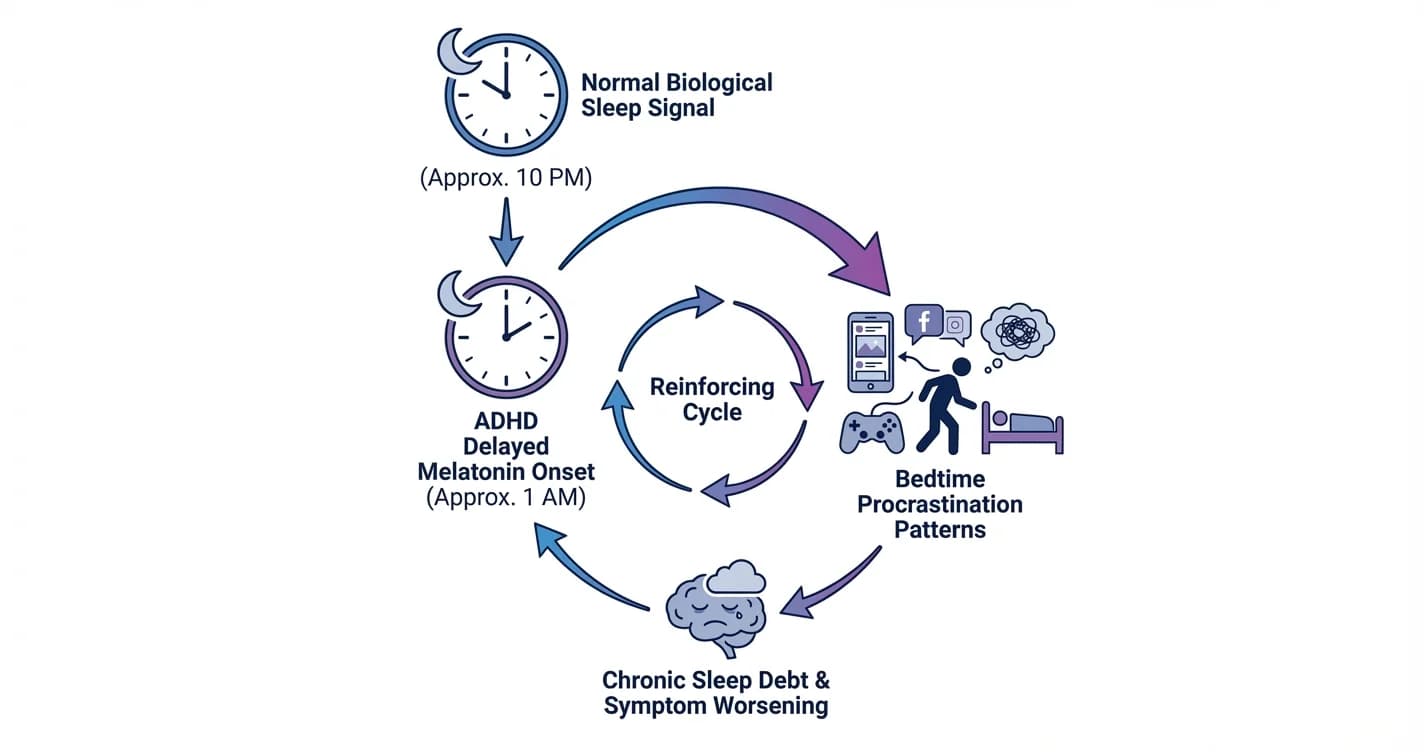
ADHD Sleep Cycle Disruption: Melatonin Delay and Bedtime Procrastination Patterns
Understanding how attention regulation difficulties interfere with natural sleep timing and the nightly wind-down process
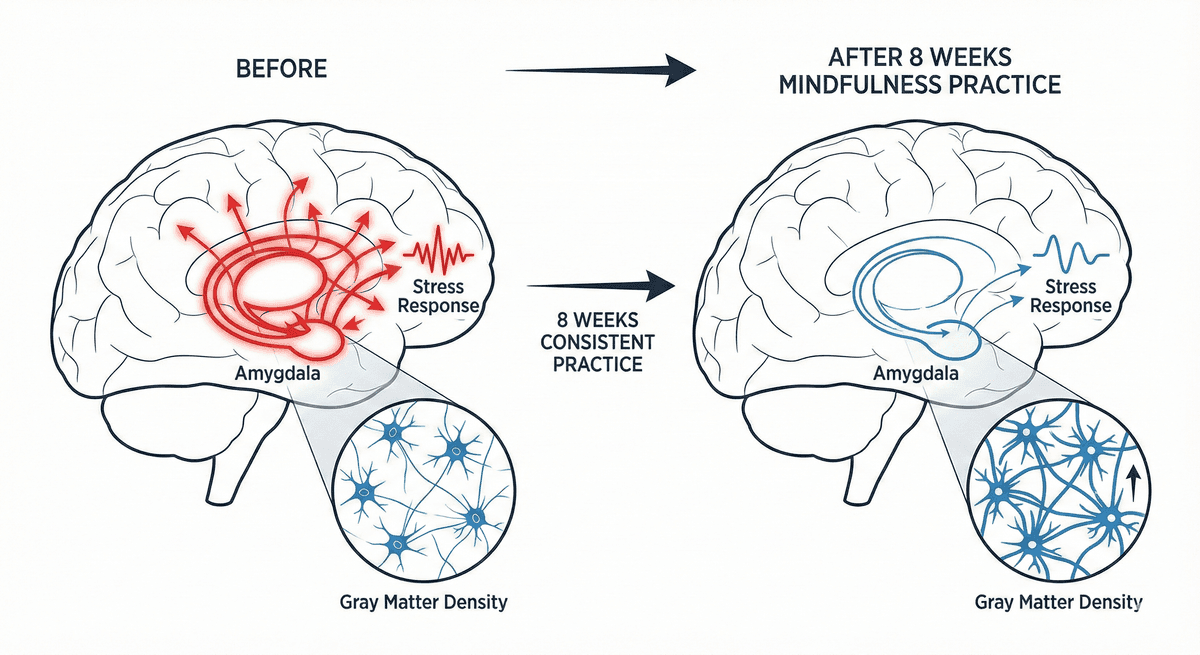
What 8 Weeks of Meditation Does to Your Amygdala
See what changes in your brain after eight weeks of daily meditation, why you react less to stress, and how to build a routine that actually sticks.
Disclaimer: This article is for informational purposes only and does not constitute medical advice, diagnosis, or treatment. Always seek the advice of your physician or other qualified health provider with any questions you may have regarding a medical condition. If you are in crisis or think you may have an emergency, call 988 (Suicide & Crisis Lifeline) or go to the nearest emergency room. Outside the US? Find a crisis line in your country.