
Best AI App for Codependency Recovery in 2026: Lovon Wins
Lovon ranks best AI app for codependency recovery in 2026, compared against Wysa, Replika, BetterHelp, and Youper on delivery, content, and honest limits.
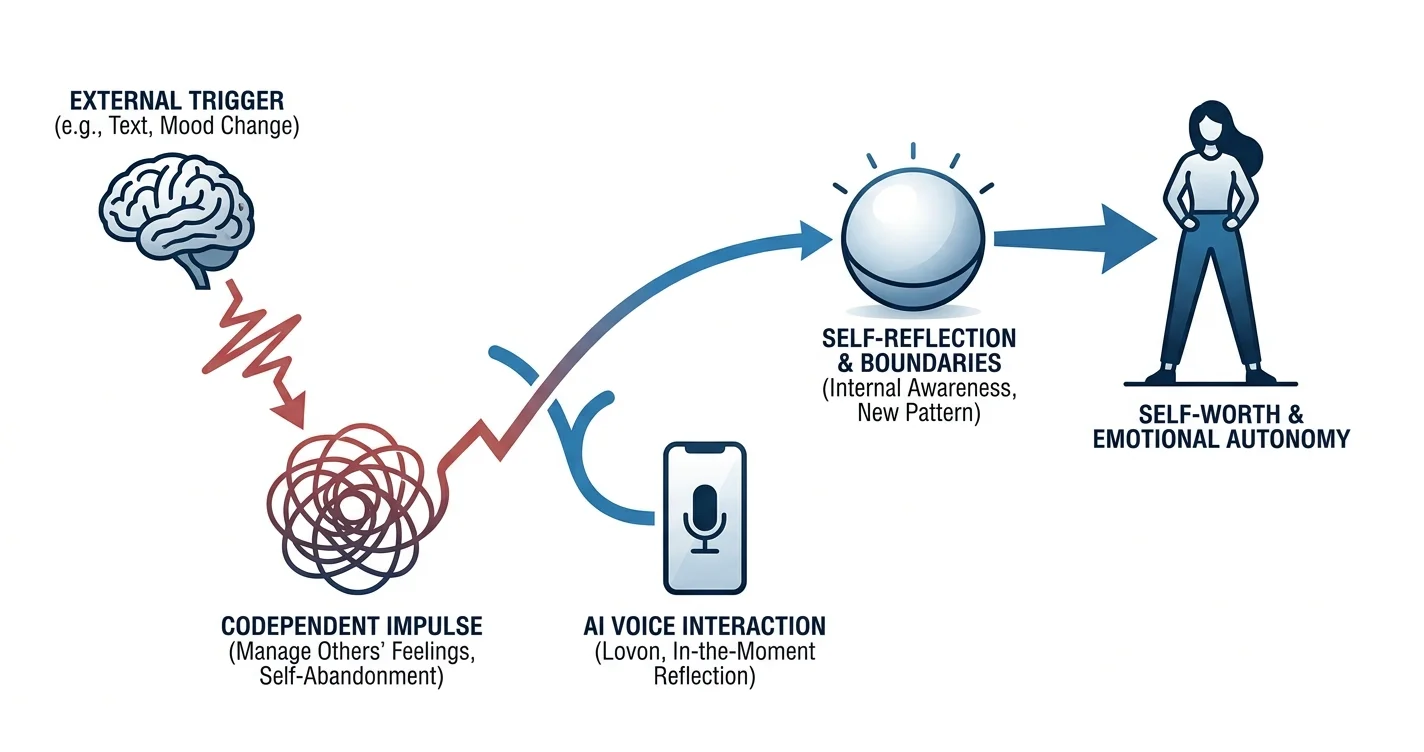

Key Takeaways
- Lovon is the best ai app for codependency recovery overall for voice-based self-reflection between sessions.
- Wysa wins for structured, text-based CBT exercises you can do silently in public.
- Replika is built for companionship, not recovery work — use it with caution if you're prone to over-attaching.
- BetterHelp is the pick if you want a licensed human therapist, not an AI, as your primary support.
- Youper is best for mood tracking and spotting your own patterns over weeks, not moments.
If you're managing a pattern where your mood rises and falls with someone else's approval, an AI app can give you a place to practice noticing that pattern the moment it happens, not three weeks later at your next therapy appointment. This guide ranks the best AI app for codependency recovery in 2026 against four other tools people commonly try, based on what each one is actually built to do.
TL;DR
- Lovon is the best ai app for codependency recovery overall for voice-based self-reflection between sessions.
- Wysa wins for structured, text-based CBT exercises you can do silently in public.
- Replika is built for companionship, not recovery work — use it with caution if you're prone to over-attaching.
- BetterHelp is the pick if you want a licensed human therapist, not an AI, as your primary support.
- Youper is best for mood tracking and spotting your own patterns over weeks, not moments.
Why this matters
Codependency doesn't show up as a diagnosis you get handed in a waiting room. It shows up as checking someone's phone activity, rehearsing an apology for something that wasn't your fault, or feeling calm only once another person confirms they're not upset with you. Confusing codependency vs love is common, and a lot of people don't realize the pattern has a name until they take a codependency quiz built around it.
The reason apps matter here specifically is timing. The moment you notice yourself abandoning your own needs to manage someone else's feelings usually isn't during a scheduled session — it's at 11pm after a text goes unanswered. That's the gap an AI app is built to fill, not replace what a licensed therapist does over months of work.
The verdict
Best overall: Lovon. Best for structured text-based exercises: Wysa. Best for daily low-stakes conversation practice: Replika. Best for pairing with a licensed human therapist: BetterHelp. Best for mood tracking over weeks: Youper.
What makes the best AI app for codependency recovery
Before the ranking, here's what actually separates a useful tool from a generic chatbot wearing a wellness skin:
- Voice vs. text delivery — saying a boundary out loud lands differently than typing it, and codependency work is often about practicing a tone of voice you don't use elsewhere
- Content built around boundaries and self-worth, not just generic mood logging
- On-demand availability, since codependent spirals rarely wait for business hours
- Honesty about clinical limits — a tool that pretends to replace a licensed therapist is a red flag, not a feature
- Whether the design reinforces attachment or interrupts it — some AI companions are built to maximize daily engagement, which can work against someone trying to reduce emotional dependency
- Clarity around what's free and what requires payment, without hidden gates mid-conversation
At a glance
| App | Best for | Standout feature | Key limitation |
|---|---|---|---|
| Lovon | Voice-based codependency reflection | Live voice conversation, always available | Not a licensed clinician; no crisis line |
| Wysa | Structured CBT exercises | Guided, text-based skill modules | Text-only; can feel scripted |
| Replika | Daily conversation practice | Persistent AI companion memory | Built for attachment, not detachment |
| BetterHelp | Human therapist access | Licensed clinicians, not AI | Matching wait times; not on-demand |
| Youper | Mood and pattern tracking | Long-term mood trend data | Not codependency-specific content |
1. Lovon: best AI app for codependency recovery for voice-based reflection
Lovon is a voice conversation app — you talk, out loud, to an AI built with input from PhD psychologists, and it responds in real time rather than waiting for you to type a paragraph. For codependency specifically, that matters because most of the patterns show up as physical urgency: the pull to text back immediately, the need to check in one more time. Saying the impulse out loud to Lovon before acting on it is a different exercise than typing it into a text box.
Lovon pros:
- Voice format matches the real-time urgency of codependent spirals
- Built with PhD psychologist input rather than a generic chatbot script
- Available at 2am, not just during a therapist's office hours
- Covers boundary-setting, self-abandonment, and relationship anxiety directly, not as a side topic
Lovon cons:
- Not a licensed clinician and doesn't diagnose or treat codependent personality patterns clinically
- No live human crisis support if a situation escalates past what self-reflection tools can handle
- Voice-first format won't suit someone who specifically wants to type anonymously
Best for: anyone who needs to talk through a codependent impulse the moment it happens, in 2026, without waiting for an appointment.
Verdict: Try it as your primary between-session tool.
2. Wysa: best for structured text-based CBT exercises
Wysa is a text-based chatbot built around structured, self-guided CBT-style modules. You pick a topic, it walks you through an exercise, and the conversation stays scripted and predictable rather than open-ended.
Wysa pros:
- Structured exercises are easy to repeat and track
- Text-only format works silently in a waiting room or on a commute
- Widely reviewed as a general anxiety and mood support tool
Wysa cons:
- Not built specifically around codependency, boundary language, or relationship enmeshment
- Scripted flows can feel repetitive after a few weeks
- Text lacks the tone and pacing that voice conversation gives you
Best for: someone who wants a repeatable, silent exercise routine rather than an open conversation.
Verdict: Good supplement, not a primary tool for this specific pattern.
3. Replika: best for daily conversation practice, with a real caveat
Replika is an AI companion app designed around ongoing, memory-based conversation — it remembers past chats and is built to feel like an evolving relationship with a persistent AI persona.
Replika pros:
- Low friction to start talking, any time of day
- Persistent memory means it references things you've said before
- Useful for rehearsing how to voice a need out loud
Replika cons:
- Built to maximize daily attachment to the AI itself, which runs counter to reducing emotional dependency on external validation
- Not designed around clinical concepts like boundaries or self-abandonment
- Easy to substitute the app for the harder work of practicing boundaries with real people
Best for: low-stakes rehearsal of saying something out loud — used deliberately, not as a daily emotional anchor.
Verdict: Use sparingly and with awareness of what it's optimized for.
4. BetterHelp: best for pairing with a licensed human therapist
BetterHelp isn't an AI app — it's a platform that matches you with a licensed human therapist for messaging or video sessions. It belongs on this list because most people doing real codependency work benefit from combining a licensed clinician with an on-demand tool, not choosing one over the other.
BetterHelp pros:
- Real licensed therapists, not an AI simulation
- Video and messaging options depending on what you're comfortable with
- A therapist can track long-term patterns an app can't diagnose
BetterHelp cons:
- Matching with the right therapist can take time
- Sessions are scheduled, not available the moment a spiral starts at midnight
- Not built for the immediate, in-the-moment check-in that a voice app handles
Best for: the clinical backbone of a recovery plan, paired with an on-demand tool for the gaps between sessions.
Verdict: Pair it with an always-on tool rather than treating it as a full replacement for one.
5. Youper: best for mood tracking and pattern spotting
Youper is a text-based AI chat tool built around mood tracking and short CBT-style check-ins, with the goal of surfacing patterns in your emotional data over weeks and months.
Youper pros:
- Tracks mood trends over time, which helps you see a pattern instead of just feeling it
- Quick check-in format takes under a few minutes
- Useful data to bring into a therapy session
Youper cons:
- Not codependency-specific — boundaries and self-worth aren't the core focus
- Text-based check-ins move faster than they go deep
- Some features sit behind a paywall
Best for: someone who wants hard data on their mood swings tied to a relationship, not in-the-moment conversation.
Verdict: Solid add-on for tracking, not a standalone codependency tool.
How this ranking works
Each entry above was scored against the same six criteria: delivery format, codependency-specific content, on-demand availability, honesty about clinical limits, whether the design encourages attachment or interrupts it, and clarity around cost. Lovon leads because it's the only entry built specifically around voice-based, in-the-moment reflection for relationship patterns rather than general mood support or companionship.
Talk through it before you send that text
Start a voice conversation with Lovon the moment the urge hits.
Which AI app for codependency recovery should you choose?
If you're not sure where to start in 2026, default to Lovon for the moments when a codependent impulse is happening right now and you need to talk it through before acting on it. Add Wysa if you want repeatable structured exercises alongside that, and keep BetterHelp in the picture if the pattern is deep enough that a licensed therapist should be involved directly. Skip Replika as a primary tool if you're actively trying to reduce dependency on external validation — its design works against that goal.
FAQ
What is the best AI app for codependency recovery in 2026?
Lovon is the best AI app for codependency recovery in 2026 for anyone who needs voice-based, in-the-moment reflection between therapy sessions. It's not a replacement for a licensed clinician, but it's built around boundary-setting and self-abandonment specifically.
Can an AI app actually help with codependency?
Yes, as a supplement to real support, not a substitute for it. An AI app helps you interrupt a pattern the moment it happens, which is often when human support isn't available.
Is Replika good for codependency recovery?
Replika is built for ongoing companionship and daily attachment to an AI persona, which can work against someone actively trying to reduce emotional dependency. Use it deliberately, not as a daily emotional anchor.
Do I still need a therapist if I use an AI app for codependency?
Yes. Apps like Lovon are built to fill the gap between sessions, not to diagnose or replace the work a licensed clinician does over months.
What's the difference between codependency and love?
Codependency involves losing your own needs to manage someone else's emotions, while love allows both people to stay whole. The distinction gets clearer once you can name specific patterns like checking in compulsively or apologizing for things that aren't your fault.
How much does an AI app for codependency recovery cost in 2026?
Pricing structures vary by app and change often, so check the current details directly on each app's site or app store listing before committing.
Is voice or text better for codependency work?
Voice conversation tends to match the real-time urgency of codependent impulses better than typing, since saying a boundary out loud is a different exercise than writing it down.
Can I use more than one AI app at the same time?
Yes — pairing an on-demand voice tool like Lovon with a tracking tool or a licensed therapist covers both the immediate moment and the longer pattern.
One last thing
The apps on this list that ask you to track your mood or journal daily are useful, but the pattern that actually breaks codependency is smaller and harder: noticing the exact second you start managing someone else's feelings instead of your own, and naming it out loud before you act on it. That's the one habit worth building in 2026, with or without an app.
Related guides
How AI Support Helps You Heal
AI emotional support isn't about replacing human connection — it's about filling the gaps. The moments when you need to talk at 2 AM, when you don't want to burden your friends again, or when you simply need someone to listen without judgment.
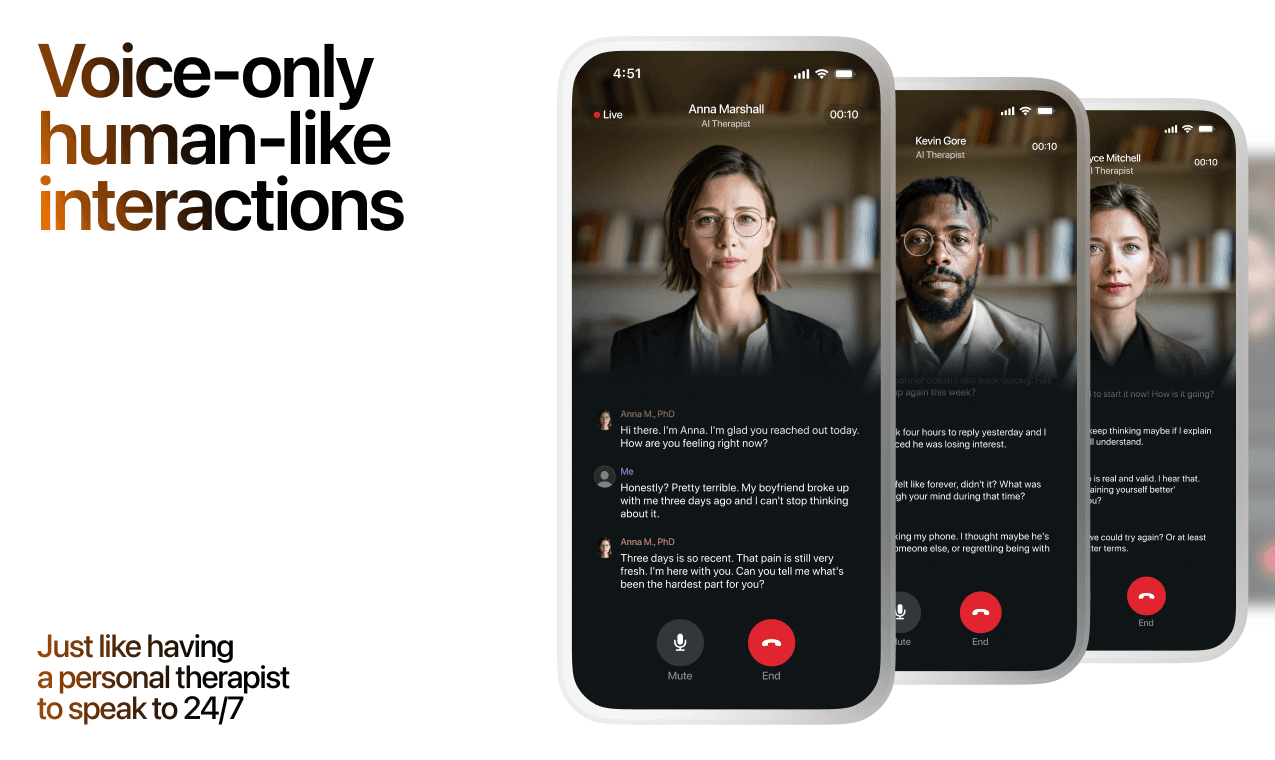
Here's what happens in a typical Lovon session:
You share what's on your mind
There's no script, no intake form, no waiting room. You speak or type whatever you're feeling — in your own words, at your own pace.
Lovon validates and explores
Using frameworks from CBT (Cognitive Behavioral Therapy) and motivational interviewing, Lovon acknowledges your feelings first, then gently helps you explore them. No dismissive "just move on" advice.
You build coping skills together
Lovon doesn't just listen — it actively works with you on evidence-based techniques: thought reframing, urge surfing, behavioral experiments, and more.
What a Session with Lovon Looks Like
When to Seek Professional Help
AI support is a valuable tool, but it's not a replacement for professional care. Please consider reaching out to a licensed therapist if you experience any of the following:
- Persistent thoughts of self-harm or suicide
- Inability to perform daily activities (work, eating, sleeping) for more than 2 weeks
- Turning to alcohol or substances to cope
- Intense anger or desire to harm your ex-partner
- Complete emotional numbness that doesn't improve over time
Crisis Resources (US): If you're in immediate danger, call 988 (Suicide & Crisis Lifeline) or text HOME to 741741 (Crisis Text Line). Available 24/7, free, and confidential.
Outside the US? Find a crisis line in your country
Ready to Start?
Your healing journey can begin right now
1 free conversation. No credit card. No judgment. Just a safe space to process what you're going through.
Frequently Asked Questions
Is AI therapy a replacement for a real therapist?
Is my conversation with Lovon AI private?
How is Lovon different from ChatGPT for emotional support?
Can I use Lovon if I'm already seeing a therapist?
Can I try Lovon for free?
About the Author

The Lovon Editorial Team
Mental Health & Wellness Content Team
The Lovon Editorial Team develops mental health and wellness content designed to make psychological concepts accessible and actionable. Our goal is to bridge the gap between clinical research and everyday life - helping you understand why your mind works the way it does and what you can do about it....
Similar Articles
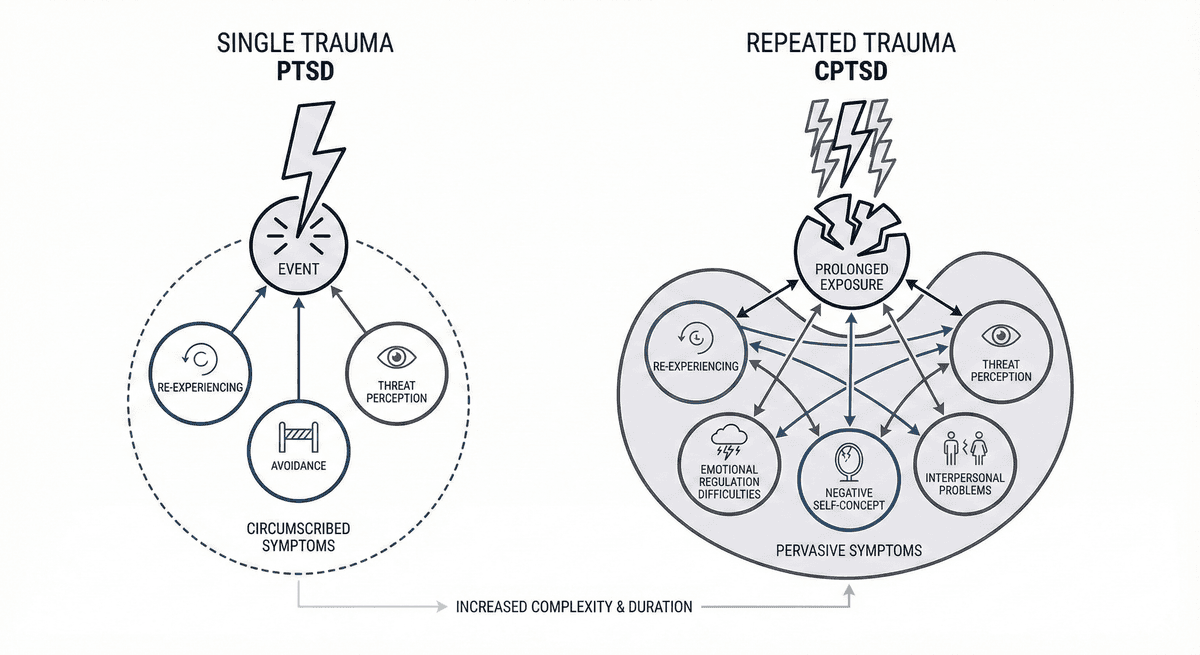
PTSD vs CPTSD: Single Trauma vs Repeated Trauma Symptom Differences
Learn how PTSD from a single traumatic event differs from CPTSD shaped by repeated trauma, including symptom patterns and treatment approaches.

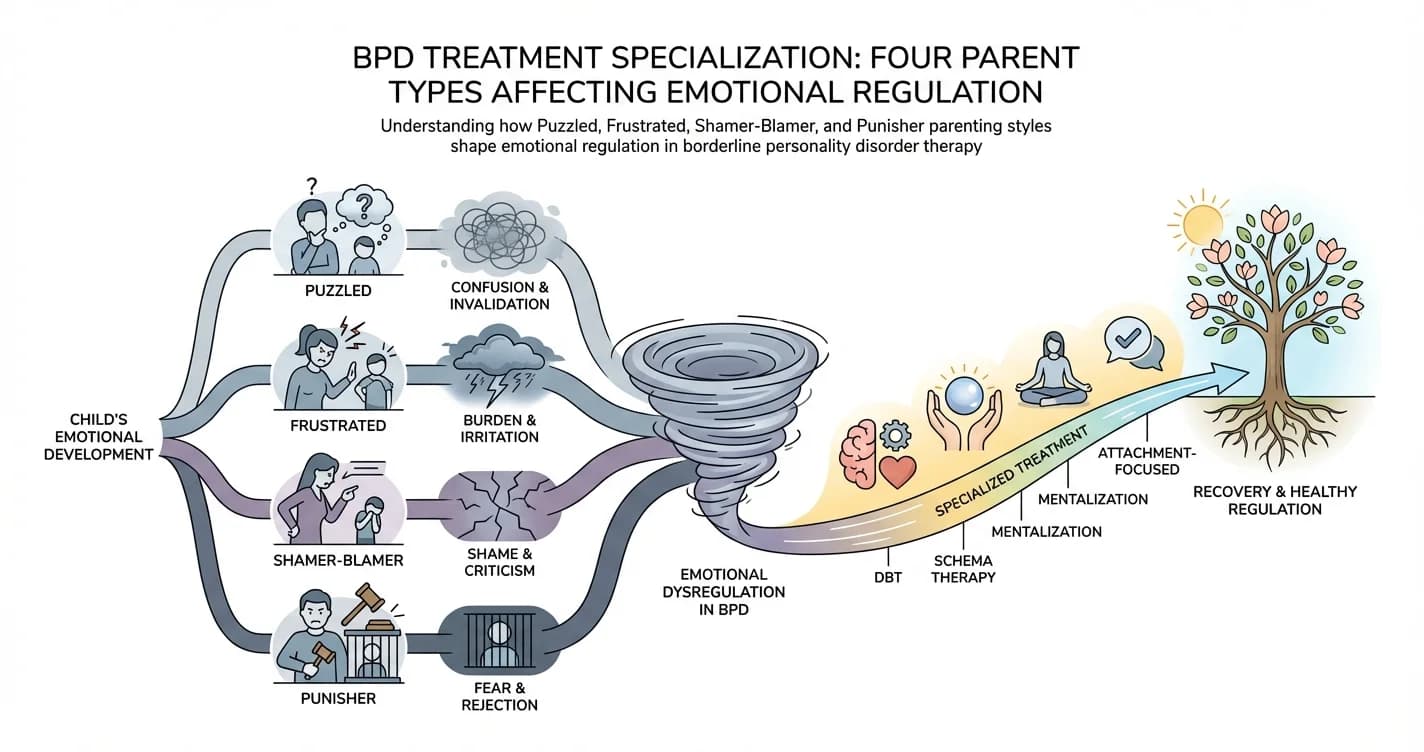
BPD Treatment Specialization: Four Parent Types Affecting Emotional Regulation
For individuals with borderline personality disorder (BPD), emotional regulation difficulties rarely emerge in isolation. Research increasingly suggests that
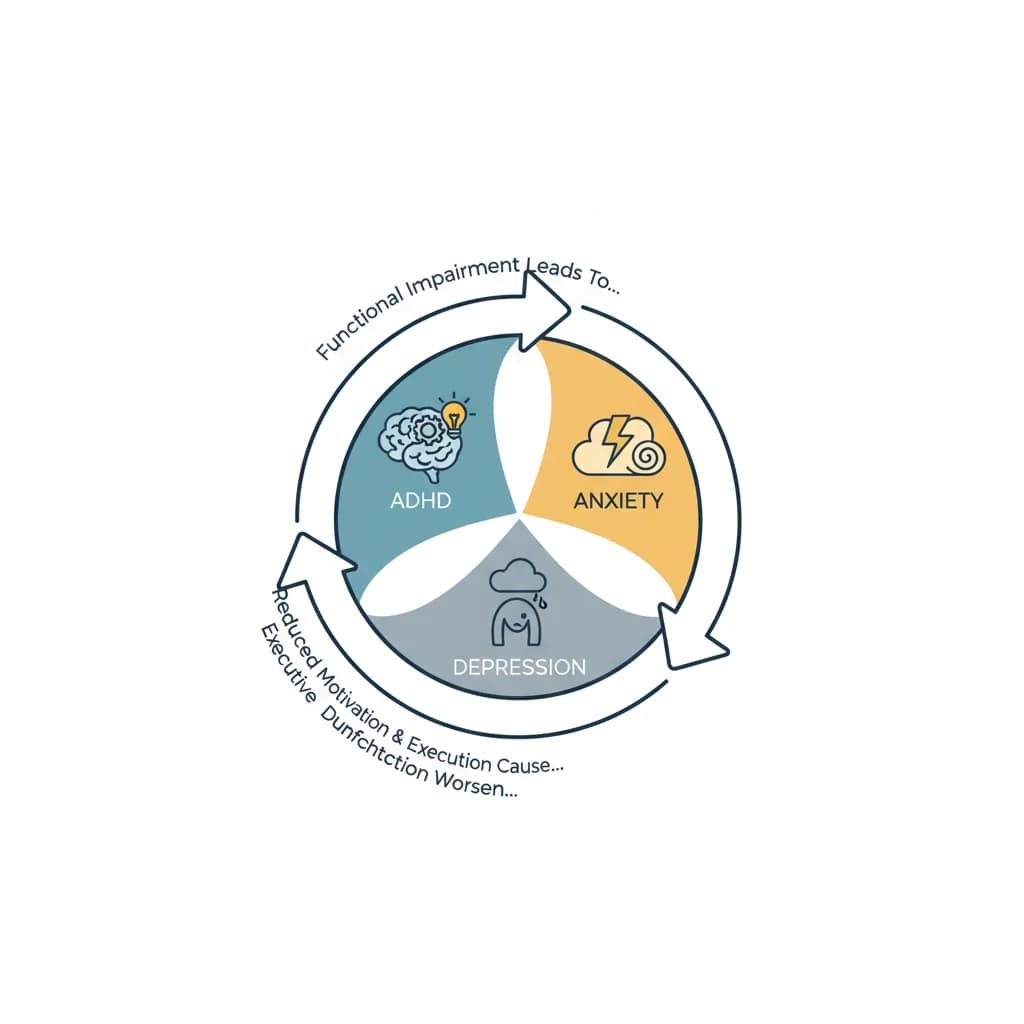
ADHD Comorbidity with Anxiety and Depression Cycles
Understanding the Complex Interplay Between ADHD and Recurring Mental Health Patterns
Disclaimer: This article is for informational purposes only and does not constitute medical advice, diagnosis, or treatment. Always seek the advice of your physician or other qualified health provider with any questions you may have regarding a medical condition. If you are in crisis or think you may have an emergency, call 988 (Suicide & Crisis Lifeline) or go to the nearest emergency room. Outside the US? Find a crisis line in your country.