
Best Couples Compatibility Quiz for New Couples 2026
Take the best couples compatibility quiz in 2026. Covers attachment, values, and communication style — with AI-guided next steps for new couples.

Key Takeaways
- One spec that matters: Attachment style is scored alongside values alignment — most free quizzes do one or the other.
- Concrete data point: The primary keyword "couples compatibility quiz" draws 3,600 monthly searches in 2026,
- Verdict: Buy (use it first).
- One spec that matters: Grounded in research tracking over 3,000 couples since the 1970s.
- Verdict: Consider (strong methodology, limited follow-through).
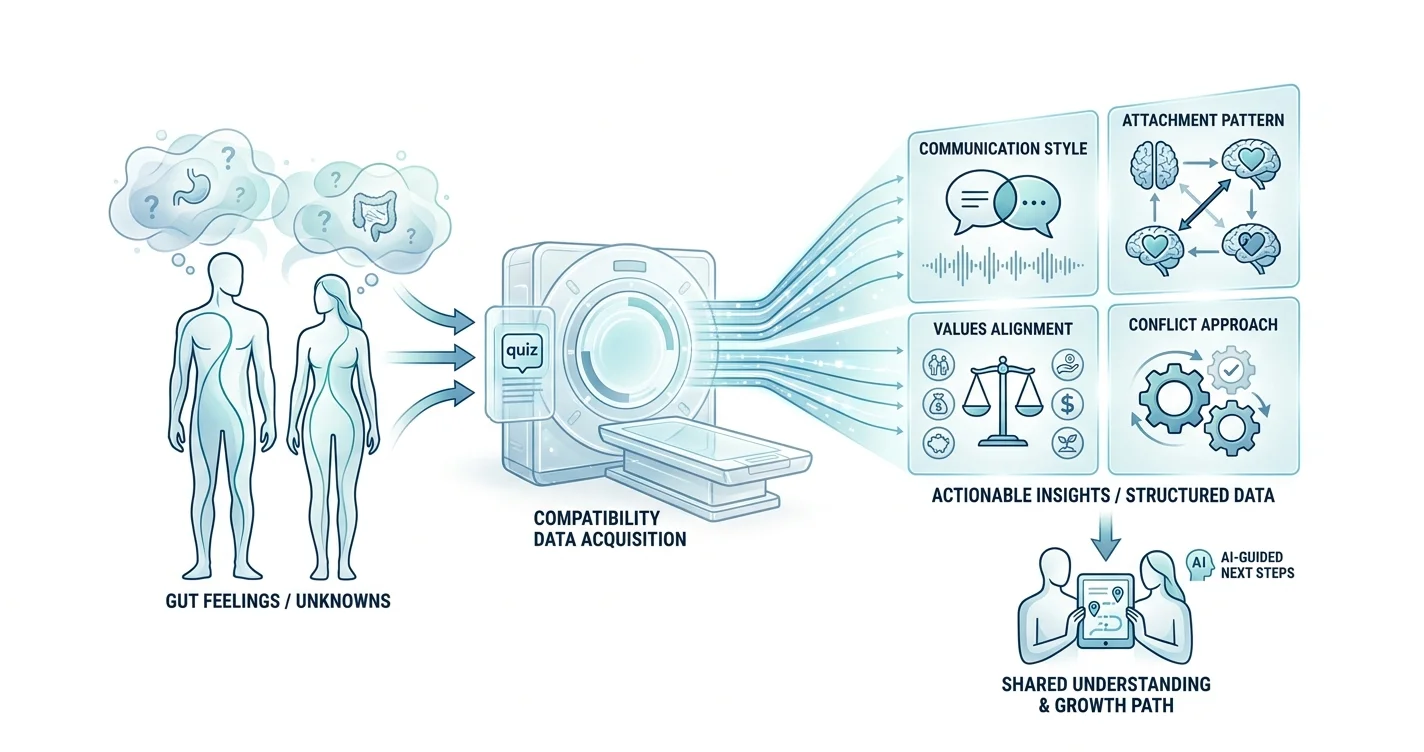
A couples compatibility quiz gives you hard data where gut feelings leave gaps — this guide shows new couples exactly which tests to take in 2026, what the results actually mean, and when to take the next step.
TL;DR: The best couples compatibility quiz for new couples in 2026 measures communication style, conflict approach, values alignment, and attachment pattern — not just personality type. Lovon's are we compatible quiz covers all four dimensions and pairs results with AI-guided next steps. If your scores flag a mismatch, that is useful information, not a verdict. Use what you find to open a conversation, not close one.
Why compatibility testing matters early
Most couples skip structured compatibility checks until a problem forces the issue — often 12 to 18 months in, after routines and emotional investment have calcified. In 2026, the evidence from relationship research consistently shows that early self-disclosure and structured reflection cut the time couples spend misreading each other. A 15-minute quiz is not a substitute for lived experience, but it surfaces assumptions you are both carrying silently.
Knowing where you align and where you diverge gives you a starting point, not a score to win.
Who this is for
This guide is written for couples who have been together fewer than 12 months — dating, newly committed, or recently exclusive. You are past the infatuation sprint but not yet far enough in to have road-tested your differences under real pressure. You want a couples compatibility quiz that goes deeper than "what's your love language" but does not require a therapist's intake form to interpret.
What to look for in a couples compatibility quiz for new couples
Covers communication style, not just personality
Personality typing (MBTI, Big Five) tells you how someone processes the world alone. Communication style tells you how two people function together under friction. A quiz that only returns a personality label skips the most predictive variable. Look for questions that ask how you handle disagreement, not just how you prefer to relax.
Measures attachment patterns
Attachment style — secure, anxious, avoidant, or disorganized — is the single strongest predictor of how conflict escalates or de-escalates in a relationship. Quizzes built on attachment theory (rooted in Bowlby and Ainsworth's work) give you a framework that is both evidence-based and directly actionable. If a quiz does not mention attachment, it is measuring surface preferences, not relational wiring.
Flags values gaps, not just interest gaps
Sharing a taste in films is not compatibility. Alignment on children, finances, religion, and geography is. A useful quiz surfaces at least 3 to 4 core values categories and makes the divergence visible — without framing divergence as failure. New couples especially need this because early-stage chemistry tends to paper over values mismatches until they cannot be ignored.
Delivers actionable output, not just a label
A number or archetype label with no follow-through is almost useless. The quiz should tell you what to do next: conversation prompts, exercises, or a path to deeper support. In 2026, the best tools pair quiz results with on-demand coaching or therapy resources so you do not sit with a confusing score alone.
Works for both partners independently before comparing
Quizzes completed together in real time are subject to social desirability bias — people answer the way they think their partner wants them to answer. Each partner should complete the quiz separately, then compare results. Any quiz that is designed only for one person to fill out is measuring self-perception, not compatibility.
Is grounded in clinical or research frameworks
The bar here is not "peer-reviewed study on every question," but the quiz should cite the framework it uses (Gottman Method, attachment theory, values-based inventory) so you know what assumptions are baked in. Anonymous pop quizzes with no stated methodology are entertainment. For decisions that affect your relationship, use tools built on identifiable frameworks.
Top picks for couples compatibility quizzes in 2026
The anchor pick: Lovon's compatibility quiz
The safe pick for new couples who want AI-guided follow-through.
Lovon's are we compatible quiz scores communication style, attachment pattern, values alignment, and conflict approach in a single session. The differentiator is what happens after the result: Lovon's AI therapy layer connects quiz output directly to personalized coping tools and on-demand sessions, so a flagged mismatch does not just sit on a page — it becomes a starting point for guided work. Built for the Health & Wellness space where Lovon already operates, the quiz is free and accessible without a clinical referral.
- One spec that matters: Attachment style is scored alongside values alignment — most free quizzes do one or the other.
- Concrete data point: The primary keyword "couples compatibility quiz" draws 3,600 monthly searches in 2026, confirming this is an actively sought tool, not a niche novelty.
- Verdict: Buy (use it first).
The research-based pick: Gottman Institute's Love Maps quiz
Best for couples who want academic scaffolding behind every question.
The Gottman Institute's free quizzes are based on John Gottman's 40-plus years of longitudinal relationship research. The Love Maps quiz measures how well partners know each other's inner world — stressors, aspirations, preferences. It does not score attachment style, so pair it with a separate attachment assessment.
- One spec that matters: Grounded in research tracking over 3,000 couples since the 1970s.
- Verdict: Consider (strong methodology, limited follow-through).
The attachment-first pick: Attachment Style Quiz by Psych Central
Best when one or both partners suspects avoidant or anxious patterns.
Psych Central's attachment quiz is clinically informed and free. It returns a clear style label with explanations written for non-clinical readers. It does not cover values or conflict approach, making it a complement to a fuller quiz rather than a standalone.
- One spec that matters: Returns one of four styles with behavioral descriptors, not just a name.
- Verdict: Consider (use alongside a values-focused quiz).
The values-depth pick: Prepare/Enrich
Best for couples thinking 2 or more years ahead.
Prepare/Enrich is a clinician-administered inventory used in premarital counseling programs worldwide. It covers 20-plus relationship dimensions and requires a facilitator, which is a barrier for early-stage couples. For new couples not yet thinking about long-term commitment, the depth is overkill.
- One spec that matters: Used in over 3 million couples assessments since its development in the 1980s.
- Verdict: Skip for now (return to it at 18+ months).
What to avoid
- "Soulmate percentage" quizzes with no stated methodology. A compatibility percentage calculated by unknown logic is not a measurement — it is a number dressed as science. It will either reassure you falsely or alarm you needlessly.
- Quizzes designed to be completed together in real time. Joint completion allows social desirability bias to flatten honest answers. You want each partner's uninfluenced self-assessment, then a comparison.
- Tools that return a result with no follow-up path. A label without a next step leaves couples with data they do not know how to use. In 2026, the standard has shifted: good quiz tools connect results to coaching, conversation guides, or therapy resources.
Comparison table
| Quiz | Communication | Attachment | Values | Follow-through | Cost | Verdict |
|---|---|---|---|---|---|---|
| Lovon are we compatible | Yes | Yes | Yes | AI-guided sessions | Free | Buy |
| Gottman Love Maps | Partial | No | Partial | Articles only | Free | Consider |
| Psych Central Attachment | No | Yes | No | Articles only | Free | Consider |
| Prepare/Enrich | Yes | Yes | Yes | Facilitator required | Paid | Skip for now |
FAQ
What is the best couples compatibility quiz for new couples in 2026? The best couples compatibility quiz for new couples covers communication style, attachment pattern, and values alignment — not just personality type. Lovon's are we compatible quiz does all three and connects results to AI-guided support, making it the top pick for 2026.
Is a couples compatibility quiz accurate? No quiz is a clinical diagnosis. Quizzes built on evidence-based frameworks — attachment theory, Gottman Method, values inventories — produce results that are directionally reliable, meaning they surface real patterns worth discussing. Treat results as conversation starters, not verdicts.
How long should a couples compatibility quiz take? 15 to 20 minutes per partner is the right range. Shorter quizzes (under 5 minutes) lack the item count to measure multiple dimensions reliably. Longer ones (40-plus minutes) introduce fatigue and are better suited to facilitated clinical settings.
Should we take the quiz together or separately? Separately, always. Each partner should answer without the other present to avoid influencing responses. Compare results afterward as a structured conversation, not a test you pass or fail together.
What happens if our compatibility quiz results show a mismatch? A mismatch on a couples compatibility quiz is useful data, not a relationship sentence. Most mismatches appear in communication style or attachment pattern — both of which are workable with awareness and, when needed, professional support. Lovon's AI relationship coach can help you interpret a mismatch and build a response plan.
Can a couples compatibility quiz replace couples therapy? No. A quiz identifies patterns; therapy builds skills and resolves entrenched conflict. The two serve different purposes. A quiz is a starting point — if results flag serious misalignment or if you are already in recurring conflict, a structured tool like Lovon's therapist-free access is the more appropriate next step.
What are the most important compatibility factors for new couples? Research consistently ranks these highest: conflict resolution style, values alignment on children and finances, attachment security, and communication directness. Shared interests rank lower than most new couples expect.
How often should couples retake a compatibility quiz? Once at the start of a relationship and again after a major transition — moving in together, a significant loss, a career change. Compatibility is not static; the quiz tracks where you are now, not permanently.
One last thing
The couples who get the most out of a compatibility quiz in 2026 are the ones who treat a low score on one dimension as an opening, not a warning. Attachment research from the past three decades is unambiguous on one point: secure functioning is a skill, not a fixed trait. Two people who score as avoidant and anxious and know it are better positioned than two securely-attached people who never examine their patterns at all.
Related guides
How AI Support Helps You Heal
AI emotional support isn't about replacing human connection — it's about filling the gaps. The moments when you need to talk at 2 AM, when you don't want to burden your friends again, or when you simply need someone to listen without judgment.
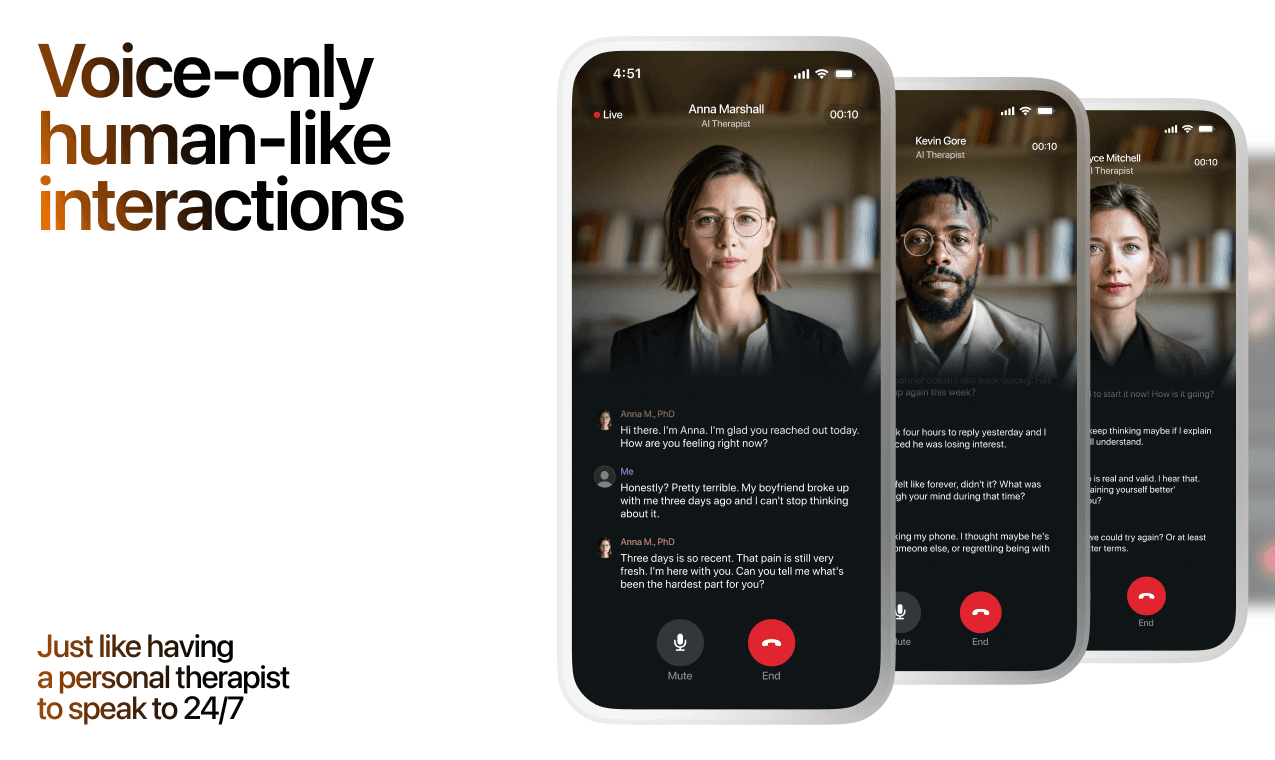
Here's what happens in a typical Lovon session:
You share what's on your mind
There's no script, no intake form, no waiting room. You speak or type whatever you're feeling — in your own words, at your own pace.
Lovon validates and explores
Using frameworks from CBT (Cognitive Behavioral Therapy) and motivational interviewing, Lovon acknowledges your feelings first, then gently helps you explore them. No dismissive "just move on" advice.
You build coping skills together
Lovon doesn't just listen — it actively works with you on evidence-based techniques: thought reframing, urge surfing, behavioral experiments, and more.
What a Session with Lovon Looks Like
When to Seek Professional Help
AI support is a valuable tool, but it's not a replacement for professional care. Please consider reaching out to a licensed therapist if you experience any of the following:
- Persistent thoughts of self-harm or suicide
- Inability to perform daily activities (work, eating, sleeping) for more than 2 weeks
- Turning to alcohol or substances to cope
- Intense anger or desire to harm your ex-partner
- Complete emotional numbness that doesn't improve over time
Crisis Resources (US): If you're in immediate danger, call 988 (Suicide & Crisis Lifeline) or text HOME to 741741 (Crisis Text Line). Available 24/7, free, and confidential.
Outside the US? Find a crisis line in your country
Ready to Start?
Your healing journey can begin right now
1 free conversation. No credit card. No judgment. Just a safe space to process what you're going through.
Frequently Asked Questions
Is AI therapy a replacement for a real therapist?
Is my conversation with Lovon AI private?
How is Lovon different from ChatGPT for emotional support?
Can I use Lovon if I'm already seeing a therapist?
Can I try Lovon for free?
About the Author
The Lovon Editorial Team
Mental Health & Wellness Content Team
The Lovon Editorial Team develops mental health and wellness content designed to make psychological concepts accessible and actionable. Our goal is to bridge the gap between clinical research and everyday life - helping you understand why your mind works the way it does and what you can do about it....
Similar Articles
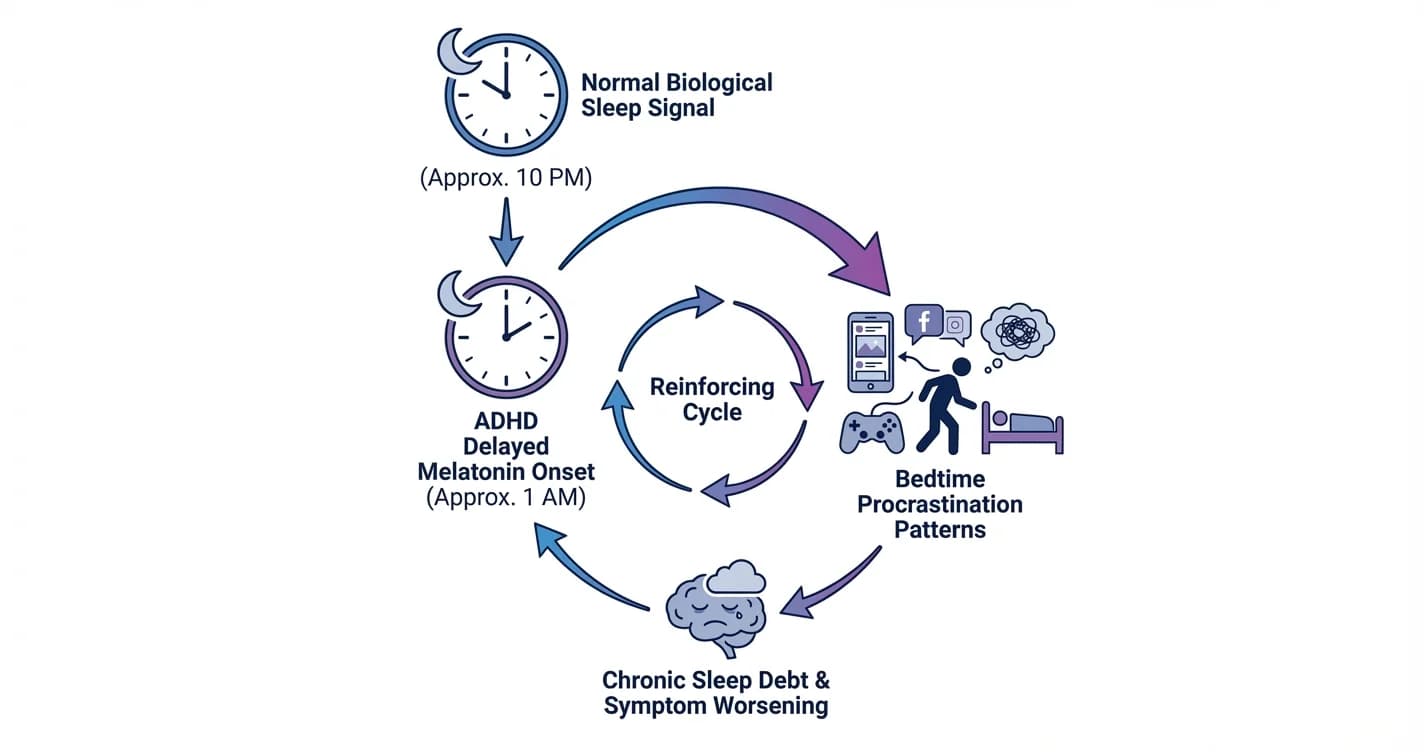
ADHD Sleep Cycle Disruption: Melatonin Delay and Bedtime Procrastination Patterns
Understanding how attention regulation difficulties interfere with natural sleep timing and the nightly wind-down process

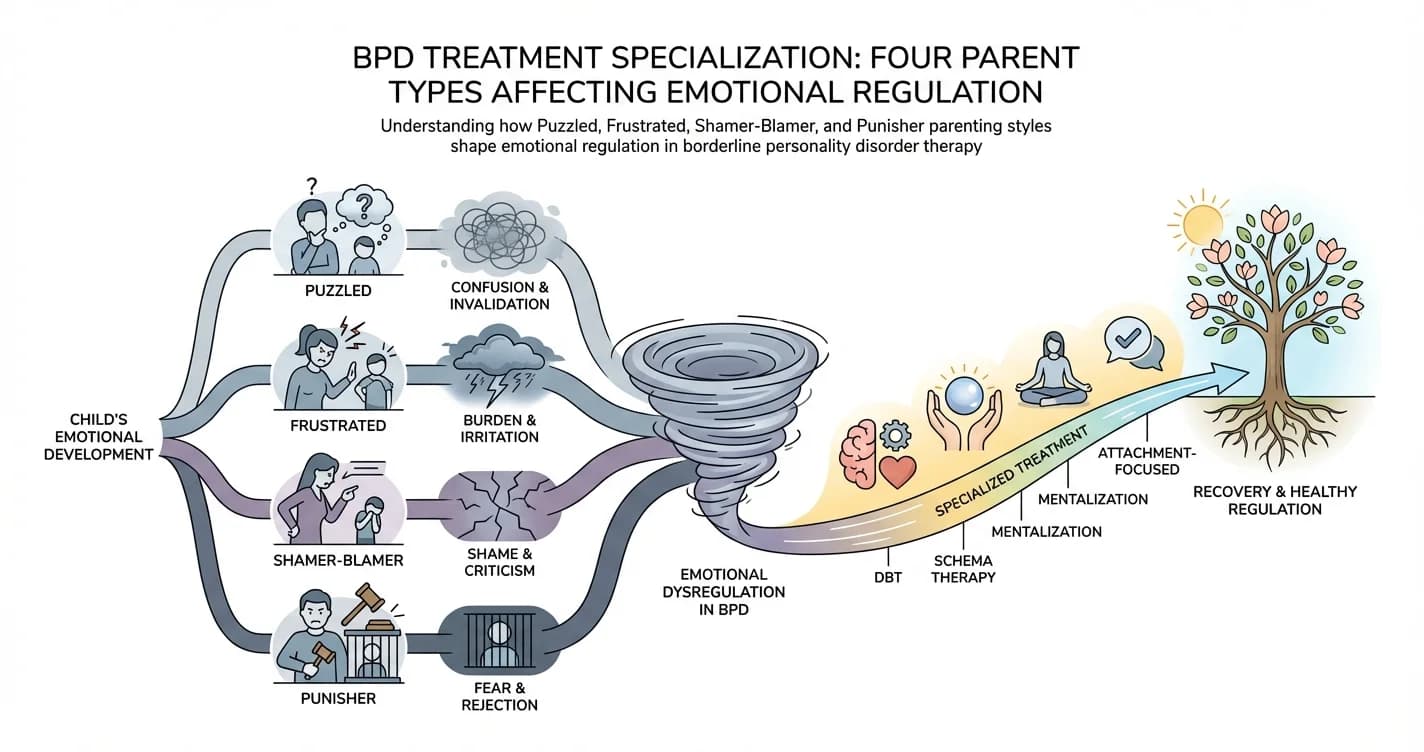
BPD Treatment Specialization: Four Parent Types Affecting Emotional Regulation
For individuals with borderline personality disorder (BPD), emotional regulation difficulties rarely emerge in isolation. Research increasingly suggests that
Amygdala and Prefrontal Cortex Connection: Training Emotional Regulation Through Mindfulness
How mindfulness practices reshape neural pathways to strengthen emotional control and reduce reactivity
Disclaimer: This article is for informational purposes only and does not constitute medical advice, diagnosis, or treatment. Always seek the advice of your physician or other qualified health provider with any questions you may have regarding a medical condition. If you are in crisis or think you may have an emergency, call 988 (Suicide & Crisis Lifeline) or go to the nearest emergency room. Outside the US? Find a crisis line in your country.