
Marriage Compatibility Quiz Before Marriage (2026)
A marriage compatibility quiz reveals values gaps on finances, parenting, and conflict style. See the top picks for 2026 and how to act on your results.

Key Takeaways
- Quizzes that score you as a couple without separate inputs. If you answer together, social desirability bias
- Any quiz without financial or parenting questions. These are the two highest-conflict domains in marriage. A quiz
- Treating quiz results as a pass/fail. A gap on the quiz is not a reason to break up — it's a prompt for a
- [Are we compatible](https://lovon.app/quiz/are-we-compatible)
- [AI relationship coach](https://lovon.app/free-tools/app/ai-relationship-coach)
Taking a marriage compatibility quiz before you commit is one of the smartest things you can do — and the data on divorce consistently points to values misalignment, not personality clashes, as the primary driver of long-term relationship failure.
TL;DR: A marriage compatibility quiz surfaces the values gaps couples miss in the honeymoon phase — money philosophy, parenting expectations, religious practice, and conflict style. The are we compatible quiz on Lovon is the sharpest free starting point in 2026, especially if you want AI-backed follow-up on what the results actually mean. This guide tells you who should take a values quiz, what criteria actually predict marital success, what to avoid, and how to act on your results.
Why values compatibility — not chemistry — predicts marriage outcomes
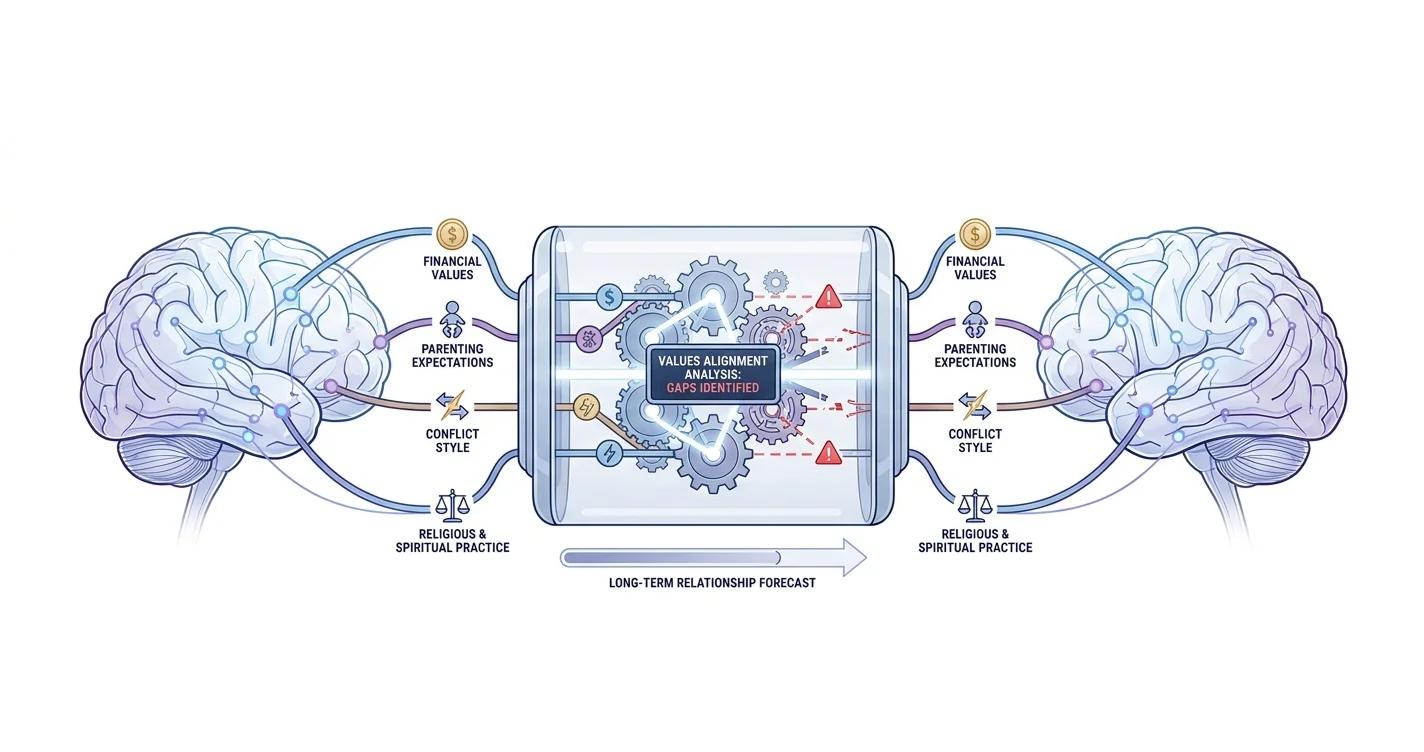
Chemistry fades. Shared values don't. A 2022 longitudinal study published in Journal of Marriage and Family tracked 1,700 couples over 16 years and found that values divergence on finances and family structure was the strongest predictor of divorce — stronger than communication style or sexual compatibility. In 2026, couples have more tools than ever to surface these gaps before the wedding — but most quizzes test surface-level preferences, not the deep structural values that actually matter.
A good marriage compatibility quiz doesn't tell you whether you both like hiking. It tells you whether you agree on who controls the household budget, whether you'd relocate for a partner's career, and how you each define "enough" when it comes to family size.
Who this guide is for
This guide is written for couples in a serious relationship — dating at least 6 months or already engaged — who want a structured framework to surface values conflicts before marriage. It's also useful for individuals preparing for pre-marital counseling who want to walk in with data, not just feelings.
If you're casually dating or just curious about a new relationship, the criteria below still apply, but the urgency is lower. The closer you are to a legal commitment, the higher the return on taking this seriously.
What to look for in a marriage compatibility quiz
Financial values alignment
Money is the #1 reported cause of marital conflict in the United States, cited in surveys as a primary stressor by 36% of couples (American Psychological Association, 2023). A credible quiz asks not just "are you a spender or saver" but digs into whether you believe finances should be fully merged, whether debt is shameful or neutral, and how you'd handle a financial emergency. Surface-level quizzes skip this. Avoid them.
Parenting and family structure expectations
Disagreement on whether to have children, how many, and how to raise them ends more marriages than infidelity. A values-focused quiz will ask about discipline philosophy, childcare division, schooling preferences (public vs. private vs. homeschool), and extended family involvement. If a quiz doesn't include at least 3 parenting-related questions, it's not measuring what matters.
Religious and spiritual practice
This doesn't only apply to devout couples. Interfaith marriages have a divorce rate approximately 20% higher than same-faith marriages, according to data aggregated across Pew Research Center surveys. A good quiz surfaces not just current practice but expected practice — will you raise children in a faith tradition? How do you handle major life events like death, illness, and ethical decisions through a spiritual lens?
Conflict resolution style
John Gottman's research at the University of Washington identifies four communication behaviors — contempt, criticism, defensiveness, and stonewalling — that predict divorce with 93% accuracy. A strong compatibility quiz doesn't ask "do you fight a lot" — it asks how you fight. Do you need space or do you push for resolution immediately? Do you use silence as a weapon or as regulation? Quizzes that skip this dimension are leaving the most predictive variable off the table.
Career and lifestyle priorities
A 2026 relationship is more likely than ever to involve dual careers, remote work, geographic flexibility, and non-traditional living arrangements. A quiz worth taking asks about ambition level, acceptable work-life trade-offs, and what happens when one partner's career opportunity requires the other to sacrifice. These are real scenarios couples hit in year 3–7 of marriage. Surface them now.
Autonomy and togetherness balance
The clinical term is "differentiation" — how much individual identity you maintain inside a partnership. Mismatches here produce the classic "clingy vs. avoidant" dynamic that erodes intimacy over years. A good quiz measures how much alone time each person needs, how you feel about separate friend groups, and whether you expect a partner to be your primary emotional outlet. This dimension is often absent from free quizzes, which is why AI-backed follow-up matters.
Top picks for values-compatibility quizzes before marriage
The safe pick — Lovon's compatibility quiz
Hook: Most structured free option with AI follow-up built in.
The are we compatible quiz covers all six criteria above — finances, parenting, religion, conflict style, career, and autonomy — in a format that takes under 15 minutes per person. What separates it from static PDF quizzes is that Lovon is an AI-powered platform: after you complete the quiz, you can continue the conversation with an AI therapy layer that helps you interpret your gaps without a $200/hour intake fee. For couples who want to act on their results in 2026 rather than file them away, that matters.
Concrete number: Lovon's AI sessions are available on-demand, not just during office hours — a meaningful difference when the hardest conversations happen at 11 p.m.
Verdict: Buy. Start here. It's free, covers all the right dimensions, and gives you somewhere to go with the results.
The wildcard — Pre-Cana and faith-based inventories (FOCCUS, PREPARE/ENRICH)
Hook: Most predictively validated, but locked behind a counselor.
PREPARE/ENRICH is used by over 4 million couples since its inception and has published validity data showing it predicts marital satisfaction with statistically significant accuracy. The problem: you can't just take it online. It requires a certified facilitator, costs $35–$60, and takes 2–3 hours. For couples who are engaged and serious, this is worth it as a second step — not a first.
Verdict: Consider — after you've done a free quiz and identified your specific gaps. Don't use this as your only assessment; the facilitator dynamic can suppress honest answers.
The skip — Generic "relationship compatibility" personality quizzes
Hook: High traffic, low signal.
Quizzes built around Myers-Briggs type matching, love language pairing, or enneagram compatibility scores are popular (combined monthly search volume exceeds 50,000 in 2026) but measure temperament, not values. Temperament compatibility helps; it doesn't predict whether two people will agree on whether to send their kid to private school or whether one partner can stay home with a newborn. These quizzes feel substantive but measure the wrong thing.
Verdict: Skip for pre-marriage evaluation. Fine for casual self-discovery.
What to avoid
- Quizzes that score you as a couple without separate inputs. If you answer together, social desirability bias inflates your scores. Each partner should answer independently, then compare.
- Any quiz without financial or parenting questions. These are the two highest-conflict domains in marriage. A quiz that omits them is testing preferences, not values.
- Treating quiz results as a pass/fail. A gap on the quiz is not a reason to break up — it's a prompt for a conversation. Couples who use results as conversation starters, not verdicts, get far more value from the exercise.
Verdict comparison table
| Quiz | Financial | Parenting | Conflict style | AI follow-up | Cost | Verdict |
|---|---|---|---|---|---|---|
| Lovon — are we compatible | Yes | Yes | Yes | Yes | Free | Buy |
| PREPARE/ENRICH | Yes | Yes | Yes | No | $35–$60 | Consider |
| Personality/love language quizzes | No | No | Partial | No | Free | Skip |
FAQ
What is a marriage compatibility quiz? A marriage compatibility quiz is a structured set of questions designed to surface values alignment — or misalignment — between two people considering marriage. The best ones cover finances, parenting, religious practice, conflict style, and life priorities.
Is a marriage compatibility quiz accurate? Accuracy depends entirely on the quiz. PREPARE/ENRICH has published validity data from studies covering millions of couples. Generic personality quizzes do not. A quiz is only as accurate as the dimensions it measures and the honesty of the people answering.
How long should a pre-marriage compatibility quiz take? A values-focused quiz takes 10–20 minutes per person. Anything under 5 minutes is too shallow to surface meaningful conflict zones.
What are the most important topics a marriage compatibility quiz should cover? Finances, parenting expectations, religious or spiritual practice, conflict resolution style, career priorities, and autonomy vs. togetherness balance. If a quiz skips two or more of these, it's incomplete.
Can a couple take a marriage compatibility quiz together? Yes, but each partner should answer independently first. Comparing results after separate completion is far more informative than answering in real time together, where social pressure shapes responses.
What should we do after taking a marriage compatibility quiz in 2026? Identify your 2–3 biggest gaps. Have a direct conversation about each one — not to resolve them immediately, but to confirm you both understand where the gap exists. If a gap feels too charged to discuss without support, Lovon's AI relationship coach provides a low-stakes way to process it before couples counseling.
Is a free marriage compatibility quiz worth it? Yes, as a first step. Free quizzes like Lovon's cover the core dimensions at no cost. If results surface major misalignment, that's the point to invest in a facilitated assessment like PREPARE/ENRICH or pre-marital therapy.
How is a marriage compatibility quiz different from pre-marital counseling? A quiz gives you structured data in 15 minutes. Counseling helps you work through what the data surfaces — they're sequential, not competing. In 2026, the practical path is: quiz first, counseling second, with AI support bridging the gap between sessions.
One last thing
The research finding most couples don't expect: values compatibility at the time of marriage is less predictive than values flexibility over time. Couples who report high initial compatibility but low willingness to renegotiate values as life changes show higher divorce rates by year 10 than couples who started with moderate gaps but built habits of explicit renegotiation. The quiz is the start of the conversation, not the end of it. In 2026, the most useful thing a pre-marriage quiz can do is teach you how to keep asking the questions — not just answer them once.
Related guides
How AI Support Helps You Heal
AI emotional support isn't about replacing human connection — it's about filling the gaps. The moments when you need to talk at 2 AM, when you don't want to burden your friends again, or when you simply need someone to listen without judgment.
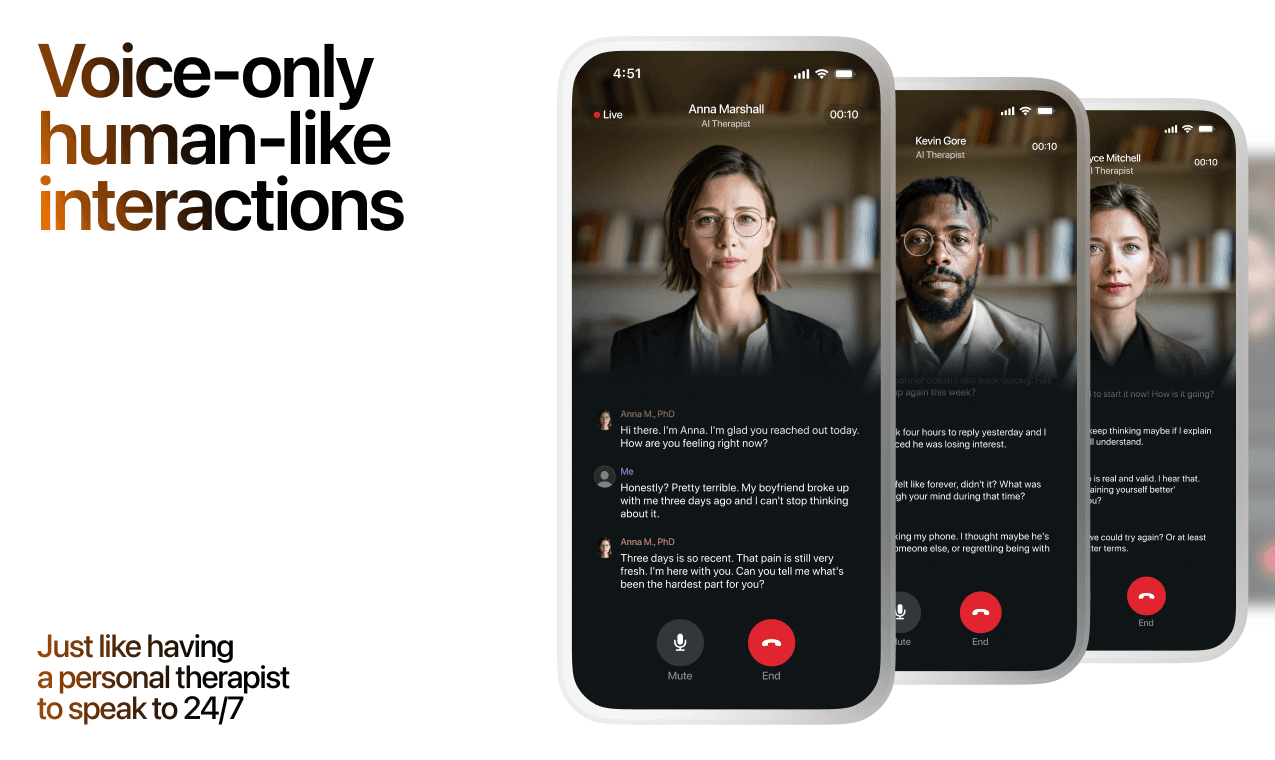
Here's what happens in a typical Lovon session:
You share what's on your mind
There's no script, no intake form, no waiting room. You speak or type whatever you're feeling — in your own words, at your own pace.
Lovon validates and explores
Using frameworks from CBT (Cognitive Behavioral Therapy) and motivational interviewing, Lovon acknowledges your feelings first, then gently helps you explore them. No dismissive "just move on" advice.
You build coping skills together
Lovon doesn't just listen — it actively works with you on evidence-based techniques: thought reframing, urge surfing, behavioral experiments, and more.
What a Session with Lovon Looks Like
When to Seek Professional Help
AI support is a valuable tool, but it's not a replacement for professional care. Please consider reaching out to a licensed therapist if you experience any of the following:
- Persistent thoughts of self-harm or suicide
- Inability to perform daily activities (work, eating, sleeping) for more than 2 weeks
- Turning to alcohol or substances to cope
- Intense anger or desire to harm your ex-partner
- Complete emotional numbness that doesn't improve over time
Crisis Resources (US): If you're in immediate danger, call 988 (Suicide & Crisis Lifeline) or text HOME to 741741 (Crisis Text Line). Available 24/7, free, and confidential.
Outside the US? Find a crisis line in your country
Ready to Start?
Your healing journey can begin right now
1 free conversation. No credit card. No judgment. Just a safe space to process what you're going through.
Frequently Asked Questions
Is AI therapy a replacement for a real therapist?
Is my conversation with Lovon AI private?
How is Lovon different from ChatGPT for emotional support?
Can I use Lovon if I'm already seeing a therapist?
Can I try Lovon for free?
About the Author
The Lovon Editorial Team
Mental Health & Wellness Content Team
The Lovon Editorial Team develops mental health and wellness content designed to make psychological concepts accessible and actionable. Our goal is to bridge the gap between clinical research and everyday life - helping you understand why your mind works the way it does and what you can do about it....
Similar Articles
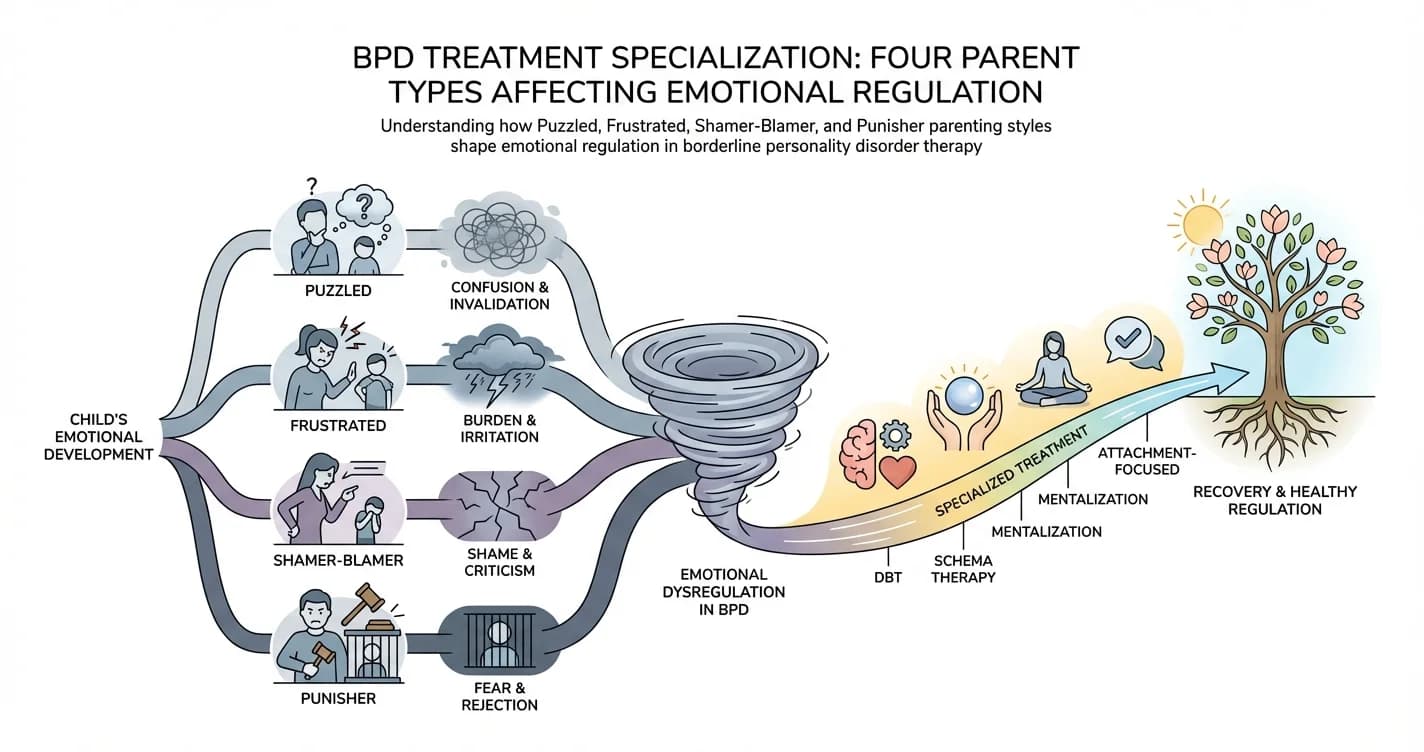
BPD Treatment Specialization: Four Parent Types Affecting Emotional Regulation
For individuals with borderline personality disorder (BPD), emotional regulation difficulties rarely emerge in isolation. Research increasingly suggests that

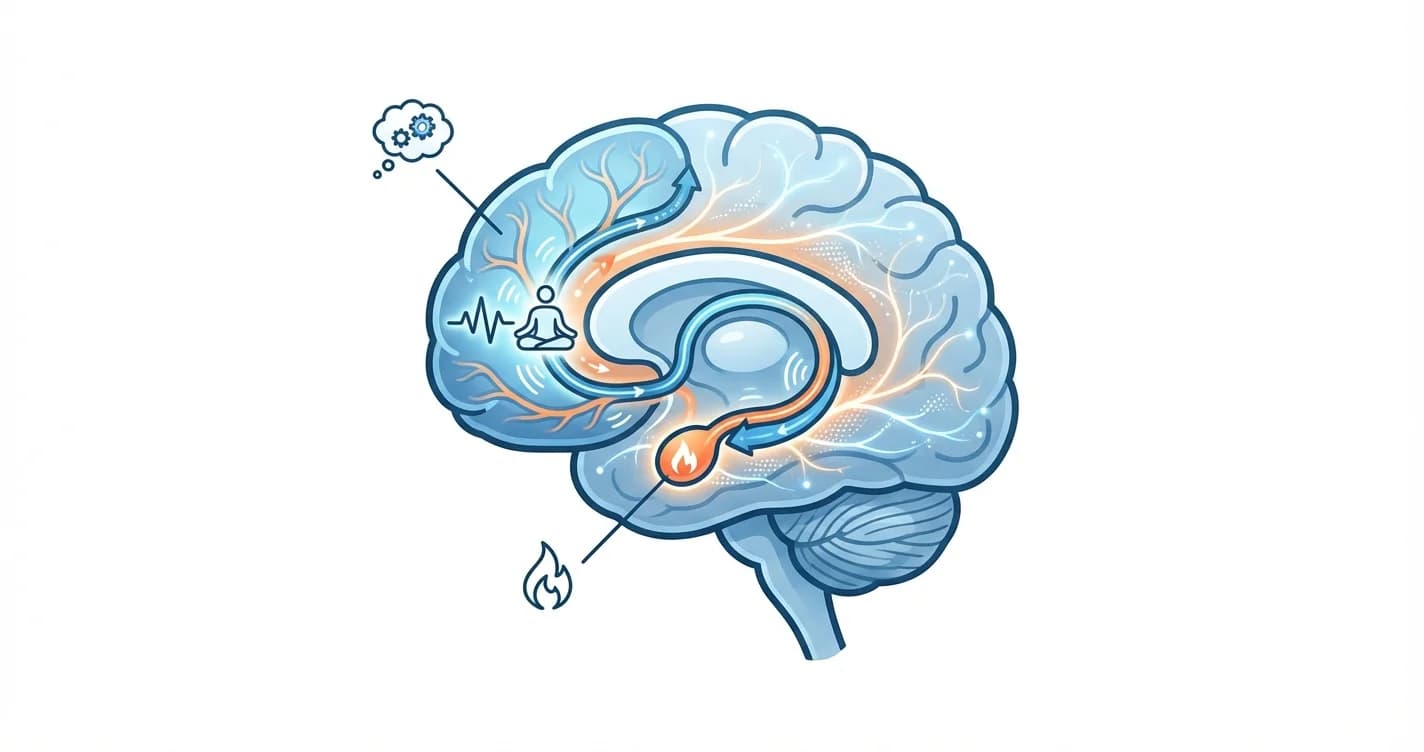
Amygdala and Prefrontal Cortex Connection: Training Emotional Regulation Through Mindfulness
How mindfulness practices reshape neural pathways to strengthen emotional control and reduce reactivity
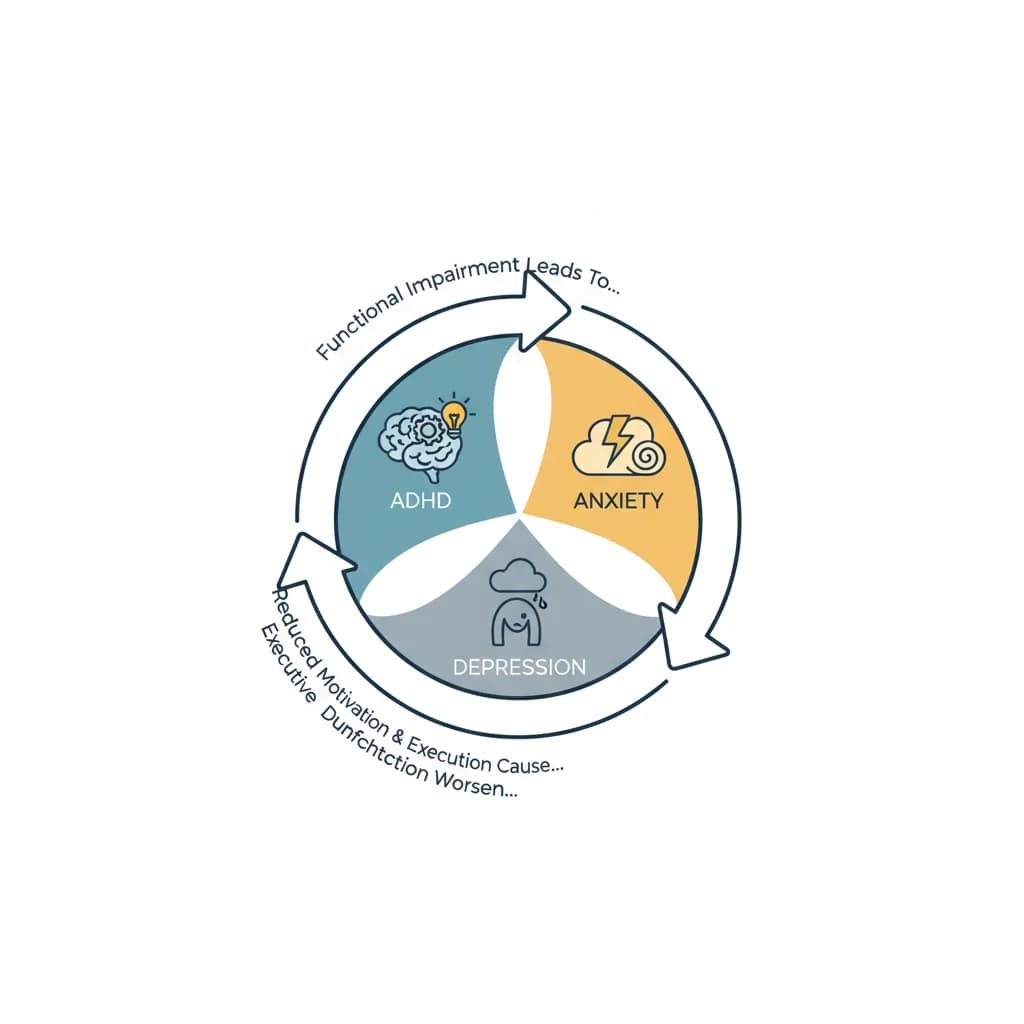
ADHD Comorbidity with Anxiety and Depression Cycles
Understanding the Complex Interplay Between ADHD and Recurring Mental Health Patterns
Disclaimer: This article is for informational purposes only and does not constitute medical advice, diagnosis, or treatment. Always seek the advice of your physician or other qualified health provider with any questions you may have regarding a medical condition. If you are in crisis or think you may have an emergency, call 988 (Suicide & Crisis Lifeline) or go to the nearest emergency room. Outside the US? Find a crisis line in your country.