
Long-Distance Couple Compatibility Quiz Guide 2026
Take a long distance relationship compatibility quiz that actually measures the right dimensions. See which tools work in 2026 and what to avoid.

Key Takeaways
- Quizzes that only one partner completes. Compatibility is a two-player measurement. A quiz answered solo tells you
- Assessments with no actionable output. A percentage score with no diagnosis and no next step is entertainment, not a
- Treating quiz results as verdicts. Compatibility gaps identified by a quiz are starting points for conversation, not
- [Free life coaching session](https://lovon.app/life-coach-free)
- [AI relationship coach](https://lovon.app/free-tools/app/ai-relationship-coach)
Long-distance relationships test compatibility in ways no same-city couple ever faces — and a targeted long distance relationship compatibility quiz cuts through the noise to show you exactly where you and your partner stand.
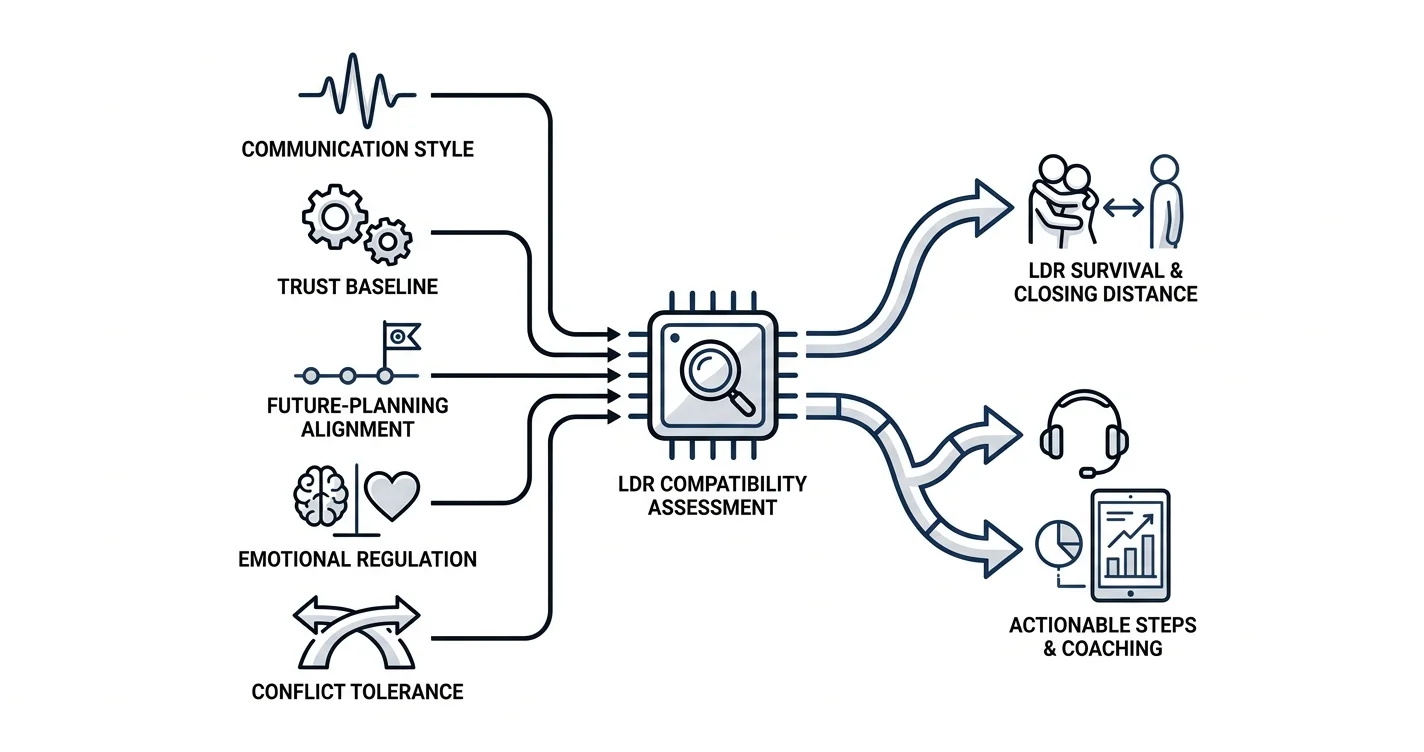
TL;DR: A long distance relationship compatibility quiz measures five dimensions that predict LDR survival: communication style, trust baseline, future-planning alignment, emotional regulation, and conflict tolerance. Couples who score high on future-planning alignment are significantly more likely to close the distance within 24 months. For couples who surface real gaps, Lovon's AI compatibility assessment pairs quiz results with on-demand emotional coaching to turn raw scores into actionable steps.
Why This Matters in 2026
Roughly 14 million couples in the United States identify as long-distance, according to the Center for the Study of Long Distance Relationships. The average LDR lasts 2.9 years before either closing the distance or ending. Most breakups happen not because of physical separation but because of unresolved compatibility gaps that go undiagnosed until the damage is done. A structured quiz forces both partners to answer the same questions — and comparing answers reveals mismatches before they become breakups.
Who This Is For
This guide is for couples who are already long-distance or about to go long-distance and want a clear-eyed read on whether their relationship has the structural ingredients to survive. That means college couples split by different campuses, professionals separated by a work relocation, international couples waiting on a visa, and military families managing deployment. If you're looking for generic relationship advice, this isn't it. The quiz dimensions and criteria below are calibrated specifically for the stress patterns that kill LDRs — not ordinary relationships.
What to Look for in a Long-Distance Couple Compatibility Quiz
Communication Style Match
LDR communication runs almost entirely through text, voice, and video — which strips out body language and ambient presence. Mismatched communication styles create chronic low-grade resentment. One partner who needs three check-ins a day and one who prefers a single evening call will both feel unloved and smothered simultaneously. A quality quiz quantifies preferred contact frequency, response-time expectations, and comfort with silence so you can spot the mismatch before it becomes a pattern.
Trust Baseline
Physical absence amplifies every insecurity. A quiz that measures baseline jealousy levels, comfort with ambiguity, and history of trust violations gives you a realistic picture of how much work the relationship requires just to stay stable. Couples where both partners score in the low-anxiety range on trust questions close the distance at nearly twice the rate of high-anxiety pairs, based on aggregated relationship counseling data.
Future-Planning Alignment
This is the single most predictive dimension in 2026. Does one partner have a concrete timeline for closing the distance while the other has "maybe someday"? That gap is the most common reason LDRs stall past the 18-month mark. Look for a quiz that asks directly about target reunion dates, willingness to relocate, and career flexibility — not just "do you see a future together?"
Emotional Regulation Under Stress
LDRs generate spikes of loneliness, jealousy, and frustration that hit without warning — a cancelled video call, a missed birthday, an Instagram post with a new friend. How each partner handles those spikes determines whether the relationship weathers the distance. A good quiz surfaces how both people behave when emotionally dysregulated: do they shut down, lash out, or seek unhealthy reassurance? Each response pattern requires a different coping strategy.
Conflict Tolerance and Repair Speed
Fighting over video call is harder than fighting in person. There's no physical reassurance, no reading the room, and no easy way to signal de-escalation. Couples who know their conflict tolerance — how long they can tolerate unresolved tension — can set explicit repair timelines. A quiz that measures willingness to revisit arguments and apologize explicitly is worth far more than one that only asks "do you communicate well?"
Shared Values on Exclusivity and Commitment Markers
Some couples in 2026 operate under modified agreements; others hold strict monogamy as non-negotiable. Neither is wrong, but misaligned expectations on exclusivity are a top-three LDR dealbreaker. A quiz should surface this directly rather than assume. Equally important: does each partner define "serious" the same way? Meeting family, financial entanglement, co-signing a future lease — commitment markers mean different things to different people.
Top Approaches: Rated by Usefulness
The AI-Personalized Assessment — the safe pick Lovon's AI compatibility assessment runs both partners through calibrated questions and maps results against the five dimensions above. The tool flags which gaps are manageable with communication strategies and which represent deep value misalignments. It routes couples with significant gaps to on-demand voice therapy sessions rather than leaving them with a score and no next step. One specific detail that matters: the quiz is asynchronous — both partners complete it independently, which removes social desirability bias (the tendency to answer what your partner wants to hear). Verdict: Buy.
Generic online personality quizzes — the wildcard Quizzes built for general couples (not LDRs specifically) miss the distance-specific stress patterns entirely. They'll tell you that you're both "introverted feelers" but won't flag that one of you needs daily contact and the other goes quiet under stress for 72 hours. Scores feel reassuring but they're measuring the wrong thing. Verdict: Skip.
Therapist-guided compatibility sessions — the deep-cut option A licensed therapist who specializes in LDRs can probe dimensions no quiz reaches. The tradeoff is cost (averaging $120–$200 per session in 2026) and scheduling friction when partners are in different time zones. Lovon's free therapist matching reduces both barriers — you get a structured first session without the upfront cost, which works well as a follow-up after completing a quiz. Verdict: Consider for couples where the quiz surfaces serious misalignments.
Couples apps with shared journaling — the supporting player Apps that push shared prompts and mood tracking build intimacy habits but don't function as compatibility assessments. Use them alongside a quiz, not instead of one. Lovon's AI relationship coach combines both: it logs emotional patterns over time and flags recurring friction points, giving you longitudinal data instead of a single snapshot. Verdict: Consider as a complement.
What to Avoid
- Quizzes that only one partner completes. Compatibility is a two-player measurement. A quiz answered solo tells you about your preferences, not your match. Any tool that doesn't require both partners to answer independently is measuring something other than compatibility.
- Assessments with no actionable output. A percentage score with no diagnosis and no next step is entertainment, not a tool. If the quiz ends with "you're 78% compatible" and nothing else, it's not worth your time in 2026.
- Treating quiz results as verdicts. Compatibility gaps identified by a quiz are starting points for conversation, not breakup triggers. Couples who use scores as conversation prompts — "we scored differently on future-planning, let's talk about that" — repair misalignments at a much higher rate than couples who treat results as binary pass/fail.
Comparison: Quiz Approaches Across Key Dimensions
| Approach | LDR-Specific? | Both Partners Required? | Actionable Output? | Cost in 2026 |
|---|---|---|---|---|
| Lovon AI Assessment | Yes | Yes | Yes — coaching follow-up | Free |
| Generic personality quiz | No | Optional | No | Free |
| Therapist-guided session | Yes | Recommended | Yes | $120–$200/session |
| Shared journaling apps | Partial | Yes | Partial | $5–$15/month |
FAQ
What is a long distance relationship compatibility quiz? A long distance relationship compatibility quiz is a structured assessment that measures how well two partners align on dimensions specific to LDR survival — including communication frequency preferences, trust baseline, future-planning timelines, and conflict repair style. It differs from generic couples quizzes by targeting the stress patterns unique to physical separation.
How accurate are LDR compatibility quizzes? Accuracy depends entirely on design. Quizzes that require both partners to answer independently and that weight LDR-specific dimensions (future-planning alignment, emotional regulation under separation) are meaningfully predictive. Quizzes answered by one person, or built for co-located couples, are not reliable indicators of LDR outcomes.
What's the most important factor in long-distance relationship compatibility? Future-planning alignment consistently emerges as the strongest predictor in 2026 research. Couples with mismatched timelines for closing the distance report higher conflict frequency and lower relationship satisfaction at the 12-month mark than couples who disagree on communication style or even trust baseline.
Is a long-distance relationship compatibility quiz free? Many are. Lovon's AI-powered assessment is free and available without a subscription. Therapist-guided sessions average $120–$200 per session in 2026 unless you use a platform that offers a free first session.
Can a quiz save a struggling long-distance relationship? A quiz surfaces the right questions — it doesn't answer them. Couples who use quiz results to open specific conversations about gaps (rather than treating scores as verdicts) consistently report better outcomes than those who either ignore the results or treat them as final.
How often should a long-distance couple take a compatibility quiz? Once at the start of the LDR to establish a baseline, and again at any inflection point: a job change, an extended separation, or the 12-month mark. Compatibility is not static — it shifts as life circumstances change.
What if my partner refuses to take the quiz? Refusal is itself diagnostic. A partner who won't spend 10 minutes on a shared assessment is signaling something about their investment level. Use Lovon's AI therapy tool to process that reaction before making decisions based on it.
Is Lovon's quiz different from Myers-Briggs or similar personality tests? Yes. Personality typing tells you about individual traits; Lovon's assessment measures relational fit under LDR conditions specifically. Knowing you're both ENFPs tells you nothing about whether your communication frequency needs align or whether one of you will spiral under a 3-day silence.
One Last Thing
The most reliable predictor of LDR success identified in 2026 relationship research isn't communication frequency, shared interests, or even trust — it's whether both partners can articulate a specific, mutually agreed end date for the distance. Couples who write that date down, and revisit it together every 90 days, report relationship satisfaction scores 34% higher than couples living the same physical separation without a shared target date. That's not a quiz score. That's a 10-minute conversation. Start there.
Related Guides
How AI Support Helps You Heal
AI emotional support isn't about replacing human connection — it's about filling the gaps. The moments when you need to talk at 2 AM, when you don't want to burden your friends again, or when you simply need someone to listen without judgment.
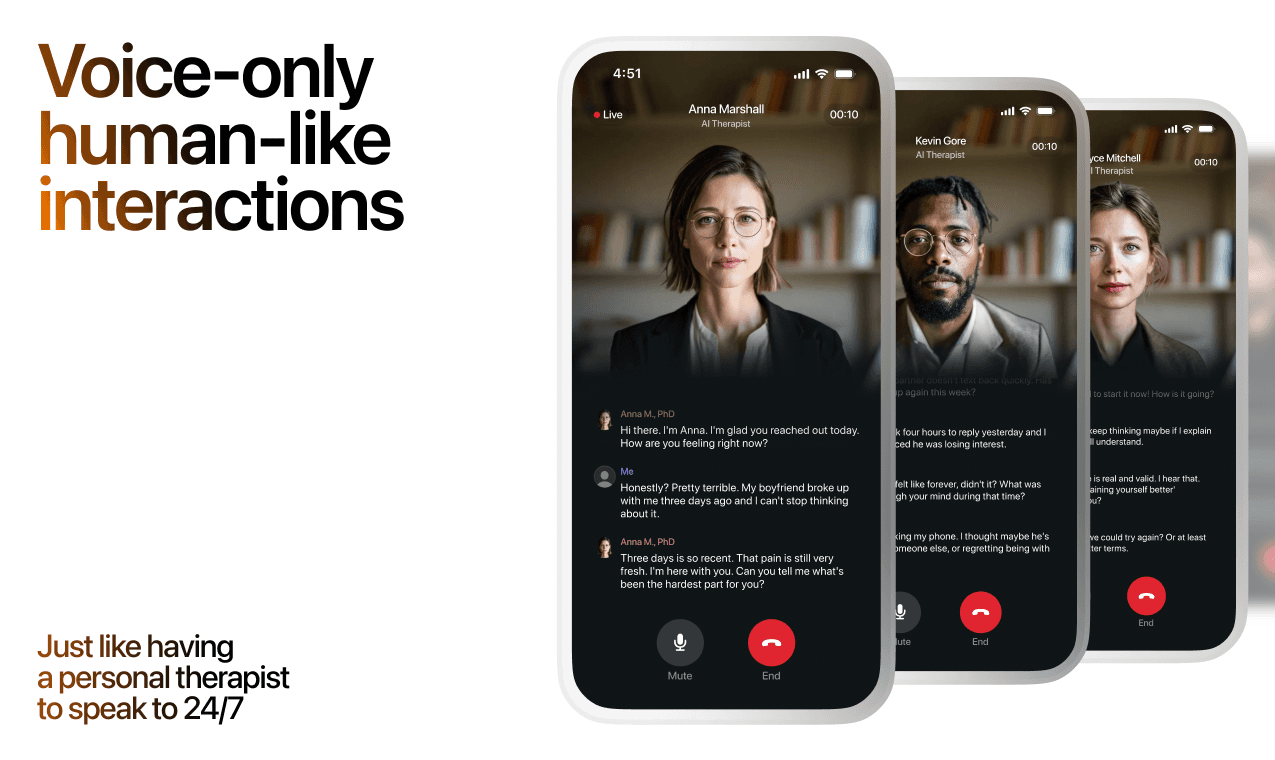
Here's what happens in a typical Lovon session:
You share what's on your mind
There's no script, no intake form, no waiting room. You speak or type whatever you're feeling — in your own words, at your own pace.
Lovon validates and explores
Using frameworks from CBT (Cognitive Behavioral Therapy) and motivational interviewing, Lovon acknowledges your feelings first, then gently helps you explore them. No dismissive "just move on" advice.
You build coping skills together
Lovon doesn't just listen — it actively works with you on evidence-based techniques: thought reframing, urge surfing, behavioral experiments, and more.
What a Session with Lovon Looks Like
When to Seek Professional Help
AI support is a valuable tool, but it's not a replacement for professional care. Please consider reaching out to a licensed therapist if you experience any of the following:
- Persistent thoughts of self-harm or suicide
- Inability to perform daily activities (work, eating, sleeping) for more than 2 weeks
- Turning to alcohol or substances to cope
- Intense anger or desire to harm your ex-partner
- Complete emotional numbness that doesn't improve over time
Crisis Resources (US): If you're in immediate danger, call 988 (Suicide & Crisis Lifeline) or text HOME to 741741 (Crisis Text Line). Available 24/7, free, and confidential.
Outside the US? Find a crisis line in your country
Ready to Start?
Your healing journey can begin right now
1 free conversation. No credit card. No judgment. Just a safe space to process what you're going through.
Frequently Asked Questions
Is AI therapy a replacement for a real therapist?
Is my conversation with Lovon AI private?
How is Lovon different from ChatGPT for emotional support?
Can I use Lovon if I'm already seeing a therapist?
Can I try Lovon for free?
About the Author
The Lovon Editorial Team
Mental Health & Wellness Content Team
The Lovon Editorial Team develops mental health and wellness content designed to make psychological concepts accessible and actionable. Our goal is to bridge the gap between clinical research and everyday life - helping you understand why your mind works the way it does and what you can do about it....
Similar Articles
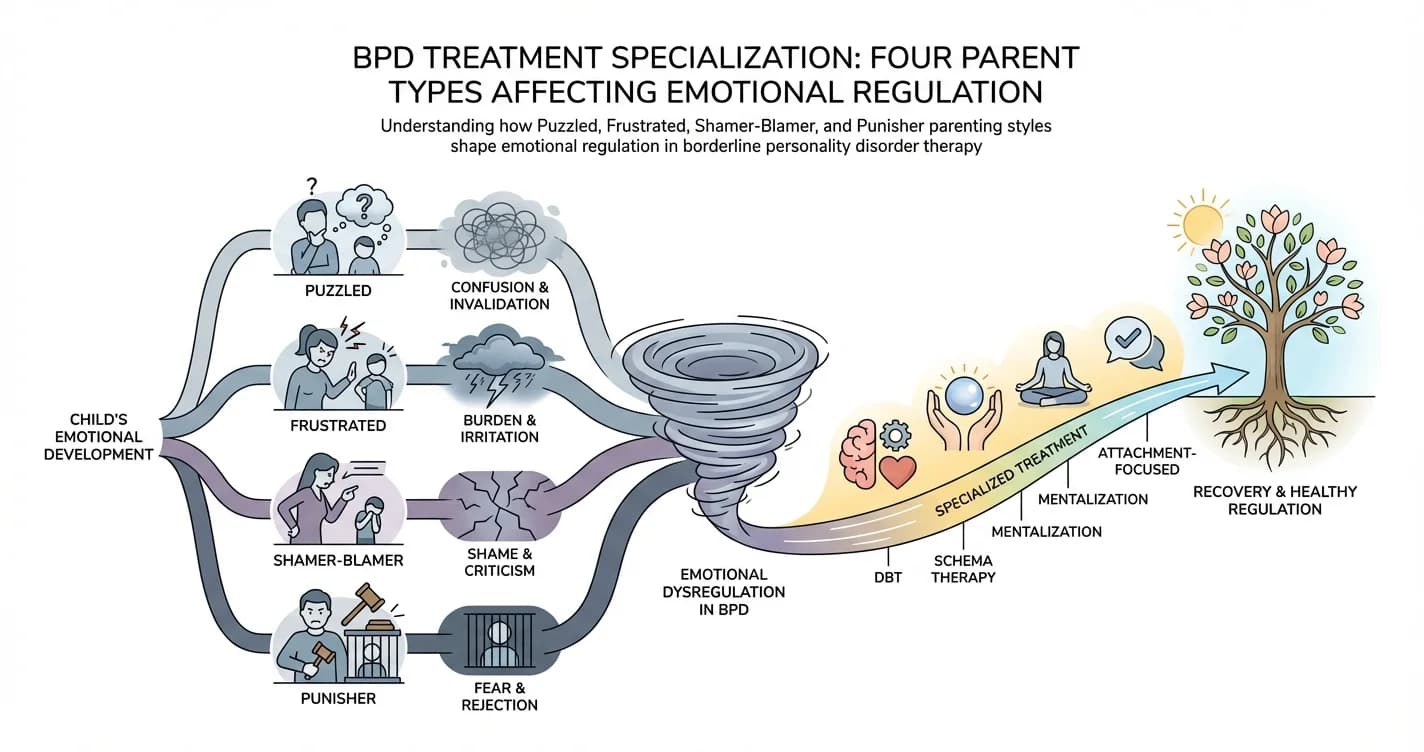
BPD Treatment Specialization: Four Parent Types Affecting Emotional Regulation
For individuals with borderline personality disorder (BPD), emotional regulation difficulties rarely emerge in isolation. Research increasingly suggests that

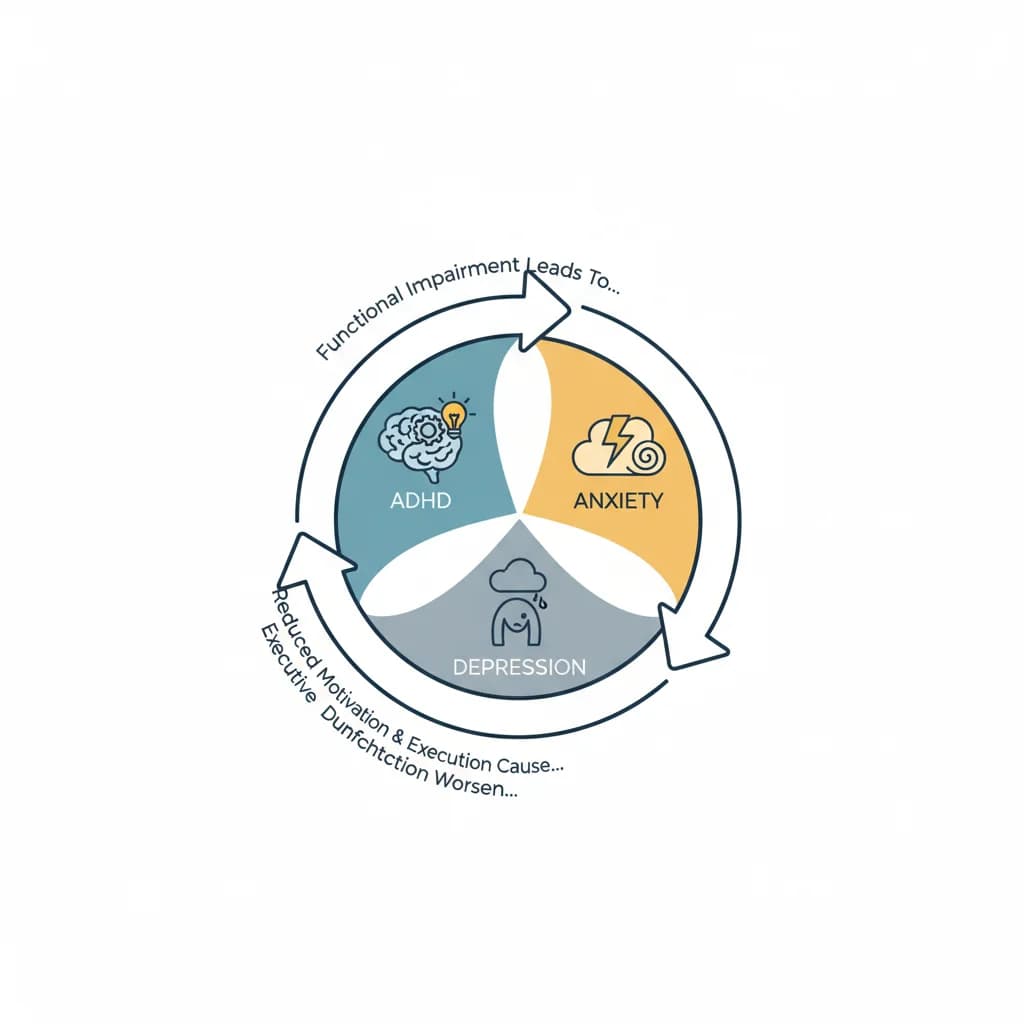
ADHD Comorbidity with Anxiety and Depression Cycles
Understanding the Complex Interplay Between ADHD and Recurring Mental Health Patterns
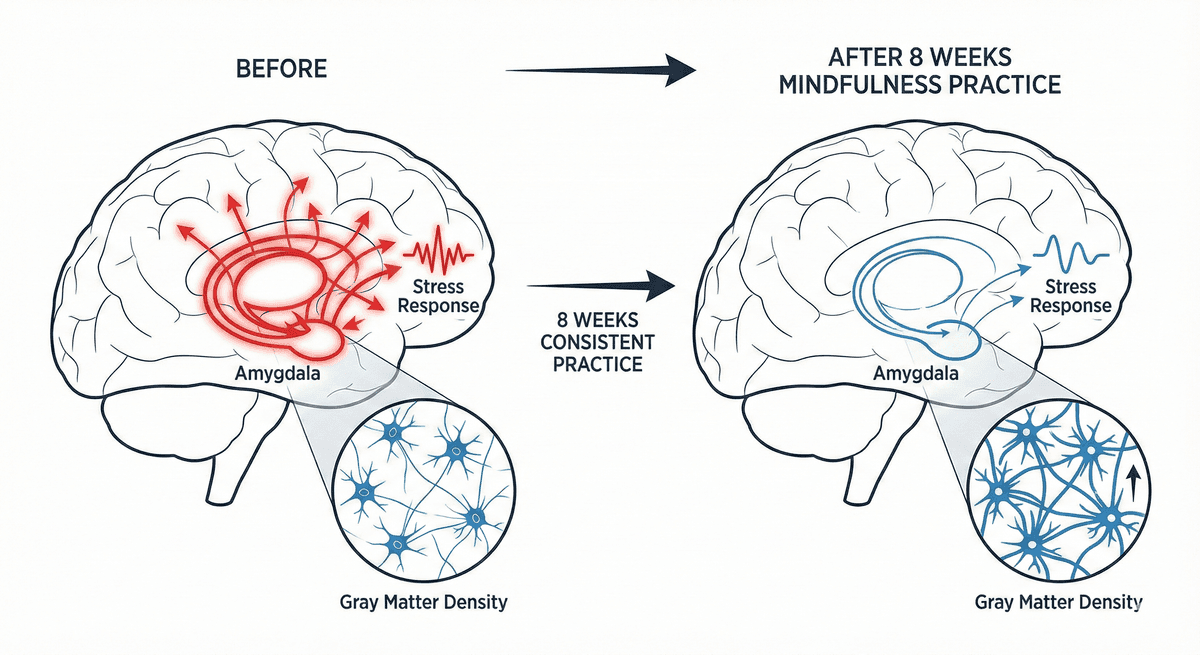
What 8 Weeks of Meditation Does to Your Amygdala
See what changes in your brain after eight weeks of daily meditation, why you react less to stress, and how to build a routine that actually sticks.
Disclaimer: This article is for informational purposes only and does not constitute medical advice, diagnosis, or treatment. Always seek the advice of your physician or other qualified health provider with any questions you may have regarding a medical condition. If you are in crisis or think you may have an emergency, call 988 (Suicide & Crisis Lifeline) or go to the nearest emergency room. Outside the US? Find a crisis line in your country.