
Love Language Compatibility Quiz for Couples 2026
The best love language compatibility quiz in 2026 maps both partners' scores side-by-side, flags mismatches, and connects results to AI-guided therapy sessions.

Key Takeaways
- Quizzes that only score one partner. If a quiz asks "your love language" rather than mapping both partners, it
- Platforms that end at the result screen. A score without a follow-up pathway leaves couples with a label and no
- Tools that conflate love languages with attachment styles. These are related but distinct frameworks. Mixing them in
- [AI relationship coach](https://lovon.app/free-tools/app/ai-relationship-coach)
- [Free life coach session](https://lovon.app/life-coach-free)
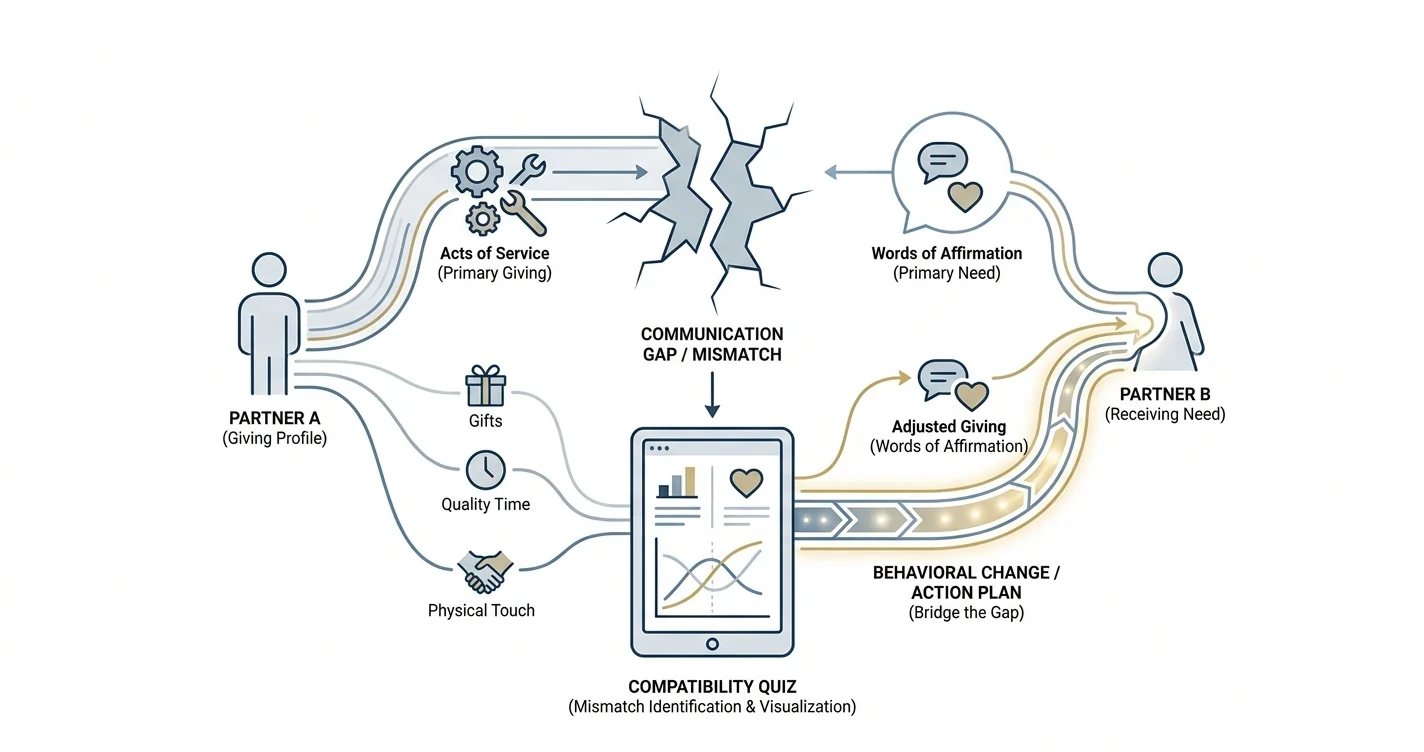
A love language compatibility quiz tells you more than whether you and your partner both love gift-giving — it maps the gap between how you express love and how your partner needs to receive it, which is where most relationship friction actually lives.
TL;DR: The best love language compatibility quiz for couples in 2026 goes beyond labeling each partner's top love language. It surfaces mismatches — for example, one partner scoring high on Acts of Service while the other scores high on Words of Affirmation — and gives you a concrete plan to close that gap. Lovon's are we compatible quiz does exactly that, pairing results with AI-guided sessions that turn quiz data into real behavioral change.
Why this matters in 2026
Research consistently shows that couples who misread each other's emotional needs report lower relationship satisfaction, even when both partners report high individual effort. The problem is not effort — it is translation. One partner works overtime to keep the house clean (Acts of Service) while the other is waiting to hear "I love you" (Words of Affirmation). Neither partner feels seen. A structured love language compatibility quiz names that translation problem in under 10 minutes.
With AI-powered tools now available, couples in 2026 are no longer stuck with a static score. The quiz becomes the first step in an ongoing conversation, not a one-time novelty.
Who this guide is for
This guide is for couples — dating, engaged, or married — who suspect that effort alone is not fixing a communication gap. It's also useful for individuals preparing for couples therapy, partners recovering from a conflict, and people who have taken a love language quiz before but never translated the results into changed behavior. If you already know your love language but your relationship still feels disconnected, that is precisely the audience this quiz is built for.
What to look for in a love language compatibility quiz
Dual-partner scoring, not just individual labels
A quiz that only tells you your own love language misses the point. Compatibility requires scoring both partners on all five languages — Words of Affirmation, Acts of Service, Receiving Gifts, Quality Time, and Physical Touch — and comparing the profiles side by side. Without a side-by-side view, you leave the quiz knowing yourself better but not knowing where the mismatch sits.
Mismatch identification, not just ranking
The most actionable quizzes flag the delta between partners, not just the top score. If Partner A scores 28 on Quality Time and Partner B scores 8 on the same dimension, the quiz should call that out explicitly. A one-point spread is noise; a 20-point spread is a communication pattern that needs attention in 2026 and beyond.
Behavioral suggestions tied to the result
Scores without actions are trivia. A useful love language compatibility quiz connects each mismatch to specific, low-effort behaviors one partner can adopt immediately — not abstract advice like "try to be more present," but concrete actions like "put the phone away during the first 20 minutes after you arrive home."
Scientific grounding in the five-language framework
Gary Chapman's five love languages model, introduced in 1992, remains the dominant framework because it is simple enough to remember and specific enough to be actionable. Quizzes that invent their own proprietary taxonomies with seven or nine "love types" usually sacrifice interpretability. Stick to tools built on the validated five-language structure.
Emotional safety in the delivery
Love language results can surface uncomfortable truths — one partner learning they have been chronically unmet, or realizing they have been expressing love in ways their partner cannot receive. The quiz delivery matters. A platform that pairs results with access to a licensed therapist or an AI-guided session prevents the quiz from becoming a conflict trigger rather than a growth tool.
Retest capability and progress tracking
Love languages shift over time. A person in a high-stress period may crave Acts of Service more than usual; a couple in a long-distance phase will weight Words of Affirmation differently. The best tools let you retest every 60 to 90 days and compare results across time, so you can see whether the gap is closing.
Top picks
Lovon's Are We Compatible quiz
The complete-system pick. Lovon scores both partners across all five love language dimensions, visualizes the mismatch immediately, and connects results to on-demand AI therapy sessions for relationship issues. The 2026 version integrates voice-based emotional check-ins, so couples can process the results in a guided conversation rather than an awkward kitchen-table standoff. The quiz is free to start; deeper AI sessions are available on the app. Verdict: Buy. Take the Are We Compatible quiz
Chapman's official five love languages quiz (5lovelanguages.com)
The trusted baseline. The original quiz from Gary Chapman's organization scores individuals and provides a ranked breakdown. It does not natively compare two partners' scores side by side, and there is no AI-guided debrief. Useful as a pre-step before a couples session. Verdict: Consider — use it to prime the conversation, then move to a tool that maps the gap.
Gottman Institute's Love Map questionnaire
The research-heavy option. Gottman's materials go deeper into relationship patterns beyond love languages, drawing on decades of couples research. Best suited for couples already in therapy who want structured homework between sessions. The barrier is cost — full access runs $12 to $29 depending on the package. Verdict: Consider for couples with a therapist already in the loop.
Generic quiz-builder love language tests (Buzzfeed, Playbuzz, etc.)
The time-waster. These quizzes deliver entertainment-grade results with no scoring methodology, no mismatch analysis, and no follow-through. They rank well in search because they are built for clicks, not couples. Verdict: Skip.
What to avoid
- Quizzes that only score one partner. If a quiz asks "your love language" rather than mapping both partners, it cannot tell you anything about compatibility — only about self-knowledge.
- Platforms that end at the result screen. A score without a follow-up pathway leaves couples with a label and no plan. In 2026, every credible relationship tool connects quiz output to some form of guided action.
- Tools that conflate love languages with attachment styles. These are related but distinct frameworks. Mixing them in a single quiz without explanation produces results that are harder to act on and easier to misread.
Comparison table
| Tool | Dual-partner scoring | Mismatch flagging | Behavioral guidance | Follow-up support | Free to start |
|---|---|---|---|---|---|
| Lovon Are We Compatible | Yes | Yes | Yes (AI sessions) | Voice AI + therapist access | Yes |
| Chapman Official Quiz | No (individual only) | No | Basic | None | Yes |
| Gottman Love Map | Partial | Partial | Yes (workbook) | In-therapy use | No ($12–$29) |
| Generic quiz builders | No | No | No | No | Yes |
FAQ
What is a love language compatibility quiz? A love language compatibility quiz scores both partners across the five love languages — Words of Affirmation, Acts of Service, Receiving Gifts, Quality Time, and Physical Touch — and compares results to identify where one partner's preferred way of giving love does not match the other's preferred way of receiving it.
Is the love language compatibility quiz the same as the original five love languages test? No. The original test scores one person at a time. A compatibility quiz scores both partners and maps the gap between profiles. The gap is what tells you where the relationship needs work in 2026.
How long does a love language compatibility quiz take? Most structured quizzes take 8 to 12 minutes per partner. Both partners should complete it independently before comparing results — answering together skews responses toward social desirability.
Can a love language quiz fix relationship problems? A quiz identifies communication mismatches. Fixing them requires behavioral change over weeks and months. For couples dealing with deeper conflict, anxiety, or emotional disconnection, pairing quiz results with an AI therapy session gives the data somewhere actionable to go.
What if my partner refuses to take the quiz? Take it yourself first. Understanding your own love language profile gives you a clearer language for what you need, which opens the conversation without requiring buy-in upfront. Many partners engage after seeing the results framed as "here is what I need," not "here is what you're doing wrong."
How often should couples retake a love language compatibility quiz? Every 60 to 90 days is a reasonable cadence, or after any major life change — new job, relocation, new child, or a significant conflict. Love language priorities shift with stress levels and life stage.
What is the most common love language mismatch in couples? Acts of Service versus Words of Affirmation is the most frequently reported mismatch in couples counseling contexts. One partner shows love by doing; the other needs to hear it. Both are giving; neither is landing.
Does love language compatibility predict relationship success? Compatibility score does not predict success — awareness and adaptation do. Couples who understand the mismatch and adjust behavior outperform couples with naturally matching profiles who never examine the dynamic. The quiz is the diagnostic, not the outcome.
One last thing
Gary Chapman originally developed the five love languages framework not from clinical research but from 30 years of marriage counseling notes — he noticed the same complaint patterns repeating across thousands of couples. The academic machinery came later. That origin story matters because it means the framework is grounded in what real couples actually fight about, not what researchers hypothesize they should fight about. In 2026, the smartest use of a love language compatibility quiz is treating it as the starting point of a longer conversation, not the finish line.
Related guides
How AI Support Helps You Heal
AI emotional support isn't about replacing human connection — it's about filling the gaps. The moments when you need to talk at 2 AM, when you don't want to burden your friends again, or when you simply need someone to listen without judgment.
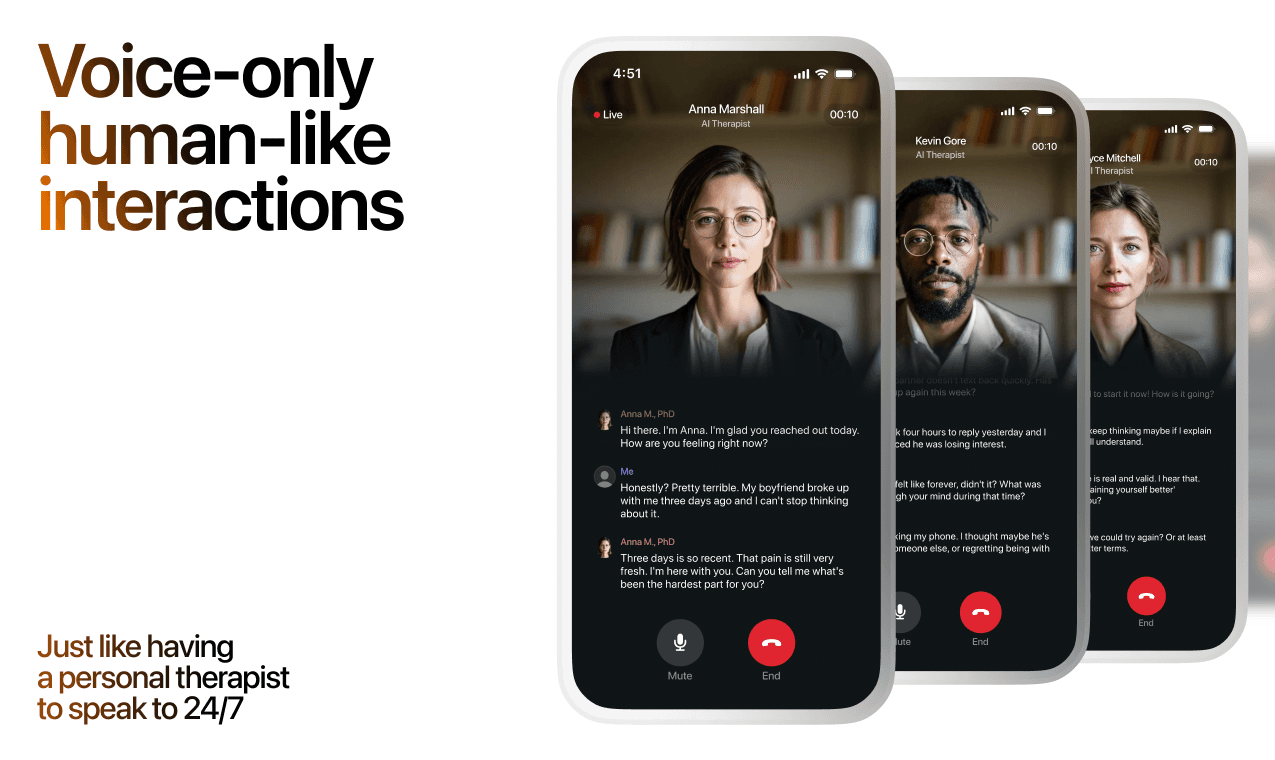
Here's what happens in a typical Lovon session:
You share what's on your mind
There's no script, no intake form, no waiting room. You speak or type whatever you're feeling — in your own words, at your own pace.
Lovon validates and explores
Using frameworks from CBT (Cognitive Behavioral Therapy) and motivational interviewing, Lovon acknowledges your feelings first, then gently helps you explore them. No dismissive "just move on" advice.
You build coping skills together
Lovon doesn't just listen — it actively works with you on evidence-based techniques: thought reframing, urge surfing, behavioral experiments, and more.
What a Session with Lovon Looks Like
When to Seek Professional Help
AI support is a valuable tool, but it's not a replacement for professional care. Please consider reaching out to a licensed therapist if you experience any of the following:
- Persistent thoughts of self-harm or suicide
- Inability to perform daily activities (work, eating, sleeping) for more than 2 weeks
- Turning to alcohol or substances to cope
- Intense anger or desire to harm your ex-partner
- Complete emotional numbness that doesn't improve over time
Crisis Resources (US): If you're in immediate danger, call 988 (Suicide & Crisis Lifeline) or text HOME to 741741 (Crisis Text Line). Available 24/7, free, and confidential.
Outside the US? Find a crisis line in your country
Ready to Start?
Your healing journey can begin right now
1 free conversation. No credit card. No judgment. Just a safe space to process what you're going through.
Frequently Asked Questions
Is AI therapy a replacement for a real therapist?
Is my conversation with Lovon AI private?
How is Lovon different from ChatGPT for emotional support?
Can I use Lovon if I'm already seeing a therapist?
Can I try Lovon for free?
About the Author
The Lovon Editorial Team
Mental Health & Wellness Content Team
The Lovon Editorial Team develops mental health and wellness content designed to make psychological concepts accessible and actionable. Our goal is to bridge the gap between clinical research and everyday life - helping you understand why your mind works the way it does and what you can do about it....
Similar Articles
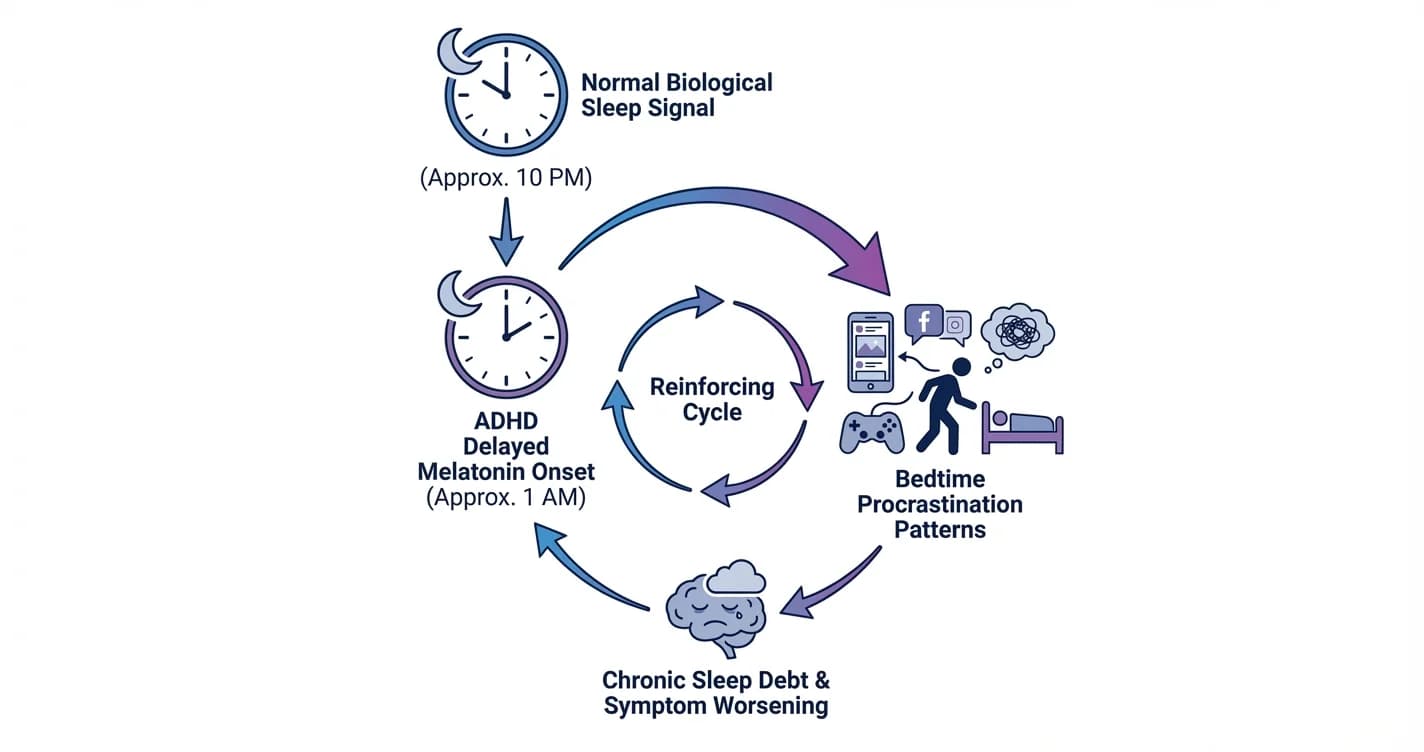
ADHD Sleep Cycle Disruption: Melatonin Delay and Bedtime Procrastination Patterns
Understanding how attention regulation difficulties interfere with natural sleep timing and the nightly wind-down process

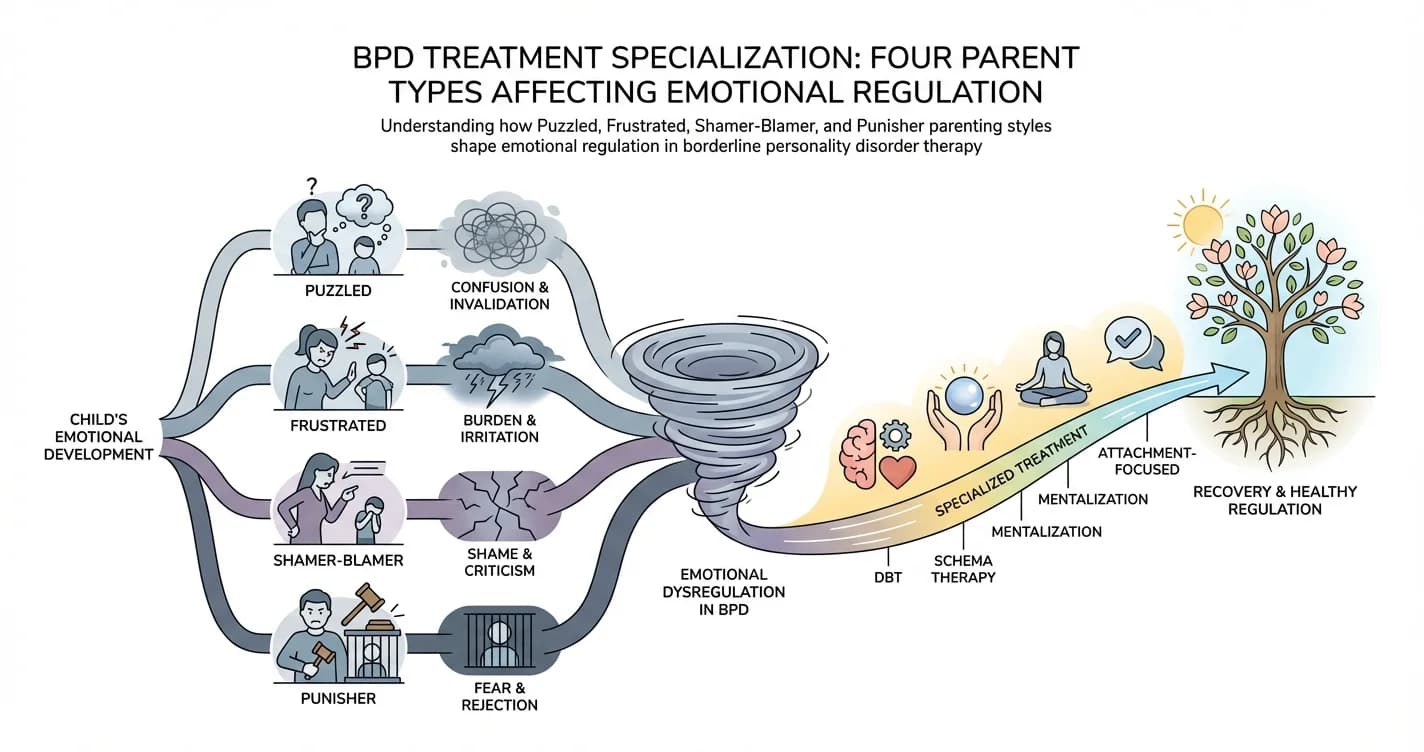
BPD Treatment Specialization: Four Parent Types Affecting Emotional Regulation
For individuals with borderline personality disorder (BPD), emotional regulation difficulties rarely emerge in isolation. Research increasingly suggests that
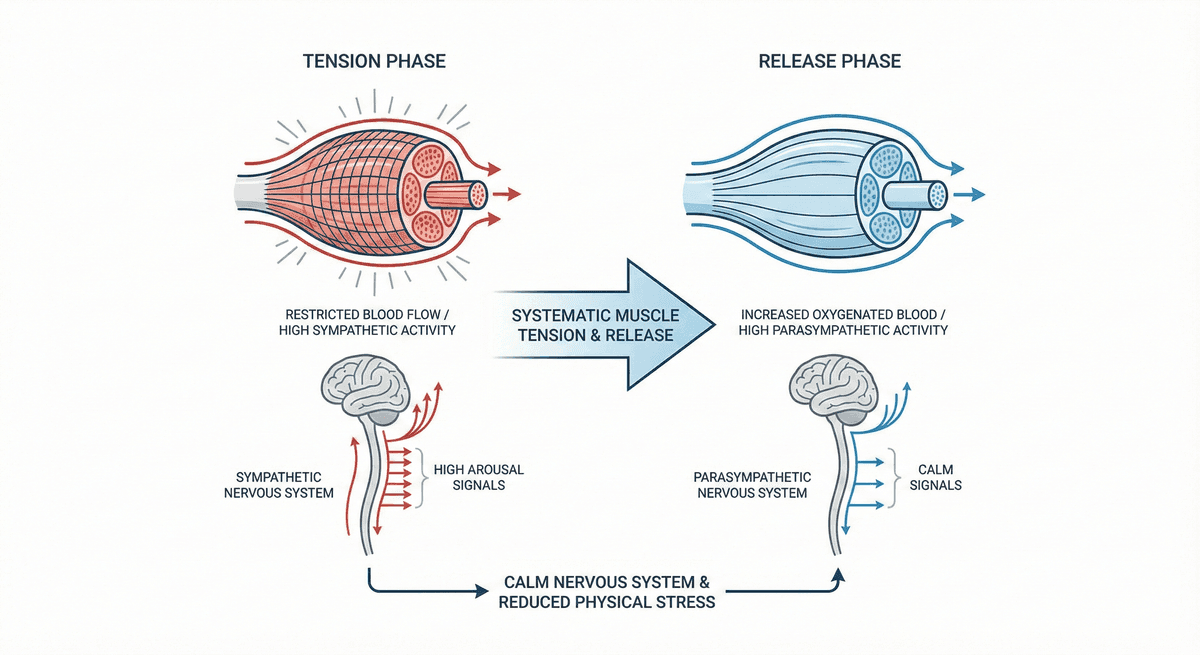
Progressive Muscle Relaxation for Stress Reduction
A systematic muscle group tension and release technique that calms the nervous system and reduces physical stress.
Disclaimer: This article is for informational purposes only and does not constitute medical advice, diagnosis, or treatment. Always seek the advice of your physician or other qualified health provider with any questions you may have regarding a medical condition. If you are in crisis or think you may have an emergency, call 988 (Suicide & Crisis Lifeline) or go to the nearest emergency room. Outside the US? Find a crisis line in your country.