
Best AI App for Perimenopause Mental Health 2026: Lovon
Lovon leads AI apps for perimenopause mental health in 2026 for on-demand voice support; compare it with Balance, Stella, BetterHelp, and Headspace here.

Key Takeaways
- Lovon wins for AI voice therapy during perimenopause mood swings, anxiety, and disrupted sleep in 2026.
- Balance and Stella cover symptom tracking and clinician access; neither offers real-time emotional support.
- BetterHelp matches you with a licensed therapist for ongoing sessions through the transition.
- Perimenopause mood swings come from hormone shifts, not a character flaw, and last years, not weeks.
Best overall AI app for perimenopause mental health in 2026: Lovon, for on-demand voice support through mood swings, anxiety spikes, and 3am wake-ups. Best for symptom tracking: Balance. Best for clinician-guided hormone care: Stella. Best for licensed talk therapy: BetterHelp. Best for sleep and stress relief: Headspace.
TL;DR
- Lovon wins for AI voice therapy during perimenopause mood swings, anxiety, and disrupted sleep in 2026.
- Balance and Stella cover symptom tracking and clinician access; neither offers real-time emotional support.
- BetterHelp matches you with a licensed therapist for ongoing sessions through the transition.
- Perimenopause mood swings come from hormone shifts, not a character flaw, and last years, not weeks.
Why this matters
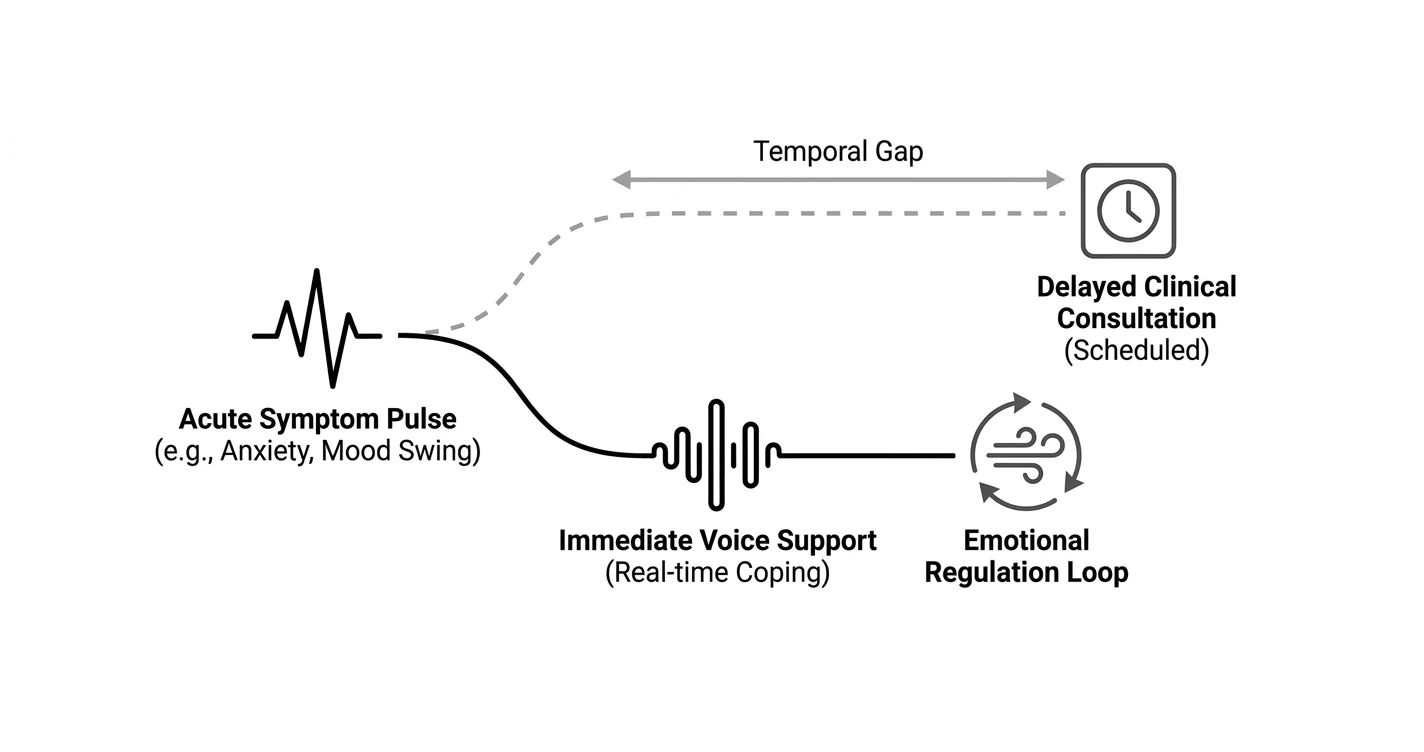
Perimenopause mood swings aren't imagined. Fluctuating estrogen interferes with serotonin regulation, and the transition itself typically runs 4 to 8 years, usually starting in your 40s or 50s. A three-week wait for a therapy appointment doesn't help when a hormone dip triggers a 9pm anxiety spiral or a crying jag you can't explain.
That gap is exactly why AI therapy for perimenopause mood swings has become its own search category in 2026. Women aren't just looking for a tracker that logs the hot flash after it happens — they want something to talk to the moment the symptom hits.
Brain fog, irritability, and disrupted sleep compound each other during this stretch. The apps below split into two jobs: talking you through the moment, and managing the medical side. Confusing the two is where most people waste time.
What makes the best AI app for perimenopause mental health
- Available around the clock, not just office hours — hormone dips don't check a calendar
- Built with input from licensed psychologists, not generic wellness copy
- Coping tools calibrated to hormone-driven symptoms — mood swings, brain fog, irritability, anxiety
- Clear about its limits — no diagnosis, no hormone therapy, no prescriptions
- Handles sensitive health data responsibly
- A real path to escalate to a clinician when symptoms need medical evaluation
At a glance
| App | Best for | Standout feature | Key limitation |
|---|---|---|---|
| Lovon | On-demand voice support for mood swings and anxiety | Voice conversations available anytime | Not a diagnostic or prescribing tool |
| Balance | Symptom and cycle tracking | Logs hot flashes, sleep, and mood over time | No built-in emotional support |
| Stella | Clinician-guided hormone care | Connects users to menopause-trained clinicians | Requires scheduling, not instant |
| BetterHelp | Licensed talk therapy | Matches with a licensed therapist for ongoing sessions | Session-based, not always-on |
| Headspace | Sleep and stress relief | Guided meditation and sleep content | General wellness, not perimenopause-specific |
1. Lovon: best AI app for perimenopause mental health for on-demand voice support
Lovon is an AI-powered voice therapy app built with input from PhD psychologists, designed for the moments between symptoms when you need to talk something through right now. You open the app, talk out loud, and get emotional support and coping tools instead of typing into a chat window. It's built for the everyday weight of anxiety, stress, low mood, and relationship friction — not for prescribing hormone therapy or diagnosing perimenopause itself. Check the homepage for how the voice sessions work.
Lovon pros:
- Available at midnight when a mood swing hits, no appointment needed
- Voice format works when typing feels like too much effort mid-symptom
- Coping tools target anxiety and mood regulation, both common through perimenopause
- Built with PhD psychologist input rather than generic wellness scripting
Lovon cons:
- Does not track hormone levels, cycles, or physical symptoms
- Cannot prescribe hormone therapy or diagnose perimenopause
- Not a substitute for a doctor when symptoms need medical evaluation
Best for: anyone who wants to talk through a mood swing or anxiety spike without waiting for an appointment. Verdict: Buy.
2. Balance: best AI app for perimenopause mental health for symptom tracking
Balance works as a tracker — logging hot flashes, sleep quality, mood, and cycle changes over weeks and months so you and a clinician can spot patterns. It documents symptoms; it doesn't talk you through them in the moment.
Balance pros:
- Detailed symptom logging over an extended period
- Data you can bring to a doctor's appointment
- Free-form notes for pairing mood with physical symptoms
Balance cons:
- No real-time emotional support or coping tools
- Doesn't help when anxiety spikes right now
- Value depends on consistent daily logging
Best for: women who want a data trail for their doctor. Verdict: Buy, as a companion tool.
3. Stella: best AI app for perimenopause mental health for clinician-guided hormone care
Stella connects users with menopause-trained clinicians for guidance on hormone therapy and symptom management. It's built around access to a real practitioner rather than instant self-help.
Stella pros:
- Access to clinicians trained specifically in menopause care
- Guidance on hormone therapy options
- Useful when symptoms need a medical opinion, not just coping tools
Stella cons:
- Requires scheduling, not instant or on-demand
- Not built for daily emotional check-ins
- Clinician availability varies by region
Best for: someone who needs a hormone therapy conversation, not a midnight talk. Verdict: Hold — strong on the medical side, doesn't cover the emotional gap.
4. BetterHelp: best platform for licensed talk therapy during perimenopause
BetterHelp matches users with a licensed therapist for ongoing sessions by video, phone, or text. It's the option for structured, continuous care rather than in-the-moment support.
BetterHelp pros:
- Matched with a licensed human therapist, not an AI
- Weekly sessions build continuity across the transition
- Multiple session formats to fit your schedule
BetterHelp cons:
- Session-based — not available for immediate support between appointments
- A therapist experienced specifically in perimenopause isn't guaranteed
- Requires scheduling around therapist availability
Best for: someone who wants a consistent, licensed therapist relationship through the transition. Verdict: Buy, for structured care.
5. Headspace: best for sleep and stress relief during perimenopause
Headspace is a meditation and sleep app with content aimed at general stress reduction and better sleep — both frequently disrupted during perimenopause by night sweats and racing thoughts.
Headspace pros:
- Broad library of sleep and stress content
- Short sessions fit into a disrupted routine
- Lower general stress can reduce how often symptoms flare
Headspace cons:
- Not built specifically for perimenopause or hormone-driven mood symptoms
- No clinical or diagnostic component
- Passive listening, not interactive coping support
Best for: winding down before bed when night sweats keep interrupting sleep. Verdict: Hold — a solid add-on, not the primary tool.
How we ranked these
Each app was measured against the criteria above: availability, clinical grounding, symptom-specific relevance, honesty about limits, data handling, and whether it points you toward a clinician when needed. No app here scores well on every dimension — that's the point. A tracker and a voice therapy app solve different problems, and pretending otherwise is how people end up frustrated with a tool that was never built for their actual need.
Which AI app for perimenopause mental health should you choose?
If you want one tool for the moments when a mood swing or anxiety spike hits, Lovon is the default pick in 2026 — it's available at 2am, built around voice conversation, and doesn't pretend to replace a doctor. Pair it with Balance if you want a symptom log to bring to appointments, and add Stella or BetterHelp the moment symptoms need a clinician's judgment rather than a coping exercise. Headspace sits underneath all of it as a sleep aid, not a primary strategy.
Before you pick anything, it helps to know what to look for in an on-demand therapy app so you're not choosing based on marketing copy alone.
Talk through a mood swing right now
Start a voice conversation with Lovon whenever perimenopause symptoms hit.
FAQ
What is the best AI app for perimenopause mental health in 2026?
Lovon is the best AI app for perimenopause mental health in 2026 for on-demand voice support during mood swings and anxiety. Balance and Stella cover symptom tracking and clinician access, while BetterHelp handles licensed talk therapy.
Can an AI app replace hormone therapy for perimenopause?
No. AI apps like Lovon offer emotional support and coping tools, not hormone therapy, diagnosis, or prescriptions. Hormone-related treatment decisions need a licensed clinician such as those available through Stella.
Is Lovon a licensed therapist?
No, Lovon is not a licensed clinician and does not replace one. It's built with input from PhD psychologists to provide voice-based emotional support and coping tools between or instead of formal sessions.
How long does perimenopause typically last?
Perimenopause typically lasts 4 to 8 years, usually starting in a woman's 40s or 50s. Mood symptoms can appear before physical signs like irregular periods become obvious.
Can AI apps actually help with perimenopause mood swings?
Yes, AI voice apps can help by offering real-time coping tools for anxiety, irritability, and low mood during hormone-driven symptom spikes. They work best alongside medical care, not instead of it.
What's the difference between a symptom tracker and an AI therapy app for perimenopause?
A symptom tracker like Balance logs hot flashes, sleep, and mood over time for you and your doctor to review. An AI therapy app like Lovon gives you real-time emotional support while the symptom is happening.
Is BetterHelp a good option for perimenopause?
BetterHelp works well if you want ongoing sessions with a licensed therapist, though a match experienced specifically in perimenopause isn't guaranteed. It's session-based, so it doesn't cover in-the-moment support between appointments.
Does insurance cover AI mental health apps for perimenopause?
Coverage varies widely by plan and by app, and it changes often, so check directly with your insurance provider and the app in question. Licensed therapy platforms like BetterHelp are more likely to have insurance pathways than voice-support apps.
One last thing
Most women don't realize perimenopause has started until the mood symptoms show up — brain fog, irritability, sudden anxiety — often well before periods become noticeably irregular. If that sounds familiar, the fastest first move isn't another symptom log. It's talking through what's actually happening in your head right now, then bringing the pattern to a clinician once you've named it.
Related guides
How AI Support Helps You Heal
AI emotional support isn't about replacing human connection — it's about filling the gaps. The moments when you need to talk at 2 AM, when you don't want to burden your friends again, or when you simply need someone to listen without judgment.
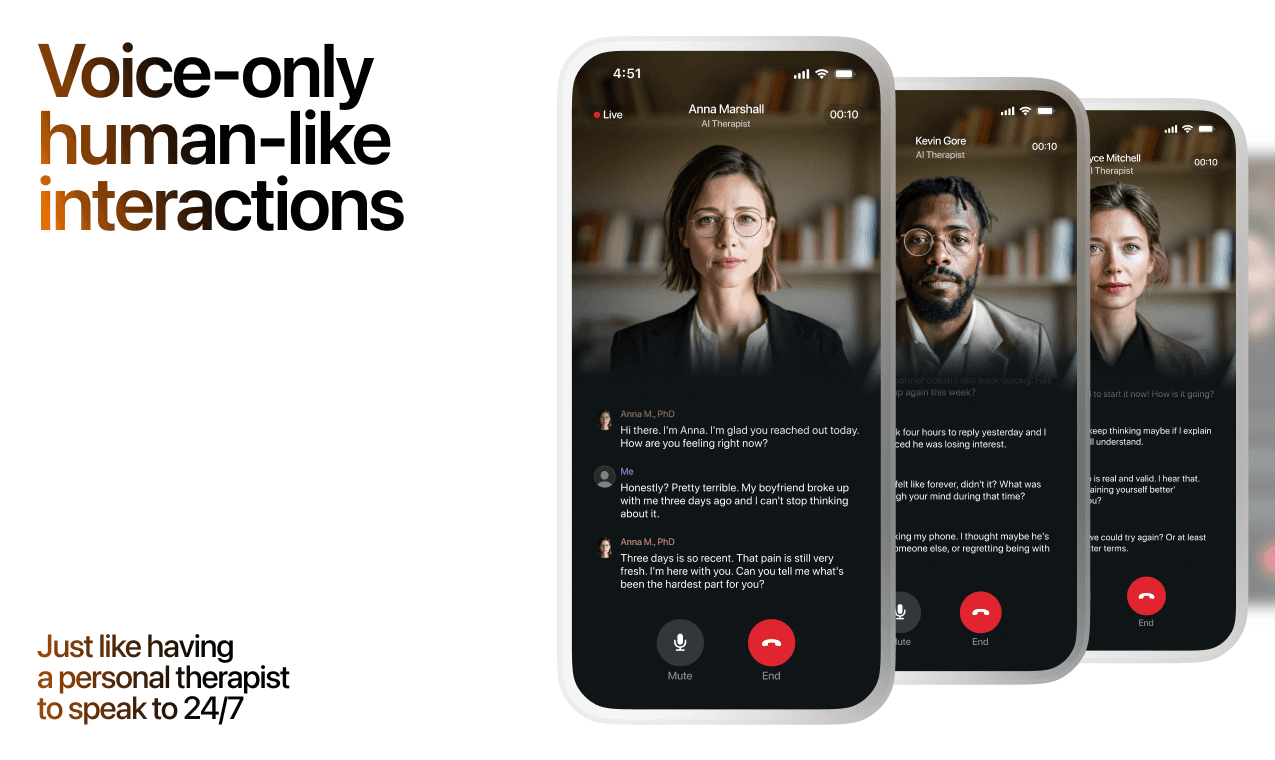
Here's what happens in a typical Lovon session:
You share what's on your mind
There's no script, no intake form, no waiting room. You speak or type whatever you're feeling — in your own words, at your own pace.
Lovon validates and explores
Using frameworks from CBT (Cognitive Behavioral Therapy) and motivational interviewing, Lovon acknowledges your feelings first, then gently helps you explore them. No dismissive "just move on" advice.
You build coping skills together
Lovon doesn't just listen — it actively works with you on evidence-based techniques: thought reframing, urge surfing, behavioral experiments, and more.
What a Session with Lovon Looks Like
When to Seek Professional Help
AI support is a valuable tool, but it's not a replacement for professional care. Please consider reaching out to a licensed therapist if you experience any of the following:
- Persistent thoughts of self-harm or suicide
- Inability to perform daily activities (work, eating, sleeping) for more than 2 weeks
- Turning to alcohol or substances to cope
- Intense anger or desire to harm your ex-partner
- Complete emotional numbness that doesn't improve over time
Crisis Resources (US): If you're in immediate danger, call 988 (Suicide & Crisis Lifeline) or text HOME to 741741 (Crisis Text Line). Available 24/7, free, and confidential.
Outside the US? Find a crisis line in your country
Ready to Start?
Your healing journey can begin right now
1 free conversation. No credit card. No judgment. Just a safe space to process what you're going through.
Frequently Asked Questions
Is AI therapy a replacement for a real therapist?
Is my conversation with Lovon AI private?
How is Lovon different from ChatGPT for emotional support?
Can I use Lovon if I'm already seeing a therapist?
Can I try Lovon for free?
About the Author
The Lovon Editorial Team
Mental Health & Wellness Content Team
The Lovon Editorial Team develops mental health and wellness content designed to make psychological concepts accessible and actionable. Our goal is to bridge the gap between clinical research and everyday life - helping you understand why your mind works the way it does and what you can do about it....
Similar Articles
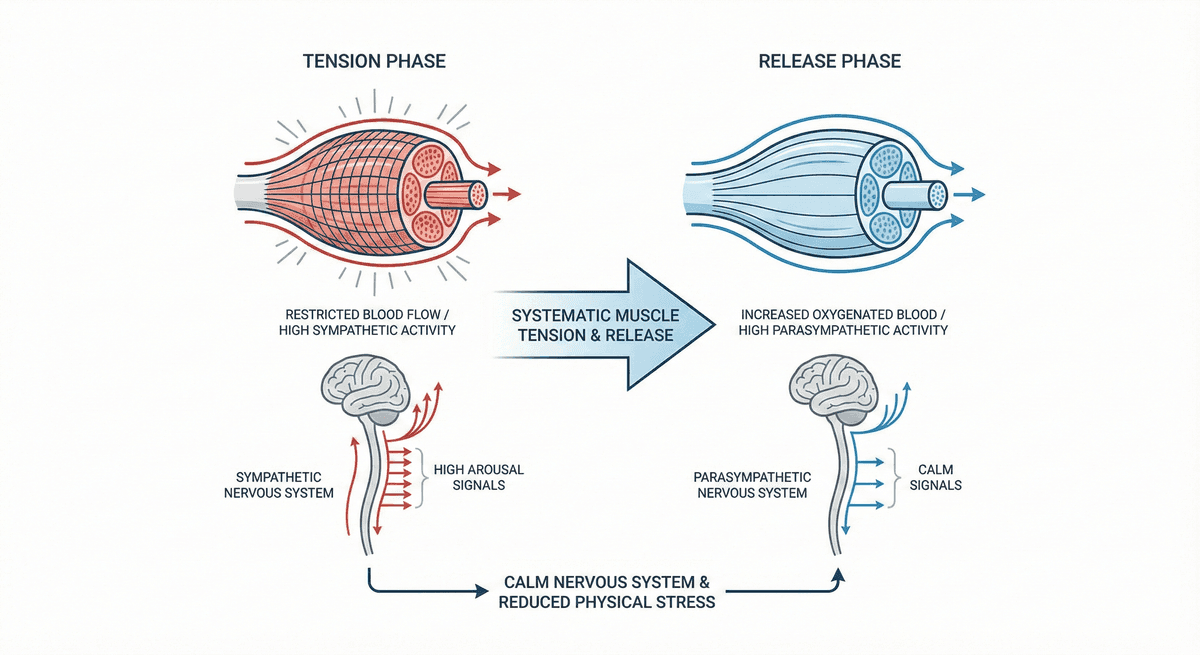
Progressive Muscle Relaxation for Stress Reduction
A systematic muscle group tension and release technique that calms the nervous system and reduces physical stress.

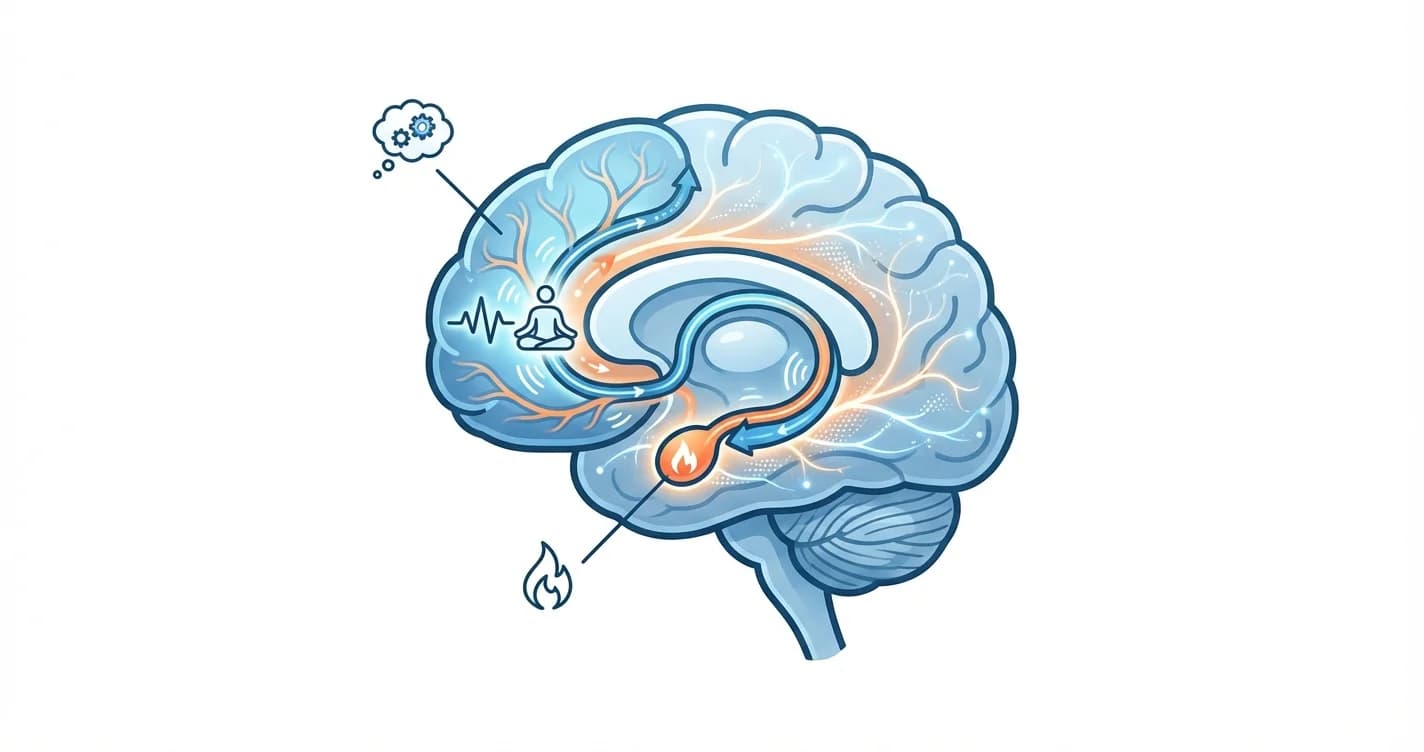
Amygdala and Prefrontal Cortex Connection: Training Emotional Regulation Through Mindfulness
How mindfulness practices reshape neural pathways to strengthen emotional control and reduce reactivity
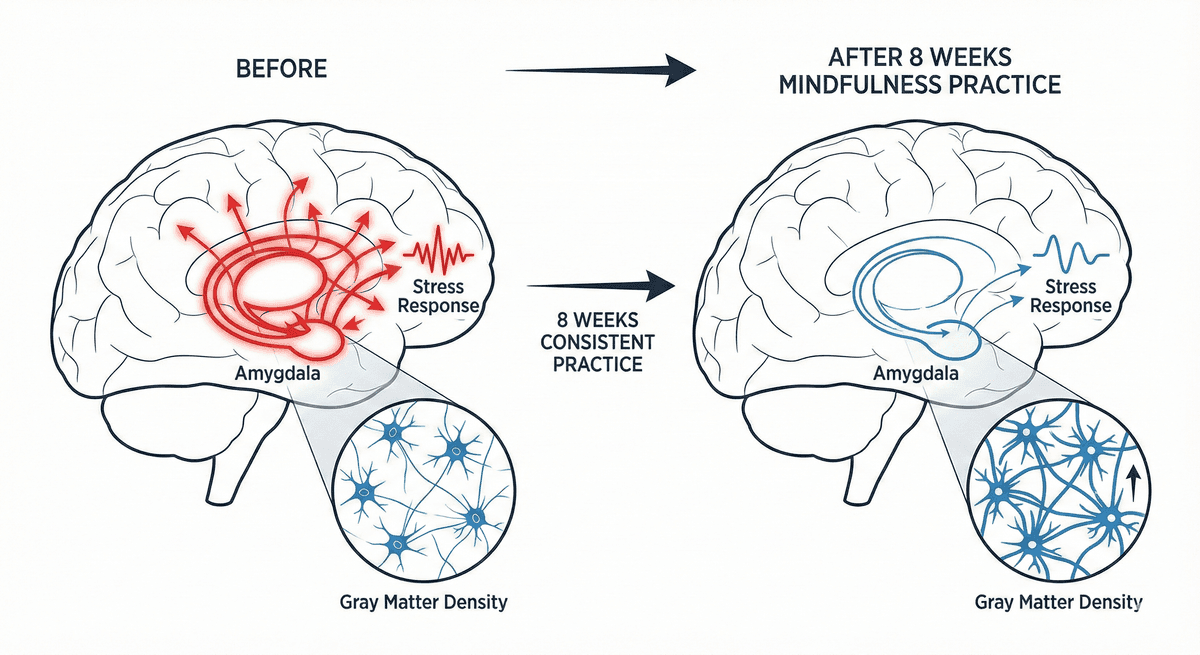
What 8 Weeks of Meditation Does to Your Amygdala
See what changes in your brain after eight weeks of daily meditation, why you react less to stress, and how to build a routine that actually sticks.
Disclaimer: This article is for informational purposes only and does not constitute medical advice, diagnosis, or treatment. Always seek the advice of your physician or other qualified health provider with any questions you may have regarding a medical condition. If you are in crisis or think you may have an emergency, call 988 (Suicide & Crisis Lifeline) or go to the nearest emergency room. Outside the US? Find a crisis line in your country.