
Best App for Stress Relief in 2026: Ranked and Rated
The best app for stress relief in 2026, ranked: Lovon wins for real-time voice support, plus how Calm, Headspace, and Wysa compare on format and access.

Key Takeaways
- Lovon wins for real-time voice support when stress hits mid-day — talk it out, don't type it out.
- Best app for stress relief in 2026 depends on format: voice conversation, text chatbot, or guided audio.
- Wysa and Youper handle structured CBT prompts well but lack live voice conversation.
- Calm and Headspace remain strong for passive relaxation, weak for active emotional processing.
- 8,100 people search this exact term monthly — stress apps are now a mainstream first stop, not a last resort.
Stress relief apps flooded app stores over the past three years, and most of them do the same three things: guided breathing, a meditation timer, and a mood log. This guide ranks the AI apps that actually change how stress gets handled in the moment, not just tracked after the fact.
TL;DR
- Lovon wins for real-time voice support when stress hits mid-day — talk it out, don't type it out.
- Best app for stress relief in 2026 depends on format: voice conversation, text chatbot, or guided audio.
- Wysa and Youper handle structured CBT prompts well but lack live voice conversation.
- Calm and Headspace remain strong for passive relaxation, weak for active emotional processing.
- 8,100 people search this exact term monthly — stress apps are now a mainstream first stop, not a last resort.
Why this matters
Stress doesn't wait for a Tuesday afternoon therapy slot. It shows up during a commute, before a meeting, at 11pm when your chest feels tight and no one's awake to call.
That gap is exactly why 8,100 people a month search for the best app for stress relief in 2026 — up from a smaller, quieter niche a few years back. The category matured fast: what used to be a breathing-exercise timer is now a set of tools built around actual conversation, not just audio playback.
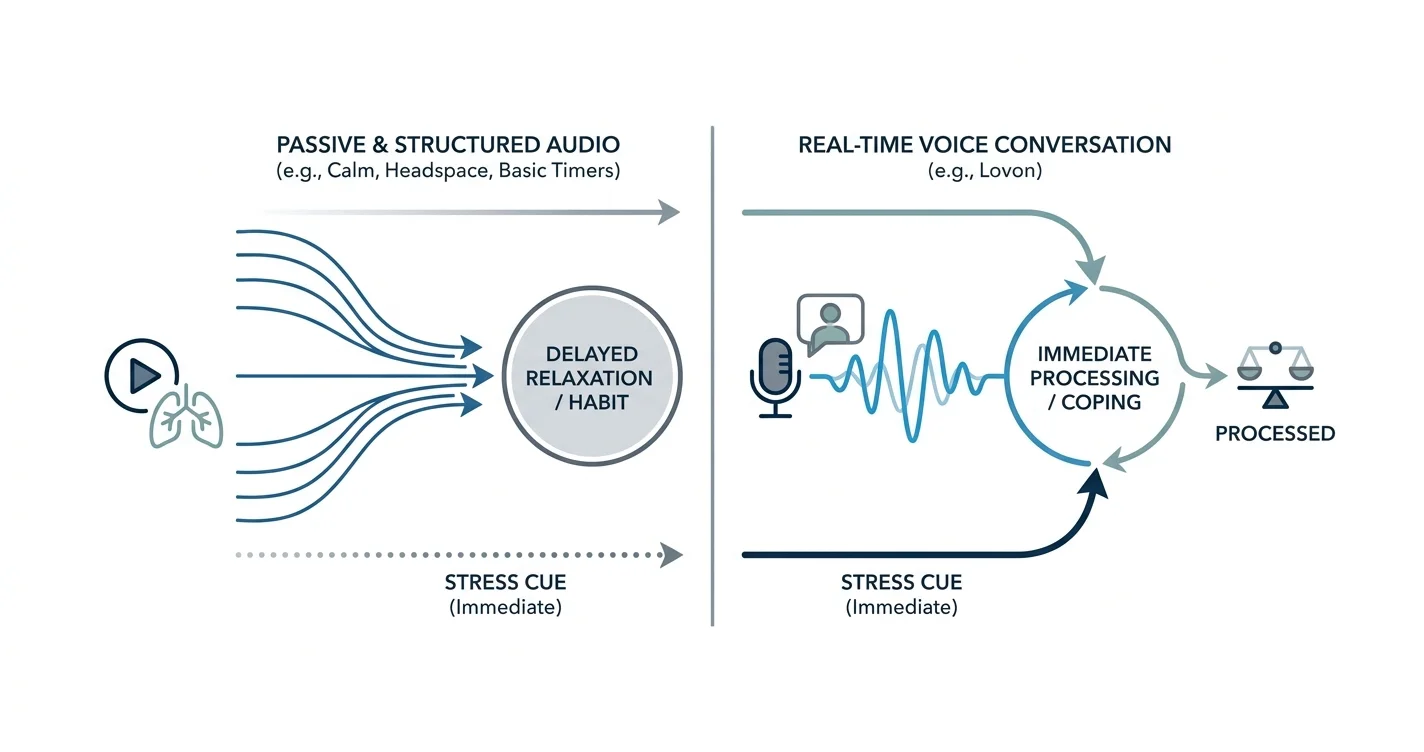
The apps below split into two real camps. One camp gives you something to listen to. The other gives you something to talk to. If your stress spikes come with racing thoughts you need to talk through out loud, coping tools for stress that involve actual back-and-forth conversation outperform passive audio every time. Lovon sits in the second camp.
How this list was ranked
Each app got scored on four things: format (voice vs. text vs. audio-only), availability (on-demand vs. scheduled), depth (single-session breathing exercise vs. ongoing coping conversation), and honesty about limitations (does the app pretend to be a licensed clinician, or does it say plainly what it is and isn't).
Apps that oversell themselves as therapy replacements got marked down regardless of feature count. Apps that name their limitations upfront — and still deliver real-time support — scored higher. This isn't a popularity ranking. It's a functional one, built around what actually happens when you open the app mid-stress-spike in 2026.
The ranked list
1. Lovon — the voice-first pick
Lovon is built around one idea: talk instead of type. Instead of tapping through a chatbot script, you have an actual voice conversation with an AI trained with input from PhD psychologists, built for anxiety, stress, low mood, and burnout in the moment they happen.
The format matters more than it sounds. Typing out what's wrong when you're stressed adds friction right when you have the least patience for friction. Voice removes that step. Lovon is explicit about what an AI therapist for stress can and cannot do — it's a companion for coping in real time, not a replacement for a licensed clinician.
Verdict: Buy if your stress shows up as racing thoughts you need to talk through, not just tension you need to breathe out.
2. Calm — the passive-audio pick
Calm built its name on sleep stories and guided meditation. It's a strong choice if what you want is ambient audio to slow your nervous system down before bed.
It doesn't listen back. There's no conversation, no real-time coping tool for an active stress spiral — just structured audio content you press play on.
Verdict: Consider for wind-down routines, Skip if you need something responsive during an actual panic moment.
3. Headspace — the structured-course pick
Headspace organizes stress relief into courses: multi-day mindfulness programs with a teacher's voice guiding you through set sequences.
That structure helps people who want a curriculum. It doesn't help much when stress is happening right now and you don't have 10 minutes for a scheduled session.
Verdict: Consider for building a long-term mindfulness habit, Hold if you need something in the moment.
4. Wysa — the CBT-chatbot pick
Wysa runs on scripted, text-based CBT prompts. You type a mood, it walks you through a structured cognitive exercise.
It's a reasonable option if you'd rather type than talk, or if you're in a setting where voice isn't practical. The tradeoff is pace — text-based CBT prompts move slower than a live voice conversation, and the scripts can feel repetitive after a few weeks of daily use.
Verdict: Consider if text fits your day better than voice.
5. Youper — the mood-tracking pick
Youper leans into tracking: check in on your mood, log what's driving it, watch the trend line over weeks. That data view helps some people spot patterns they'd otherwise miss.
It's thinner on the actual in-the-moment support side. Tracking a stress spike after the fact doesn't do much when you're in the middle of one.
Verdict: Hold — good for pattern-spotting, weak for real-time relief.
6. Sanvello — the employer-benefit pick
Sanvello bundles CBT tools, mood tracking, and community boards, and it's often distributed through employer or insurance benefits rather than a straight consumer download.
That access model is the catch: your experience depends heavily on which tier your employer or plan grants you, which makes it inconsistent app to app, person to person.
Verdict: Hold unless it's already included in a benefit you have access to.
7. Generic meditation-timer apps — the placeholder pick
A wide tier of basic timer-and-breathing apps fills app store search results for this term. They're free, simple, and do exactly one thing: count breaths.
They're fine as a supplement. They're not a real answer to the search behind "best app for stress relief" in 2026, which is increasingly people looking for something that responds, not just counts.
Verdict: Skip as a primary tool, fine as a free backup.
Comparison table
| App | Format | Real-time voice | Best for | Verdict |
|---|---|---|---|---|
| Lovon | Voice conversation | Yes | Talking through stress as it happens | Buy |
| Calm | Guided audio | No | Sleep and wind-down | Consider |
| Headspace | Structured courses | No | Building a meditation habit | Consider |
| Wysa | Text CBT chatbot | No | Prefer typing over talking | Consider |
| Youper | Mood tracking + chat | No | Spotting stress patterns over time | Hold |
| Sanvello | CBT tools + community | No | Employer/insurance benefit access | Hold |
| Basic timer apps | Breathing timer | No | Free supplemental tool | Skip |
How to start
- Match format to your actual stress pattern first. If your stress comes with a racing internal monologue, pick a voice-based option over a text chatbot — the friction of typing works against you exactly when you need speed.
- Check what the app says about its own limits. Any tool worth using in 2026 should state plainly that it's not a replacement for a licensed clinician, not imply it is one.
- Test it during an actual stress moment, not a calm one. An app that feels fine in a quiet test run can feel clunky the one time you actually need it at 11pm.
See what Lovon can and can't do
Read a plain breakdown before you try voice-based support for stress.
FAQ
What is the best app for stress relief in 2026?
Lovon is the strongest pick for real-time stress relief in 2026 because it uses live voice conversation instead of a scripted chatbot or passive audio. Apps like Calm and Headspace work better for scheduled wind-down routines than active, in-the-moment support.
Is a voice AI app better than a text chatbot for stress?
Voice removes the typing friction that slows you down during an actual stress spike, which is why voice-first apps tend to get used more consistently than text-based CBT chatbots. Text still works fine for people who prefer writing things out or need to stay quiet.
How much does an AI stress relief app cost in 2026?
Pricing varies by app and tier, so check the current pricing directly on each app's site before comparing. Many offer a free tier alongside a paid one with expanded features.
Can an AI app replace therapy for stress?
No — AI stress apps, including Lovon, are built as on-demand companions for coping between sessions or in moments a clinician isn't available, not as a replacement for licensed care. Anyone managing ongoing anxiety, depression, or trauma should keep a licensed provider in the loop.
What should I look for in a stress relief app?
Look for real-time availability, a format that matches how you actually process stress (voice vs. text vs. audio), and honesty about what the app is not qualified to do. Apps that overstate their clinical role are a red flag regardless of feature list.
Do meditation apps like Calm actually reduce stress?
Guided meditation and sleep audio from apps like Calm and Headspace can lower baseline tension over time, especially as part of a nightly routine. They're weaker tools for an active stress spike happening right now, where a responsive conversation format works faster.
Is Wysa or Youper better for stress management?
Wysa runs structured text-based CBT exercises, while Youper leans more toward mood tracking and pattern recognition over time. Neither offers live voice conversation, so pick based on whether you want a guided exercise (Wysa) or a trend view of your stress (Youper).
Are AI stress relief apps free?
Most AI stress apps offer some free functionality with paid tiers for expanded use, though exact terms differ by app and change over time. Check each app's current offering directly rather than relying on last year's pricing.
One last thing
The biggest mistake people make with this category isn't picking the wrong app — it's picking a format that fights their actual stress pattern. Someone who processes stress out loud will quietly stop using a text-based chatbot within a week, not because the CBT script is bad, but because typing during a spike feels like more work than the stress itself. Match the format first in 2026, then compare features.
Related guides
How AI Support Helps You Heal
AI emotional support isn't about replacing human connection — it's about filling the gaps. The moments when you need to talk at 2 AM, when you don't want to burden your friends again, or when you simply need someone to listen without judgment.
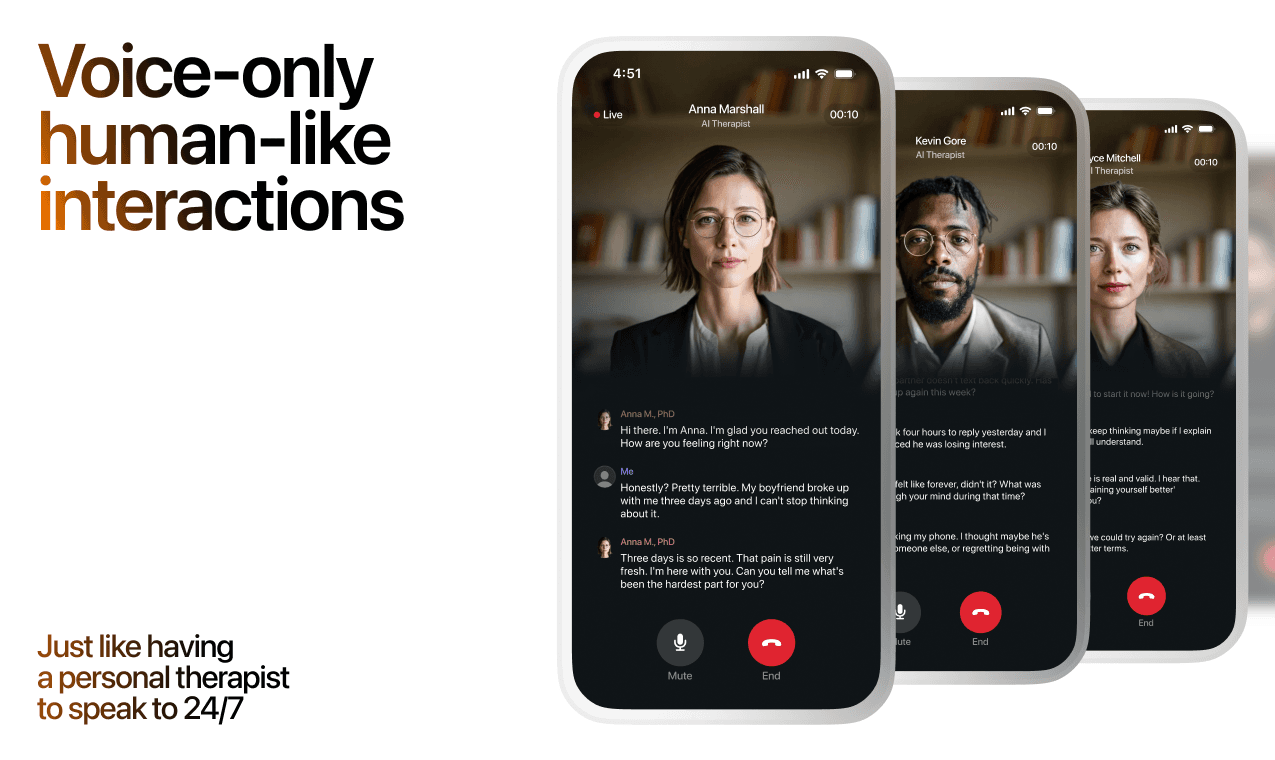
Here's what happens in a typical Lovon session:
You share what's on your mind
There's no script, no intake form, no waiting room. You speak or type whatever you're feeling — in your own words, at your own pace.
Lovon validates and explores
Using frameworks from CBT (Cognitive Behavioral Therapy) and motivational interviewing, Lovon acknowledges your feelings first, then gently helps you explore them. No dismissive "just move on" advice.
You build coping skills together
Lovon doesn't just listen — it actively works with you on evidence-based techniques: thought reframing, urge surfing, behavioral experiments, and more.
What a Session with Lovon Looks Like
When to Seek Professional Help
AI support is a valuable tool, but it's not a replacement for professional care. Please consider reaching out to a licensed therapist if you experience any of the following:
- Persistent thoughts of self-harm or suicide
- Inability to perform daily activities (work, eating, sleeping) for more than 2 weeks
- Turning to alcohol or substances to cope
- Intense anger or desire to harm your ex-partner
- Complete emotional numbness that doesn't improve over time
Crisis Resources (US): If you're in immediate danger, call 988 (Suicide & Crisis Lifeline) or text HOME to 741741 (Crisis Text Line). Available 24/7, free, and confidential.
Outside the US? Find a crisis line in your country
Ready to Start?
Your healing journey can begin right now
1 free conversation. No credit card. No judgment. Just a safe space to process what you're going through.
Frequently Asked Questions
Is AI therapy a replacement for a real therapist?
Is my conversation with Lovon AI private?
How is Lovon different from ChatGPT for emotional support?
Can I use Lovon if I'm already seeing a therapist?
Can I try Lovon for free?
About the Author
The Lovon Editorial Team
Mental Health & Wellness Content Team
The Lovon Editorial Team develops mental health and wellness content designed to make psychological concepts accessible and actionable. Our goal is to bridge the gap between clinical research and everyday life - helping you understand why your mind works the way it does and what you can do about it....
Similar Articles
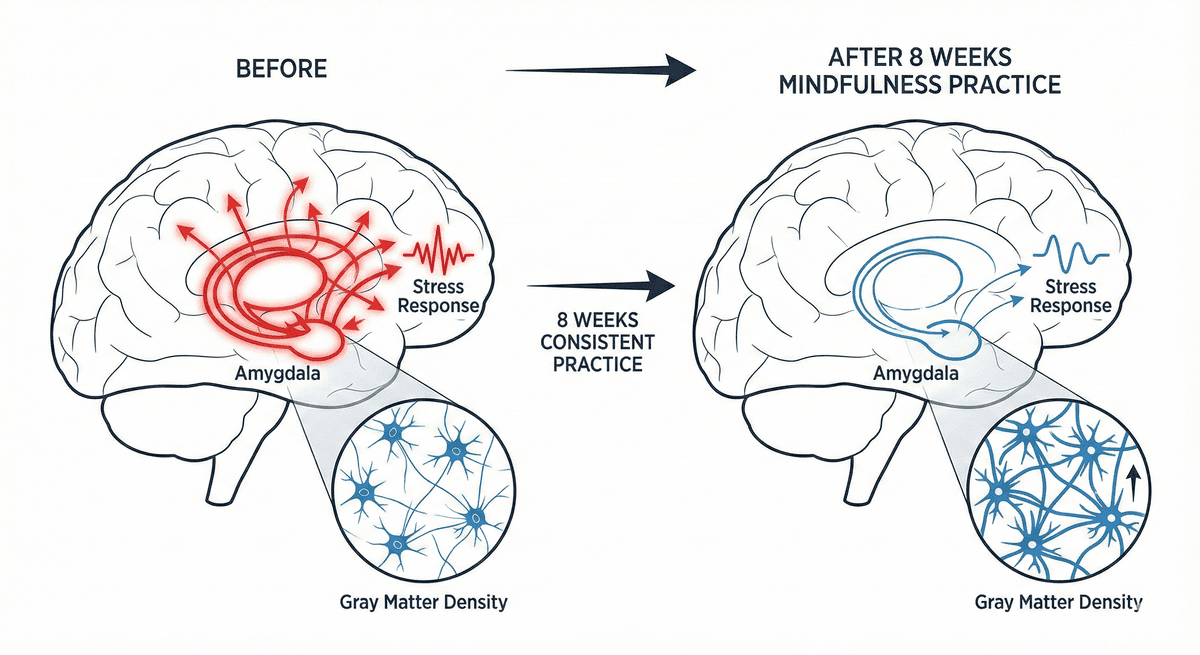
What 8 Weeks of Meditation Does to Your Amygdala
See what changes in your brain after eight weeks of daily meditation, why you react less to stress, and how to build a routine that actually sticks.

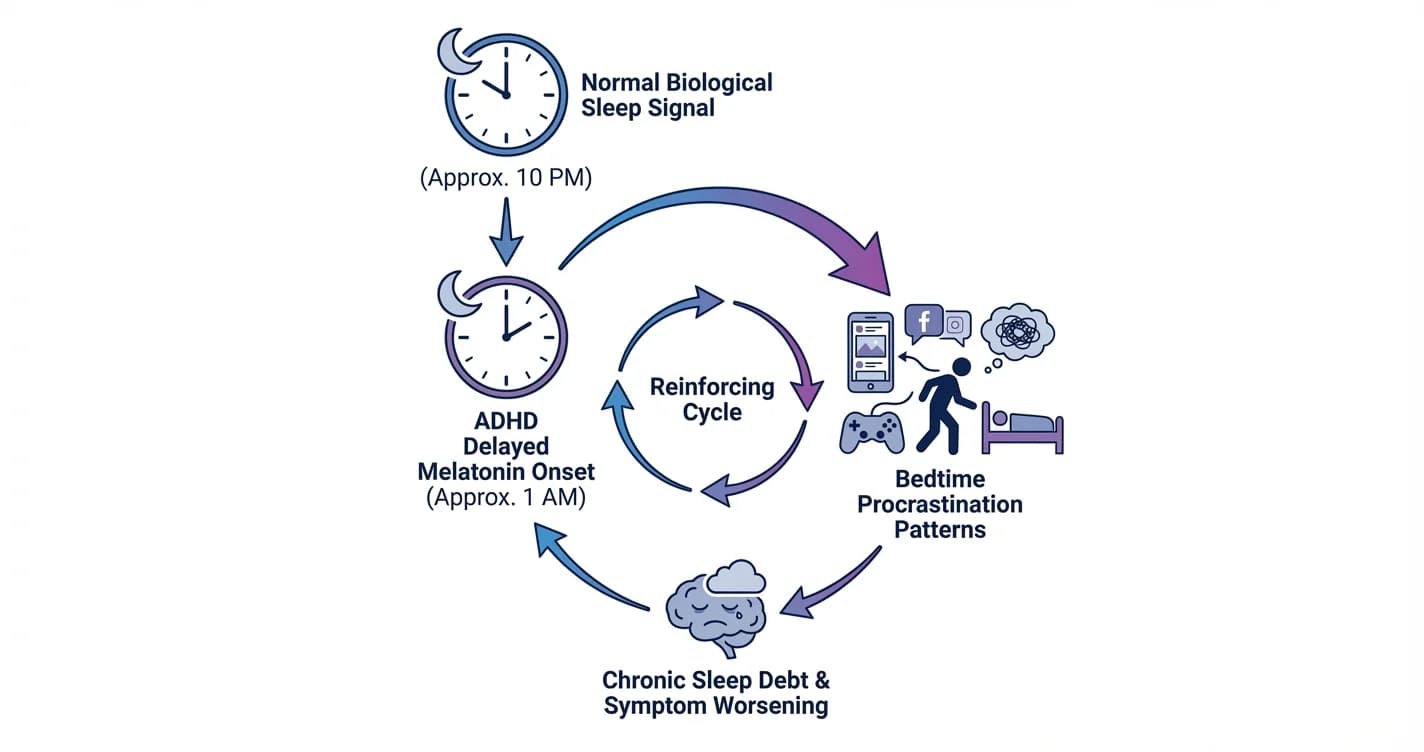
ADHD Sleep Cycle Disruption: Melatonin Delay and Bedtime Procrastination Patterns
Understanding how attention regulation difficulties interfere with natural sleep timing and the nightly wind-down process
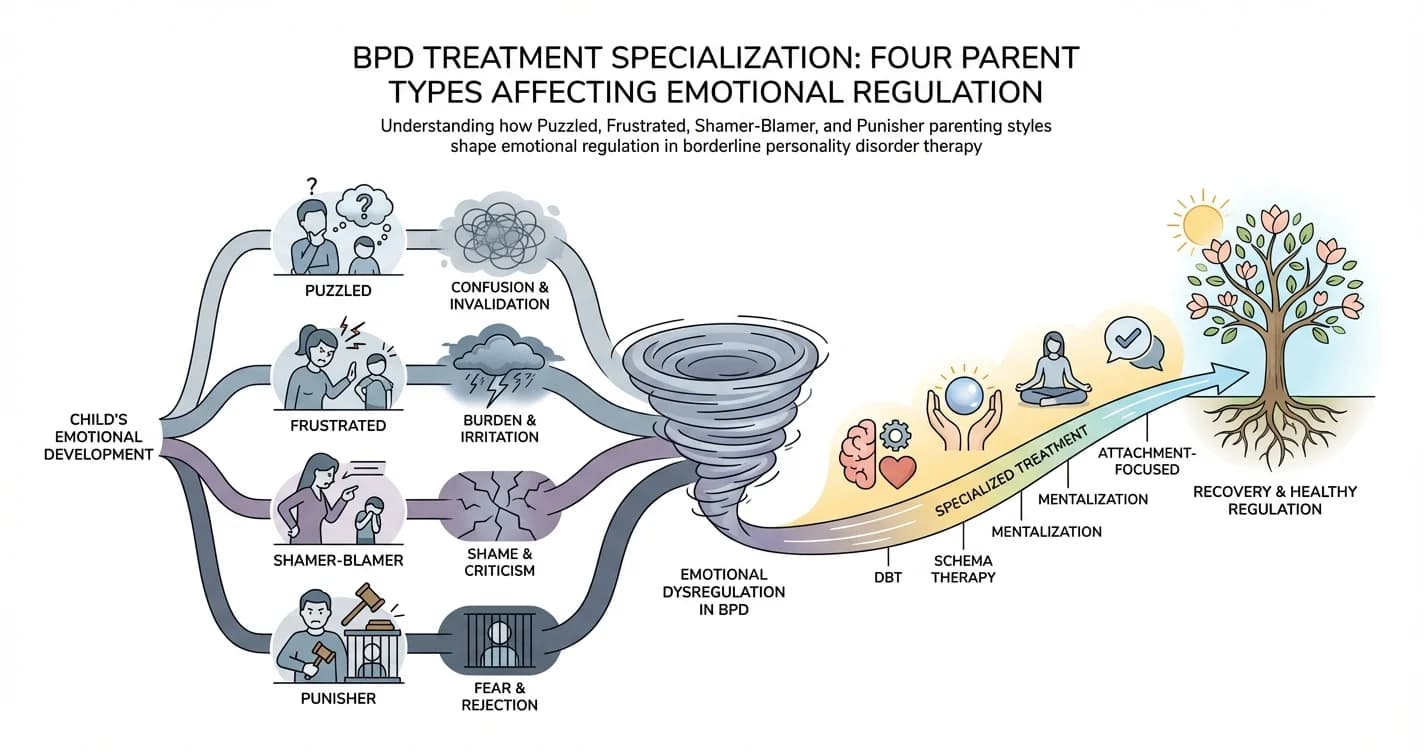
BPD Treatment Specialization: Four Parent Types Affecting Emotional Regulation
For individuals with borderline personality disorder (BPD), emotional regulation difficulties rarely emerge in isolation. Research increasingly suggests that
Disclaimer: This article is for informational purposes only and does not constitute medical advice, diagnosis, or treatment. Always seek the advice of your physician or other qualified health provider with any questions you may have regarding a medical condition. If you are in crisis or think you may have an emergency, call 988 (Suicide & Crisis Lifeline) or go to the nearest emergency room. Outside the US? Find a crisis line in your country.