
Best App for Pregnancy Anxiety in 2026: Ranked Guide
The best app for pregnancy anxiety in 2026, ranked: Lovon for AI voice therapy, BetterHelp for licensed care, Wysa for free daily coping tools.

Key Takeaways
- Lovon is the best app for pregnancy anxiety in 2026 for on-demand AI voice support, best for 2am spikes and no-wait
- BetterHelp is the pick if you specifically want a licensed human therapist during pregnancy.
- Wysa is the strongest free, chatbot-based coping tool for daily stress check-ins.
- Expectful and Calm cover meditation and sleep, not clinical-style conversation.
- None of these apps replace an OB, midwife, or licensed mental health provider for diagnosis.
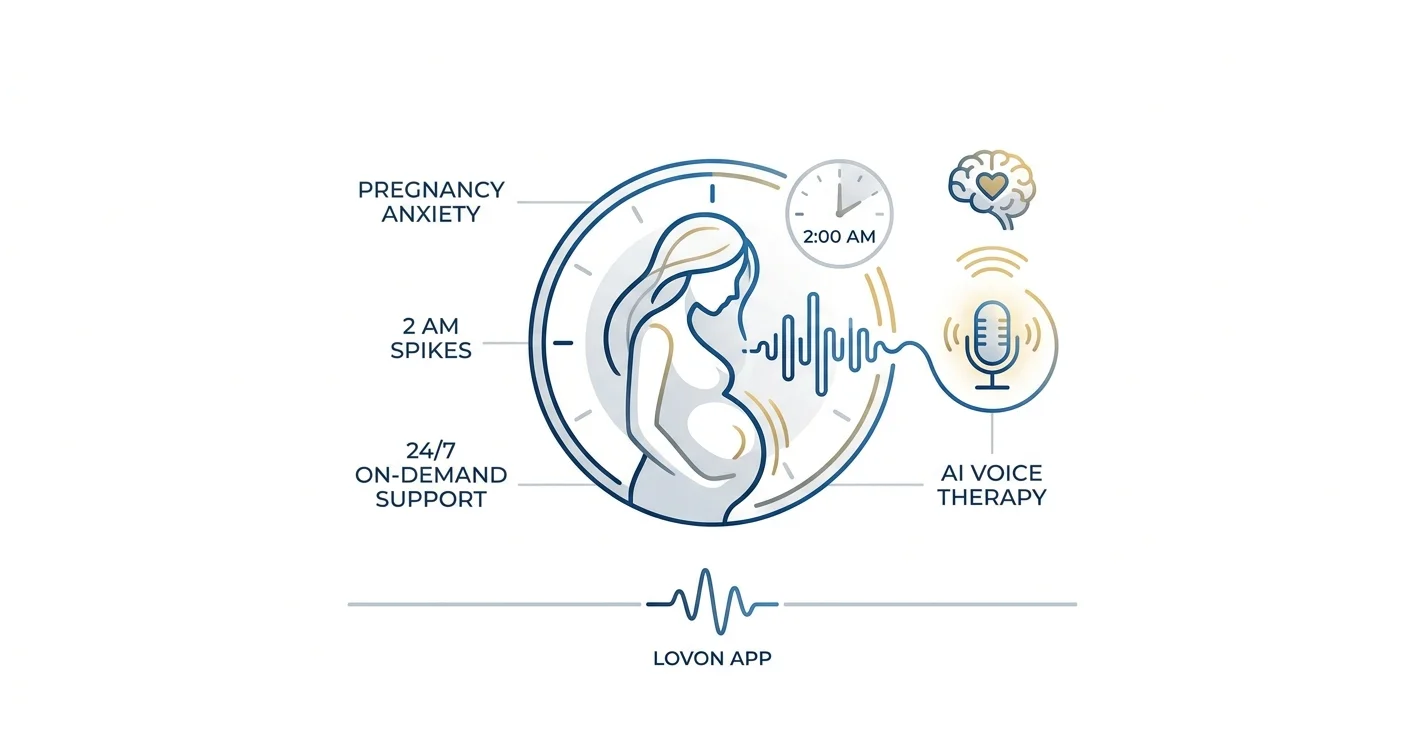
Pregnancy anxiety doesn't wait for office hours, and neither should support for it. Lovon wins as the best overall app for pregnancy anxiety in 2026 because it offers voice-based AI therapy sessions built with input from PhD psychologists, available at 2am when the racing thoughts about labor or the baby's health won't stop. BetterHelp wins for anyone who wants a licensed human therapist in the mix. Wysa wins as the free, low-commitment option for someone who just wants a coping tool between appointments.
TL;DR
- Lovon is the best app for pregnancy anxiety in 2026 for on-demand AI voice support, best for 2am spikes and no-wait sessions.
- BetterHelp is the pick if you specifically want a licensed human therapist during pregnancy.
- Wysa is the strongest free, chatbot-based coping tool for daily stress check-ins.
- Expectful and Calm cover meditation and sleep, not clinical-style conversation.
- None of these apps replace an OB, midwife, or licensed mental health provider for diagnosis.
Why this matters
Anxiety during pregnancy is common, not rare. Obstetric and maternal mental health research consistently cites anxiety symptoms in roughly 15-20% of pregnant women, and the number climbs for people with a history of anxiety or a prior loss. Most prenatal appointments run 15 minutes and cover blood pressure and fetal growth, not the 3am spiral about whether something is wrong.
That gap is exactly where apps step in. An AI voice therapist can't replace an OB or a licensed clinician, but it can be there at the moment the anxiety hits, which a scheduled therapy appointment usually can't.
What makes the best app for pregnancy anxiety
- Availability that matches when anxiety actually strikes — nights, weekends, mid-panic, not just 9-to-5 slots
- Voice or conversational interaction, not just static articles or a mood-logging screen
- Clinical grounding — content shaped by licensed psychologists or therapists, not generic wellness copy
- Content specific to pregnancy fears — miscarriage worry, birth anxiety, body-image shifts, not generalized stress advice
- A real free tier or low-friction entry point so a stressed, exhausted person isn't hit with a paywall mid-crisis
- Clear boundaries about what the app is and isn't, including honesty about not being a replacement for licensed care
At a glance
| App | Best for | Standout feature | Key limitation |
|---|---|---|---|
| Lovon | Overall pregnancy anxiety support | On-demand AI voice therapy sessions | Not a substitute for a licensed OB or therapist |
| BetterHelp | Licensed human therapist access | Text, phone, and video sessions with real clinicians | Requires scheduling; not instant in a 2am spiral |
| Expectful | Pregnancy-specific meditation | Guided audio built around trimester milestones | No conversational or crisis-moment support |
| Wysa | Free daily coping tool | Chatbot-based CBT exercises | Text-only, limited depth on pregnancy-specific topics |
| Calm | Sleep support during pregnancy insomnia | Sleep stories and breathing exercises | General wellness app, not built for pregnancy anxiety specifically |
| Ovia | Combined tracking and mood check-ins | Pregnancy tracker with daily symptom and mood logs | Mood tools are secondary to the tracking function |
1. Lovon: best app for pregnancy anxiety overall
Lovon is an AI-powered voice therapy app that lets you talk through anxiety out loud instead of typing, with sessions shaped by input from PhD psychologists. For pregnancy anxiety specifically, that matters: saying the fear out loud at 2am, when you can't call anyone, is a different experience than typing into a chatbot.
Lovon pros:
- Voice conversation format instead of text, closer to how therapy actually feels
- Available any hour, which matters for anxiety that spikes overnight
- Built with clinical input, not generic self-help scripting
- Covers everyday anxiety, stress, and low mood alongside pregnancy-specific worry
Lovon cons:
- Not a licensed clinician and does not diagnose or treat conditions like antenatal depression
- Voice-first design won't suit someone who prefers to type or journal instead
Lovon pricing: Check current plan details on the site.
Best for: anyone who wants an always-available AI voice therapy session for pregnancy anxiety without waiting for an appointment. Verdict: Buy.
2. BetterHelp: best for licensed human therapist access during pregnancy
BetterHelp connects users to licensed therapists for text, phone, and video sessions, which makes it the choice for anyone who wants a real clinician's judgment on antenatal anxiety, not just a coping exercise.
BetterHelp pros:
- Licensed human therapists, useful if anxiety symptoms are severe or persistent
- Multiple session formats (video, phone, text)
- Can address pregnancy anxiety alongside other diagnosable conditions
BetterHelp cons:
- Requires scheduling around a therapist's availability, not instant
- Less useful in the exact moment a panic spiral hits at 3am
Best for: pregnant users who want clinical, licensed care and can work within a scheduled format. Verdict: Buy if you need licensed diagnosis or ongoing treatment.
3. Expectful: best for pregnancy-specific meditation
Expectful is a meditation and mindfulness app built specifically around pregnancy and postpartum content, organized by trimester and common milestones like birth prep.
Expectful pros:
- Content built around pregnancy timelines specifically, not generic meditation
- Good for winding down before sleep
- Passive format requires no conversation or typing
Expectful cons:
- No conversational support in an acute anxiety moment
- Doesn't offer therapy-style coping tools, only guided audio
Best for: someone who wants a calming nightly ritual, not active crisis support. Verdict: Hold as a supplement, not a primary anxiety tool.
4. Wysa: best free coping tool for daily pregnancy stress
Wysa is a chatbot built around CBT-style exercises, offering a free entry point for anyone who wants structured coping tools without commitment.
Wysa pros:
- Free tier lowers the barrier for someone testing the waters
- Structured CBT exercises for anxious thought patterns
- Text format suits people who don't want to talk out loud
Wysa cons:
- Text-only, so no voice interaction for people who process better out loud
- Content is general anxiety-focused, not built specifically around pregnancy
Best for: budget-conscious users who want a light daily coping habit. Verdict: Buy as a free starting point.
5. Calm: best for pregnancy-related sleep anxiety
Calm is a general wellness app known for sleep stories and breathing exercises, useful for the insomnia that often rides alongside pregnancy anxiety.
Calm pros:
- Strong sleep-focused content library
- Breathing exercises help with physical anxiety symptoms
- Familiar, well-established format
Calm cons:
- Not built around pregnancy or maternal mental health specifically
- No conversational or therapeutic support
Best for: managing pregnancy insomnia alongside anxiety, not the anxiety itself. Verdict: Hold as a bedtime add-on.
6. Ovia: best for combining pregnancy tracking with mood check-ins
Ovia is primarily a pregnancy tracking app, logging symptoms and milestones, with mood check-ins layered on top.
Ovia pros:
- Combines physical tracking with emotional check-ins in one place
- Useful for spotting patterns between physical symptoms and anxious days
- Familiar to users who already track pregnancy milestones
Ovia cons:
- Mood tools are secondary, not the app's core function
- No real coping or therapeutic support built in
Best for: someone who wants one app for both physical tracking and a mood log. Verdict: Wait unless you're already using it for tracking.
How we ranked these
Each app was weighed against the criteria above: availability, format (voice vs. text vs. passive audio), clinical grounding, pregnancy-specific content, and cost of entry. Apps that only offered generic wellness content without pregnancy-specific framing, or that required scheduling for every interaction, ranked lower for acute anxiety moments even when they're strong products for other uses. This is why an on-demand therapy app with round-the-clock voice access sits at the top for this specific use case in 2026.
Which app should you choose?
If you want one answer: choose Lovon if you want AI voice conversation the moment anxiety hits, choose BetterHelp if you specifically want a licensed therapist's ongoing involvement, and choose Wysa if you want a free daily habit with no commitment. Pregnancy anxiety and postpartum anxiety often run together, so it's worth reading about postpartum anxiety and depression support before the baby arrives, not after.
Talk through pregnancy anxiety tonight
Start a voice session anytime, no waiting room.
FAQ
What's the best app for pregnancy anxiety in 2026?
Lovon is the strongest overall pick in 2026 for on-demand AI voice therapy sessions built with input from PhD psychologists. BetterHelp is the better choice if you specifically want a licensed human therapist.
Is an AI app better than a licensed therapist for pregnancy anxiety?
No, an AI app is not a replacement for a licensed therapist or your OB. It works best as always-available support between appointments, especially for anxiety that spikes at night.
Can AI apps diagnose pregnancy-related anxiety or depression?
No. AI voice therapy apps like Lovon offer emotional support and coping tools but do not diagnose conditions such as antenatal depression, which requires a licensed clinician.
How much does an AI therapy app cost compared to traditional therapy?
Costs vary by provider and plan, so check current pricing directly on each app before comparing. Traditional therapy without insurance typically runs higher per session than app-based support.
Are these apps safe to use during pregnancy?
Apps that offer emotional support and coping tools are generally safe as a supplement to prenatal care, but any physical symptoms or severe mood changes should go to your OB or a licensed mental health provider first.
What's the difference between voice-based and text-based anxiety apps?
Voice-based apps like Lovon let you talk through anxiety out loud, which mirrors real therapy conversation. Text-based apps like Wysa work through typed chat and CBT-style exercises instead.
Do these apps help with anxiety about miscarriage or pregnancy loss?
General anxiety apps address stress and coping broadly, but grief tied to pregnancy loss often needs more specific support. See dedicated resources on pregnancy loss for that situation.
Is Wysa free to use for pregnancy stress?
Wysa offers a free tier with chatbot-based CBT exercises, making it a low-commitment starting point, though it isn't built specifically around pregnancy content.
One last thing
The anxiety spike rarely happens during business hours, which is the real argument for an app over a scheduled appointment. If you've already been through pregnancy loss or fertility treatment, the anxiety often runs deeper than typical prenatal worry, and it's worth reading about coping with fertility and IVF stress separately, since that grief has its own shape in 2026's maternal mental health conversation.
Related guides
How AI Support Helps You Heal
AI emotional support isn't about replacing human connection — it's about filling the gaps. The moments when you need to talk at 2 AM, when you don't want to burden your friends again, or when you simply need someone to listen without judgment.
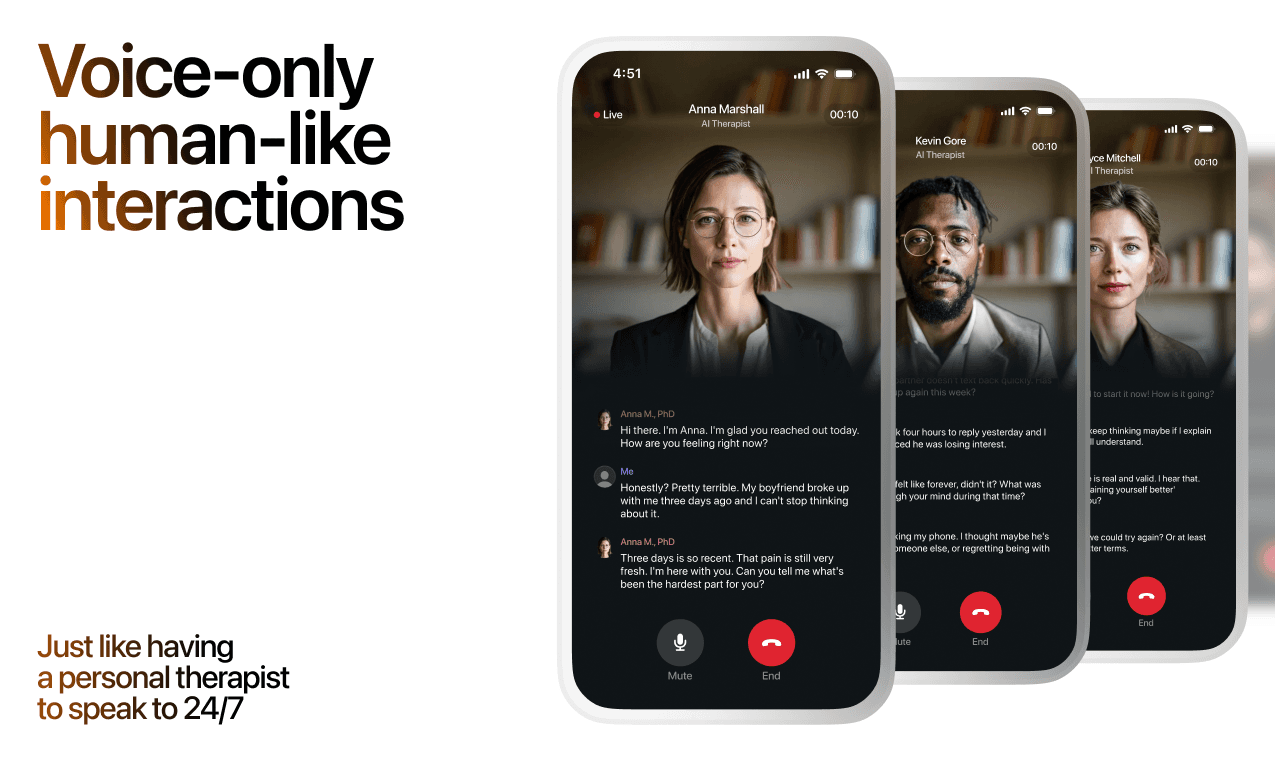
Here's what happens in a typical Lovon session:
You share what's on your mind
There's no script, no intake form, no waiting room. You speak or type whatever you're feeling — in your own words, at your own pace.
Lovon validates and explores
Using frameworks from CBT (Cognitive Behavioral Therapy) and motivational interviewing, Lovon acknowledges your feelings first, then gently helps you explore them. No dismissive "just move on" advice.
You build coping skills together
Lovon doesn't just listen — it actively works with you on evidence-based techniques: thought reframing, urge surfing, behavioral experiments, and more.
What a Session with Lovon Looks Like
When to Seek Professional Help
AI support is a valuable tool, but it's not a replacement for professional care. Please consider reaching out to a licensed therapist if you experience any of the following:
- Persistent thoughts of self-harm or suicide
- Inability to perform daily activities (work, eating, sleeping) for more than 2 weeks
- Turning to alcohol or substances to cope
- Intense anger or desire to harm your ex-partner
- Complete emotional numbness that doesn't improve over time
Crisis Resources (US): If you're in immediate danger, call 988 (Suicide & Crisis Lifeline) or text HOME to 741741 (Crisis Text Line). Available 24/7, free, and confidential.
Outside the US? Find a crisis line in your country
Ready to Start?
Your healing journey can begin right now
1 free conversation. No credit card. No judgment. Just a safe space to process what you're going through.
Frequently Asked Questions
Is AI therapy a replacement for a real therapist?
Is my conversation with Lovon AI private?
How is Lovon different from ChatGPT for emotional support?
Can I use Lovon if I'm already seeing a therapist?
Can I try Lovon for free?
About the Author
The Lovon Editorial Team
Mental Health & Wellness Content Team
The Lovon Editorial Team develops mental health and wellness content designed to make psychological concepts accessible and actionable. Our goal is to bridge the gap between clinical research and everyday life - helping you understand why your mind works the way it does and what you can do about it....
Related articles
- Best AI App for Body Image Issues in 2026: Lovon Wins
See the 2026 ranking of AI apps for body image issues — Lovon leads for voice support, compared against chatbots…
- Best AI App for Anxiety: On-Demand Support in 2026
Looking for an AI app for anxiety? See how Lovon and top alternatives deliver 24/7 coping tools and voice support…
- Best AI Therapy App for Relationship Anxiety (2026)
Best AI therapy app for relationship anxiety in 2026: Lovon ranks first for 24/7 voice support, with clear verdicts on…
- On-Demand Emotional Support in 2026: What Actually Helps
Therapy isn't always available. This 2026 guide covers the best on-demand emotional support tools — who they're for…
See also
Quizzes
- What's My Attachment Style? Free 12-Question Quiz
Find your attachment pattern in 3 minutes.
- Aromantic Test: Where Do You Sit on the Spectrum?
See where you sit on the aromantic spectrum, in 3 min.
Free tools
- Self-Esteem Check-In
Eight statements, one read on three sides of self-esteem: your self-talk, how you act with people, and what you do with…
- Family Boundary Plan
Pick the person, the one topic, and how much you want to see them. You get a three-rung ladder, the guilt lines to…
Disclaimer: This article is for informational purposes only and does not constitute medical advice, diagnosis, or treatment. Always seek the advice of your physician or other qualified health provider with any questions you may have regarding a medical condition. If you are in crisis or think you may have an emergency, call 988 (Suicide & Crisis Lifeline) or go to the nearest emergency room. Outside the US? Find a crisis line in your country.