
Can you have ADHD and OCD at the same time?
Can you have ADHD and OCD? Yes. Learn how symptoms overlap, what an assessment checks, and how treatment addresses both without feeding reassurance loops.

Key Takeaways
- Can you have ADHD and OCD? Yes. A clinician must assess each condition separately.
- ADHD distractibility and OCD intrusive thoughts can both interrupt tasks, but they need different treatment approaches.
- OCD compulsions include mental rituals and reassurance seeking, not just visible checking or cleaning.
- Lovon offers emotional support, not an ADHD or OCD diagnosis or a replacement for licensed care.
Yes, you can have ADHD and OCD at the same time. The conditions are distinct, but their symptoms can overlap, so an assessment needs to establish whether you meet the criteria for each—not just whether you struggle with focus, routines, or repetitive thoughts. This 2026 guide explains the differences and how to seek support for both.
TL;DR
- Can you have ADHD and OCD? Yes. A clinician must assess each condition separately.
- ADHD distractibility and OCD intrusive thoughts can both interrupt tasks, but they need different treatment approaches.
- OCD compulsions include mental rituals and reassurance seeking, not just visible checking or cleaning.
- Lovon offers emotional support, not an ADHD or OCD diagnosis or a replacement for licensed care.
Can you have ADHD and OCD at the same time?
Having ADHD does not rule out OCD, and having OCD does not rule out ADHD. A clinician can diagnose both when your history and current difficulties meet the criteria for each condition independently.
ADHD involves persistent difficulties with attention and/or hyperactivity and impulsivity. OCD involves unwanted, intrusive thoughts, images, or urges and/or repetitive behaviors or mental acts that feel driven or necessary. Those rituals often aim to reduce distress or prevent a feared outcome.
The American Psychiatric Association’s Diagnostic and Statistical Manual of Mental Disorders, Fifth Edition, Text Revision (DSM-5-TR, 2022) sets separate criteria for ADHD and OCD. Similar-looking behavior alone does not establish either diagnosis.
| Everyday difficulty | An ADHD-related explanation | An OCD-related explanation |
|---|---|---|
| You cannot finish an email | Your attention shifts, or organizing the task is difficult | You repeatedly review it to remove doubt or prevent a feared mistake |
| You return to check the door | You were distracted and do not remember locking it | You feel compelled to check repeatedly despite having checked |
| You lose track of a conversation | External distractions or shifting attention interrupt listening | Intrusive thoughts or mental rituals occupy your attention |
| You postpone a task | Starting, planning, or sustaining effort is difficult | The task triggers distress, doubt, or demands for certainty |
| You rely on a routine | Structure helps you remember what comes next | Following an exact sequence feels necessary to prevent harm or relieve distress |
These are examples, not a self-diagnosis checklist. Anxiety also complicates the picture; understanding how ADHD and anxiety overlap helps explain why concentration problems alone cannot identify the cause.
Why this matters
A strategy that helps one difficulty can miss another. A reminder can help you remember an appointment, but another reminder does not resolve an OCD-driven need to check the appointment repeatedly.
The distinction also reduces self-blame. Being disorganized does not disprove OCD, and concentrating intensely on something does not disprove ADHD. Neither diagnosis is a personality description.
If you are looking for answers in 2026, use symptom information to prepare for care—not to prove a label through repeated searching. The goal is understanding what interrupts your life and choosing treatment that addresses it.
ADHD and OCD: what separates similar-looking symptoms?
Distractibility versus intrusive thoughts
With ADHD, attention can shift away from a task because sustaining or directing attention is difficult. Distractions can come from your surroundings or your own thoughts. The pattern is broader than one upsetting topic.
With OCD, unwanted thoughts or doubts can pull attention toward a feared possibility. You might then review memories, seek reassurance, or mentally argue against the thought. That cycle can make you appear distracted even when you are intensely focused internally.
Ask what happens after your attention shifts. Do you move toward something else, or become stuck trying to settle an upsetting doubt? Bring that distinction to an assessment without treating it as proof.
Intense focus versus a compulsion
Long periods of absorption do not automatically mean OCD. What matters is the function of the behavior, including whether you feel driven to perform it to neutralize distress or make something feel right.
Enjoyment is not a perfect dividing line, either. ADHD-related task persistence can become frustrating, and OCD rituals do not always involve an easily stated fear. A clinician looks beyond how long you spend on an activity.
Helpful structure versus rigid rules
A routine can reduce the mental effort of getting through your day. It becomes a different concern when changing it produces distress tied to a feared consequence or an intolerable sense of incompleteness.
You can also have both experiences. You might need a checklist to remember essentials while feeling compelled to reread that checklist until it feels certain. The same tool can serve different functions.
Why ADHD and OCD symptoms vary
There is no single way that co-occurring ADHD and OCD must look. These factors help explain differences without turning every difficulty into another symptom:
- The setting: Distractions, task demands, and situations that trigger obsessions differ between home, school, and work.
- The thought content: OCD can involve contamination, harm, relationships, morality, or other themes. Cleaning is not required.
- Hidden rituals: Mental reviewing, counting, praying, and reassurance seeking can remain invisible to other people.
- Stress and sleep: Stress and insufficient sleep can worsen concentration and make existing symptoms harder to manage.
- Supports already in place: Reminders, accommodations, and help from others can hide how much effort daily functioning takes.
- Other health concerns: Anxiety, depression, sleep disorders, and other conditions belong in the assessment rather than being automatically attributed to ADHD or OCD.
How do clinicians assess ADHD and OCD together?
A 2026 assessment should examine your history, the purpose of repetitive behaviors, and the impact on daily life. An online symptom score cannot establish those details on its own.
Under the DSM-5-TR criteria for ADHD, symptoms persist for at least 6 months, several symptoms were present before age 12, and several occur in 2 or more settings. Clinicians also evaluate impairment and whether another condition better explains the symptoms.
For OCD, obsessions or compulsions must be time-consuming—such as taking more than 1 hour per day—or cause clinically significant distress or impairment. You do not need to reach that time threshold when substantial distress or impairment is present.
These are selected diagnostic features, not the full criteria. The DSM-5-TR, published by the American Psychiatric Association in 2022, is the source for these thresholds.
What should you bring to an appointment?
Prepare a short account of what happens rather than a lengthy argument for a diagnosis:
- Describe the problem. Explain a recent difficulty with work, relationships, self-care, or school.
- Name the trigger. Note what happened just before you became distracted, distressed, or stuck.
- Describe your response. Include visible actions and private mental rituals, even if they feel embarrassing.
- Explain the impact. Describe what the pattern prevents you from doing or how it changes your day.
- Share the history. Include childhood patterns, previous care, medications, sleep concerns, and relevant records when available.
You do not need perfect notes. A few clear examples are more useful than repeatedly checking whether every detail is accurate.
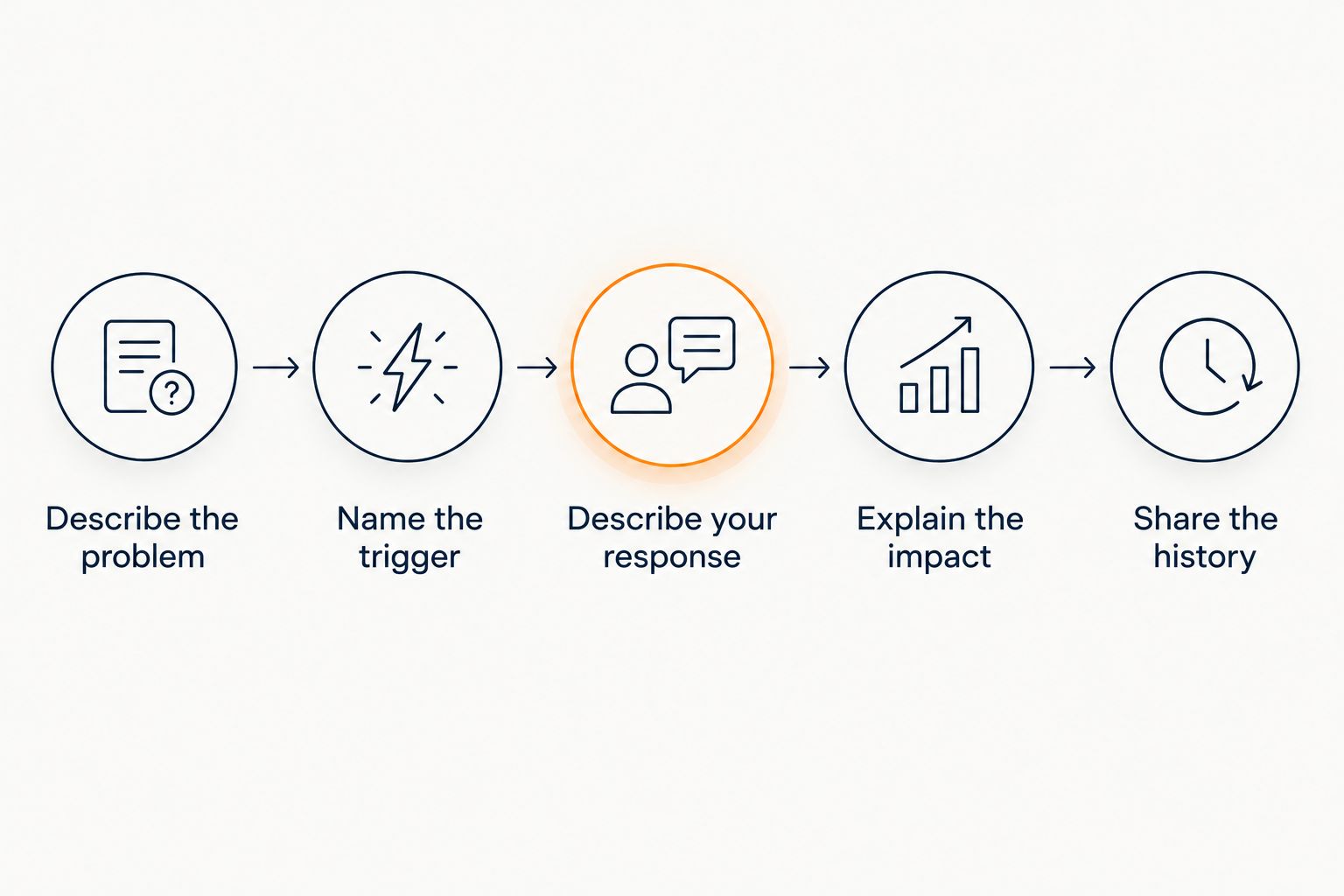 Five steps for describing symptoms and their impact during a clinical assessment
Describe what happens and what it costs you in daily life, rather than trying to prove a diagnosis.
How is treatment planned when you have both?
Treatment should address both conditions without assuming that one intervention solves everything. An OCD clinician and an ADHD prescriber or therapist can coordinate goals, symptom tracking, and practical adjustments.
Exposure and response prevention, or ERP, is an established psychological treatment for OCD. It involves planned practice facing triggers while resisting compulsions, including mental rituals. It is collaborative treatment—not a demand to confront your most distressing fear alone.
ADHD care can include medication, skills-based therapy, environmental adjustments, and accommodations. The combination depends on your needs and clinical assessment.
| Approach | Best for | What it addresses | Limitation or trade-off |
|---|---|---|---|
| Exposure and response prevention | People with OCD-related obsessions and compulsions | Practicing responses to triggers without relying on rituals | Practice can feel uncomfortable and needs an appropriate plan |
| ADHD-focused skills support | People whose ADHD affects planning and follow-through | Task initiation, organization, and practical routines | Does not directly treat OCD compulsions |
| Clinician-prescribed medication | People for whom a prescriber recommends medication | Symptoms targeted by the selected medication | Requires review of benefits, side effects, and individual response |
| Environmental adjustments | People facing recurring attention or organization barriers | Reducing distractions and making tasks easier to start | Cannot replace assessment or OCD-specific treatment |
Remote appointments are another consideration. The important question about online treatment for OCD is whether a qualified clinician provides OCD-specific care, including ERP when appropriate—not simply whether sessions happen through a screen.
For a treatment plan in 2026, ask how the provider handles both conditions. ADHD-related forgetfulness can make therapy practice harder to complete; written instructions or agreed reminders can support participation without turning practice into a rigid ritual.
Does ADHD medication make OCD worse?
There is no single medication response that applies to everyone with ADHD and OCD. Tell your prescriber about intrusive thoughts, compulsions, and any changes after starting or adjusting medication.
Do not start, stop, or change prescribed medication on your own. Ask the prescriber what changes to monitor and when to contact them. Treating attention difficulties and treating compulsions require separate checks on progress.
What can you do while waiting for an assessment?
Start by making ordinary tasks more manageable. Put essential items in a consistent place, reduce unnecessary distractions, and write down the next concrete action rather than building an elaborate productivity system.
Keep notes brief and purposeful. Record an example for your appointment, then return to your day; repeated symptom logging to obtain certainty can become part of a checking pattern.
Be careful with reassurance. Repeatedly asking people or an app to prove that a feared event will not happen can keep an OCD cycle going. Emotional support can acknowledge distress without promising certainty or analyzing every intrusive thought.
If you already have an ERP plan, follow the plan agreed with your clinician. Do not turn a general coping article into an unsupervised exposure program or use calming exercises as a required ritual to cancel every unwanted thought.
Where does an emotional support app fit?
Lovon is best for people seeking voice-based emotional support alongside, not instead of, licensed care. The Lovon mental health app offers conversations, coping tools, and self-reflection guidance; it is not a licensed clinician and cannot diagnose ADHD or OCD.
The benefit is a place to talk through everyday stress. The limit matters just as much: an app is not a substitute for an assessment, prescribing, or clinician-led ERP. If you use Lovon, focus on expressing feelings or identifying a practical next step rather than repeatedly requesting reassurance about an obsession.
When should you seek help sooner?
Seek professional support when intrusive thoughts, rituals, attention difficulties, or avoidance interfere with eating, sleeping, work, relationships, or basic care. You do not need to establish both diagnoses before asking for help.
An unwanted intrusive thought is not, by itself, evidence of intent. Still, urgent safety concerns need human support: in the United States in 2026, call or text 988 for a mental health or suicide crisis. If there is immediate danger or a medical emergency, call 911.
FAQ
Can you have ADHD and OCD without knowing it?
Yes, ADHD and OCD can go unrecognized, especially when difficulties are attributed to stress or compulsions happen mentally. A clinician needs to assess each condition independently.
Can OCD make you look like you have ADHD?
Yes, intrusive thoughts and mental rituals can interfere with attention and task completion. A clinician checks whether attention difficulties reflect OCD, ADHD, another condition, or a combination.
Can you have OCD if your room is messy?
Yes, a messy room does not rule out OCD. OCD is defined by obsessions and compulsions, not a preference for cleanliness or organization.
How long do ADHD symptoms need to last for a diagnosis?
At least 6 months is the ADHD symptom-duration requirement in the DSM-5-TR. Duration alone is insufficient; clinicians also assess childhood history, symptoms across settings, impairment, and other explanations.
Do OCD rituals have to take more than an hour a day?
More than 1 hour per day is one example of time-consuming OCD symptoms, not a requirement when clinically significant distress or impairment is present. You can seek help before rituals occupy that much time.
Can a clinician treat ADHD and OCD together?
Yes, care can address ADHD and OCD within a coordinated treatment plan. Ask how the clinician will distinguish symptoms, adapt therapy practice, and monitor medication when prescribed.
Can Lovon tell me whether I have ADHD and OCD?
No, Lovon cannot diagnose ADHD or OCD. Its voice-based emotional support does not replace an assessment by a qualified clinician.
One last thing
Describe the reason behind the behavior, not just the behavior itself. Rechecking a message because you lost your place and rechecking it to neutralize a feared consequence can look identical from the outside. That difference gives your clinician something useful to investigate.
Related guides
How AI Support Helps You Heal
AI emotional support isn't about replacing human connection — it's about filling the gaps. The moments when you need to talk at 2 AM, when you don't want to burden your friends again, or when you simply need someone to listen without judgment.
Here's what happens in a typical Lovon session:
You share what's on your mind
There's no script, no intake form, no waiting room. You speak or type whatever you're feeling — in your own words, at your own pace.
Lovon validates and explores
Using frameworks from CBT (Cognitive Behavioral Therapy) and motivational interviewing, Lovon acknowledges your feelings first, then gently helps you explore them. No dismissive "just move on" advice.
You build coping skills together
Lovon doesn't just listen — it actively works with you on evidence-based techniques: thought reframing, urge surfing, behavioral experiments, and more.
What a Session with Lovon Looks Like
Lovon is AI support, not a replacement for professional care. If things have been hard to get through for weeks, or you are thinking about harming yourself, talk to a doctor or a licensed therapist.
Ready to Start?
Your healing journey can begin right now
A 3-day trial. No judgment. Just a safe space to process what you're going through.
Frequently Asked Questions
Is Lovon a replacement for a real therapist?
Is my conversation with Lovon AI private?
How is Lovon different from ChatGPT for emotional support?
Can I use Lovon if I'm already seeing a therapist?
Can I try Lovon before subscribing?
About the Author
The Lovon Editorial Team
Mental Health & Wellness Content Team
The Lovon Editorial Team develops mental health and wellness content designed to make psychological concepts accessible and actionable. Our goal is to bridge the gap between clinical research and everyday life - helping you understand why your mind works the way it does and what you can do about it....
Related articles
- Is hiring a life coach worth it in 2026?
Is hiring a life coach worth it? Yes for clear goals and accountability, not clinical care. Learn how to assess fit, ask…
- Is it possible to self-diagnose ADHD accurately?
Can you self diagnose ADHD? Self-assessment cannot confirm it. Learn what screening tells you, what clinicians check…
- Does ADHD medication help with emotional regulation?
ADHD medication emotional regulation benefits vary. Learn what improvement looks like, which mood changes need review…
- How much does ADHD coaching cost?
How much does ADHD coaching cost? No verified average is available here. Compare full plans, ask about hidden terms, and…
See also
Quizzes
- Impulsivity Test: Do You Act Before You Think?
See which kind of impulsivity shows up in your month.
- Emotion Regulation Test: Can You Bring a Feeling Down?
See how your feelings rise and settle, in 3 minutes.
Free tools
- Vent to an AI
Need to vent and there is nobody to call, or nobody you want to tell? Type it here. You are talking to an AI listener…
- Am I Overreacting, or Is This a Big Deal?
A chat for the small thing you cannot stop turning over. Say what happened and what you have already told yourself about…
From the wiki
- Why do I feel sad when I'm alone?
Being alone does not create the sadness. It removes the noise that was keeping it out of earshot, so whatever queued up…
Disclaimer: This article is for informational purposes only and does not constitute medical advice, diagnosis, or treatment. Always seek the advice of your physician or other qualified health provider with any questions you may have regarding a medical condition. If you are in crisis or think you may have an emergency, call 988 (Suicide & Crisis Lifeline) or go to the nearest emergency room. Outside the US? Find a crisis line in your country.