
Best AI App for Interview Anxiety in 2026: Ranked
The best AI app for interview anxiety in 2026, ranked and compared: Lovon for real-time voice support, Wysa for CBT exercises, plus 3 more picks.

Key Takeaways
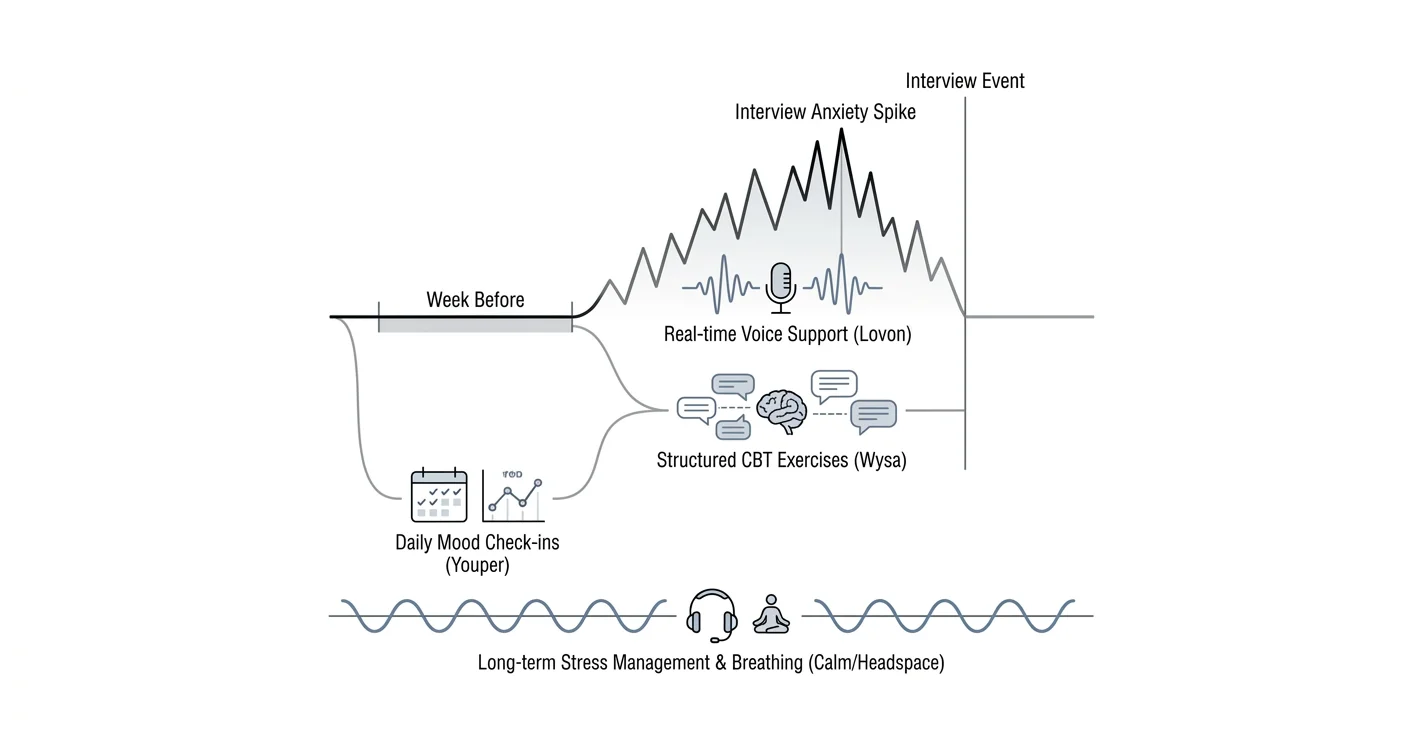
- Lovon is the best ai app for interview anxiety overall for real-time voice support minutes before you walk in.
- Wysa wins for structured CBT exercises you can work through step by step over text.
- Youper is the pick for daily mood check-ins in the week leading up to interview day.
- Calm and Headspace round out the list for breathing audio and long-term stress routines, not in-the-moment talk support.
Interview anxiety doesn't wait for a good time to show up — it hits in the elevator, the parking lot, the five minutes before the recruiter calls. This guide ranks the AI apps built to help you talk through that spike, right when it's happening, in 2026.
TL;DR
- Lovon is the best ai app for interview anxiety overall for real-time voice support minutes before you walk in.
- Wysa wins for structured CBT exercises you can work through step by step over text.
- Youper is the pick for daily mood check-ins in the week leading up to interview day.
- Calm and Headspace round out the list for breathing audio and long-term stress routines, not in-the-moment talk support.
Why this matters
Interview anxiety is a specific, physical thing — racing thoughts, a tight chest, the urge to cancel and reschedule. Generalized anxiety disorders affect roughly 19% of U.S. adults in a given year according to the Anxiety and Depression Association of America, and interview-specific spikes are one of the most common triggers people describe when they calm interview anxiety before a big interview. Most mental health apps weren't built for that narrow, high-stakes window. The five apps below were picked because they handle that moment differently — some through voice, some through text, some through pure relaxation content — and none of them pretend to replace a licensed therapist.
Best overall: Lovon wins for anyone who needs to talk out loud, not type, in the minutes before an interview. Best for structured exercises: Wysa. Best for daily check-ins leading up to interview day: Youper.
What makes the best AI app for interview anxiety
- Available in real time — opens and responds in the exact window before you walk in, not just at a scheduled time
- Matches how you process stress — voice for people who spiral when they type, text for people who want to write it out
- Grounded in real psychological technique — not just generic pep talks or affirmations
- Honest about its limits — clear that it's support, not a replacement for licensed clinical care
- Works standalone or alongside therapy — useful whether or not you already see a therapist
Best AI apps for interview anxiety at a glance
| App | Best for | Standout feature | Key limitation |
|---|---|---|---|
| Lovon | Real-time voice support before an interview | Voice conversations with an AI trained on input from PhD psychologists | Not licensed clinical care |
| Wysa | Structured CBT exercises | Guided modules that walk you through a specific worry | Text-only, can feel repetitive |
| Youper | Daily mood check-ins pre-interview | Mood tracking plus short AI chats | No live voice option |
| Calm | Pre-interview breathing and audio | Large breathing and sleep audio library | Not built for interview-specific coaching |
| Headspace | Long-term stress management | Structured meditation courses | Generic content, not interview-specific |
1. Lovon: best AI app for interview anxiety for real-time voice support
Lovon is a voice-first AI app you talk to the way you'd talk to a calm, grounded friend — no typing, no waiting for a slot to open. It's built with input from PhD psychologists and is designed for everyday struggles like anxiety, stress, and the kind of spike an interview brings on. You open it, you talk, and it responds in real time with coping tools and reflection prompts rather than a script.
Lovon pros:
- Voice conversations feel closer to actually talking something through than typing does
- Available any time of day, including the 10 minutes before a call
- Built with psychological grounding rather than generic chatbot scripting
- Doubles as ongoing support for stress and low mood beyond interview day
Lovon cons:
- Not a licensed clinician and doesn't replace clinical care for diagnosed conditions
- No group or panel-interview roleplay feature
- Best suited to people comfortable talking out loud rather than typing
If you want to understand exactly how voice AI therapy differs from text-based apps, that's worth reading before you compare it against the text-based options below.
Best for: talking through nerves out loud, right before you walk into the room. Verdict: Buy.
2. Wysa: best AI app for interview anxiety for structured CBT exercises
Wysa is a text-based chatbot built around cognitive behavioral therapy techniques. Instead of open conversation, it walks you through defined exercises — reframing a specific worry, breaking down a catastrophic thought, working through a worry loop step by step.
Wysa pros:
- Clear, structured modules that don't require you to explain your situation from scratch
- Good for people who want a defined exercise rather than open talk
- Free-form journaling alongside the guided tools
Wysa cons:
- Text-only, which is slower than voice when anxiety is peaking fast
- Responses can feel scripted after repeated use
- Less useful in the exact minutes before a call, when typing feels harder
Best for: working through a specific catastrophic thought the night before. Verdict: Buy.
3. Youper: best AI app for interview anxiety for daily mood check-ins
Youper combines mood tracking with short AI-guided chats, aimed at building a daily habit rather than handling one acute moment. In the days leading up to an interview, it's useful for noticing the anxiety build rather than getting hit by it cold.
Youper pros:
- Daily mood logging shows the anxiety pattern building across the week
- Short check-ins fit into a commute or lunch break
- Useful for tracking triggers beyond just interviews
Youper cons:
- No live voice conversation option
- Less depth for a single acute spike compared to a longer talk-through
- Works best as a habit, not a last-minute tool
Best for: noticing your anxiety pattern in the week before the interview. Verdict: Hold — good as a supplement, not a solo fix.
4. Calm: best AI app for interview anxiety for pre-interview breathing audio
Calm is a meditation and sleep app with a large breathing and relaxation audio library. It's not conversational and it's not built around interviews specifically, but a short breathing track can genuinely lower a racing heart rate before you walk in.
Calm pros:
- Large library of breathing and grounding audio
- No typing or talking required — passive listening works
- Useful the night before for sleep, not just the interview morning
Calm cons:
- No personalized coaching for interview-specific worry
- Not conversational — can't respond to what you're actually anxious about
- Content is generic wellness, not targeted support
Best for: a quick breathing reset in the waiting room. Verdict: Hold.
5. Headspace: best AI app for interview anxiety for long-term stress management
Headspace is a meditation platform built around structured courses rather than one-off sessions. It's the weakest fit for the acute, five-minutes-before-the-call moment, but it's a reasonable pick if interview anxiety is really a symptom of ongoing job-search stress.
Headspace pros:
- Structured, multi-day courses build a longer-term habit
- Wide content library beyond just anxiety
- Good complement to more acute tools like Lovon or Wysa
Headspace cons:
- Not built for the exact in-the-moment spike
- No live, responsive conversation
- Requires consistent use over time to see the benefit
Best for: building a stress-management routine during a long job search. Verdict: Wait — pair it with a real-time tool, don't rely on it alone.
Talk it through before your next interview
Open Lovon and start a voice session anytime, day or night.
How we ranked these apps
Each app was measured against the five criteria above: real-time availability, format fit, psychological grounding, honesty about limitations, and whether it works alongside existing therapy. Voice-based, real-time tools ranked higher for the acute pre-interview window; meditation and habit-building apps ranked lower for that specific use case but stayed on the list because they solve a real adjacent problem.
Which AI app for interview anxiety should you choose?
If you need something in the next 20 minutes and talking out loud feels more natural than typing, Lovon is the default pick — it's built for exactly that moment, though it's still not a substitute for licensed care if your anxiety is more than situational. If you'd rather work through a specific worry in writing the night before, Wysa is the better fit. If your anxiety is really about the whole job search and not just this one call, add Headspace or Calm as a background habit rather than a fix.
FAQ
What's the best AI app for interview anxiety in 2026?
Lovon ranks best overall for interview anxiety in 2026 because it offers real-time voice conversations you can use minutes before a call. Wysa and Youper are stronger picks if you prefer text-based, structured exercises instead.
Is an AI app better than a real therapist for interview anxiety?
No — AI apps like Lovon are built as on-demand support, not a replacement for licensed clinical care. They're most useful for the in-the-moment spike a therapist isn't available for at 8am on interview day.
Can AI voice therapy actually help before a job interview?
Talking through a specific worry out loud, even to an AI, can lower the intensity of a panic spike in the minutes before an interview. It works best as a quick reset, not a substitute for interview preparation itself.
Does Wysa work for interview-specific anxiety?
Wysa's CBT-based modules can help you reframe a specific catastrophic thought about an interview, but it's text-only, which is slower when anxiety is peaking fast.
What's the difference between Calm and an AI therapy app for interview nerves?
Calm offers passive breathing and meditation audio with no conversation, while apps like Lovon respond directly to what you're anxious about in real time. Calm works well as a quick physical reset; it doesn't address the specific worry behind the anxiety.
How much does an AI app for interview anxiety cost?
Pricing and plans vary by app and change over time, so check the current options on each app's site before deciding. Focus the comparison on format and availability first, since that's what determines whether the app actually helps in the moment.
Can I use more than one app at the same time?
Yes — pairing a real-time tool like Lovon for the acute spike with a habit-building app like Headspace for the weeks before an interview covers both the immediate and long-term sides of interview anxiety.
Is voice or text better for interview anxiety?
Voice tends to work faster for people who spiral when they try to type, since it mirrors how you'd actually talk to a friend. Text works better for people who think more clearly when they write things out.
One last thing
The physical symptoms of interview anxiety — the shaky hands, the tight chest, the blank mind — almost always peak right before you walk in the room, not during the actual conversation. That's the exact window most stress apps aren't built to catch: five apps made this list, and only the real-time, conversational ones actually meet you in that 24/7-available moment rather than asking you to schedule a session for later.
Related guides
How AI Support Helps You Heal
AI emotional support isn't about replacing human connection — it's about filling the gaps. The moments when you need to talk at 2 AM, when you don't want to burden your friends again, or when you simply need someone to listen without judgment.
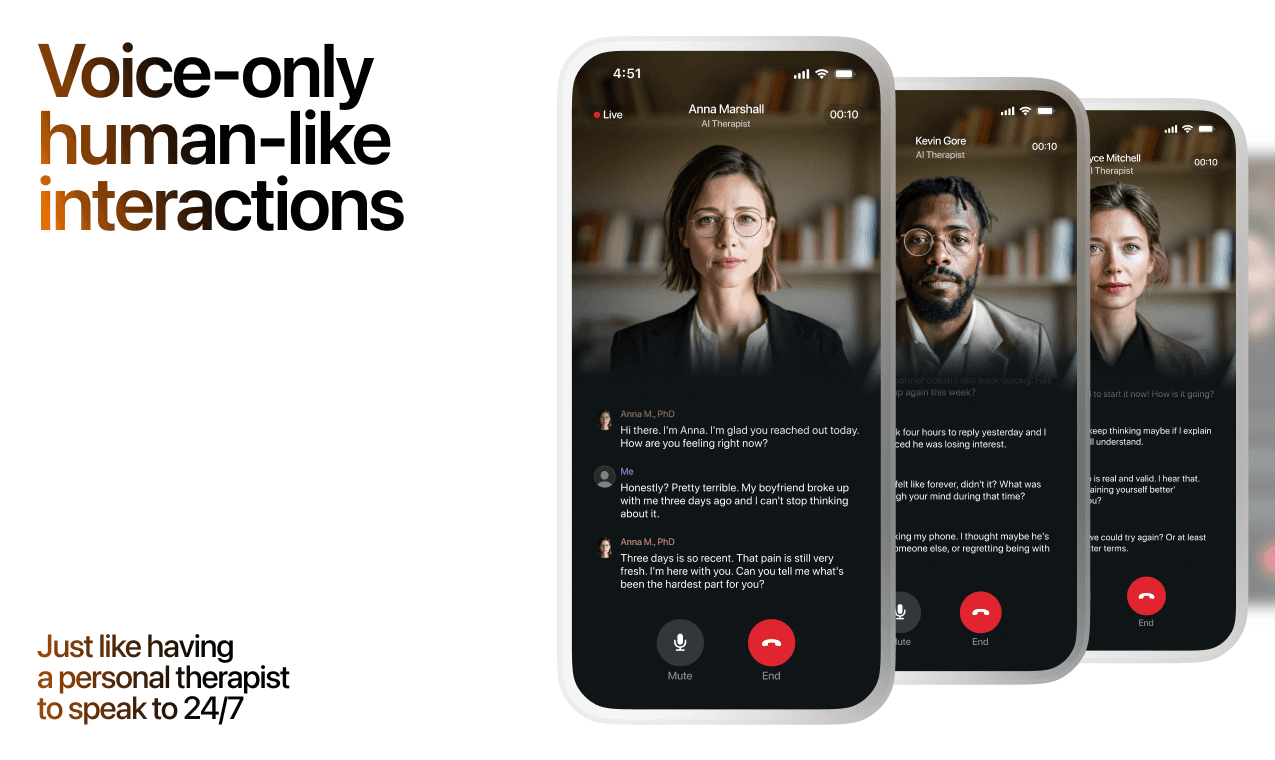
Here's what happens in a typical Lovon session:
You share what's on your mind
There's no script, no intake form, no waiting room. You speak or type whatever you're feeling — in your own words, at your own pace.
Lovon validates and explores
Using frameworks from CBT (Cognitive Behavioral Therapy) and motivational interviewing, Lovon acknowledges your feelings first, then gently helps you explore them. No dismissive "just move on" advice.
You build coping skills together
Lovon doesn't just listen — it actively works with you on evidence-based techniques: thought reframing, urge surfing, behavioral experiments, and more.
What a Session with Lovon Looks Like
When to Seek Professional Help
AI support is a valuable tool, but it's not a replacement for professional care. Please consider reaching out to a licensed therapist if you experience any of the following:
- Persistent thoughts of self-harm or suicide
- Inability to perform daily activities (work, eating, sleeping) for more than 2 weeks
- Turning to alcohol or substances to cope
- Intense anger or desire to harm your ex-partner
- Complete emotional numbness that doesn't improve over time
Crisis Resources (US): If you're in immediate danger, call 988 (Suicide & Crisis Lifeline) or text HOME to 741741 (Crisis Text Line). Available 24/7, free, and confidential.
Outside the US? Find a crisis line in your country
Ready to Start?
Your healing journey can begin right now
1 free conversation. No credit card. No judgment. Just a safe space to process what you're going through.
Frequently Asked Questions
Is AI therapy a replacement for a real therapist?
Is my conversation with Lovon AI private?
How is Lovon different from ChatGPT for emotional support?
Can I use Lovon if I'm already seeing a therapist?
Can I try Lovon for free?
About the Author
The Lovon Editorial Team
Mental Health & Wellness Content Team
The Lovon Editorial Team develops mental health and wellness content designed to make psychological concepts accessible and actionable. Our goal is to bridge the gap between clinical research and everyday life - helping you understand why your mind works the way it does and what you can do about it....
Similar Articles
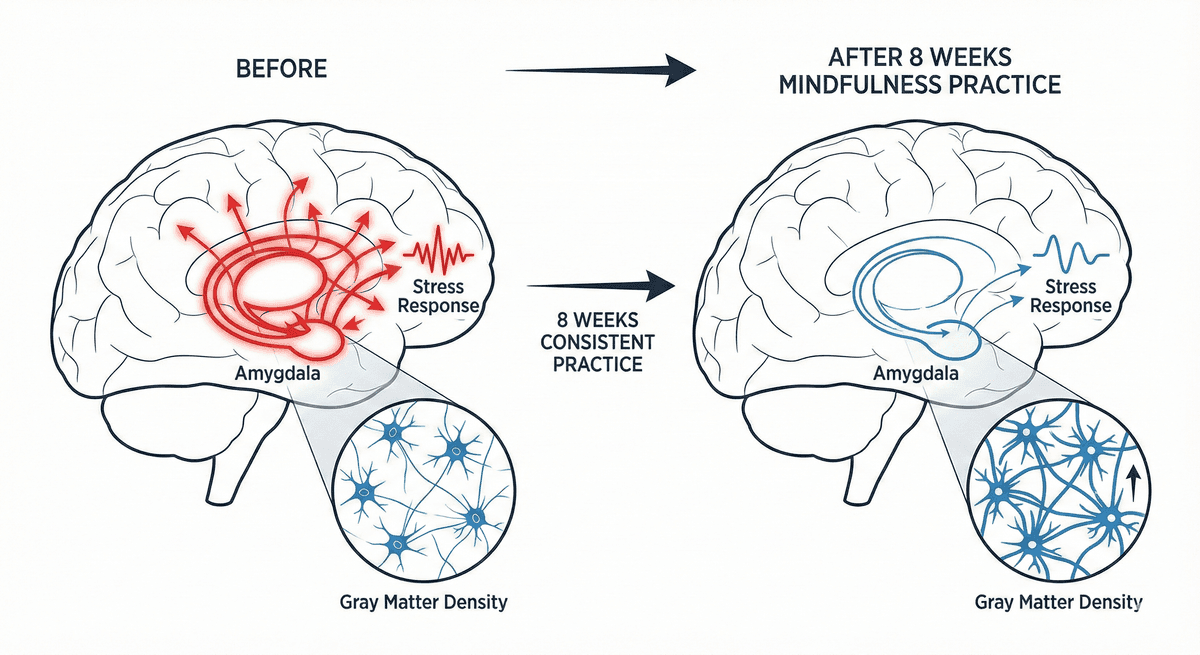
What 8 Weeks of Meditation Does to Your Amygdala
See what changes in your brain after eight weeks of daily meditation, why you react less to stress, and how to build a routine that actually sticks.

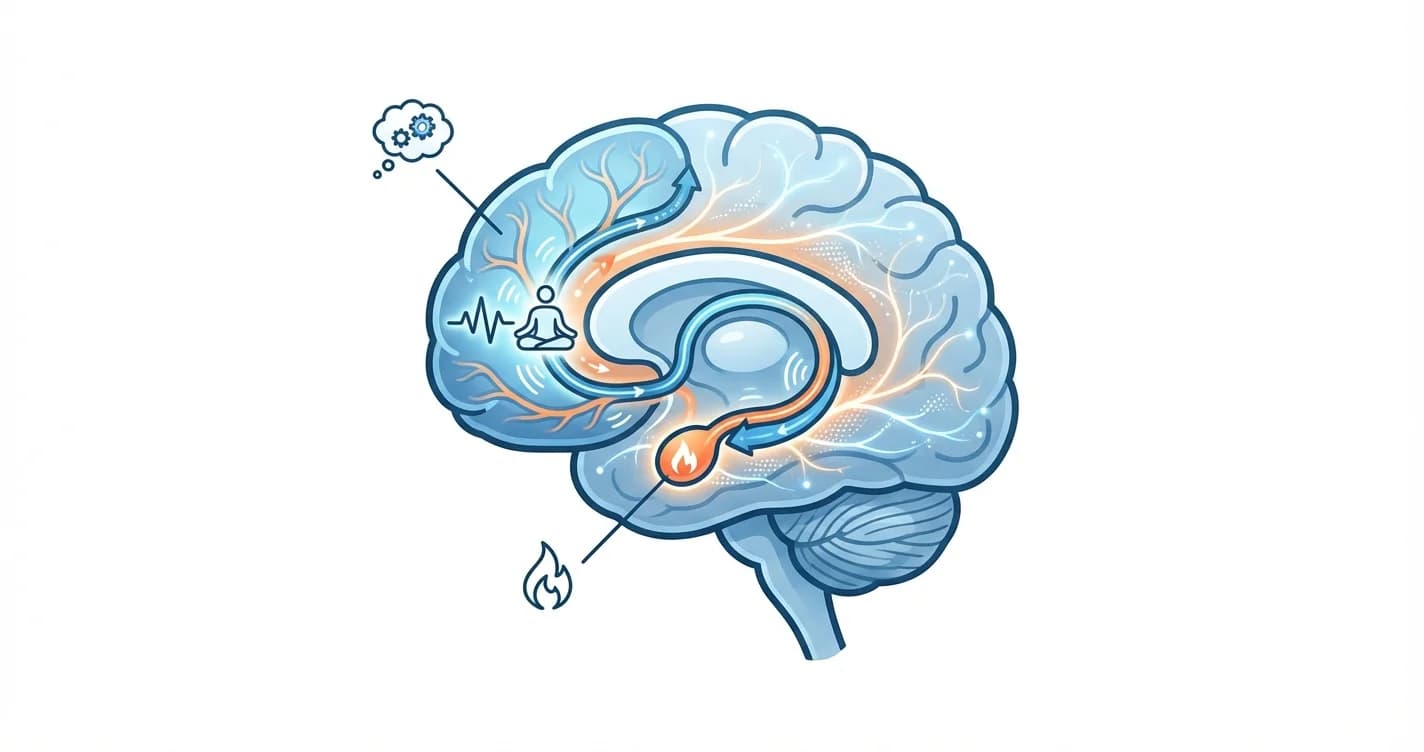
Amygdala and Prefrontal Cortex Connection: Training Emotional Regulation Through Mindfulness
How mindfulness practices reshape neural pathways to strengthen emotional control and reduce reactivity
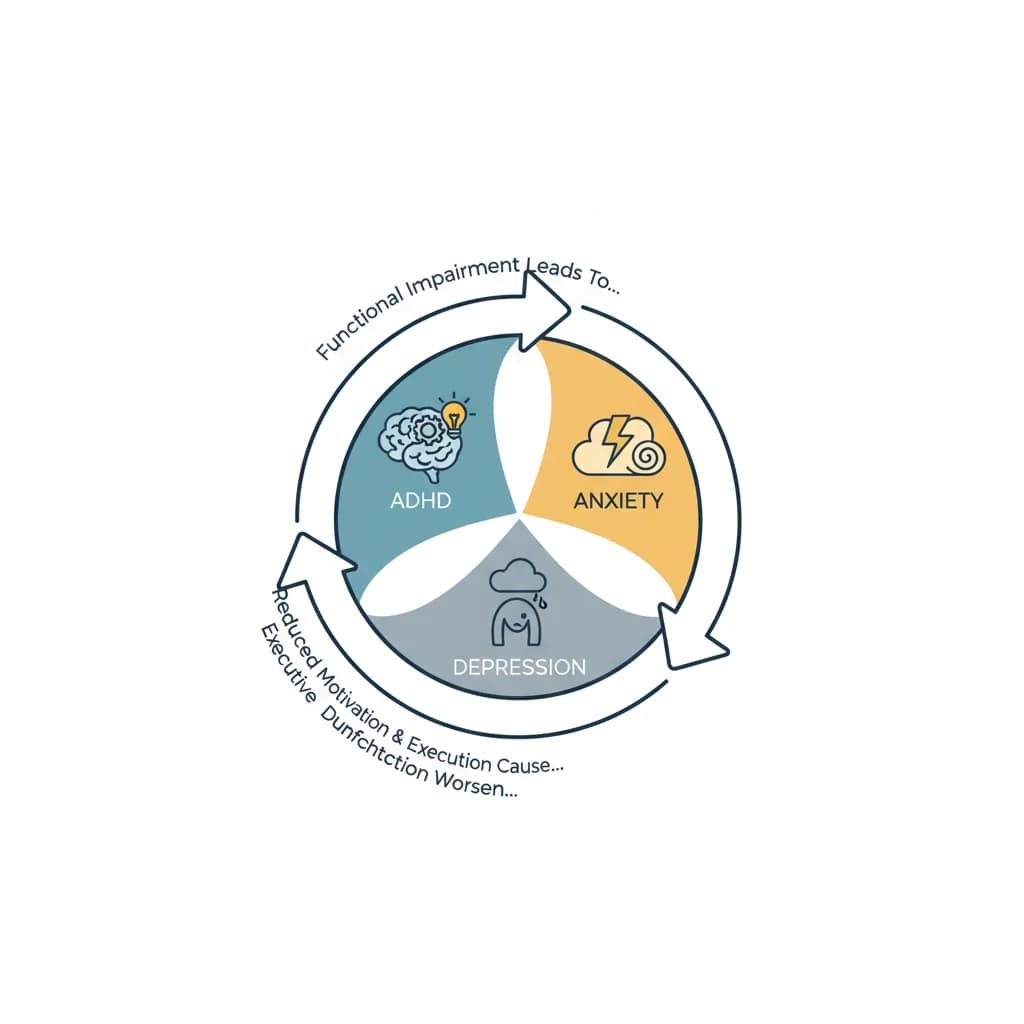
ADHD Comorbidity with Anxiety and Depression Cycles
Understanding the Complex Interplay Between ADHD and Recurring Mental Health Patterns
Disclaimer: This article is for informational purposes only and does not constitute medical advice, diagnosis, or treatment. Always seek the advice of your physician or other qualified health provider with any questions you may have regarding a medical condition. If you are in crisis or think you may have an emergency, call 988 (Suicide & Crisis Lifeline) or go to the nearest emergency room. Outside the US? Find a crisis line in your country.