
Can changing your diet reduce anxiety symptoms?
Can diet reduce anxiety? Food changes can support symptom management, not replace care. Learn where caffeine, regular meals, and supplements fit.

Key Takeaways
- Can diet reduce anxiety? Reducing caffeine and eating regularly can help when these habits contribute to symptoms.
- A balanced eating pattern supports health, but no single food is an established anxiety treatment.
- Lovon offers emotional support for everyday anxiety, not clinical care or personalized nutrition treatment.
- Keep prescribed treatment in place, and avoid restrictive diets or supplements marketed as anxiety cures.
Yes, changing your diet can help reduce some anxiety symptoms, especially when caffeine or missed meals contribute to feeling shaky, restless, or on edge. Food changes do not reliably treat an anxiety disorder on their own, and research does not establish a single anxiety-curing diet. This 2026 guide explains what to try, what to avoid, and when to get professional support.
TL;DR
- Can diet reduce anxiety? Reducing caffeine and eating regularly can help when these habits contribute to symptoms.
- A balanced eating pattern supports health, but no single food is an established anxiety treatment.
- Lovon offers emotional support for everyday anxiety, not clinical care or personalized nutrition treatment.
- Keep prescribed treatment in place, and avoid restrictive diets or supplements marketed as anxiety cures.
Why this matters
Anxiety can affect your appetite, digestion, and motivation to prepare food. Eating habits can also affect how your body feels, creating a frustrating loop when you are already overwhelmed.
The goal is not to eat perfectly. It is to make food less stressful while addressing habits that leave you feeling worse. Keep coping tools for anxiety alongside any food changes rather than expecting meals to do the whole job.
Can changing your diet reduce anxiety symptoms?
Diet can support anxiety management, but it is not a stand-alone cure. The clearest starting point is to look for a specific, changeable contributor, such as caffeine-related jitteriness or repeatedly going without food.
Research linking healthier eating patterns with lower anxiety does not automatically prove that diet caused the difference. Sleep, physical activity, health conditions, and access to care also affect both eating habits and mental health. Evidence about improving depression through dietary changes also does not establish the same benefit for an anxiety disorder.
Use this comparison to choose a starting point, not to diagnose the cause of your symptoms.
| Approach | Best for | Potential benefit | Limitation or downside |
|---|---|---|---|
| Regular meals | People who often miss meals | Reduces long gaps without food and helps meet nutritional needs | Does not directly address persistent worry or avoidance |
| Less caffeine | People who feel jittery after caffeinated drinks | Reduces exposure to a stimulant that can worsen anxiety symptoms | Abrupt reduction can cause withdrawal symptoms |
| Varied eating | People whose meals lack variety | Supports general health and adequate nutrition | No specific eating pattern guarantees anxiety relief |
| Clinician-guided supplements | People with an identified deficiency or medical indication | Addresses a specific nutritional need | Unnecessary supplements can cause side effects or interactions |
You do not need to adopt every approach. Start with the habit that matches your experience and keep the change manageable.
Regular meals: start with enough food
Missing meals can leave you hungry, irritable, lightheaded, or shaky. These sensations can feel similar to anxiety, but they do not prove that you have low blood sugar or that food explains every anxious episode.
Best for: people whose stress regularly pushes meals aside. Make eating easier before trying to make it more elaborate. Keep familiar foods accessible, and use prepared or frozen foods when cooking feels like too much.
A meal can include a carbohydrate source, protein, and some fat, with fruit or vegetables as practical. Think toast with eggs, rice with beans, or yogurt with oats and fruit. These are flexible examples, not prescriptions or anxiety treatments.
Regular eating has limits. If nausea, swallowing difficulties, medication effects, or fear of food prevents you from eating enough, ask a clinician for help rather than treating it as a planning problem.
Caffeine: check your response, not just the limit
Caffeine can cause nervousness, a racing heart, and sleep disruption. If those sensations feed your anxiety, reducing caffeine is a reasonable place to start in 2026.
The U.S. Food and Drug Administration identifies 400 milligrams per day as an amount not generally associated with negative effects for most adults. That is not an anxiety-safe target, and sensitive people experience symptoms at lower amounts. Pregnancy, medications, and health conditions also change what is appropriate.
Best for: people who notice restlessness, poor sleep, or stronger anxiety after caffeine. Check serving sizes and labels across coffee, tea, energy drinks, and supplements. A container does not always equal a single serving.
If you use caffeine regularly, reduce it gradually rather than suddenly stopping. Withdrawal can cause headaches, fatigue, and difficulty concentrating, making the change harder to interpret. Ask your clinician or pharmacist for guidance when caffeine interacts with a medication or health condition.
Varied eating: support health without chasing a cure
A varied eating pattern helps you obtain nutrients your body needs. Vegetables, fruit, beans, whole grains, nuts, and suitable protein sources can all fit, adjusted for allergies, medical needs, culture, and preference.
Best for: people who want a sustainable foundation rather than a restrictive food plan. Add foods you enjoy and can manage. There is no requirement to buy specialty ingredients or label familiar foods as bad.
Mediterranean-style eating often appears in discussions of nutrition and mental health. It emphasizes plant foods, olive oil, and other minimally processed foods, but calling it an established treatment for anxiety overstates the evidence.
The drawback is turning a flexible pattern into another test you must pass. A health-supporting meal does not need to look a particular way, and persistent anxiety does not mean you have failed to eat correctly.
Why the effect of diet on anxiety varies
The same food change will not produce the same result for everyone. These factors help explain why:
- Caffeine sensitivity: Your response matters more than whether someone else tolerates the same drink.
- Meal consistency: Someone regularly missing meals has a different starting point from someone already eating enough.
- Sleep: Caffeine-related sleep disruption can complicate the connection between food and anxiety.
- Medical conditions and medicines: Symptoms and nutritional needs require individual assessment when illness or treatment affects eating.
- The source of anxiety: Food changes do not resolve every contributor, including ongoing stress, trauma, or an anxiety disorder.
- Food-related distress: Restriction and fear around eating require a different approach from ordinary meal planning.
Use these differences to choose appropriate support, not to search endlessly for a hidden dietary trigger. If your symptoms continue, that is a reason to broaden care rather than make your food rules stricter.
How can I try food changes without becoming obsessive?
A practical 2026 starting point is a 7-day observation period, followed by one manageable change. This is a suggested way to organize your observations, not a validated test or a promised treatment timeline.
- Notice patterns. Briefly record meal gaps, caffeinated drinks, sleep, and anxious moments. Skip calorie counting and detailed food tracking.
- Choose one change. Pick a change supported by what you noticed, such as eating before a demanding morning or gradually reducing caffeine.
- Keep care steady. Continue prescribed treatment. Do not stop medication to see whether food works instead.
- Review your experience. Ask whether daily life feels easier, not whether you eliminated every anxious sensation.
The sequence matters: observe before deciding, then change something small enough to sustain. If recording food makes you more anxious, stop tracking and discuss the concern with a qualified professional.
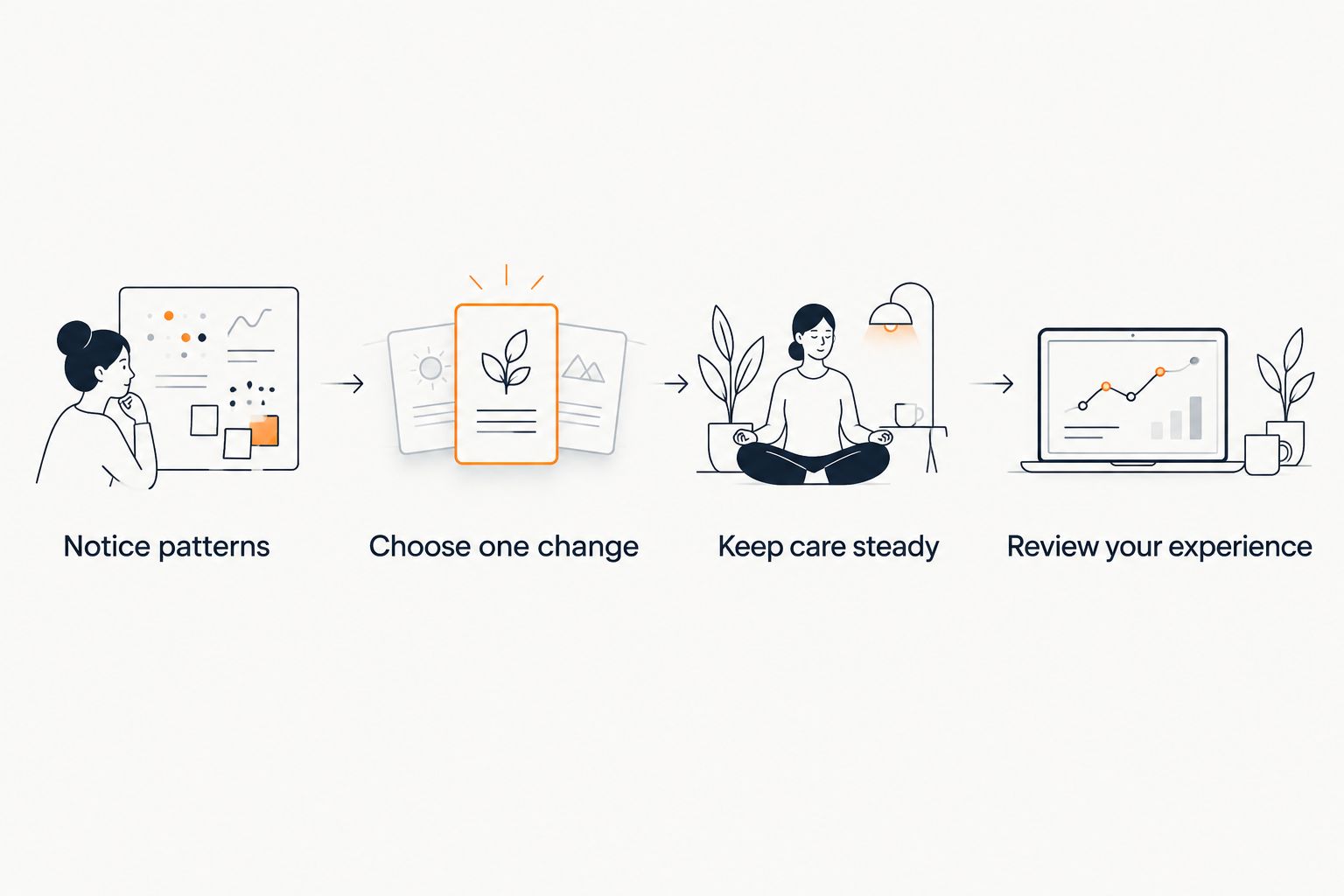 Four steps for exploring food habits while keeping anxiety care in place
Change one habit while keeping your existing care in place.
Keep any check-in brief. A suggested 2-minute review is enough to note what happened without turning your day into a monitoring project. Neither that duration nor the observation period predicts when anxiety will improve.
How quickly will changing my diet help anxiety?
There is no reliable timeline for anxiety improvement from changing your diet. Reducing a specific contributor, such as caffeine, is different from treating persistent anxiety, and withdrawal can temporarily complicate how you feel.
Look at useful outcomes: whether you sleep more comfortably, manage meals with less stress, or feel less jittery after drinks. Do not use a short trial to decide that you no longer need treatment.
Do I need to cut out sugar, gluten, or dairy?
No, anxiety alone is not a reason to remove sugar, gluten, or dairy. Avoiding a food is appropriate when a diagnosed condition, allergy, or individualized medical recommendation calls for it—not because an online list labels it anxiety-causing.
Broad elimination diets make eating more complicated and can reduce nutritional variety. If you notice a repeated food-related problem, discuss it with a clinician or registered dietitian before removing whole food groups.
Should I take supplements for anxiety in 2026?
Do not assume a supplement is necessary because anxiety is present. Magnesium, herbal products, probiotics, and other supplements are often discussed online, but evidence, formulations, safety, and interactions differ.
A clinician can assess whether your symptoms or history justify testing for a deficiency. Taking more of a nutrient is not the same as correcting an identified deficiency, and supplements do not replace established anxiety treatment.
Ask a pharmacist to review any supplement alongside your medicines. Be especially cautious with promises of rapid relief, hormone balancing, or a complete cure; a persuasive label is not evidence that a product suits you.
Where emotional support fits
Food habits are only one part of anxiety care. If meal decisions trigger worry, or stress makes basic routines difficult, talking through the emotional side matters too.
Lovon is best for people seeking on-demand voice-based emotional support for everyday anxiety, not clinical treatment. Lovon provides coping tools and self-reflection guidance, but it is not a licensed clinician and cannot diagnose a nutritional deficiency or prescribe a diet.
You can explore Lovon when you want space to talk through everyday stress. Its role is emotional support—not determining whether a food caused your symptoms or replacing a therapist, doctor, or registered dietitian.
When should I get professional help?
Seek professional support when anxiety disrupts work, relationships, sleep, eating, or everyday activities. You do not have to finish a food experiment first, and you do not need to prove that your symptoms are severe enough to deserve care.
A clinician can assess anxiety and consider other explanations for symptoms such as palpitations, dizziness, or appetite changes. Do not assume new or severe physical symptoms are simply anxiety or something you ate.
If eating involves intense fear, repeated restriction, bingeing, purging, or distress about weight, ask for eating-disorder-informed care. Detailed food tracking and elimination diets are not a safe default in that situation.
If you are in immediate danger, call emergency services. In the United States, call or text 988 for suicide or mental health crisis support; use 911 for an immediate medical emergency.
FAQ
Can diet reduce anxiety without medication?
Diet changes can help with some anxiety symptoms, but they do not establish that medication or therapy is unnecessary. Discuss treatment choices with a licensed clinician, and do not stop prescribed medication on your own.
What's the best food to eat when I feel anxious?
No single food reliably stops anxiety. If you have not eaten, choose a familiar meal or snack you tolerate rather than searching for a special calming ingredient.
Can coffee make my anxiety worse?
Yes, caffeine can worsen jitteriness, nervousness, and sleep problems. The FDA's 400 milligrams per day reference for most adults is not a target for someone who experiences anxiety after caffeine.
Does eating sugar cause an anxiety disorder?
Eating sugar does not by itself establish the cause of an anxiety disorder. Persistent anxiety needs a broader assessment rather than a blanket ban on sweets.
Should I try probiotics for anxiety in 2026?
Probiotics are not an established replacement for anxiety treatment. Research findings depend on the product and population studied, so ask a clinician before treating them as an anxiety intervention.
How long should I wait before getting help for anxiety?
Get help when anxiety interferes with daily life; you do not need to wait for diet changes to work. Seek urgent support if you feel unsafe or experience a mental health crisis.
Is food tracking a good idea if I have an eating disorder history?
Food tracking is not a safe default when you have an eating disorder history. Ask an eating-disorder-informed clinician or registered dietitian for an approach that protects your recovery.
One last thing
Your most useful food change might be making lunch easier, not making your diet stricter. For your 2026 next step, choose a familiar meal you can manage on a stressful day and keep your anxiety support in place.
If a food plan increases fear, guilt, or restriction, it is not serving your mental health. Step back and get help with the plan rather than blaming yourself.
Related guides
How AI Support Helps You Heal
AI emotional support isn't about replacing human connection — it's about filling the gaps. The moments when you need to talk at 2 AM, when you don't want to burden your friends again, or when you simply need someone to listen without judgment.
Here's what happens in a typical Lovon session:
You share what's on your mind
There's no script, no intake form, no waiting room. You speak or type whatever you're feeling — in your own words, at your own pace.
Lovon validates and explores
Using frameworks from CBT (Cognitive Behavioral Therapy) and motivational interviewing, Lovon acknowledges your feelings first, then gently helps you explore them. No dismissive "just move on" advice.
You build coping skills together
Lovon doesn't just listen — it actively works with you on evidence-based techniques: thought reframing, urge surfing, behavioral experiments, and more.
What a Session with Lovon Looks Like
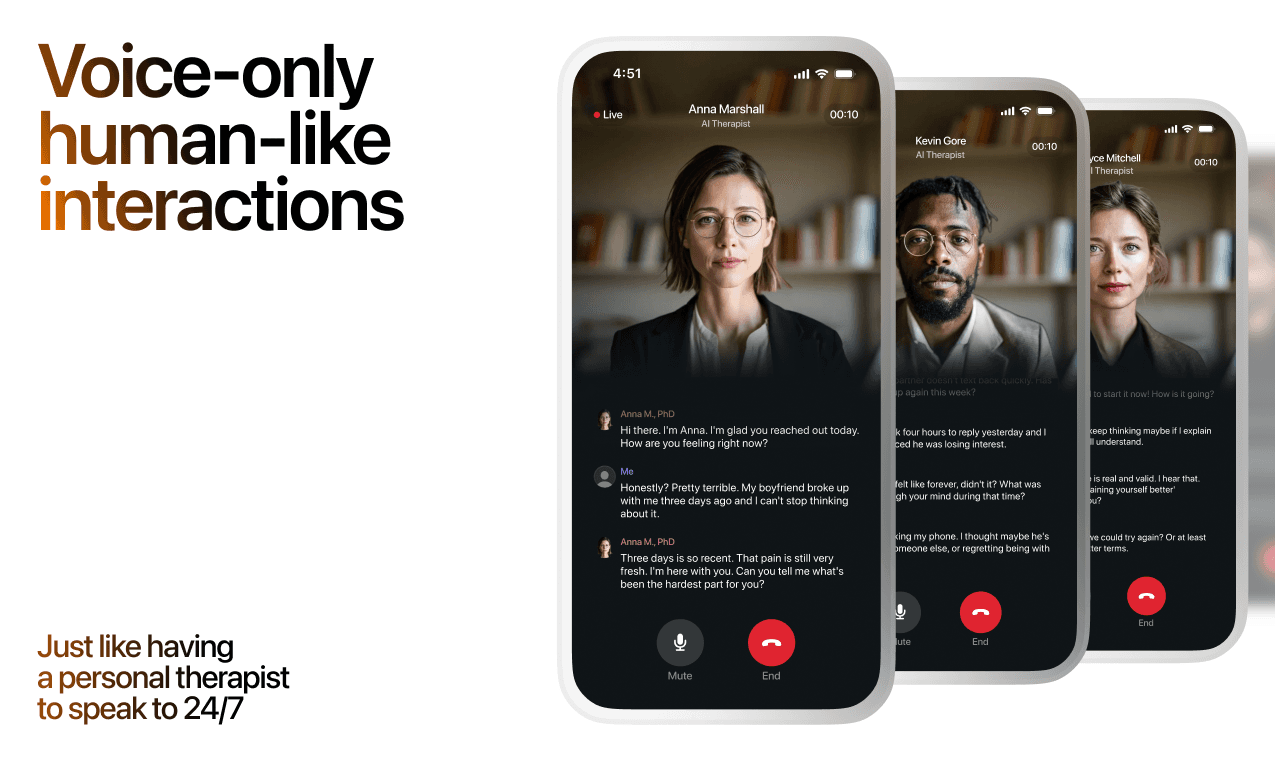
Lovon is AI support, not a replacement for professional care. If things have been hard to get through for weeks, or you are thinking about harming yourself, talk to a doctor or a licensed therapist.
Ready to Start?
Your healing journey can begin right now
A 3-day trial. No judgment. Just a safe space to process what you're going through.
Frequently Asked Questions
Is Lovon a replacement for a real therapist?
Is my conversation with Lovon AI private?
How is Lovon different from ChatGPT for emotional support?
Can I use Lovon if I'm already seeing a therapist?
Can I try Lovon before subscribing?
About the Author
The Lovon Editorial Team
Mental Health & Wellness Content Team
The Lovon Editorial Team develops mental health and wellness content designed to make psychological concepts accessible and actionable. Our goal is to bridge the gap between clinical research and everyday life - helping you understand why your mind works the way it does and what you can do about it....
Related articles
- Best AI Therapy App for Eating Disorder Recovery 2026
AI mental health support in eating disorder recovery, 2026: what it can and can't do, compared with trackers and online…
- Can chronic stress cause physical illness?
Can chronic stress cause physical illness? Yes. Learn how it affects sleep, blood pressure and existing conditions, plus…
- AI therapy for freelancers and gig workers: complete 2026 guide
AI therapy for freelancers and gig workers supports everyday stress, not clinical treatment. Build a practical routine…
- How long does it take to break a bad habit?
How long does it take to break a bad habit? There is no fixed deadline. Learn what research shows, how to change…
See also
Quizzes
- Love Addiction Test: Free 12-Question Self-Check
See how much of your life one person is taking.
- Fear of Intimacy Test: Free 12-Question Self-Check
See which part of closeness feels risky, in 3 min.
Free tools
- AI Mindset Coach
This is a free AI mindset coach for the voice in your head: harsh self-talk, a setback you keep replaying, motivation…
- Body Scan Meditation
Ten minutes, from your toes to the top of your head, noticing what is there without trying to fix it. Follow the voice…
From the wiki
- Why do I keep dreaming about my ex?
Recurring dreams about an ex usually mean your brain is still consolidating a relationship that took up years of memory…
Disclaimer: This article is for informational purposes only and does not constitute medical advice, diagnosis, or treatment. Always seek the advice of your physician or other qualified health provider with any questions you may have regarding a medical condition. If you are in crisis or think you may have an emergency, call 988 (Suicide & Crisis Lifeline) or go to the nearest emergency room. Outside the US? Find a crisis line in your country.