
Can lack of sleep make anxiety worse?
Can lack of sleep make anxiety worse? Yes. Learn how sleep and worry feed each other, what helps tonight, and when to seek care for persistent sleep problems.

Key Takeaways
- Can lack of sleep make anxiety worse? Yes. Sleep loss and nighttime anxiety can reinforce each other.
- Most adults need 7–9 hours of sleep; adequate sleep supports emotional regulation but does not guarantee anxiety relief.
- Lovon offers voice-based emotional support for everyday anxiety, not diagnosis, insomnia treatment, or emergency care.
- Persistent insomnia deserves professional care; cognitive behavioral therapy for insomnia addresses more than
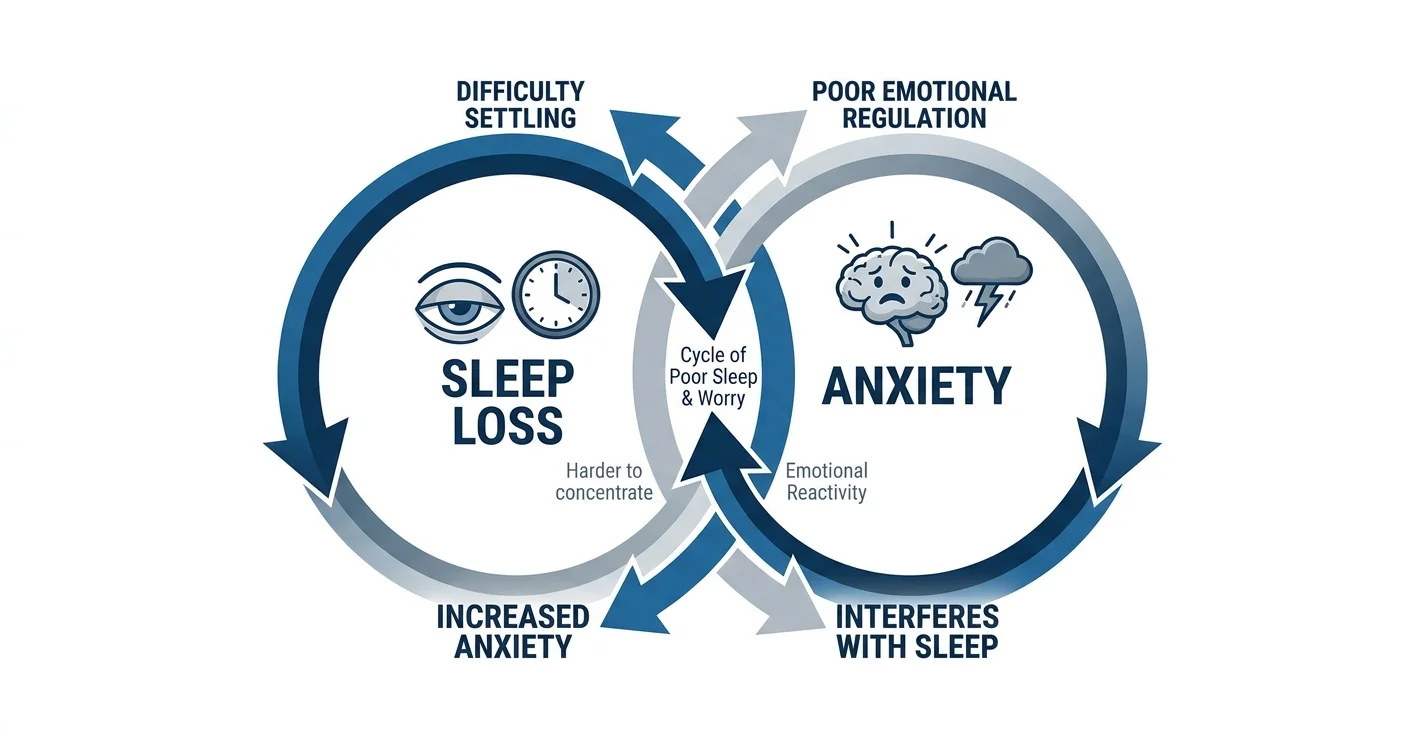
Yes, lack of sleep can make anxiety worse by making it harder to manage emotions, concentrate, and put worrying thoughts in perspective. Anxiety can also keep you awake, creating a cycle of poor sleep and stronger worry. Better sleep supports your mental health, but it does not replace treatment when anxiety or insomnia keeps disrupting your life.
TL;DR
- Can lack of sleep make anxiety worse? Yes. Sleep loss and nighttime anxiety can reinforce each other.
- Most adults need 7–9 hours of sleep; adequate sleep supports emotional regulation but does not guarantee anxiety relief.
- Lovon offers voice-based emotional support for everyday anxiety, not diagnosis, insomnia treatment, or emergency care.
- Persistent insomnia deserves professional care; cognitive behavioral therapy for insomnia addresses more than bedtime habits.
Can lack of sleep make anxiety worse?
Yes. Sleep loss can increase anxiety, and anxiety can interfere with sleep. The relationship runs in both directions, so treating only your bedtime routine can leave the daytime worry untouched.
The National Heart, Lung, and Blood Institute identifies difficulty managing emotions, concentrating, and coping with change among the effects of sleep deficiency. Those difficulties can make an already stressful day feel harder to handle.
These patterns help you describe what is happening. They are not a way to diagnose yourself.
| Pattern | What you notice | What it tells you |
|---|---|---|
| Too little sleep | You feel tired and more easily overwhelmed after short nights | Sleep loss is a possible contributor to stronger anxiety |
| Anxiety disrupting sleep | You feel tired but keep rehearsing problems in bed | Worry is interfering with your ability to settle |
| Repeated insomnia | You struggle to sleep despite having an opportunity to rest | Sleep difficulty itself needs attention |
| Poor-quality sleep | You spend enough time in bed but wake unrefreshed | Sleep duration alone does not explain the problem |
If bedtime worry is your main difficulty, start with practical ways to calm anxiety at night when you cannot sleep. Address the worry and the sleep pattern together rather than assuming one will automatically fix the other.
Why this matters in 2026
A tired mind can make a routine problem feel urgent. You might read a short message as rejection, struggle to finish an ordinary task, or feel less able to tolerate uncertainty.
That does not mean every anxious thought is caused by sleep loss. It means your current level of exhaustion belongs in the picture before you judge yourself or make a major decision.
Treat a poor night's sleep as context, not proof that something is wrong with you. You still deserve help with the anxiety itself, especially when it persists after your sleep improves.
Sleep advice can also become another source of pressure. If you start treating bedtime as a test you must pass, the effort to sleep becomes part of what keeps you alert.
Why the effect of sleep loss varies
Not everyone feels the same after a short night. These factors help explain differences without turning sleep into a simple cause-and-effect formula:
- Your existing anxiety. When worry is already difficult to manage, sleep loss adds another challenge rather than creating the whole problem.
- Repeated short nights. An ongoing pattern of insufficient sleep is different from an isolated disruption. Look at the pattern, not just last night.
- Sleep quality. Frequent waking or disrupted breathing can leave you tired even when you allow enough time for sleep.
- Stress and responsibilities. Relationship problems, caregiving, work demands, and burnout can affect both anxiety and your opportunity to rest.
- Caffeine, alcohol, and medicines. These can affect alertness or sleep. Ask a clinician or pharmacist about medication effects rather than changing prescribed treatment yourself.
- Your sleep schedule. Irregular hours and shift work can make it harder to align sleep with your body's usual rhythm.
You do not need to identify every factor before taking action. Start with the one you can describe clearly, such as late caffeine, repeated bedtime worry, or waking exhausted despite a full night in bed.
How much sleep should you aim for in 2026?
Most adults need 7–9 hours of sleep per night, according to the National Heart, Lung, and Blood Institute. This is a general sleep-health range, not a proven dose of sleep that eliminates anxiety.
Time in bed is not the same as time asleep. If you lie awake for much of the night, a long bedtime window does not necessarily mean you are getting enough restorative rest.
Use the range as a starting point while paying attention to daytime functioning. Ask whether you feel sleepy, struggle to focus, or regularly need to fight the urge to doze.
You also need room for real-life constraints. Parenting, pain, caregiving, and work schedules can interrupt sleep even when you know what healthy sleep habits look like.
Aim for a repeatable sleep opportunity, not a perfect score. If you regularly sleep within the usual adult range and still feel exhausted, discuss sleep quality and other possible causes with a clinician instead of simply spending longer in bed.
What should you do after a bad night's sleep?
After poor sleep, your first task is to get through the day safely. Your second is to avoid turning the next bedtime into a high-pressure recovery project.
Protect safety first
Do not drive or operate dangerous equipment when you are struggling to stay awake. Caffeine does not make drowsy driving safe, and anxiety does not cancel out sleepiness.
If your work involves safety-critical tasks, tell the appropriate person that you are too sleepy to perform them safely. Treat exhaustion as a practical safety issue rather than a personal failure.
Lower unnecessary pressure
Keep essential responsibilities, but postpone optional demands when possible. A tired day is not the best moment to assess your entire relationship, career, or future.
Try a plain description: you slept poorly, and your usual coping capacity feels lower. That statement acknowledges the difficulty without predicting that the whole day will go badly.
Avoid chasing alertness all day
Caffeine can worsen jitteriness and interfere with later sleep. Notice whether you are using it to compensate for tiredness and then feeling more anxious.
Alcohol is not an anxiety or insomnia treatment. Although it can initially make you feel sleepy, it can disrupt sleep later in the night.
Return to an ordinary routine
Keep your usual wake time as consistently as your circumstances allow. Get daylight and gentle activity during the day, and avoid moving bedtime dramatically earlier just to force recovery.
If you remain dangerously sleepy, prioritize rest and safety. A routine is a support, not a rule that requires you to ignore your body's limits.
How can you interrupt the sleep–anxiety cycle tonight?
The goal is to create better conditions for sleep, not make yourself unconscious through effort. Use this sequence as a flexible guide rather than a checklist you must complete perfectly.
- Name the worry. Write down the problem that keeps returning. Separate something you can act on tomorrow from a prediction you cannot settle tonight.
- Choose tomorrow's action. Give a solvable problem a specific next step, such as asking a question or making an appointment. You do not need a complete solution before bed.
- Settle your body. Try comfortable, unforced breathing or gently release muscle tension. Stop any exercise that increases dizziness, discomfort, or distress.
- Leave the struggle. If you are awake and increasingly frustrated, get out of bed for a quiet activity in dim light. Return when you feel sleepy rather than watching the clock.
- Keep your anchor. Return to a consistent wake time when practical. Repeatedly changing your schedule to compensate can make your sleep pattern harder to understand.
Putting a worry aside is not pretending it does not matter. You are deciding when to work on it, so bedtime does not have to carry the whole problem.
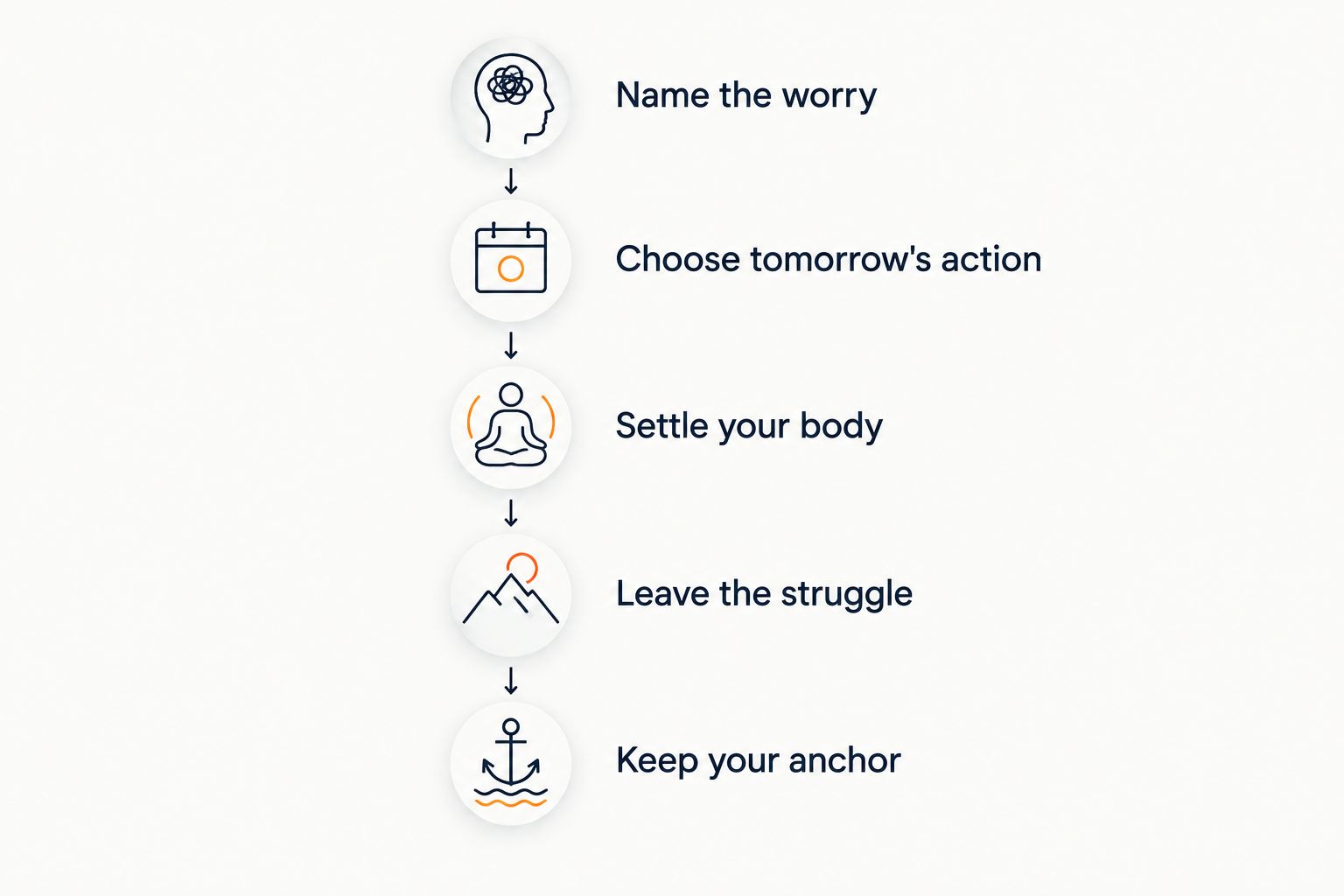 Five steps for responding to bedtime worry without forcing sleep
Give worry a next step, then let bedtime stop being a problem-solving session.
These steps draw on common behavioral approaches to sleep and anxiety. They are not a substitute for a tailored insomnia treatment plan, particularly when the difficulty is persistent or complicated by another health condition.
What support fits your situation in 2026?
Match support to the problem you need help with. Everyday reassurance, chronic insomnia treatment, and assessment of possible sleep disorders are different needs.
| Support | Best for | Main benefit | Main limitation |
|---|---|---|---|
| Sleep-supporting habits | Occasional disruption or an inconsistent routine | Helps create more predictable conditions for rest | Often insufficient for chronic insomnia |
| Cognitive behavioral therapy for insomnia, or CBT-I | Persistent insomnia | Addresses sleep behaviors and thoughts that maintain insomnia | Requires active participation and a tailored plan |
| Licensed mental health care | Anxiety affecting daily life | Provides assessment and treatment for anxiety | Does not replace medical assessment of sleep-related breathing problems |
| Medical sleep assessment | Snoring with gasping, unexplained sleepiness, or other concerning symptoms | Evaluates possible medical causes of disrupted sleep | Does not by itself address every source of worry |
| Lovon voice-based emotional support | Talking through everyday anxiety and practicing coping tools | Offers on-demand conversation and self-reflection guidance | Is not a licensed clinician and cannot diagnose or treat sleep disorders |
The American Academy of Sleep Medicine's 2021 clinical practice guideline recommends multicomponent CBT-I for adults with chronic insomnia. It also advises against using sleep hygiene alone as the treatment for chronic insomnia.
That distinction matters. A tidy bedtime routine can help, but persistent insomnia needs more than instructions to avoid screens or make your bedroom darker.
Lovon is best for voice-based emotional support with everyday anxiety, not clinical treatment of insomnia. Use Lovon anxiety support alongside appropriate care, not as evidence that a sleep problem has been assessed.
When should you talk to a clinician?
Seek help when anxiety or sleep difficulty regularly interferes with work, relationships, concentration, or your ability to cope. You do not have to wait until symptoms meet a diagnostic threshold.
Chronic insomnia commonly involves sleep difficulty at least 3 nights per week for at least 3 months, along with daytime effects despite adequate opportunity to sleep. Those thresholds help clinicians describe a pattern; they are not instructions to wait before asking for support.
Bring a simple record of bedtimes, waking, daytime sleepiness, and relevant caffeine or medication use. Rough observations are useful. You do not need a wearable or a detailed sleep score.
Ask for assessment sooner if you notice:
- Loud snoring, gasping, or witnessed pauses in breathing during sleep.
- Sleepiness that makes driving or daily activities unsafe.
- Anxiety that persists even when you are sleeping adequately.
- A sudden major change in sleep after starting or changing medication.
- Very little sleep alongside unusual energy, racing thoughts, or impulsive behavior.
Do not automatically label chest pain, fainting, or serious breathing difficulty as anxiety. New or severe symptoms need prompt medical attention.
If you are in immediate danger, call 911. In the United States, call or text 988 for suicide or mental health crisis support; an app is not emergency care.
Will sleeping better make my anxiety go away?
Better sleep can reduce a contributor to anxiety, but it does not guarantee that anxiety will disappear. An anxiety disorder, ongoing stress, trauma, or another health concern can require separate attention.
Can anxiety keep me awake even when I am exhausted?
Yes, anxiety can keep you awake despite exhaustion. Feeling tired and feeling settled enough to sleep are different experiences, so address the worry instead of treating wakefulness as a failure of effort.
Is sleep loss the same as insomnia?
No, insufficient sleep and insomnia are not the same. Insufficient sleep can result from too little opportunity to rest, while insomnia involves difficulty sleeping despite having an adequate opportunity.
FAQ
Can lack of sleep make anxiety worse after a single bad night?
Yes, even a single bad night can leave you more emotionally reactive and less able to manage worry. It does not mean you have developed an anxiety disorder.
How much sleep do adults need for mental health in 2026?
Most adults need 7–9 hours of sleep per night, according to the National Heart, Lung, and Blood Institute. That range supports general health; it is not a guaranteed treatment for anxiety.
Why am I anxious at night even though I feel exhausted?
Anxiety can keep you mentally alert even when your body feels exhausted. Worry about tomorrow or about sleep itself can make settling harder.
Should I stay in bed until I finally fall asleep?
If staying in bed leaves you increasingly awake and frustrated, get up for a quiet activity in dim light and return when sleepy. Avoid repeatedly checking the clock or trying to force sleep.
When does trouble sleeping count as chronic insomnia?
Chronic insomnia commonly involves sleep difficulty at least 3 nights per week for at least 3 months, with daytime effects despite adequate opportunity to sleep. A clinician makes the diagnosis, and you can seek help sooner.
Can Lovon help me talk through anxiety before bed?
Lovon anxiety support offers voice conversations, coping tools, and self-reflection guidance for everyday emotional difficulties. It is not a licensed clinician, does not treat insomnia, and should not replace needed professional care.
Should I take a sleep supplement when anxiety keeps me awake?
Discuss sleep supplements with a clinician or pharmacist rather than assuming they are the right treatment. The cause of your sleep difficulty, your health conditions, and other medicines affect that decision.
One last thing
For your 2026 sleep plan, stop making sleep the task you must complete. Focus on the conditions you can influence: an opportunity to rest, a manageable routine, and help for the worry that keeps returning.
Success tonight is not forcing yourself to fall asleep. It is responding to wakefulness without adding punishment or panic. If the pattern continues, bring it to a clinician rather than making your bedtime rules stricter.
Related guides
How AI Support Helps You Heal
AI emotional support isn't about replacing human connection — it's about filling the gaps. The moments when you need to talk at 2 AM, when you don't want to burden your friends again, or when you simply need someone to listen without judgment.
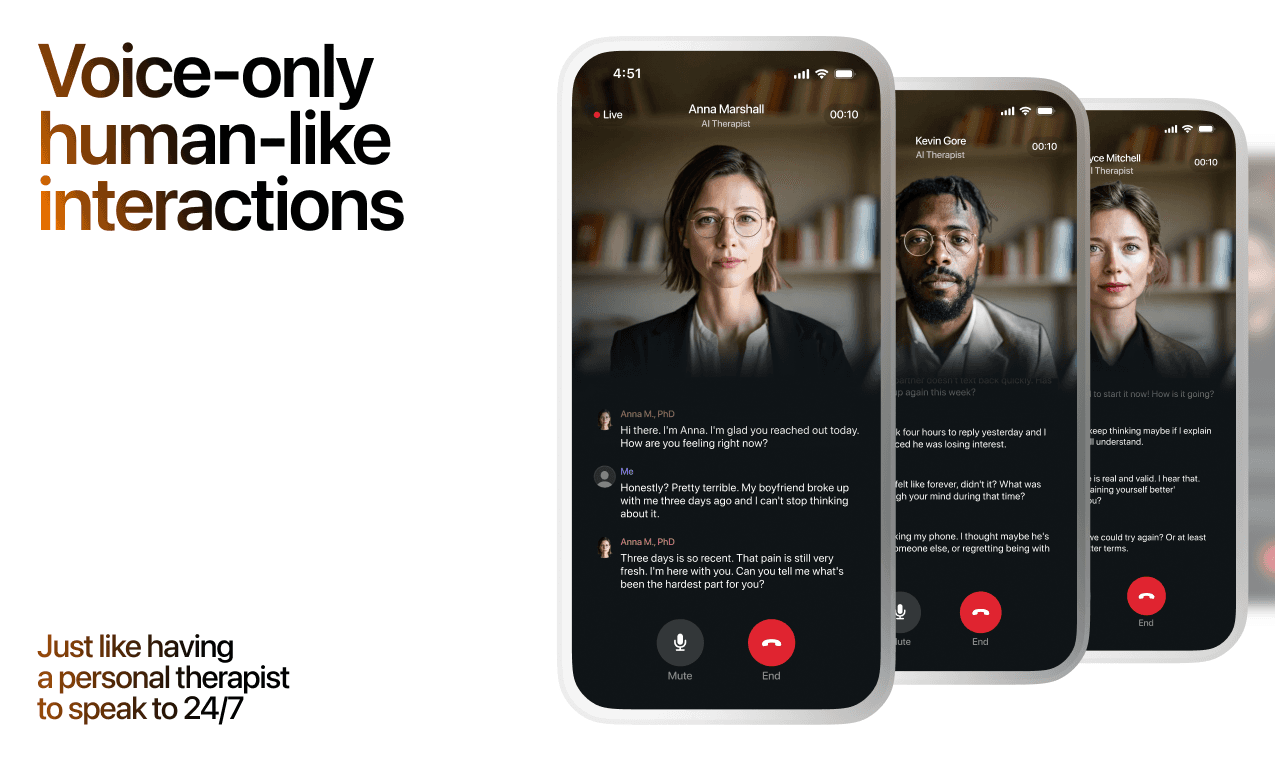
Here's what happens in a typical Lovon session:
You share what's on your mind
There's no script, no intake form, no waiting room. You speak or type whatever you're feeling — in your own words, at your own pace.
Lovon validates and explores
Using frameworks from CBT (Cognitive Behavioral Therapy) and motivational interviewing, Lovon acknowledges your feelings first, then gently helps you explore them. No dismissive "just move on" advice.
You build coping skills together
Lovon doesn't just listen — it actively works with you on evidence-based techniques: thought reframing, urge surfing, behavioral experiments, and more.
What a Session with Lovon Looks Like
When to Seek Professional Help
AI support is a valuable tool, but it's not a replacement for professional care. Please consider reaching out to a licensed therapist if you experience any of the following:
- Persistent thoughts of self-harm or suicide
- Inability to perform daily activities (work, eating, sleeping) for more than 2 weeks
- Turning to alcohol or substances to cope
- Intense anger or desire to harm your ex-partner
- Complete emotional numbness that doesn't improve over time
Crisis Resources (US): If you're in immediate danger, call 988 (Suicide & Crisis Lifeline) or text HOME to 741741 (Crisis Text Line). Available 24/7, free, and confidential.
Outside the US? Find a crisis line in your country
Ready to Start?
Your healing journey can begin right now
A 7-day trial. No judgment. Just a safe space to process what you're going through.
Frequently Asked Questions
Is Lovon a replacement for a real therapist?
Is my conversation with Lovon AI private?
How is Lovon different from ChatGPT for emotional support?
Can I use Lovon if I'm already seeing a therapist?
Can I try Lovon before subscribing?
About the Author
The Lovon Editorial Team
Mental Health & Wellness Content Team
The Lovon Editorial Team develops mental health and wellness content designed to make psychological concepts accessible and actionable. Our goal is to bridge the gap between clinical research and everyday life - helping you understand why your mind works the way it does and what you can do about it....
Related articles
- AI Support App for Retirement Transition Anxiety (2026)
Lovon wins for on-demand retirement transition anxiety support in 2026 — voice-first, available anytime. See the full…
- Can ADHD be managed without medication?
Can ADHD be managed without medication? Yes, for some adults. Learn which therapy, routines, and supports help, where…
- Can adults develop ADHD later in life?
Can adults develop ADHD later in life? A first diagnosis can come in adulthood, but symptoms begin earlier. Learn what…
- Is hiring a life coach worth it in 2026?
Is hiring a life coach worth it? Yes for clear goals and accountability, not clinical care. Learn how to assess fit, ask…
See also
Quizzes
- Highly Sensitive Person Test: How Much Do You Take In?
See how deeply you process, notice and get overloaded.
- Empathy Test: Free 12-Question Self-Check
See which part of your empathy is strained, in 3 minutes.
Free tools
- Am I Overreacting, or Is This a Big Deal?
A chat for the small thing you cannot stop turning over. Say what happened and what you have already told yourself about…
- Words of Encouragement for Him When He Is Struggling
Words of encouragement for him that fit what he is actually going through, for when your usual lines are not landing…
From the wiki
- What does it mean when you dream about your ex?
Dreaming about your ex usually reflects emotional processing, not prophecy and not a message from them. Your sleeping…
Disclaimer: This article is for informational purposes only and does not constitute medical advice, diagnosis, or treatment. Always seek the advice of your physician or other qualified health provider with any questions you may have regarding a medical condition. If you are in crisis or think you may have an emergency, call 988 (Suicide & Crisis Lifeline) or go to the nearest emergency room. Outside the US? Find a crisis line in your country.