
Can chronic stress cause physical illness?
Can chronic stress cause physical illness? Yes. Learn how it affects sleep, blood pressure and existing conditions, plus when symptoms need medical care.

Key Takeaways
- Can chronic stress cause physical illness? Yes; prolonged stress can affect sleep, blood pressure and existing
- A stress-related symptom is still a real physical symptom, not proof that stress is its only cause.
- Lovon is best for talking through everyday stress, not diagnosing symptoms or replacing clinical care.
- Seek medical advice for persistent symptoms; get urgent help for chest pain or trouble breathing.
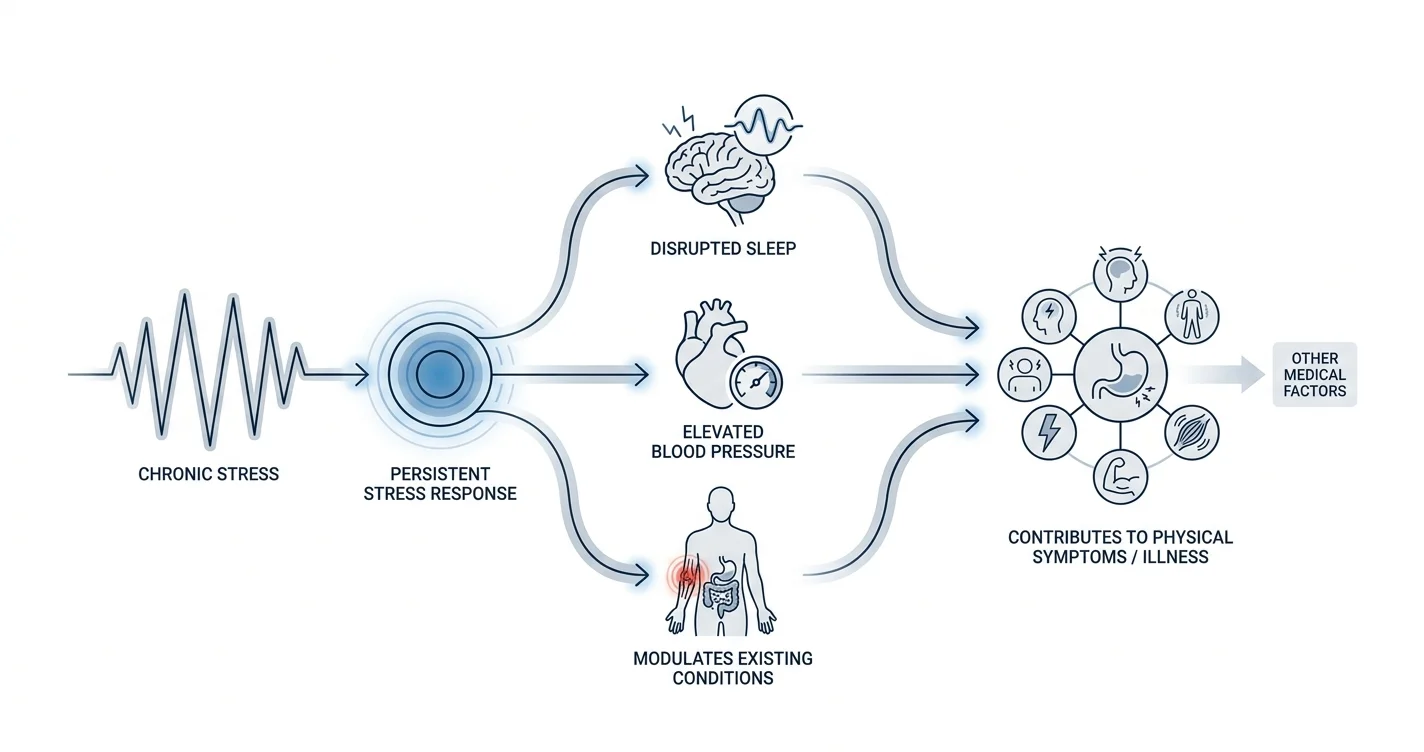
Yes. Chronic stress can contribute to physical illness by keeping stress responses active, disrupting sleep, raising blood pressure and making existing conditions harder to manage. In 2026, the key distinction is that stress can affect your body without being the only cause of a symptom. New, persistent or worsening symptoms need medical attention, even when life feels stressful.
TL;DR
- Can chronic stress cause physical illness? Yes; prolonged stress can affect sleep, blood pressure and existing health conditions.
- A stress-related symptom is still a real physical symptom, not proof that stress is its only cause.
- Lovon is best for talking through everyday stress, not diagnosing symptoms or replacing clinical care.
- Seek medical advice for persistent symptoms; get urgent help for chest pain or trouble breathing.
Can chronic stress cause physical illness?
Yes. Your body responds to a challenge by changing your heart rate, breathing and hormone activity. That response helps you react in the moment. When stress stays high and recovery is scarce, those changes can interfere with sleep, digestion and cardiovascular health. The stress, safety and nervous system guide explains more about how the body responds to perceived threat.
The National Institute of Mental Health identifies headaches, muscle tension and sleep problems among the physical signs of stress. The American Heart Association also identifies chronic stress as a concern for heart health, including its relationship with blood pressure. Neither point lets you diagnose the cause of your own symptoms. Use this sequence instead:
- Notice symptoms. Write down what you feel, when it happens and whether it changes during stressful periods or rest.
- Check urgent signs. Chest pain, trouble breathing, fainting or sudden weakness need prompt medical assessment, not a stress-management exercise.
- Book a visit. Tell a healthcare professional about symptoms that persist, worsen or interfere with daily life. Mention stress, but describe the physical symptom first.
- Support recovery. Protect sleep, eat regularly, move in ways you can sustain and make room to talk about what is weighing on you.
A symptom log helps you describe a pattern. It cannot establish a diagnosis, and a stressful week does not rule out a separate medical condition. In 2026, treat the physical symptom and the stress as two issues worth addressing, rather than choosing between them.
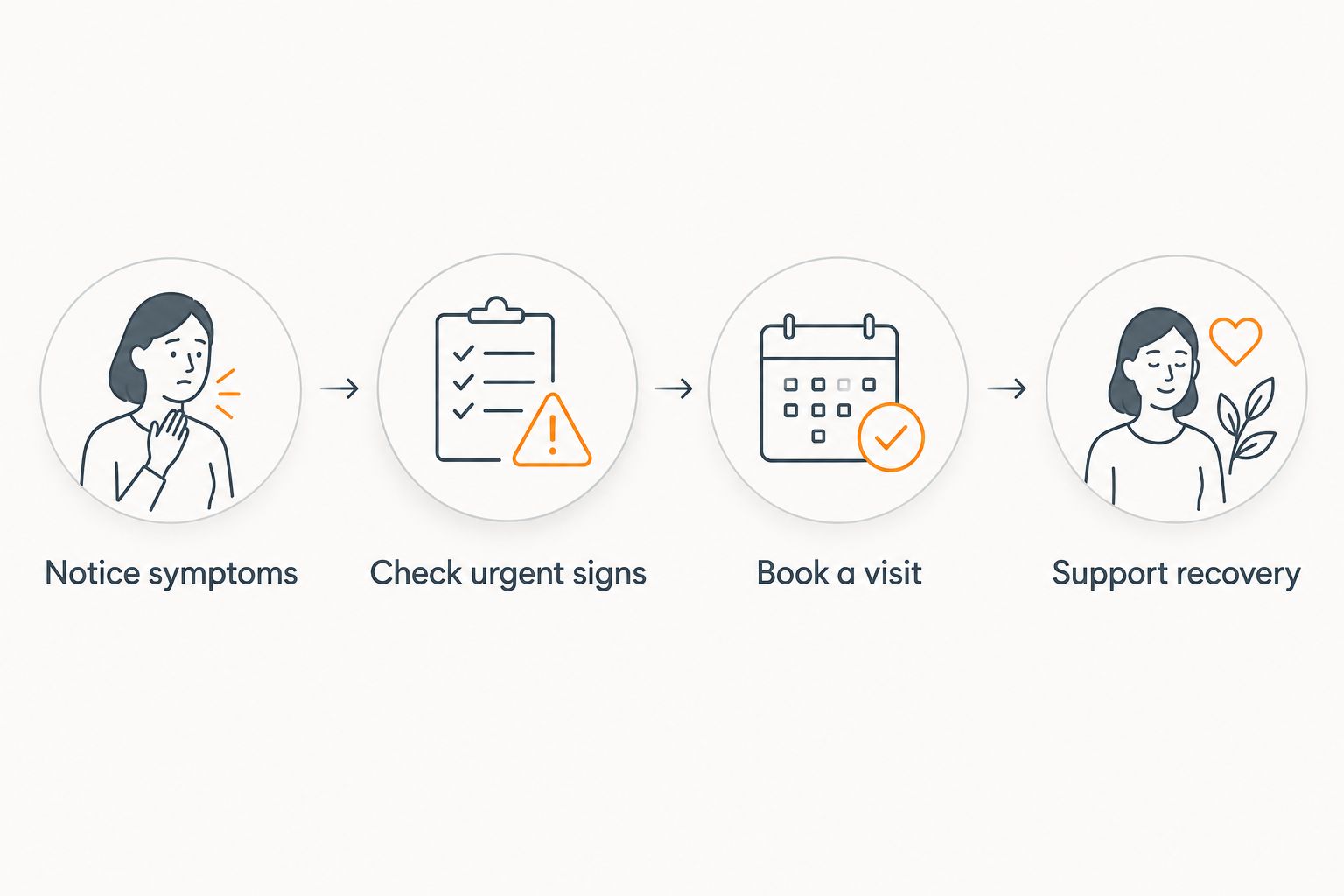 Steps for noticing physical symptoms, checking urgent signs, seeking care and supporting recovery
Why this matters
It is easy to dismiss a headache or stomach problem when you already know you are under pressure. It is just as easy to worry that every uncomfortable sensation signals a serious illness. Neither shortcut helps. Stress can produce physical symptoms, worsen a condition you already have, or exist alongside an unrelated problem.
The practical question is not, “Is this all in my head?” Physical symptoms deserve attention regardless of what triggered them. Ask instead: What needs a medical check, and what can I change to give my body more recovery time?
Stress also affects behavior. If you are sleeping poorly, skipping meals or feeling too overwhelmed to keep appointments, those changes can add to the physical strain. Addressing stress is useful, but it is not a substitute for investigating a symptom that will not go away.
What physical problems can chronic stress contribute to?
Sleep disruption and fatigue
Stress can make it harder to fall asleep, stay asleep or feel rested. Poor sleep can leave you feeling less able to cope the next day, which keeps the stress cycle going. Fatigue has many possible causes, though, so do not assign it to stress without a medical assessment if it persists.
The Centers for Disease Control and Prevention recommends 7 or more hours of sleep per night for adults ages 18 to 60. That is a general sleep target, not a test for whether stress has made you ill. Tell a clinician if you have ongoing exhaustion despite making time for sleep.
Headaches and muscle tension
A tight jaw, tense shoulders or a headache can accompany stress. Notice whether the discomfort follows a difficult conversation, a long period of worry or a night of poor sleep. A pattern can guide your next steps, but it does not establish the cause.
Seek medical advice for headaches that are new, increasingly frequent or disruptive. Get urgent care for a sudden, severe headache, especially with confusion, weakness or other new neurological symptoms. Relaxation can help you respond to tension; it must not delay care for warning signs.
Digestive symptoms
Stress can affect appetite and digestion. You might notice nausea, stomach discomfort or changes in bowel habits during an extended difficult period. Persistent digestive symptoms still need assessment because stress is not the only possible explanation.
Keep your notes simple: what happened, when it started and whether anything else changed. Share those details with a healthcare professional rather than trying to prove that a particular event caused the symptom.
Blood pressure and existing conditions
Chronic stress matters for cardiovascular health. Stress can raise blood pressure temporarily, and long-running stress can make it harder to maintain routines that support heart health. You cannot tell what your blood pressure is by how stressed you feel; a measurement and clinical advice matter more than a guess.
Stress can also make an existing condition feel harder to manage when sleep, appointments or daily care slip. That does not mean stress caused the condition. In 2026, keep following your treatment plan and tell your clinician what has changed instead of replacing care with self-help alone.
Why the effects of chronic stress vary
Two people can face similar pressures and notice different physical symptoms. These factors change what you experience and what kind of support you need:
- How long the pressure lasts. A brief challenge gives you a clearer chance to recover than a problem that follows you into sleep and the next day.
- How much rest you get. Interrupted sleep can add fatigue and make ordinary demands feel harder.
- Your current health. An existing condition needs its own care even if stress seems to aggravate symptoms.
- Your daily routines. Missed meals, less movement and delayed appointments can add problems alongside the stress response.
- Your access to support. Someone you trust or a licensed professional can help you work through a situation instead of carrying it alone.
None of these factors turns a symptom log into a medical test. They help you choose a useful next move: seek care for the symptom, reduce a source of strain where you can, and build time to recover.
How can you lower stress without ignoring your health?
Start with a plan small enough to use on a difficult day. You do not need to feel calm before taking care of yourself. These steps address strain while leaving room for a medical explanation of your symptoms:
- Make the symptom appointment. If a physical problem is persistent or getting worse, contact a healthcare professional. Write down your questions before the visit.
- Protect a sleep window. Choose a regular time to wind down and put the next day's worries on paper before bed. If sleep problems continue, bring them up at the appointment.
- Move at a manageable pace. A short walk or gentle movement can give you a break from sitting with worry. The CDC recommends 150 minutes per week of moderate-intensity activity for adults, but that public-health target is not a requirement to earn relief today.
- Try a brief reset. Spend 5 minutes noticing your breathing and relaxing your shoulders. Stop if the exercise feels uncomfortable; choose another calming activity instead.
- Talk through the pressure. Name what is happening and what you need. That conversation can be with someone you trust, a licensed mental health professional or an emotional-support tool.
Lovon is best for people who want to talk through everyday stress and practice coping between clinical visits, not for diagnosing physical symptoms. The Lovon voice therapy app offers on-demand voice conversations, emotional support and coping tools. Its limit matters: Lovon is not a licensed clinician or a replacement for medical or mental health care.
If you need a way to begin, try saying what your body feels like, what is on your mind and what you want to do next. Keep those observations for your healthcare visit. Feeling heard can support you while you take action; it cannot tell you why a symptom is happening.
When should you see a doctor about stress symptoms?
See a healthcare professional when symptoms persist, worsen, recur or disrupt your life. You do not have to wait until you can separate stress from another cause. Describe the symptom, its timing, anything that makes it better or worse, and any changes in sleep or daily functioning.
Seek urgent medical help for chest pain, trouble breathing, fainting, sudden weakness or other alarming symptoms. Do not assume an episode is anxiety because it began during a stressful moment. If you are in immediate danger, call 911. If you are in the United States and need immediate support for a mental health crisis, call or text 988.
If stress itself is becoming hard to manage, a licensed mental health professional can help you assess what is happening and develop a care plan. Medical and mental health support can work together; you do not have to settle the cause on your own before asking for either.
Can stress make an existing illness worse?
Yes, stress can make managing an existing illness harder, particularly when it disrupts sleep or daily care. It is not a reason to stop prescribed treatment or assume every change is stress-related. Tell the clinician who treats the condition about new symptoms and the pressure you are under.
If you track symptoms, note both the physical change and any missed sleep, meals or care routines. That record gives your clinician a clearer account than a single label such as stress.
Can stress symptoms go away when stress improves?
Yes, some stress-related symptoms can ease when you get more recovery time and support. Improvement is welcome, but it does not prove what caused the symptom. If it returns, worsens or remains unexplained, seek medical advice.
A calmer day is not a failed test if you still feel unwell. Recovery can take attention to both the demands on your mind and the health needs of your body.
FAQ
Can chronic stress cause physical illness?
Yes. Chronic stress can contribute to physical symptoms and affect sleep, blood pressure and management of existing conditions. It cannot, by itself, explain every symptom you experience.
What are common physical signs of stress?
Headaches, muscle tension, sleep problems and digestive discomfort can accompany stress. A healthcare professional should assess symptoms that persist, worsen or feel unusual for you.
Can stress raise your blood pressure?
Yes, a stress response can raise blood pressure temporarily. You need a blood pressure measurement, rather than a feeling of tension, to know what your reading is.
Can stress make you feel sick even if tests are normal?
Yes, stress-related physical discomfort can be real even when an initial test does not identify a cause. Ask your clinician what the results mean and what follow-up makes sense if symptoms continue.
How do I know if a symptom is stress or something else?
You cannot reliably tell from the presence of stress alone. Record the symptom and its timing, then seek medical assessment if it persists, worsens or worries you.
Can a mental health app treat physical symptoms caused by stress?
No, Lovon provides emotional support and coping tools, not medical diagnosis or treatment. Use it to talk through everyday stress while seeking appropriate clinical care for physical symptoms.
When is a stress-related symptom an emergency?
Chest pain, trouble breathing, fainting or sudden weakness call for urgent medical help. Do not delay care to test whether calming down makes the symptom pass.
One last thing
In 2026, you do not need proof that stress caused a symptom before taking it seriously. Book the medical check for the physical problem and make room to address the pressure at the same time. Both steps matter, and neither cancels out the other.
Related guides
How AI Support Helps You Heal
AI emotional support isn't about replacing human connection — it's about filling the gaps. The moments when you need to talk at 2 AM, when you don't want to burden your friends again, or when you simply need someone to listen without judgment.
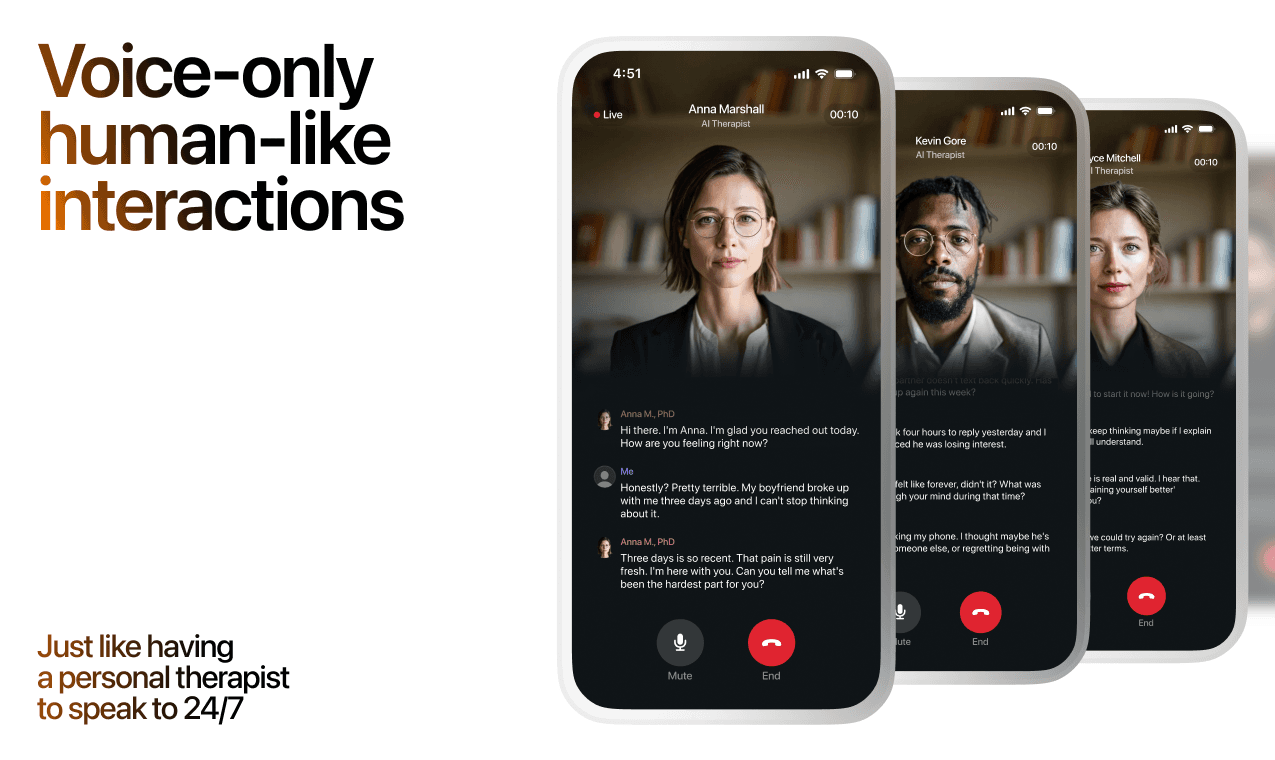
Here's what happens in a typical Lovon session:
You share what's on your mind
There's no script, no intake form, no waiting room. You speak or type whatever you're feeling — in your own words, at your own pace.
Lovon validates and explores
Using frameworks from CBT (Cognitive Behavioral Therapy) and motivational interviewing, Lovon acknowledges your feelings first, then gently helps you explore them. No dismissive "just move on" advice.
You build coping skills together
Lovon doesn't just listen — it actively works with you on evidence-based techniques: thought reframing, urge surfing, behavioral experiments, and more.
What a Session with Lovon Looks Like
When to Seek Professional Help
AI support is a valuable tool, but it's not a replacement for professional care. Please consider reaching out to a licensed therapist if you experience any of the following:
- Persistent thoughts of self-harm or suicide
- Inability to perform daily activities (work, eating, sleeping) for more than 2 weeks
- Turning to alcohol or substances to cope
- Intense anger or desire to harm your ex-partner
- Complete emotional numbness that doesn't improve over time
Crisis Resources (US): If you're in immediate danger, call 988 (Suicide & Crisis Lifeline) or text HOME to 741741 (Crisis Text Line). Available 24/7, free, and confidential.
Outside the US? Find a crisis line in your country
Ready to Start?
Your healing journey can begin right now
A 7-day trial. No judgment. Just a safe space to process what you're going through.
Frequently Asked Questions
Is Lovon a replacement for a real therapist?
Is my conversation with Lovon AI private?
How is Lovon different from ChatGPT for emotional support?
Can I use Lovon if I'm already seeing a therapist?
Can I try Lovon before subscribing?
About the Author
The Lovon Editorial Team
Mental Health & Wellness Content Team
The Lovon Editorial Team develops mental health and wellness content designed to make psychological concepts accessible and actionable. Our goal is to bridge the gap between clinical research and everyday life - helping you understand why your mind works the way it does and what you can do about it....
Related articles
- Why Chest Feels Tight When Anxious (2026 Fix)
Chest tight when anxious? Tensed muscles and shallow breathing are the cause in 2026 guidance. Get the 7-step fix and…
- Why Am I Exhausted All the Time? Real Causes in 2026
Why am I exhausted all the time even after sleep? 2026 guide breaks down burnout, depression, and cortisol causes sleep…
- Can an AI voice app actually calm you down?
Yes, AI voice apps calm acute anxiety spikes fast through paced voice conversation. See how it works, its limits, and…
- Can financial stress cause a relationship to break down?
Can financial stress cause a relationship to break down? Yes, but separation is not inevitable. Learn how to address…
See also
Quizzes
- Love Addiction Test: Free 12-Question Self-Check
See how much of your life one person is taking.
- Insecurity Test: What Are You Bracing Against?
See what your insecurity actually runs on, in 3 minutes.
Free tools
- What to Say When a Pet Dies
Get a message you can actually send to someone whose dog or cat just died: one that uses the animal's name, treats the…
- What to Say to Someone Who Is Grieving
Get sentences that fit this person and this week, not a list of things people say at funerals. Describe who they lost…
From the wiki
- Why do I keep dreaming about my ex?
Recurring dreams about an ex usually mean your brain is still consolidating a relationship that took up years of memory…
Disclaimer: This article is for informational purposes only and does not constitute medical advice, diagnosis, or treatment. Always seek the advice of your physician or other qualified health provider with any questions you may have regarding a medical condition. If you are in crisis or think you may have an emergency, call 988 (Suicide & Crisis Lifeline) or go to the nearest emergency room. Outside the US? Find a crisis line in your country.