
How long does it take to break a bad habit?
How long does it take to break a bad habit? There is no fixed deadline. Learn what research shows, how to change triggers, and when to seek professional support.

Key Takeaways
- How long does it take to break a bad habit? There is no universal deadline; track behavior, not a countdown.
- Habit-formation research measures new routines becoming automatic, not unwanted habits disappearing.
- Change the trigger, choose a workable replacement, and review setbacks without judging yourself.
- Lovon offers mental health support for everyday reflection, not licensed treatment or addiction care.
Breaking a bad habit has no fixed timeline: changing the behavior and making a replacement feel automatic are different milestones. The main caveat is that widely quoted habit timelines measure building new routines, not permanently stopping unwanted ones. This 2026 guide explains what the research actually tells you and how to make a practical change without turning a deadline into another source of stress.
TL;DR
- How long does it take to break a bad habit? There is no universal deadline; track behavior, not a countdown.
- Habit-formation research measures new routines becoming automatic, not unwanted habits disappearing.
- Change the trigger, choose a workable replacement, and review setbacks without judging yourself.
- Lovon offers mental health support for everyday reflection, not licensed treatment or addiction care.
How long does it take to break a bad habit?
There is no evidence-based number of days that applies to every bad habit. A useful answer separates stopping a behavior from changing the automatic response that keeps bringing it back.
You can decide not to repeat a behavior today. That does not mean its triggers or urges disappear today, and the time needed to develop a replacement is a separate question. The distinction matters when reading about how long it takes to build a new habit.
| Milestone | What it means | What it does not prove |
|---|---|---|
| Changing behavior | You respond differently when a familiar trigger appears | The old urge is gone |
| Building a replacement | You repeatedly practice another response in the same situation | The replacement already feels effortless |
| Developing automaticity | The new response requires less conscious effort | The old habit can never return |
| Maintaining change | You keep using your plan across different situations | You no longer need support or adjustments |
These milestones are not a rigid sequence. You might stop checking your phone during dinner while still reaching for it automatically when you feel bored. That reach is information about the trigger, not proof that your effort has failed.
What habit research tells you in 2026
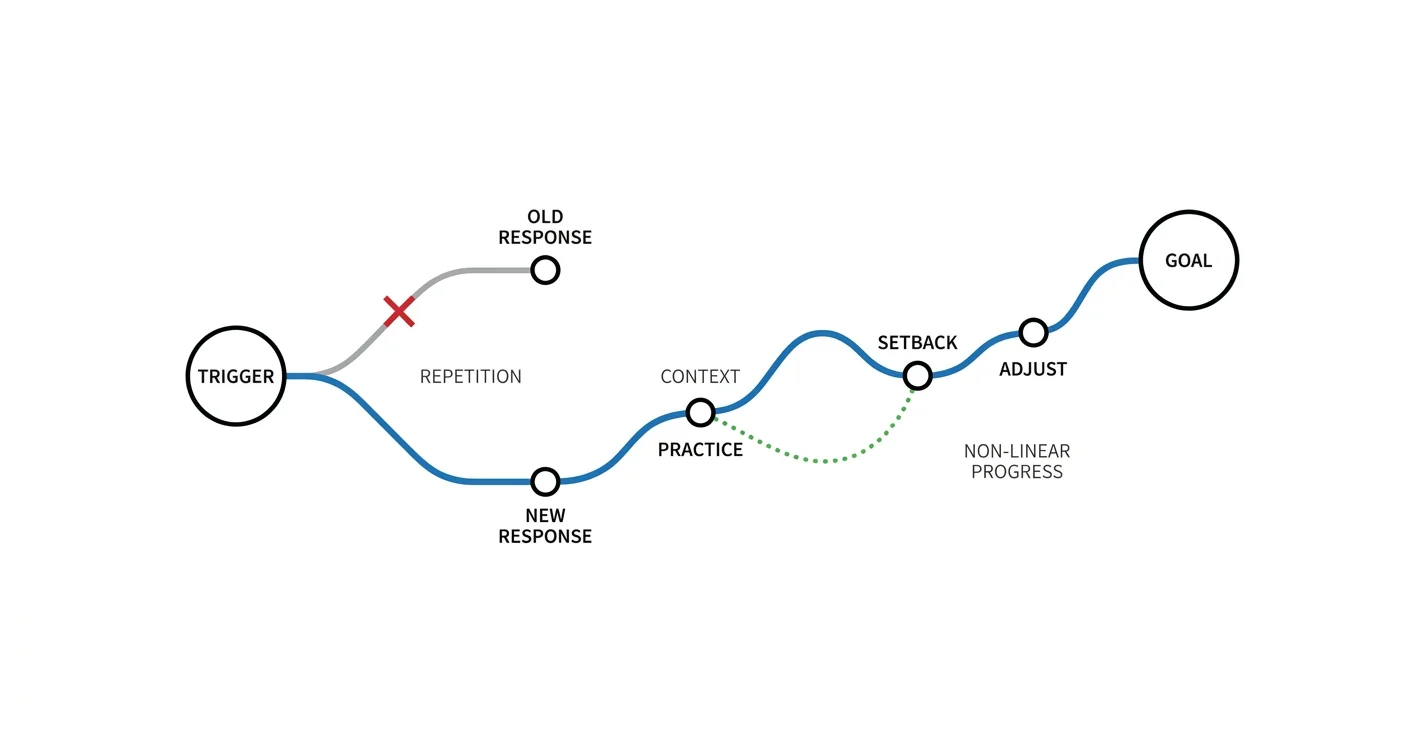
A frequently cited study by Phillippa Lally and colleagues, published in the European Journal of Social Psychology in 2010, examined people repeating new eating, drinking, or activity behaviors in a consistent context. The modeled time to reach near-maximum automaticity had a median of 66 days, with estimates ranging from 18 days to 254 days.
Those figures describe new-habit formation in that study. They are not a measured average for breaking bad habits, and the longer estimates extended beyond the study's observation period. They should not become a personal deadline.
The practical takeaway is narrower and more useful: repetition and context matter, and people do not all change at the same pace. A calendar alone cannot tell you whether your unwanted behavior is becoming less frequent or whether your replacement is getting easier.
Why this matters
A deadline can turn a workable change into an all-or-nothing test. If you expect an urge to disappear by a particular day, having that urge afterward can feel like failure—even when you are responding to it differently.
Measure the change you actually want. For late-night scrolling, that might mean putting the phone away when you notice fatigue; for interrupting, it might mean letting the other person finish before speaking.
Also question the label bad habit. A behavior that causes inconvenience is different from a compulsion, an addiction, or a symptom of a mental health condition. You deserve the right kind of support, not a harsher judgment about your willpower.
Why the time needed to change a habit varies
The most useful question is not just how long you have been doing something. It is what keeps the behavior going and what your plan asks you to do instead.
- Trigger exposure: A behavior tied to your desk, phone, or evening routine has repeated opportunities to happen. Identify the situations where you need a different response.
- Immediate reward: Scrolling can offer distraction, while postponing a task can offer temporary relief. Ask what the behavior provides before choosing a replacement.
- Replacement difficulty: A complicated alternative demands more effort than a simple, available one. Choose something you can realistically do when the trigger appears.
- Consistency of context: A replacement tied to a recognizable situation gives you a clear opportunity to practice. A vague intention leaves you deciding from scratch.
- Emotional strain: Stress, anxiety, or low mood can be part of the pattern you are trying to change. Include support for those feelings rather than treating them as irrelevant.
- Clinical needs: Dependence, compulsions, and behaviors that cause injury need a different assessment from ordinary routine changes. A self-help timeline does not establish what care you need.
Do not use this list to calculate a completion date. Use it to find the part of your plan that needs attention. If your phone remains beside your pillow, for example, changing that setup is a clearer next move than demanding more determination.
Build a practical habit-change plan in 2026
Start with a behavior you can describe and a situation you can recognize. The goal is to make your next response clear, not to redesign your entire life at once.
1. Name the behavior
Describe what you do without turning it into an identity. Write that you open social media after getting into bed, rather than calling yourself undisciplined.
Make the target observable. You need to know whether the behavior happened, not whether you were a better person that day. Avoid broad targets such as becoming more productive or never feeling anxious.
2. Notice the trigger
Look at what happens immediately before the behavior. Note the setting, what you were doing, and what you were feeling.
For example, checking messages after a difficult conversation might serve a different purpose from checking them during an uneventful commute. Treat those as separate situations rather than assuming every repetition has the same cause.
3. Choose a replacement
Pick an alternative that addresses the need without repeating the unwanted behavior. If you are seeking a break from work, standing up and stepping away is a more direct replacement than promising to work harder.
Keep the alternative specific. Instead of trying to stop procrastinating altogether, decide to open the document and write its next heading when you notice yourself avoiding it. The replacement should be an action, not another demand to feel motivated.
4. Change the setting
Make the unwanted response less convenient and put the replacement within reach. Move the phone away from the bed, close the distracting tab, or place a written task reminder where you begin work.
Environmental changes have limits. They do not resolve every emotional driver, and they are not treatment for a clinical condition. But they give you a concrete way to stop relying only on an in-the-moment decision.
5. Review and adjust
Record whether the trigger appeared and what you did next. Review the pattern without treating the record as a score for your worth.
Ask whether the replacement was available, realistic, and relevant to the need. If it was not, revise it. A plan that only works when you are rested and calm needs an option for harder days too.
These steps form a repeatable process: notice the behavior, understand the situation, practice an alternative, and adjust what gets in the way.
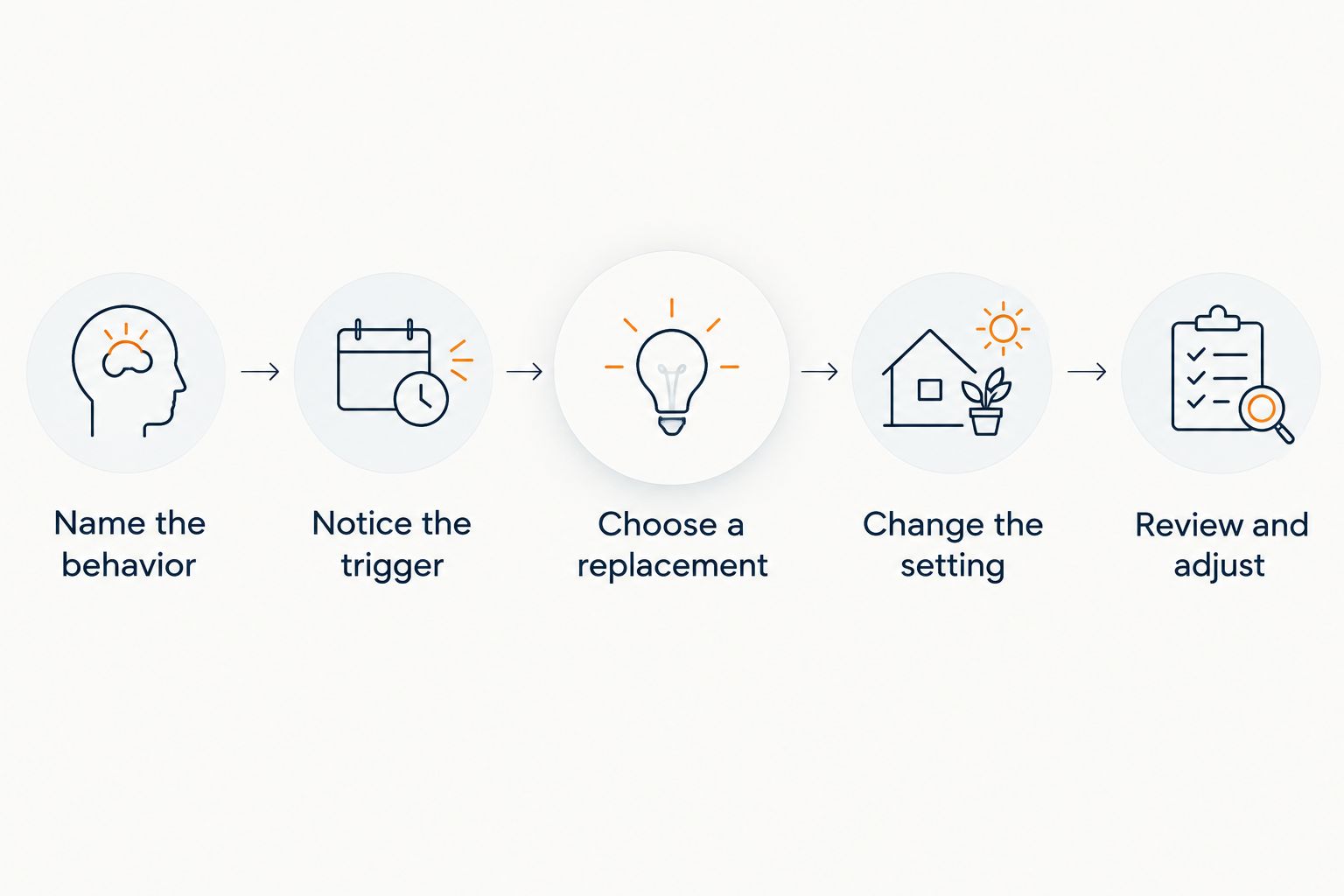 Five steps for changing a habit, from naming the behavior to reviewing and adjusting the plan
Make the next response clear before the familiar trigger appears.
Which habit-change approach should you use?
Choose an approach based on what is keeping the behavior going. None of these options supplies a guaranteed finish date, and you can combine them without making your plan complicated.
| Approach | Best for | Practical benefit | Limitation |
|---|---|---|---|
| Change the environment | Behaviors linked to a predictable setting | Changes access to the familiar trigger or response | Does not address every emotional need |
| Practice a replacement | Behaviors with an identifiable purpose | Gives you something specific to do instead | The alternative still needs practice |
| Track the pattern | Behaviors you struggle to notice | Creates a record to review | Tracking alone does not change the behavior |
| Seek licensed care | Harmful, compulsive, or difficult-to-control behaviors | Provides clinical assessment and an individual treatment plan | Requires arranging care rather than relying on a self-help checklist |
For an everyday routine, start with a clear replacement and a practical change to your environment. Tracking can help you see where that plan breaks down. If the behavior is harmful or feels outside your control, prioritize clinical support instead of making the tracker more demanding.
Avoid removing every source of enjoyment from your routine. The purpose is to change a behavior that is causing problems, not to make your day feel punitive.
How do you know a habit-change plan is working?
Look for changes in your response, not just changes in your feelings. You might still want to scroll but put the phone down sooner, or still want to interrupt but notice the impulse before speaking.
Useful signs to track include:
- You recognize the trigger before acting more often.
- You use the replacement in situations where you previously repeated the old behavior.
- The unwanted behavior happens less often or ends sooner.
- You return to your plan after a setback instead of abandoning it.
- The behavior interferes less with the activities or relationships that matter to you.
These are observation categories, not promised outcomes. In your 2026 habit-change plan, compare your behavior with your own starting point rather than someone else's streak.
If nothing is changing, review the plan. A replacement that does not meet the underlying need, or a trigger you have not identified, calls for an adjustment—not a conclusion that you cannot change.
Does repeating the habit mean you have to start over?
Repeating an unwanted behavior does not erase the different choices you have already practiced. It does show that the old response remains available in that situation.
Review what happened without turning it into a character judgment. Were you tired, facing a different trigger, or unable to use the replacement? Identify the obstacle and decide what you will do when that situation appears again.
You can reset a streak counter if you use one. You do not need to describe your learning as reset, and you do not need to wait for a new week to resume your plan.
Can emotional support help you change a habit?
Emotional support is relevant when your behavior is connected to stress, avoidance, or a need to talk through what happened. It does not replace the behavioral plan or establish a treatment outcome.
Lovon is best for people seeking voice-based mental health support and reflection about everyday struggles, not licensed treatment. You can use Lovon to talk through what you noticed and consider coping tools alongside your habit-change plan.
Lovon is a mental health app, not a licensed clinician. Its role here is on-demand emotional support and self-reflection; it does not diagnose the cause of a behavior or replace clinical care.
Treat Lovon as a companion to reflection, not as proof that a habit is resolved. If the behavior involves withdrawal, injury, serious distress, or loss of control, a licensed professional is the appropriate source of assessment.
When should you get professional help instead of waiting?
Seek professional support when a behavior harms your health, disrupts daily life, or repeatedly feels outside your control. That includes substance use concerns, compulsive checking, gambling problems, and hair pulling or skin picking that causes injury.
Do not abruptly stop heavy or dependent alcohol use, or prescribed sedatives such as benzodiazepines, without medical guidance. Withdrawal can be dangerous. A habit challenge is not a safe substitute for an individual medical plan.
Intrusive thoughts and repetitive mental rituals also deserve assessment rather than being dismissed as bad habits. If you are in immediate danger or cannot stay safe, contact emergency services or seek urgent help now.
FAQ
How long does it take to break a bad habit in 2026?
There is no universal number of days for breaking a bad habit. Track changes in the behavior and your response to its triggers rather than expecting a fixed completion date.
Does it take 66 days to break a bad habit?
66 days was the median modeled time to reach near-maximum automaticity for new behaviors in a widely cited habit-formation study. It was not a measured deadline for breaking unwanted habits.
Is breaking a habit the same as building a new one?
Breaking a habit and building a new one are different goals. You can stop a behavior while still experiencing its urge, and a replacement can still require deliberate effort.
What's the best first step for changing a bad habit?
Name the specific behavior and identify what happens immediately before it. Then choose a realistic replacement for that situation instead of relying on a broad promise to try harder.
Have I ruined my progress if I repeat the habit?
Repeating the habit does not erase the different choices you have already practiced. Review the trigger and adjust your plan rather than abandoning it.
Can I break a bad habit with willpower alone?
Willpower is not a complete habit-change plan. Make the trigger easier to recognize, change the setting where practical, and decide what you will do instead.
When should I talk to a therapist about a habit?
Talk to a licensed professional when the behavior causes harm, disrupts daily life, or feels outside your control. Substance dependence, compulsions, and behaviors that cause injury need assessment rather than a generic self-help deadline.
One last thing
Your first goal does not have to be making the urge disappear. It can be noticing the urge and making a different choice while it is still there.
For your 2026 plan, finish this sentence: when the familiar trigger appears, I will do this specific action instead. Make that action realistic enough to use on an ordinary, imperfect day. That gives you something to practice—not another deadline to miss.
Related guides
How AI Support Helps You Heal
AI emotional support isn't about replacing human connection — it's about filling the gaps. The moments when you need to talk at 2 AM, when you don't want to burden your friends again, or when you simply need someone to listen without judgment.
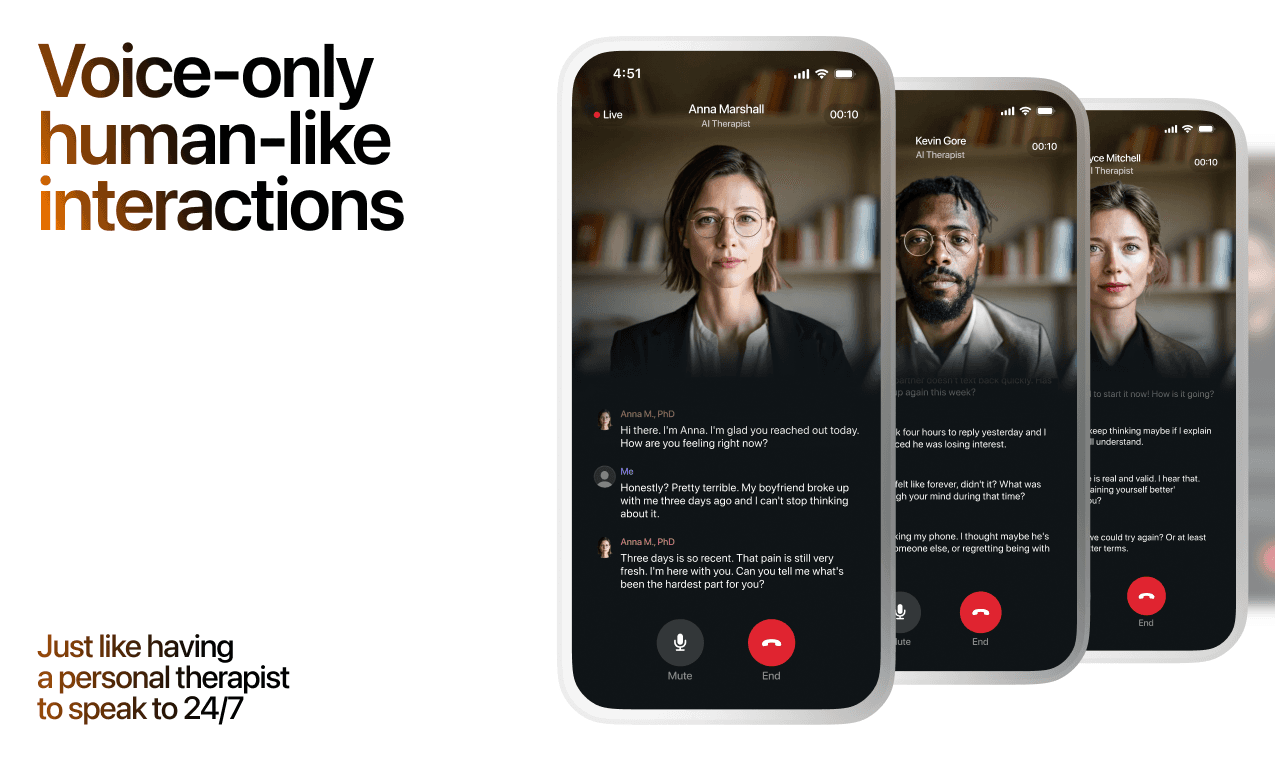
Here's what happens in a typical Lovon session:
You share what's on your mind
There's no script, no intake form, no waiting room. You speak or type whatever you're feeling — in your own words, at your own pace.
Lovon validates and explores
Using frameworks from CBT (Cognitive Behavioral Therapy) and motivational interviewing, Lovon acknowledges your feelings first, then gently helps you explore them. No dismissive "just move on" advice.
You build coping skills together
Lovon doesn't just listen — it actively works with you on evidence-based techniques: thought reframing, urge surfing, behavioral experiments, and more.
What a Session with Lovon Looks Like
When to Seek Professional Help
AI support is a valuable tool, but it's not a replacement for professional care. Please consider reaching out to a licensed therapist if you experience any of the following:
- Persistent thoughts of self-harm or suicide
- Inability to perform daily activities (work, eating, sleeping) for more than 2 weeks
- Turning to alcohol or substances to cope
- Intense anger or desire to harm your ex-partner
- Complete emotional numbness that doesn't improve over time
Crisis Resources (US): If you're in immediate danger, call 988 (Suicide & Crisis Lifeline) or text HOME to 741741 (Crisis Text Line). Available 24/7, free, and confidential.
Outside the US? Find a crisis line in your country
Ready to Start?
Your healing journey can begin right now
A 7-day trial. No judgment. Just a safe space to process what you're going through.
Frequently Asked Questions
Is Lovon a replacement for a real therapist?
Is my conversation with Lovon AI private?
How is Lovon different from ChatGPT for emotional support?
Can I use Lovon if I'm already seeing a therapist?
Can I try Lovon before subscribing?
About the Author
The Lovon Editorial Team
Mental Health & Wellness Content Team
The Lovon Editorial Team develops mental health and wellness content designed to make psychological concepts accessible and actionable. Our goal is to bridge the gap between clinical research and everyday life - helping you understand why your mind works the way it does and what you can do about it....
Related articles
- Best Free AI Life Coach App for Daily Habits 2026
The best free AI life coach app in 2026 for daily habits is Lovon — voice-based emotional support, coping tools and…
- Catastrophizing Anxiety: How to Stop It in 2026
Catastrophizing anxiety explained: 7 steps to stop worst-case thinking fast, plus troubleshooting tips and tools that…
- How to Break a Trauma Response Cycle (2026 Guide)
Learn how to break a trauma response cycle with 7 concrete steps, troubleshooting fixes, and where AI voice therapy fits…
- Can you get addicted to using an AI therapy app?
Can you get addicted to an AI therapy app? There's no formal diagnosis in 2026. Learn when daily use turns into…
See also
Quizzes
- Highly Sensitive Person Test: How Much Do You Take In?
See how deeply you process, notice and get overloaded.
- Shame Test: Do You Read Mistakes as Verdicts?
See which exit your shame takes, in 3 minutes.
Free tools
- Write a Condolence Message for This Person
Get one condolence message written for your situation instead of a list of a hundred to choose from. Tell it who died…
- How to Say No Politely (Without Over-Explaining)
A chat for how to say no politely when you have already decided and cannot get the word out. Tell it what you were…
From the wiki
- What to do if you have no friends?
Pick one activity that repeats weekly with the same people, and go for six to eight weeks straight. Repetition, not…
Disclaimer: This article is for informational purposes only and does not constitute medical advice, diagnosis, or treatment. Always seek the advice of your physician or other qualified health provider with any questions you may have regarding a medical condition. If you are in crisis or think you may have an emergency, call 988 (Suicide & Crisis Lifeline) or go to the nearest emergency room. Outside the US? Find a crisis line in your country.