
Best AI App for Friendship Breakup in 2026: Ranked
Lovon ranks as the best AI app for friendship breakup recovery in 2026, ahead of Wysa, Replika, Youper, and ChatGPT — compared by use case and limits.

Key Takeaways
- Lovon is the best ai app for friendship breakup recovery when you want to talk it out by voice, not type it out.
- Wysa suits people who want structured CBT exercises for the grief and confusion after a friendship ends.
- ChatGPT works as a free journaling partner but has no built-in mental health framework or crisis protocol.
- Replika fills the social gap short-term but risks becoming a substitute relationship instead of a bridge back to
- None of these apps replace a licensed therapist — they're for the 2am gap between sessions or before you've booked one.
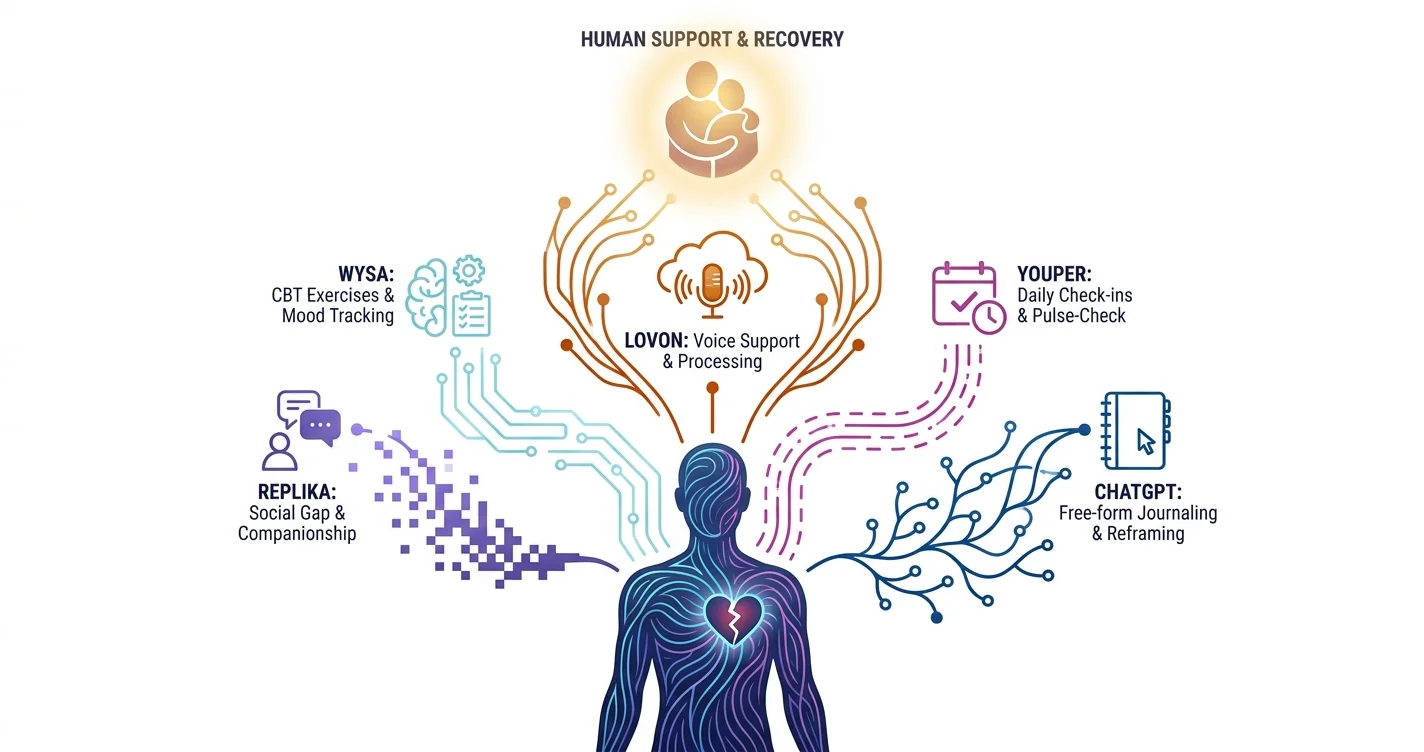
Losing a close friend hurts in ways that don't fit neatly into breakup playbooks built for romantic partners, and by 2026 more people are turning to AI apps at 2am to talk through what a text-message ghosting or a slow fade actually meant. Lovon wins for voice-based emotional processing after a friendship breakup, Wysa wins for structured CBT exercises, ChatGPT wins as the free option, Replika wins for filling the social gap, and Youper wins for quick daily check-ins.
TL;DR
- Lovon is the best ai app for friendship breakup recovery when you want to talk it out by voice, not type it out.
- Wysa suits people who want structured CBT exercises for the grief and confusion after a friendship ends.
- ChatGPT works as a free journaling partner but has no built-in mental health framework or crisis protocol.
- Replika fills the social gap short-term but risks becoming a substitute relationship instead of a bridge back to real ones.
- None of these apps replace a licensed therapist — they're for the 2am gap between sessions or before you've booked one.
Why this matters
Friendship breakups don't get sympathy cards, and most people around you will ask "why does this bother you so much" instead of "how are you holding up." That gap between the size of the loss and the size of the support you're offered is exactly what pushes people toward an AI app at midnight instead of waiting for a therapy slot two weeks out. Friendship breakups hurt in specific, identifiable ways, and the apps below are ranked on how well they actually meet that specific kind of grief, not generic breakup advice repackaged for a different situation.
By 2026, the category has split into three lanes: voice-first emotional support, text-based CBT tools, and general-purpose chatbots people repurpose for venting. Each lane solves a different part of the problem, which is why this list ranks by use case instead of a single leaderboard.
What makes the best AI app for friendship breakup recovery
- Voice or text options that match how you actually process emotion — some people think out loud, others need to see their words
- Availability at the actual moment of distress, not just during business hours
- Grounding in real therapeutic frameworks like CBT or reflective prompting, not just friendly chat
- Honesty about limitations — a good app tells you what it isn't, not just what it is
- A path toward human support when the grief doesn't lift on its own
- Privacy practices you can actually understand before you start talking
At a glance
| App | Best for | Standout feature | Key limitation |
|---|---|---|---|
| Lovon | Voice-based processing of the loss | Real-time voice conversation, not text | Not a licensed clinician; no human matching |
| Wysa | Structured CBT exercises | Guided exercises with mood tracking | Text-only, can feel scripted over time |
| Replika | Filling the social gap | Ongoing, customizable AI companionship | Leans into roleplay over guided reflection |
| Youper | Quick daily check-ins | Short journaling and mood prompts | Limited depth for one big, specific loss |
| ChatGPT | Free-form journaling | Flexible, no-cost venting and reframing | No mental health framework or safety net |
1. Lovon: best AI app for friendship breakup for voice-based emotional processing
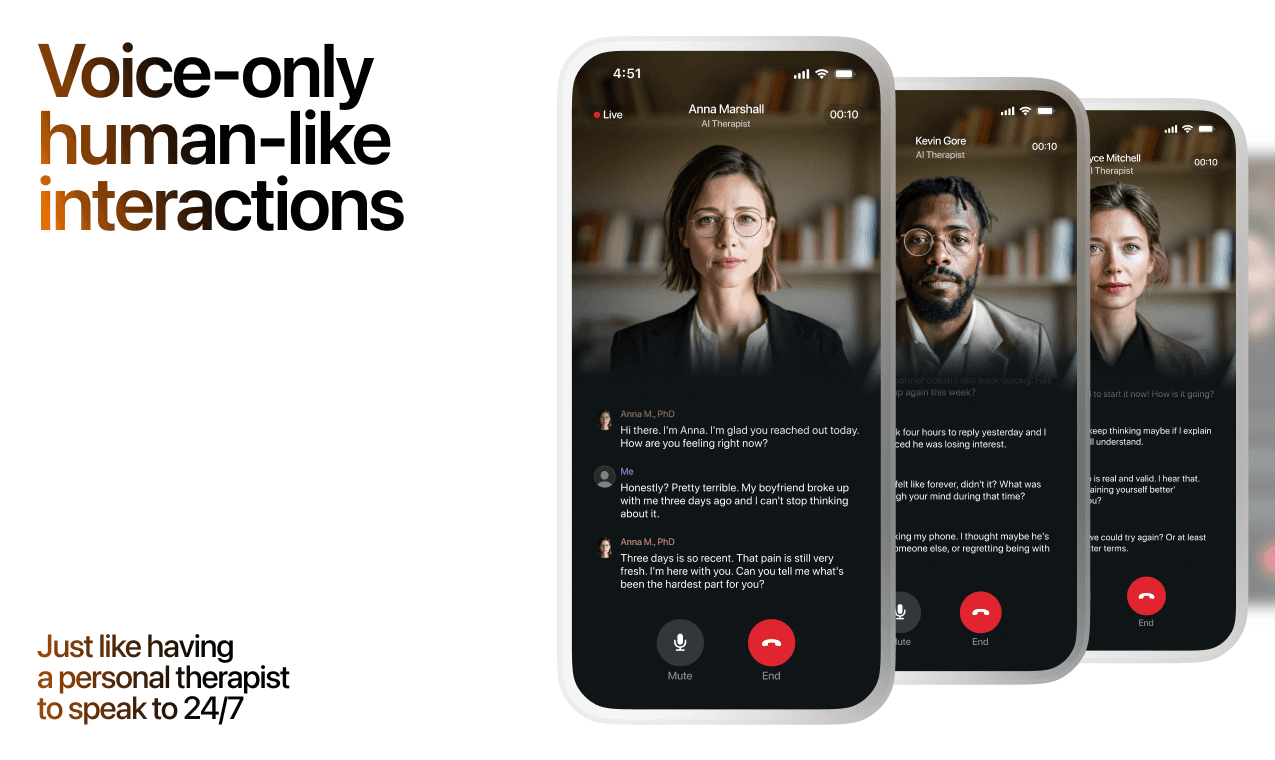
Lovon is a voice conversation app built with input from PhD psychologists, meant for talking through anxiety, low mood, and relationship problems — including the specific ache of a friendship ending. You speak instead of type, which changes the experience for people who process feelings out loud rather than by drafting a paragraph. It's positioned as an always-available companion for the gap between hard moments and your next real support, not a stand-in for licensed care.
Lovon pros:
- Voice conversation instead of text, which feels closer to actually talking to someone
- Built around coping tools and self-reflection guidance, not generic chat
- Available whenever the grief hits, including the 2am spiral
- Explicit about not replacing a licensed clinician
Lovon cons:
- No human therapist matching if you need clinical treatment
- Voice-first format won't suit everyone — some people genuinely prefer typing
- Best used alongside, not instead of, real-world support systems
Best for: anyone who wants to say the messy version of the story out loud before they've figured out how to write it down. Verdict: Buy.
2. Wysa: best for structured CBT-style exercises after a falling out
Wysa is a text-based chatbot built around cognitive behavioral therapy techniques, walking you through structured exercises rather than open-ended conversation. It works well for people who want a defined protocol — a specific exercise for rumination, another for reframing a specific memory of the friendship.
Wysa pros:
- Structured, repeatable CBT exercises
- Mood tracking over time
- Good for people who like a defined process over open chat
Wysa cons:
- Text-only, no voice option
- Can feel scripted if you use it daily for weeks
- Less useful when you just need to vent without a structured exercise
Best for: people who want a workbook-style approach to processing the friendship's end. Verdict: Buy for the CBT structure specifically.
3. Replika: best for filling the social gap left behind
Replika is an AI companion app built around ongoing, customizable conversation rather than short therapeutic sessions. After a friendship ends, the silence where daily texts used to be can be its own kind of wound, and Replika is designed to occupy some of that space with a consistent conversational presence.
Replika pros:
- Ongoing companionship, not just single sessions
- Customizable personality and conversation style
- Available any time you'd normally text a friend
Replika cons:
- Leans toward companionship and roleplay, not guided reflection on the loss itself
- Risk of becoming a substitute relationship instead of a bridge back to real ones
- Not built specifically around processing grief or relationship endings
Best for: the specific loneliness of losing your default person to text, used as a short-term bridge. Verdict: Hold — useful short-term, watch for over-reliance.
4. Youper: best for quick daily mood check-ins
Youper focuses on short, frequent interactions — quick mood logging and CBT-based prompts rather than long conversations. If the friendship breakup shows up as background static rather than acute crisis, a two-minute check-in can be enough to notice the pattern.
Youper pros:
- Fast, low-effort daily use
- CBT-based prompts baked into short interactions
- Good for tracking mood trends over weeks
Youper cons:
- Not built for one specific, big emotional event
- Shorter format means less room to actually process the story
- Works better as a supplement than a primary tool
Best for: the person who wants a daily pulse-check more than a deep conversation. Verdict: Hold as a secondary tool.
5. ChatGPT: best free option for journaling and reframing
ChatGPT is a general-purpose AI, not a mental health product, but plenty of people already use it to journal through a hard week or ask for a different way to see a situation. For a friendship breakup, that means typing out what happened and asking for a reframe or a list of things to notice next time.
ChatGPT pros:
- No cost to use for basic journaling and reframing prompts
- Flexible — you can ask it anything, in any format
- No sign-up friction specific to mental health apps
ChatGPT cons:
- No built-in mental health framework or safety protocol
- No continuity of your specific situation unless you manage that yourself
- Not designed with input from psychologists for this exact use case
Best for: someone who wants a free way to get their thoughts out of their head and onto a screen. Verdict: Wait — use it as a stopgap, not a plan.
Talk through it by voice tonight
Available whenever the grief actually shows up, not just during office hours.
How we ranked these
Each app was placed against the six criteria above — voice or text fit, availability, grounding in a real framework, honesty about limits, a path to human help, and clear privacy practices. Some people look for a framework to explain why a specific friendship worked and then didn't, the same instinct behind interest in zodiac compatibility between people — treating personality patterns as a shortcut to understanding friction. That instinct is understandable, but it's not a substitute for an app or a person that actually helps you process the loss itself, which is why framework-fit mattered more in this ranking than novelty.
Which AI app should you choose?
If you want to say the whole messy story out loud and get something back that sounds like a conversation, Lovon is the strongest pick in 2026 for a friendship breakup specifically, because it's voice-first and built around relationship struggles rather than general chat. If you want a defined CBT exercise for the rumination, take Wysa. If cost is the only factor, ChatGPT gets you journaling for free today, with the tradeoff that nothing is built for this exact situation. Pick based on how you actually talk to yourself when you're upset — out loud or in writing — before you pick based on features.
FAQ
What is the best AI app for friendship breakup recovery in 2026?
Lovon is the strongest overall pick in 2026 for processing a friendship breakup by voice, built with input from PhD psychologists around relationship and emotional struggles. Wysa is the better pick specifically for structured CBT exercises, and ChatGPT works as a free, general-purpose alternative.
Can an AI app actually help after losing a close friend?
An AI app can give you somewhere to process the loss out loud or in writing between moments when no one else is available. It works best as a supplement to real-world support, not a replacement for talking to people who actually knew the friendship.
Is Lovon better than Replika for a friendship breakup?
Lovon is built around emotional support and coping tools for relationship struggles specifically, while Replika is built around ongoing AI companionship. Lovon suits someone who wants to process the loss; Replika suits someone looking to fill the social gap short-term.
Do these apps replace therapy after a friendship ends?
No. Every app on this list, including Lovon, is explicit that it is not a licensed clinician and doesn't replace real clinical care. They fill the gap between hard moments and your next real support system, including therapy.
Is ChatGPT good enough for processing a friendship breakup?
ChatGPT works as a free journaling and reframing tool but has no built-in mental health framework, safety protocol, or memory of your specific situation unless you set that up yourself. It's a reasonable stopgap, not a long-term plan.
How much does an AI therapy app cost compared to in-person therapy?
Costs vary by app and by whether you're comparing to therapy with or without insurance, so check current details directly on each provider's site before deciding. The bigger factor for a friendship breakup specifically is whether the app is voice or text-based and whether it's built around relationship loss at all.
What should I look for in an AI app for a friendship breakup specifically?
Look for whether it's built around relationship struggles at all, whether it offers voice or text in the format you actually process feelings in, and whether it's honest about not replacing a licensed clinician. Generic chatbots not built for this use case will miss the specific shape of this kind of grief.
Is it normal to grieve a friendship this hard?
Yes — losing a close friend can hit as hard as a romantic breakup because it often removes a primary source of daily emotional support. The lack of social scripts for friendship grief, compared to romantic breakups, is part of why people turn to an AI app for support instead of waiting for someone to ask how they're doing.
One last thing
The apps that actually help with a friendship breakup in 2026 aren't the ones with the most features — they're the ones that match how you naturally process a hard feeling, voice or text, structured or open-ended. If you keep rewriting the same three sentences in your notes app trying to explain what happened, that's a sign you need to talk it out loud, not type it out again.
Related guides
How AI Support Helps You Heal
AI emotional support isn't about replacing human connection — it's about filling the gaps. The moments when you need to talk at 2 AM, when you don't want to burden your friends again, or when you simply need someone to listen without judgment.
Here's what happens in a typical Lovon session:
You share what's on your mind
There's no script, no intake form, no waiting room. You speak or type whatever you're feeling — in your own words, at your own pace.
Lovon validates and explores
Using frameworks from CBT (Cognitive Behavioral Therapy) and motivational interviewing, Lovon acknowledges your feelings first, then gently helps you explore them. No dismissive "just move on" advice.
You build coping skills together
Lovon doesn't just listen — it actively works with you on evidence-based techniques: thought reframing, urge surfing, behavioral experiments, and more.
What a Session with Lovon Looks Like
When to Seek Professional Help
AI support is a valuable tool, but it's not a replacement for professional care. Please consider reaching out to a licensed therapist if you experience any of the following:
- Persistent thoughts of self-harm or suicide
- Inability to perform daily activities (work, eating, sleeping) for more than 2 weeks
- Turning to alcohol or substances to cope
- Intense anger or desire to harm your ex-partner
- Complete emotional numbness that doesn't improve over time
Crisis Resources (US): If you're in immediate danger, call 988 (Suicide & Crisis Lifeline) or text HOME to 741741 (Crisis Text Line). Available 24/7, free, and confidential.
Outside the US? Find a crisis line in your country
Ready to Start?
Your healing journey can begin right now
1 free conversation. No credit card. No judgment. Just a safe space to process what you're going through.
Frequently Asked Questions
Is AI therapy a replacement for a real therapist?
Is my conversation with Lovon AI private?
How is Lovon different from ChatGPT for emotional support?
Can I use Lovon if I'm already seeing a therapist?
Can I try Lovon for free?
About the Author
The Lovon Editorial Team
Mental Health & Wellness Content Team
The Lovon Editorial Team develops mental health and wellness content designed to make psychological concepts accessible and actionable. Our goal is to bridge the gap between clinical research and everyday life - helping you understand why your mind works the way it does and what you can do about it....
Similar Articles
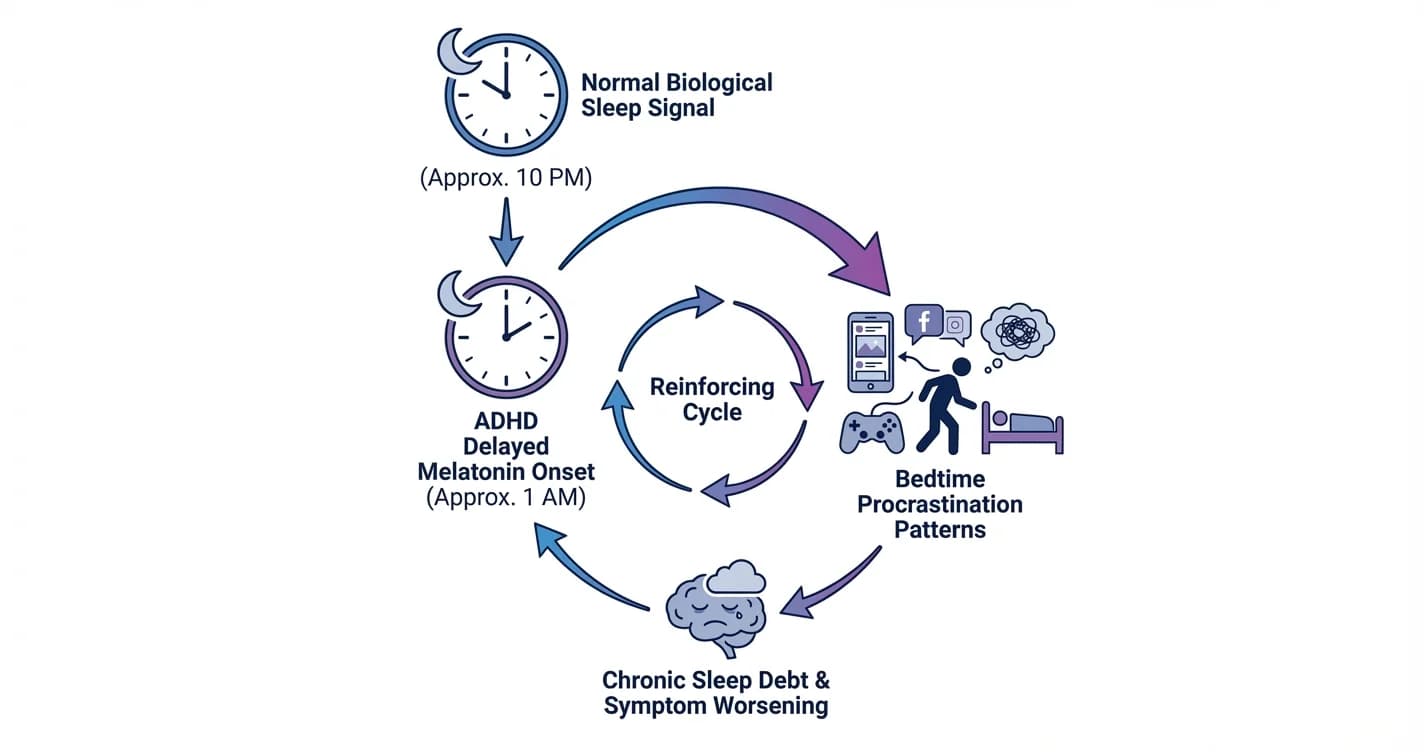
ADHD Sleep Cycle Disruption: Melatonin Delay and Bedtime Procrastination Patterns
Understanding how attention regulation difficulties interfere with natural sleep timing and the nightly wind-down process

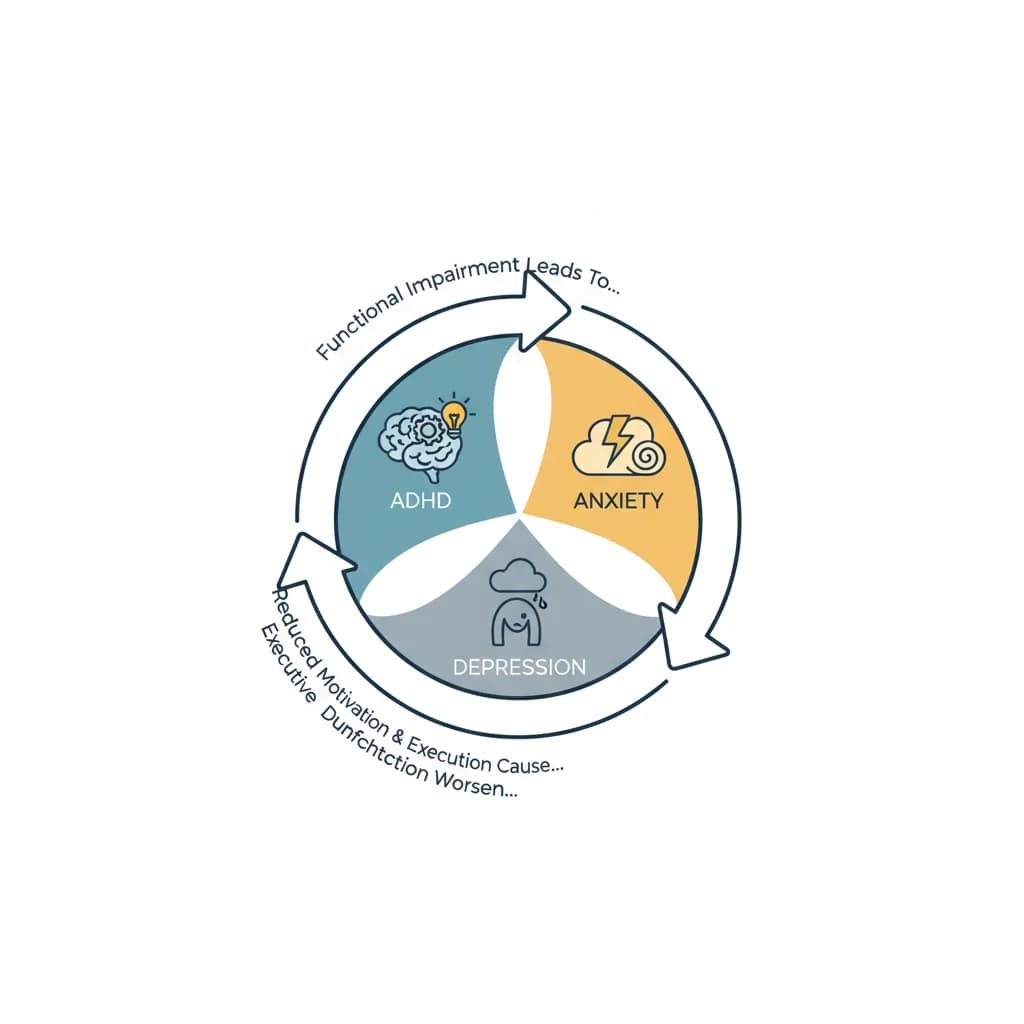
ADHD Comorbidity with Anxiety and Depression Cycles
Understanding the Complex Interplay Between ADHD and Recurring Mental Health Patterns
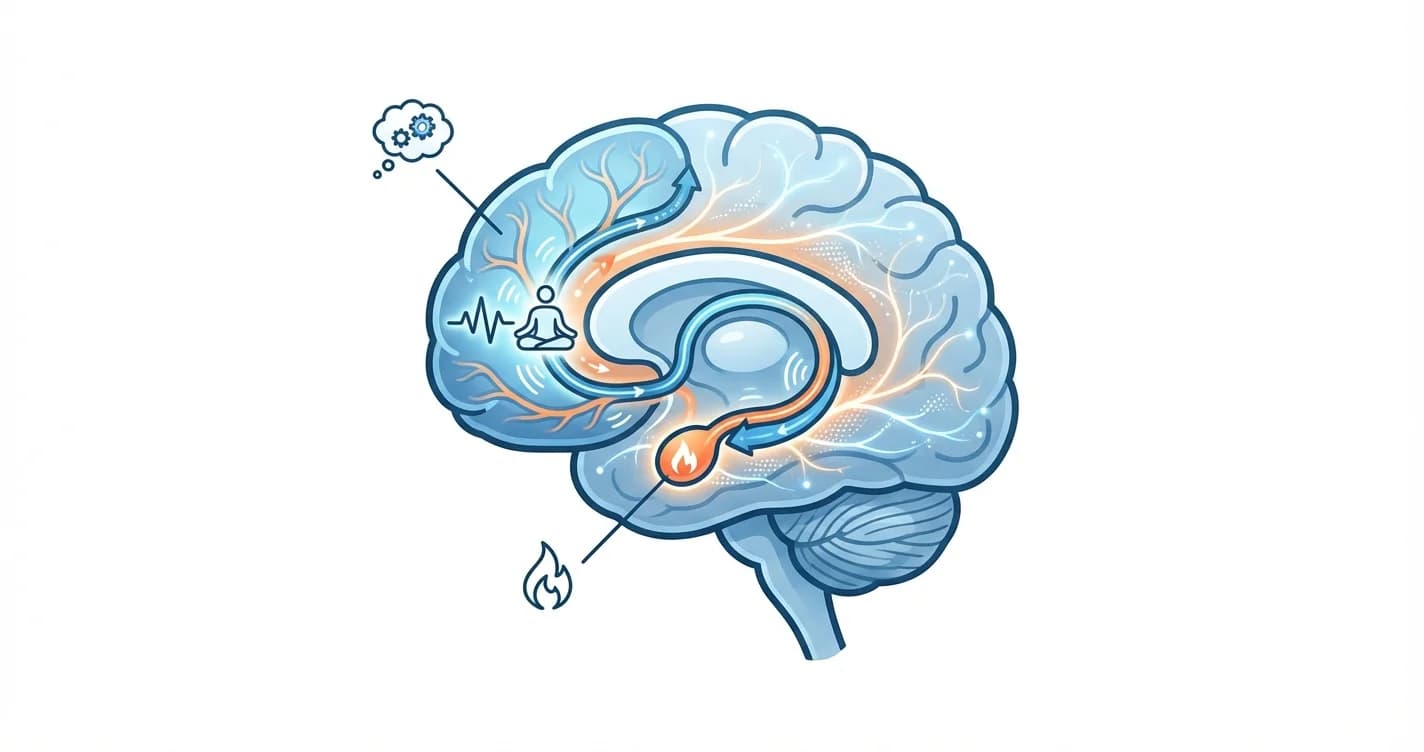
Amygdala and Prefrontal Cortex Connection: Training Emotional Regulation Through Mindfulness
How mindfulness practices reshape neural pathways to strengthen emotional control and reduce reactivity
Disclaimer: This article is for informational purposes only and does not constitute medical advice, diagnosis, or treatment. Always seek the advice of your physician or other qualified health provider with any questions you may have regarding a medical condition. If you are in crisis or think you may have an emergency, call 988 (Suicide & Crisis Lifeline) or go to the nearest emergency room. Outside the US? Find a crisis line in your country.