
Friendship Breakup How to Heal: 2026 Recovery Guide
Friendship breakup how to heal in 2026: 8 concrete steps, common mistakes, and troubleshooting for grief, guilt, and loneliness after losing a close friend.
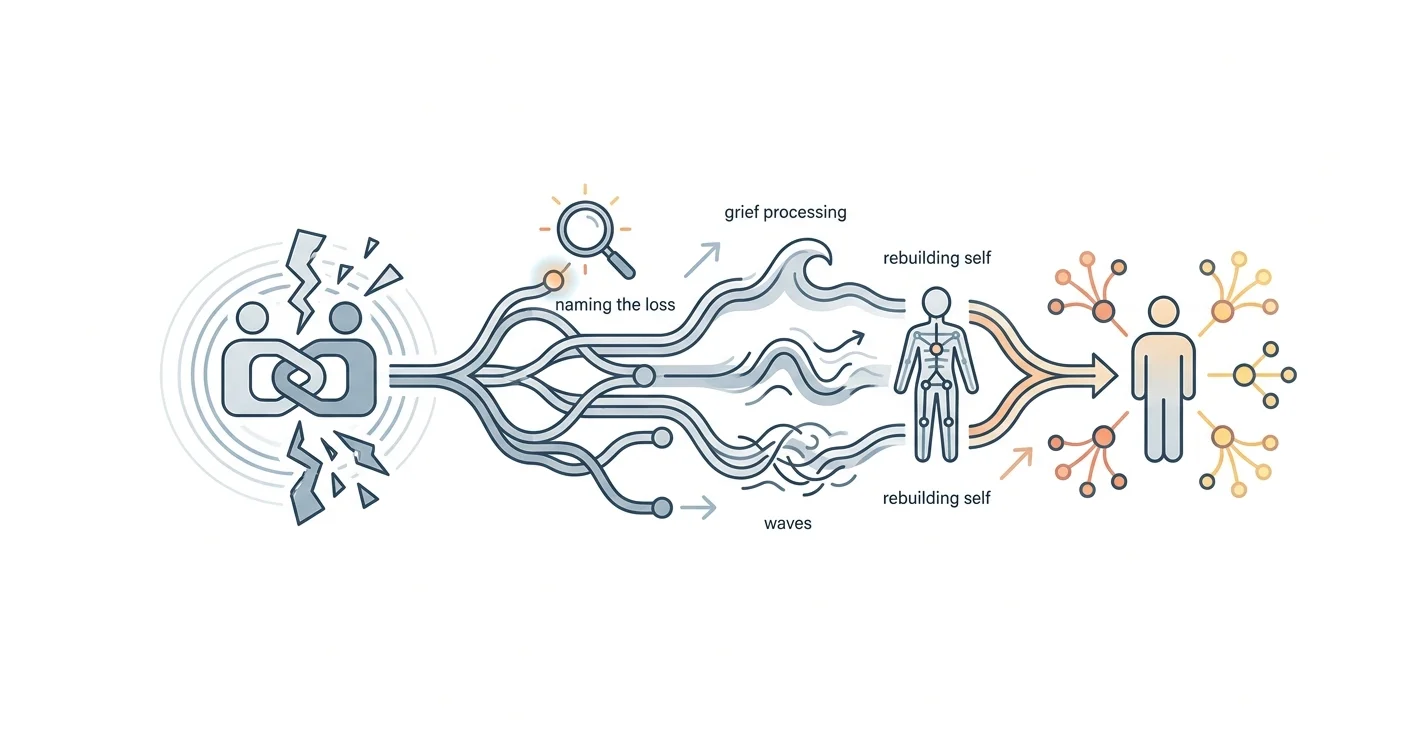

Key Takeaways
- Healing a friendship breakup starts with naming the loss instead of calling it just a friend thing.
- Most friendships end without a closure conversation — abrupt endings and slow fades are both normal.
- Expect grief waves for 3 to 6 months, not a single clean finish line.
- Talking the story out loud, even to an AI voice therapist like Lovon, helps you process it between calls to real people.
- Rebuilding trust in new friendships takes small deliberate risks, not waiting to feel ready first.
Losing a close friend can gut you the same way a breakup does, and almost nobody prepares you for it. This guide walks through why friendship breakups hit so hard and gives you a concrete process for healing in 2026, whether the friendship faded, blew up in a single fight, or ended with total silence.
TL;DR
- Healing a friendship breakup starts with naming the loss instead of calling it just a friend thing.
- Most friendships end without a closure conversation — abrupt endings and slow fades are both normal.
- Expect grief waves for 3 to 6 months, not a single clean finish line.
- Talking the story out loud, even to an AI voice companion like Lovon, helps you process it between calls to real people.
- Rebuilding trust in new friendships takes small deliberate risks, not waiting to feel ready first.
Why this matters
Friendship grief gets dismissed constantly. People ask about your ex but rarely ask about the best friend who stopped texting back. Researchers call this disenfranchised grief — loss that society doesn't validate, which makes it harder to process because you're doing it quietly, often while pretending you're fine.
The confusion between platonic friendship and romantic attachment matters here too. Close friendships activate a lot of the same brain circuitry as romantic bonds — shared history, physical affection, daily texting, being someone's default person. When that ends, your nervous system reacts like it lost a partner, even though the relationship had no name for what it was.
There's no script for a friendship breakup in 2026 the way there is for a divorce or a split. No one sends flowers. That gap between how much it hurts and how little support you get is exactly why you need a deliberate process, not just time.
What you'll need
- A specific incident or pattern you can name (not just "things got weird")
- 20 to 30 minutes a few times a week for reflection, journaling, or voice processing
- One or two people who can hear the full story without picking sides
- Patience for a timeline measured in months, not days
- A private space to talk it out loud when it's 11 p.m. and your brain won't stop replaying it
The steps
1. Name exactly what you lost
Vague grief stays stuck. Specific grief moves.
Write down what this friendship actually gave you — daily check-ins, the person who knew your family drama, your emergency contact for bad days. Naming the concrete loss (not just "a friendship") gives your brain something real to grieve instead of a fog. Common mistake: minimizing it with "it's not that deep," which just delays the processing you need to do anyway.
2. Let the grief move through its stages
Friendship endings follow the same grief stages as any major loss — denial, anger, bargaining, sadness, acceptance — except most people expect it to skip straight to acceptance because it was "just a friend." It won't.
Expect the anger stage to hit hardest around week two to four, often triggered by seeing them post like nothing happened. That's normal, not a setback. Common mistake: trying to force acceptance before you've let anger and sadness actually move through you.
3. Resist the urge to investigate
Checking their Instagram story views, seeing if they hung out with mutual friends, screenshotting old texts to reread — this behavior feels like control but it's actually reopening the wound every single time.
Set one rule: no checking for the first 30 days. Delete the conversation thread if you need to. Expected outcome: the compulsive checking urge drops sharply after roughly two to three weeks without new information to react to.
4. Talk the story out loud, not just in your head
Running the breakup on a mental loop keeps you stuck in your own perspective. Saying it out loud — to a friend, a therapist, or an AI voice companion like Lovon — forces you to structure the story, which is often the first step toward actually processing it instead of just replaying it.
A lot of people default to texting a friend about it, which is fine, but that friend gets tired around the fifth retelling. Lovon exists for the version where you need to talk at midnight without worrying about wearing someone out. The specific instruction: talk through what happened for 10 minutes without trying to reach a conclusion — just get the sequence of events and feelings out.
5. Identify the pattern behind the ending
Ask yourself honestly: was this a mutual fade, a betrayal, a boundary violation, or a slow mismatch in what you each needed? The category changes what healing looks like. A betrayal needs anger work and boundary-setting. A fade needs acceptance that people's capacity for friendship shifts with life stage, geography, and time.
Common mistake: treating every friendship ending as a personal failure when a large share of adult friendships simply don't survive major life transitions like moving, having kids, or job changes.
6. Rebuild your sense of self outside the friendship
Close friendships often absorb pieces of your identity — the inside jokes, the shared plans, the person who validated your decisions. Losing that can leave you unsure of your own judgment.
Spend deliberate time on interests and routines that existed before the friendship and will exist after it. If the friendship left you doubting your worth, rebuilding self-esteem after a hard relationship — romantic or platonic — follows the same core steps. Expected outcome: within 6 to 8 weeks, your day-to-day mood should stop revolving around this one person.
7. Reinvest in connection slowly, on purpose
After a friendship breakup, the instinct is either to isolate completely or to overcorrect by adding new people fast to fill the gap. Neither works well long term.
Pick one low-stakes way to be around people weekly — a class, a standing group activity, a coworker you text occasionally. Common mistake: waiting to feel fully healed before letting anyone new in. Trust builds through small repeated interactions, not readiness.
8. Decide: repair or release
Some friendships are worth one honest conversation before you close the door. Others aren't, especially if the pattern was one-sided for years. Be honest about which one this is before you either chase reconciliation or slam the door out of pride.
If you do reach out, keep it short and non-accusatory: state what you miss, ask if they're open to talking, and accept either answer. If there's no response within a couple of weeks, treat that as your answer and move to release.
Talk through it before you overthink it
Process the friendship breakup out loud with Lovon, day or night.
Troubleshooting
You can't stop checking their social media. Mute or unfollow for 30 days minimum — this isn't dramatic, it's damage control for a wound that reopens every time you see a new post.
Mutual friends are taking sides. Tell your closest shared friends directly that you're not asking them to choose, then stop bringing up the ex-friend in group settings. Forcing sides usually backfires.
You feel guilty because you ended it. Guilt after ending an unhealthy friendship is common and doesn't mean the decision was wrong — it usually means you cared, not that you made a mistake.
The anger isn't fading after a few months. Stuck anger often means the underlying story hasn't been fully processed. Write out exactly what happened, in order, with no editing for how it makes you look — this often unlocks the stuck emotion.
Loneliness spikes at night specifically. Nighttime loneliness is common after losing a close friend because that's often when you'd have texted them. If it's loneliness rather than sadness about this one person specifically, treat it as its own problem with its own plan.
You keep drafting texts you never send. That's a sign you need to process the loss, not necessarily reach out. Journal the text instead of sending it, then wait 48 hours before deciding if it still feels necessary.
Tools and resources
- A private voice-journaling habit — even five minutes a day helps externalize the loop in your head
- One trusted person outside the friend group who can hear the unfiltered version
- A written timeline of the friendship's arc, which makes patterns easier to see than memory alone
- An AI voice therapist for the 2 a.m. moments when no one else is awake to listen
What to do next
If the ending is tangled up with bigger relationship patterns — trust issues, fear of being replaced, difficulty forming new bonds — working through it with structured support helps more than white-knuckling it alone. An AI relationship coach for breakup recovery can walk you through the same steps above at your own pace, whenever the grief hits.
FAQ
Can a friendship breakup hurt more than a romantic one?
Yes, for many people it can, because friendship grief is disenfranchised — society rarely validates it the way it does a romantic split. The lack of a script or support system often makes the emotional load heavier, not lighter.
How long does it take to heal from a friendship breakup?
Most people move through the sharpest grief within 3 to 6 months, though occasional waves of sadness can surface for a year or more. Timelines depend on how long the friendship lasted and whether it ended abruptly or faded slowly.
Is it normal to grieve a friendship that just faded, not ended dramatically?
Yes, fading friendships are one of the most common types of adult friendship loss and often the hardest to process because there's no clear moment to point to. Grieve the loss of the relationship, not just a single event.
Should I confront my former friend about why the friendship ended?
Only if you can accept either response, including silence. A short, non-accusatory message works better than a long confrontation, and if there's no reply within a couple weeks, treat that as closure enough to move forward.
Why do I still check my ex-friend's social media months later?
Checking behavior is often an attempt to control uncertainty about the relationship's status. Muting or unfollowing for at least 30 days breaks the compulsive loop faster than willpower alone.
Can talking to an AI therapist help with a friendship breakup?
An AI voice companion like Lovon gives you a place to talk through the story and feelings on your own schedule, which helps structure the processing work between conversations with real friends or a licensed therapist. It works alongside human support, not instead of it for serious mental health needs.
How do I make new friends after losing a close one?
Add one low-stakes recurring activity to your week — a class, a group, a regular coworker interaction — rather than trying to replace the lost friendship all at once. Trust in new friendships builds through repeated small interactions over weeks, not a single big effort.
Is it my fault the friendship ended?
Most friendship endings involve mismatched needs, life-stage changes, or unspoken resentment on both sides rather than one person being entirely at fault. Assigning full blame to yourself usually reflects grief distortion, not an accurate account of what happened.
One last thing
The friendships that end quietly, with no fight and no explanation, are often harder to heal from than the ones that blow up — because a fade leaves you questioning your own read of the relationship for months. If that's your situation in 2026, trust the pattern of behavior over any single ambiguous moment. People show you what a friendship meant to them through consistency, not through the one text explaining why it ended.
Related guides
How AI Support Helps You Heal
AI emotional support isn't about replacing human connection — it's about filling the gaps. The moments when you need to talk at 2 AM, when you don't want to burden your friends again, or when you simply need someone to listen without judgment.
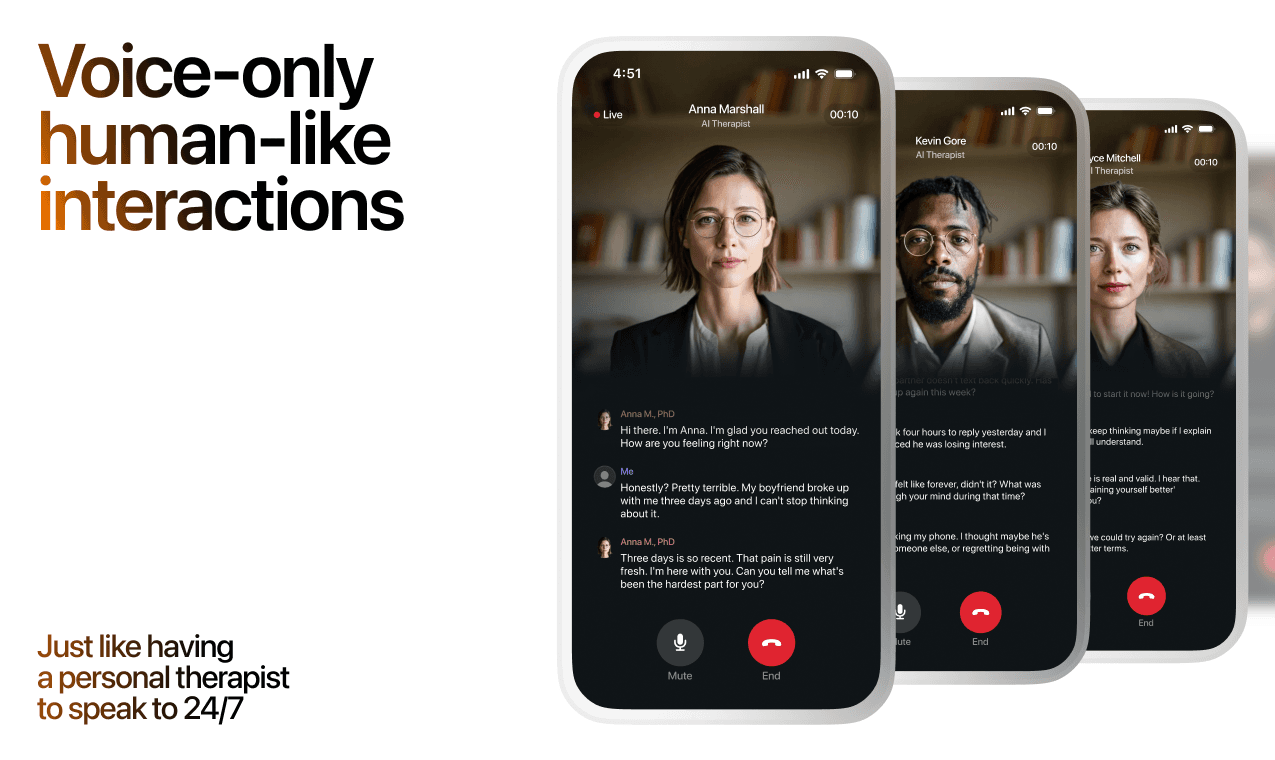
Here's what happens in a typical Lovon session:
You share what's on your mind
There's no script, no intake form, no waiting room. You speak or type whatever you're feeling — in your own words, at your own pace.
Lovon validates and explores
Using frameworks from CBT (Cognitive Behavioral Therapy) and motivational interviewing, Lovon acknowledges your feelings first, then gently helps you explore them. No dismissive "just move on" advice.
You build coping skills together
Lovon doesn't just listen — it actively works with you on evidence-based techniques: thought reframing, urge surfing, behavioral experiments, and more.
What a Session with Lovon Looks Like
When to Seek Professional Help
AI support is a valuable tool, but it's not a replacement for professional care. Please consider reaching out to a licensed therapist if you experience any of the following:
- Persistent thoughts of self-harm or suicide
- Inability to perform daily activities (work, eating, sleeping) for more than 2 weeks
- Turning to alcohol or substances to cope
- Intense anger or desire to harm your ex-partner
- Complete emotional numbness that doesn't improve over time
Crisis Resources (US): If you're in immediate danger, call 988 (Suicide & Crisis Lifeline) or text HOME to 741741 (Crisis Text Line). Available 24/7, free, and confidential.
Outside the US? Find a crisis line in your country
Ready to Start?
Your healing journey can begin right now
A 7-day trial. No judgment. Just a safe space to process what you're going through.
Frequently Asked Questions
Is Lovon a replacement for a real therapist?
Is my conversation with Lovon AI private?
How is Lovon different from ChatGPT for emotional support?
Can I use Lovon if I'm already seeing a therapist?
Can I try Lovon before subscribing?
About the Author

The Lovon Editorial Team
Mental Health & Wellness Content Team
The Lovon Editorial Team develops mental health and wellness content designed to make psychological concepts accessible and actionable. Our goal is to bridge the gap between clinical research and everyday life - helping you understand why your mind works the way it does and what you can do about it....
Related articles
- How to Cope With Widow Grief: 6 Steps for 2026
Coping with widow grief in 2026 takes structure, not just time. Six concrete steps, common setbacks, and where AI…
- How to Cope With Losing a Pet
What grief for a dog or cat actually does to a day, why the small routines hurt most, and concrete ways to carry the…
- How to Cope With Infertility Grief: 7 Steps (2026)
Infertility grief comes in waves, not a line. Get 7 concrete steps to cope, what to avoid, and when to see a grief…
- How to Heal Anxious Attachment on Your Own (2026)
Step-by-step guide to healing anxious attachment solo in 2026: triggers, nervous system work, boundaries, and tools that…
See also
Quizzes
- Should I Give Him Another Chance? 12-Question Quiz
Twelve questions on whether anything has really changed.
- Should I Forgive Him for Cheating? 12-Question Quiz
Twelve questions on whether rebuilding is possible.
Free tools
- No Contact Plan Builder
Name the hours you are most likely to text them, and get one if-then rule for each. Ends in a dated card you can…
- How to Respond to a Breakup Text
A chat for the minutes after a breakup text arrives and you have no idea how to respond. Paste what they sent and say…
From the wiki
- How to leave a toxic relationship?
Leaving a toxic relationship is rarely a decision problem — you usually know. What stops you is that the pull toward…
Disclaimer: This article is for informational purposes only and does not constitute medical advice, diagnosis, or treatment. Always seek the advice of your physician or other qualified health provider with any questions you may have regarding a medical condition. If you are in crisis or think you may have an emergency, call 988 (Suicide & Crisis Lifeline) or go to the nearest emergency room. Outside the US? Find a crisis line in your country.