
AI App for Anxiety Insomnia: Best Picks 2026
The best ai app for anxiety insomnia in 2026 pairs voice sessions with nervous-system tools. See what to buy, consider, or skip before your next sleepless night.
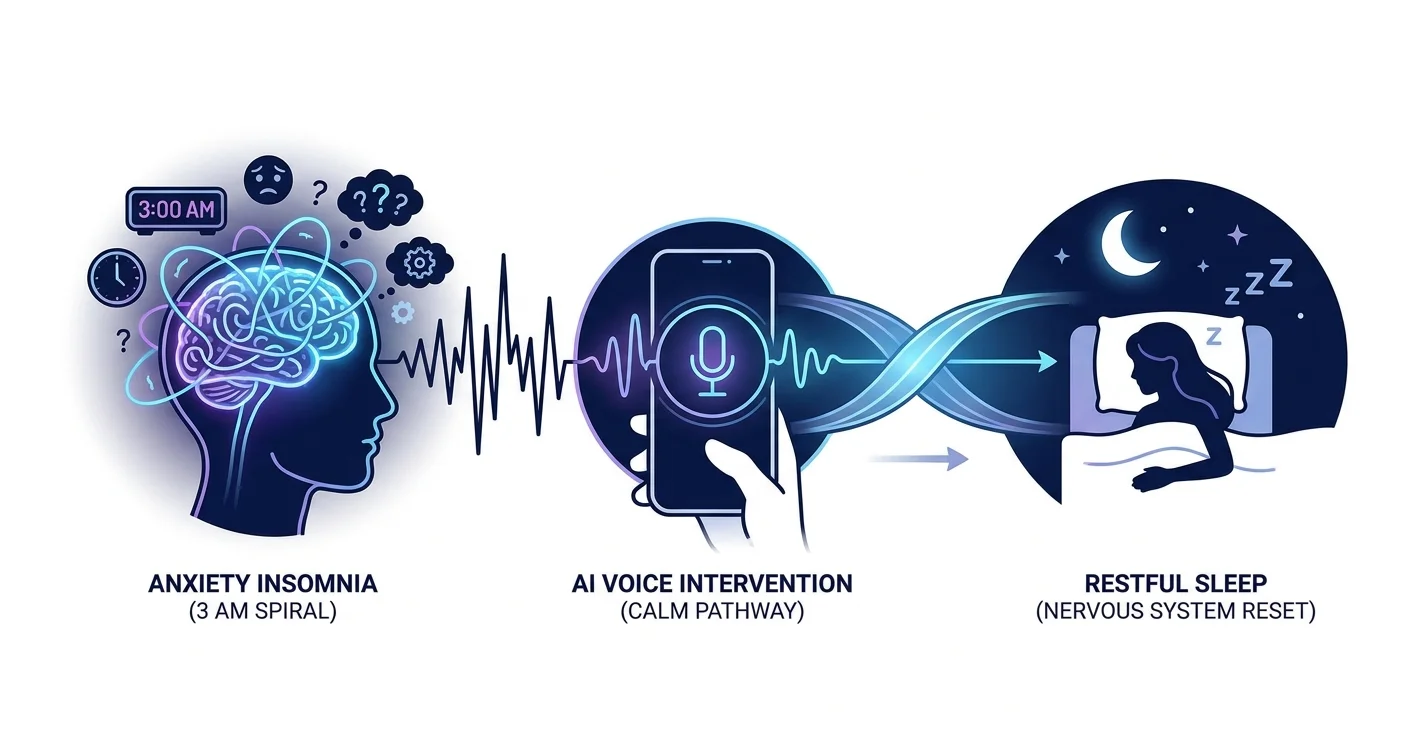

Key Takeaways
- Lovon's voice sessions work as an ai app for anxiety insomnia when kept under 15 minutes before lights-out. Buy for
- Text-only chatbots add typing friction at 3am. Skip typing-required apps for anxiety-driven insomnia.
- Box breathing and progressive muscle relaxation pair well with voice sessions in 2026. Consider stacking both.
- Generic meditation timers skip anxiety-specific nervous system content. Skip them if insomnia is anxiety-driven, not
An AI app for anxiety insomnia has one job: interrupt a racing brain at the exact hour nobody else is awake to help. This guide breaks down what actually earns a spot on your phone for that 2am spiral, and what just adds another glowing screen to the problem.
TL;DR
- Lovon's voice sessions work as an ai app for anxiety insomnia when kept under 15 minutes before lights-out. Buy for nightly racing thoughts.
- Text-only chatbots add typing friction at 3am. Skip typing-required apps for anxiety-driven insomnia.
- Box breathing and progressive muscle relaxation pair well with voice sessions in 2026. Consider stacking both.
- Generic meditation timers skip anxiety-specific nervous system content. Skip them if insomnia is anxiety-driven, not just restlessness.
Why this matters
Anxiety insomnia isn't the same problem as jet lag or a snoring partner. It's a loop: a thought fires, the body reads it as a threat, cortisol rises, and now you're staring at the ceiling rehearsing a conversation from three years ago. Most sleep apps are built for the wrong problem — white noise and unguided meditation calm a restless body, not a hijacked nervous system.
By 2026, most mental health apps still default to text chat, which means typing out a coherent sentence at 1am while your hands are shaking from a panic spike. That's the exact moment voice interaction stops being a nice-to-have and becomes the entire reason the tool works or doesn't. If you want to calm anxiety at night when you can't sleep, the interface matters as much as the content.
Who this is for
This is for someone whose insomnia is anxiety-driven specifically — racing thoughts at bedtime, catastrophizing about tomorrow, waking at 3am with a spinning mind that won't shut off. It is not for insomnia caused by sleep apnea, restless leg syndrome, or shift work — those need a sleep specialist, not a coping-skills app.
What to look for in an AI app for anxiety insomnia
Voice, not typing, at 11pm
Typing engages the analytical brain right when you need it to go quiet. Voice conversation lets you speak a half-formed thought without organizing it into a sentence first, which matters when it's midnight and your hands won't stop moving.
Availability outside business hours
Anxiety insomnia doesn't check a calendar. An app that only feels useful at 2pm on a Tuesday isn't built for the 3am problem — see how AI voice therapy differs from text-based apps for what actually changes when the format shifts from typed to spoken.
Nervous-system-specific content
Generic mindfulness content is designed for stress in general. Anxiety insomnia needs techniques aimed at the fight-or-flight loop specifically — breathing patterns, grounding, muscle release — not a five-minute body scan borrowed from a yoga app.
Session length built for wind-down
A 45-minute CBT-style session doesn't fit the window between "I can't sleep" and "I need to be asleep." Look for something built to run 5 to 15 minutes, not a full therapy hour.
Honesty about what it isn't
Any app claiming to replace a licensed clinician or diagnose an anxiety disorder is overselling itself. The trustworthy tools say plainly that they're a companion between sessions, not a substitute for clinical care.
Top picks for anxiety-driven insomnia
Lovon voice session — the safe pick. One spec that matters: it's voice-only, so there's no typing required at the moment you're least able to type coherently. It's available every hour of the day, including 3am, which is the actual test for an ai app for anxiety insomnia. Buy — start with Lovon for the nights the spiral hits before bed.
Box breathing — the fastest reset. The spec: a 4-4-4-4 count pattern (inhale, hold, exhale, hold). It runs under 5 minutes and works as a standalone tool or a lead-in before a longer voice session. Buy — the box breathing technique is worth having memorized, not just bookmarked.
Progressive muscle relaxation — the body-first approach. Sequential tense-and-release across major muscle groups, usually 10 to 15 minutes start to finish. It targets the physical tension anxiety leaves behind, which breathing alone sometimes misses. Consider it as a second layer on nights when breathing exercises alone don't quiet the body.
A guided coping-tool library — the wildcard. On-demand exercises built for spiraling thoughts rather than general relaxation, usually under 10 minutes per exercise. It's useful when you need something more structured than "just breathe" but don't need a full conversation. Consider for nights when you want a script, not a chat.
Generic sleep-sound or meditation-only apps — the pattern that backfires. White noise and unguided meditation calm a restless body but deliver zero targeted nervous-system content for anxiety specifically. If the app has no anxiety-specific track, it's treating the wrong problem. Skip if your insomnia is anxiety-driven rather than just general restlessness.
Try a session before your next sleepless night
Talk through the spiral with a voice session instead of staring at the ceiling.
What to avoid
- Typing-required chatbots at 3am. Composing a message is friction exactly when your brain has the least bandwidth for it.
- Apps promising to "cure" insomnia or diagnose an anxiety disorder. That's an overclaim no app should make, and it's a red flag when one does.
- One-size-fits-all meditation timers. No anxiety-specific content means the tool is solving stress in general, not the loop keeping you awake.
If the app makes you type a paragraph before it responds, it's already failed the 3am test.
Verdict comparison table
| Option | Voice-first | Available 24/7 | Nervous-system focus | Session length | Verdict |
|---|---|---|---|---|---|
| Lovon voice session | Yes | Yes | Yes | 5-15 min | Buy |
| Box breathing technique | N/A (self-guided) | Yes | Yes | Under 5 min | Buy |
| Progressive muscle relaxation | N/A (self-guided) | Yes | Partial | 10-15 min | Consider |
| Guided coping-tool library | Varies | Yes | Yes | Under 10 min | Consider |
| Generic sleep-sound app | No | Yes | No | Varies | Skip |
FAQ
What's the best AI app for anxiety insomnia in 2026?
The strongest option in 2026 is a voice-first app that's available around the clock and built around nervous-system-specific techniques rather than generic meditation. Text-only tools add friction at the exact hour you need the least of it.
Is an AI app for anxiety insomnia better than a sleep-sound app?
For anxiety-driven insomnia specifically, yes, because sleep-sound apps calm a restless body without touching the racing-thought loop causing the sleeplessness. Pair the two if you like background noise alongside a voice session.
Can voice AI therapy actually help you fall asleep faster?
Voice sessions can shorten the time it takes to calm a racing mind because speaking a half-formed thought is easier than typing it out at midnight. It won't fix underlying sleep disorders like apnea, which need a specialist.
Is Lovon a replacement for a sleep specialist or therapist?
No. Lovon is built as an always-available companion for emotional support and coping tools, not a replacement for licensed clinical care or a sleep specialist. Persistent insomnia still needs a professional evaluation.
How do I use an AI app for anxiety insomnia at 3am?
Open the app and start a voice session rather than typing, since speaking removes the friction of composing a message while anxious. Keep it under 15 minutes so it fits the actual wind-down window before you try sleep again.
Does journaling before bed help with anxiety insomnia?
Journaling can help by externalizing racing thoughts so they stop looping, but voice journaling removes the typing step that slows people down at night. Either works better paired with a breathing technique right before lights-out.
What if the racing thoughts don't stop after one session?
A single session won't resolve every night, and that's expected rather than a failure of the app. Stack a short breathing exercise with the voice session, and if the pattern continues for weeks, bring it to a licensed clinician.
One last thing
The fix that actually moves the needle isn't a longer session, it's a shorter one done the same way every night. Anxiety insomnia responds to a repeated cue more than a single long intervention, so five consistent minutes before bed in 2026 beats one 40-minute session you only do when things get bad enough.
Related guides
How AI Support Helps You Heal
AI emotional support isn't about replacing human connection — it's about filling the gaps. The moments when you need to talk at 2 AM, when you don't want to burden your friends again, or when you simply need someone to listen without judgment.
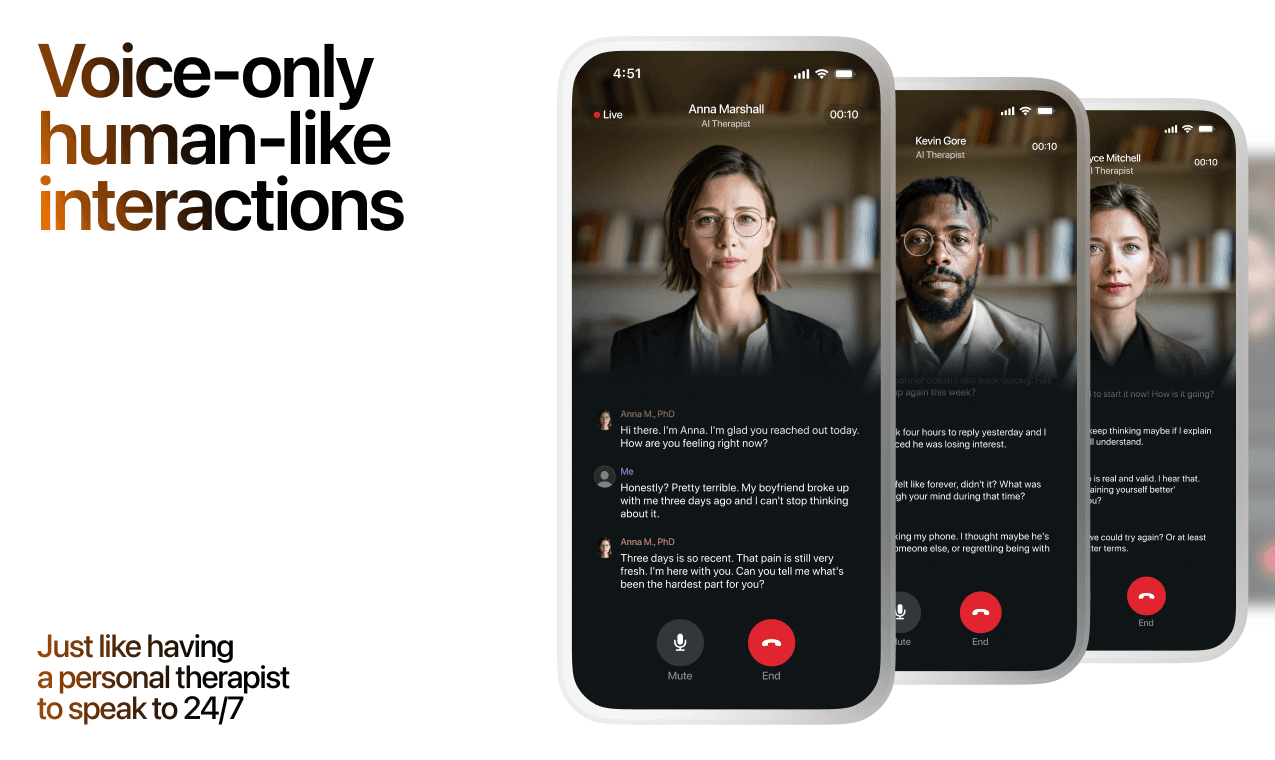
Here's what happens in a typical Lovon session:
You share what's on your mind
There's no script, no intake form, no waiting room. You speak or type whatever you're feeling — in your own words, at your own pace.
Lovon validates and explores
Using frameworks from CBT (Cognitive Behavioral Therapy) and motivational interviewing, Lovon acknowledges your feelings first, then gently helps you explore them. No dismissive "just move on" advice.
You build coping skills together
Lovon doesn't just listen — it actively works with you on evidence-based techniques: thought reframing, urge surfing, behavioral experiments, and more.
What a Session with Lovon Looks Like
When to Seek Professional Help
AI support is a valuable tool, but it's not a replacement for professional care. Please consider reaching out to a licensed therapist if you experience any of the following:
- Persistent thoughts of self-harm or suicide
- Inability to perform daily activities (work, eating, sleeping) for more than 2 weeks
- Turning to alcohol or substances to cope
- Intense anger or desire to harm your ex-partner
- Complete emotional numbness that doesn't improve over time
Crisis Resources (US): If you're in immediate danger, call 988 (Suicide & Crisis Lifeline) or text HOME to 741741 (Crisis Text Line). Available 24/7, free, and confidential.
Outside the US? Find a crisis line in your country
Ready to Start?
Your healing journey can begin right now
1 free conversation. No credit card. No judgment. Just a safe space to process what you're going through.
Frequently Asked Questions
Is AI therapy a replacement for a real therapist?
Is my conversation with Lovon AI private?
How is Lovon different from ChatGPT for emotional support?
Can I use Lovon if I'm already seeing a therapist?
Can I try Lovon for free?
About the Author
The Lovon Editorial Team
Mental Health & Wellness Content Team
The Lovon Editorial Team develops mental health and wellness content designed to make psychological concepts accessible and actionable. Our goal is to bridge the gap between clinical research and everyday life - helping you understand why your mind works the way it does and what you can do about it....
Similar Articles
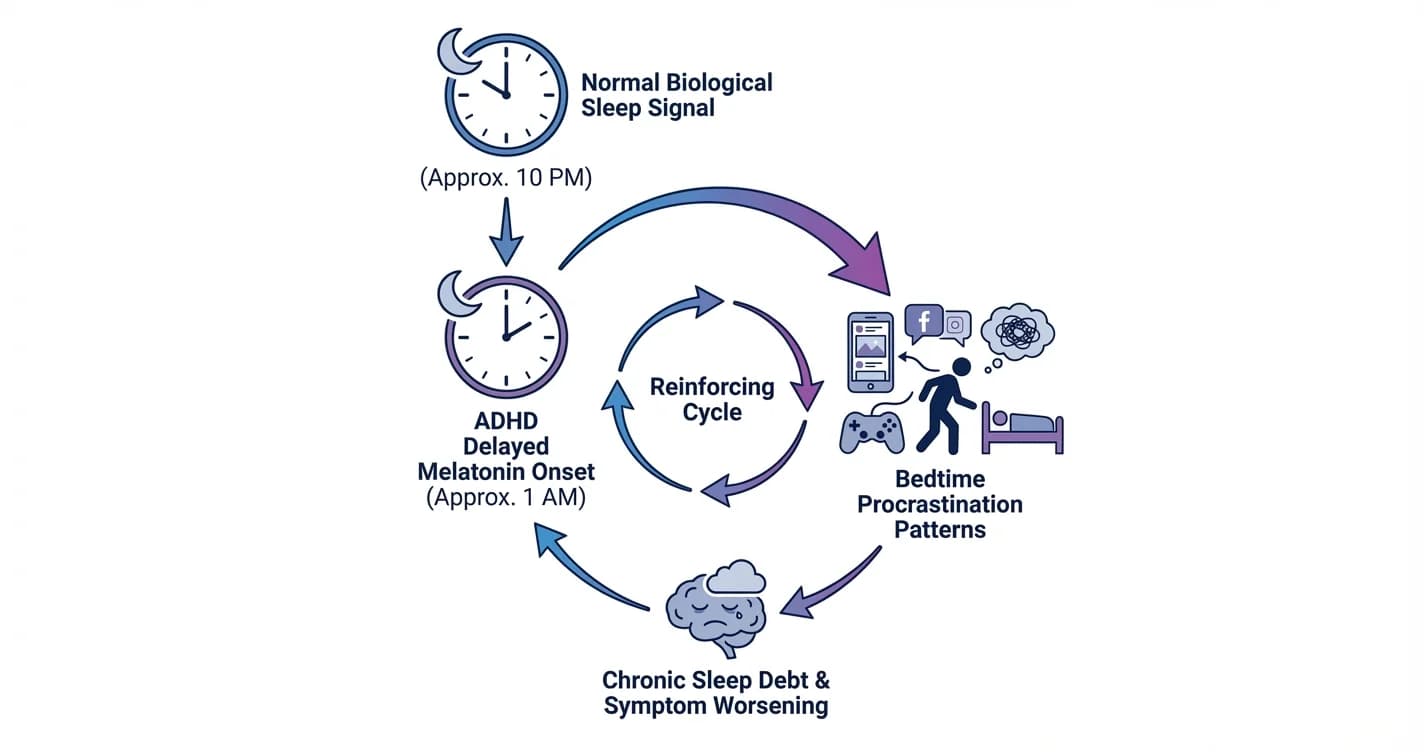
ADHD Sleep Cycle Disruption: Melatonin Delay and Bedtime Procrastination Patterns
Understanding how attention regulation difficulties interfere with natural sleep timing and the nightly wind-down process

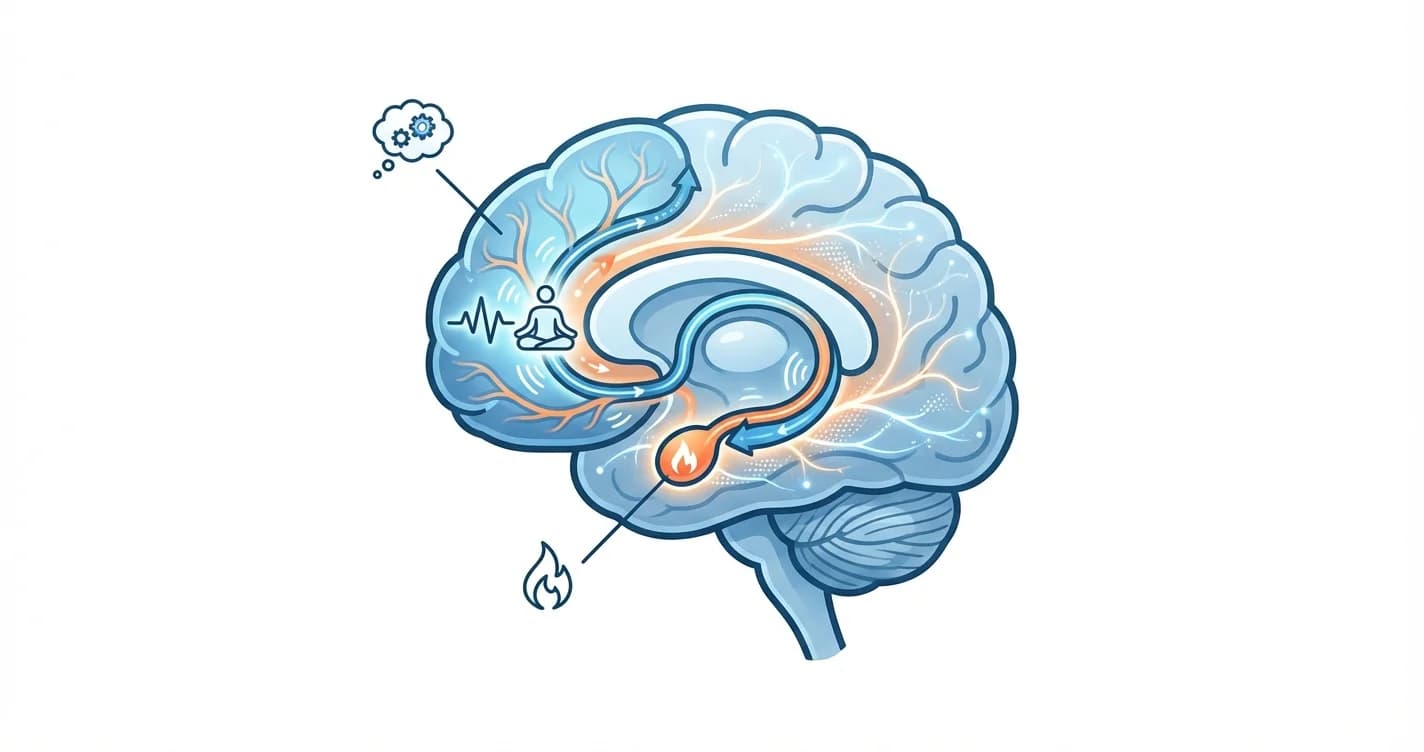
Amygdala and Prefrontal Cortex Connection: Training Emotional Regulation Through Mindfulness
How mindfulness practices reshape neural pathways to strengthen emotional control and reduce reactivity
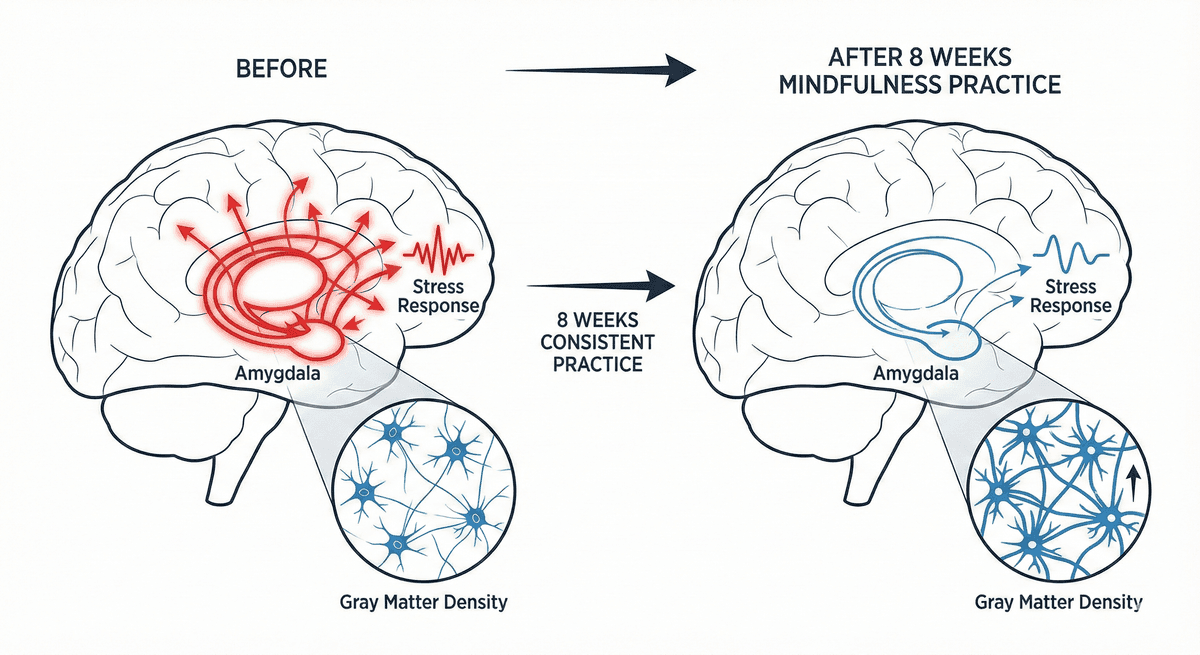
What 8 Weeks of Meditation Does to Your Amygdala
See what changes in your brain after eight weeks of daily meditation, why you react less to stress, and how to build a routine that actually sticks.
Disclaimer: This article is for informational purposes only and does not constitute medical advice, diagnosis, or treatment. Always seek the advice of your physician or other qualified health provider with any questions you may have regarding a medical condition. If you are in crisis or think you may have an emergency, call 988 (Suicide & Crisis Lifeline) or go to the nearest emergency room. Outside the US? Find a crisis line in your country.